-
-
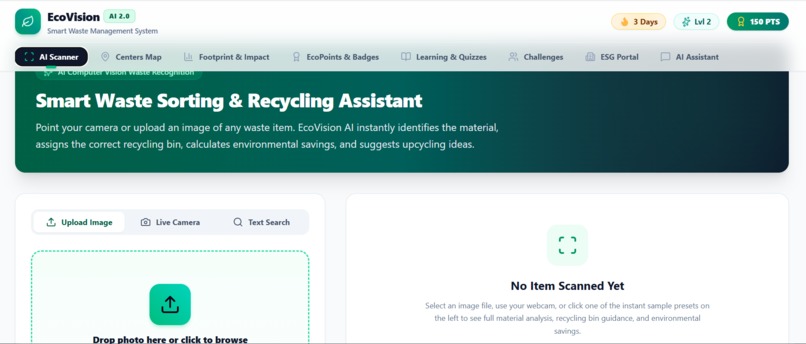
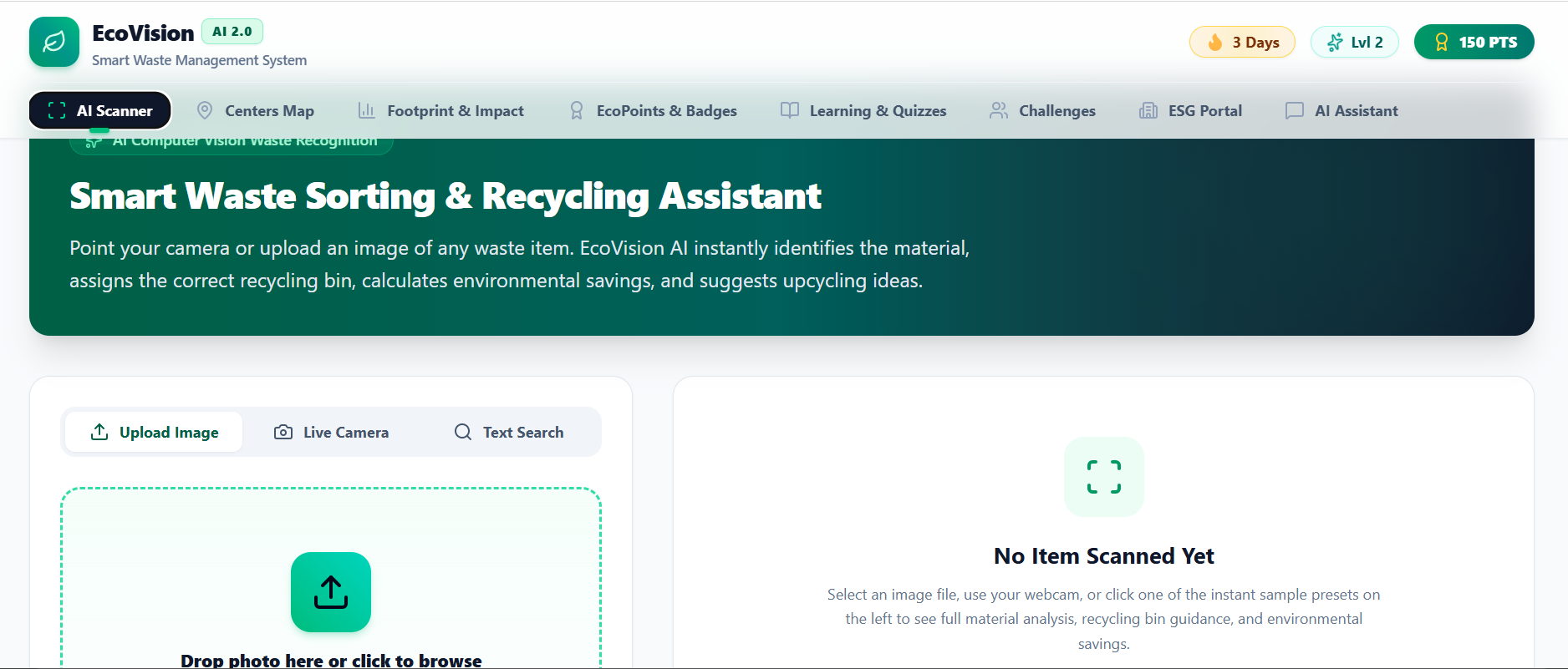
introducing with the landing home page
-
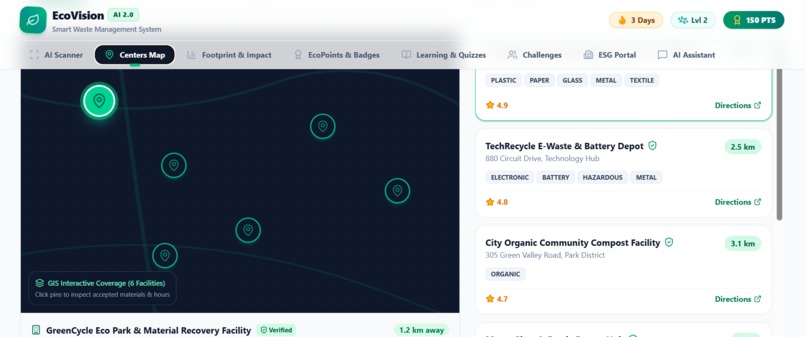
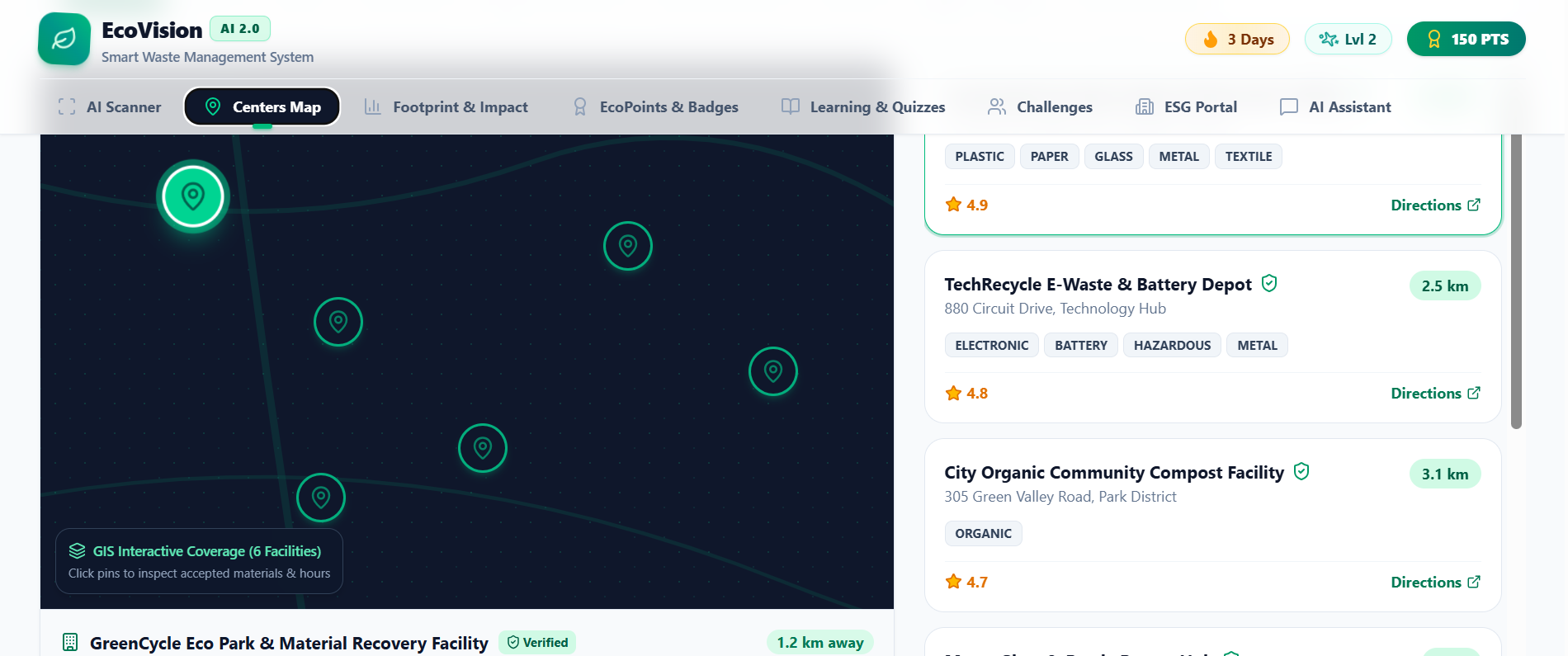
a variety of map locations to show our centers
-
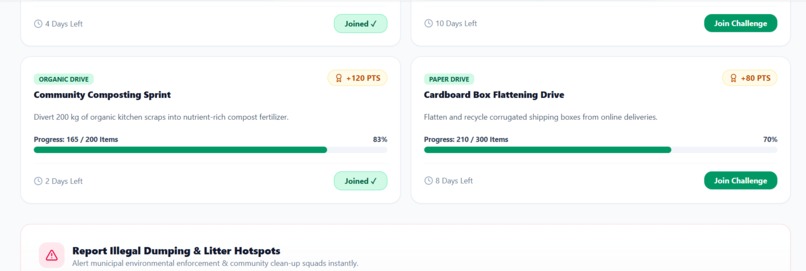
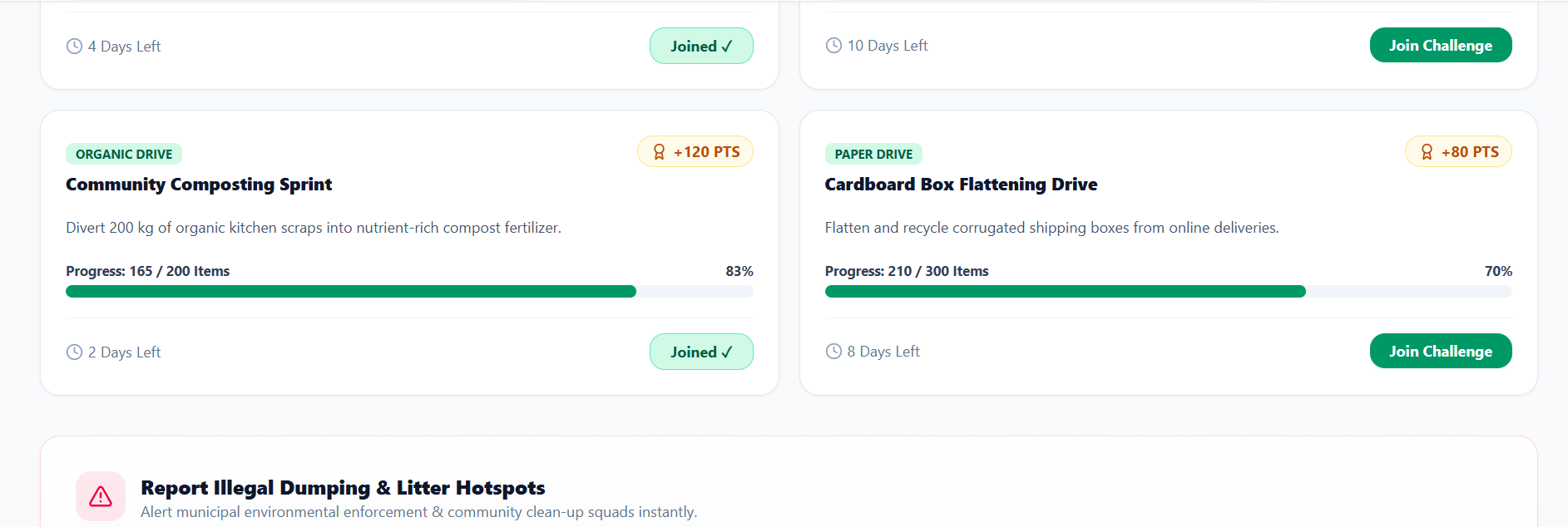
the app has a vast feature of options and sections
-
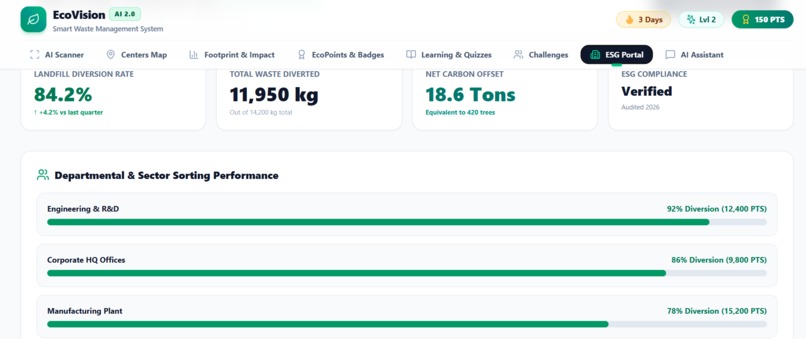
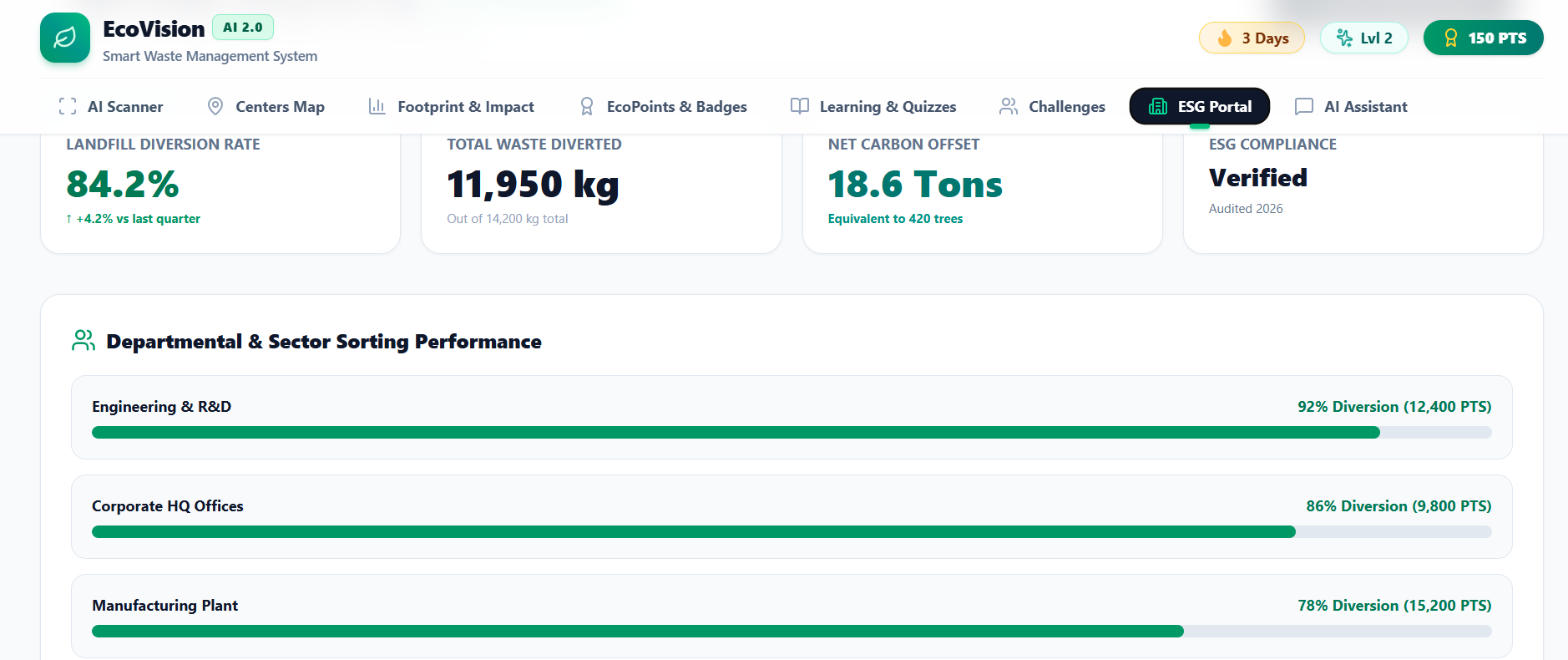
you can also explore the portal of the app
🌍 About EcoVision
Inspiration
EcoVision was inspired by the growing environmental challenges caused by poor waste management, plastic pollution, and low recycling rates in many communities. Every day, recyclable materials such as plastic bottles, paper, glass, and metal are discarded incorrectly because people are unsure how to sort them or where they should be recycled. This not only wastes valuable resources but also contributes to pollution, climate change, and environmental degradation.
We wanted to create a solution that makes recycling simple, accessible, and engaging for everyone. By combining artificial intelligence with environmental education, EcoVision empowers individuals to make better waste disposal decisions while promoting a circular economy where materials are reused instead of discarded.
What We Built
EcoVision is an intelligent smart waste management platform available as a mobile and web application. Using computer vision and artificial intelligence, the system identifies waste items through a smartphone camera and instantly provides recycling guidance.
The platform helps users:
- 📷 Scan and identify waste.
- ♻️ Determine whether an item is recyclable.
- 🗑️ Learn the correct recycling bin for each item.
- 📍 Locate nearby recycling centers using GPS.
- 🌱 Understand the environmental impact of proper recycling.
- 🏆 Earn EcoPoints and achievements for sustainable actions.
- 📊 Track personal recycling habits and environmental impact.
- 📚 Access educational resources about recycling and sustainability.
By making recycling interactive and rewarding, EcoVision encourages long-term environmental responsibility.
How We Built It
EcoVision combines several modern technologies into one intelligent platform.
Artificial Intelligence
Computer vision models analyze images captured by the user's camera to recognize different types of waste materials such as:
- Plastic
- Glass
- Paper
- Cardboard
- Metal
- Organic waste
- Electronic waste
Machine learning continuously improves recognition accuracy as more data becomes available.
Application Development
The platform consists of:
- A responsive web application
- A mobile application
- A cloud-based backend
- A secure database for storing user progress and recycling information
Additional Features
- GPS integration for nearby recycling centers.
- Cloud storage for environmental statistics.
- Intelligent recycling recommendations.
- Interactive dashboards.
- Reward and gamification system.
What We Learned
Developing EcoVision taught us valuable lessons beyond software development.
We learned:
- The importance of artificial intelligence in solving real-world environmental problems.
- How computer vision can classify objects with high accuracy.
- The importance of user-friendly design when encouraging sustainable behavior.
- The value of combining technology with education to create lasting environmental impact.
- How gamification motivates people to adopt environmentally friendly habits.
- The importance of designing scalable and sustainable digital solutions.
Most importantly, we learned that technology alone cannot solve environmental challenges—it must inspire and empower people to change their everyday behavior.
Challenges We Faced
Building EcoVision presented several challenges.
Waste Recognition Accuracy
Different waste items often look similar. Training computer vision models to distinguish between materials such as clear plastic, glass, and certain metals requires large, diverse datasets.
Data Availability
Obtaining high-quality labeled images of waste for machine learning was challenging. The recognition system performs best when trained on thousands of accurately categorized images.
User Experience
Creating an interface that is simple enough for children while still offering advanced functionality for organizations required careful design and usability testing.
Recycling Information
Recycling rules differ by region. The platform needed to be flexible enough to support different local recycling guidelines and collection systems.
Community Engagement
Encouraging users to recycle consistently required adding motivation through EcoPoints, achievements, leaderboards, and community challenges.
Environmental Impact
EcoVision contributes to environmental sustainability by:
- Reducing landfill waste.
- Improving recycling accuracy.
- Increasing public environmental awareness.
- Conserving natural resources.
- Reducing greenhouse gas emissions.
- Supporting circular economy practices.
- Encouraging responsible consumption and waste management.
Future Improvements
Our vision for EcoVision extends beyond waste identification.
Future features include:
- 🤖 Recognition of hundreds of additional waste categories.
- 🛰️ Smart city integration with IoT-enabled recycling bins.
- 🌍 Global recycling database supporting country-specific recycling rules.
- 📈 Carbon footprint analytics for individuals and organizations.
- 🏢 Sustainability dashboards for schools, companies, and municipalities.
- 🌳 Community environmental campaigns and cleanup events.
- 🛍️ Partnerships with recycling companies and eco-friendly businesses.
- 🔄 Intelligent suggestions for reusing or upcycling household items.
Conclusion
EcoVision demonstrates how modern technology can transform everyday recycling into a smarter, simpler, and more engaging experience. By combining intelligent waste recognition, environmental education, location-based recycling services, and community rewards, the platform empowers individuals and organizations to reduce waste, protect natural resources, and build a cleaner, more sustainable future. We believe that small actions, when supported by innovative technology, can create a significant positive impact on the environment and help accelerate the transition toward a truly circular economy.

Log in or sign up for Devpost to join the conversation.