-
-
About Page
-
Home Page
-
Features
-
How It Works
-
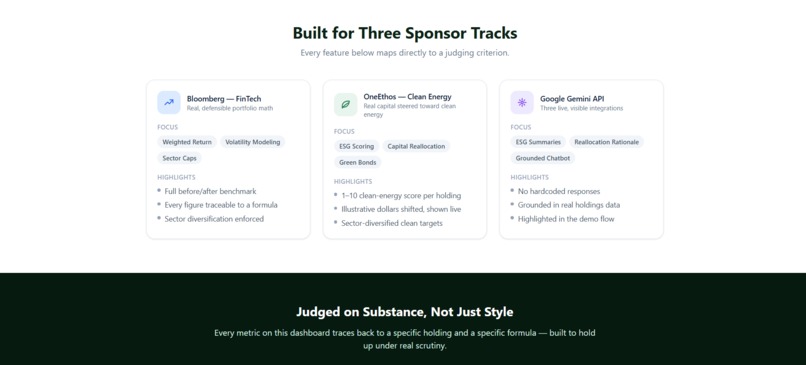
Sponsor Goals
-
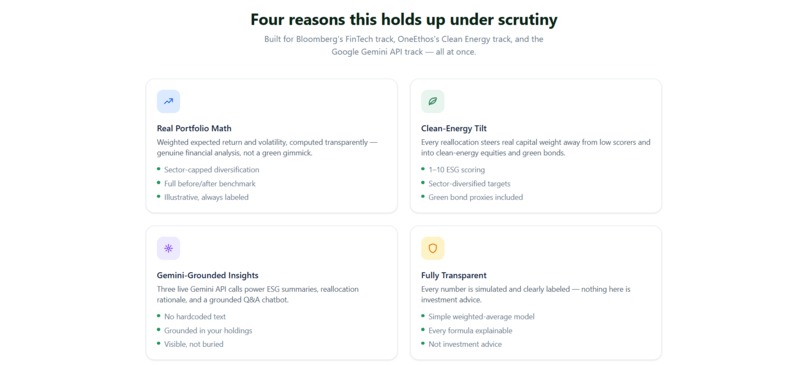
Four Reasons
-
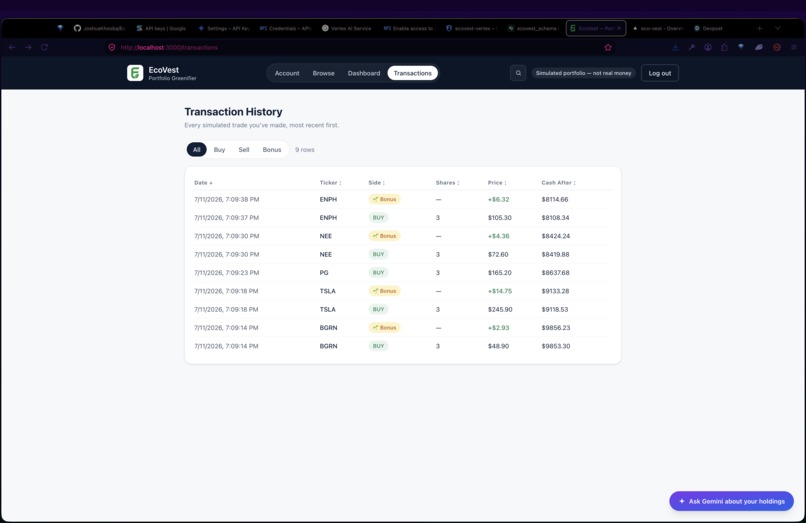
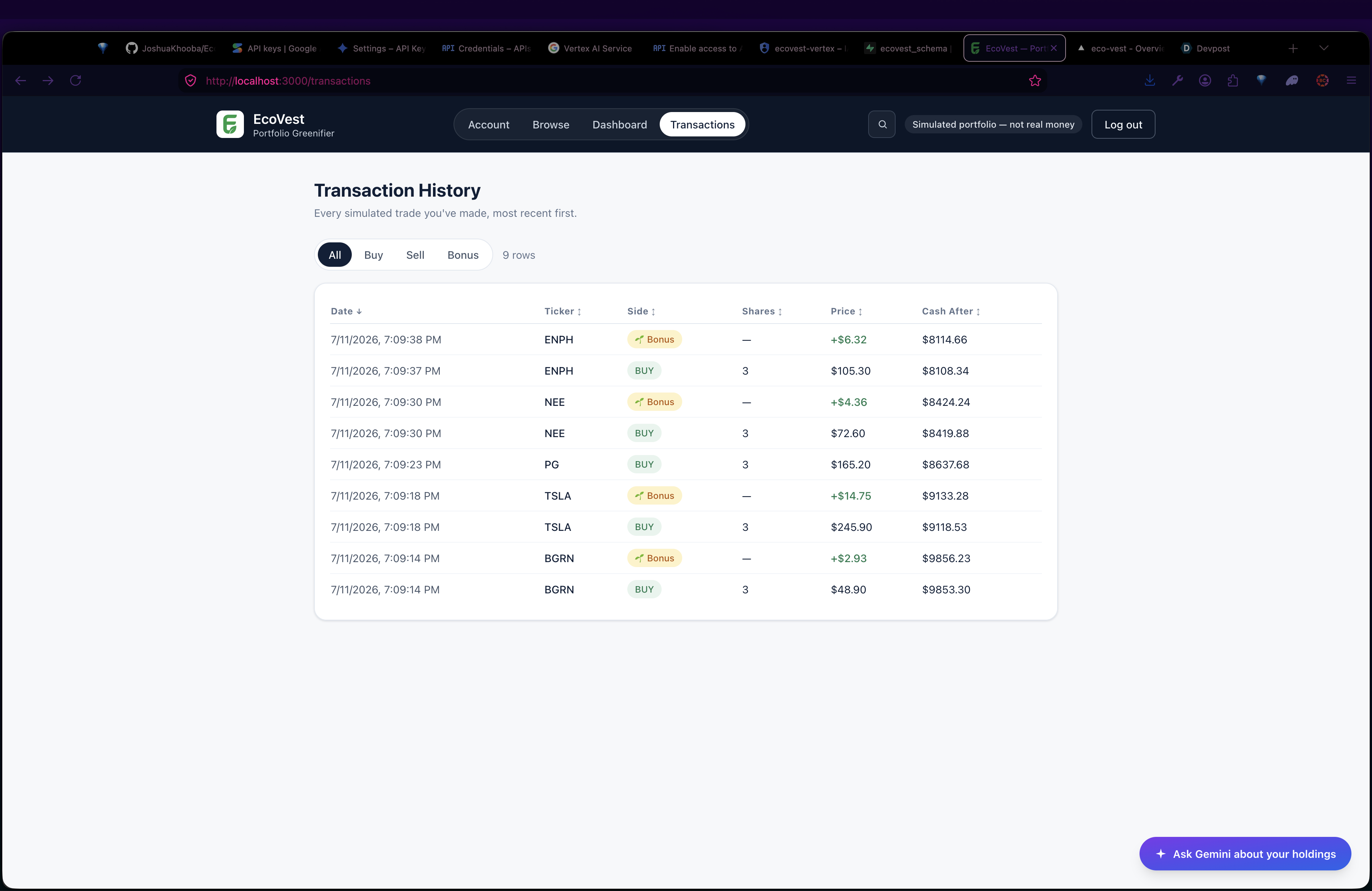
Transaction Page
-
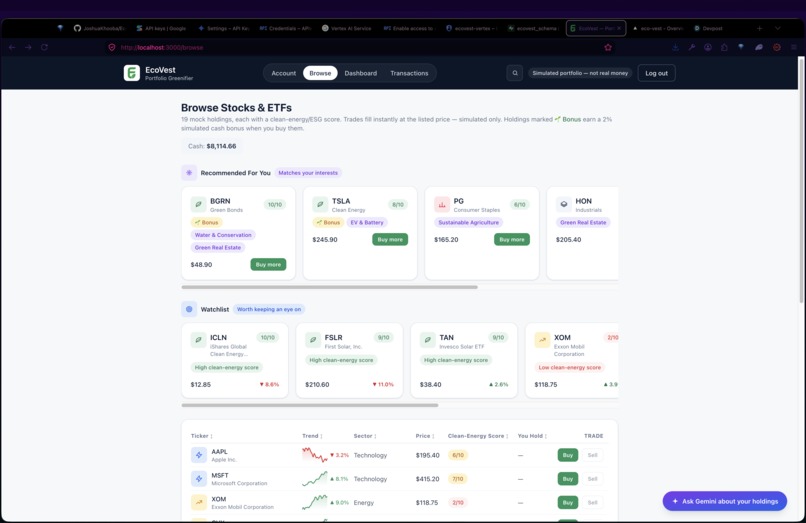
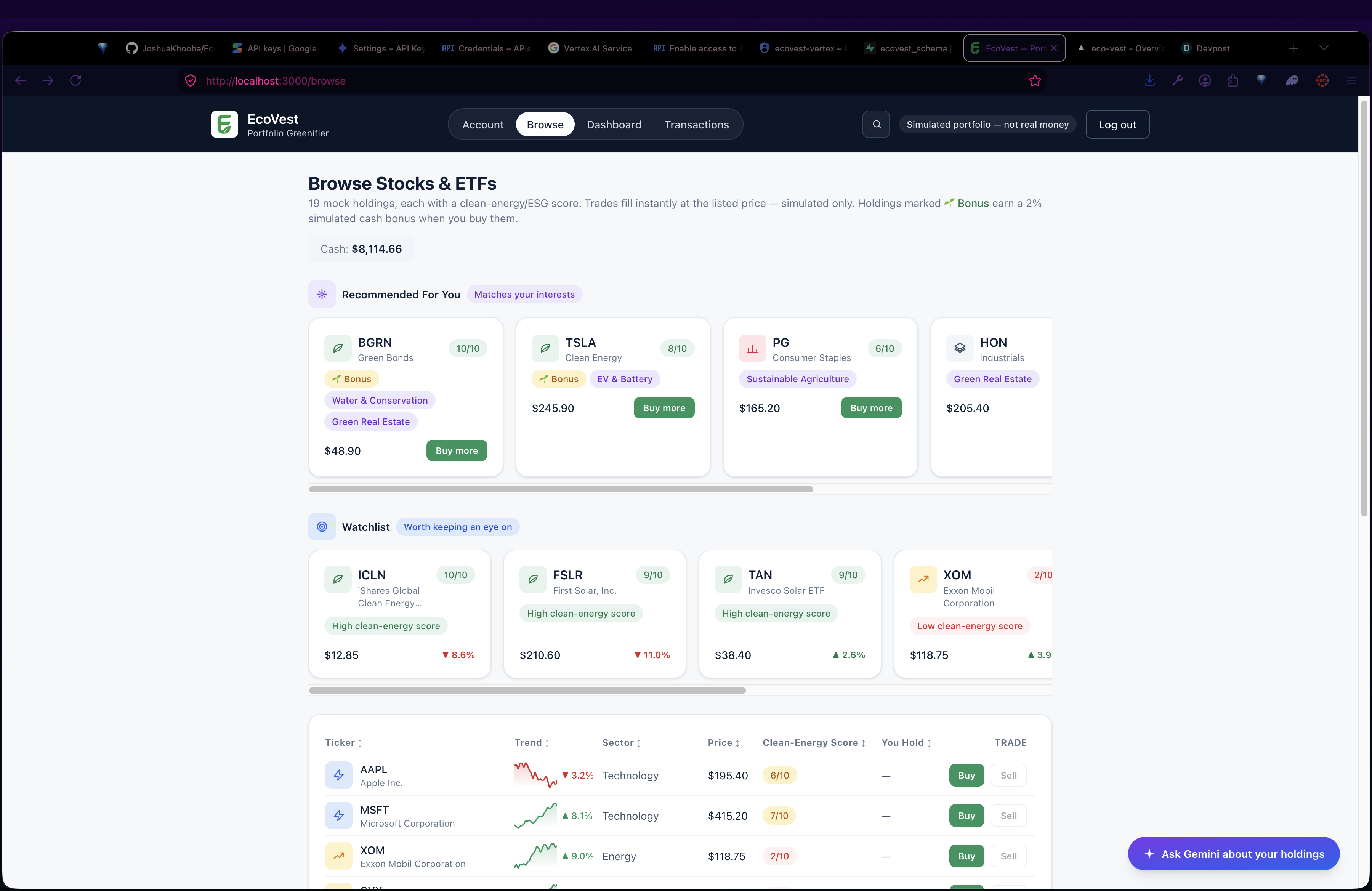
Browse Page
-
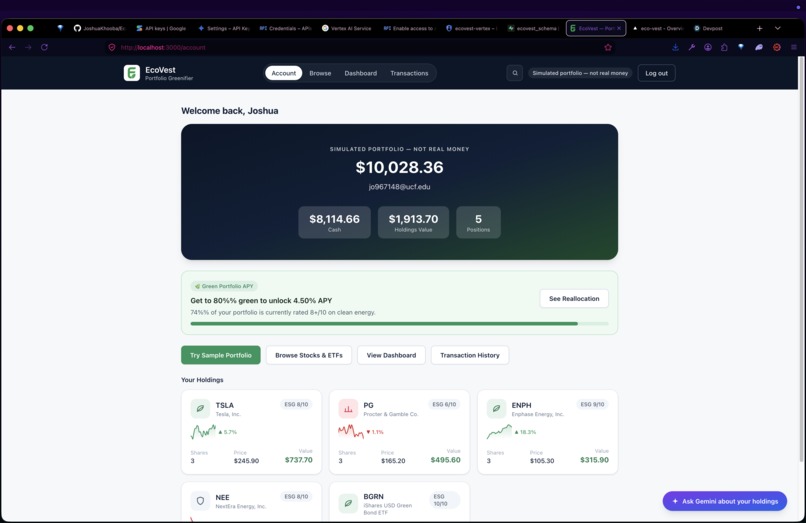
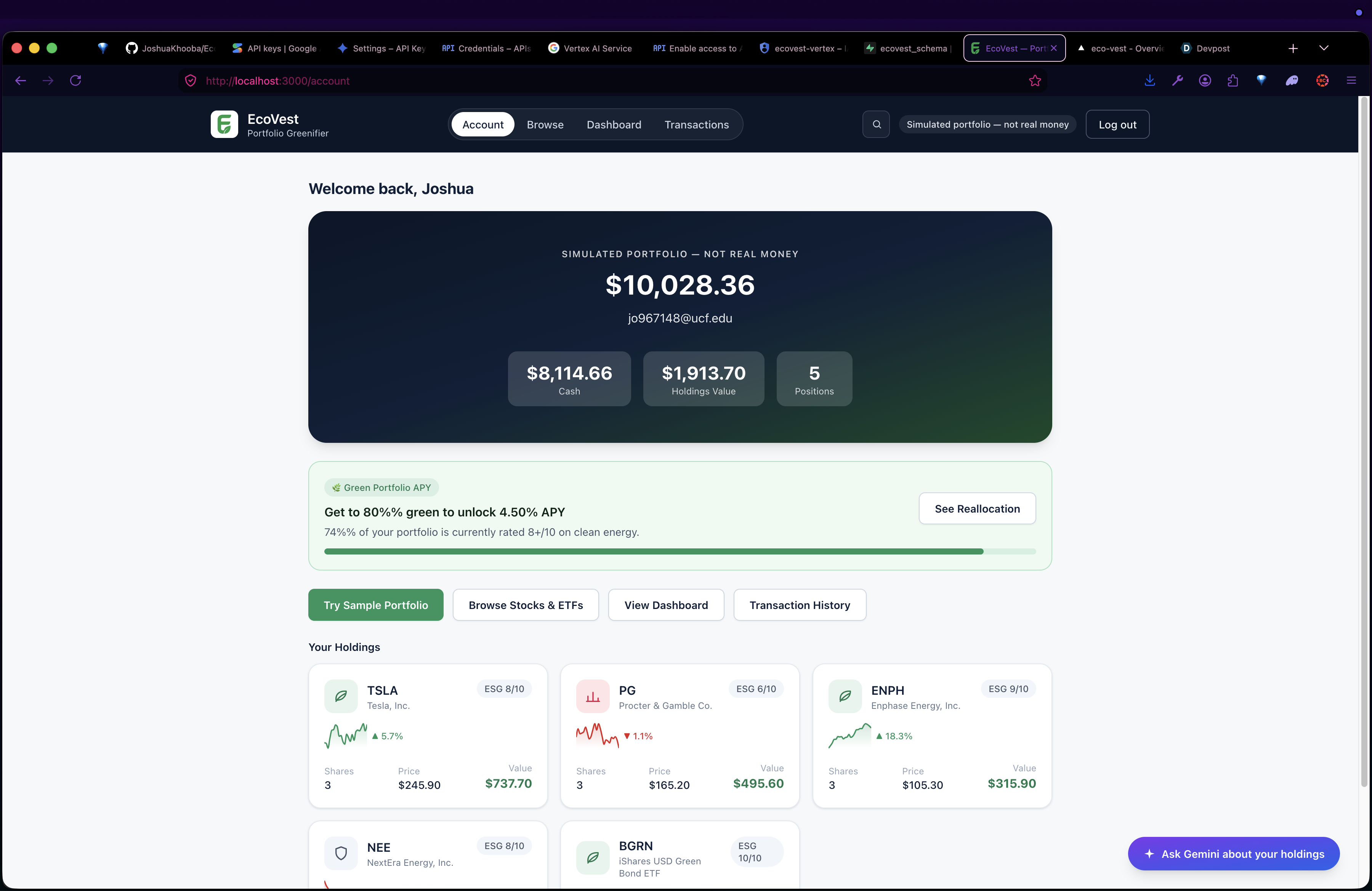
Account Page
-
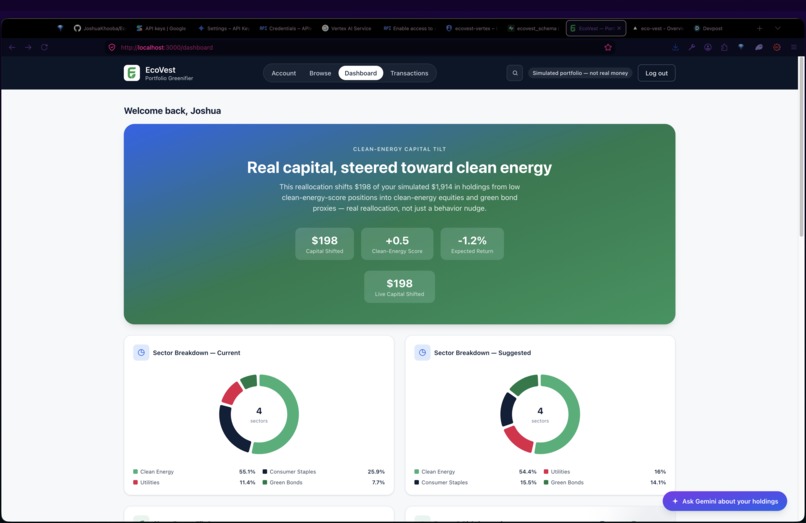
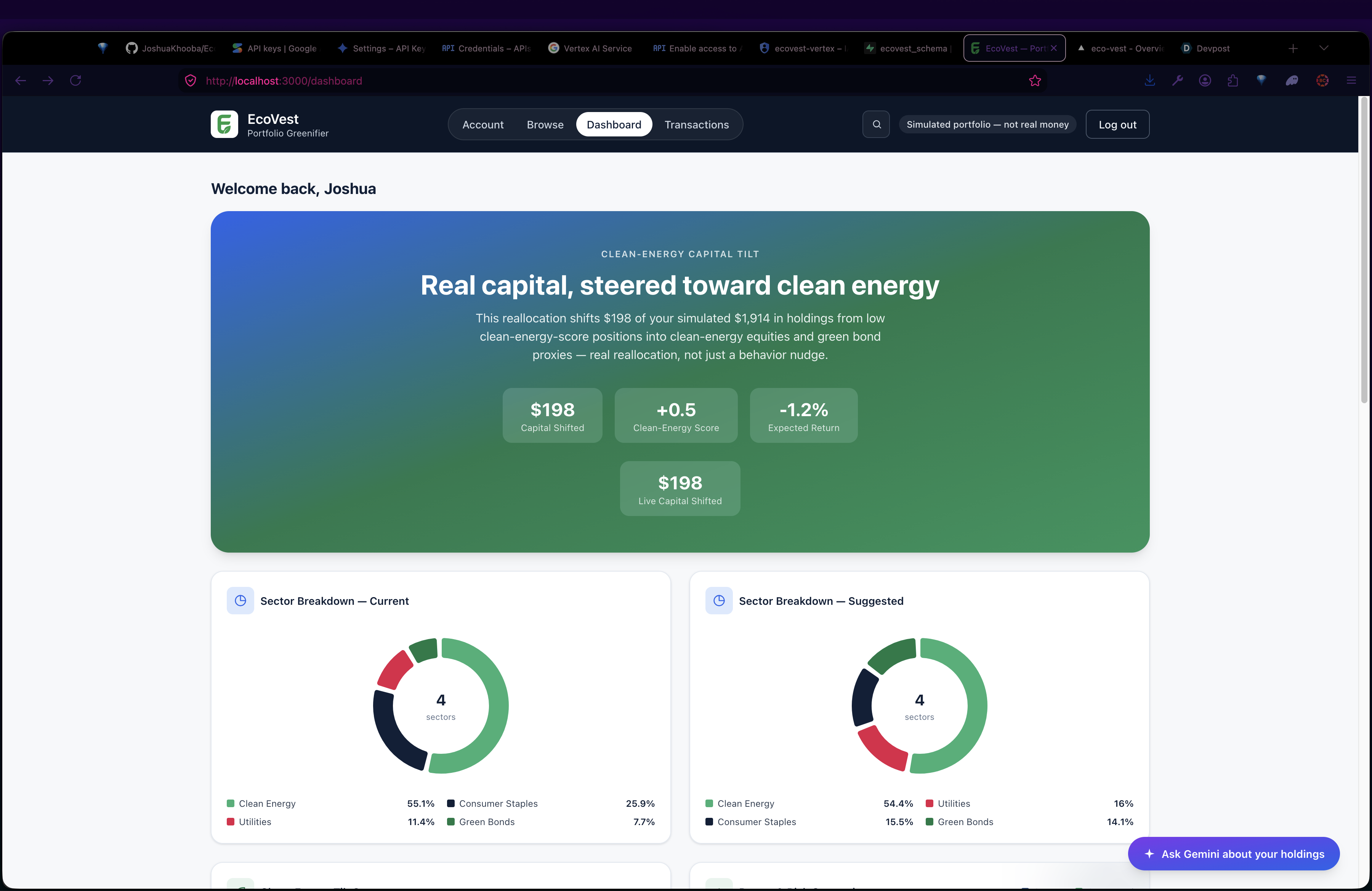
Dashboard Page
Inspiration
EcoVest was inspired by a common problem in green investing: users are often asked to choose between supporting sustainable companies and earning competitive returns. We wanted to show that those goals do not have to conflict.
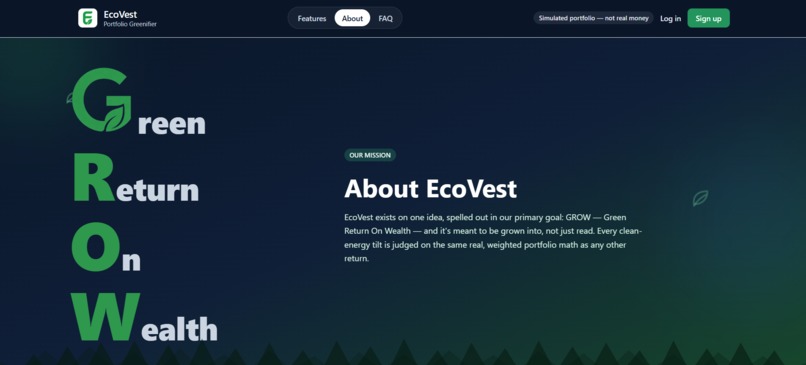
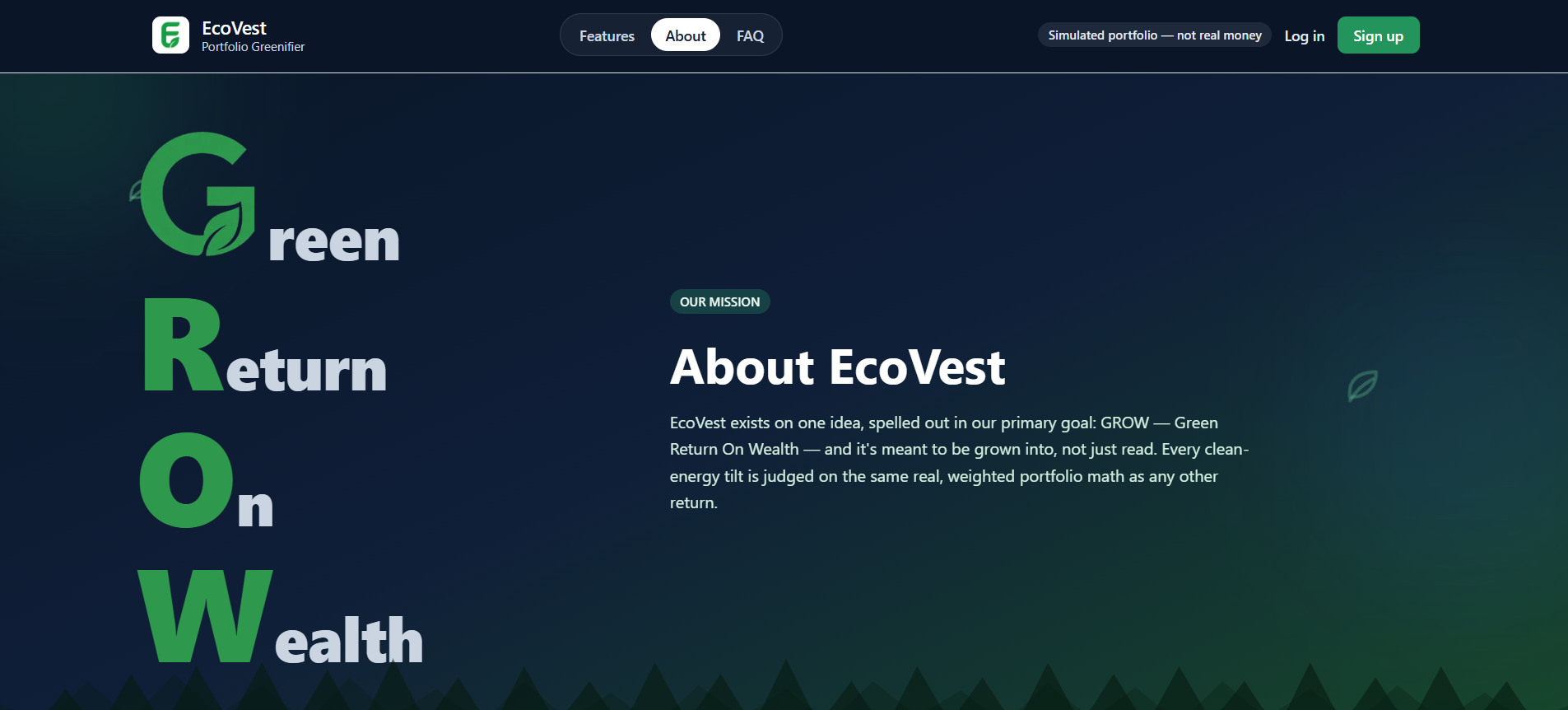
Our guiding idea became GROW — Green Return On Wealth: helping users grow their wealth through investments that also contribute to a greener economy.
What it does
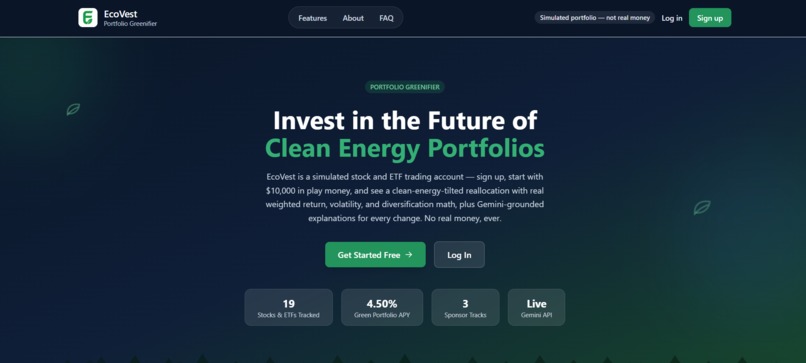
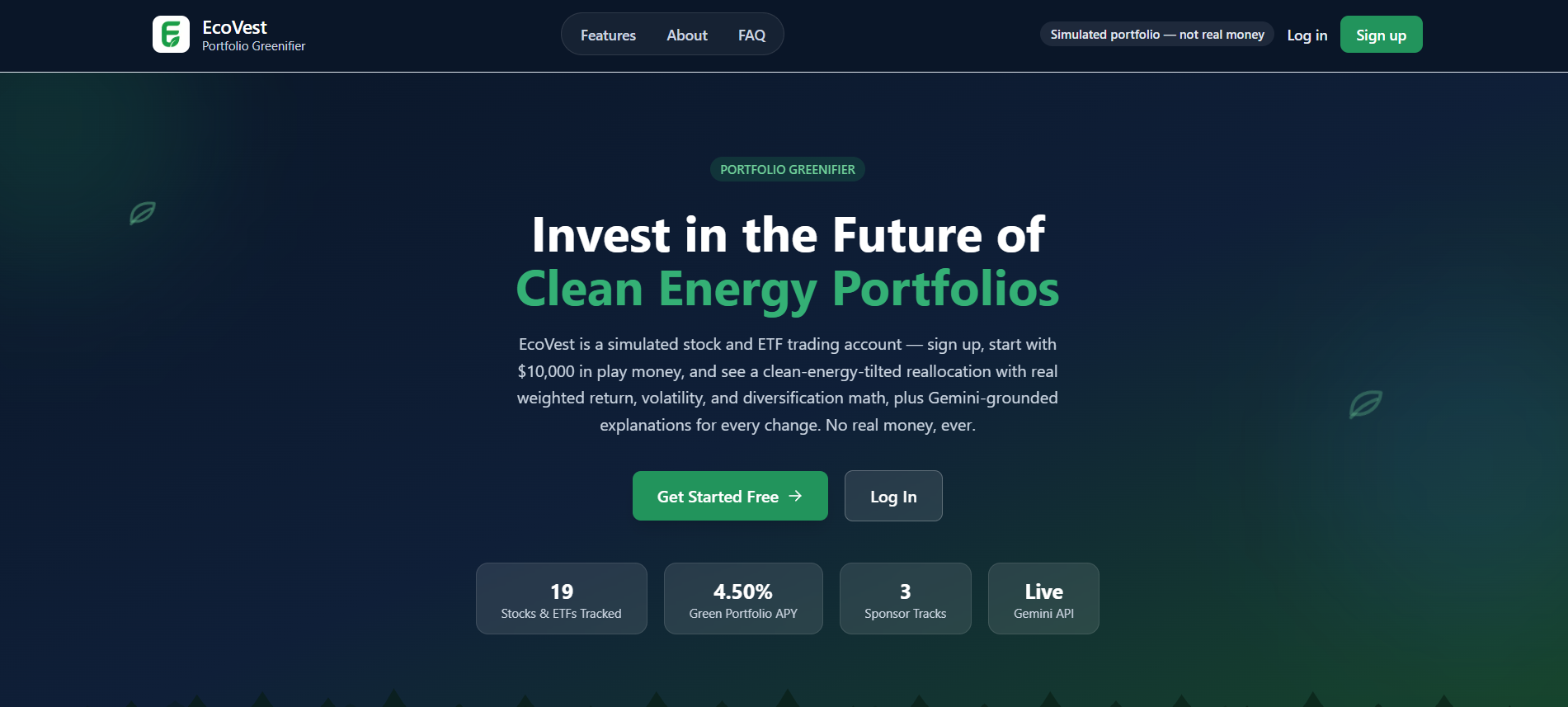
EcoVest is a simulated portfolio platform that lets users explore clean-energy investing without risking real money.
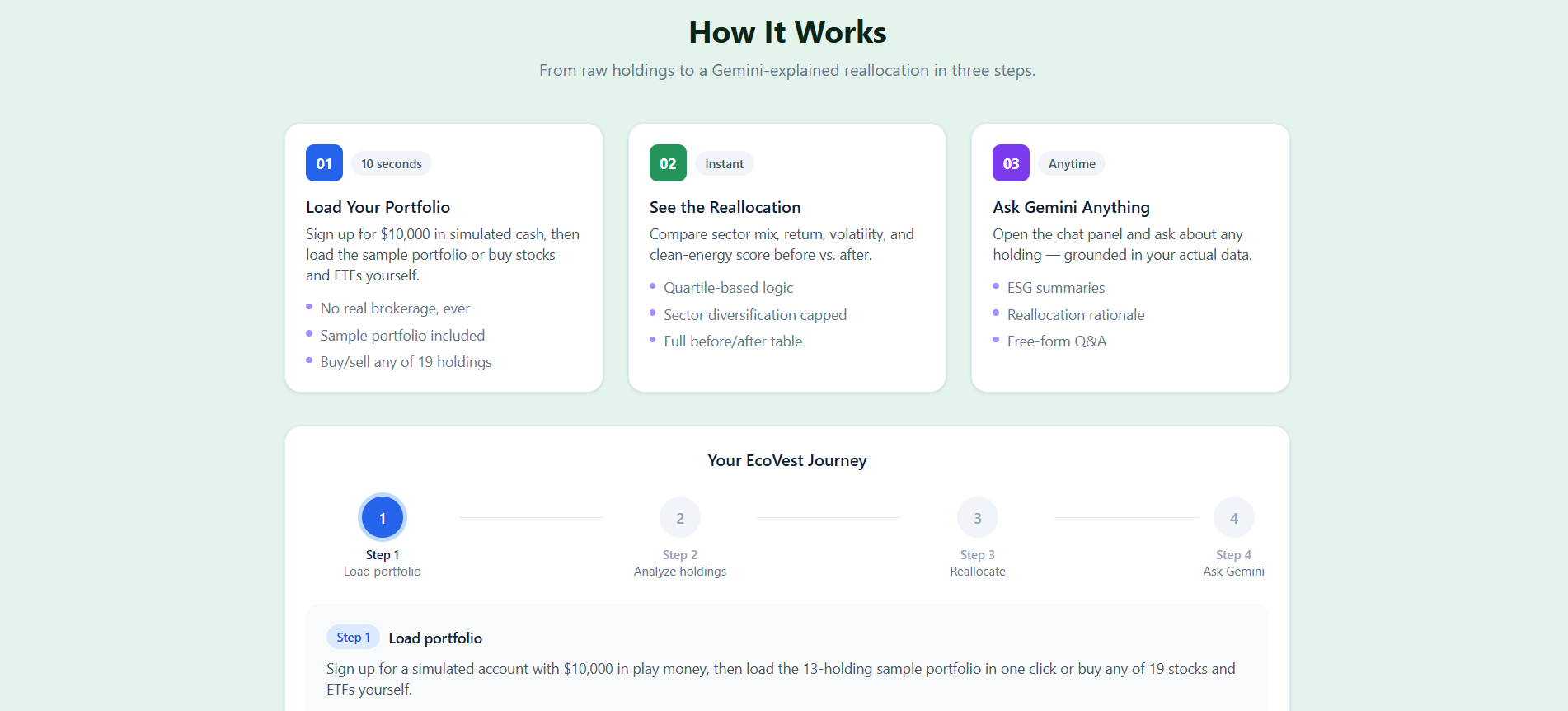
Every account begins with $10,000 in simulated cash, and users can buy or sell from a modeled selection of 19 stocks and ETFs.
The app evaluates each holding using:
- A 1–10 clean-energy score
- Weighted portfolio return
- Volatility
- Sector diversification
- User-selected clean-energy interests
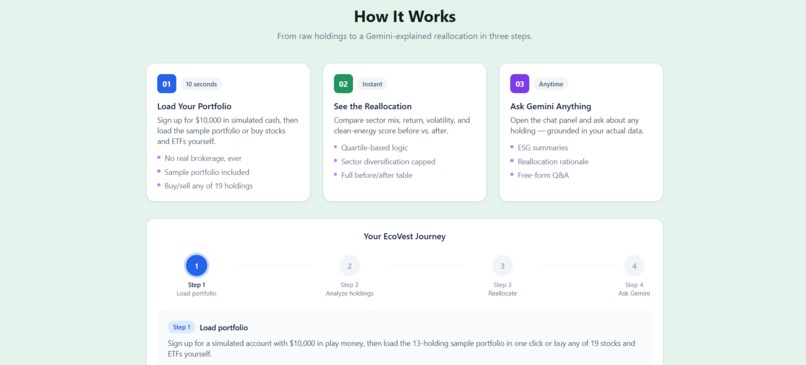
Its reallocation system identifies lower-scoring holdings, reduces their portfolio weight, and redistributes that capital toward stronger clean-energy investments while limiting sector concentration.
EcoVest also includes:
- A pre-built sample portfolio
- Personalized clean-energy interests
- Clean-energy recommendations
- A simulated bonus for purchasing highly rated assets
- Portfolio reallocation explanations
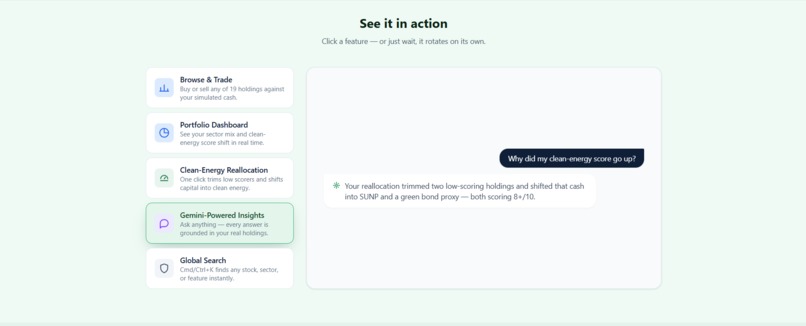
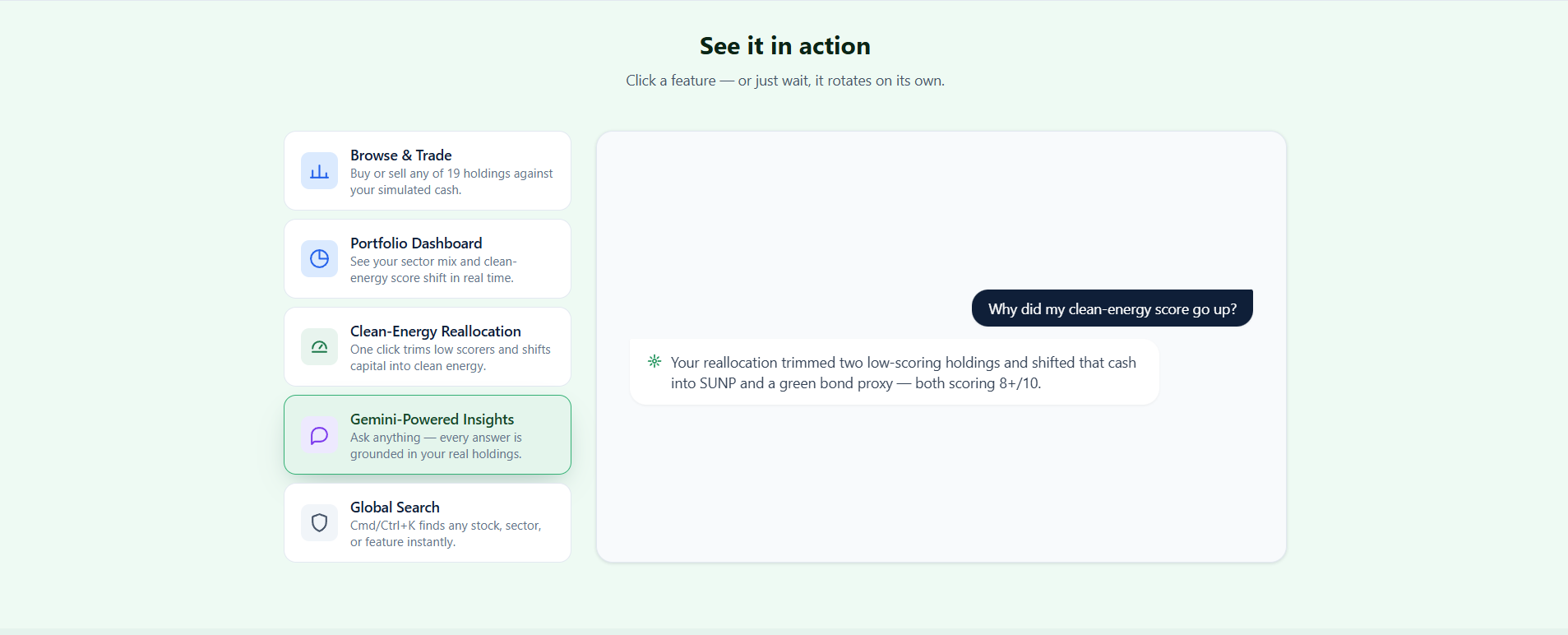
- A Gemini-powered assistant
- AI-generated ESG summaries based on the user’s simulated holdings
How we built it
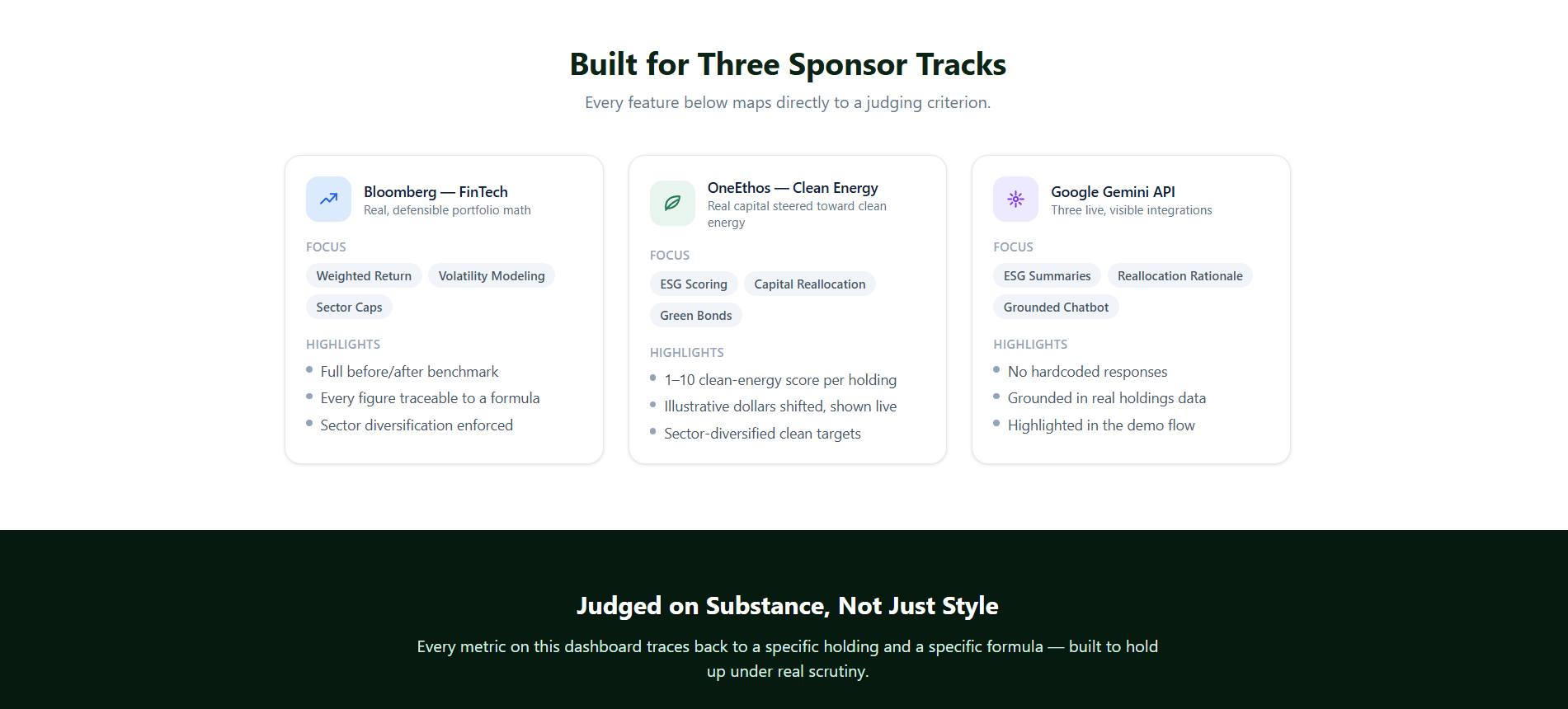
EcoVest was created during a single 12-hour hackathon across Bloomberg’s FinTech track, OneEthos’s Clean Energy track, and the Google Gemini API track.
We built a full-stack simulated trading experience with:
- Account creation
- Portfolio management
- Stock and ETF browsing
- Transaction tracking
- Clean-energy scoring
- Portfolio reallocation
The recommendation engine combines:
- Clean-energy and ESG scores
- Weighted portfolio returns
- Volatility
- Sector diversification
- User-selected clean-energy interests
We integrated the Google Gemini API to generate plain-English ESG summaries, explain suggested reallocations, and power a chat assistant grounded in EcoVest’s available holdings and features.
Challenges we ran into
One of our largest challenges was balancing sustainability with legitimate financial analysis. We did not want EcoVest to simply recommend whichever asset had the highest clean-energy score. The system also needed to consider return, volatility, diversification, and the user’s current portfolio.
Another challenge was building a consistent simulated trading engine. Manual trades, recommended reallocations, cash balances, portfolio positions, and transaction history all needed to remain synchronized.
We also had to ensure that Gemini’s responses stayed grounded in EcoVest’s actual dataset rather than producing unsupported investment claims.
Finally, completing the interface, recommendation logic, trading functionality, and AI integrations within a 12-hour window required careful prioritization and close team coordination.
Accomplishments that we're proud of
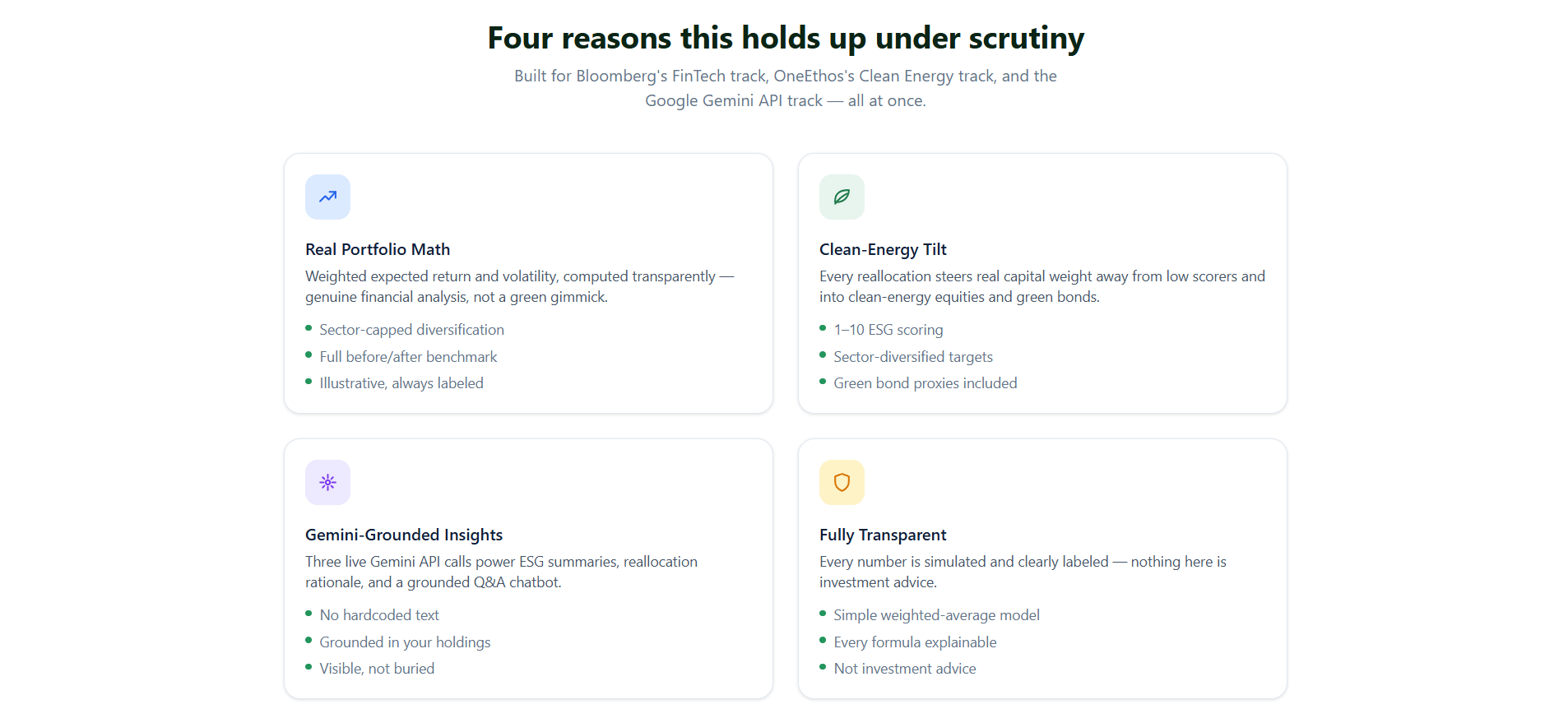
We are proud that EcoVest goes beyond displaying sustainability labels. It applies measurable portfolio logic to every recommendation and explains why each change is being suggested.
Within one hackathon, we completed:
- A working simulated investment platform
- A portfolio reallocation engine
- A clean-energy scoring system
- Personalized sustainability preferences
- Buy and sell functionality
- A simulated clean-energy purchase bonus
- Gemini-generated portfolio explanations
- A grounded AI assistant
- A polished, responsive interface
We are especially proud that every major feature supports the same central idea: users should not have to choose between financial performance and environmental impact.
What we learned
We learned that sustainable investing cannot be represented effectively by a single score. Clean-energy alignment must be considered alongside return, risk, diversification, and user preferences.
We also learned how valuable generative AI can be when it is grounded in structured application data. Gemini was most useful not as a replacement for the portfolio calculations, but as a way to translate those calculations into explanations users could understand.
The hackathon also reinforced the importance of defining a focused minimum viable product. With only 12 hours, every feature had to support EcoVest’s core mission and work reliably with the rest of the platform.
What's next for EcoVest
Our next step is to expand EcoVest beyond its current set of 19 modeled stocks and ETFs by incorporating a larger and more frequently updated investment dataset.
We would also like to add:
- Historical portfolio-performance charts
- More detailed risk and volatility analytics
- Stronger ESG and clean-energy data from verified sources
- Custom portfolio goals and risk tolerances
- More advanced reallocation strategies
- Improved Gemini explanations with cited financial and sustainability data
- Portfolio comparison and scenario-testing tools
- Educational lessons about sustainable investing
- Additional controls for resetting, saving, and comparing portfolios
Long term, EcoVest could grow from a hackathon simulation into a full educational platform that helps new investors understand how financial returns and sustainability can work together.


Log in or sign up for Devpost to join the conversation.