-
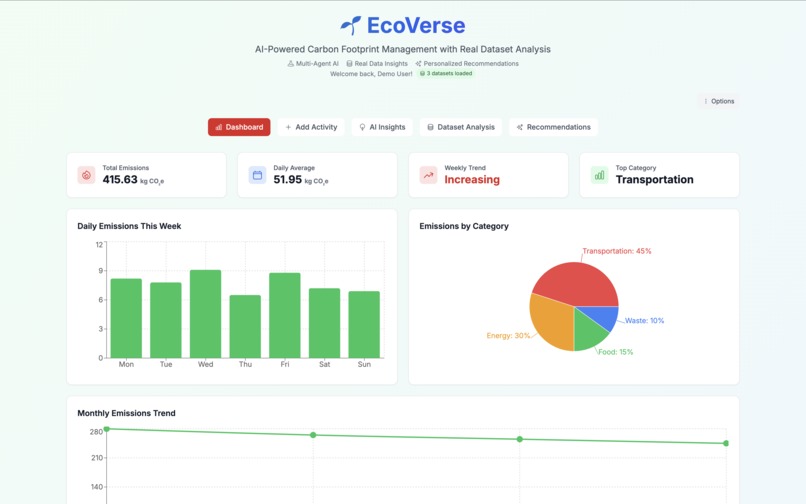
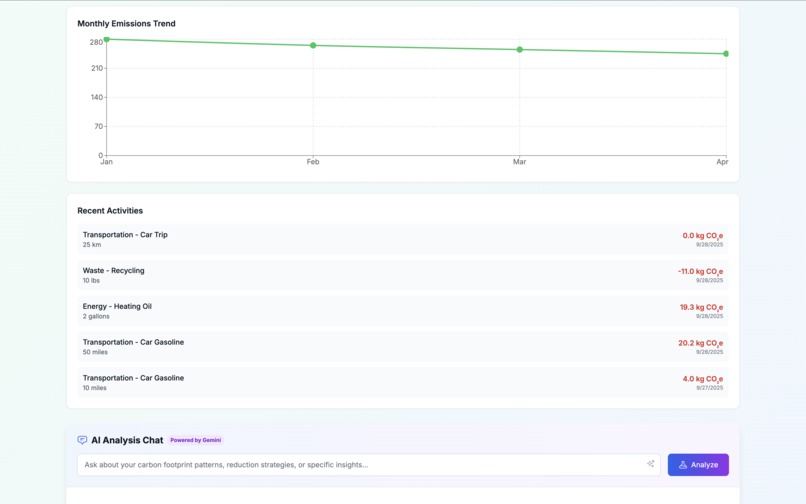
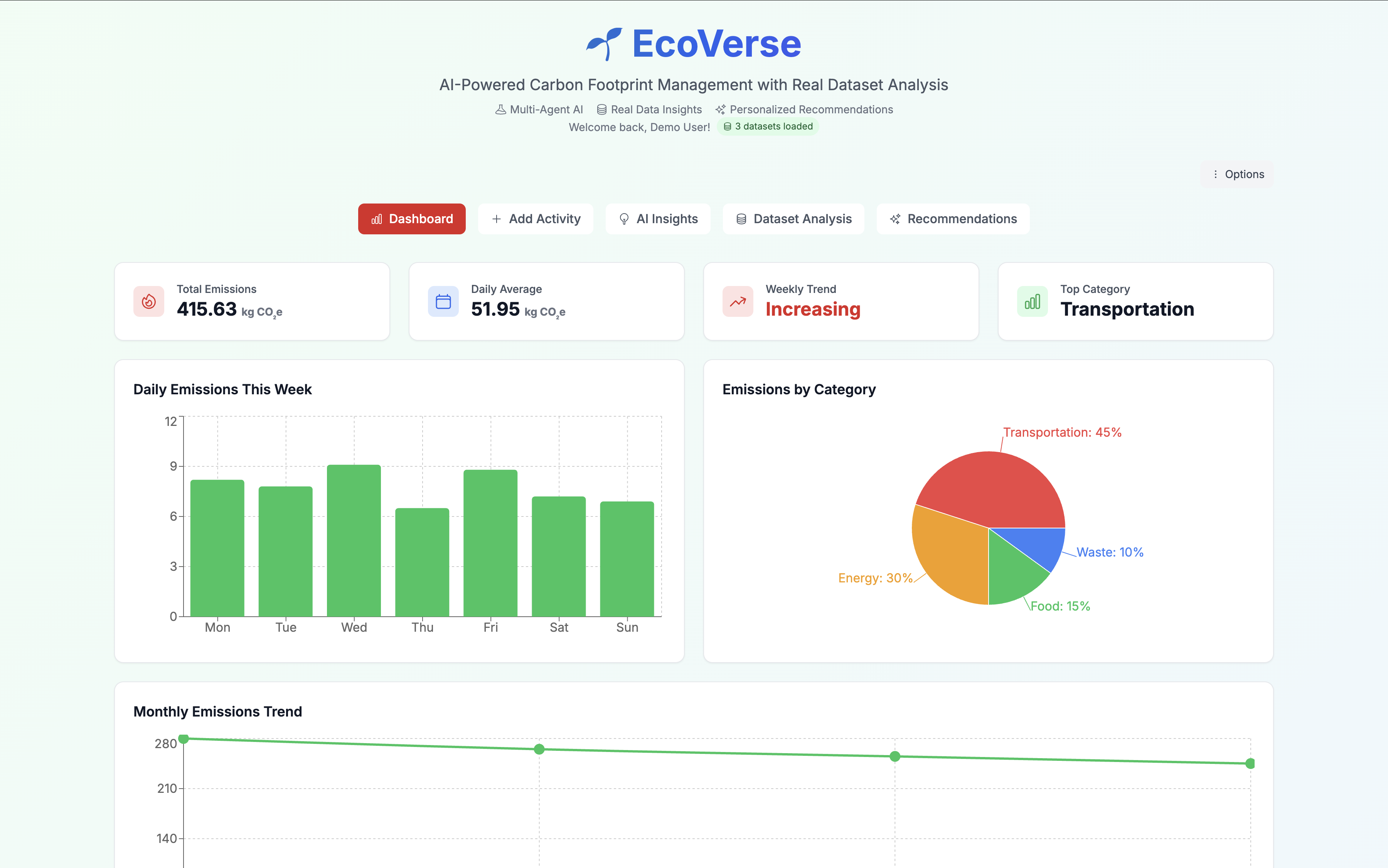
Dashboard with Insights on the Carbon emissions based on the usage logged.
-
-
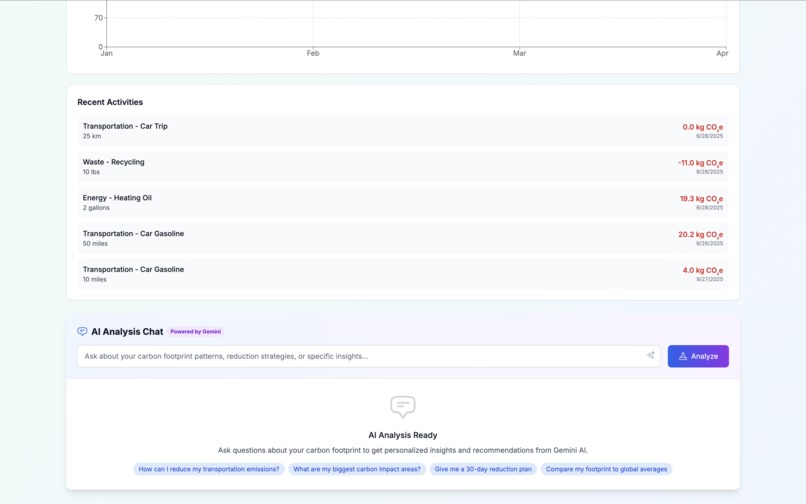
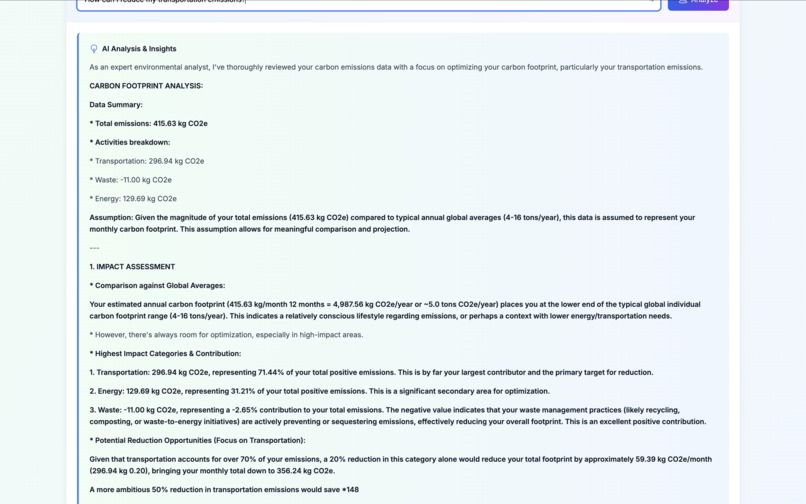
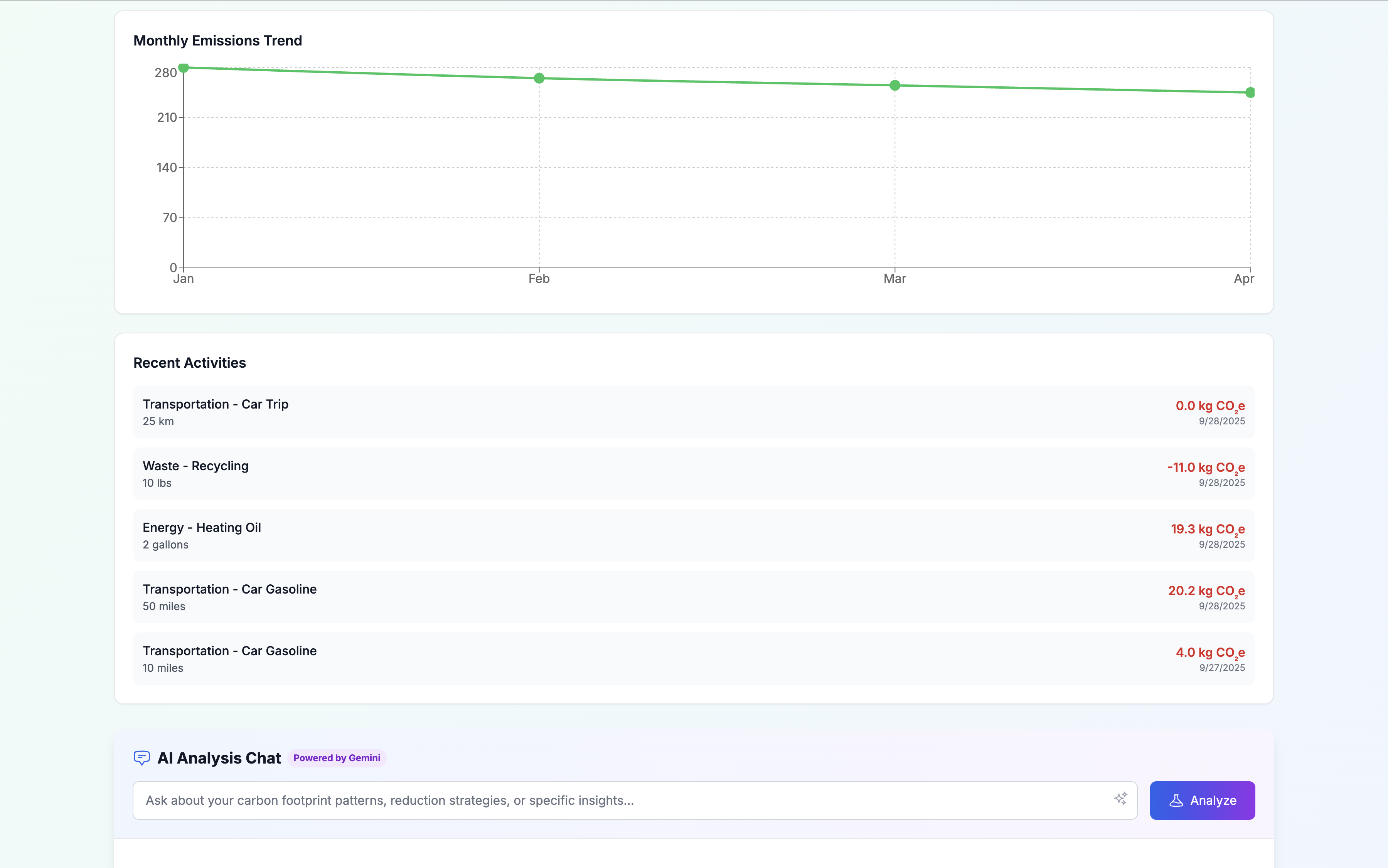
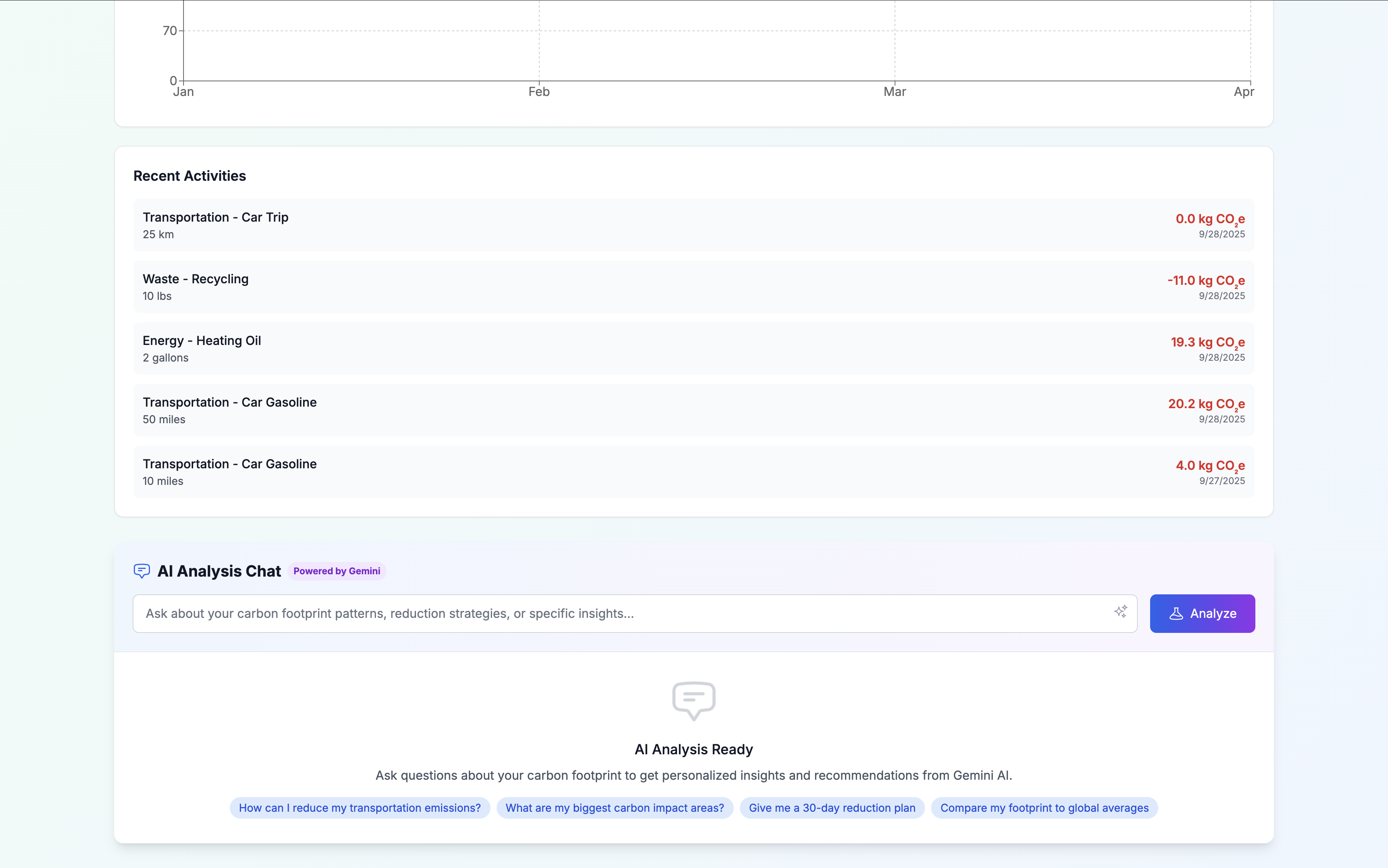
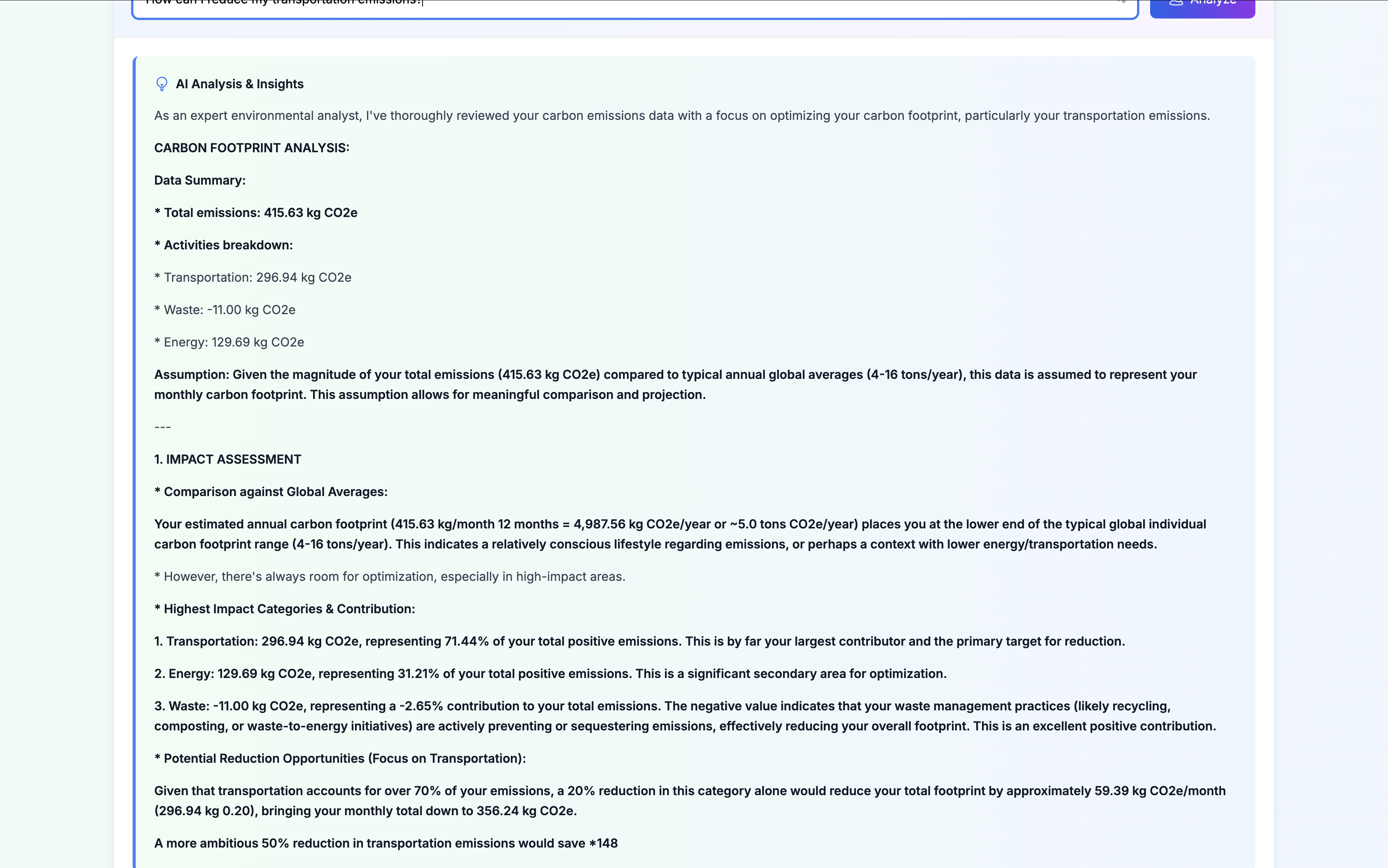
Recent Activities along with the AI Analysis chat Interface with recommended questions to ask.
-
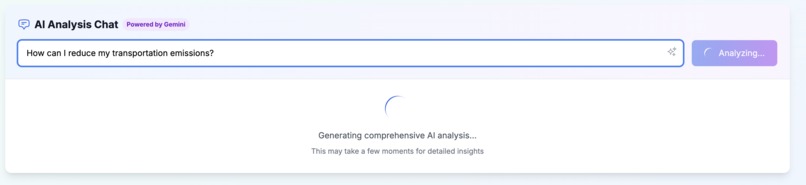
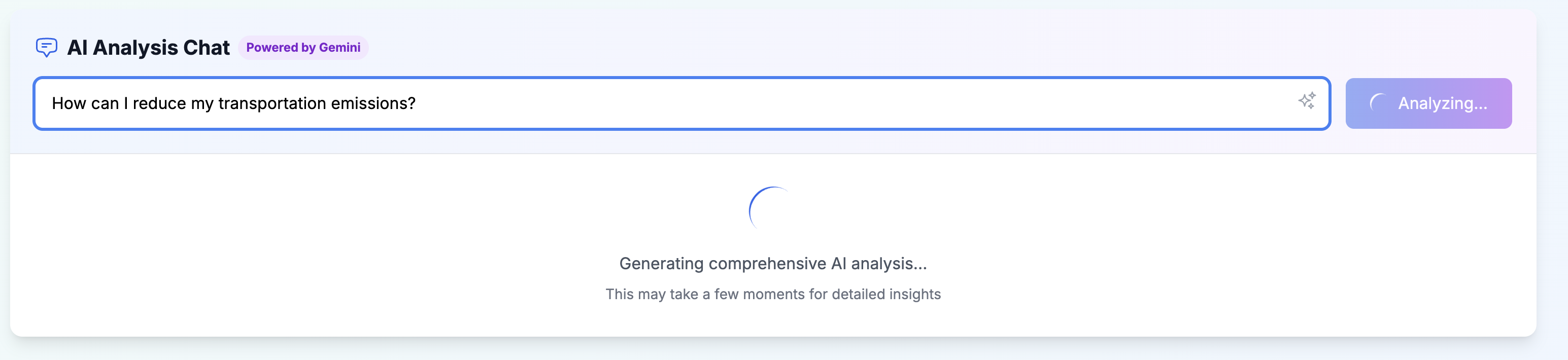
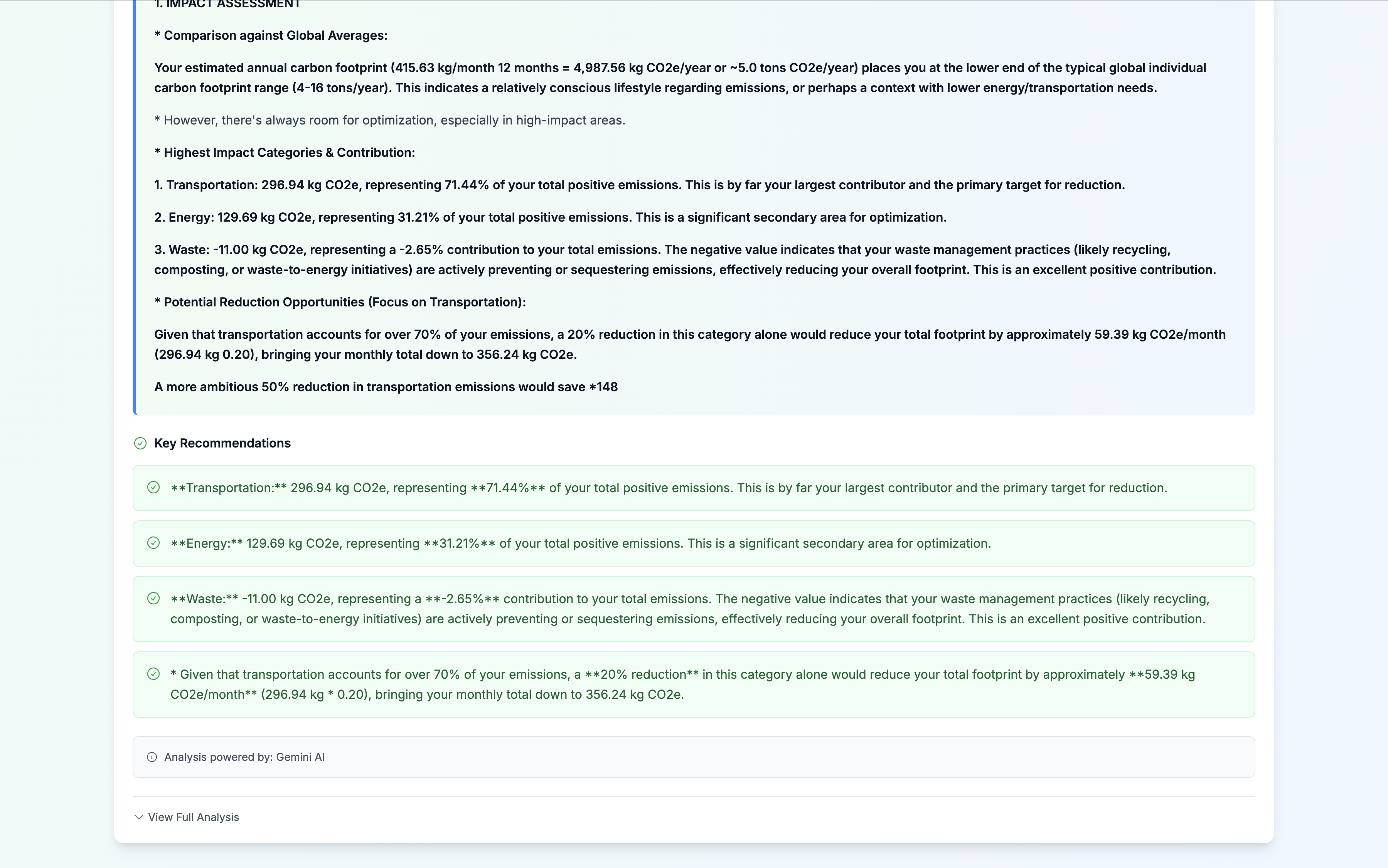
Generation of Response
-
-
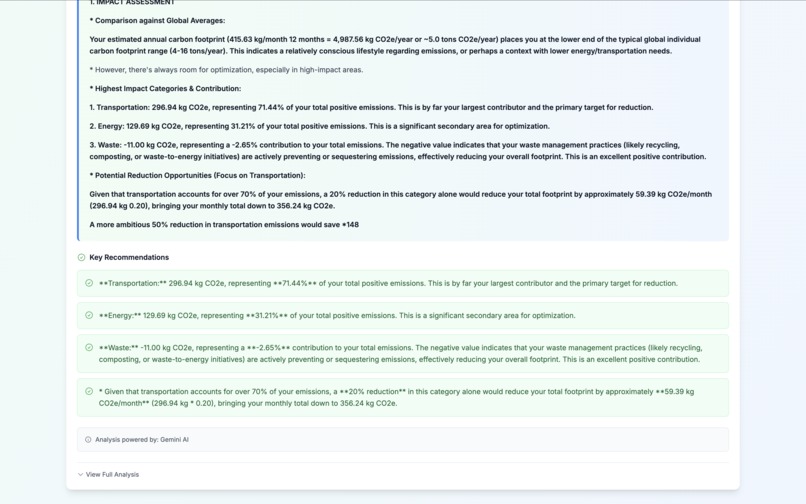
AI Powered by Gemini 2.5 providing answers to all the question on emissions based on the user trends, and comparing by global statistics
-
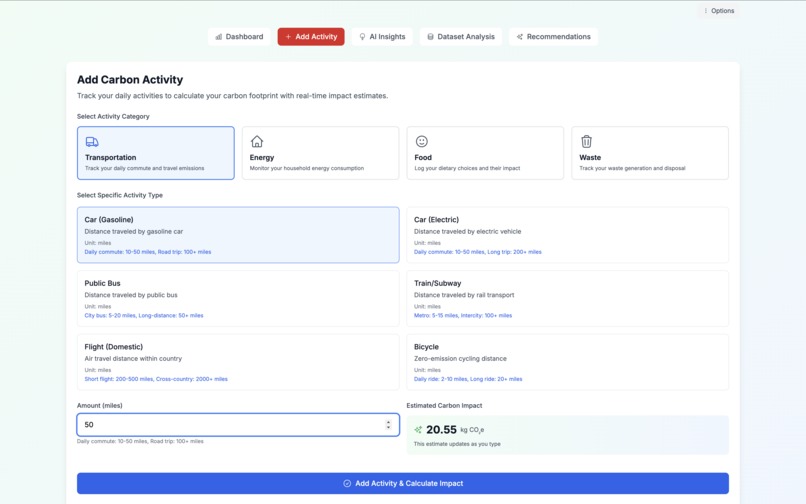
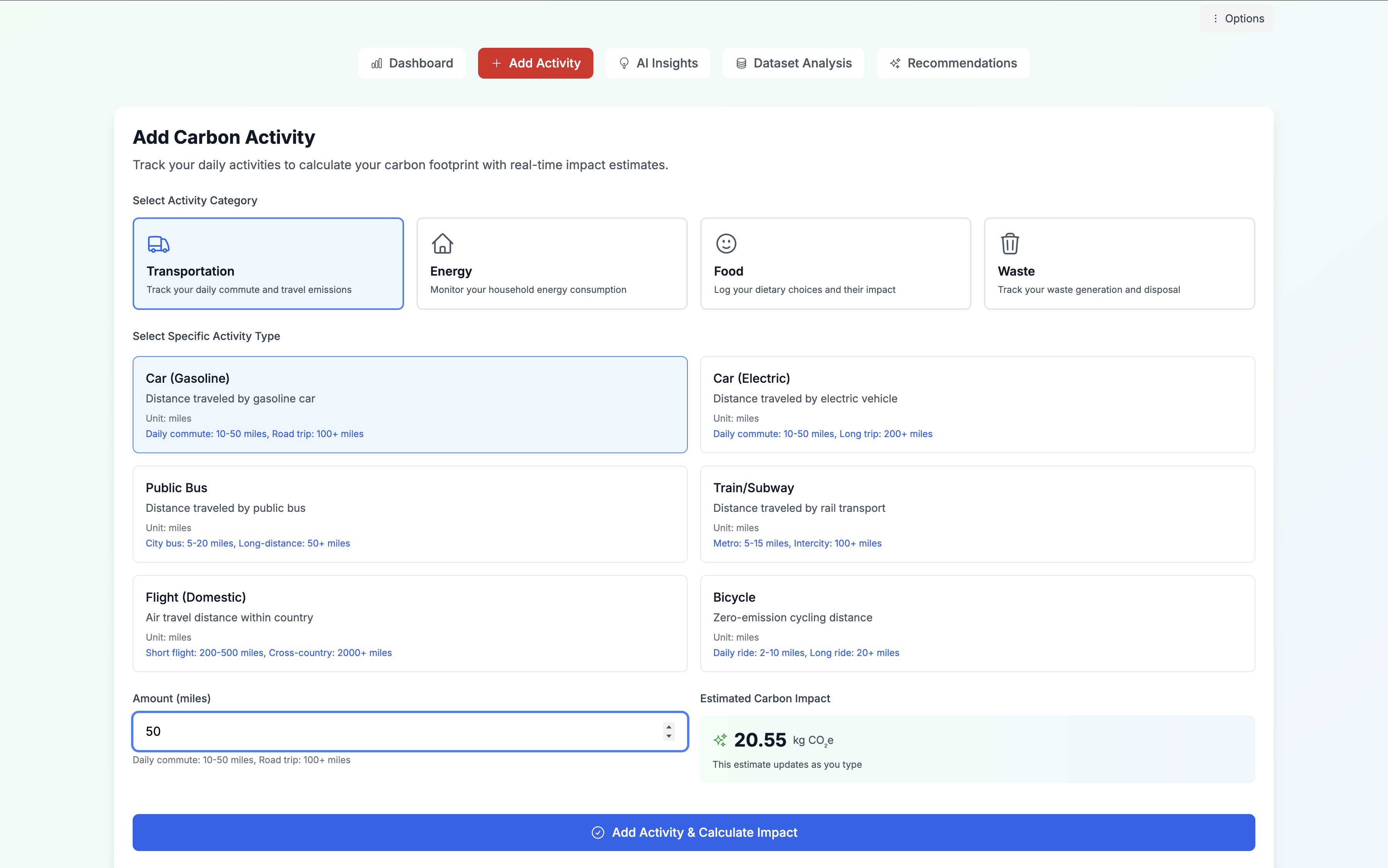
Activity Logger with Categories and Sub categories with smart estimation of CO2 Emission based on the resources consumed.
-
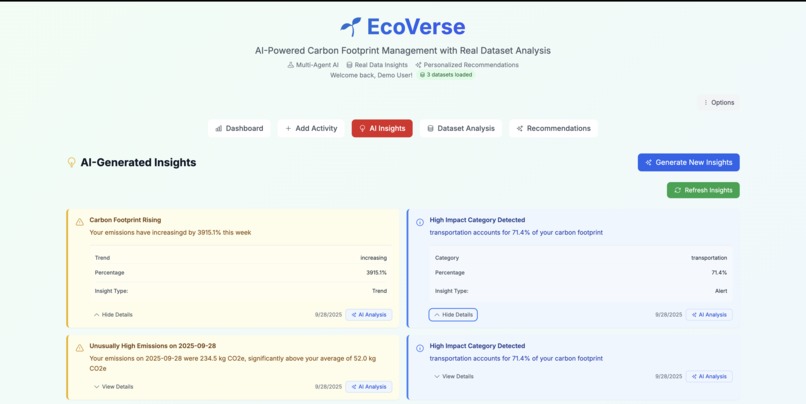
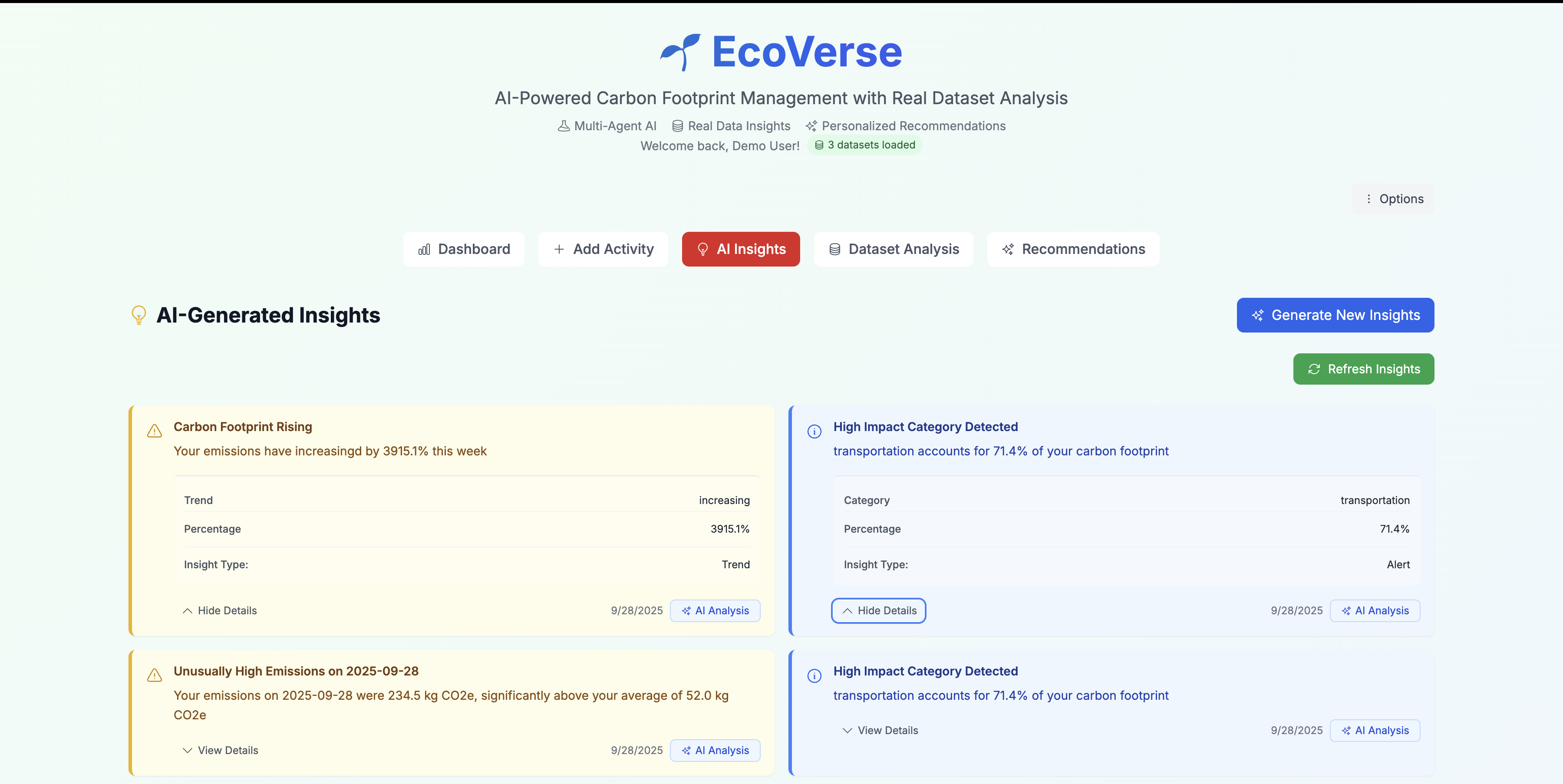
AI Generated Insights based on all the activity recorded.
-
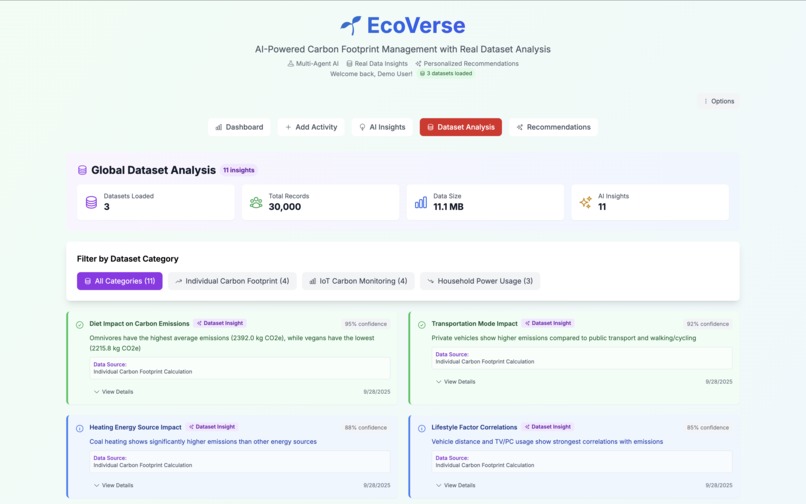
Summarizing all the data analyzed.
-
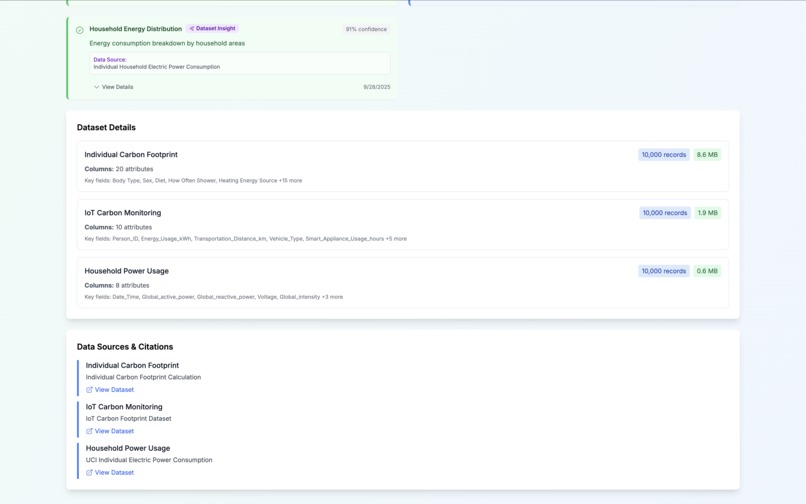
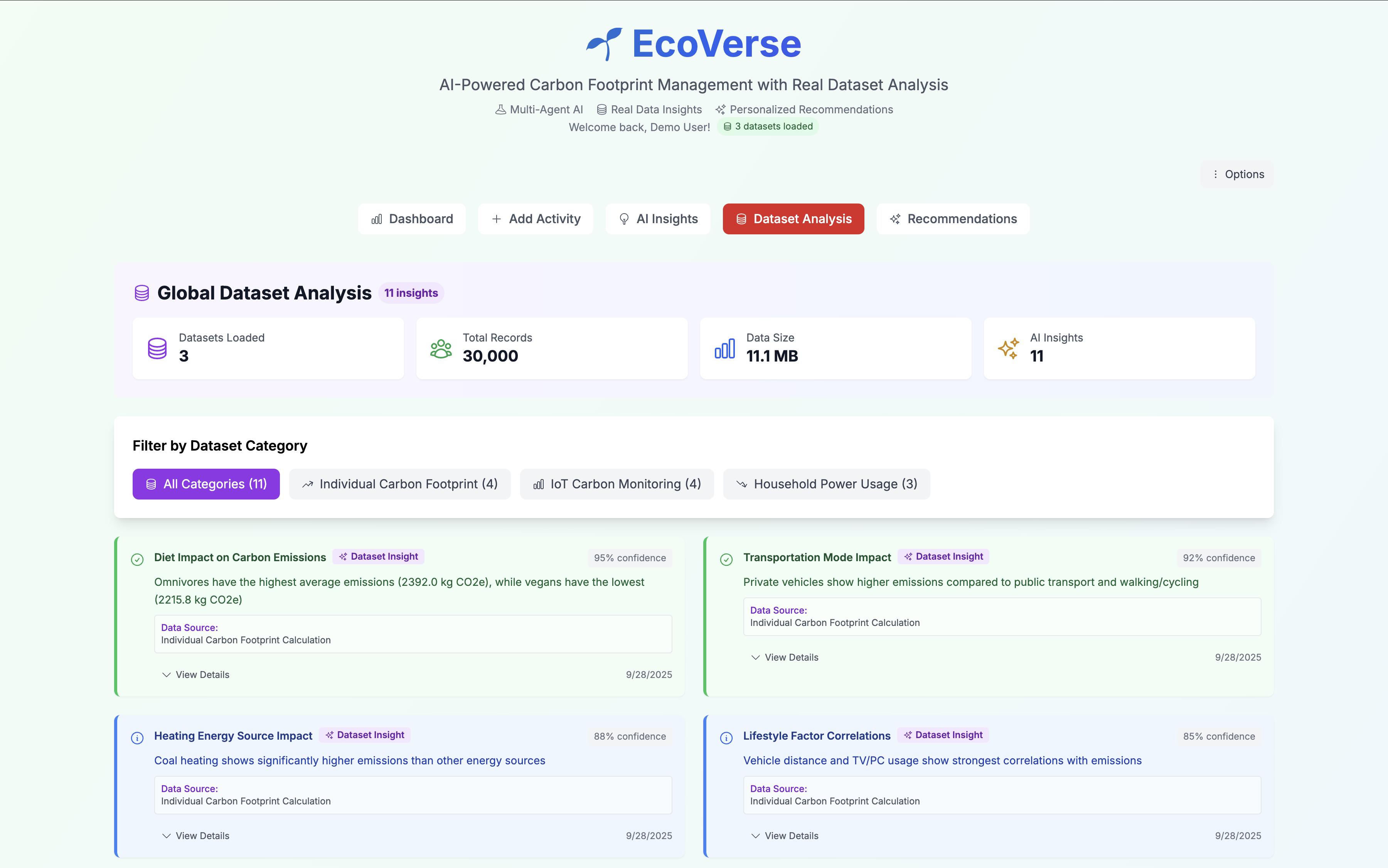
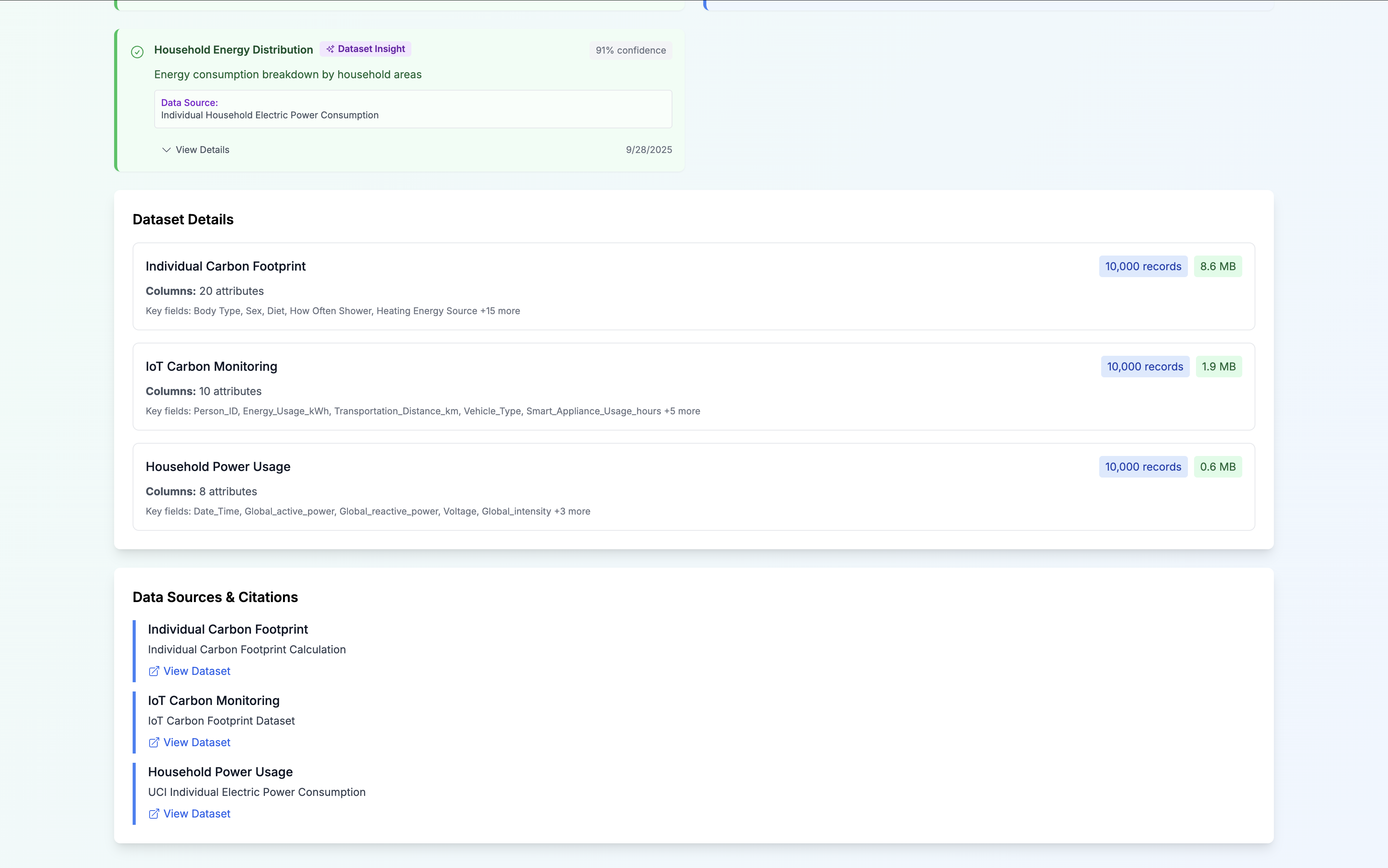
Using Real World Datasets to perform analysis and provide insights powered by Gemini.
-
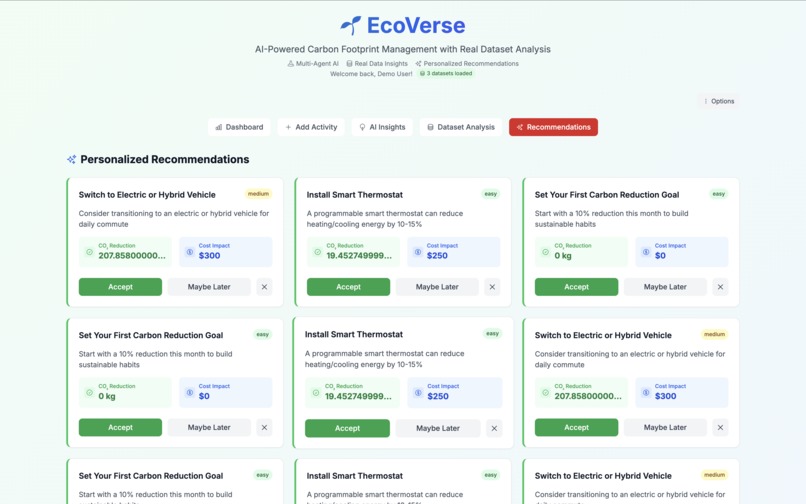
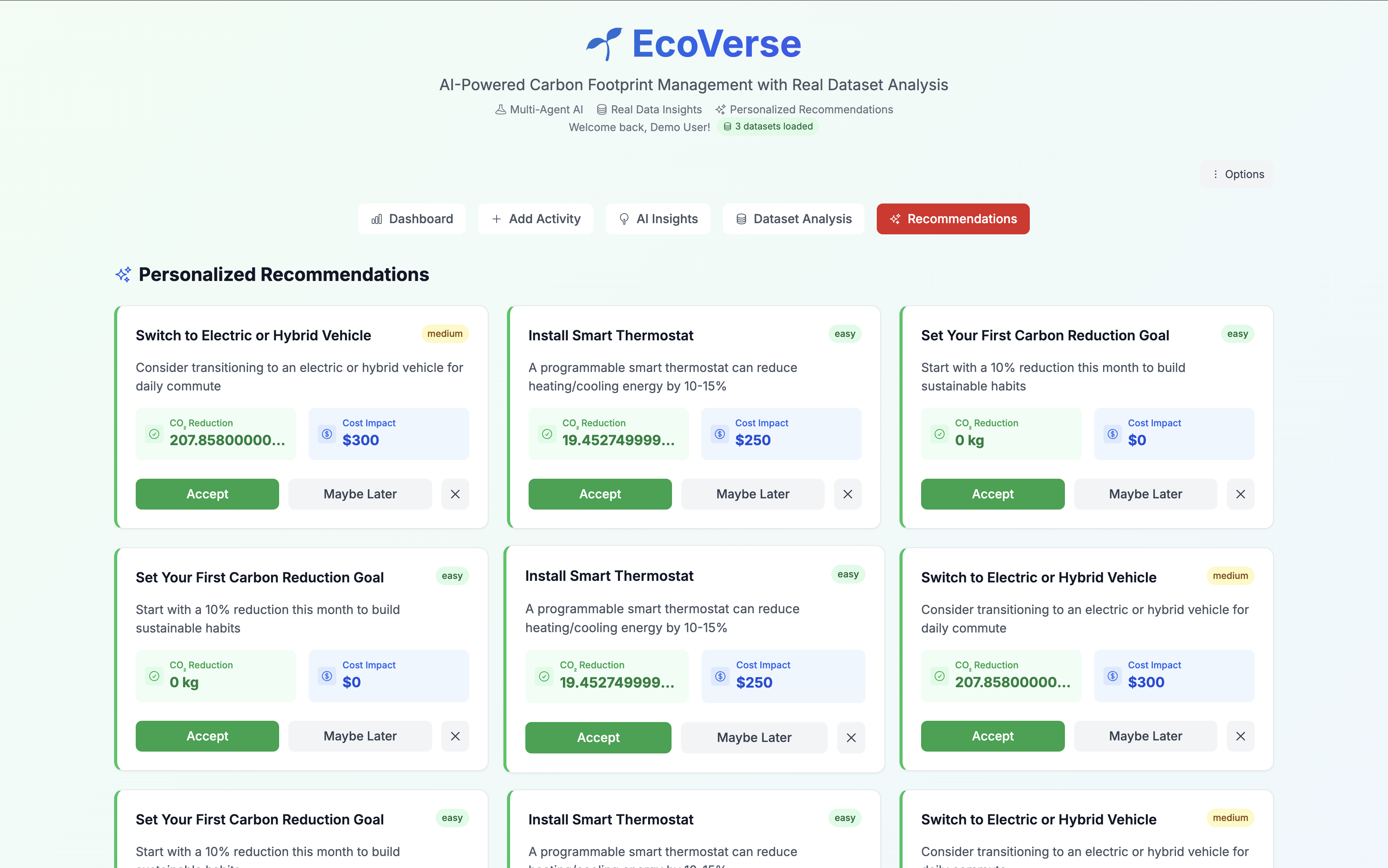
AI Recommendations based on the utilization
-
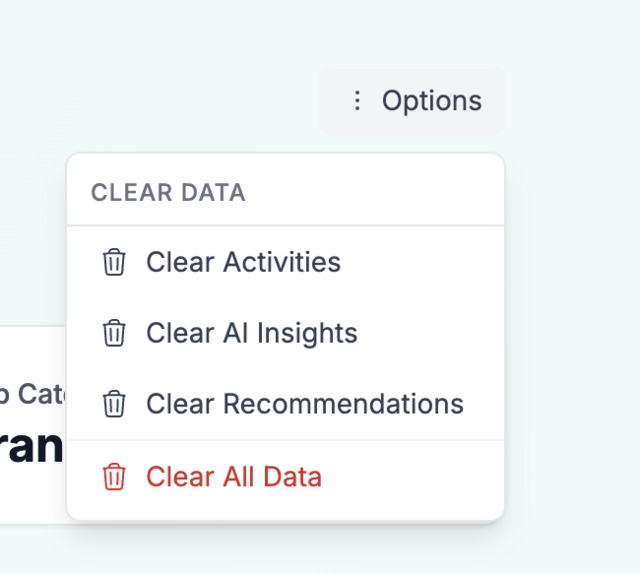
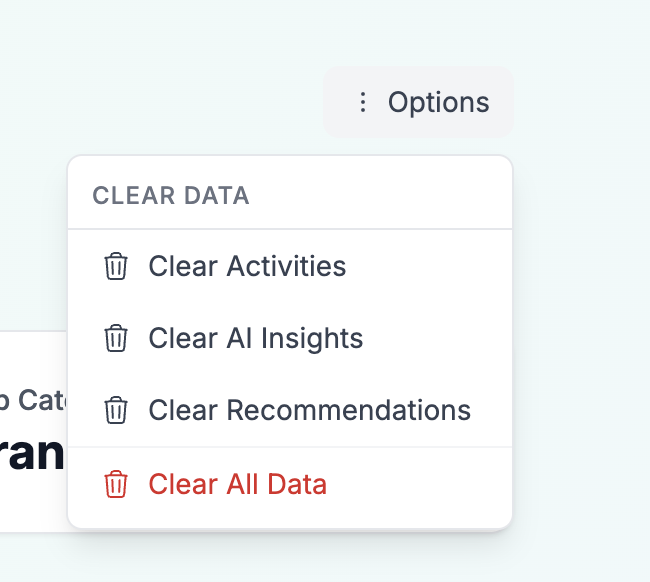
User also get the option to clear all the data and start over.
EcoVerse
Inspiration
We've all seen the headlines about climate change, but the concept of a personal "carbon footprint" often feels abstract, overwhelming, and difficult to act upon. Existing carbon calculators are frequently tedious, asking for utility bills and complex manual data entry, which makes them hard to stick with. They give you a number, but rarely a clear, actionable path forward.
Inspired by the simplicity and utility of modern fintech apps like Splitwise. What if tracking your carbon impact could be as easy and intuitive as logging an expense? I wanted to build a tool that transforms ambiguity into clarity, empowering users to not just see their footprint, but to understand it, manage it, and reduce it effectively. The goal was to create a data-driven tool that feels less like a chore and more like a personal analytics dashboard for a sustainable lifestyle.
What it does
EcoVerse is a smart ledger for your daily carbon footprint. It's a clean, intuitive dashboard where users can quickly log their activities across key categories like transportation, food, and home energy.
- Effortless Logging: Users can add entries in plain language, such as "Drove 15km to work" or "Had a beef burger for lunch."
- Instant Visualization: The app immediately calculates the carbon cost of each activity and displays it on a simple, powerful dashboard. This allows users to see their impact over time, understand trends, and identify their personal "carbon hotspots."
- AI-Powered Insights: The core of EcoVerse is its integrated AI assistant, powered by the Gemini API. Users can ask direct questions like, "How can I reduce my transportation emissions?" or "What's the impact of my diet this week?" The assistant provides personalized, data-driven recommendations and actionable advice based on the user's own logged data.
EcoVerse makes your environmental impact tangible, understandable, and, most importantly, manageable.
How I built it
Given the time constraint of the hackathon, I chose a modern and agile tech stack for rapid development:
- Frontend: I used React with Next.js to build a fast, responsive user interface. For the data visualizations and dashboards, I implemented Recharts, which allowed us to create clean and interactive graphs that bring the data to life.
- Backend: Our backend is a Python server running on FastAPI, chosen for its high performance and ease of use. This server handles user activity logging, carbon calculations, and all interactions with the AI model.
- AI & Data: The "brains" of our project is the Google Gemini Pro API. We use it for two key functions:
- Natural Language Understanding: To parse user-logged activities from simple text into structured, analyzable data.
- Recommendation Engine: To power the AI assistant, providing contextual and personalized answers to user queries.
- Emission Factors: To ensure our calculations were credible, I integrated publicly available emission factor data from authoritative sources like the U.S. Environmental Protection Agency (EPA) and other scientific databases.
Challenges we ran into
The Initial vision was massive, and I had to be ruthless in prioritizing features to deliver a polished, functional prototype that demonstrated our core concept.
One of the main technical hurdles was designing the carbon calculation engine. Sourcing and mapping accurate emission factors for a wide variety of activities—from different foods to modes of transport—was complex and time-consuming.
Integrating the Gemini API to provide genuinely useful, non-generic advice was another significant challenge. It required careful prompt engineering to ensure the AI assistant's responses were not only accurate but also encouraging and actionable. I spent a great deal of time refining our prompts to get the tone and substance just right.
Accomplishments that we're proud of
Incredibly proud of building a fully functional, end-to-end application in just 24 hours. The user interface is clean, intuitive, and delivers on our "Splitwise for carbon" vision.
The most significant accomplishment is the development of the AI assistant. It's not just a generic chatbot; it's a genuinely helpful tool that provides personalized insights based on the user's actual data. Seeing it analyze a user's log and give a specific, actionable tip like, "I see most of your emissions come from your daily commute by car. Switching to public transit could cut your transport footprint by over 60%," was a huge moment.
What we learned
This hackathon was a massive learning experience. I gained a deep appreciation for the complexity of carbon accounting and the power of data visualization to make complex information accessible and engaging.
Technically, I learned a great deal about prompt engineering for the Gemini API to create a specialized assistant. More importantly, we learned the importance of user-centric design; for a sustainability app to succeed, it must empower and encourage users, not shame them. Finally, the intense time pressure taught us invaluable lessons in project management, scoping, and teamwork.
What's next for EcoVerse
This is just the beginning for EcoVerse. I have a clear roadmap for the future:
- Automated Logging: Integration with third-party APIs like Google Maps, fitness trackers, and smart home devices to automate the logging of travel and energy consumption, making the app even more effortless.
- Expanded Database: Adding a comprehensive database of food products and consumer goods, allowing users to simply scan a barcode to see its carbon footprint.
- Community Features: Envisioning adding features that allow users to compare their footprint with their city's average or create community challenges to encourage collective action.
- Enterprise Solution: EcoVerse has potential as a B2B tool for companies to track and help reduce the carbon footprint of their employees' travel and work-from-home activities.
Built With
- claude
- fastapi
- framer-motion
- gemini
- next.js
- python
- recharts
- tailwind
- typescript


Log in or sign up for Devpost to join the conversation.