-
-
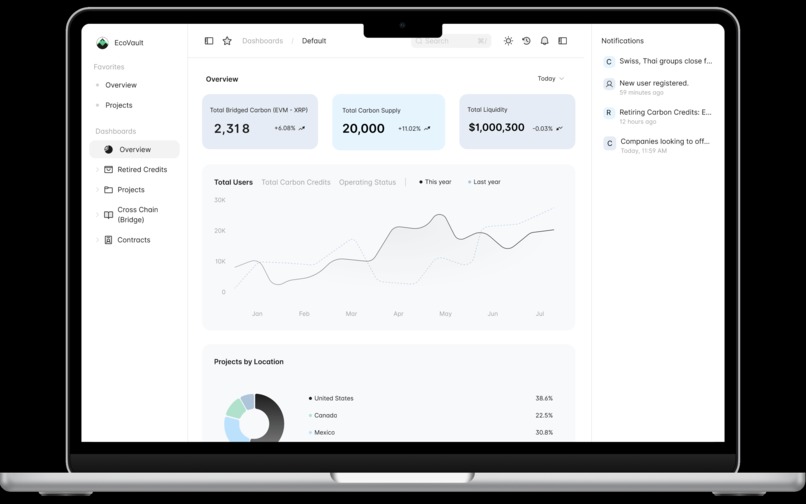
EcoVault User Interface

In devising our ideation report, we explored Ripple's innovative approach to smart contracts, which encompass both the XRP Ledger (XRPL) for automated transactions and bespoke business operations and an Ethereum Virtual Machine (EVM) Sidechain for leveraging Ethereum's extensive smart contract features. The Main net focuses on the movement of value with an additional feature set of NFTs. The EVM Sidechain significantly enhances Ripple's functionality, allowing for the creation and deployment of Ethereum-compatible decentralised applications and contracts. This integration fosters a sidechain that enjoys the XRPL's renowned speed and cost-effectiveness. Collectively, these technologies strive to create a flexible and scalable smart contract ecosystem within Ripple.
Our aim is to harness these sophisticated technologies to forge a groundbreaking application, extending beyond traditional uses and challenging the present boundaries of tech capabilities. Our deep dive into sidechain potential led us to the realm of cross-asset transactions, envisioning a future where these exchanges are seamlessly recorded on Ripple’s ledger via smart contracts.
The current landscape of carbon credit markets, an area ripe for technological disruption, presents several challenges that directly affect a range of stakeholders. On one side, businesses and corporations are increasingly pressured to offset their carbon footprints, navigating complex and often opaque markets to procure reliable carbon credits. On the other hand, carbon credit developers and environmental projects seek efficient and transparent platforms to sell their credits, ensuring their environmental impact is accurately represented and rewarded. The market's fragmentation and lack of standardisation has led to inefficiencies, hindering the broader goal of environmental sustainability. This situation underscores a critical need for an innovative solution that bridges these gaps, leveraging the advanced capabilities of Ripple's EVM sidechain to address the pain points of all stakeholders involved in the carbon credit ecosystem and enable Ripple’s XRPL ledger to function in service of others.
We aim to extend the utility of this technology into a budding industry—combating climate change and bolstering environmental conservation efforts, areas deeply relevant to individuals and corporations alike. In light of the growing significance of carbon credit discussions in modern business practices, we were inspired to develop an innovative and inclusive approach to the commitment and acquisition of carbon credits. This vision culminated in the idea of a DeFi-Powered Climate Impact platform, designed to facilitate transparent carbon credit transactions and a firmer resolve to environmental sustainability, all while leveraging Ripple's advanced technologies and infrastructure.
Built With
- evm
- python
- streamlit
- xrpl

Log in or sign up for Devpost to join the conversation.