-
-
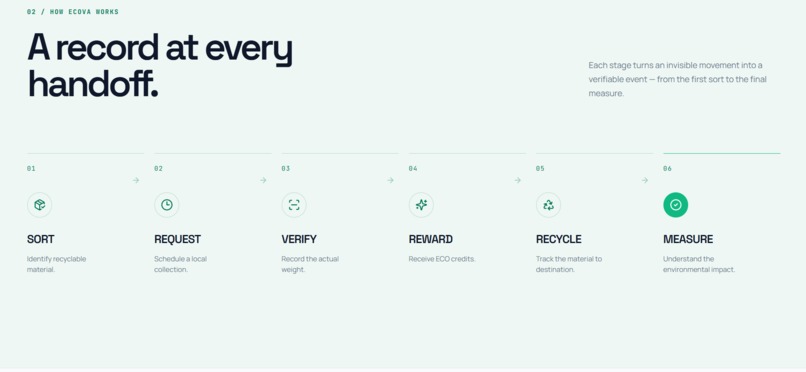
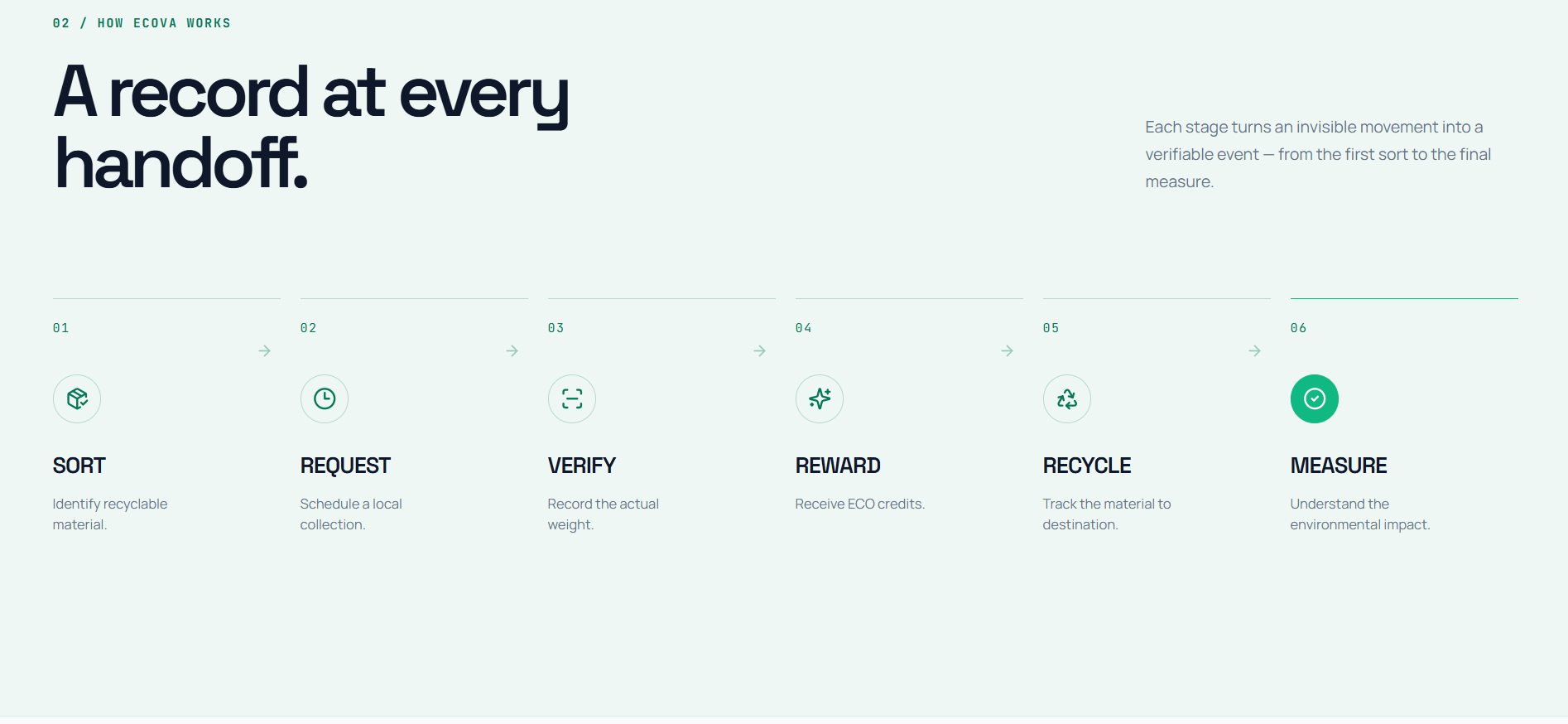
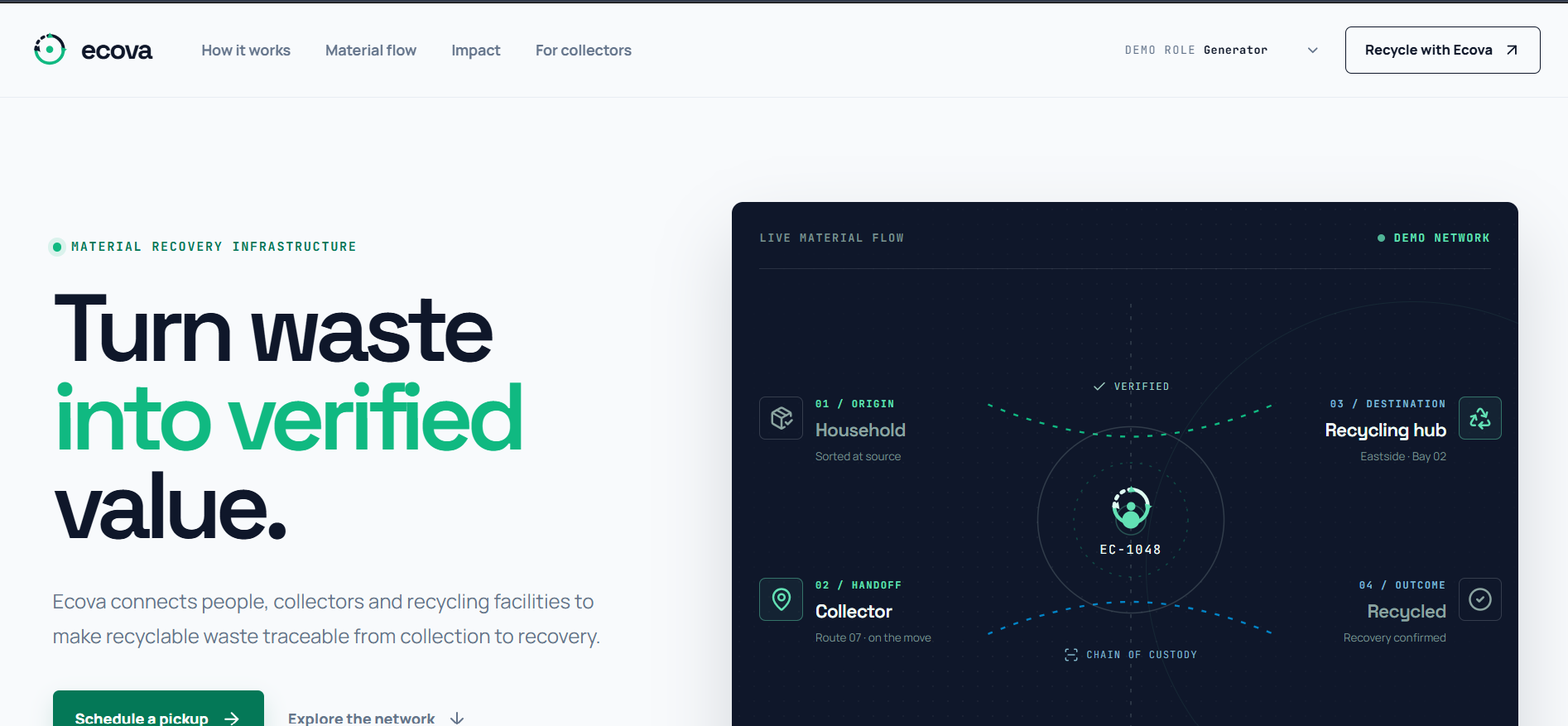
how ecova works
-
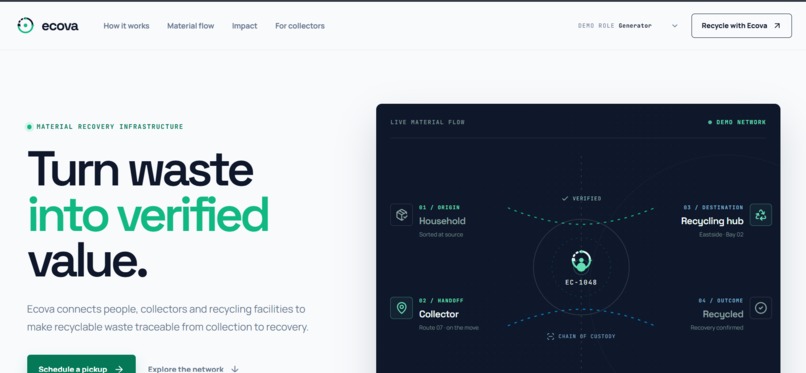
landing page
-
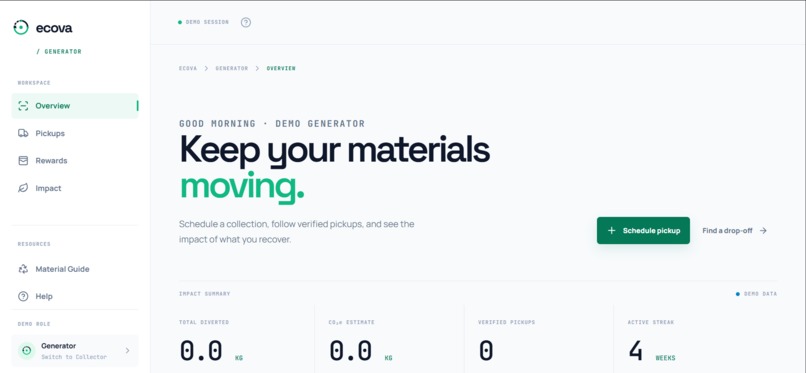
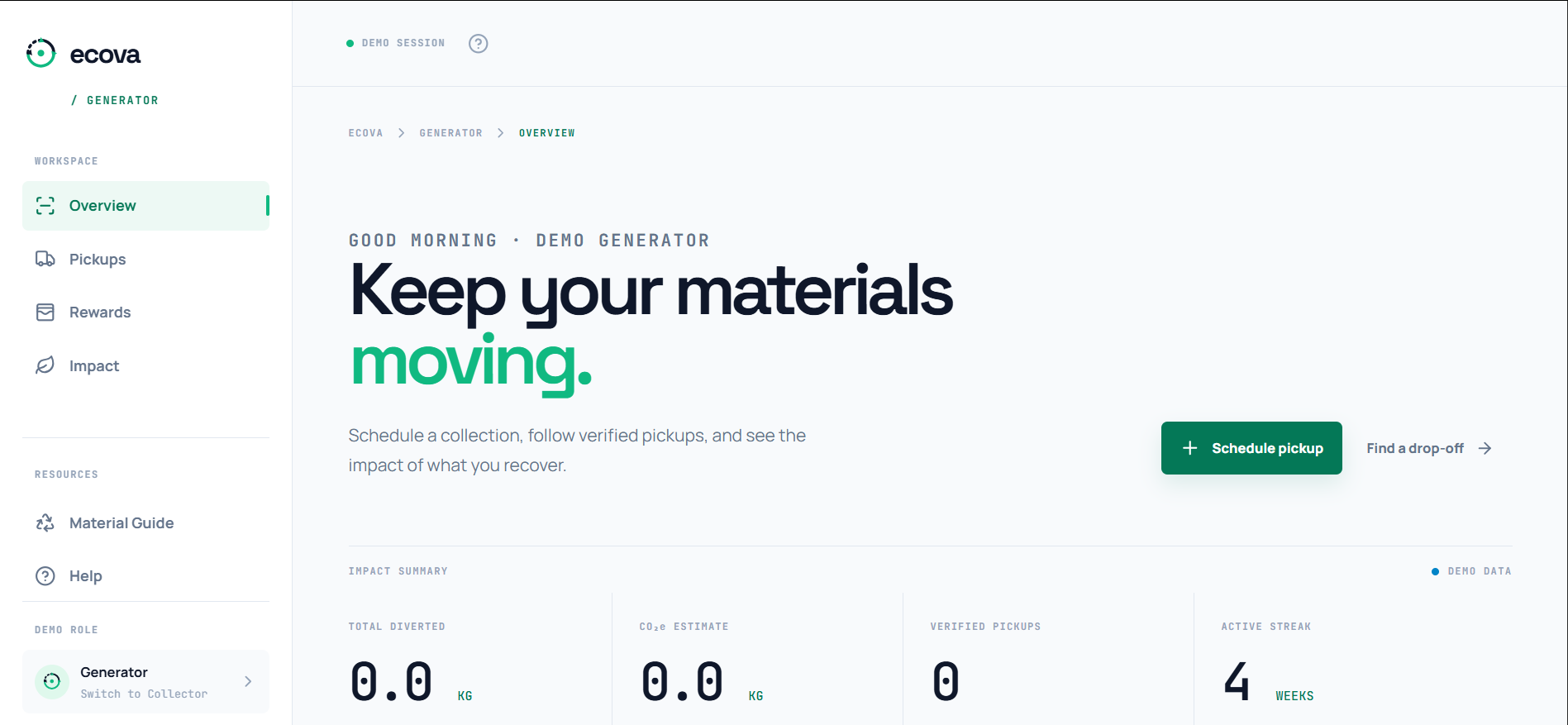
generator dashboard
-
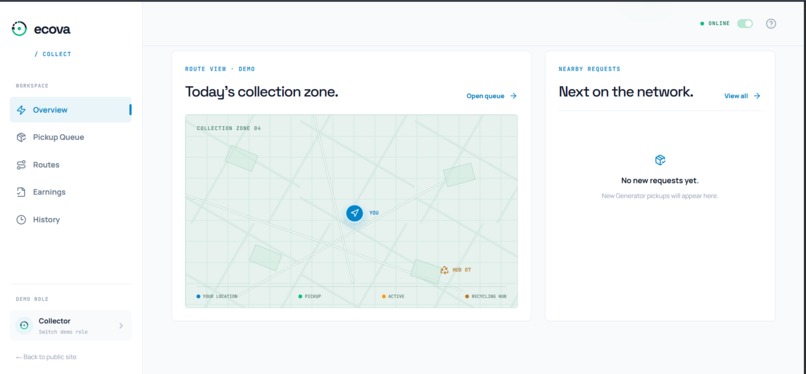
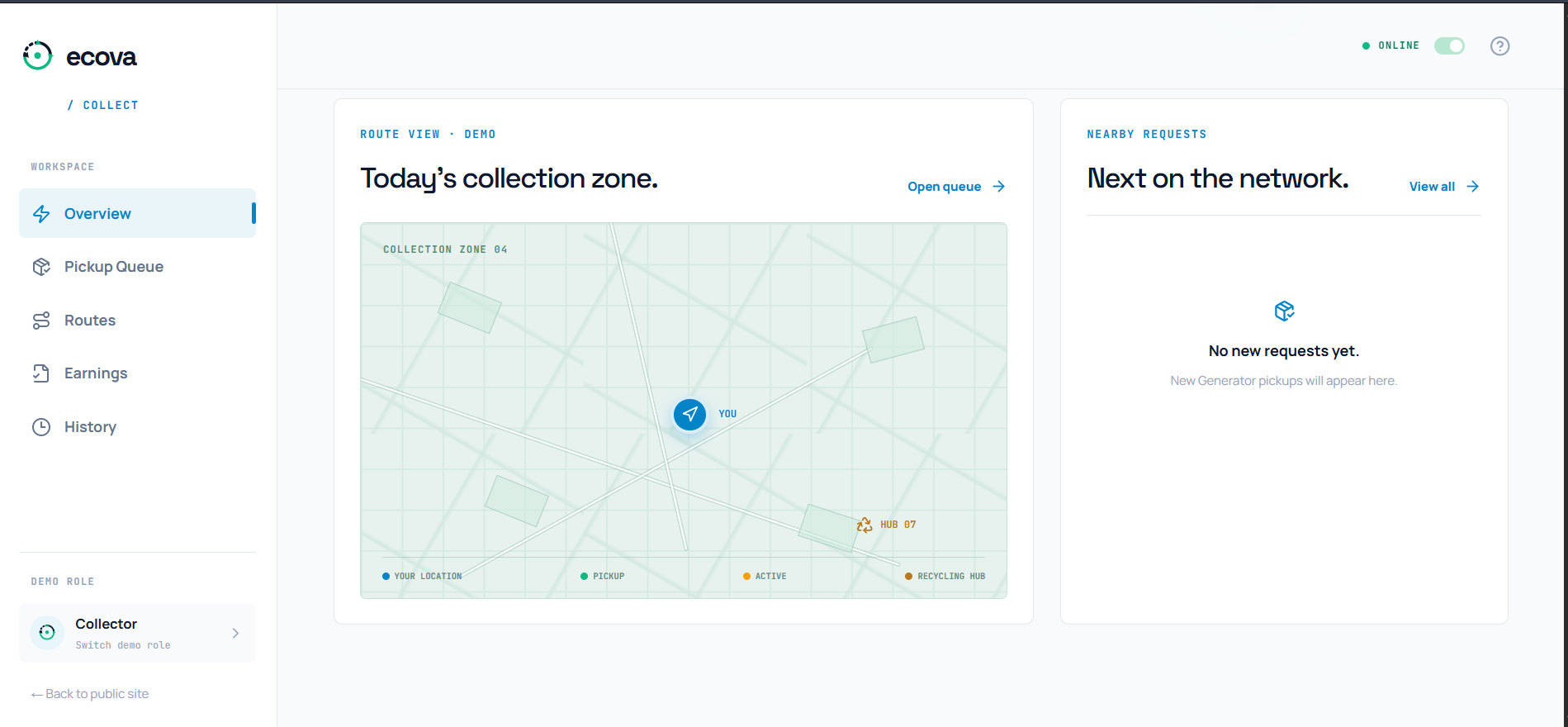
collector dashboard
-
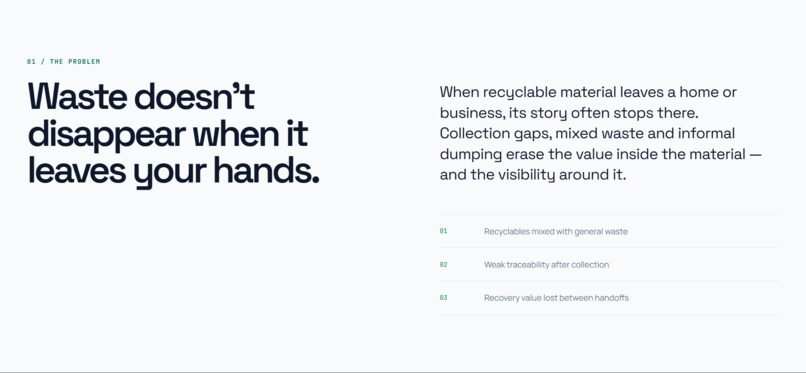
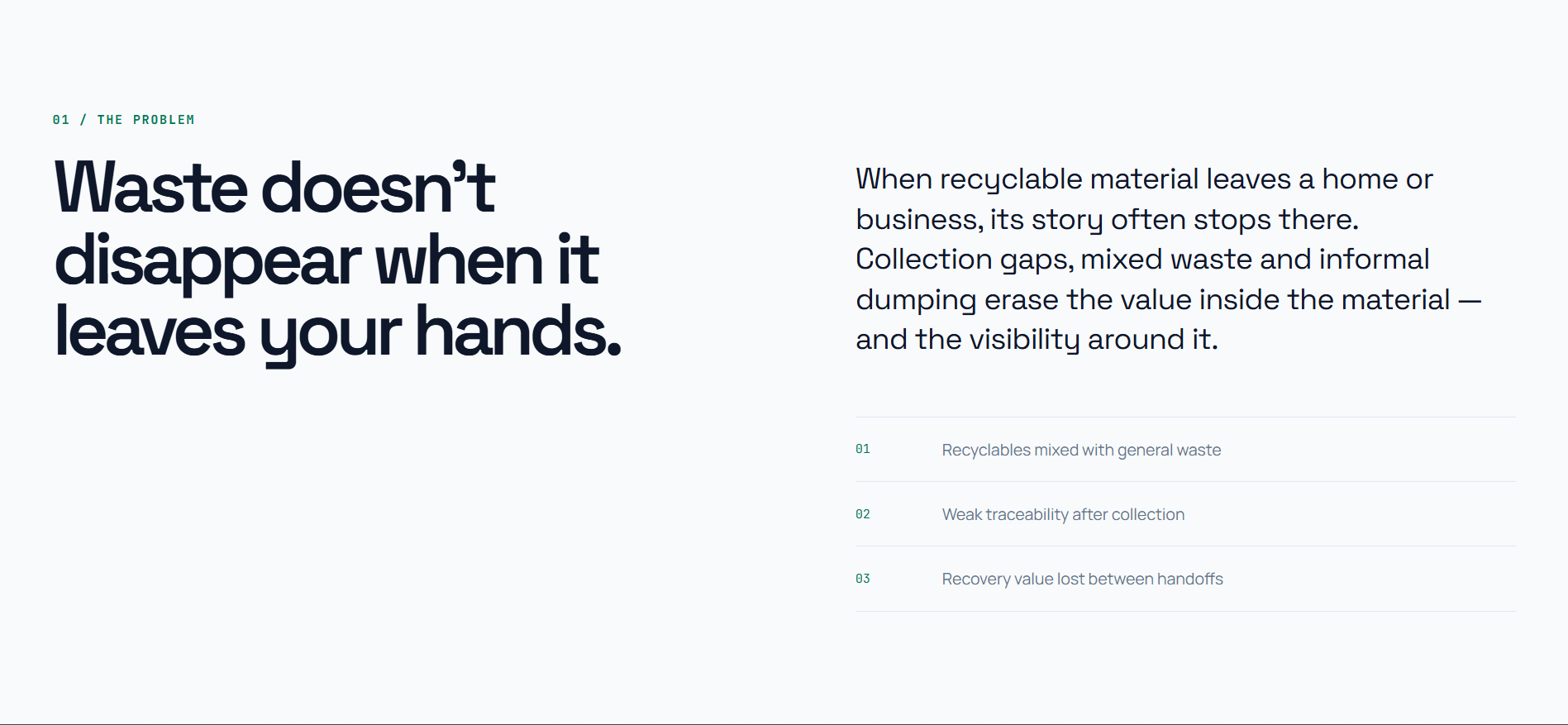
problem
-
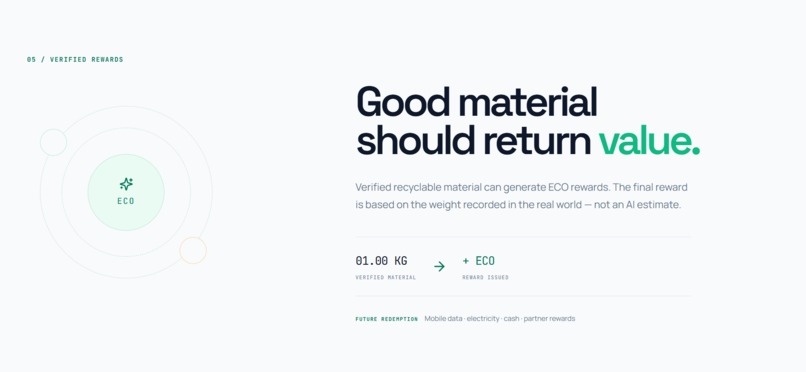
verified rewards
-
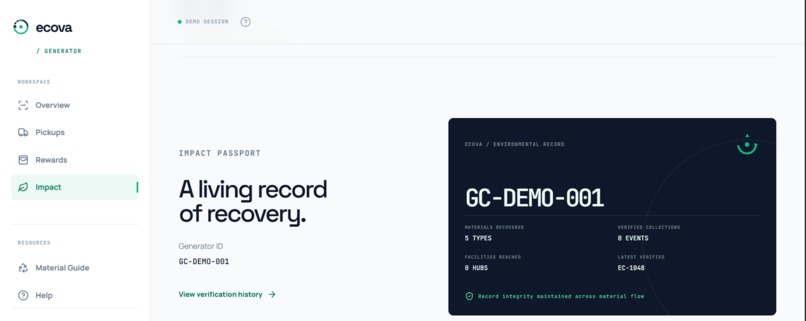
impact section
Inspiration
Ecova was inspired by a simple observation: recyclable waste is everywhere, but the journey of that waste is often invisible.
In many communities, people may be willing to separate and recycle their waste, but they don't always have an easy way to find reliable collectors or know what happens to the material after it is collected. I wanted to explore how technology could make that process more connected, transparent, and rewarding.
That led to the idea of Ecova, a digital recycling marketplace that connects waste generators with collectors, helps identify recyclable materials, rewards verified collections, and creates a traceable record of the material's journey.
What it does
Ecova is a digital recycling marketplace that connects households and businesses with waste collectors.
Users can upload recyclable waste, use AI-assisted identification to understand the material, and request a pickup. Collectors receive and manage these requests, verify the actual weight of the collected material, and complete the collection.
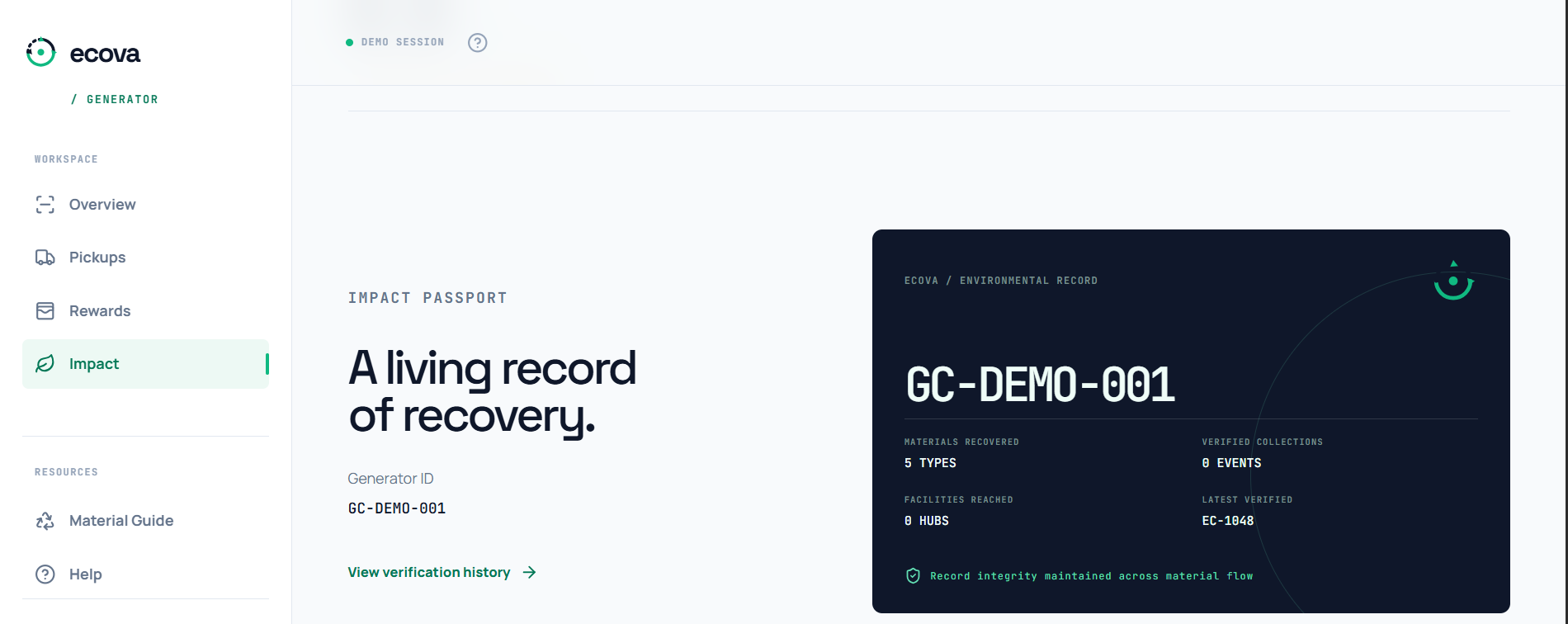
Ecova then calculates rewards based on the verified weight and maintains a digital record of the material's journey, creating a traceable chain from waste submission to collection and, eventually, recycling.
In simple terms:
Upload → Identify → Request → Collect → Verify → Reward → Track
How we built it
We built Ecova as a web-based MVP using an AI-assisted development workflow, with a focus on creating a functional end-to-end recycling workflow rather than a static prototype.
The frontend handles the Generator and Collector experiences, while Supabase provides the backend infrastructure for persistent data, image storage, and real-time updates. The application uses a shared database so actions taken by one role are reflected across the other in real time.
The main workflow is:
Waste Submission → AI Identification → Pickup Request → Collector Assignment → Collection → Weight Verification → Reward → Chain of Custody
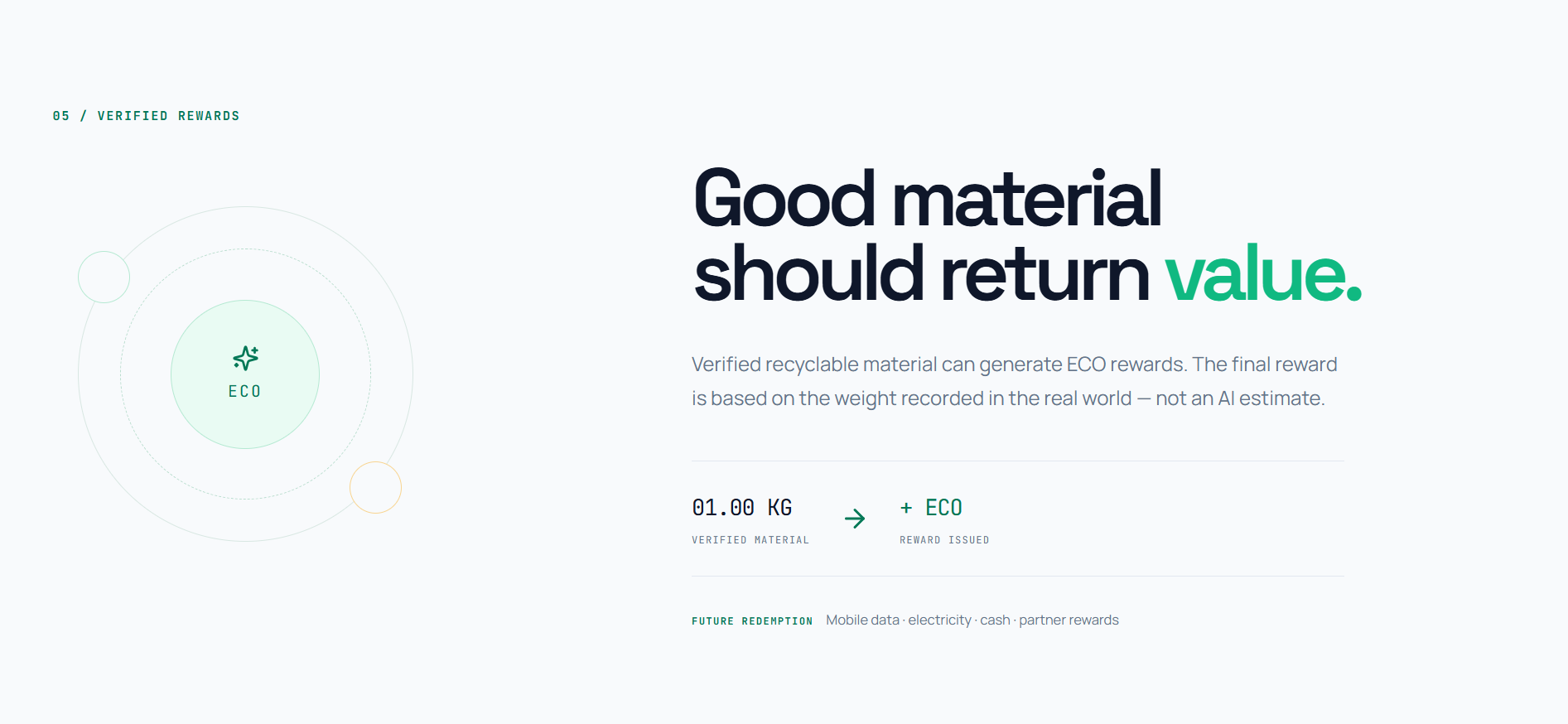
AI is used to assist with identifying recyclable materials from uploaded images. However, the system does not use AI to determine the final reward. The collector records the actual physical weight, and the reward is calculated from that verified measurement.
We also implemented persistent pickup records, status tracking, reward transactions, and chain-of-custody events so that the recycling journey can be followed throughout the process.
The MVP was then tested across both Generator and Collector workflows to verify that data persisted correctly, updates were synchronized, and rewards were tied to verified collections.
Challenges we ran into
Building Ecova came with several challenges, especially while trying to turn an idea into a functional end-to-end product.
One of the biggest challenges was making the Generator and Collector experiences work from the same underlying data. A pickup request created by a Generator needed to appear on the Collector side and update correctly when the Collector accepted or completed it.
We also had to think carefully about verification and reward integrity. We didn't want users to receive rewards based only on an estimated weight or an AI prediction, so we designed the workflow around physical weight verification by the Collector.
Another challenge was integrating AI-assisted waste identification with the rest of the application while keeping the experience simple and reliable.
We also encountered the usual challenges of debugging, connecting the frontend and backend, handling real-time updates, testing different user flows, and working within the limitations of AI-assisted development tools and available resources.
These challenges taught us to build incrementally, test each part of the workflow, and prioritize the core user experience instead of trying to build everything at once.
Accomplishments that we're proud of
One of our biggest accomplishments is turning Ecova from an idea into a working end-to-end MVP.
We built a connected workflow where a waste Generator can submit recyclable material, receive AI-assisted identification, create a pickup request, and have that request appear on the Collector side. The Collector can accept the request, complete the collection, record the actual verified weight, and trigger the corresponding reward.
We are particularly proud of making the reward system depend on verified physical weight rather than estimates. We also implemented persistent pickup records and a chain-of-custody system that makes it possible to follow the material from its initial submission through collection.
Beyond the technology, we are proud that Ecova addresses a real environmental problem with a product that could continue evolving beyond the hackathon.
What we learned
Building Ecova taught us that solving a real-world problem requires more than just building features. We had to think about how different people, actions, and data connect within one complete workflow.
Technically, we learned more about building with a persistent backend, real-time data, image uploads, AI-assisted identification, database logic, and reward transactions. We also learned how important it is to test an application from the perspective of different users rather than testing each feature in isolation.
One of our biggest lessons was the importance of verification and trust. AI can assist with identifying recyclable materials, but real-world actions still need reliable verification. This influenced our decision to base rewards on the Collector's verified physical weight rather than an AI estimate.
We also learned how to work within limitations. Instead of trying to build every feature we imagined, we focused on the core experience and built an MVP that demonstrates the main value of Ecova.
Most importantly, we learned that good technology should not only solve a problem — it should make the solution simple enough for people to actually use.
What's next for Ecova
The hackathon MVP is only the starting point for Ecova.
Our next step is to move from a prototype into a real-world pilot by connecting Ecova with verified waste collectors and recycling partners in selected communities.
We plan to expand the platform with:
- Verified recycling partners to complete the chain of custody from collection to recycling.
- Real-world reward and pricing systems based on material type, location, and current recycling-market conditions.
- Collector tools for route optimization, collection management, and earnings tracking.
- Business accounts that allow organizations to track their recyclable waste and sustainability impact.
- Improved material recognition for more types of recyclable materials.
- Impact reporting that turns verified collection data into meaningful environmental metrics.
- Expansion to more communities and cities, creating a connected circular-economy network.
Our long-term vision is for Ecova to become infrastructure that connects the different participants in the recycling ecosystem — from the person holding a recyclable bottle to the collector, recycling hub, and recycling partner.
Built With
- css
- html5
- javascript
- postgresql
- react
- superbase
- tailwindcss
- typescript
- vite

Log in or sign up for Devpost to join the conversation.