-
-
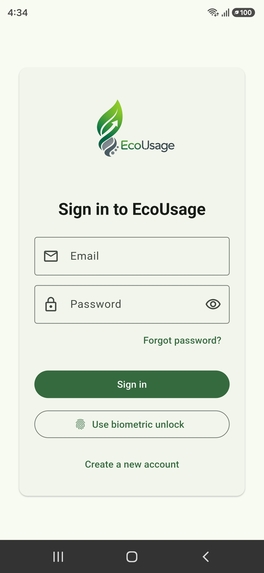
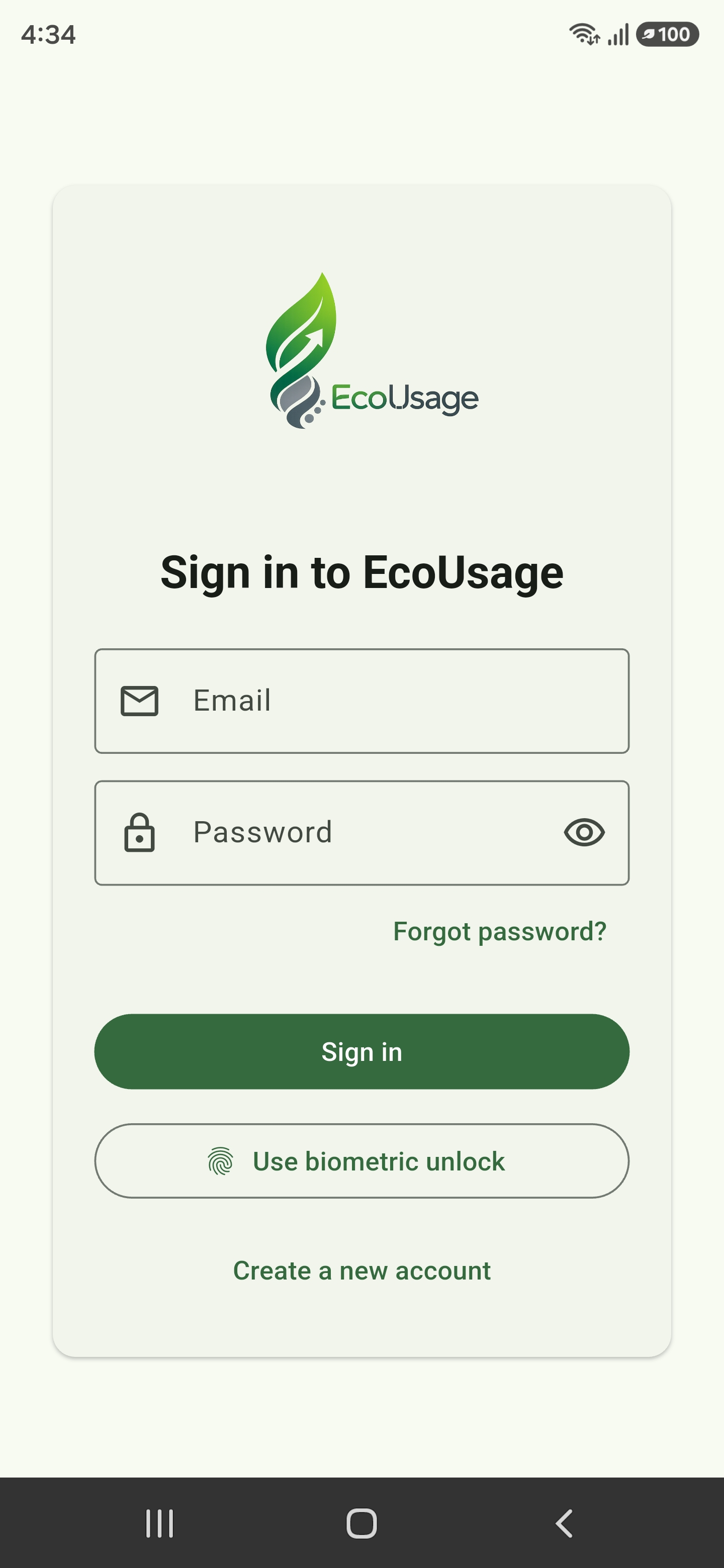
Login Page
-
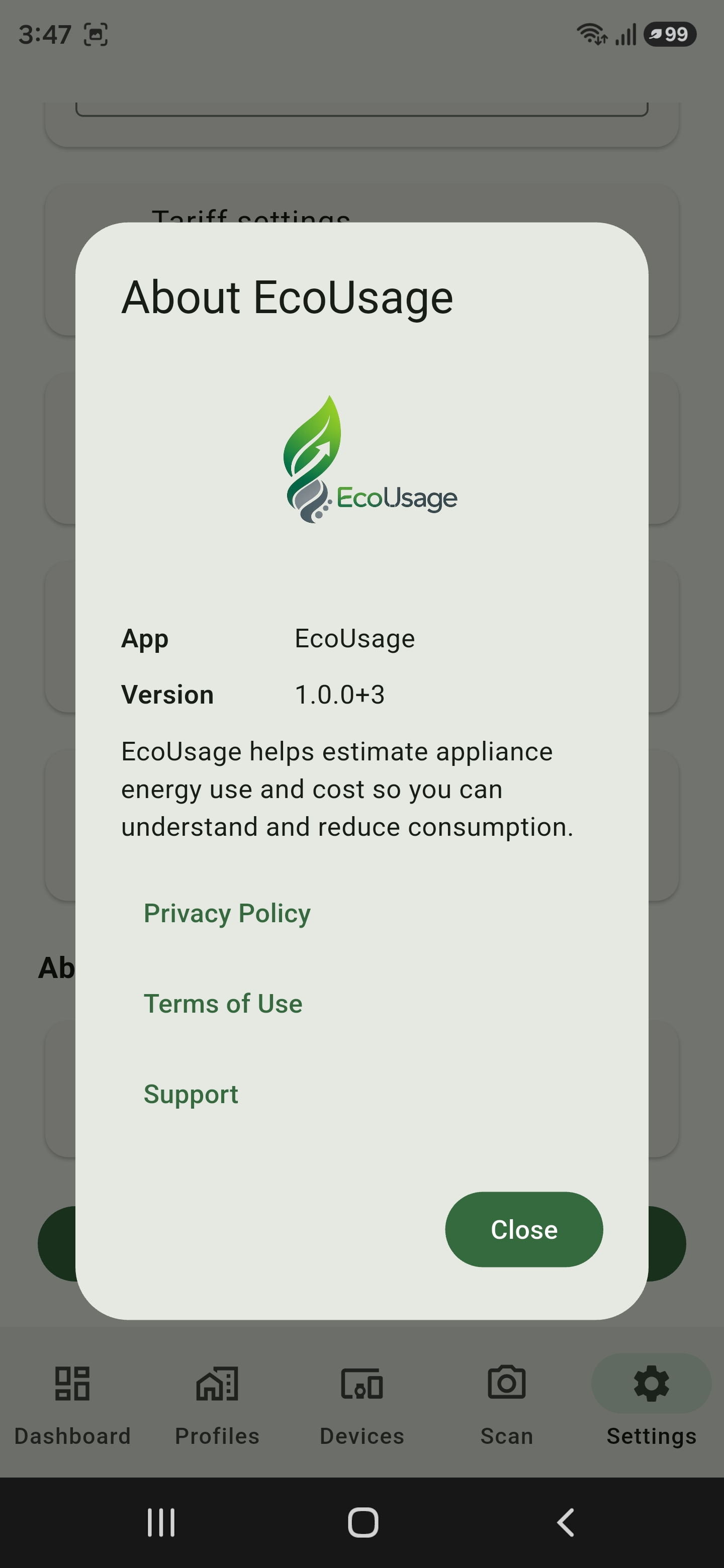
About Screen
-
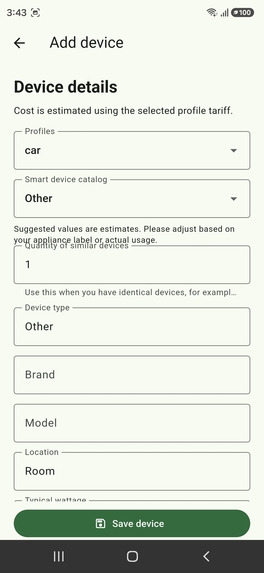
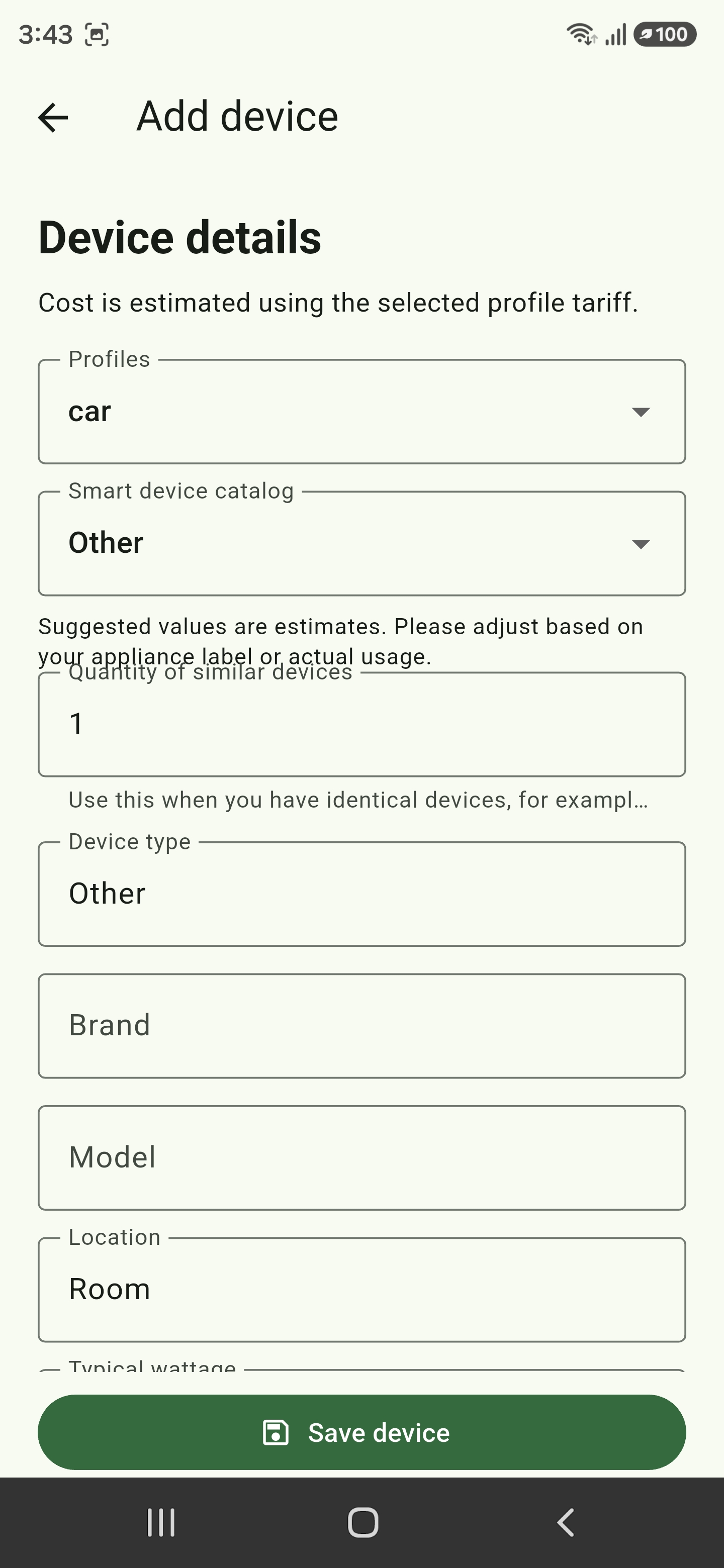
Add Device Manual Entry
-
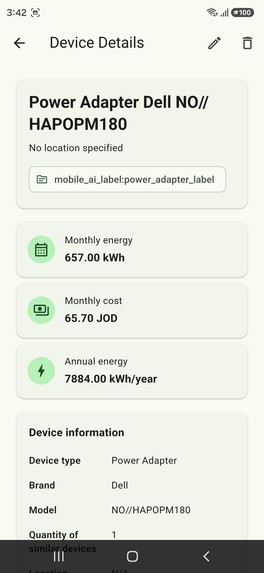
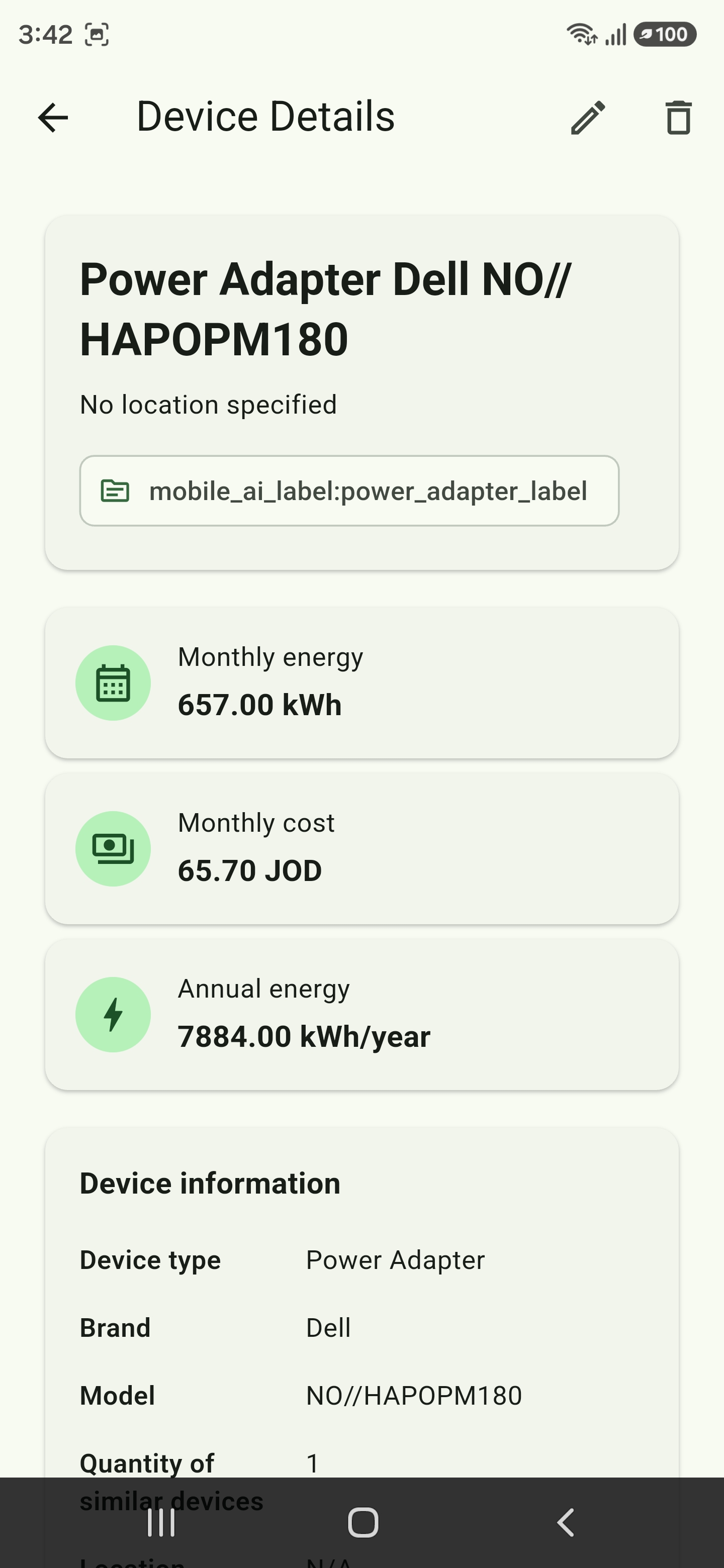
Device Details
-
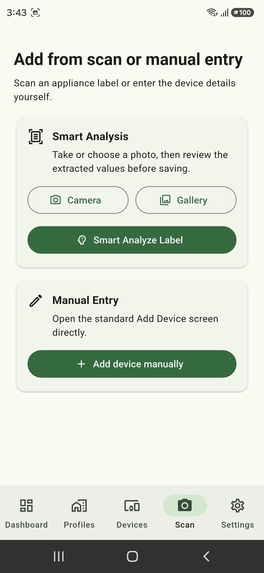
Add Device by Camera and Gallery with AI analyzes
-
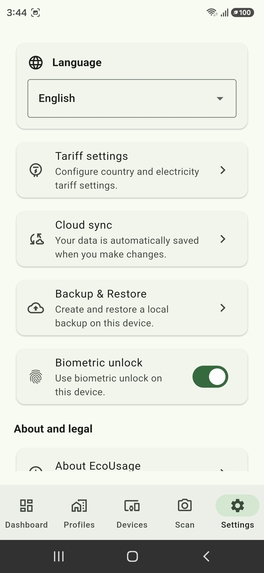
Tariff Page
-
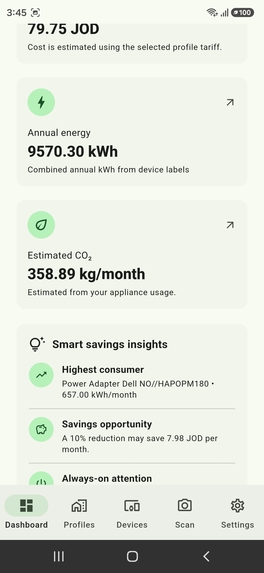
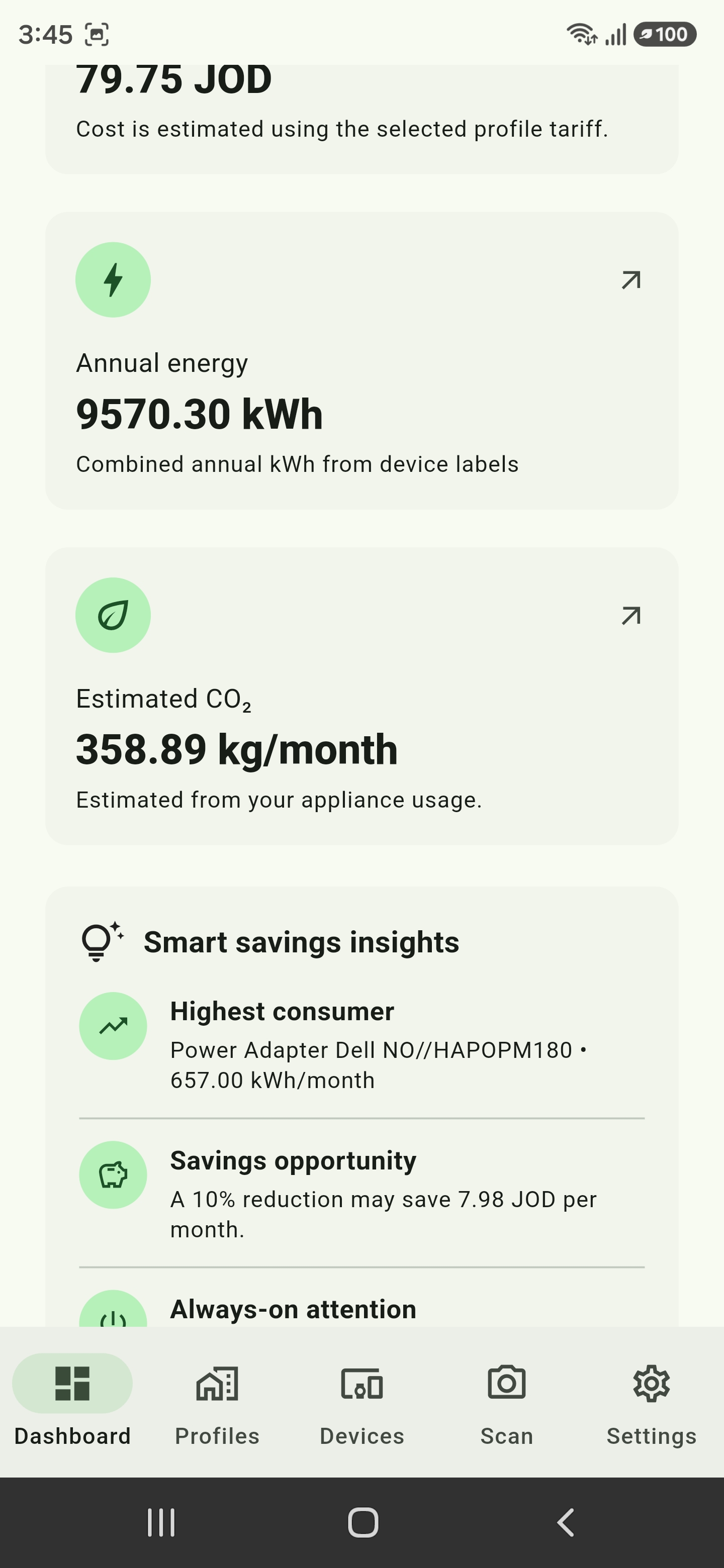
Details about consumptions
-
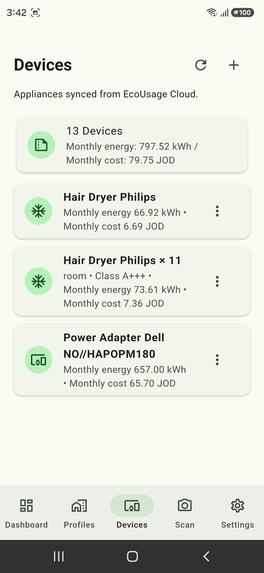
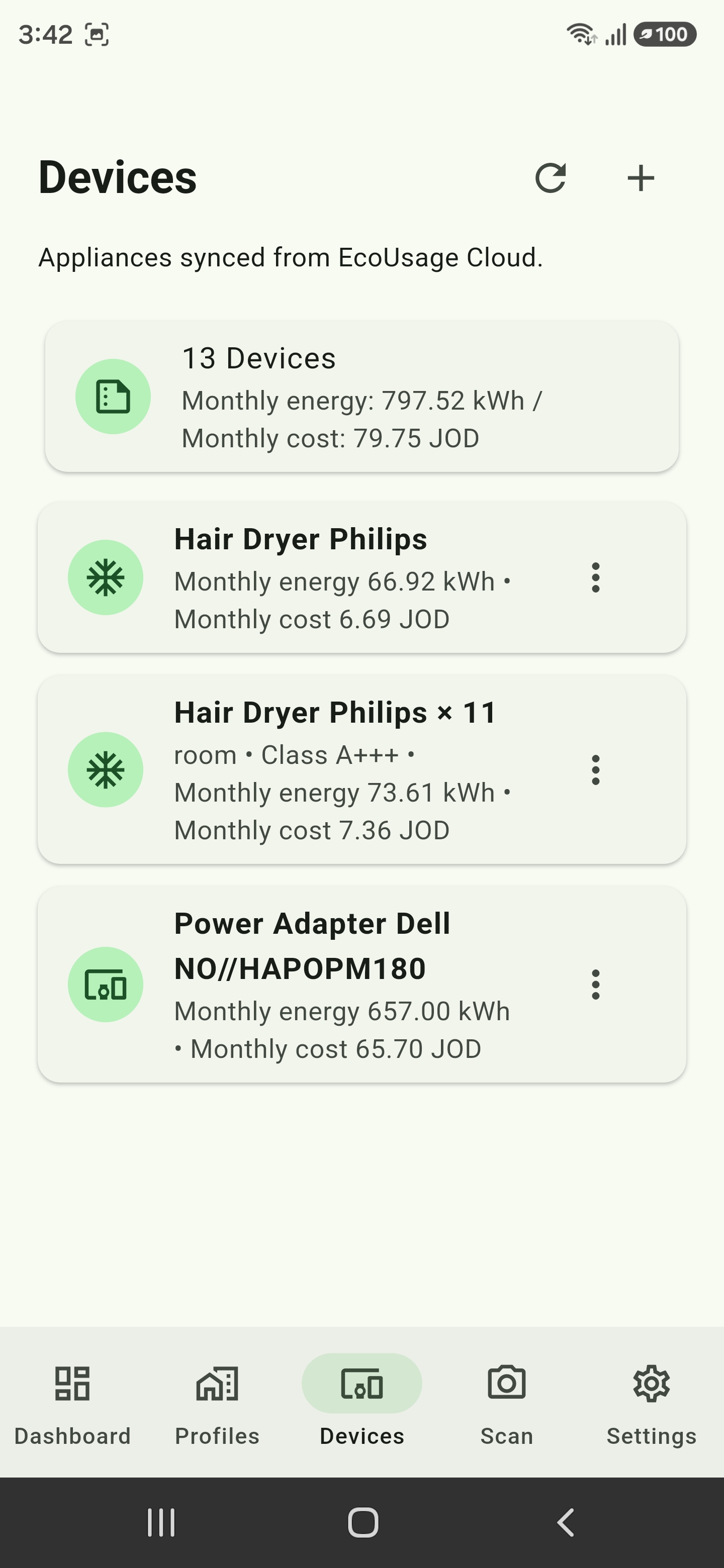
Devices List
-
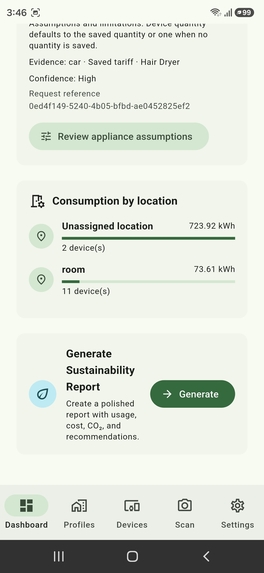
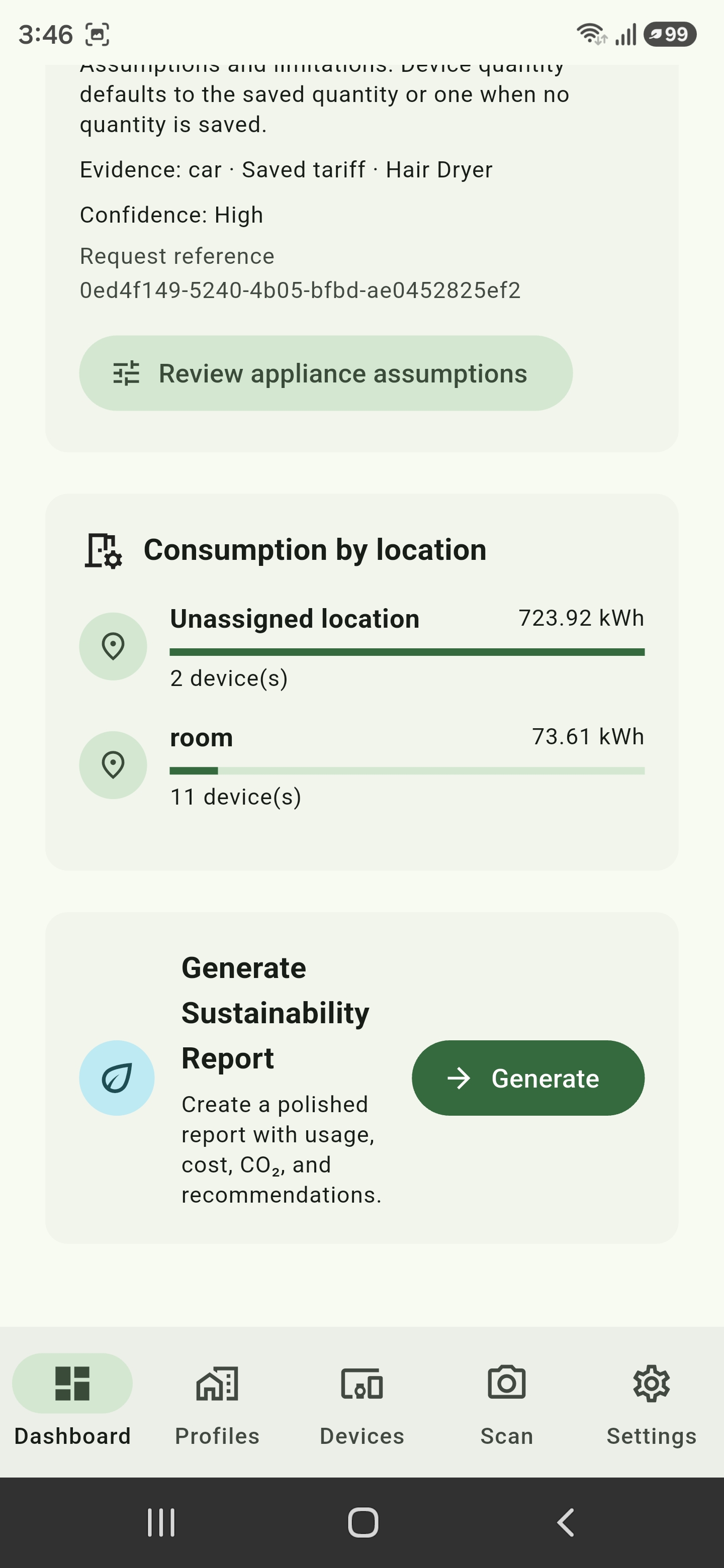
Generate Sustainability Report
-
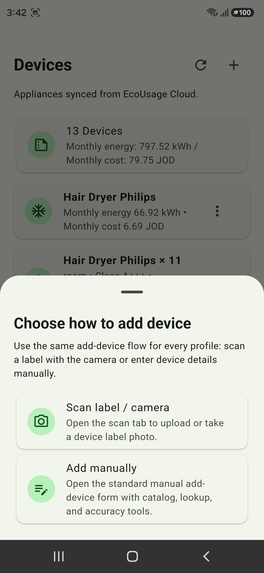
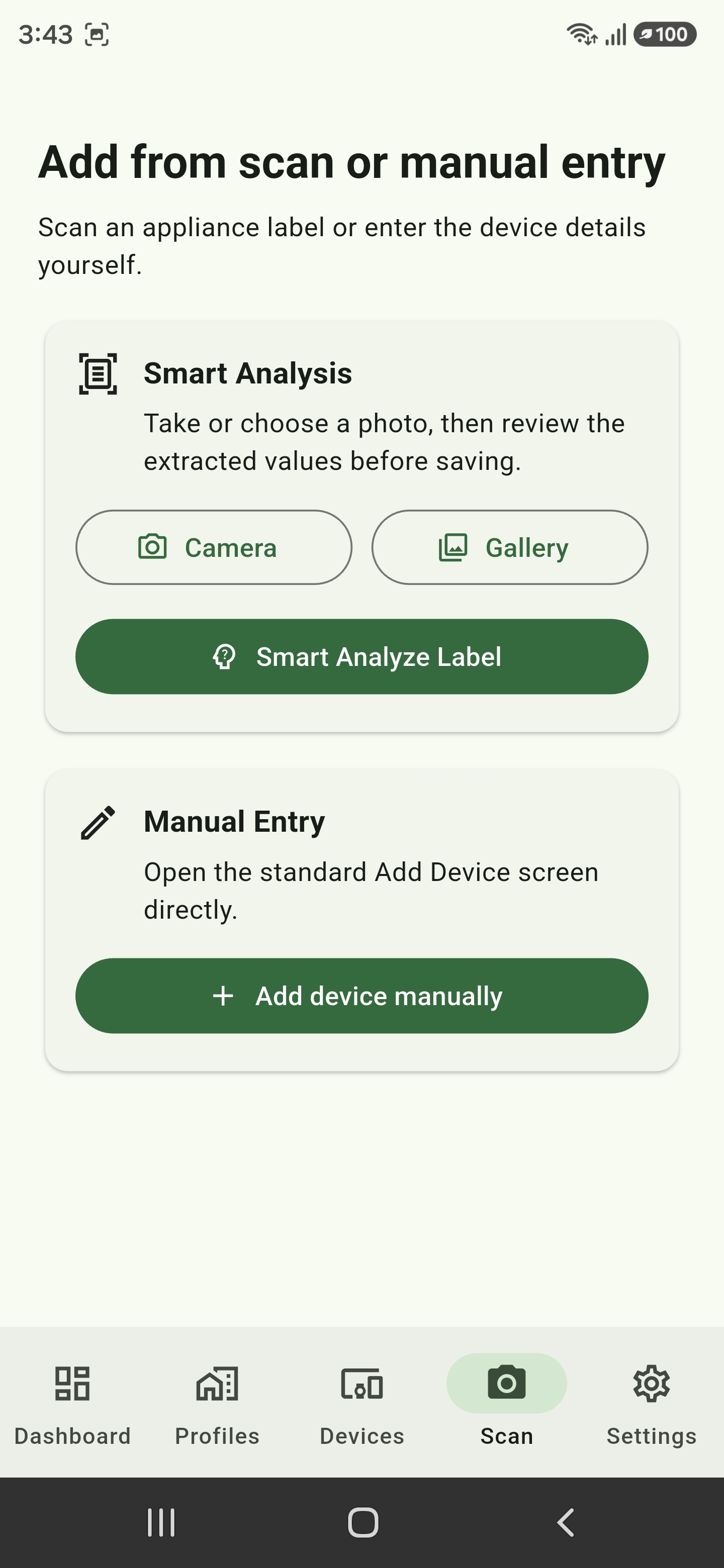
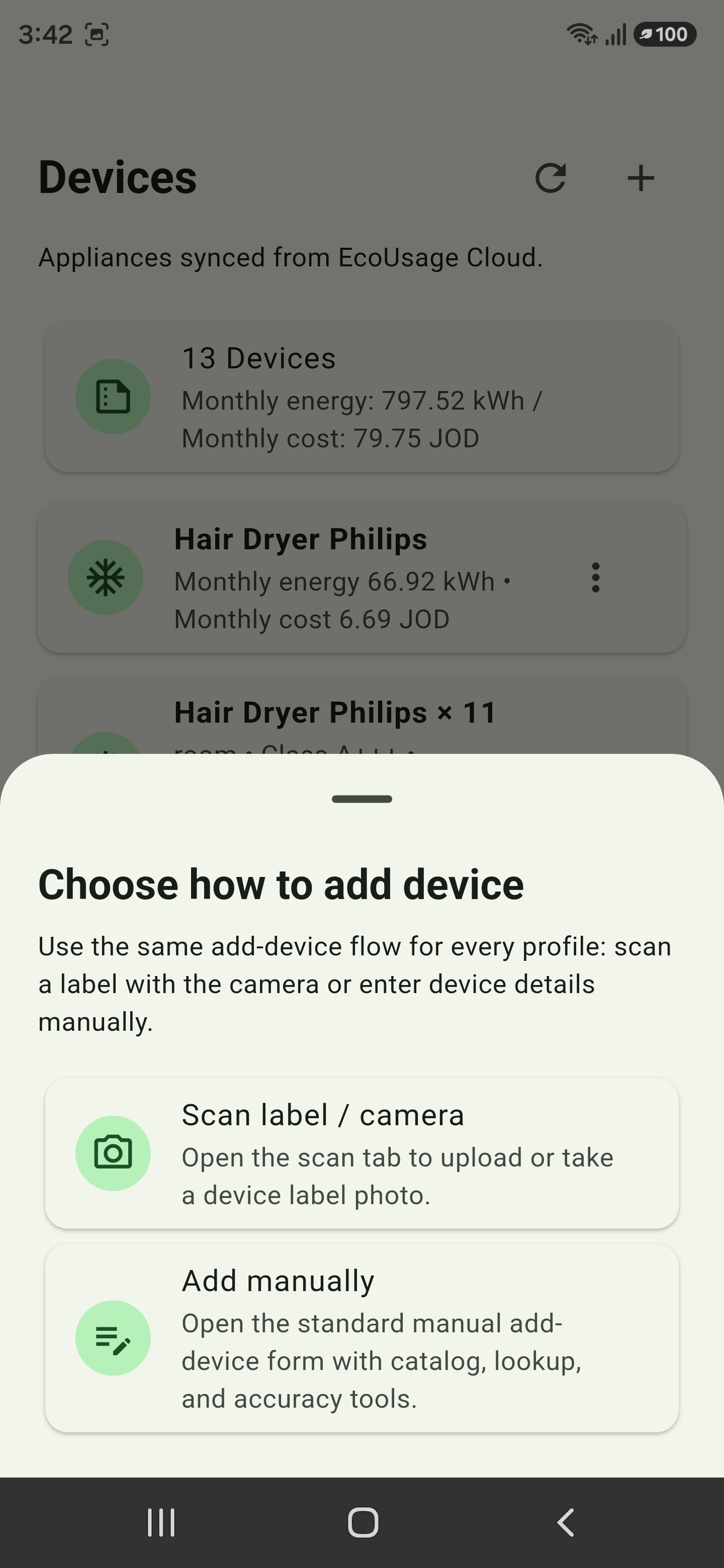
Add Device Options
-
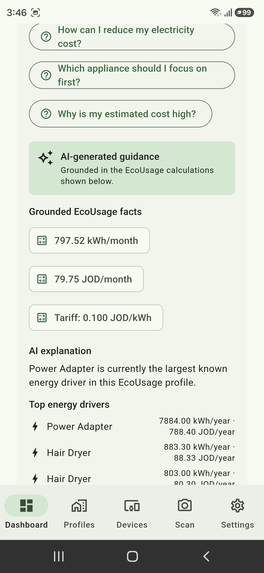
Advisor Request to Track
-
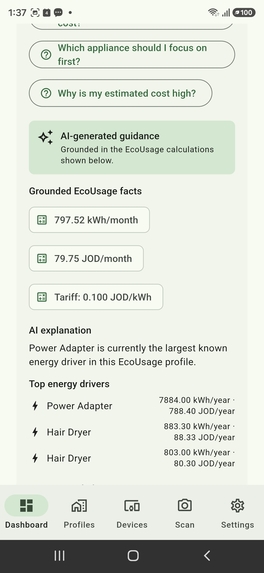
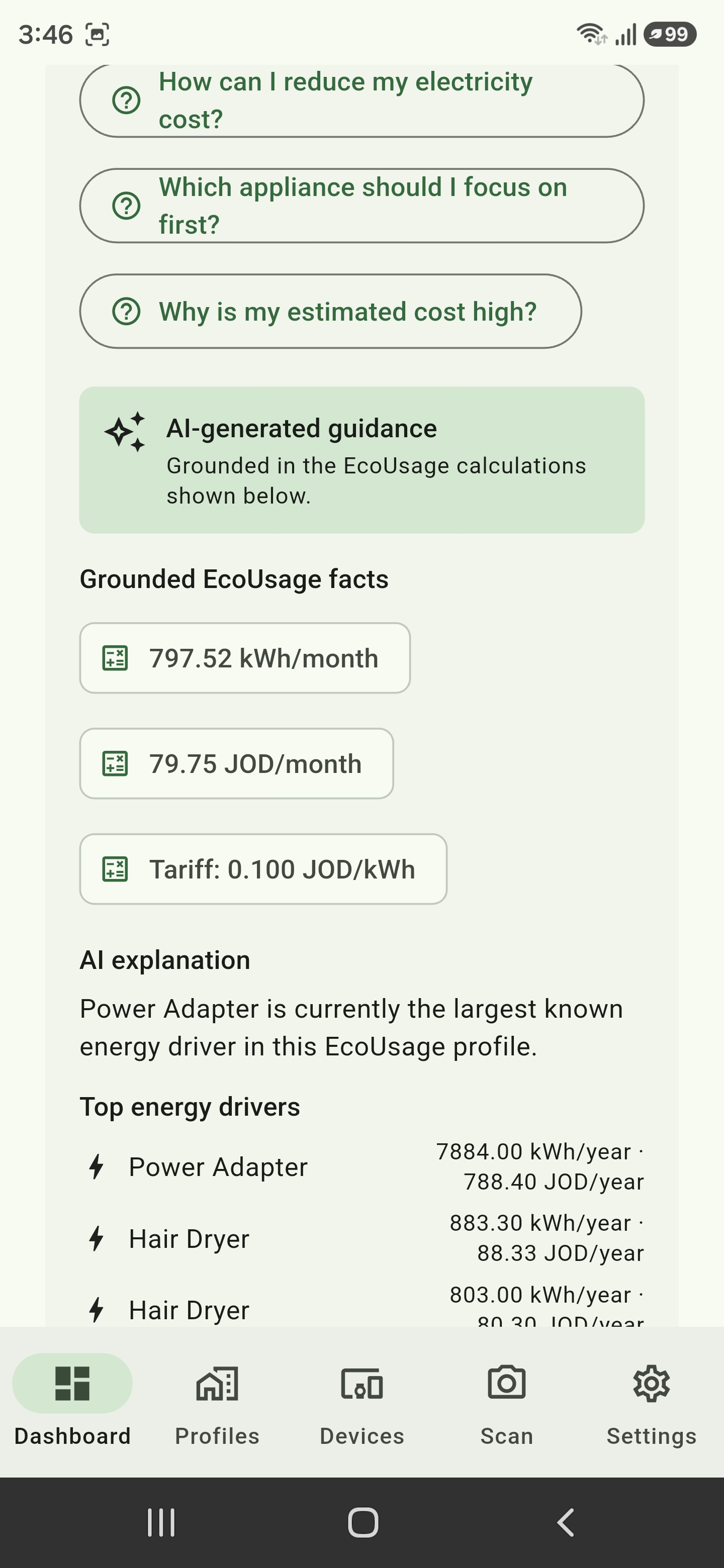
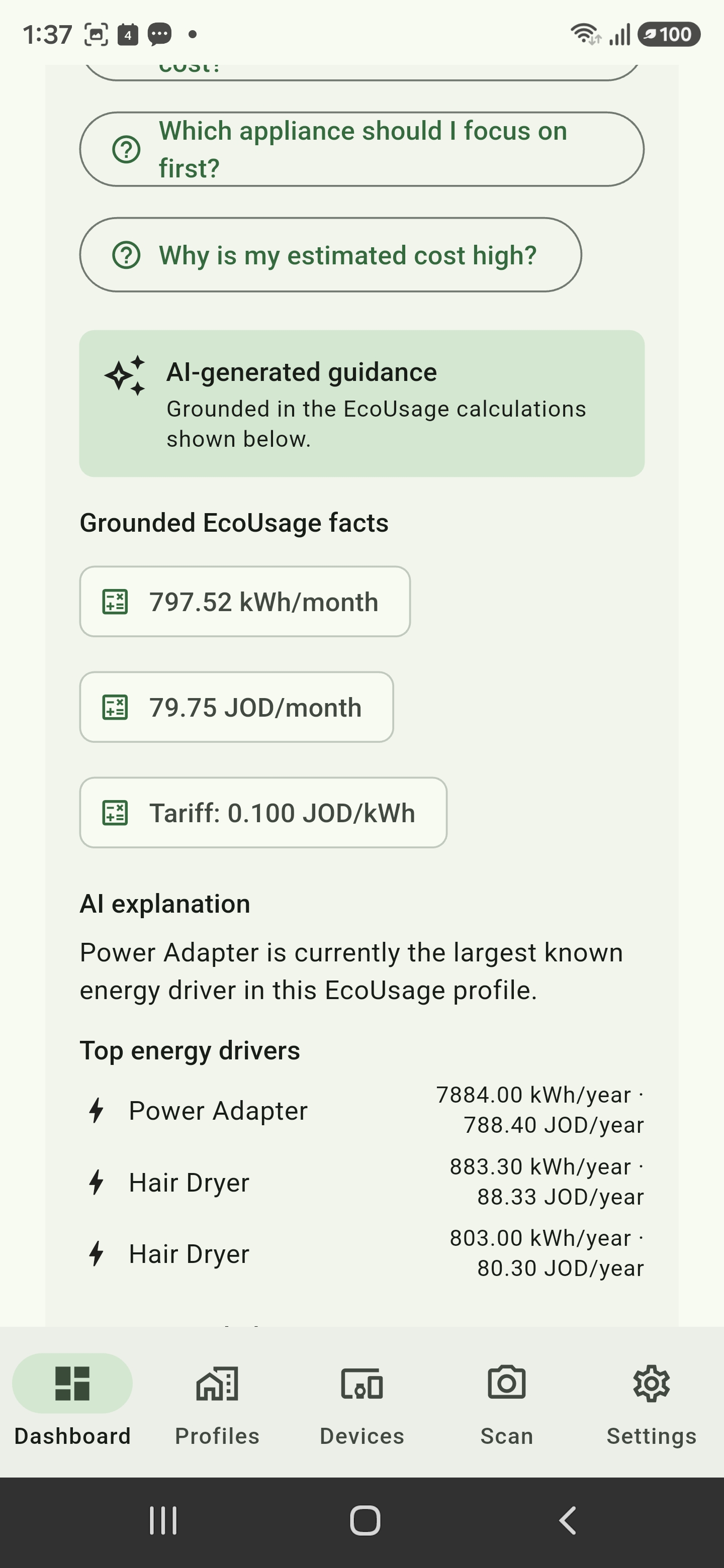
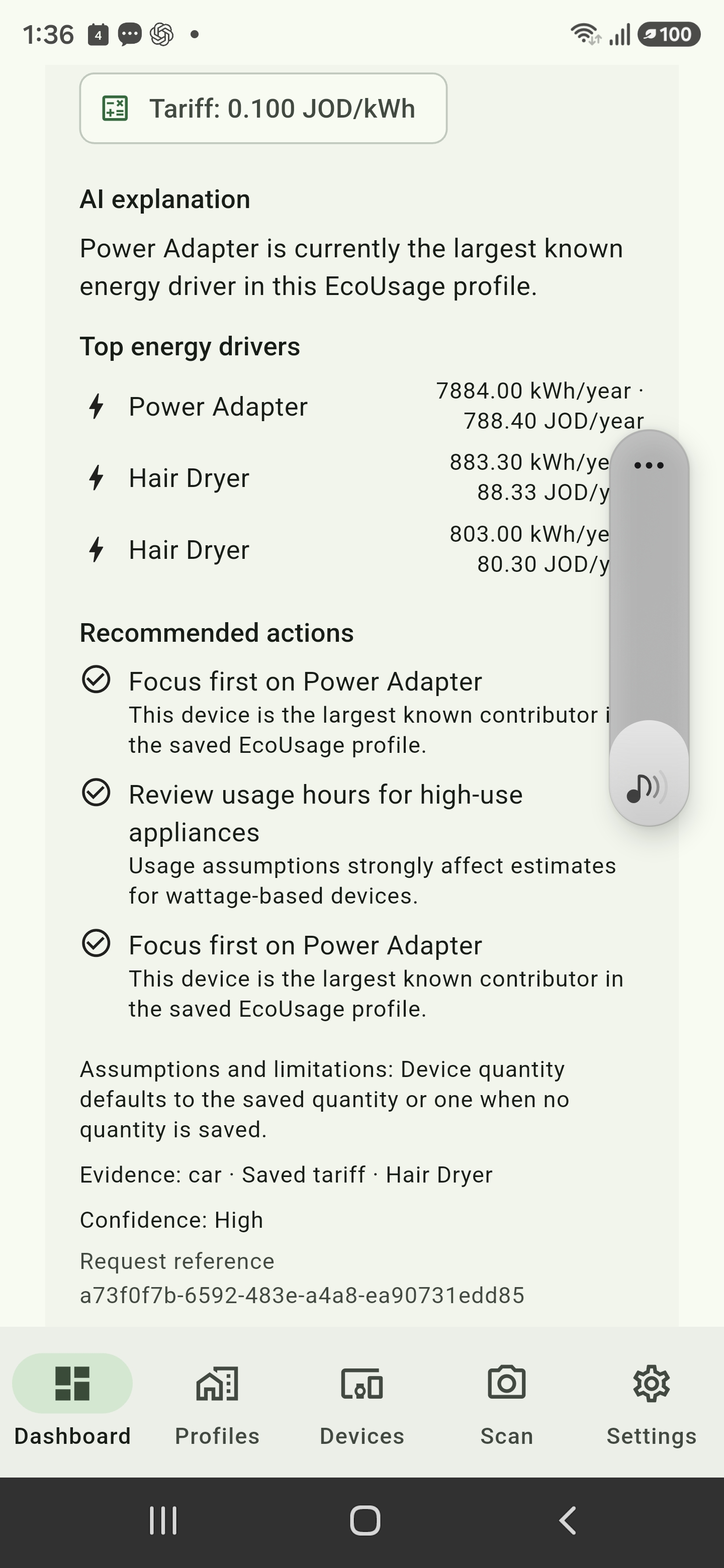
Gemini Advisor With Request Reference
-
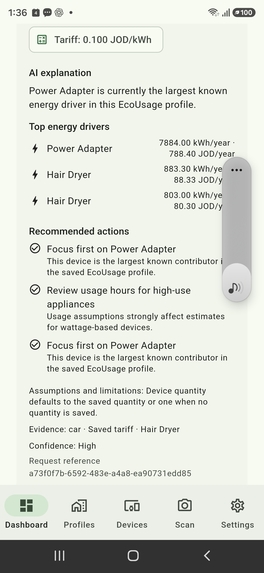
AI-Gemini Advisor
-
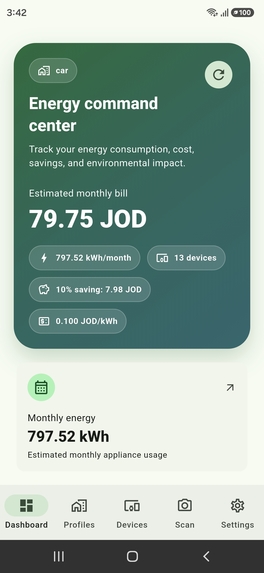
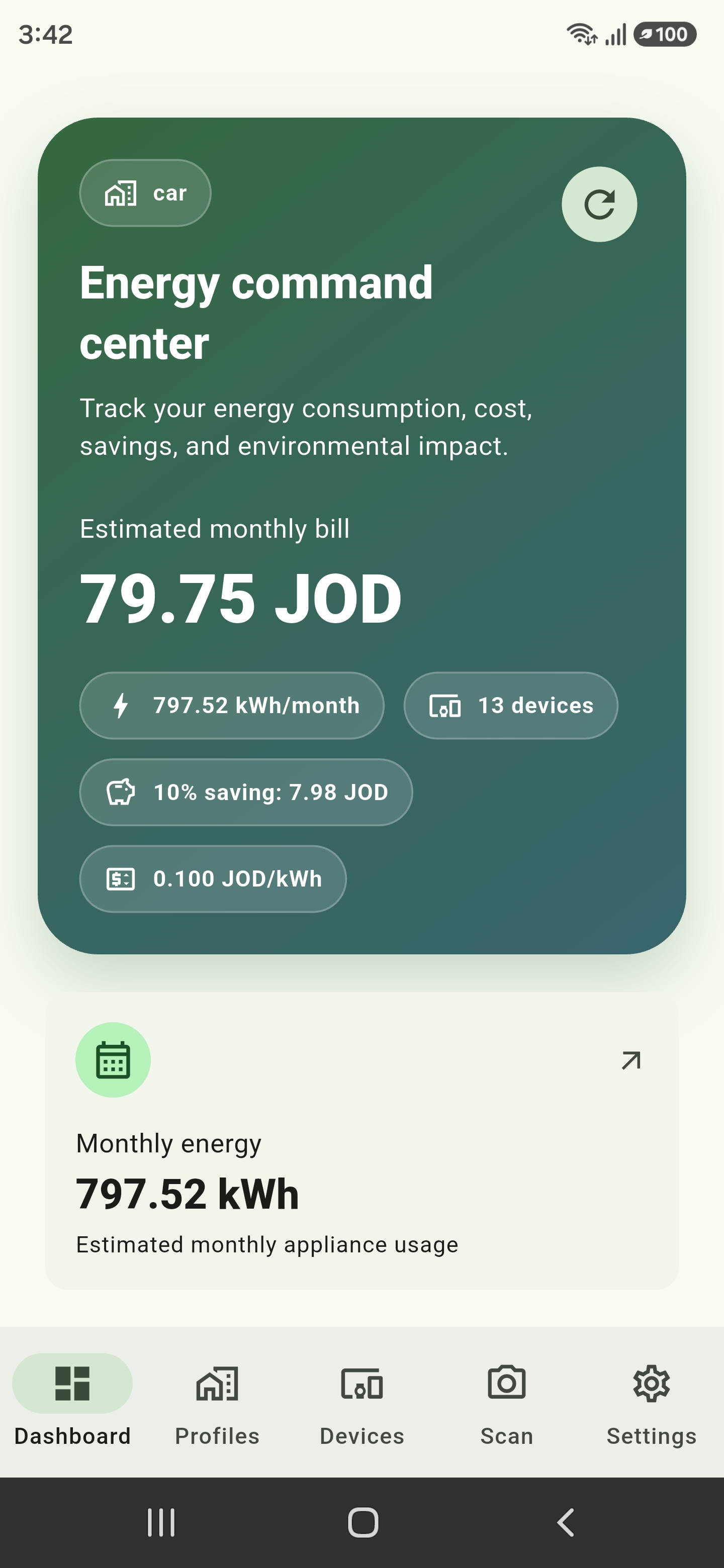
01_dashboard
Ins## Inspiration
EcoUsage started with a simple personal problem: an unusually high electricity bill during winter.
I could see how much I had to pay, but the bill could not answer the questions that actually mattered:
Why is my electricity bill so high, and which appliances are responsible?
That became the inspiration for EcoUsage.
The problem was not simply that energy was expensive. The deeper problem was that energy information was difficult to understand and even harder to act on.
A household may know that its electricity bill increased, yet still not know whether the reason was an air conditioner, water heater, inefficient appliance, longer operating hours, a tariff change, seasonal behavior, or another source of consumption.
Most consumers receive numbers. What they really need are explanations and decisions.
That led to the core idea behind EcoUsage:
Transform complex energy data into clear, personalized, and financially useful actions.
What began as an appliance energy calculator evolved into a larger vision:
EcoUsage — Global AI Energy Intelligence
Our goal is to build a trusted AI-powered platform that helps people understand their energy consumption, explain their costs, identify waste, predict future expenses, and determine the highest-value actions they can take.
What it does
EcoUsage combines appliance information, usage assumptions, electricity tariffs, deterministic energy calculations, and Gemini-powered intelligence to help users understand and reduce their energy costs.
Today, the platform provides the foundation for users to:
- Scan an appliance energy label using a camera or gallery image
- Extract appliance information using OCR
- Review and correct detected values
- Add appliances manually
- Track multiple quantities of the same appliance
- Define usage assumptions
- Estimate monthly and annual energy consumption
- Calculate electricity costs using tariff information
- Compare appliance energy usage
- Estimate carbon impact
- Receive energy-saving recommendations
- Generate energy reports
- Synchronize energy data through the cloud
For an appliance using rated electrical power, monthly consumption can be estimated as:
[ E_{\text{month}} = \frac{P_{\text{watts}}}{1000} \times H_{\text{day}} \times D_{\text{month}} \times Q ]
where:
- (P_{\text{watts}}) is the appliance rated power
- (H_{\text{day}}) is estimated daily usage in hours
- (D_{\text{month}}) is the number of usage days per month
- (Q) is the appliance quantity
For appliances that provide annual energy consumption instead of rated operating power:
[ E_{\text{month}} = \frac{E_{\text{annual}}}{12} \times Q ]
These calculations create the numerical foundation for EcoUsage's intelligence layer.
From energy calculations to energy intelligence
Our larger objective is not simply to tell users:
“You consumed 500 kWh.”
We want EcoUsage to help answer:
“Why did my bill increase, what caused it, and what should I do next?”
For example:
“My electricity bill increased by $80. Why?”
EcoUsage is being designed to break that increase into explainable components such as:
- Appliance-related consumption changes
- Tariff changes
- Seasonal usage
- Usage-behavior changes
- Fixed charges
- Other identifiable factors
- Unexplained consumption
The platform can then prioritize actions according to:
- Estimated monthly savings
- Estimated annual savings
- Effort
- Confidence
- Supporting evidence
- Potential payback
This turns energy data into something users can actually act on.
How we built it
EcoUsage is built as a mobile-first cloud platform with separate layers for the user experience, deterministic energy calculations, cloud services, security, and AI intelligence.
Mobile application
The mobile application is developed using:
- Flutter
- Dart
- Android-first release strategy
- Camera integration
- Gallery integration
- OCR-assisted appliance recognition
- Manual appliance entry
- Energy and tariff interfaces
- Secure authentication
- Biometric local unlocking
- English and Arabic localization
- Right-to-left layout support
- PDF report generation and export
Flutter allows us to maintain a common application architecture while preparing the platform for broader device and international support.
Backend platform
The EcoUsage backend uses:
- Node.js
- REST APIs
- Google Cloud Run
- Google Cloud SQL for PostgreSQL
- JWT/session-based authentication
- Cloud synchronization
- Appliance services
- Tariff services
- Reporting services
- Administrative and operational APIs
Google Cloud gives us the foundation to scale the platform while keeping the mobile application separated from sensitive server-side operations and data.
Gemini-powered intelligence
Gemini is the intelligence layer of EcoUsage.
A critical design principle for the project is that generative AI should not invent financial or energy calculations.
Energy recommendations can influence real household spending decisions, so we deliberately separate deterministic calculation from generative explanation.
Our architecture follows this pattern:
Appliance + usage data
        ↓
Energy calculation engine
        ↓
Tariff calculation
        ↓
Structured energy results
        ↓
Gemini
        ↓
Explanation + prioritized recommendations

## Challenges we ran into

Electricity tariffs are highly complex
Electricity pricing is not always a single price per kilowatt-hour.
Different markets may use:
• Flat tariffs
• Tiered tariffs
• Time-of-use pricing
• Seasonal tariffs
• Fixed monthly charges
• Taxes
• Subsidies
• Regional or utility-specific rates
Appliance-label data can be ambiguous
An appliance label may contain:
• Voltage
• Current
• Rated power
• Maximum power
• Annual consumption
• Model number
• Frequency
• Capacity
OCR can extract these values, but it may misunderstand their meaning.
For example, a laptop charger’s maximum wattage should not automatically be treated as continuous consumption. Voltage must not be interpreted as power, and annual kilowatt-hours must not be interpreted as watts.
We therefore added stronger normalization, validation, confidence indicators, and user confirmation before saving OCR-extracted information.
Accurate recommendations require grounded AI
A generic language model can produce convincing but incorrect energy advice.
EcoUsage therefore separates calculation from explanation.


## Accomplishments that we're proud of
We are proud that EcoUsage has progressed beyond a simple prototype into an advanced, security-conscious product foundation.
Key accomplishments include:
• Rebranding the product from EcoMeter to EcoUsage
• Purchasing the main global product domains
• Building a Flutter mobile application
• Deploying a cloud backend
• Implementing Cloud SQL PostgreSQL
• Creating authentication and MFA foundations
• Adding biometric local unlock
• Supporting English and Arabic
• Implementing appliance scanning and OCR
• Building manual appliance entry
• Supporting appliance quantity and usage assumptions
• Creating an energy-calculation engine
• Building a tariff engine
• Supporting Jordan tariff logic
• Adding cloud synchronization
• Building an admin portal foundation
• Implementing report generation and export
• Designing a global Country Pack architecture
• Defining grounded AI Advisor contracts
• Designing sustainability scoring
• Designing appliance replacement ROI
• Preparing a global investor-demo plan
• Maintaining privacy, security, and data-quality requirements throughout development

## What we learned
Users need explanations, not only numbers
Showing kilowatt-hours is not enough.
Users need to understand:
• What changed
• Why it changed
• Which appliance caused it
• What action to take
• How much money they may save
AI should explain verified results
The most valuable AI is not the AI that generates the most text.
It is the AI that explains accurate calculations in a clear and useful way.
Global scale requires configuration and data operations
A worldwide platform cannot depend on country-specific code inside mobile screens.
Global scale requires:
• Versioned country data
• Tariff governance
• Source tracking
• Effective dates
• Verification status
• Translation workflows
• Regional privacy requirements
• Data quality determines recommendation quality
• An energy recommendation is only as reliable as:
• Appliance data
• Usage assumptions
• Tariff data
• Bill data
• Regional factors
• Confidence and limitations must be visible to the user.
• Security must be strong but understandable
• Security features should protect users without making the app frustrating.
• Local biometric unlocking, secure backend sessions, and protected admin access must work together rather than repeatedly forcing the user through full authentication.
• Focus is a competitive advantage
• A smaller, polished customer journey is more valuable than a large collection of incomplete features.
• Our priority is now:
o   Accurate calculations
o    tariff intelligence
o    appliance intelligence
o    bill explanation
o    replacement ROI
o    verified savings


## What's next for A Global AI Energy Intelligence Platform

The next step is to complete mobile release stabilization and then build the global investor-demo experience.
1.  Complete mobile stabilization
                 We are finalizing:
o   Biometric error handling
o   Secure cold-start and background locking
o   Simplified appliance scanning
o   Clean manual device entry
o   Automatic report export
o   Energy-calculation regression testing
o   Android APK and AAB release validation


2. Launch Country Packs
Initial verified market packs will focus on:
o   United States
o   Germany
o   Jordan
o   Saudi Arabia
o   United Arab Emirates
o   United Kingdom
Each pack will include its currency, tariff structure, source, effective date, carbon factor, and verification status.
3. Expand localization
The first validated languages will be:
o   English
o   German
o   Arabic
o   Spanish
o   French
The architecture will support additional languages without modifying the core product.
4. Build the AI Energy Advisor
The advisor will:
o   Explain bill changes
o   Identify appliance contributions
o   Show tariff impact
o   Rank saving actions
o   Show confidence and evidence
o   Calculate monthly and annual savings
5. Add bill-to-appliance reconciliation
EcoUsage will compare appliance estimates with the user’s actual electricity bill.
It will explain the known portion and clearly identify the unexplained portion.
6. Add replacement economics
Users will be able to compare an existing appliance with a more efficient replacement.
The platform will calculate:
o   Purchase cost
o   Operating-cost reduction
o   Annual saving
o   Payback period
o   Five-year net saving
o   Carbon reduction
7. Add a sustainability score
o   Users will receive an explainable score based on:
o   Appliance efficiency
o   Consumption performance
o   Usage behavior
o   Standby consumption
o   Renewable or low-carbon energy
o   Data quality
8. Build the investor demonstration
The global investor demo will include:
o   A secure synthetic demo household
o   Five appliances
o   Energy-cost prediction
o   Country switching
o   AI recommendations
o   Bill-increase explanation
o   Sustainability score
o   Replacement ROI
o   Energy-saving PDF report
o   Synthetic B2B Partner Insights
9. Validate with real users
After the investor demo, the next phase will focus on:
o   Closed testing
o   Real households
o   Bill-explanation accuracy
o   Recommendation usefulness
o   User retention
o   Verified savings
o   Pricing validation
o   Partner discussions
10. Build the B2B platform
Future partners may include:
o   Banks
o   Utilities
o   Appliance retailers
o   Solar companies
o   Battery providers
o   Green-finance providers
The B2B platform may provide anonymized and aggregated insights such as:
o   Average household consumption
o   Saving opportunities
o   Appliance-replacement potential
o   Carbon-reduction potential
o   Green-finance opportunities
o   Recommendation


## What it does

## How we built it

## Challenges we ran into

## Accomplishments that we're proud of

## What we learned

## What's next for EcoUsage — Global AI Energy Intelligence
Built With
- cloudflare
- dart
- flutter
- gemini-api
- google-cloud-run
- google-cloud-sql
- node.js
- ocr
- postgresql
- rest-api

Log in or sign up for Devpost to join the conversation.