Inspiration
Sustainability marketing is full of words that sound meaningful but carry no legal weight — "eco-friendly," "all-natural," "green." Meanwhile, real certifications like USDA Organic or B Corp get lost in the same noise. We wanted to build something that could tell the two apart automatically, and do it in a way that couldn't just make things up. That's the core problem "greenwashing" creates: consumers have no fast way to verify a claim, and most AI tools would just confidently hallucinate an answer instead of admitting they don't know.
What it does
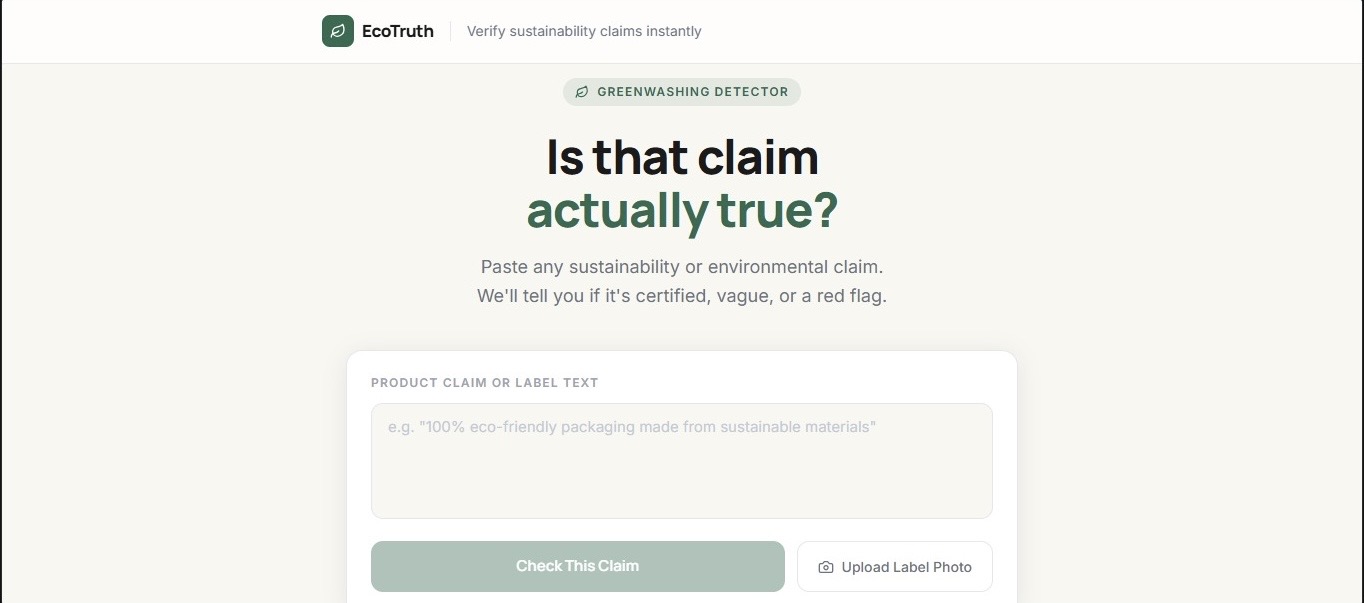
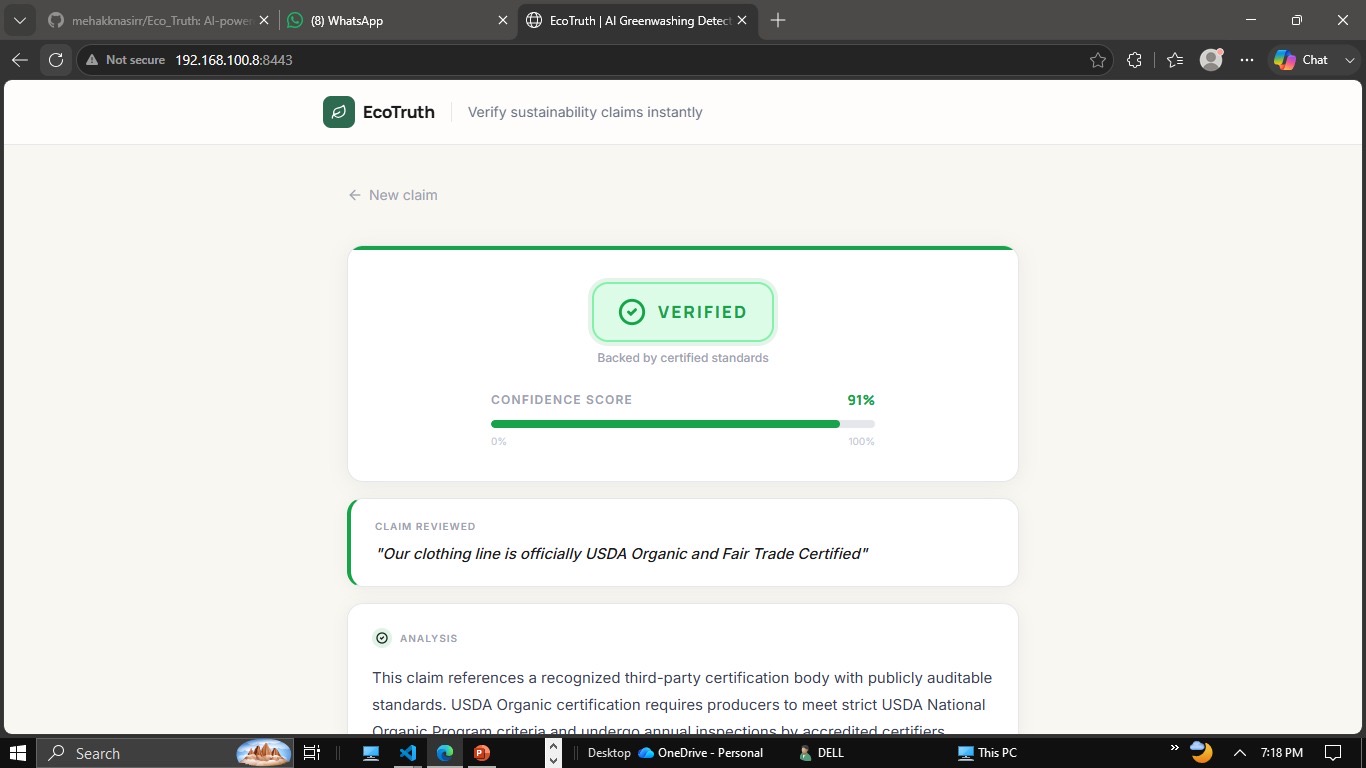
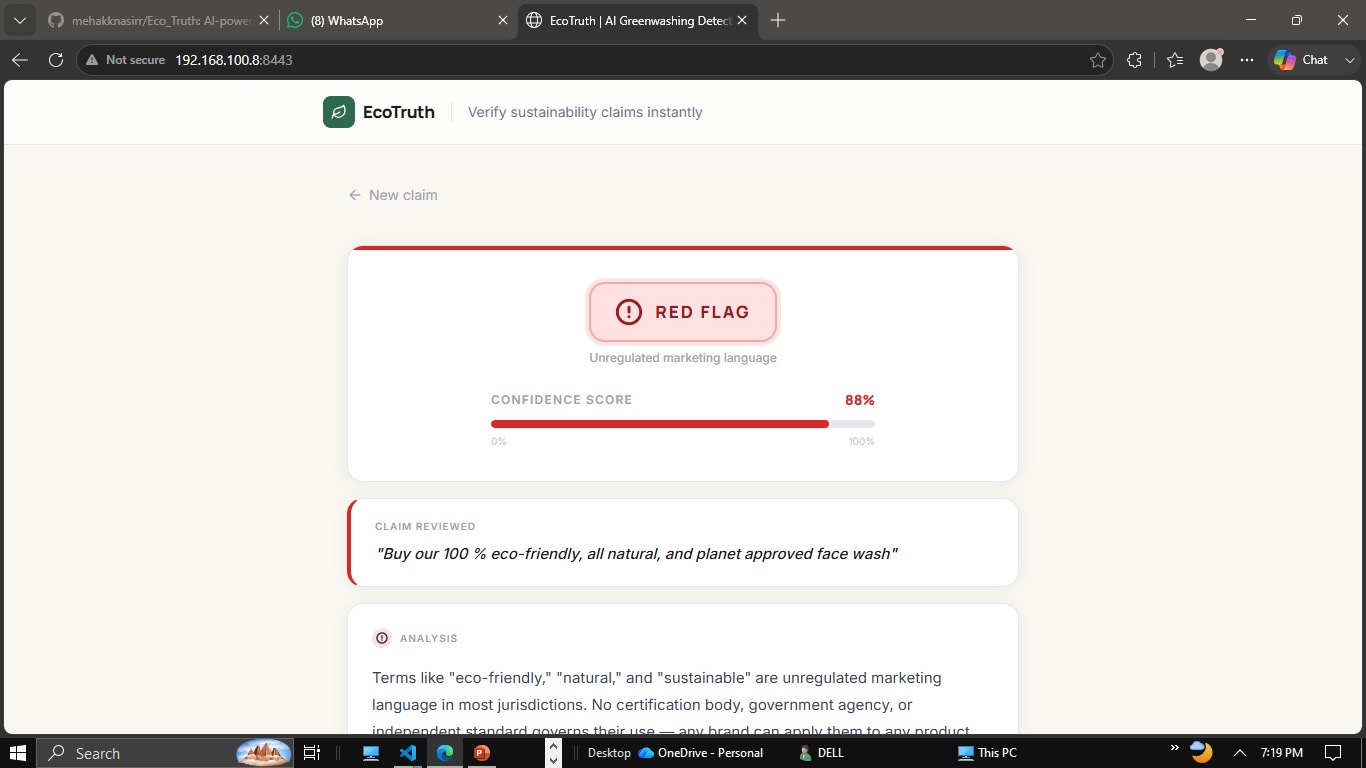
EcoTruth takes any product description or marketing claim and returns a grounded sustainability rating: Certified, Red Flag, or Vague. Each result comes with a confidence score and a plain-language explanation, plus the specific red flags or certifications that drove the verdict — so the answer is never a black box.
How we built it
- Frontend: React (Vite), designed in Figma and translated into components, so users get a clean, responsive interface for submitting claims and reading results.
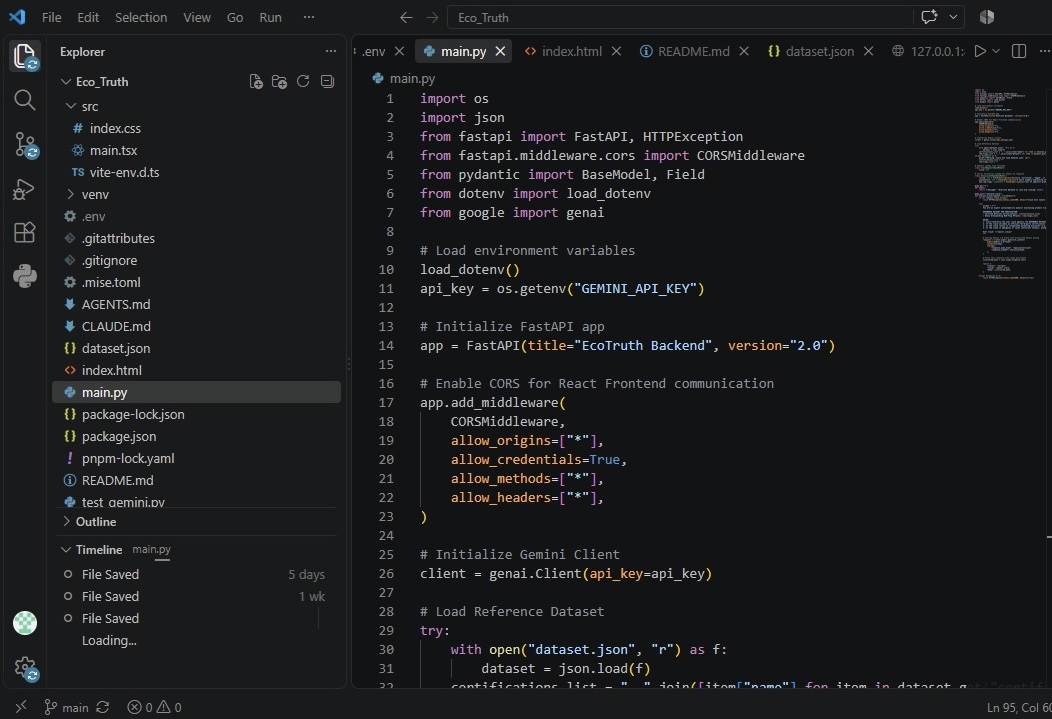
- Backend: FastAPI with Pydantic schemas that force every AI response into a strict, predictable JSON shape (
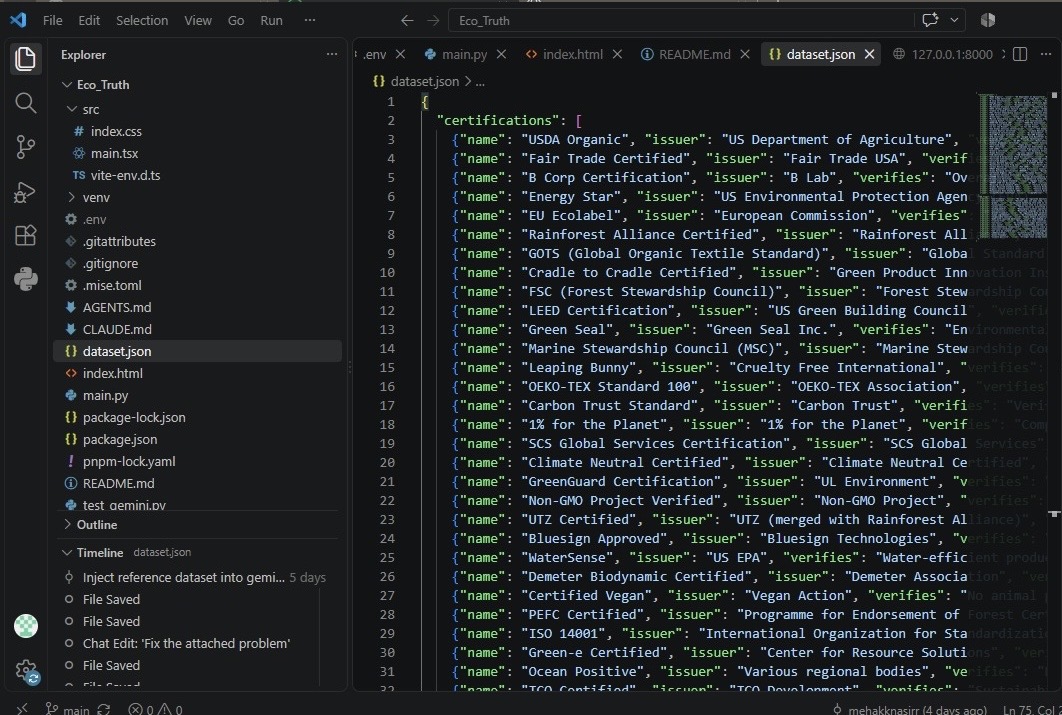
rating,explanation,key_red_flags) — no free-text surprises the UI has to guess how to render. - Grounding engine: A curated
dataset.jsonof 50 recognized global certifications and 20 known greenwashing buzzwords is injected directly into the Gemini 2.0-Flash system prompt for every request. The model is instructed to validate claims only against that dataset, not its own general knowledge — turning a normally open-ended LLM task into something closer to a verifiable lookup.
Challenges we ran into
The hardest problem wasn't the UI or the API — it was trust. Off-the-shelf LLMs will happily invent a certification that sounds plausible, which is the opposite of what a tool like this needs to do. Getting Gemini to only reason within the bounds of the reference dataset, and to say "vague" instead of guessing, took real iteration on the system prompt and the JSON schema enforcement. Building the whole stack — dataset curation, backend, frontend — solo in a 7-day window meant constantly prioritizing what actually moved the grounding accuracy forward versus polish.
Accomplishments that we're proud of
Getting a genuinely hallucination-resistant AI pipeline working end-to-end, solo, in a week. The structured-output enforcement means the frontend never has to defensively parse unpredictable AI text — every response is a rating the UI can trust and render consistently.
What we learned
Grounding an LLM well is less about the model and more about constraints: a good dataset, a tightly scoped prompt, and a schema the model is forced into. I also got much more comfortable moving a Figma design into working React components and wiring a full frontend-to-backend-to-AI pipeline by myself.
What's next for EcoTruth
- Expand the reference dataset beyond 50 certifications and 20 red flags
- Add source citations alongside each rating
- Support batch analysis of full product pages, not just single claims
- Deploy a public demo
Built With
- fastapi
- google-gemini
- pydantic
- python
- react
- typescript
- vite

Log in or sign up for Devpost to join the conversation.