-
-
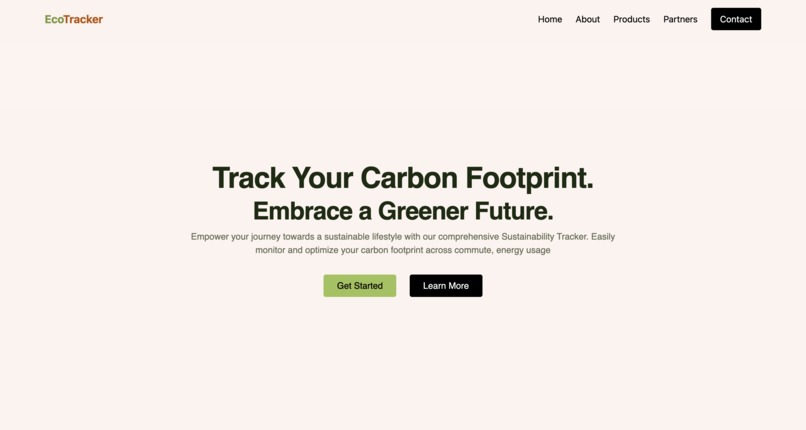
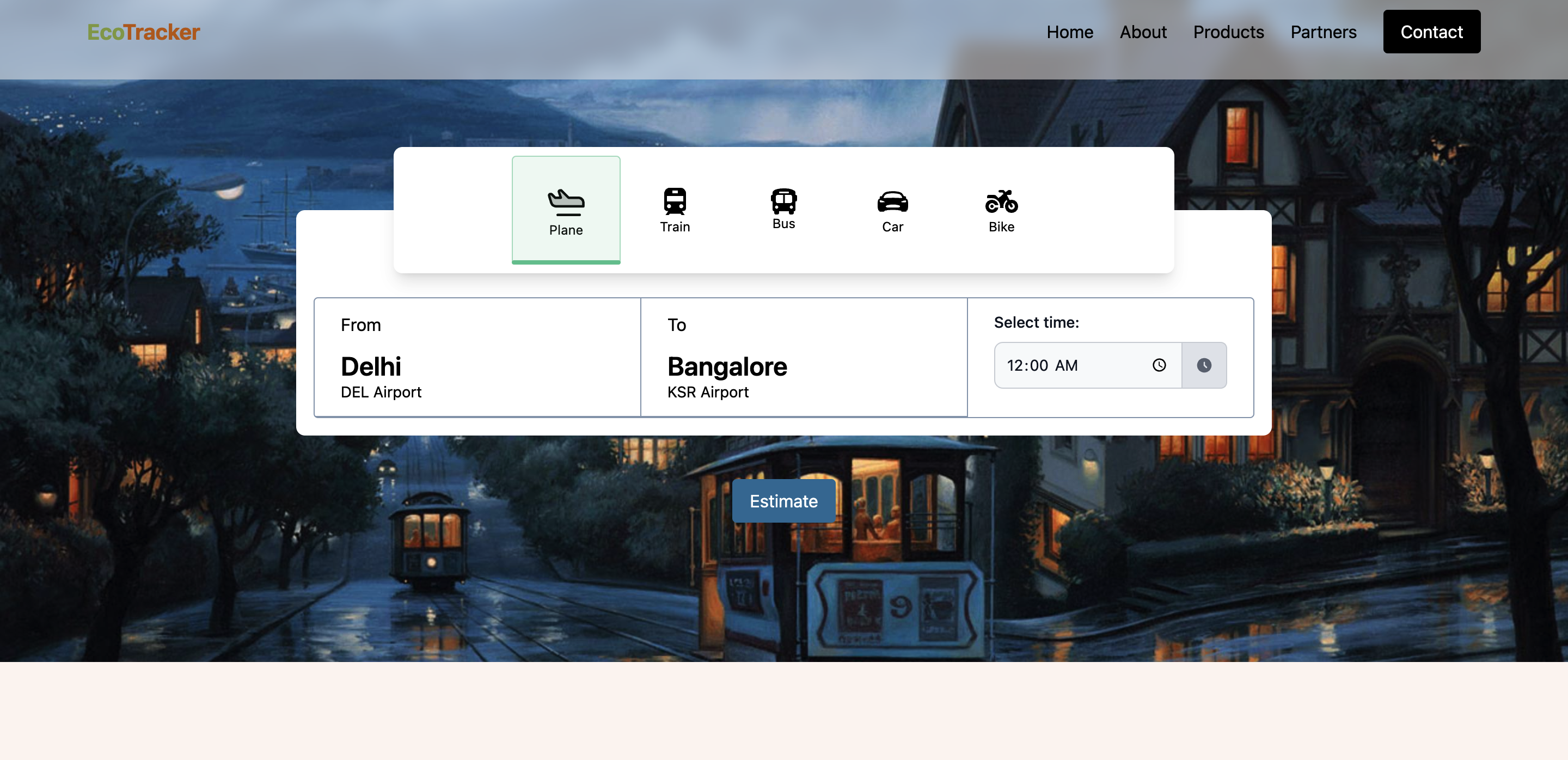
Landing Page
-
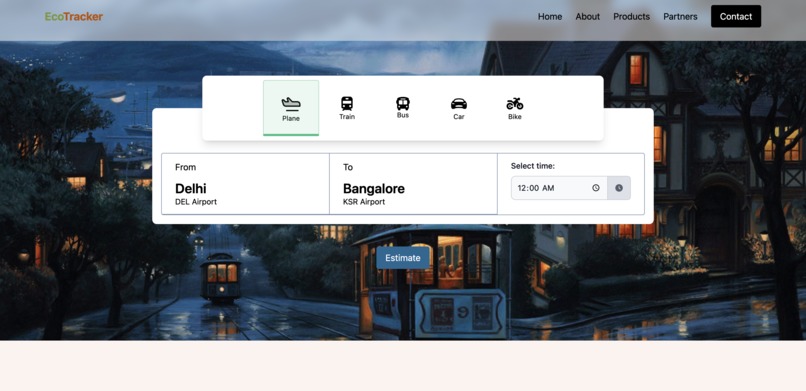
Search Page
-
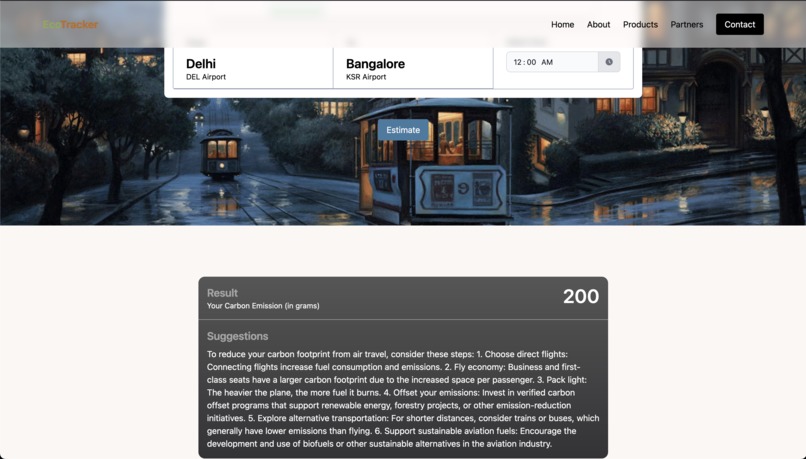
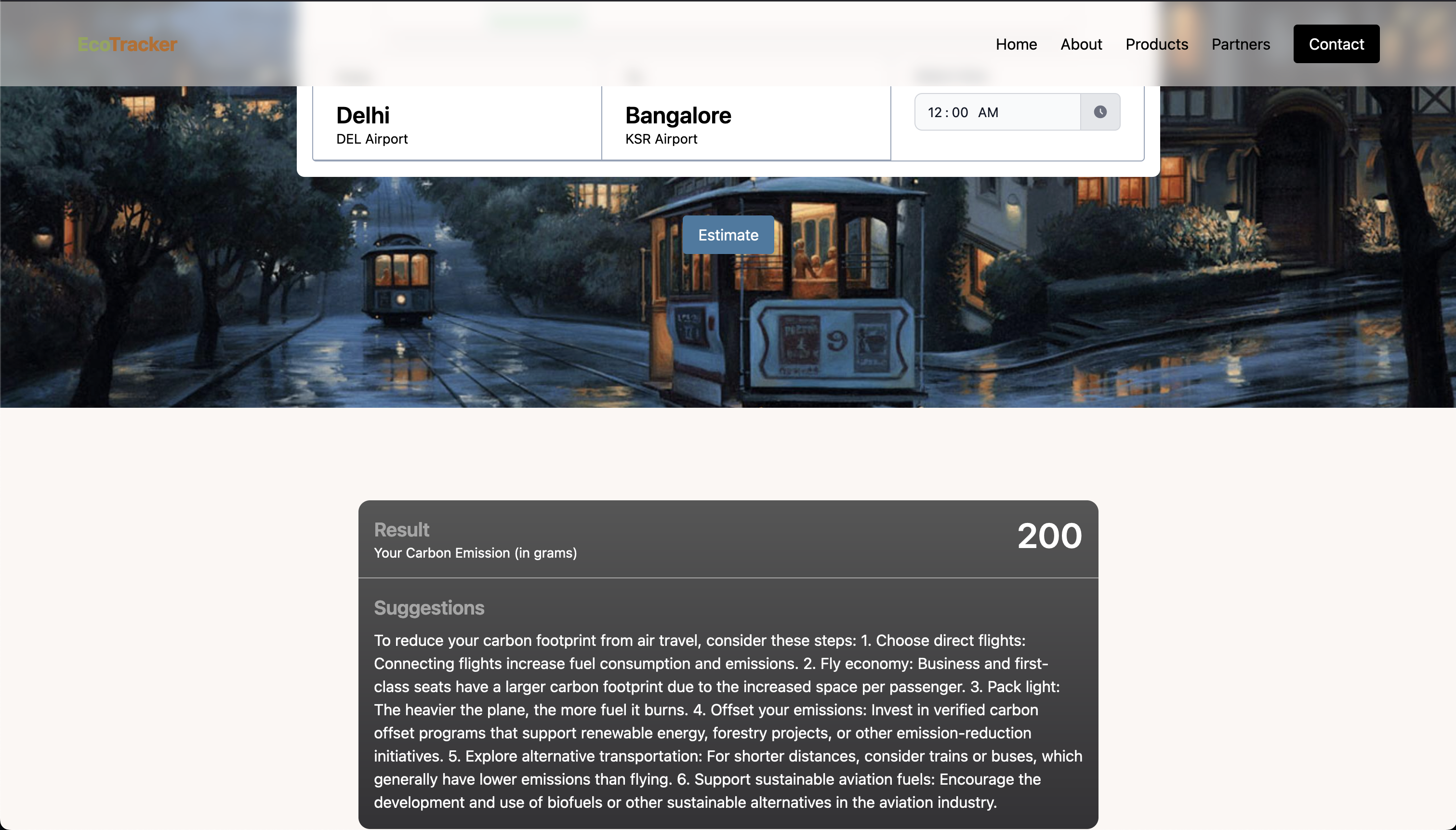
Result Page
Inspiration
Our inspiration for this project stemmed from the need to address environmental sustainability by tracking and reducing carbon emissions. We aimed to create a comprehensive tool that evaluates carbon emissions based on transportation choices, including the mode of transport, source, destination, and timing. By providing predictions and actionable suggestions, we wanted to help users make informed decisions that contribute to a greener future.
What it does
Our website tracks carbon emissions based on user input for transportation mode, source, destination, and timing. It predicts the carbon footprint of different travel options—Plane, Train, Bus, Car, and Bike—and offers tailored suggestions to reduce emissions. The platform leverages advanced algorithms and data analysis to provide accurate predictions and practical recommendations, helping users make environmentally conscious choices.
How we built it
We developed the website using Next.js for a robust and scalable frontend, with Tailwind CSS for a modern and responsive design. Flask served as the backend framework, handling data processing and communication. We integrated the Gemini AI model via Python to enhance the accuracy of carbon emission predictions and suggestions. The combination of these technologies allowed us to build a seamless and efficient platform.
Challenges we ran into
One of the primary challenges was ensuring the accuracy of carbon emission predictions based on diverse transportation modes and varying user inputs. Integrating the AI model with the Flask backend and ensuring smooth data flow was another hurdle. Additionally, optimizing the user interface for clarity and usability while presenting complex information was a key challenge.
Accomplishments that we're proud of
We are proud of creating a user-friendly website that provides accurate carbon emission predictions and practical reduction suggestions. The successful integration of Gemini AI for enhanced prediction capabilities and the effective use of Next.js and Tailwind CSS for a responsive design are significant achievements. We are also proud of our ability to provide actionable insights that can help users make a positive impact on the environment.
What we learned
Throughout this project, we gained a deeper understanding of integrating AI models with web applications, particularly using Flask and Python. We also learned the importance of optimizing user experience in presenting complex data. The project highlighted the challenges of accurate emission tracking and the value of providing clear, actionable recommendations to users.
What's next for our project
In the future, we plan to expand the website’s features by incorporating more transportation modes and refining emission prediction algorithms. We aim to enhance the user experience with additional functionalities, such as real-time emission tracking and personalized carbon reduction plans. We also plan to explore partnerships with environmental organizations to further the impact of our tool.


Log in or sign up for Devpost to join the conversation.