-
-
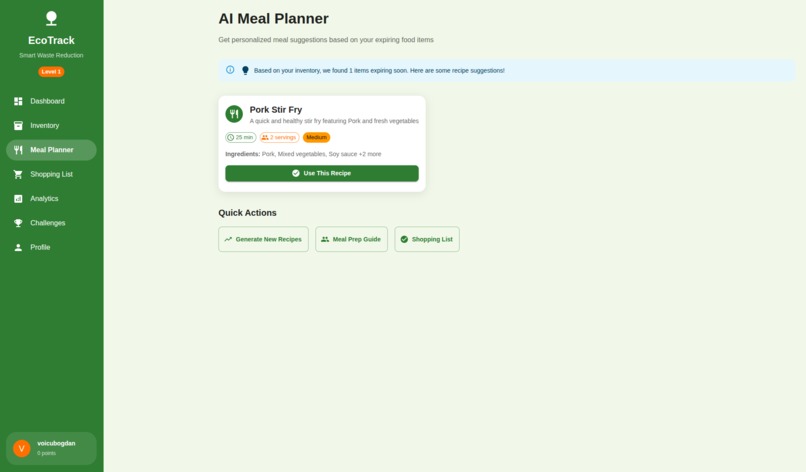
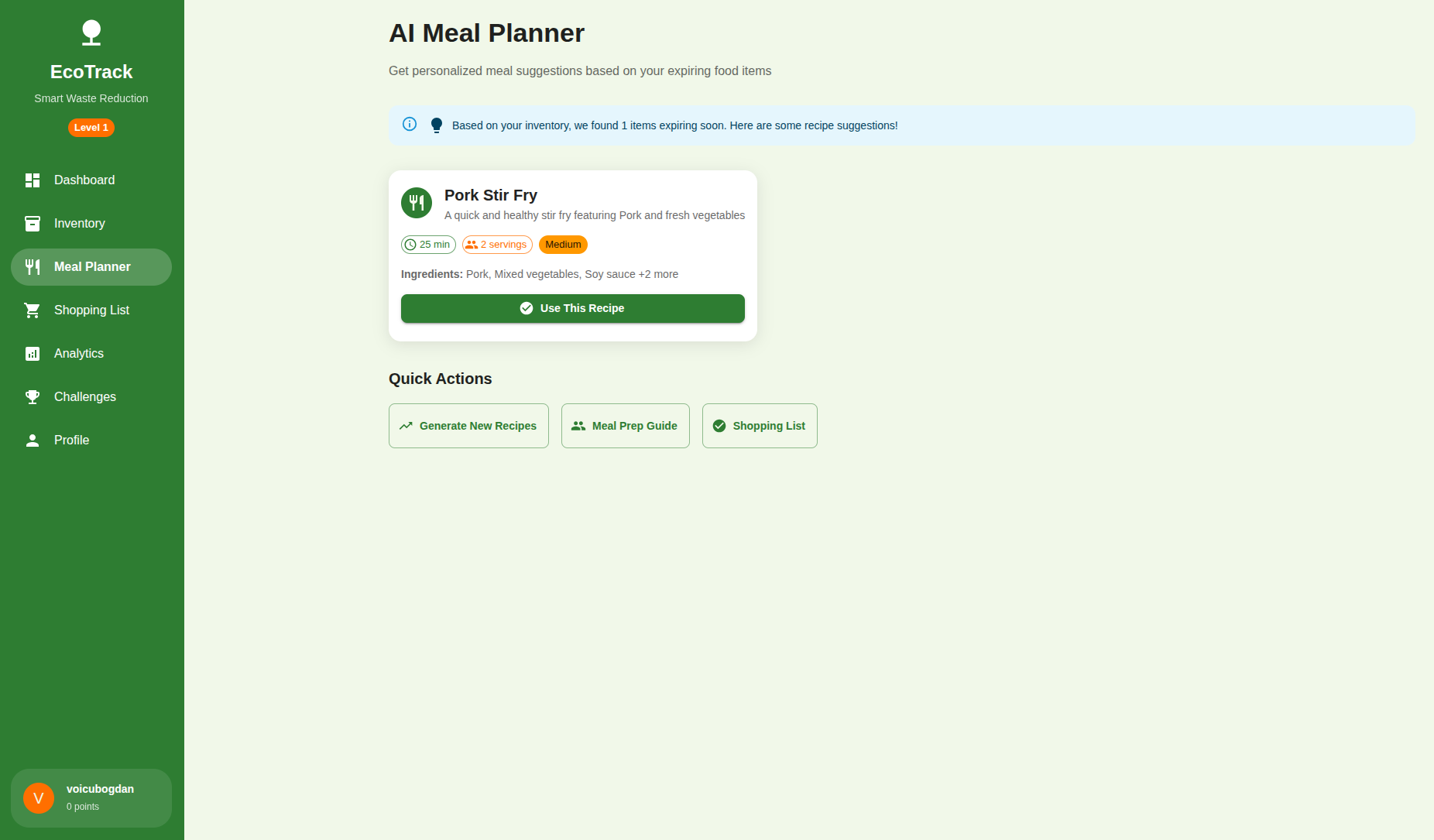
AI Meal Planner
-
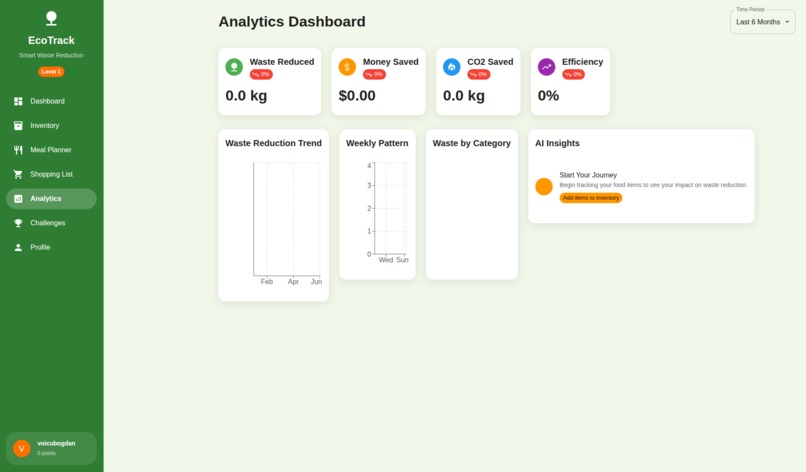
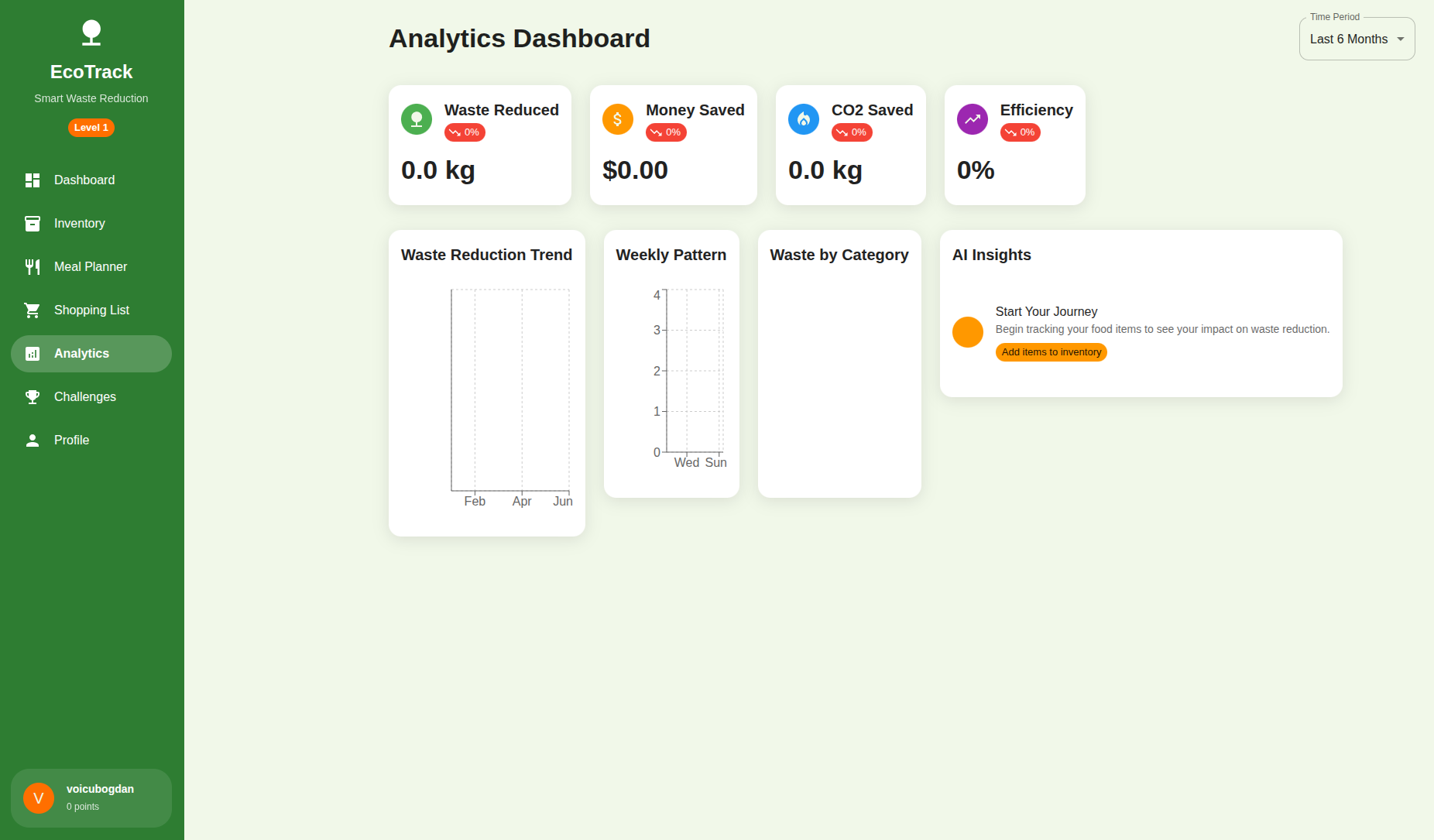
Analytics
-
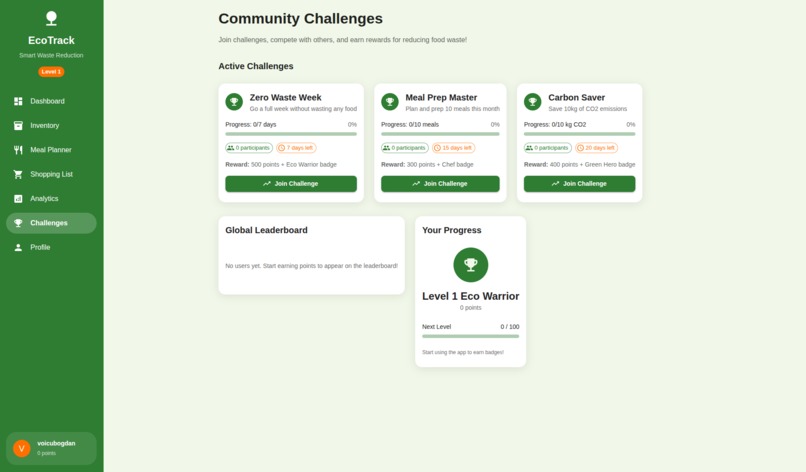
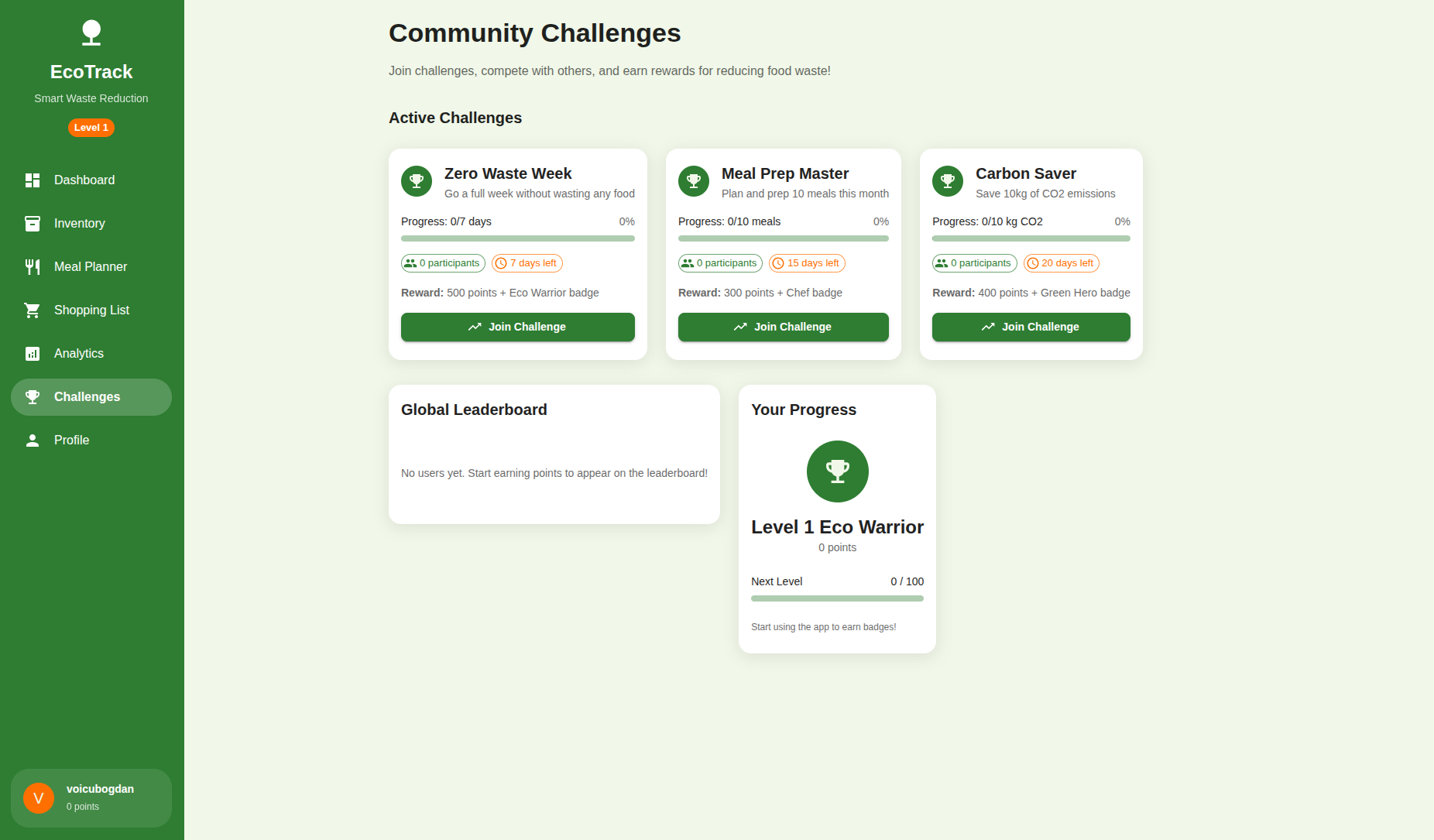
Challenges
-
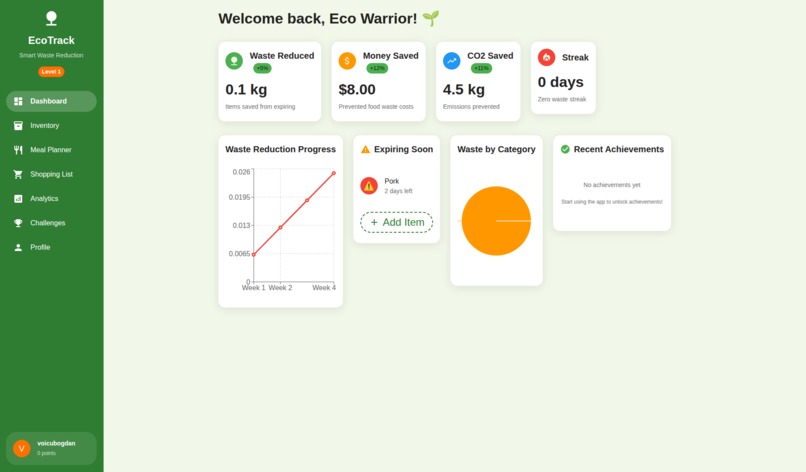
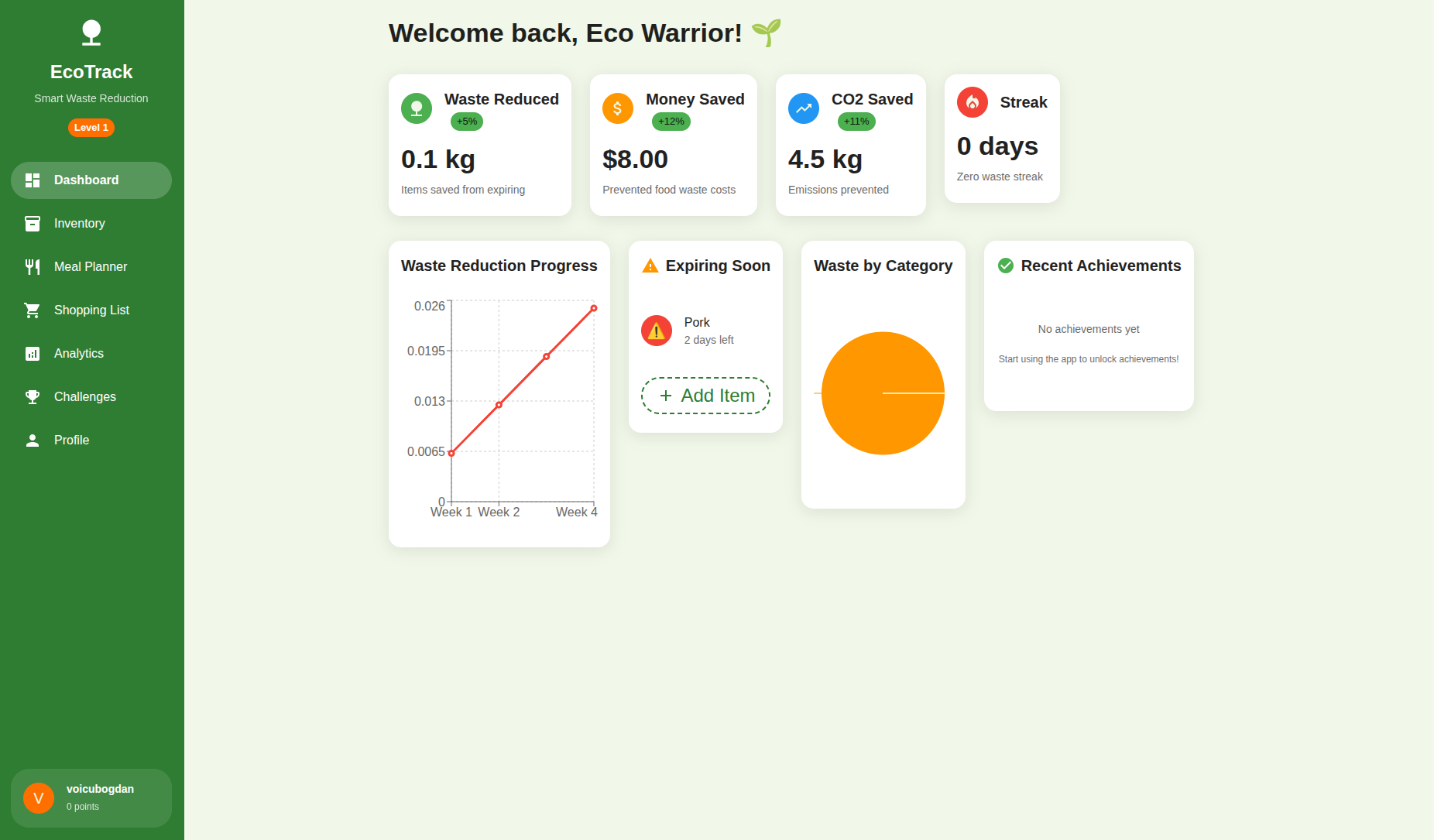
Dashboard
Inspiration
EcoTrack was inspired by the need to make sustainable living easier and more accessible. We wanted to empower users to track their consumption, reduce waste, and make eco-friendly choices in their daily lives.
What it does
EcoTrack helps users manage their inventory, plan meals, and create shopping lists while minimizing food waste. It integrates with Supabase for authentication and data storage, providing a seamless experience for tracking and analyzing consumption habits.
How we built it
We built EcoTrack using React for the frontend and Supabase for backend services, including authentication and database management. The app leverages context providers for state management and custom hooks for data operations. We focused on modular design and reusable components to ensure scalability.
Challenges we ran into
Integrating Supabase authentication and syncing real-time data presented some challenges. Designing an intuitive user interface and managing complex state across multiple contexts also required careful planning and debugging.
Accomplishments that we're proud of
We’re proud of creating a functional MVP that allows users to track inventory and shopping lists, with secure authentication and a clean, user-friendly interface. The modular architecture makes future expansion straightforward.
What we learned
We learned a lot about Supabase integration, React context management, and building scalable web applications. We also gained insights into user experience design for sustainability-focused apps.
What's next for EcoTrack
Next, we plan to add analytics for tracking environmental impact, gamify challenges to encourage sustainable habits, and expand integrations with other platforms. We aim to make EcoTrack a comprehensive tool for eco-conscious living.


Log in or sign up for Devpost to join the conversation.