-
-
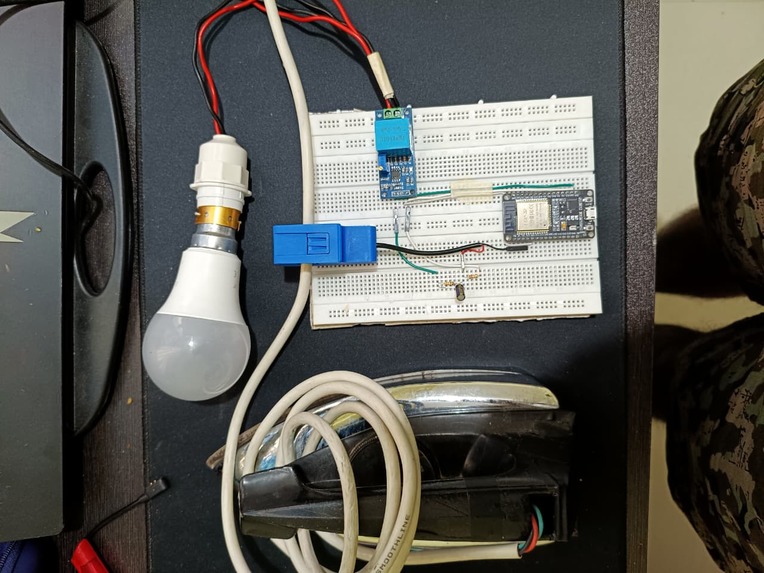
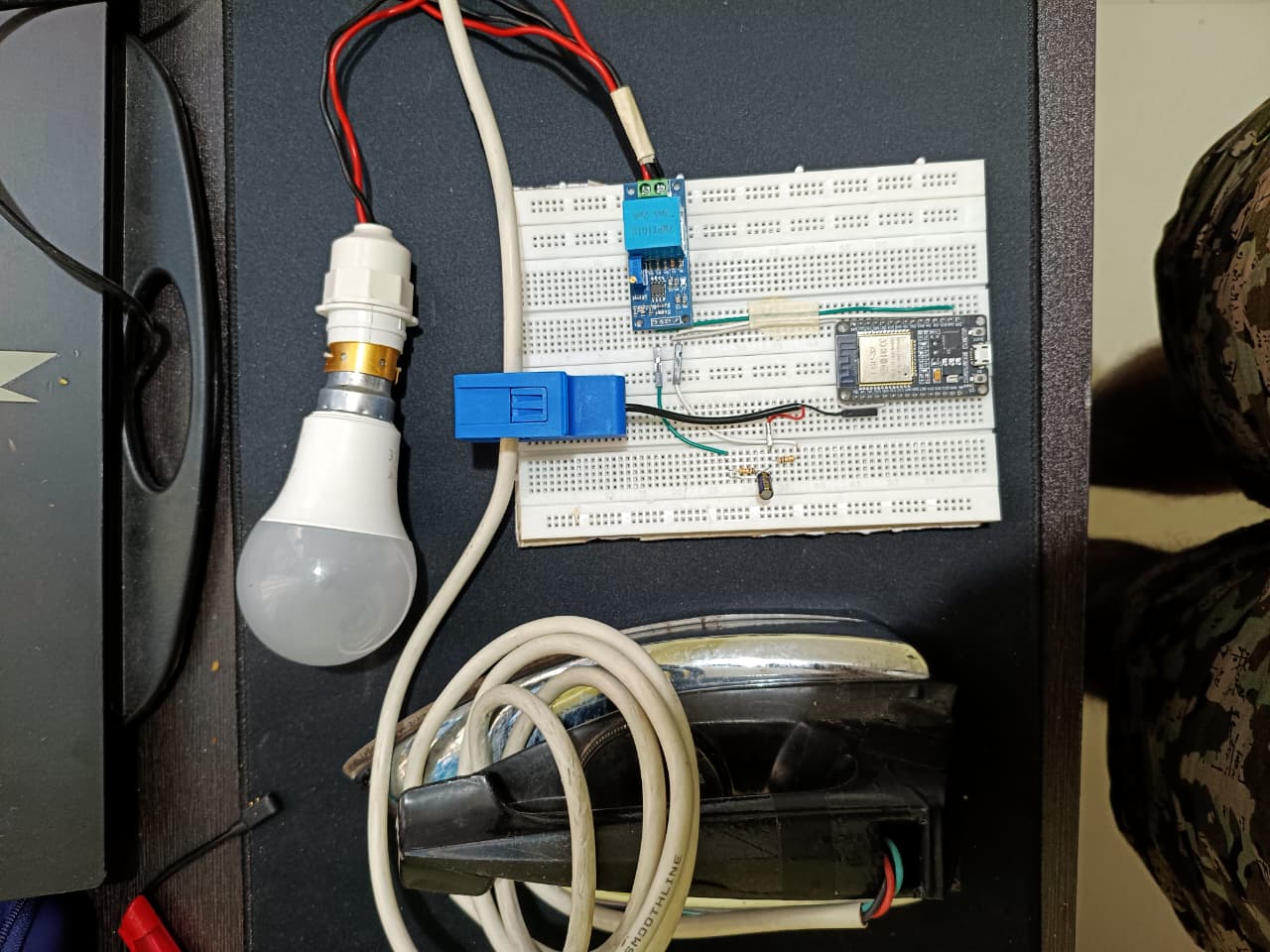
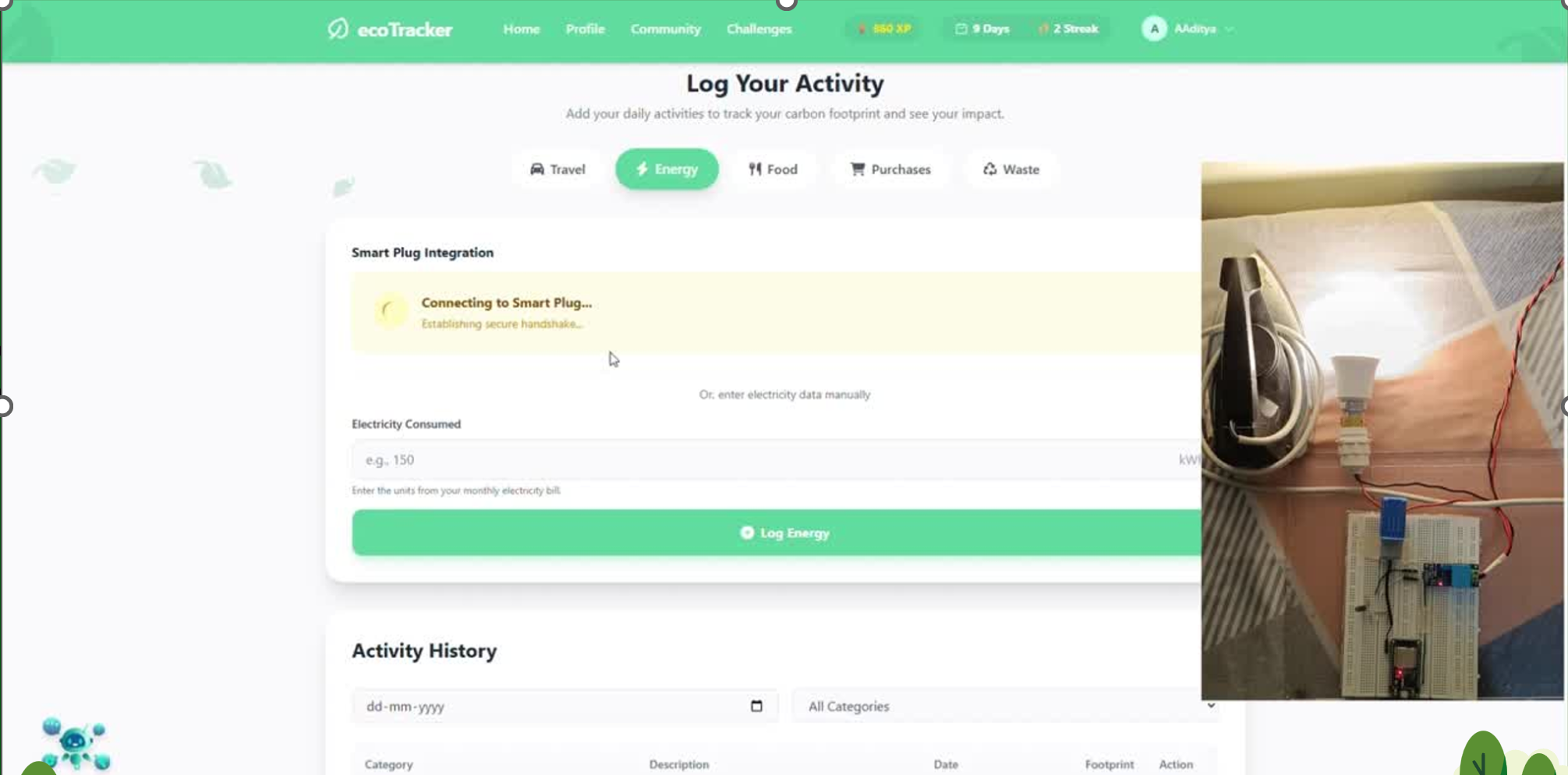
Hardware integrated with esp32 and other sensors
-
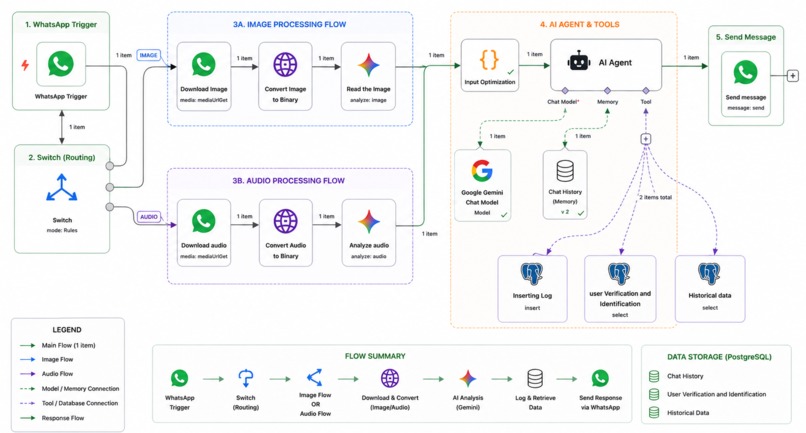
schematic diagram
-

Hardware integrated with esp32 and other sensors
-
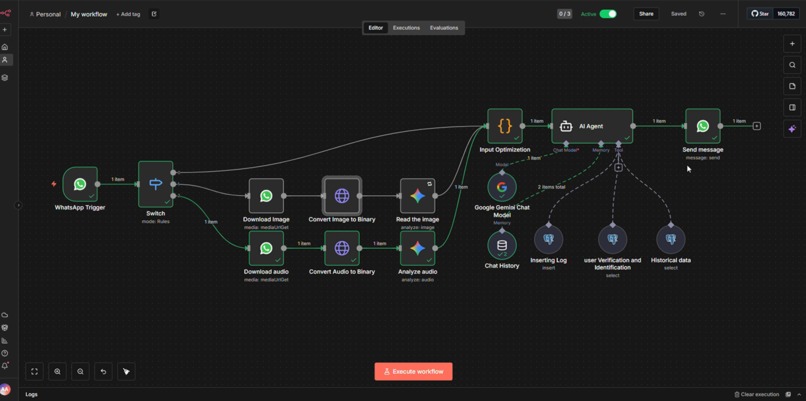
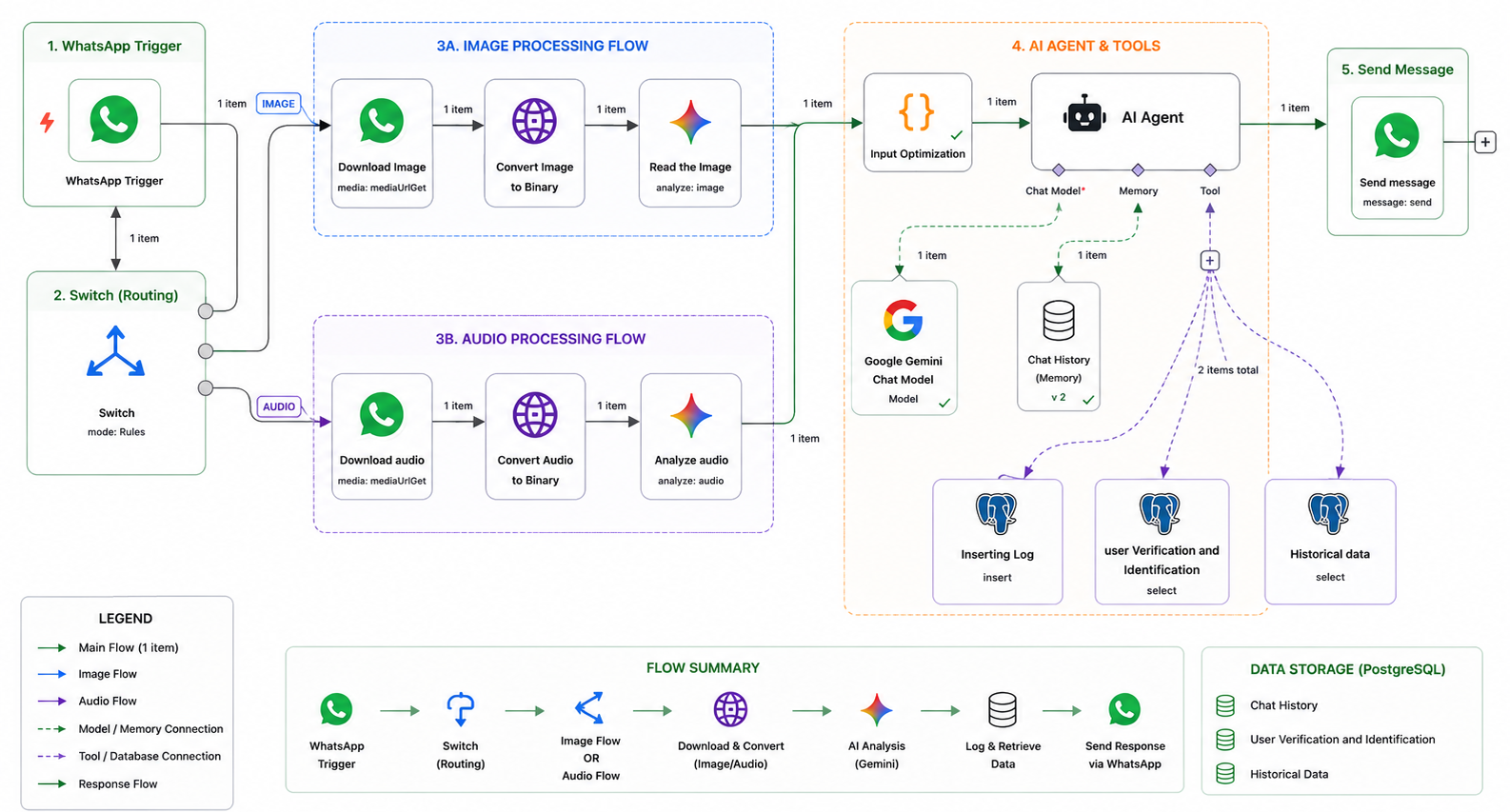
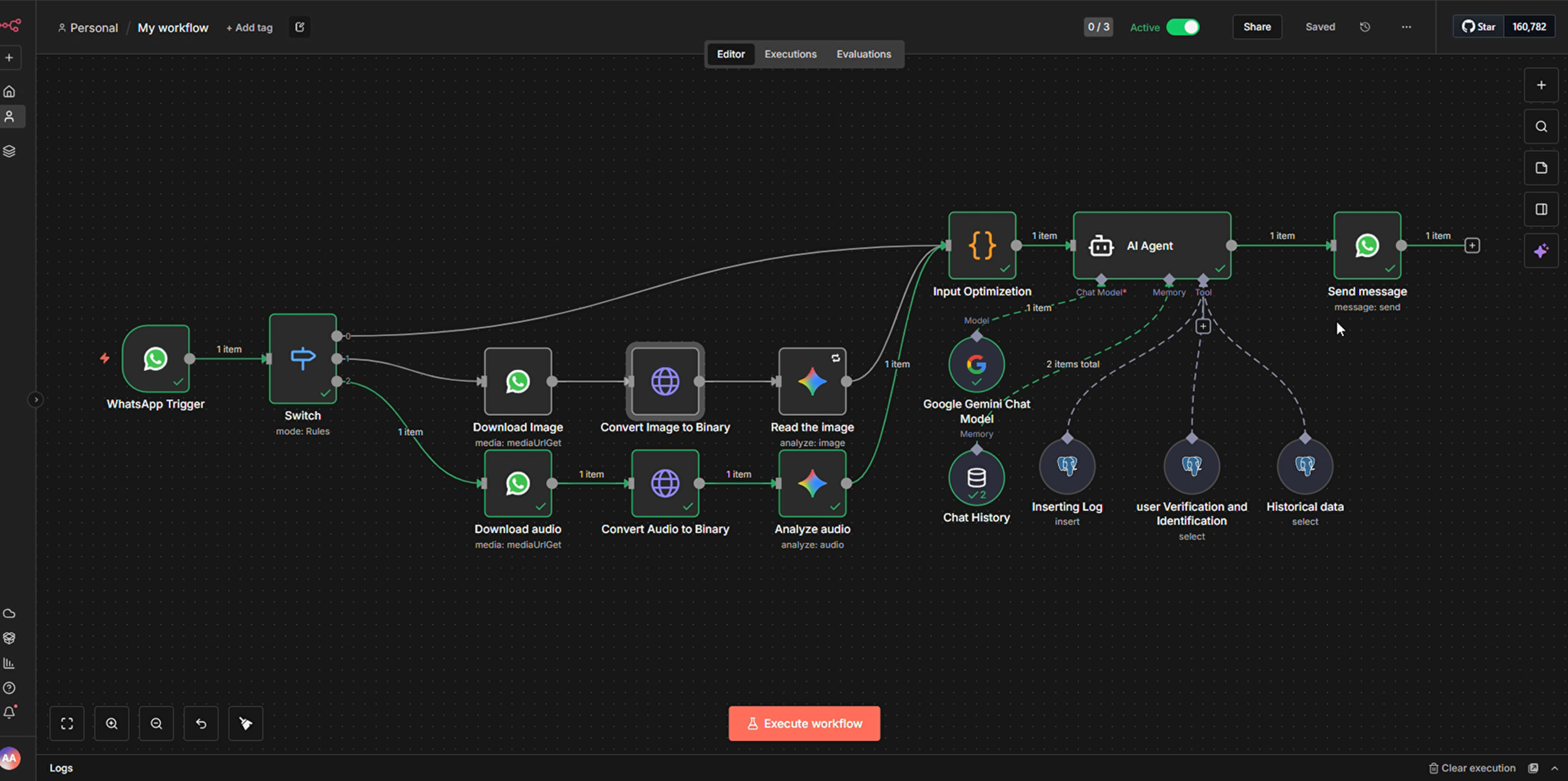
workflow
-
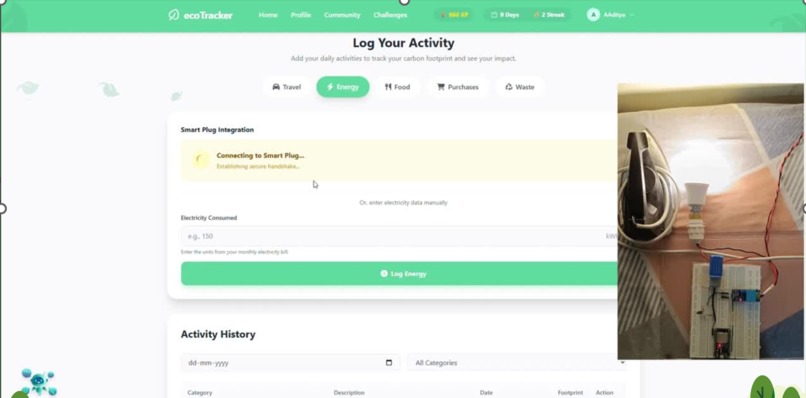
iot system integrated with whatsapp
-
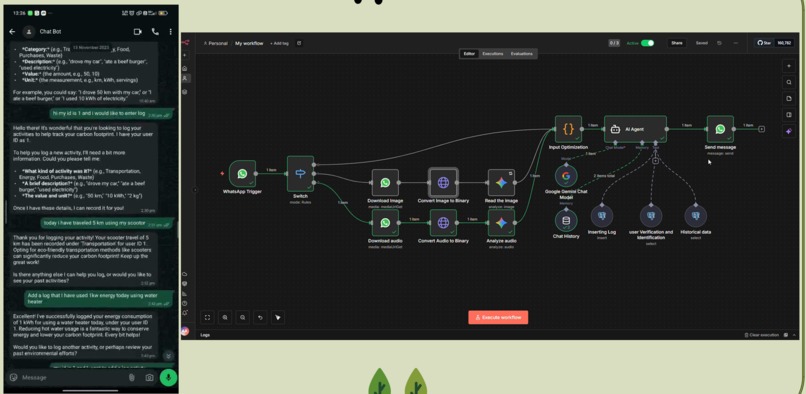
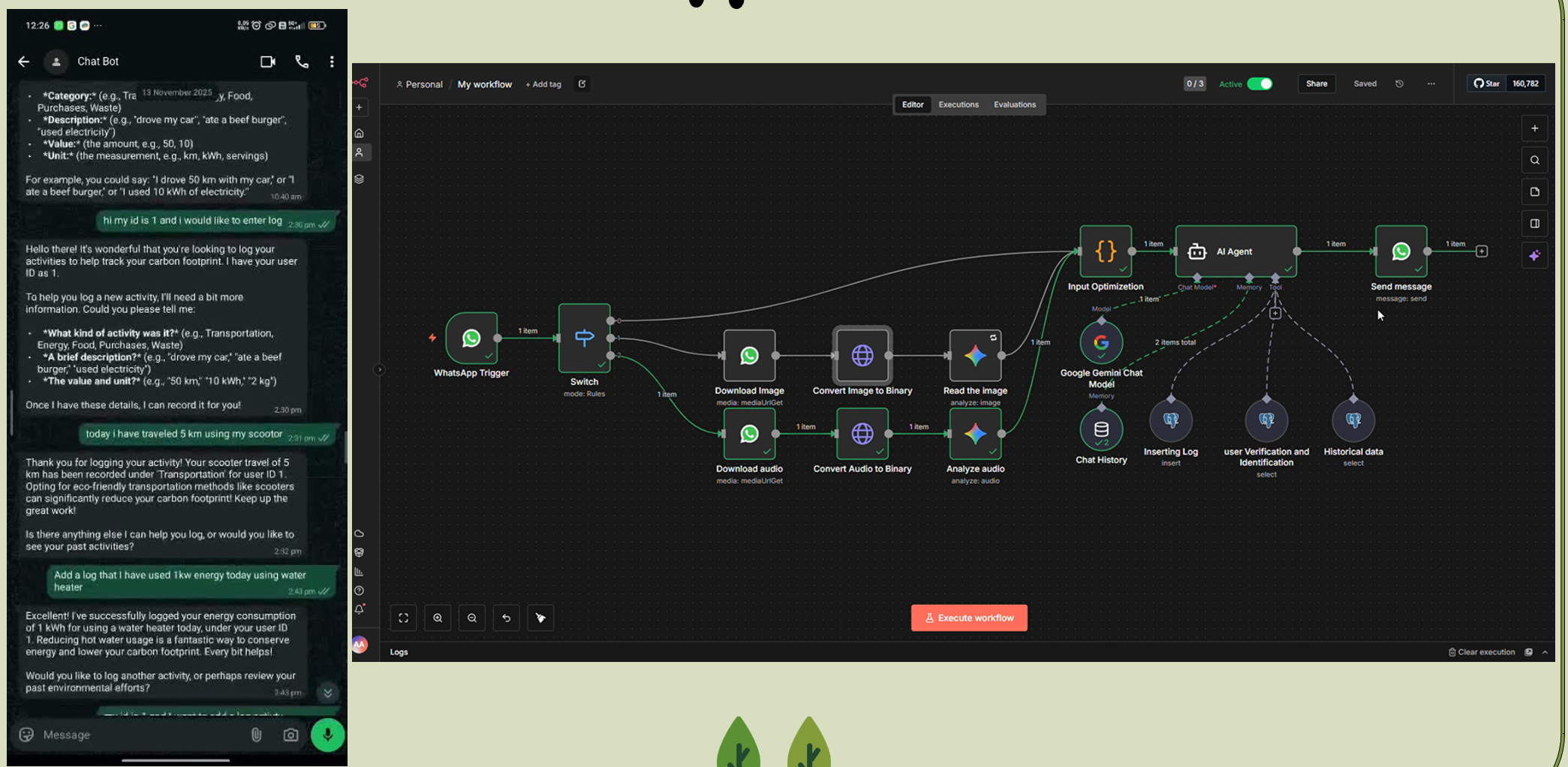
whatsapp integration with our platform
-
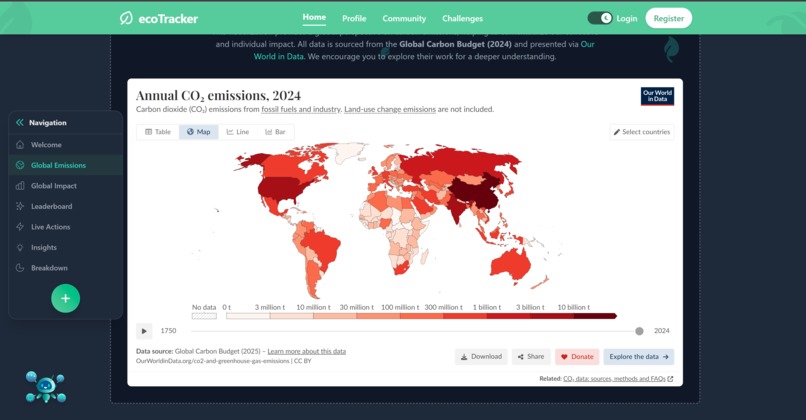
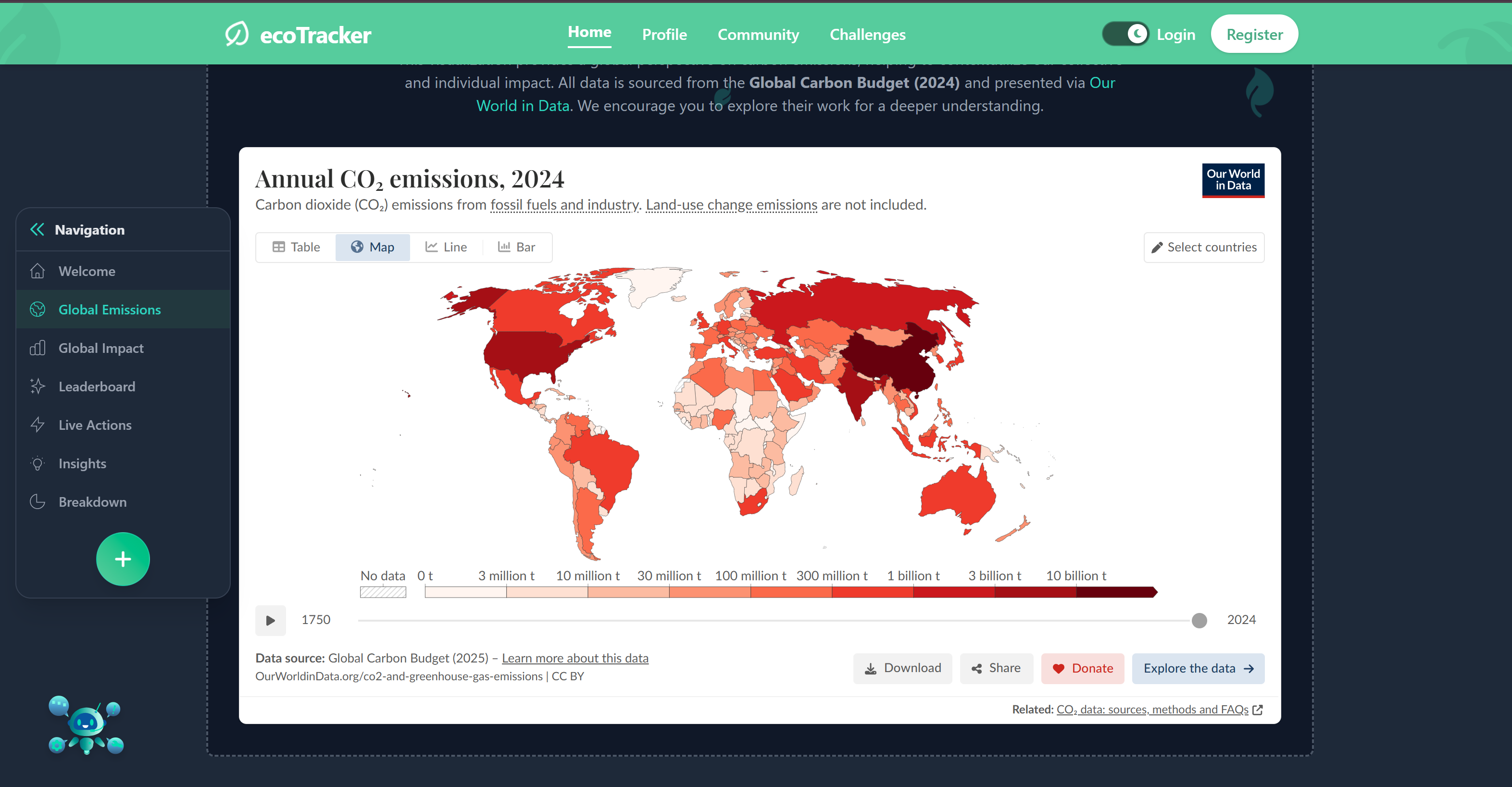
website overview ( you can checkout with given link )

EcoTrack: From Energy Data to Real Carbon Intelligence
-------------------------------------------------------------------------------------------------------------
Inspiration
EcoTrack was inspired by a critical gap in today’s sustainability systems. Despite global efforts toward Net-Zero, most carbon tracking still relies on estimates, spreadsheets, and manual inputs. This leads to inaccurate reporting and a lack of real-world impact. With global temperatures already rising by ~1.1°C due to human activity, we wanted to build a system that works on real data—helping organizations understand and reduce emissions at the source rather than just reporting them.
-------------------------------------------------------------------------------------------------------------
What it does
1. Captures real-time energy usage using a low-cost IoT device
2. Converts energy consumption into carbon emissions automatically
3. Identifies appliance-level usage using a single sensor
4. Predicts future energy usage using AI
5. Provides insights via a simple WhatsApp interface
6. Enables proactive reduction of emissions instead of just tracking
-------------------------------------------------------------------------------------------------------------
How we built it
Our system combines hardware, AI, and software into one cohesive solution. On the hardware side, we used an ESP32 with current and voltage sensors to capture energy data at regular intervals. This data is processed through a backend pipeline where noise is filtered and cleaned for accuracy.
We implemented Non-Intrusive Load Monitoring (NILM) techniques to break down total energy usage into appliance-level insights without requiring multiple sensors. On top of this, we integrated LSTM-based time-series forecasting models to predict future energy consumption patterns.
For usability, we integrated the system with WhatsApp, allowing users to interact with the system naturally without needing to learn a new platform. This significantly reduces friction and improves adoption.
-------------------------------------------------------------------------------------------------------------
Challenges we ran into
One of our biggest challenges was handling noisy sensor data while maintaining high accuracy (<1% error). We also faced difficulties integrating real-time hardware data with backend processing systems. Balancing technical complexity with a simple user experience was another key challenge. Additionally, ensuring low-cost scalability while maintaining reliability required careful design decisions.
-------------------------------------------------------------------------------------------------------------
Accomplishments that we’re proud of
1. Built a complete working AI + IoT cyber-physical system
2. Achieved real-time carbon tracking with <1% error margin
3. Enabled appliance-level insights using a single sensor (NILM)
4. Integrated AI forecasting for proactive emission reduction
5. Created a WhatsApp-based interface for frictionless adoption
-------------------------------------------------------------------------------------------------------------
What we learned
We learned that solving real-world problems requires integrating hardware, AI, and user experience into one system. We also realized that predictive systems create far more impact than reactive ones—preventing emissions is more valuable than just reporting them.
-------------------------------------------------------------------------------------------------------------
Technology Used
EcoTrack is built as a cyber-physical system combining IoT, AI, and software:
1. Hardware : ESP32 microcontroller with current (SCT-013) and voltage (ZMPT101B) sensors for real-time energy data
2. Processing : Data cleaning and real-time pipelines
3. Analytics : Non-Intrusive Load Monitoring (NILM) for appliance-level insights
4. AI : LSTM-based forecasting for predicting energy usage
5. Interface : WhatsApp-based interaction for seamless user experience + a web dashboard for detailed insights and visualization
-------------------------------------------------------------------------------------------------------------
What’s next for EcoTrack
1. Scale deployment across organizations and industries
2. Improve AI models using larger datasets
3. Expand to broader Scope 3 emission tracking
4. Integrate with enterprise compliance systems (e.g., ESG reporting tools)
-------------------------------------------------------------------------------------------------------------
References
Research & Knowledgebase
1. IPCC. (2023). Climate Change 2023: Synthesis Report. https://www.ipcc.ch/report/ar6/syr/
2. CDP. (2022). Transparency to Transformation Report. https://www.cdp.net/en/research/global-reports/transparency-to-transformation
3. Anjana, M. S., et al. (2025). IoT-enabled distributed systems for reducing carbon footprints. IEEE Access
4. Zhu, H., & Li, D. (2024). Carbon emission adjustment models considering green finance. IEEE Access.
-------------------------------------------------------------------------------------------------------------
Technical Concepts
1. Non-Intrusive Load Monitoring (NILM)
2. Time-Series Forecasting using LSTM Networks
3. Carbon Emission Calculation using Grid Emission Factors
-------------------------------------------------------------------------------------------------------------
Documentation
1. ESP32 Documentation: https://docs.espressif.com
2. Angular Documentation: https://angular.dev
3. TypeScript Handbook: https://www.typescriptlang.org/docs
4. PlatformIO Docs: https://docs.platformio.org
-------------------------------------------------------------------------------------------------------------
Third-party software used
1. VS Code
2. Arduino IDE / PlatformIO
3. SolidWorks (for hardware design)
4. Google Cloud (backend hosting)
5. Vercel (frontend deployment)
6. WhatsApp API integration
-------------------------------------------------------------------------------------------------------------
EcoTrack doesn’t just track carbon emissions — it helps prevent them in real time.
-------------------------------------------------------------------------------------------------------------
Built With
- django
- esp32
- iot
- lstm
- machine-learning
- next.js
- python
- react
- react.js
- sct-013
- sct-013-sensor

Log in or sign up for Devpost to join the conversation.