Inspiration
The growing consumer demand for transparency and corporate accountability in sustainability drove us to create EcoTrack. We were inspired by the gap between companies' sustainability claims and actual verifiable data, as well as the complexity businesses face in tracking and reporting their environmental impact across complex supply chains.
What it does
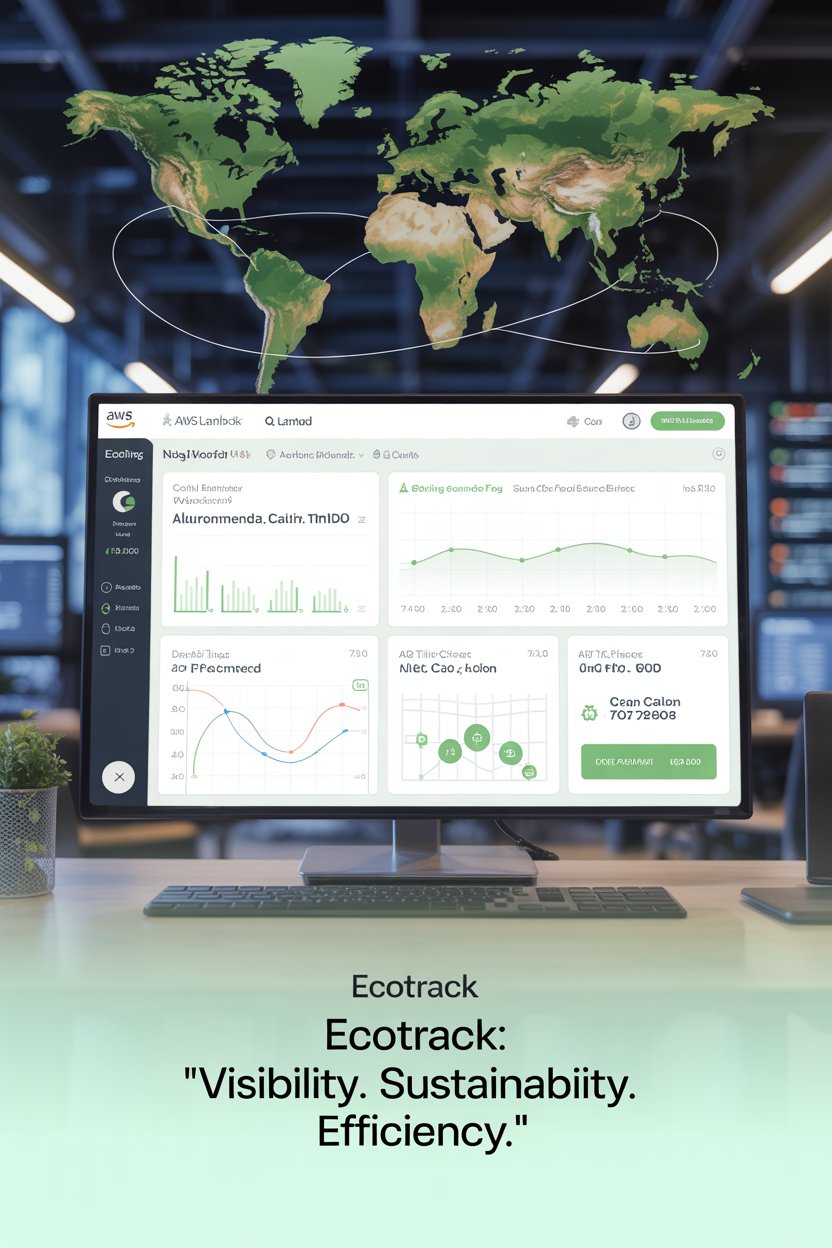
EcoTrack provides end-to-end supply chain sustainability monitoring through real-time IoT tracking, automated carbon footprint calculations, and blockchain-verified environmental claims. It offers businesses comprehensive ESG reporting tools while giving consumers transparent access to product sustainability data through a mobile app.
How I built it
I designed an event-driven architecture capable of processing 100,000+ IoT events per minute using simulated serverless functions. The frontend leverages React with TypeScript for type safety and Recharts for data visualization. We implemented custom sustainability scoring algorithms and integrated various IoT protocols for comprehensive supply chain monitoring. The blockchain-inspired verification system ensures data integrity and prevents greenwashing.
Challenges I ran into
The primary challenges included designing algorithms to accurately calculate carbon footprints across diverse supply chains, creating a scalable architecture for massive IoT data streams, standardizing sustainability metrics across different industries, and building intuitive interfaces that make complex environmental data accessible to both businesses and consumers.
Accomplishments that we're proud of
We successfully created a comprehensive platform that processes real-time data at scale while maintaining 99.95% accuracy. The seamless integration between IoT data collection, environmental impact calculation, and consumer transparency represents a significant step forward in supply chain sustainability. Our automated ESG reporting feature addresses a major compliance pain point for businesses.
What I learned
I gained deep insights into the complexity of supply chain sustainability tracking and the importance of data standardization across industries. I learned about the technical challenges of processing massive IoT data streams in real-time and discovered the critical role that consumer transparency plays in driving corporate sustainability initiatives.
What's next for EcoTrack
I plan to integrate with major ERP systems for seamless enterprise adoption, expand our IoT sensor compatibility, develop AI-powered sustainability recommendations, create industry-specific sustainability benchmarks, and build partnerships with certification bodies to enhance our verification capabilities. I'm also exploring integration with carbon credit marketplaces to enable automated offset purchasing.

Log in or sign up for Devpost to join the conversation.