Inspiration
We created EcoTrack because climate change is one of the biggest challenges of our time, and most people want to live sustainably but don’t know how. The problem is that household utilities—like electricity and water—usually only show up in monthly bills, so it’s hard to see where resources are being wasted until it’s too late. We wanted to make sustainability visible and easy to act on, by showing people in real time how their daily habits affect the environment.
What it does
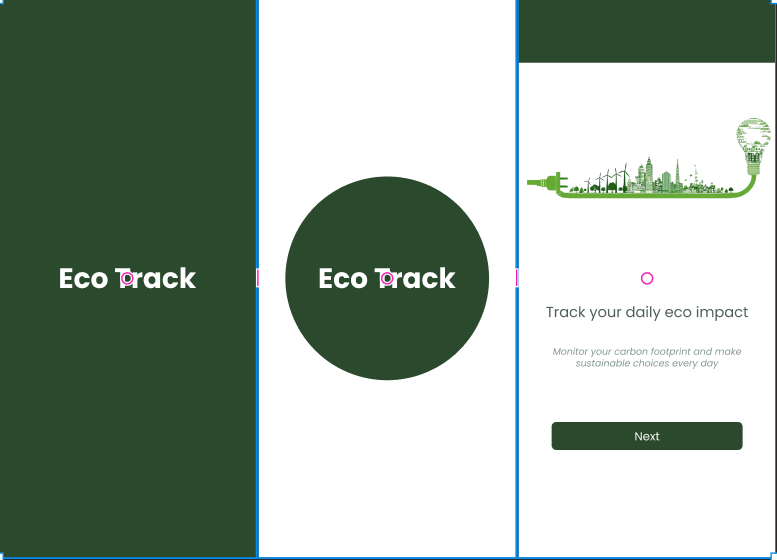
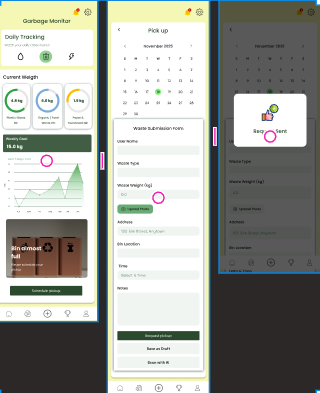
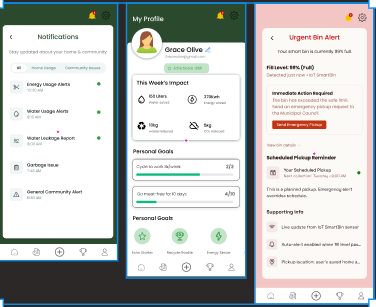
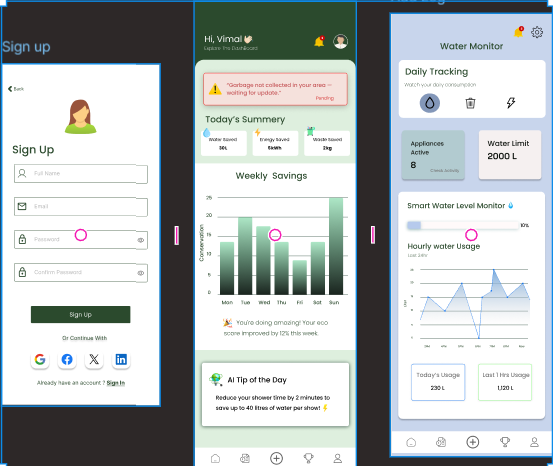
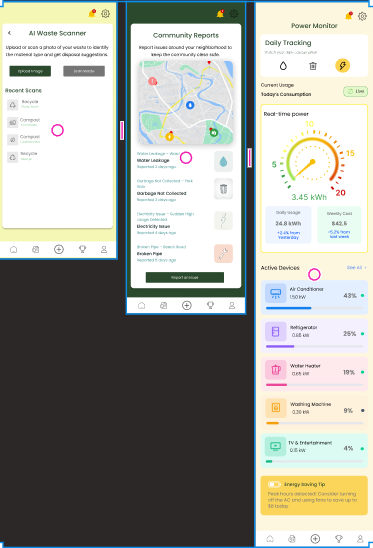
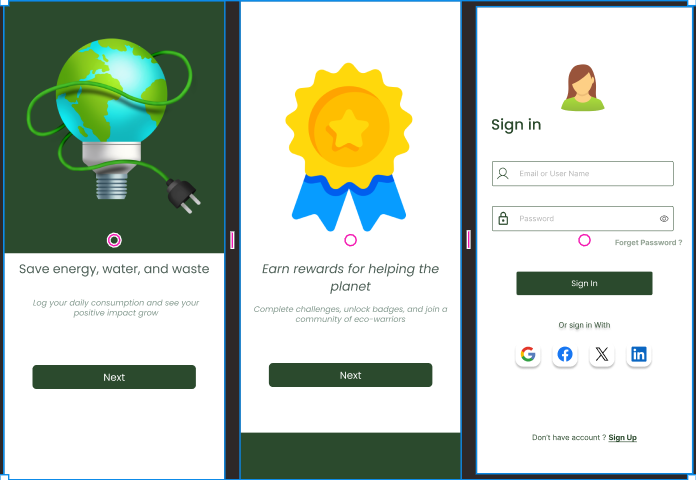
EcoTrack is a conceptual platform that helps households understand and reduce their environmental footprint. In our prototype, it shows:
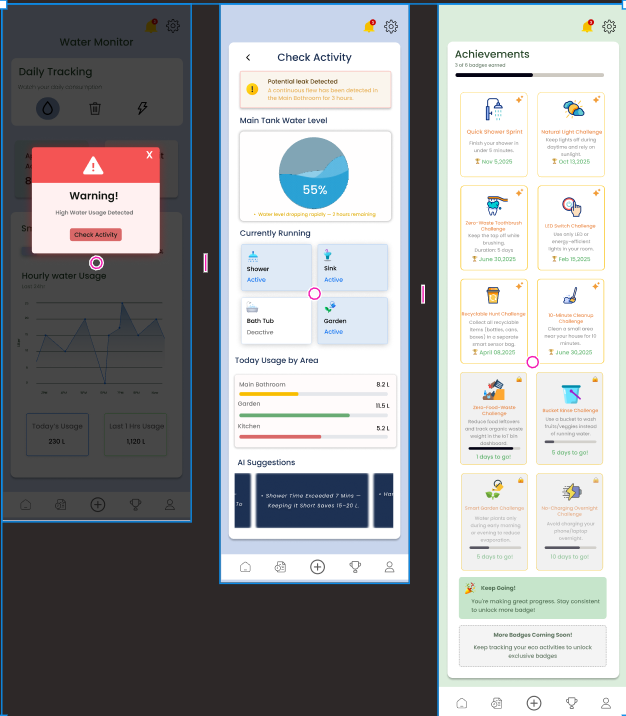
Real-Time Monitoring (Conceptual): Track electricity, water, and waste usage.
Actionable Tips: Suggests ways to save resources based on your habits.
Gamification: Earn points, badges, and complete challenges to stay motivated.
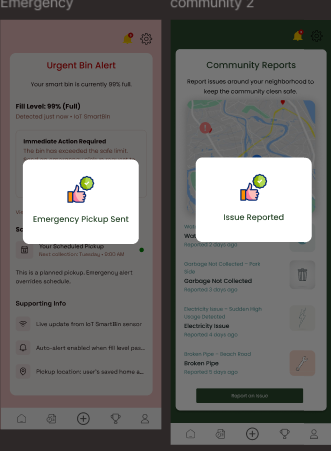
Community Reporting: A way for people to report local issues, like illegal dumping or blocked drains.
How I built it
EcoTrack is design-only, created as a high-fidelity Figma prototype. We followed Design Thinking principles:
Plan & Structure: Made a clear site map and user workflow so navigating the app feels simple and logical.
Design: Focused on minimalist, accessible visuals, using calm green and blue colors to reflect eco-friendly ideas.
Data Visualization (Conceptual): Designed gauges, charts, and animations to make resource usage easy to understand.
Even though there’s no real IoT or backend yet, the prototype shows how these features could work in a real app.
Challenges I ran into
Showing all resource data in one place without making it overwhelming.
Turning complex environmental data into something simple and actionable.
Designing a platform that motivates users to change their habits, not just watch numbers.
Accomplishments that I'm proud of
Created a rewarding and easy-to-use prototype that turns sustainability into a daily habit.
Demonstrated gamification and community features to motivate eco-friendly behavior.
Illustrated how IoT and AI could be used conceptually to improve households and neighborhoods.
What I learned
Good design can make complex ideas simple and actionable.
Behavior change is about clarity and motivation, not just data.
Even without coding, you can show how technology could solve real-world problems through design.
What's next for EcoTrack
Add AI predictions for future resource use and leak detection.
Integrate with smart home devices for automatic savings.
Build a carbon footprint calculator to show environmental impact in real time.
Include community leaderboards to encourage friendly competition and larger-scale sustainability.
Built With
- accessibility
- ai
- and
- and-behaviour-driven-design-gamification-design-?-points
- and-solution-mapping-user-flow-&-information-architecture-?-structured-site-map-and-intuitive-navigation-material-design-/-minimal-ui-principles-?-clarity
- and-visual-consistency-sustainability-centric-ux-?-data-visualisation-concepts
- backend
- badges
- conceptual)
- dashboards
- data
- designed
- for
- ideation
- insights
- integration
- iot
- no
- personalised
- problem-definition
- progress
- sensor
- tracking
- wireframes
- workflows


Log in or sign up for Devpost to join the conversation.