-
-
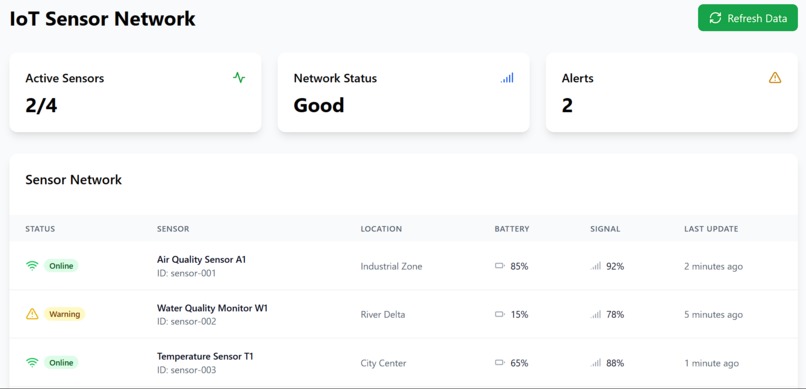
IoT Network
-
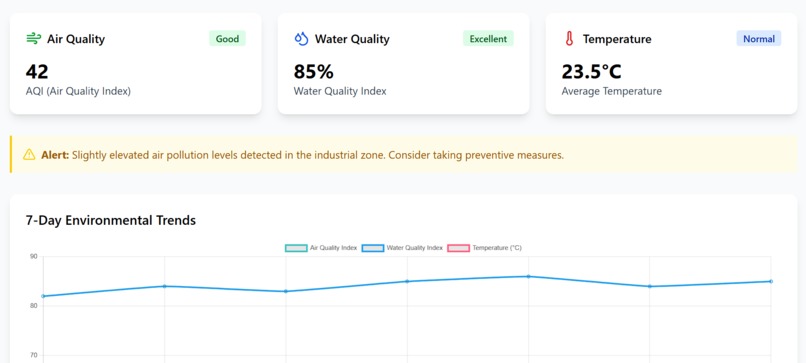
Dashboard
-
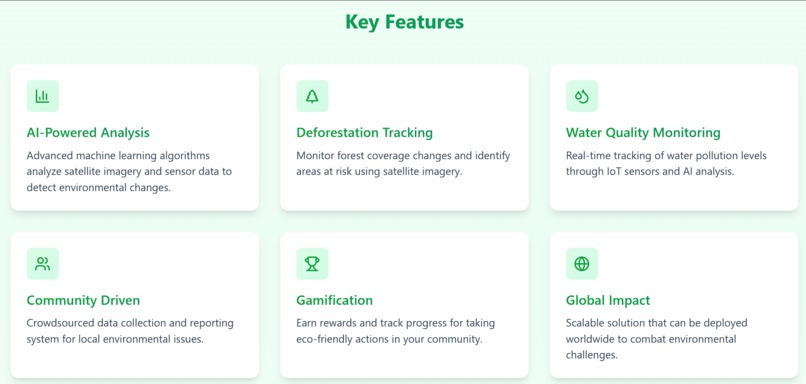
Key Features
Inspiration
With climate change accelerating, pollution levels rising, and deforestation increasing, we wanted to create a smart, AI-powered solution to monitor and reduce environmental impact. Current monitoring systems are either too expensive or inaccessible, so we aimed to build an open-source, AI-driven platform that enables individuals, researchers, and policymakers to track environmental sustainability in real-time.
What it does
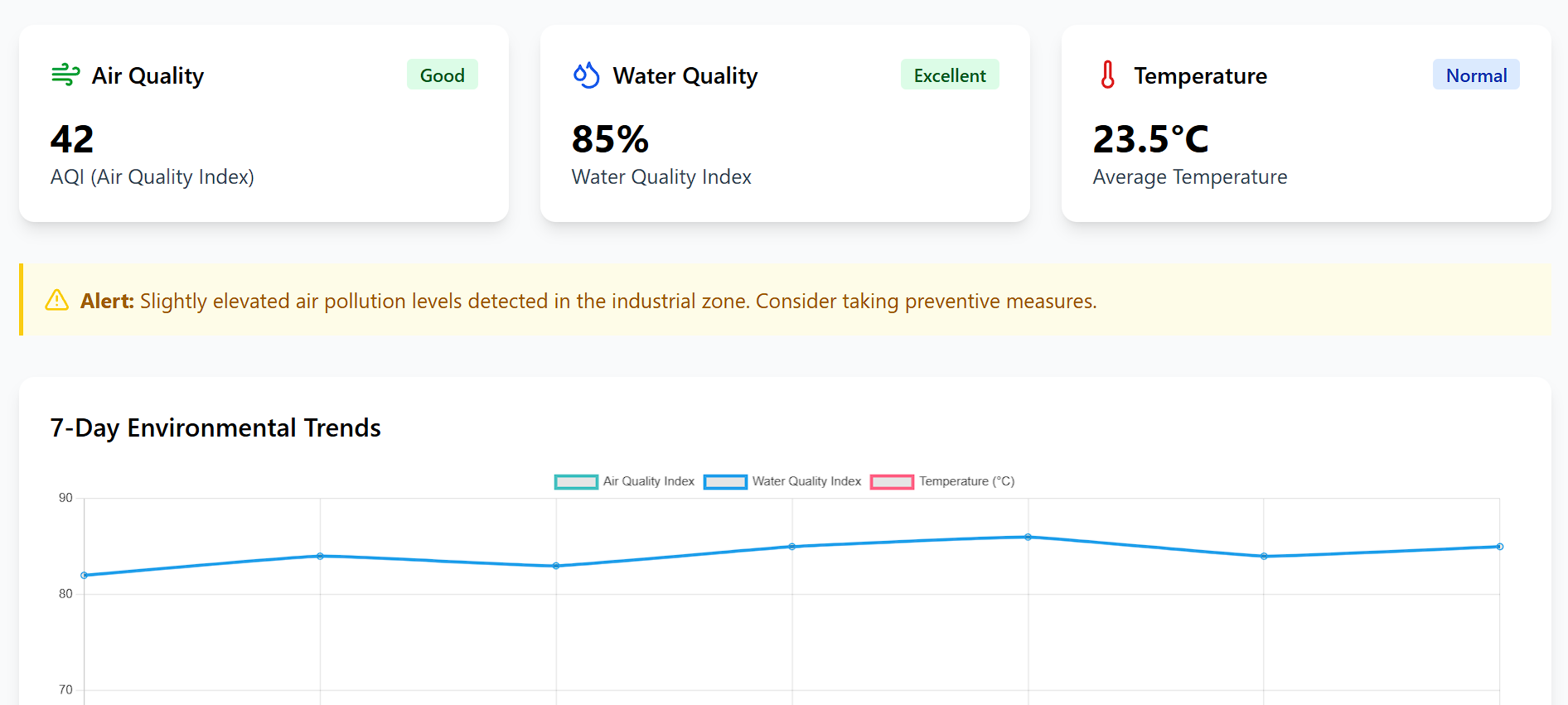
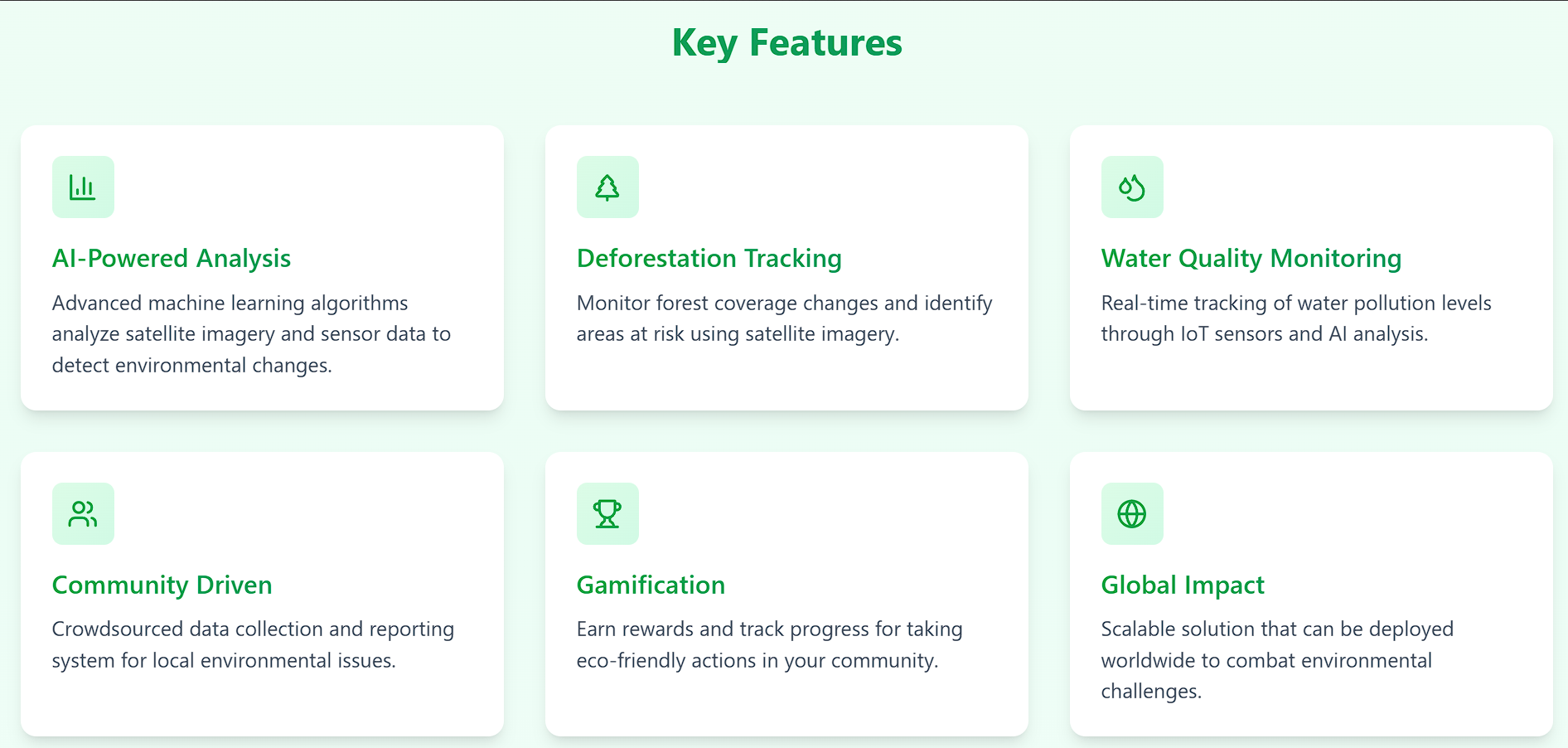
EcoTrack is a web-based platform that: Uses AI to analyze air pollution, water quality, and deforestation through satellite and IoT sensor data. Provides an interactive map to visualize pollution levels and environmental trends. Offers a carbon footprint calculator to help users track and reduce their emissions. Uses blockchain for transparent carbon credit tracking. Allows crowdsourced environmental reporting, where users can submit pollution data from their locality.
How I built it
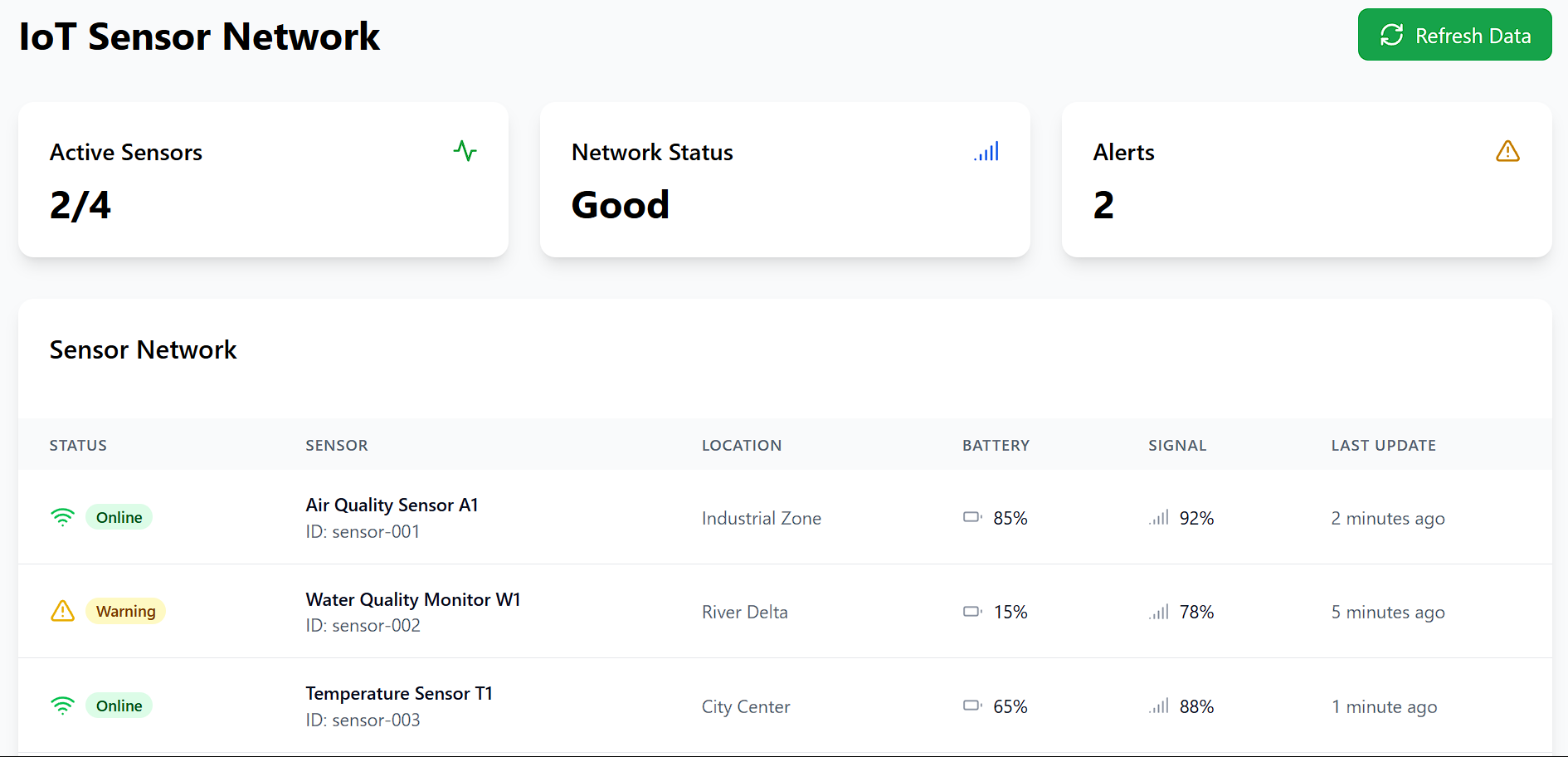
Frontend: React.js for an interactive and intuitive UI. Backend: FastAPI with Python to process environmental data. AI/ML Models: TensorFlow and OpenCV for image classification (deforestation, pollution detection). IoT Integration: Raspberry Pi & ESP32 sensors for real-time pollution tracking. Cloud Storage: Firebase for storing user-generated reports.
Challenges I ran into
Data Collection – Finding reliable, real-time environmental datasets was difficult. IoT Integration – Calibrating sensors for accurate air & water quality monitoring required extensive testing. AI Model Accuracy – Training models to recognize pollution patterns with high precision took significant effort.
Accomplishments that I'm proud of
Built a fully functional AI-powered environmental monitoring platform. Integrated real-time IoT-based pollution sensors. Developed an interactive and user-friendly web dashboard.
What I learned
How to use AI for satellite and environmental image analysis. The complexities of IoT sensor integration for pollution tracking. Implementing smart contracts for transparent carbon credit tracking. The importance of real-time environmental data and accessibility.
What's next for EcoTrack
Scaling up – Expand to more cities and integrate with NASA and ESA satellite data. Advanced AI models – Improve accuracy in detecting pollution and deforestation. More IoT devices – Deploy low-cost, open-source environmental sensors for wider adoption. Mobile App – Build an Android/iOS app for real-time tracking and reporting. Government & NGO Partnerships – Collaborate with organizations for real-world implementation.
Built With
- ai
- css
- entity-framework
- github
- javascript
- react.js
- typescript
- vercel

Log in or sign up for Devpost to join the conversation.