-
-
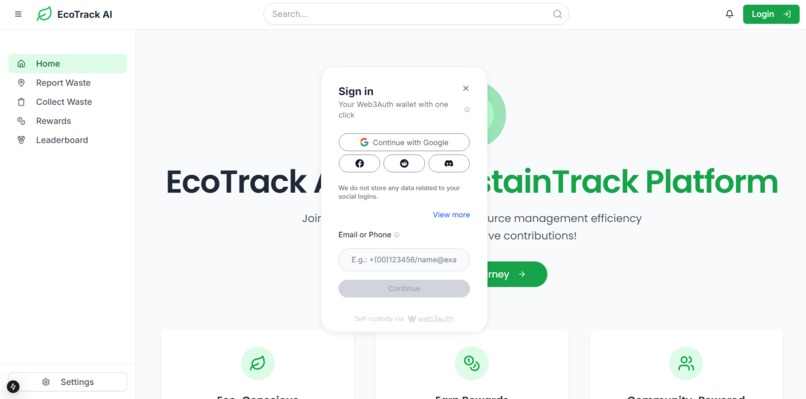
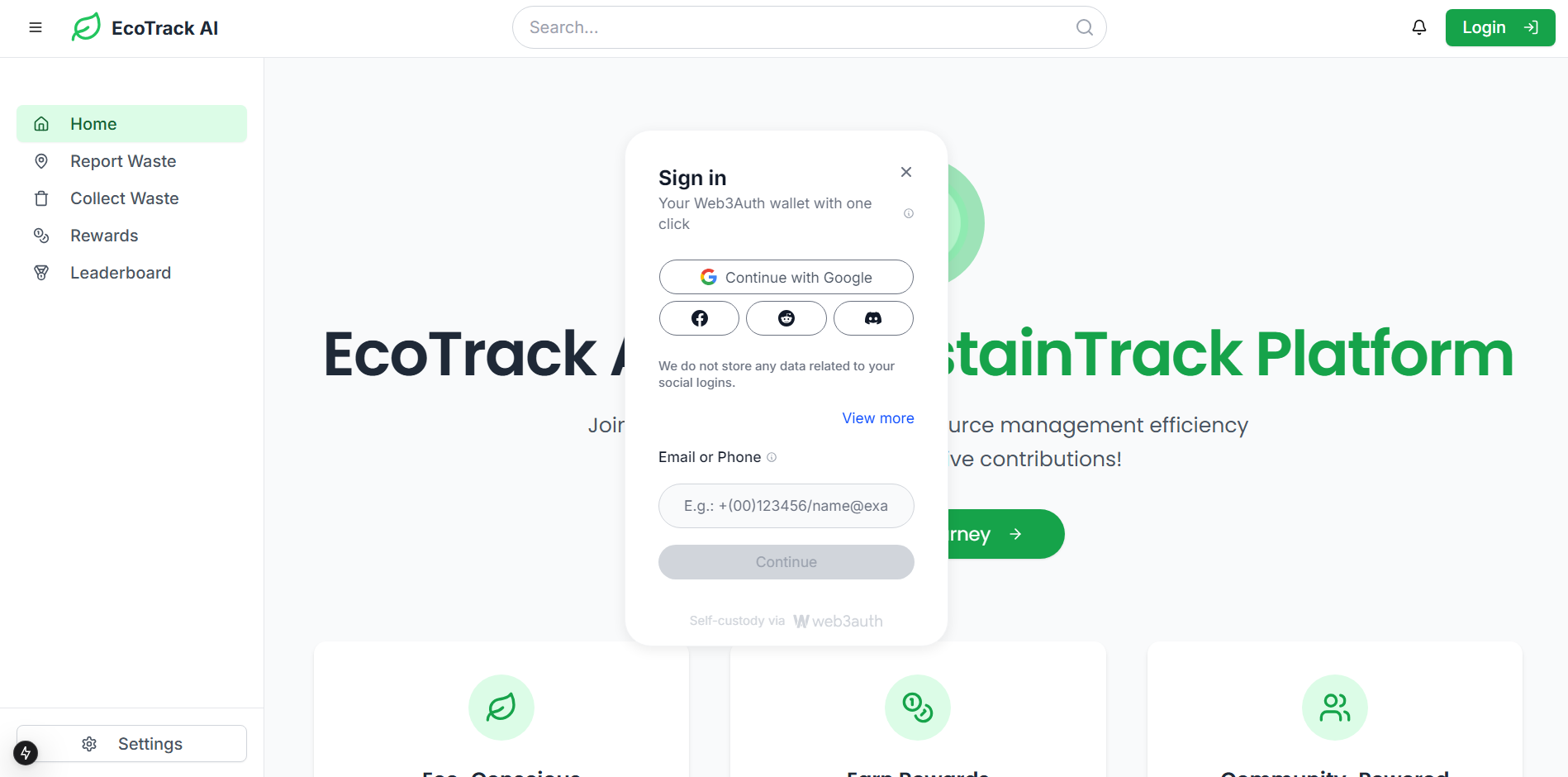
Sign-in Section
-
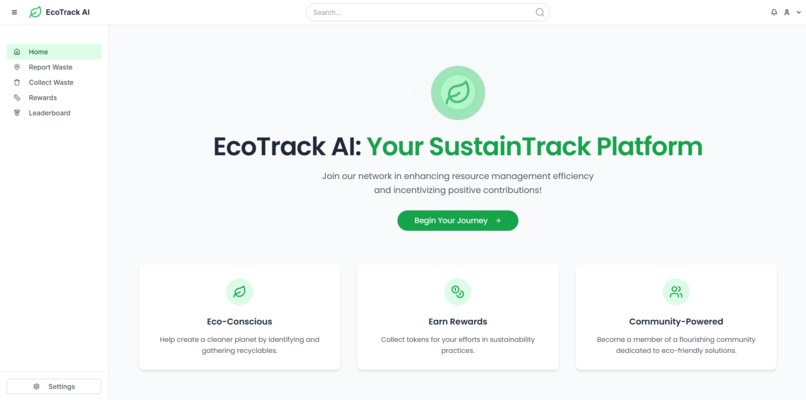
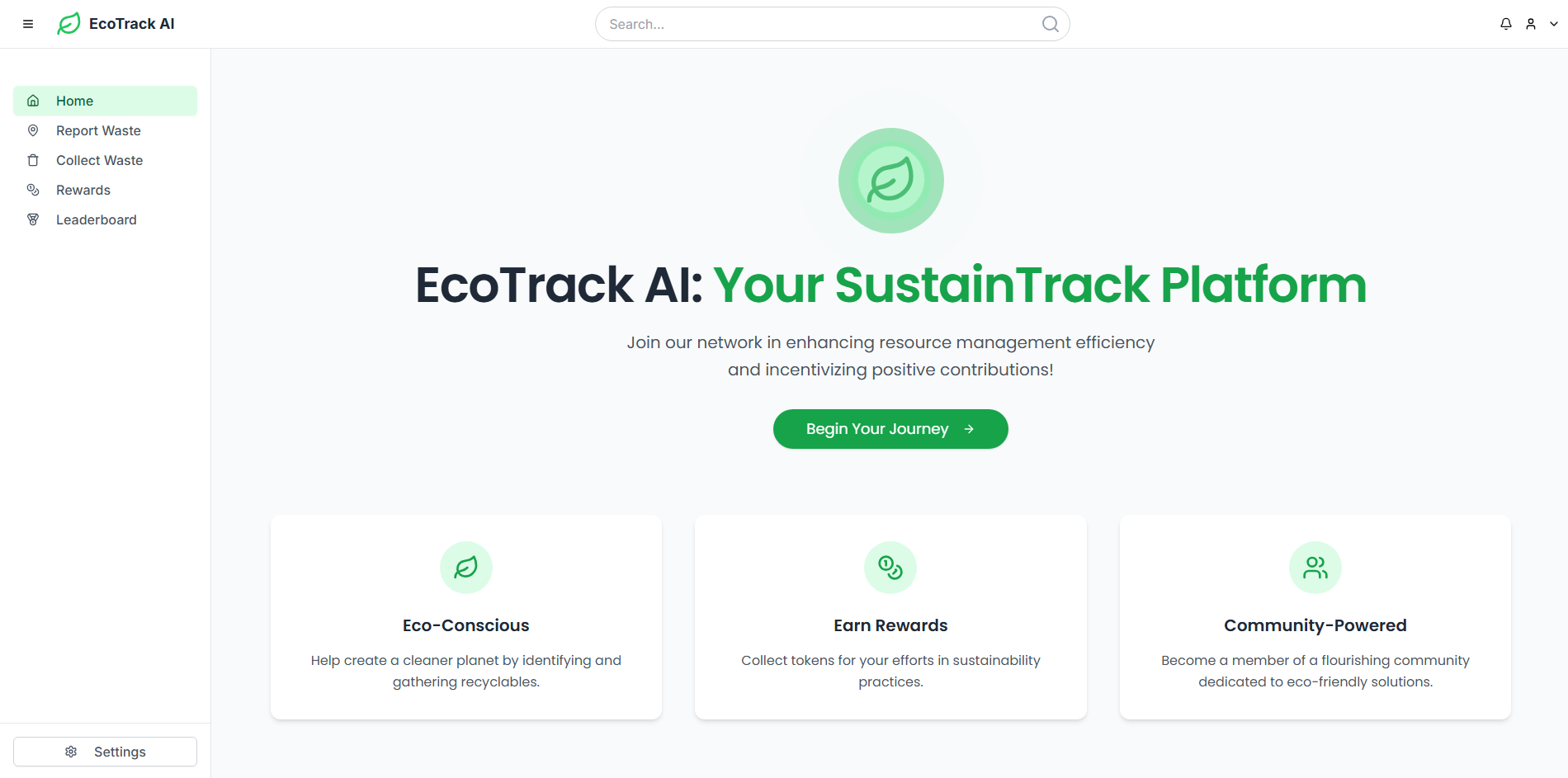
Home Section#1
-
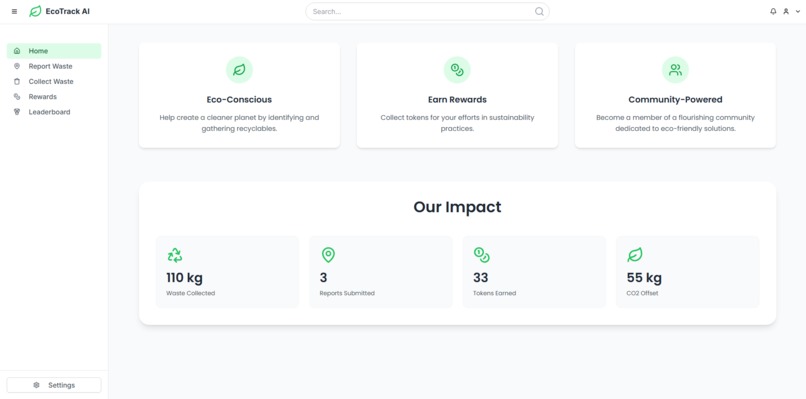
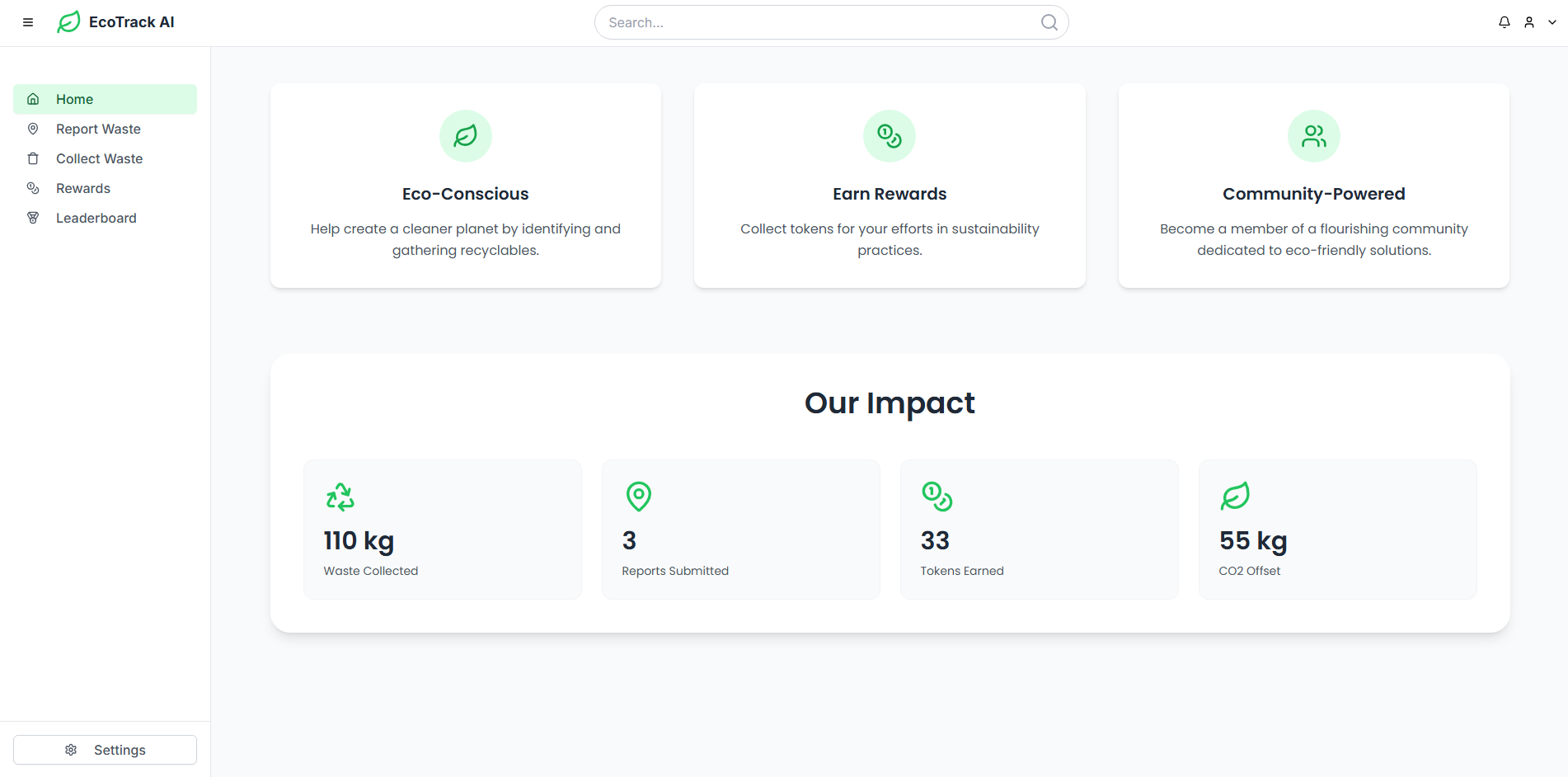
Home Section#2
-
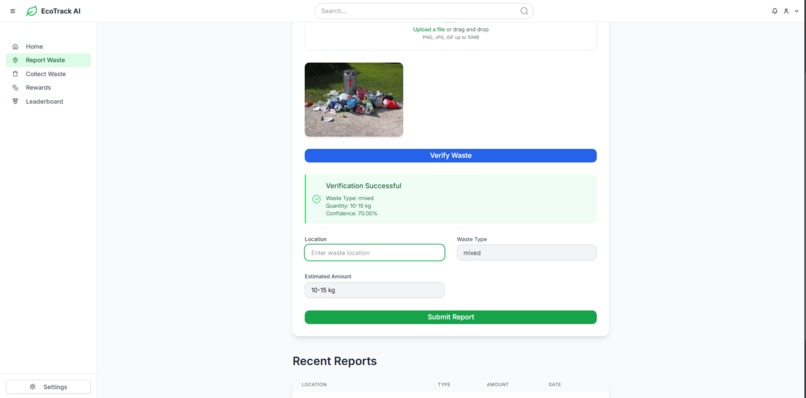
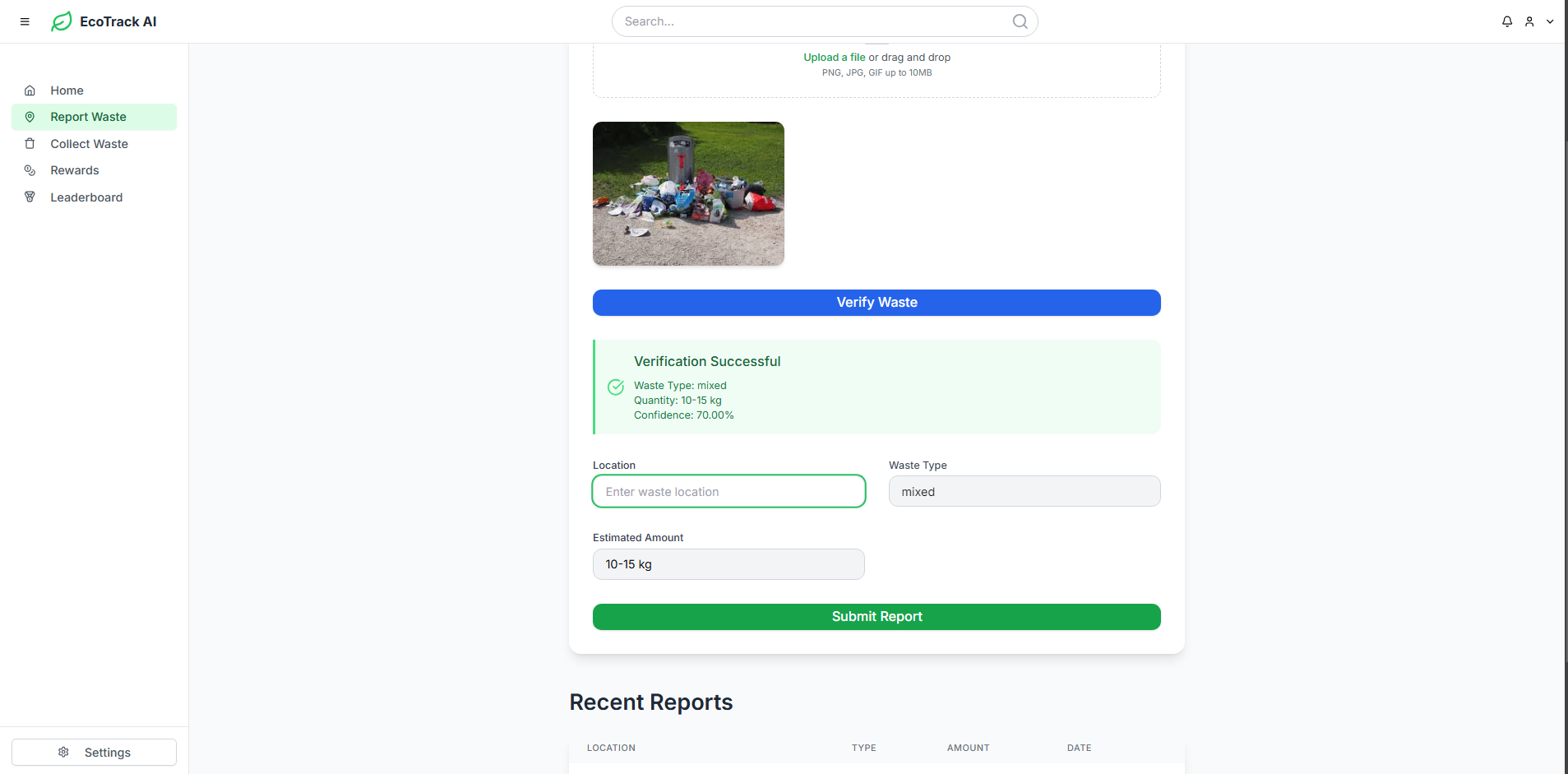
Report Section
-
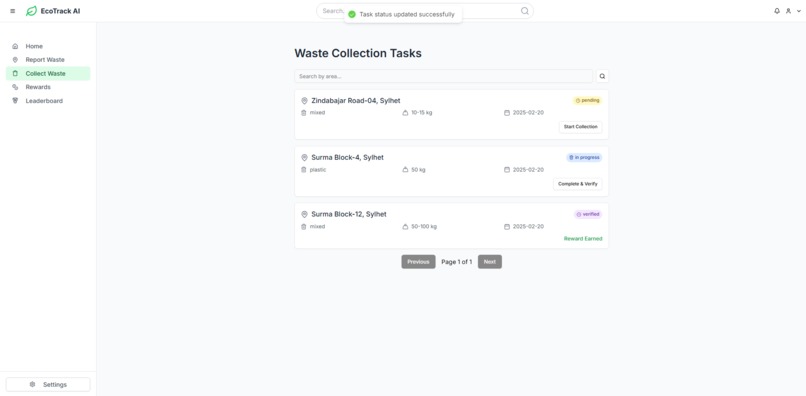
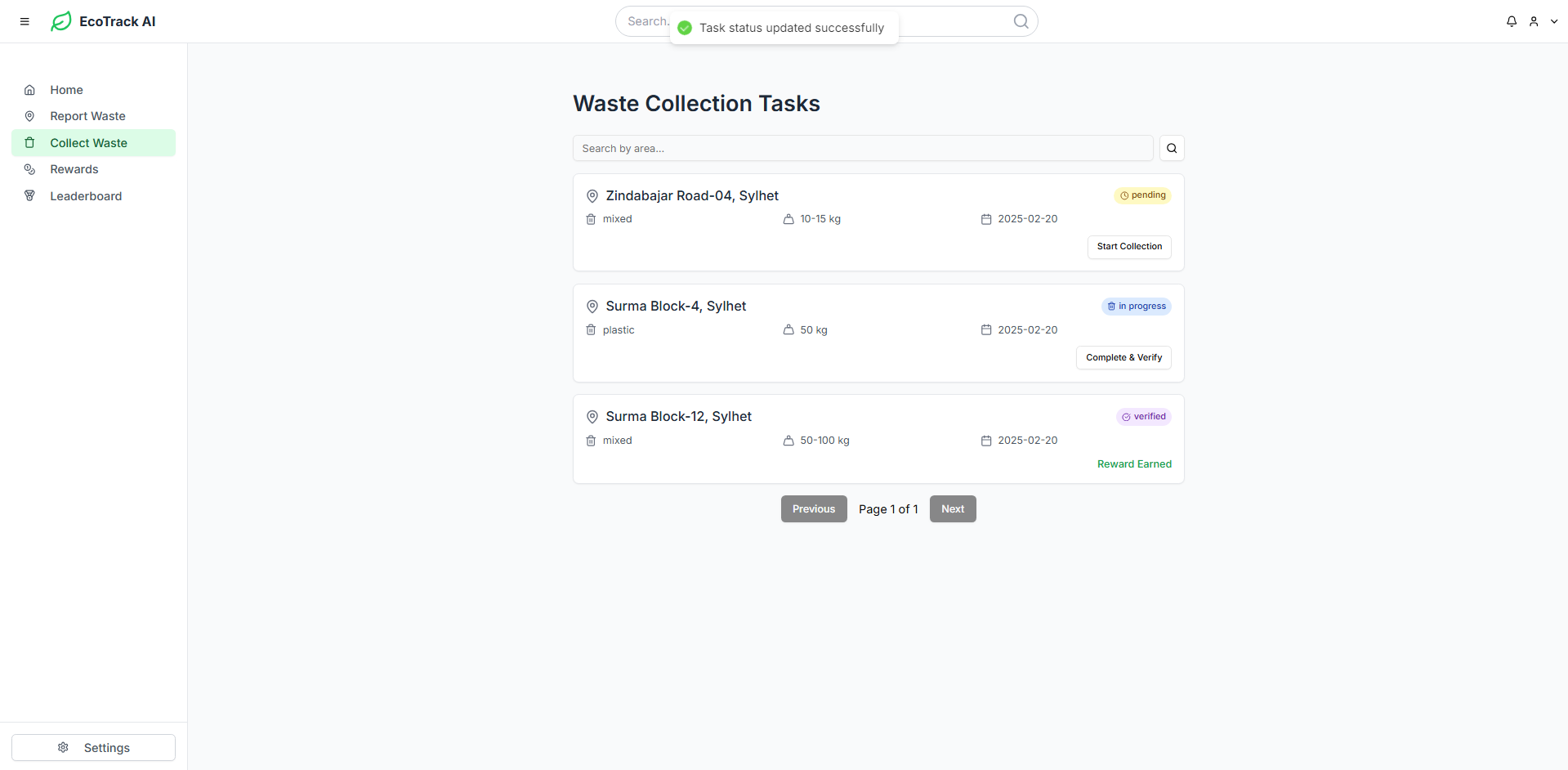
Collect Section
-
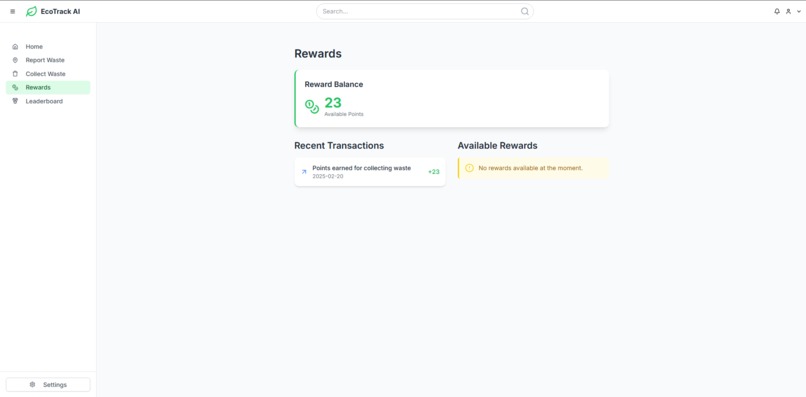
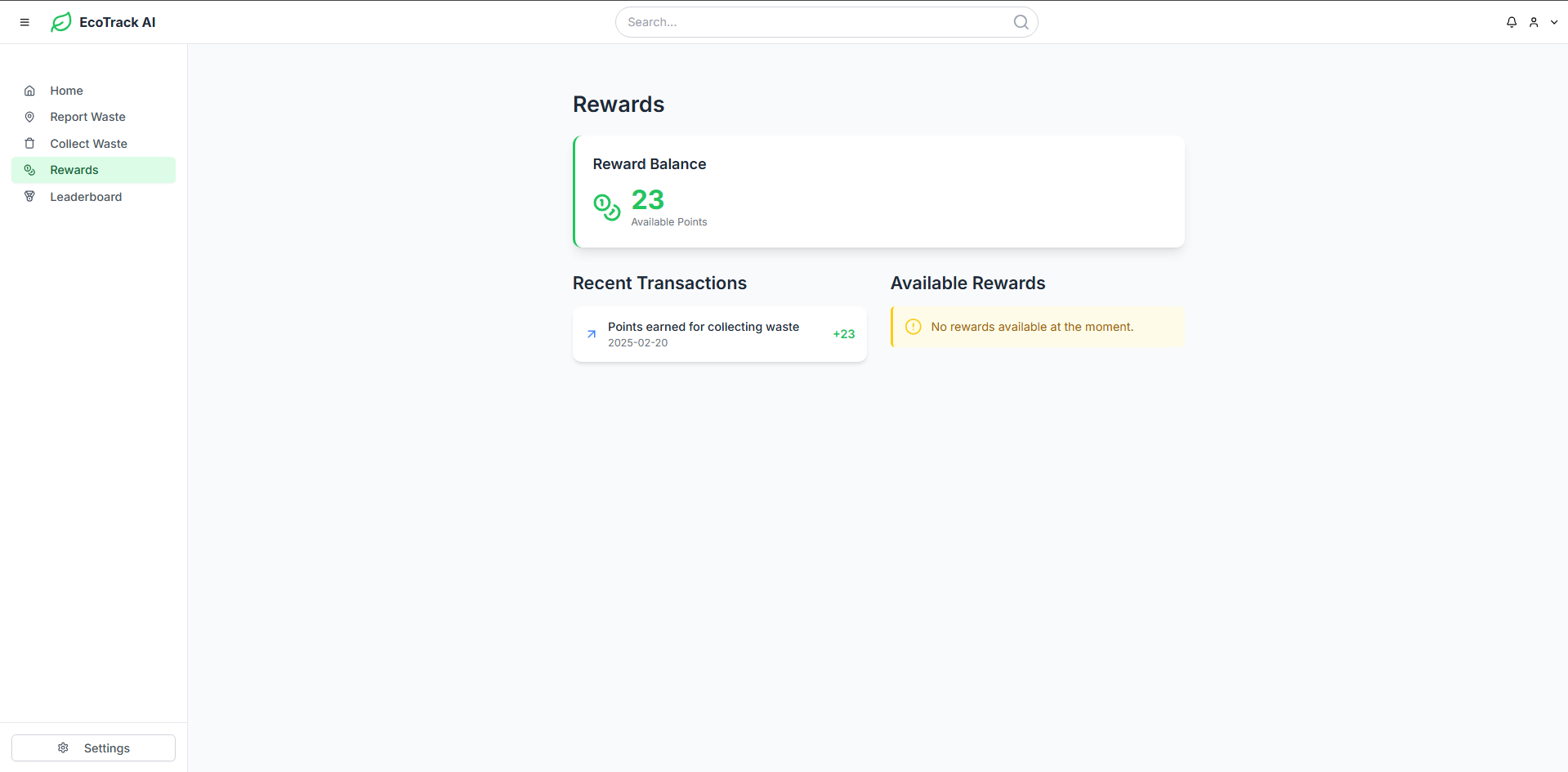
Reward Section
-
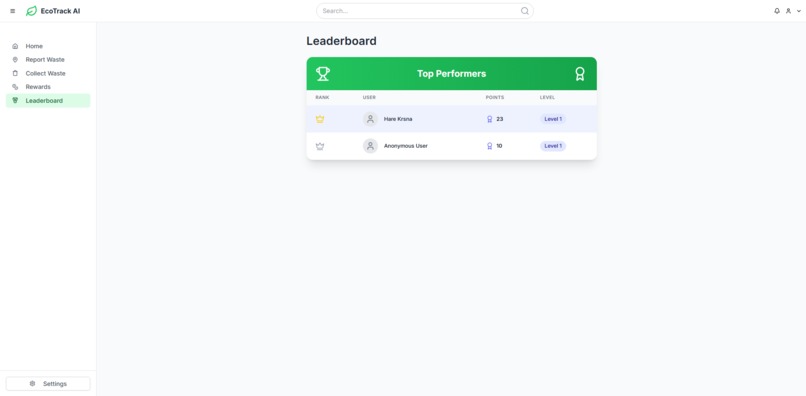
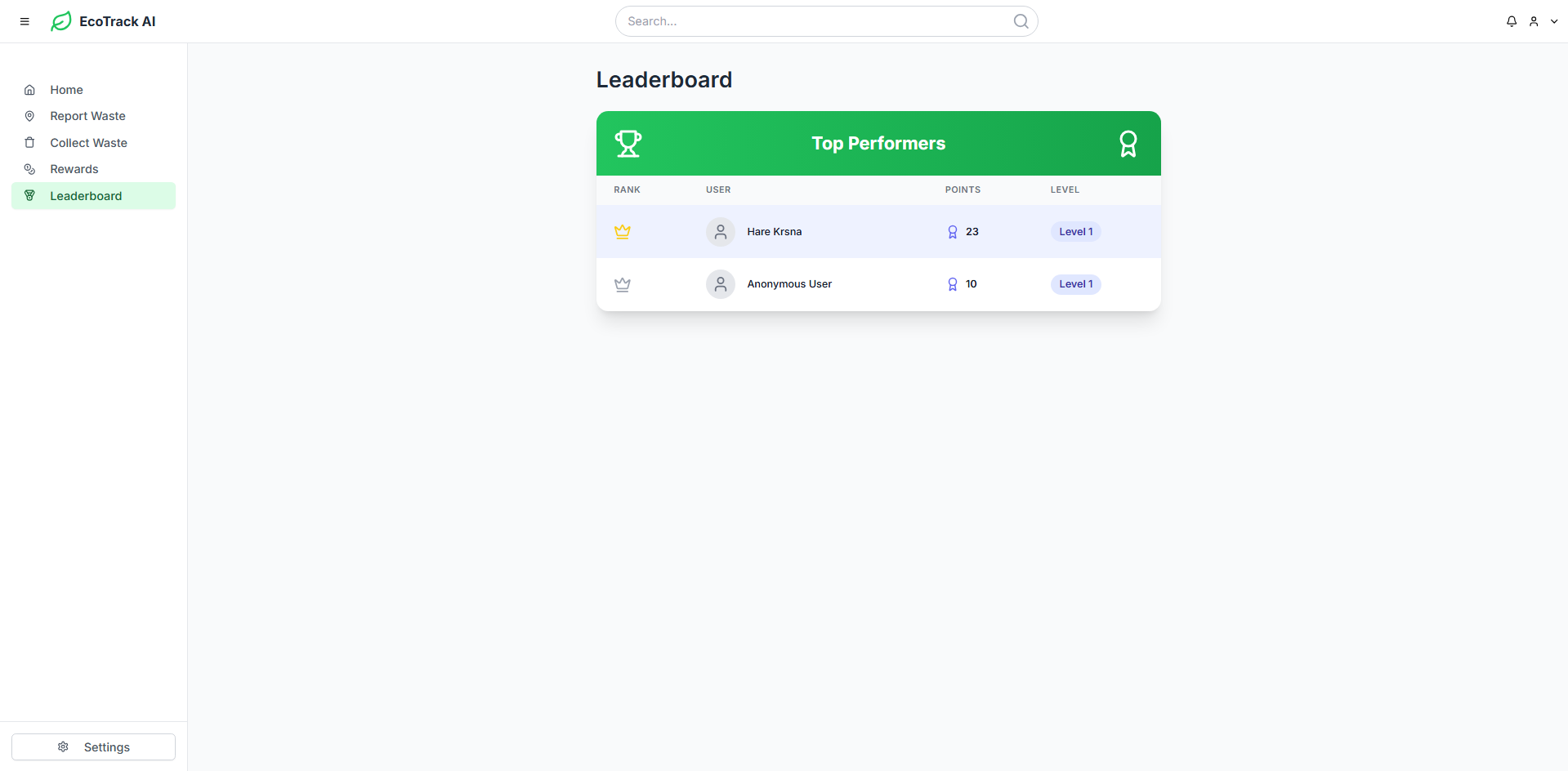
Leaderboard Section
Inspiration
Waste mismanagement has become a pressing global issue, contributing to environmental degradation, pollution, and serious health risks. Traditional waste disposal methods often lack efficiency and public engagement, leading to improper waste handling and accumulation. EcoTrack AI was designed to address these challenges through an innovative approach that combines artificial intelligence, gamification, and community engagement to create a sustainable waste management ecosystem. By leveraging cutting-edge technology, we aim to transform waste disposal into an interactive and rewarding process, encouraging individuals and communities to take active responsibility for their surroundings.
Our mission is simple yet impactful: to provide a technology-driven platform where users can report waste, participate in cleanup efforts, and earn rewards while contributing to environmental conservation. By integrating AI for waste classification and verification, we ensure accuracy, efficiency, and transparency in the entire process.
What it does
EcoTrack AI is built around a streamlined process that makes waste disposal effortless and engaging. Users can capture and upload images of waste they come across in their environment. Our AI-powered system instantly classifies the type of waste, estimates its weight, and logs the data for tracking. Once reported, volunteers or community members can step in to collect and dispose of the waste properly. To ensure accountability, proof of collection must be submitted, which is then verified by AI to confirm successful completion.
To incentivize participation, we have integrated a gamified rewards system where users earn points for their contributions. Whether reporting waste, or verifying collections, users accumulate points. A dynamic leaderboard fosters a spirit of healthy competition, encouraging communities to take collective action for a cleaner environment.
How we built it
EcoTrack AI is built on a robust and scalable tech stack that ensures high performance, security, and usability. The frontend is developed using Next.js (React) and TypeScript, providing a seamless and responsive user experience. The backend is powered by Neon (PostgreSQL), offering a reliable and efficient database for managing user submissions and tracking environmental impact.
The core of our platform lies in its AI-driven processing capabilities. We have integrated Gemini AI to analyze images, classify waste types, and estimate weight with high precision. Our verification system ensures that collected waste is accurately recorded, preventing false submissions and reinforcing trust in the process.
Security is a top priority, which is why we have implemented Web3 Auth for authentication. This decentralized approach ensures user data privacy while allowing secure access to the platform.
Challenges we ran into
Developing EcoTrack AI came with multiple challenges, from integrating AI capabilities to ensuring a smooth and engaging user experience. One of the key hurdles was accurate waste classification. Since we rely on Gemini AI’s API for image recognition, we had to fine-tune its usage for our specific needs. Ensuring the AI correctly identifies different waste types under varying lighting conditions and backgrounds required extensive testing and prompt engineering to improve accuracy.
Another challenge was building a reliable verification system to prevent misuse. Since our platform rewards users for reporting and collecting waste, we needed a way to validate submissions. By leveraging AI-powered image analysis through Gemini AI, we developed a system that cross-references uploaded images to confirm legitimate waste disposal efforts. While this approach works well, we are continuously refining it to minimize errors and false positives.
Managing large-scale media uploads was also a technical challenge. Users submit high-resolution images, which can impact performance if not handled efficiently. To solve this, we utilized Neon (PostgreSQL) for structured data storage while optimizing image processing and retrieval. This allows us to maintain speed and efficiency without compromising user experience.
Additionally, ensuring a secure and seamless authentication process was critical. We implemented Web3Auth to provide decentralized authentication, enhancing security while giving users an easy login experience. Despite initial integration challenges, this approach ensures that our platform remains both accessible and protected.
Through iterative improvements and real-world testing, we have made significant progress in refining EcoTrack AI. However, we recognize that waste management is a dynamic challenge, and we remain committed to evolving our platform to enhance accuracy, security, and user engagement.
Accomplishments that we're proud of
EcoTrack AI stands out as a pioneering solution in the sustainable technology space. We have successfully developed an AI-powered waste classification model, allowing for precise identification and tracking of waste materials. Our gamified reward system has proven to increase engagement, motivating users to participate actively in environmental cleanup efforts. By implementing secure authentication through Web3 Auth, we have ensured that user data remains protected while maintaining a seamless login experience.
Furthermore, our scalable and fully responsive web application provides a user-friendly interface, making it accessible to individuals, community groups, and environmental organizations. Our platform not only simplifies waste management but also empowers people to take initiative in maintaining cleaner public spaces.
What we learned
Throughout the development of EcoTrack AI, we have learned a lot that will help us improve the platform going forward. First, we realized that AI-powered systems like Gemini AI need continuous tweaking to improve accuracy. While we used Gemini AI's API for waste classification, it’s important to regularly adjust settings to make sure it works well under different conditions.
Another key lesson was that media handling is crucial. Since users upload images, we had to find ways to process these photos quickly without slowing down the platform. Optimizing image processing was necessary to keep the webapp running smoothly.
We also learned that gamification plays an important role in user engagement. By rewarding users with tokens for contributing to waste management, we’ve seen a positive effect on encouraging long-term participation.
Lastly, scalability and maintainability are essential for handling future growth. By using Next.js with TypeScript, we ensured that our platform can scale and remain easy to maintain as the user base grows.
What's next for EcoTrack AI
Our journey doesn't end here. We plan to continue improving EcoTrack AI's capabilities. One key area is enhancing the waste classification system. Although we currently use Gemini AI's API for waste recognition, we’re focused on refining the process to ensure more accurate results.
Community engagement will remain a priority as well. We aim to introduce social incentives and challenges to encourage more active participation and collaboration within communities.
Additionally, we plan to improve accessibility by developing a dedicated mobile application for on-the-go waste reporting and tracking, making it easier for users to engage with the platform from anywhere.
We’re also exploring the possibility of a blockchain-based reward system to ensure secure and transparent distribution of rewards, which will help build trust with our users.
Conclusion
EcoTrack AI redefines waste management by merging AI-powered technology, gamification, and community-driven engagement into a single impactful platform. By making waste disposal an interactive and rewarding process, we are fostering a culture of environmental responsibility and collective action. Our goal is to create lasting, scalable solutions that contribute to a cleaner, healthier world.
With technology as our driving force and sustainability as our mission, EcoTrack AI is paving the way for a future where waste management is not just a necessity but an empowered movement that brings communities together for a common cause.
Built With
- gemini
- neon(postgresql)
- nextjs
- react
- typescript

Log in or sign up for Devpost to join the conversation.