-
-
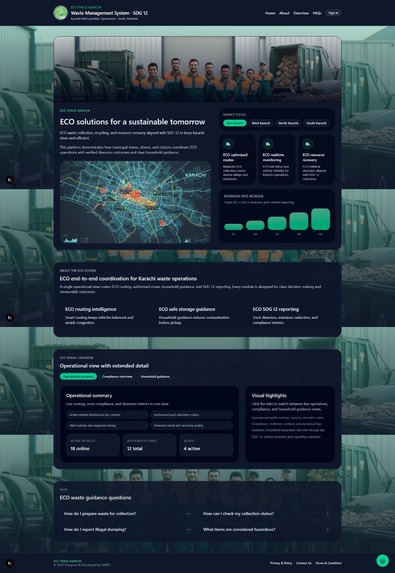
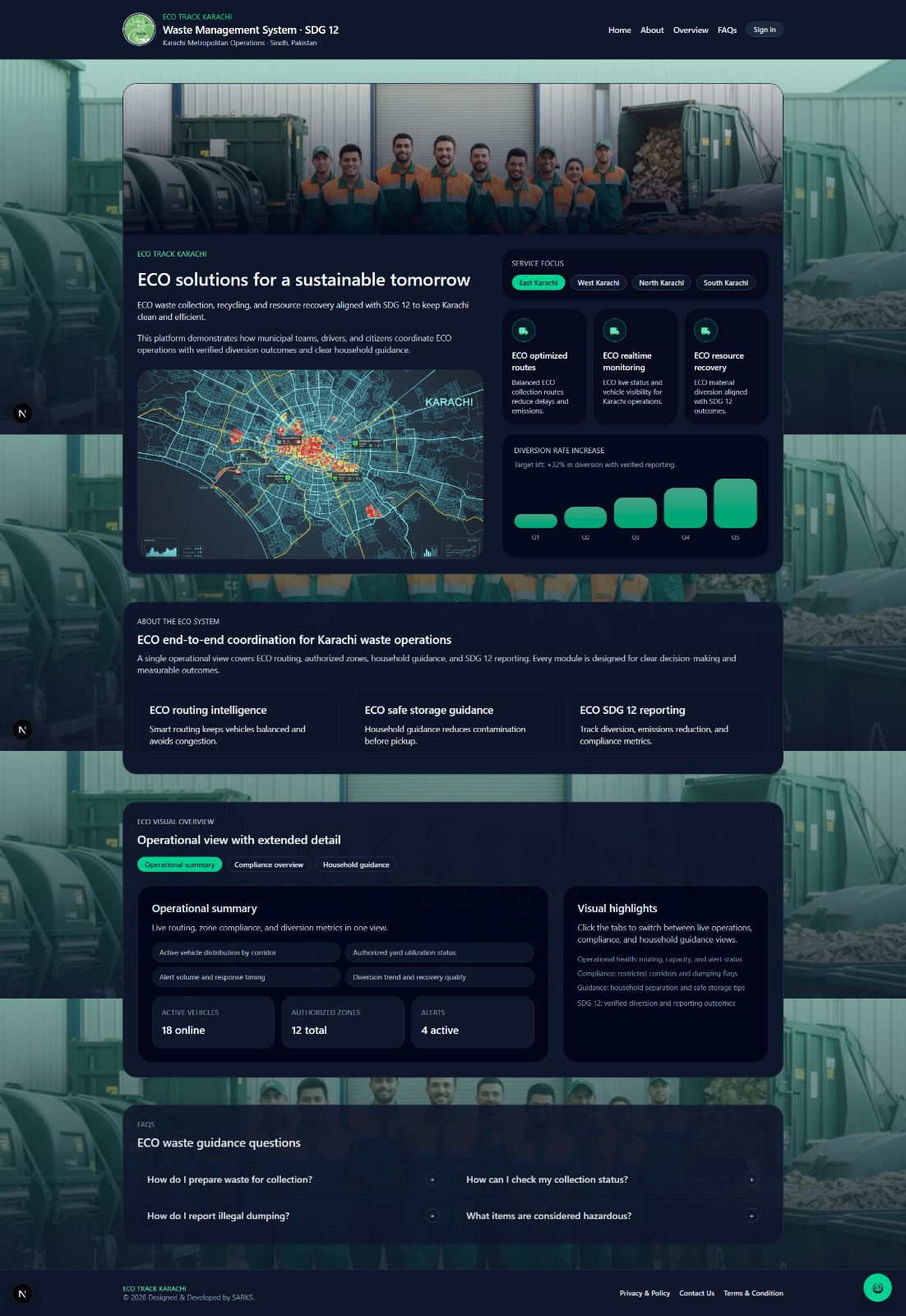
Web landing page
EcoTrack: AI Waste Management
♻️ Inspiration
Waste management is a growing challenge for cities and communities worldwide. Improper waste segregation, overflowing bins, inefficient collection schedules, and limited awareness of recycling contribute to environmental pollution and unnecessary landfill waste. We wanted to explore how artificial intelligence could make waste management smarter, more efficient, and more sustainable.
EcoTrack was envisioned as an AI-powered solution that connects intelligent waste identification with practical waste management workflows, helping people make better disposal decisions and supporting more efficient collection processes.
💡 What It Does
EcoTrack aims to make waste management more intelligent and accessible through AI-driven capabilities, including:
- AI Waste Classification: Identify waste categories from images to help users understand how to sort different materials.
- Smart Waste Tracking: Organize waste-related information to improve visibility into collection and disposal activities.
- Collection Optimization: Support more efficient collection planning using available waste and location data.
- Sustainability Insights: Help users understand waste patterns and identify opportunities to reduce, reuse, and recycle materials.
- Environmental Awareness: Encourage responsible disposal habits and support cleaner, more sustainable communities.
The goal is to turn waste management from a largely reactive process into a more data-informed and proactive system.
🛠️ How We Built It
Our approach centers on combining AI capabilities with a practical software interface. The planned workflow begins with collecting waste-related inputs, processing images or relevant data through AI models, and presenting the resulting classifications or insights through an accessible interface.
The system can be structured into three main components:
- Input Layer: Receives waste images and relevant waste management information.
- AI and Processing Layer: Analyzes available inputs to classify waste and derive useful insights.
- Application Layer: Presents results and supports waste tracking, decision-making, and sustainability awareness.
The architecture is designed to support future integration with collection schedules, geospatial information, and analytics dashboards.
🧠 What We Learned
Developing EcoTrack highlights the importance of connecting AI models to real-world needs. A useful AI solution must do more than produce predictions: it must present understandable results, support practical decisions, and account for limitations in data quality and real-world conditions.
We also recognize that reliable waste classification, responsible data handling, usability, and integration with existing waste management processes are essential to creating a solution that can make a meaningful difference.
🚧 Challenges
Some of the key challenges in this problem space include distinguishing visually similar waste materials, handling images captured under different lighting and environmental conditions, obtaining representative training data, and translating AI predictions into actionable waste management decisions.
Another challenge is designing a system that can remain useful across different communities, where recycling infrastructure and disposal guidelines may vary.
🌍 What's Next
Future development could include expanding waste categories, improving model performance, integrating local recycling guidelines, introducing collection route optimization, and building dashboards that help communities and waste management organizations monitor progress.
Our vision is to make EcoTrack a practical step toward smarter waste management, improved recycling habits, and a cleaner future.
EcoTrack — Smarter Waste, Cleaner Future.


Log in or sign up for Devpost to join the conversation.