-
-
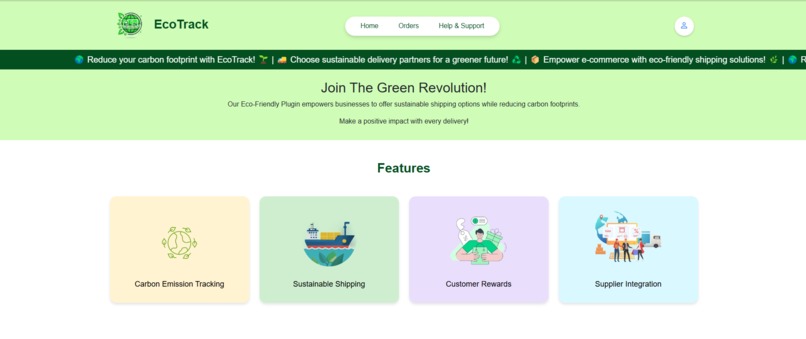
HomePage
-
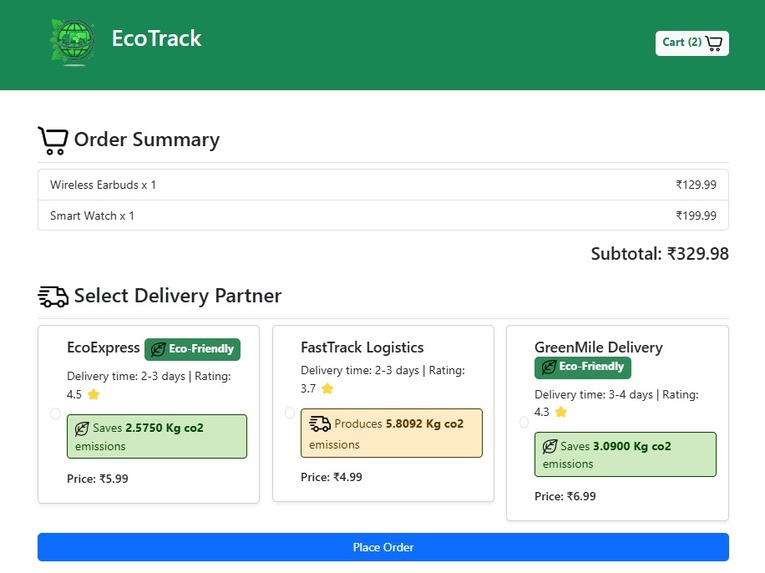
CheckOut
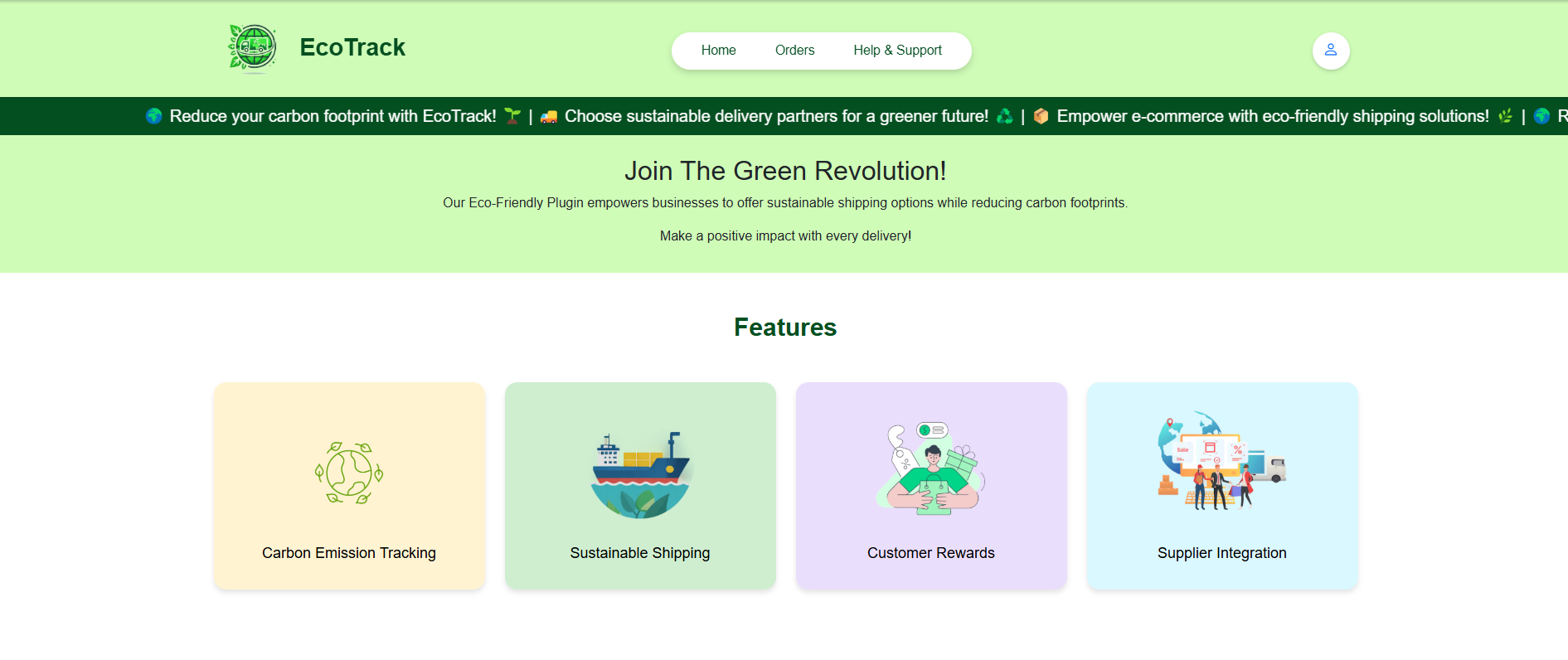
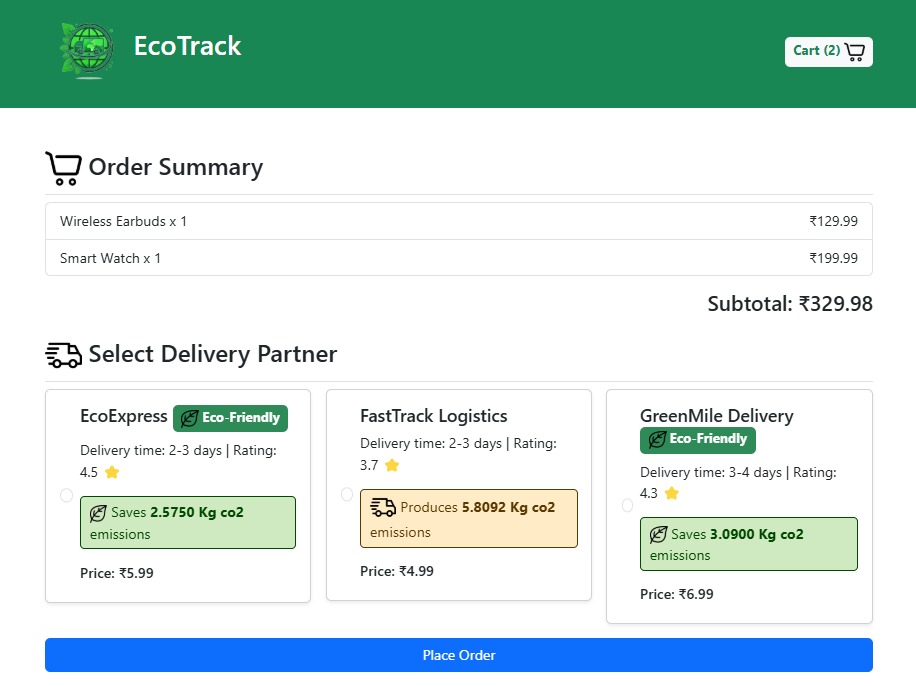
Inspiration
The global urgency to combat climate change and the rising demand for eco-conscious consumer behavior inspired EcoTrack. We noticed a significant gap in e-commerce where customers lacked the ability to assess the environmental impact of their delivery choices. EcoTrack was born to bridge this gap by empowering businesses and consumers with actionable insights to make greener choices.
What it does
EcoTrack is a dynamic plugin for e-commerce platforms that calculates and displays carbon emissions for various delivery options in real time. During checkout, users can compare the environmental impact of their choices and select eco-friendly alternatives. By integrating advanced logistics data and carbon emission calculations, EcoTrack brings transparency to the environmental cost of shipping, promoting sustainability directly at the point of decision-making.
How we built it
EcoTrack was developed using:
- Backend: Node.js and MongoDB for robust data handling and storage.
- Frontend: EJS templates for seamless integration with e-commerce interfaces.
- API Integration: Unified Logistics Interface Platform (ULIP) APIs for real-time logistics and carbon emission calculations.
- Responsive Design: Ensuring a smooth user experience across devices.
- Sustainability Algorithms: Custom-built calculations to assess emissions based on distance, weight, and transportation mode.
Challenges we ran into
- API Integration: Ensuring seamless interaction with ULIP APIs for real-time data.
- Dynamic Emission Calculations: Developing accurate algorithms to calculate emissions for diverse delivery options.
- User Experience: Balancing detailed carbon insights with an intuitive and non-intrusive plugin design.
- Scalability: Building a system capable of supporting multiple e-commerce platforms without compromising performance.
Accomplishments that we're proud of
- Successfully built and deployed a dynamic carbon emission calculation tool.
- Integrated real-time logistics data to provide users with actionable insights.
- Created a user-friendly plugin that aligns environmental responsibility with convenience.
What we learned
- The critical role of logistics data in promoting sustainability.
- Technical and design challenges in creating scalable, user-focused plugins.
- How small, informed consumer choices can drive significant environmental impact.
- The importance of collaboration between technology, businesses, and sustainability goals.
What's next for EcoTrack
- Expanding Platform Support: Scaling to integrate with more e-commerce platforms globally.
- Enhanced Insights: Introducing personalized recommendations for low-carbon alternatives.
- Carbon Offsetting Options: Allowing users to contribute to offset initiatives directly through the plugin.
- Business Analytics Dashboard: Equipping companies with in-depth sustainability metrics to enhance green policies.
- Collaborations: Partnering with logistics providers and environmental organizations to further our mission.


Log in or sign up for Devpost to join the conversation.