-
-
AI POWERED ECO JOURNEY
Inspiration
Climate change is one of the biggest challenges of our time. With transportation being a major contributor to global CO₂ emissions, we were inspired to create a tool that empowers individuals to make informed, eco-conscious travel decisions. We wanted to turn everyday journeys into meaningful opportunities for positive impact—powered by AI, made simple for everyone.
What it does
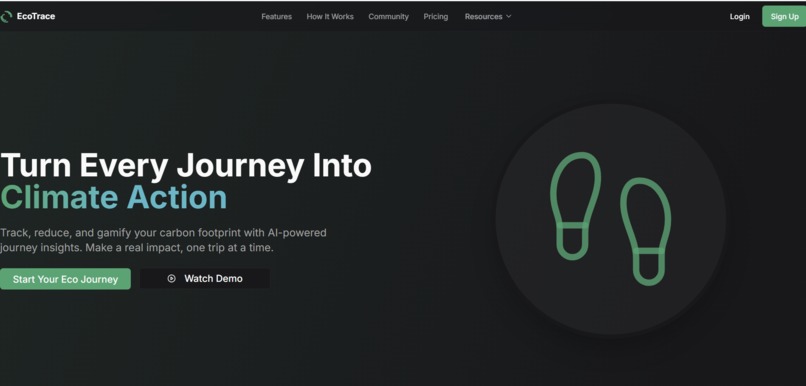
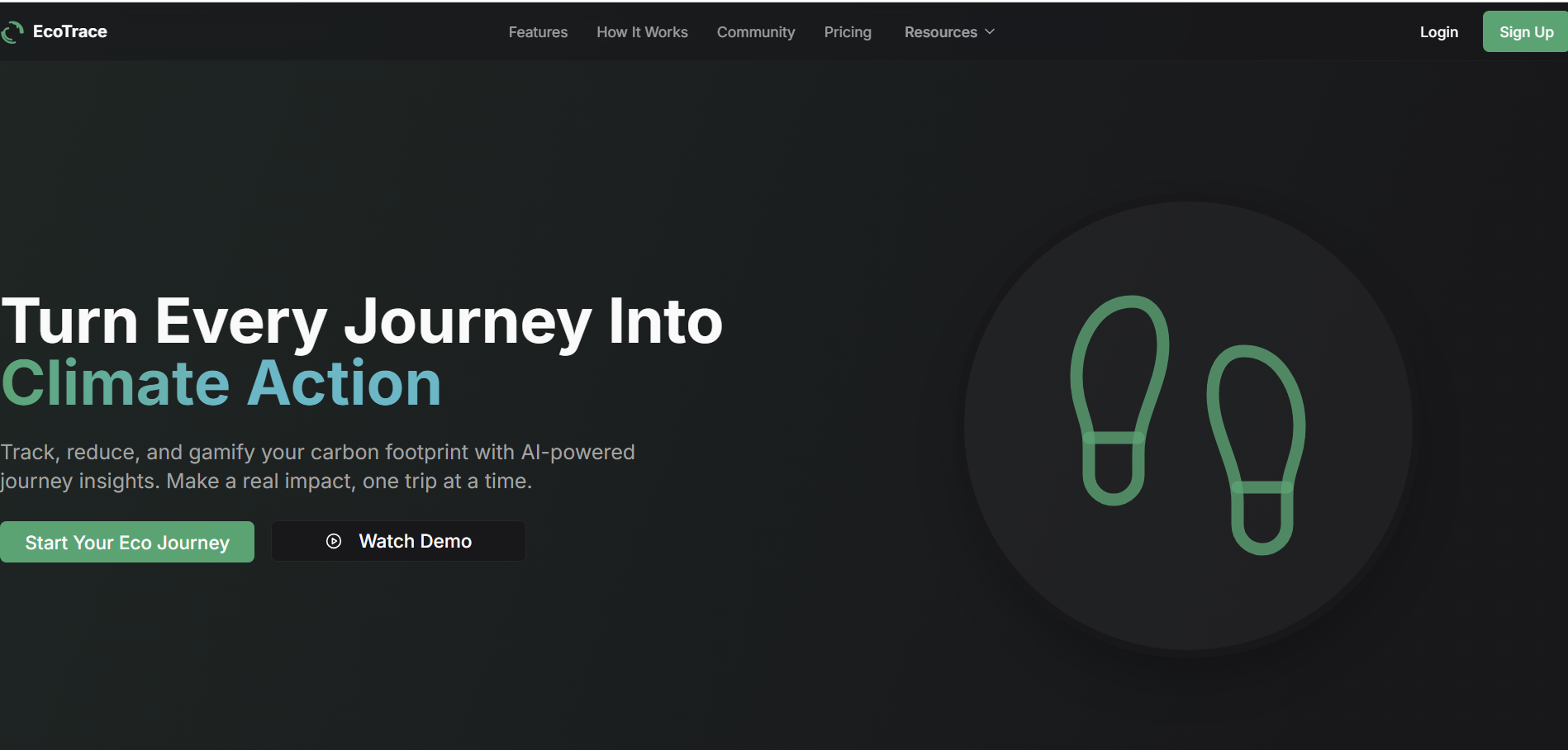
EcoTrace is an AI-powered web app that helps users log their daily travel, calculate carbon emissions in real-time, and receive personalized, low-emission route suggestions. It includes gamified challenges, team collaboration, interactive footprint mapping, and AI-generated summaries to keep users engaged and environmentally aware.
How we built it
We built EcoTrace using:
- Next.js (App Router) and React for the frontend framework
- Tailwind CSS and ShadCN UI for modern styling and component design
- MongoDB with Mongoose for efficient data storage
- NextAuth.js for secure authentication (email, Google)
- Google Genkit to generate AI-powered journey summaries and insights
- Google Maps API for route visualization and geo-location features
Challenges we ran into
- Accurate Emission Calculation: Designing a flexible yet accurate CO₂ calculator for various transport types and travel patterns.
- AI Personalization: Integrating Genkit to generate meaningful, context-aware eco-summaries was both exciting and complex.
- Data Visualization: Creating an interactive and intuitive footprint heatmap required careful tuning of performance and UX.
- Team Collaboration Features: Managing real-time team scores, achievements, and syncing state across users introduced backend and UI challenges.
Accomplishments that we're proud of
- Seamlessly integrating AI to personalize user journeys and boost environmental awareness.
- Developing a carbon tracking engine that is both easy to use and scientifically grounded.
- Building a community-driven platform that motivates users through challenges and shared progress.
- Delivering a clean, responsive, and fully functional MVP within our timeline.
What we learned
- How to effectively use Google Genkit to enhance user engagement with AI-powered features.
- The power of combining gamification and environmental data to drive user behavior.
- Practical challenges in working with mapping APIs, carbon databases, and building real-time experiences in Next.js.
- User feedback matters—small UX tweaks made a big difference in engagement.
What's next for EcoTrace-Journey-for-Good
- Mobile App Launch: Build a PWA or native mobile app for on-the-go journey tracking.
- Public Transit API Integration: Offer smarter suggestions that prioritize public transport and biking options.
- Carbon Offset Marketplace: Let users contribute directly to reforestation and carbon offset projects.
- Corporate Dashboards: Help companies engage employees in eco-friendly commuting and visualize company-wide impact.
- AI Eco-Advisor: Introduce a more proactive AI assistant to guide users on sustainable lifestyle changes.
Built With
- ask
- bcryptjs
- clsx
- date-fns
- embla-carousel
- eslint
- firebase
- genkit-ai
- google-genkit
- google-maps
- jest
- jsdom.
- lucide-icons
- marked
- mongodb
- mongoose
- next.js-15
- nextauth.js-v5
- patch-package
- radix-ui
- react-19
- react-hook-form
- recharts
- shadcn-ui
- tailwind-css
- tailwind-merge
- tailwindcss-animate
- testing-library
- typescript
- zod

Log in or sign up for Devpost to join the conversation.