-
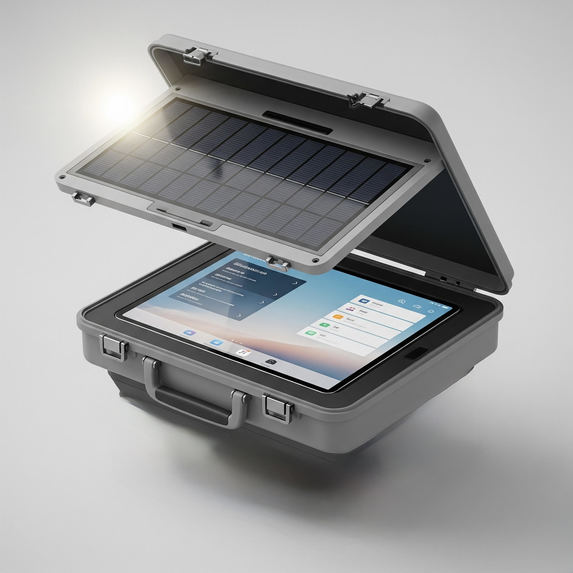
EcoTotem 2D prototype
-
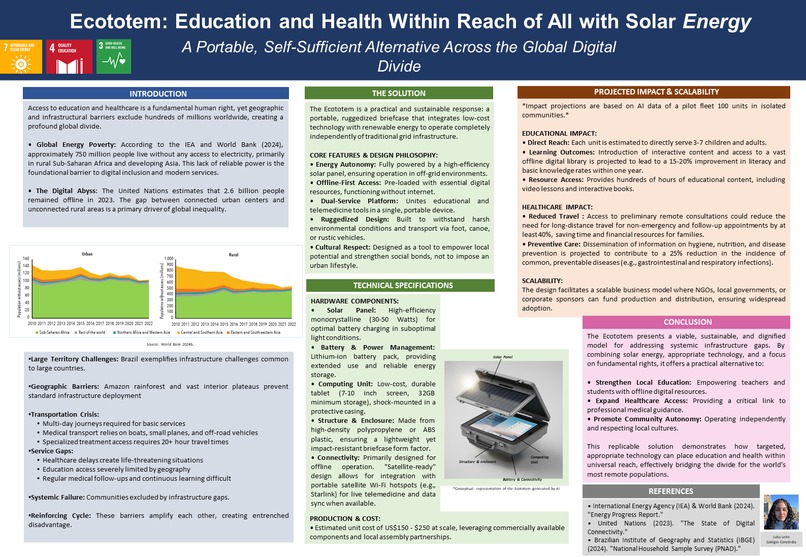
Research Poster

Inspiration
The inspiration for Ecototem began with observing the severe drought affecting the Amazon region, where rivers are not merely natural features but the primary infrastructure for mobility, education, and healthcare. In many riverine communities, schools, health centers, and essential services are accessed almost exclusively by boat. When prolonged droughts lower river levels, entire communities become physically isolated.
During these periods, children are unable to attend school, patients cannot reach basic healthcare, and supplies are delayed or cut off altogether. This isolation is not caused by a lack of demand for education or medical care, but by climate-driven changes in geography, where the drying of rivers temporarily collapses the only viable transportation network.
Ecototem emerged as a response to this reality and beyond. Rather than assuming constant mobility or stable infrastructure, it was conceived as a resilient, self-sufficient alternative for times when rivers can no longer connect people to essential services. Powered entirely by solar energy, Ecototem can remain within communities, providing offline educational resources and access to remote medical support even when physical travel becomes impossible.
By addressing climate-induced isolation, Ecototem reframes technology as a tool for climate adaptation, ensuring that resilience and access to essential services are rights, not privileges.
What it does
Ecototem is a portable, off-grid, solar-powered unit designed to provide education and basic healthcare access in communities temporarily isolated by climate events. The system combines renewable energy, offline digital content, and optional connectivity to operate independently of traditional infrastructure.
Each unit delivers:
Offline educational materials, including video lessons and interactive content
Preventive healthcare information and telemedicine support when connectivity is available
Reliable power through integrated solar generation and battery storage
How I built it
Ecototem was developed as a conceptual hardware–software prototype, guided by climate adaptation principles and real-world constraints in remote environments.
The design process focused on:
Energy autonomy using monocrystalline solar panels and battery storage
A rugged, portable enclosure suitable for riverine and rural conditions
An offline-first system architecture to ensure usability without continuous connectivity
The system was designed to be low-cost, modular, and scalable, enabling deployment by NGOs, governments, and humanitarian organizations.
Accomplishments that we're proud of
Developing a climate-adaptive solution rooted in the lived reality of Amazonian riverine communities
Designing a fully off-grid, solar-powered system for education and health access
Creating a scalable and affordable model suitable for humanitarian deployment
What's next for EcoTotem
The next step for EcoTotem is to move from conceptual design to functional prototyping. This includes assembling and testing the physical unit, validating energy performance, and refining the software experience with real users.
Future plans involve pilot deployments in riverine communities, partnerships with NGOs and public institutions, and iterative improvements to ensure long-term durability, usability, and impact.

Log in or sign up for Devpost to join the conversation.