Inspiration
Globally, cities are experiencing unbalanced microenvironments, heat islands and increased pollution as a result of rapid urbanization. Autonomous systems that can anticipate, adjust and optimize urban ecology in real-time are needed because the majority of smart city solutions currently in use are reactive and disjointed. In our ideal system, AI agents would serve as proactive urban stewards, constantly enhancing the surroundings for the health and welfare of the populace.
What it does
EcoSynth is an autonomous urban environment optimizer driven by artificial intelligence. It: Uses Internet of Things sensors to keep an eye on temperature, noise, greenery, and air quality. Anticipates changes in the environment and suggests or implements interventions on its own (e.g., adjusting water misters, controlling urban greenery, optimizing energy usage). Continuously learns from residents' social feedback loops and reinforcement learning. Gives city planners access to a developer sandbox where they can model interventions before implementing them in the real world.
How we built it
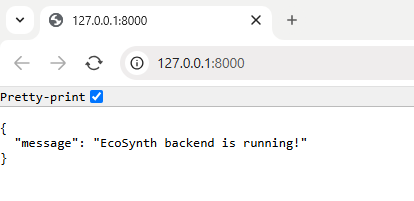
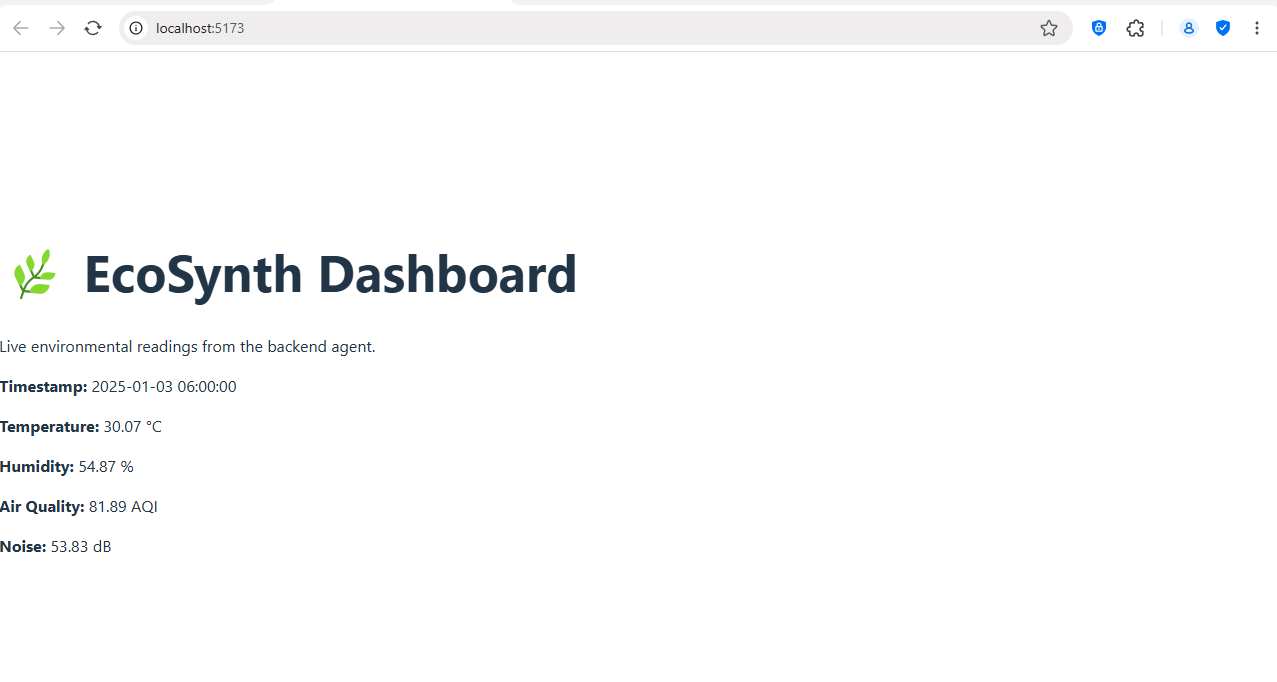
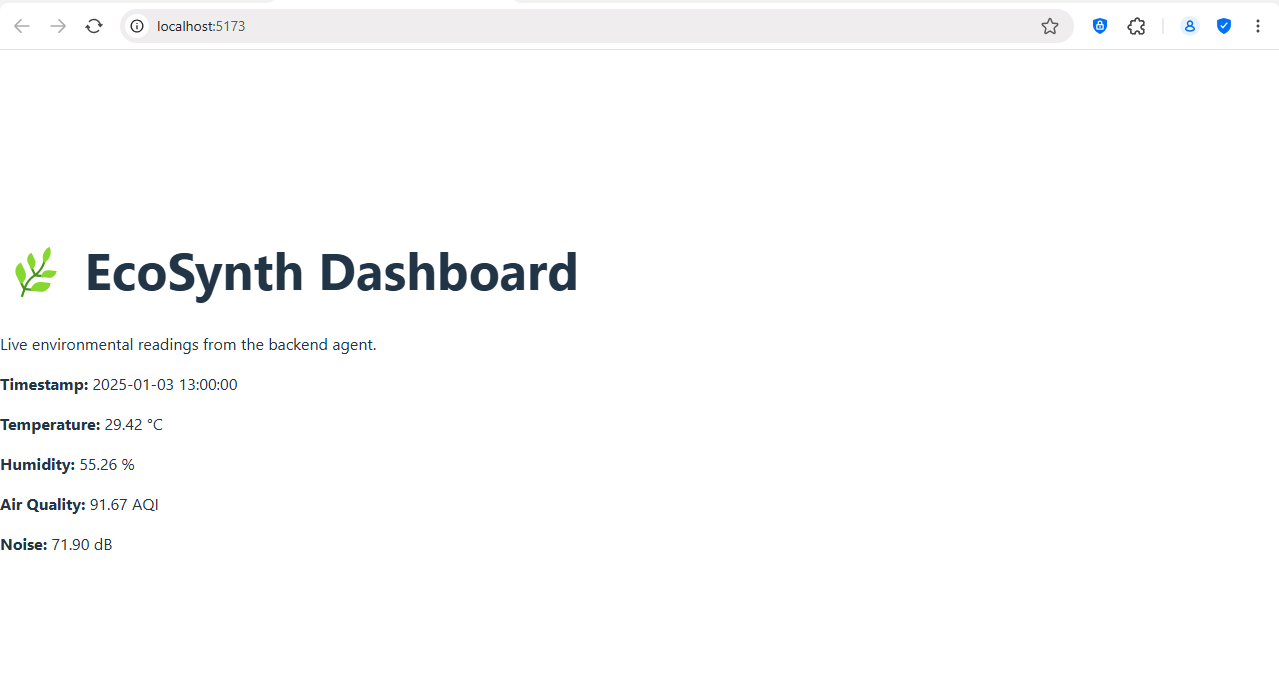
AI & ML: reinforcement learning algorithms for predictive urban modeling, TensorFlow/PyTorch and Python. Autonomous Agents: A multi-agent system designed with Ray to manage the gathering, forecasting and planning of environmental data. IoT Integration: ESP32 microcontrollers and sensors to stream data on humidity, temperature and air quality. Real-time communication is facilitated by the MQTT protocol. Simulation: A Python-based digital twin environment is created using Plotly/Matplotlib for 2D visualization and Unity can be used for 3D expansion. Web Dashboard: Next + React. Visualize environmental metrics, AI decisions and resident feedback using a js frontend and a FastAPI backend. Data management: InfluxDB for time-series sensor streams and PostgreSQL for structured data.
Challenges we ran into
Coordination of multiple agents in real time: It was difficult to make sure AI agents made cooperative, non-conflicting choices. Data sparsity: To train early models, a limited amount of real sensor data necessitated synthetic simulation. Autonomy and social input: Iterative tuning was necessary to integrate human input without compromising AI decisions. Edge integration: Optimization was required for the deployment of RL-based decision-making on low-power IoT devices.
Accomplishments that we're proud of
Developed a network of completely autonomous environmental optimization agents that are capable of real-time adaptation and intervention simulation. Created a sandbox simulation to allow urban planners to safely test policies prior to implementation. EcoSynth can be implemented at the city block, campus or entire city level due to its proven scalability and modularity. Created user-friendly real-time dashboards for citizens and planners.
What we learned
How multi-objective optimization problems in the real world can be resolved using multi-agent reinforcement learning. A dynamic, self-improving urban ecosystem is produced by combining IoT, AI and human feedback. Prior to physical deployment, simulation is crucial in intricate urban settings. Techniques for scalable AI systems that strike a balance between efficiency, social impact and autonomy.
What's next for EcoSynth
Extend to practical pilot projects in small cities or smart campuses. To scale across several cities while maintaining data privacy, incorporate federated learning. Use predictive climate modeling to improve AI for adaptation to extreme weather. Encourage public involvement in sustainable initiatives by introducing citizen gamification. The platform for global urban innovation should be made open-source under the MIT/Apache License.


Log in or sign up for Devpost to join the conversation.