Inspiration
Inspiration
I set out to build EcoSync because home-energy monitoring today feels scattered and opaque. I craved a single dashboard to visualize, automate and optimize every smart device—so people save money and carbon without a PhD in engineering.
What it does
EcoSync brings together real-time feeds from your smart plugs, thermostats and solar inverter to:
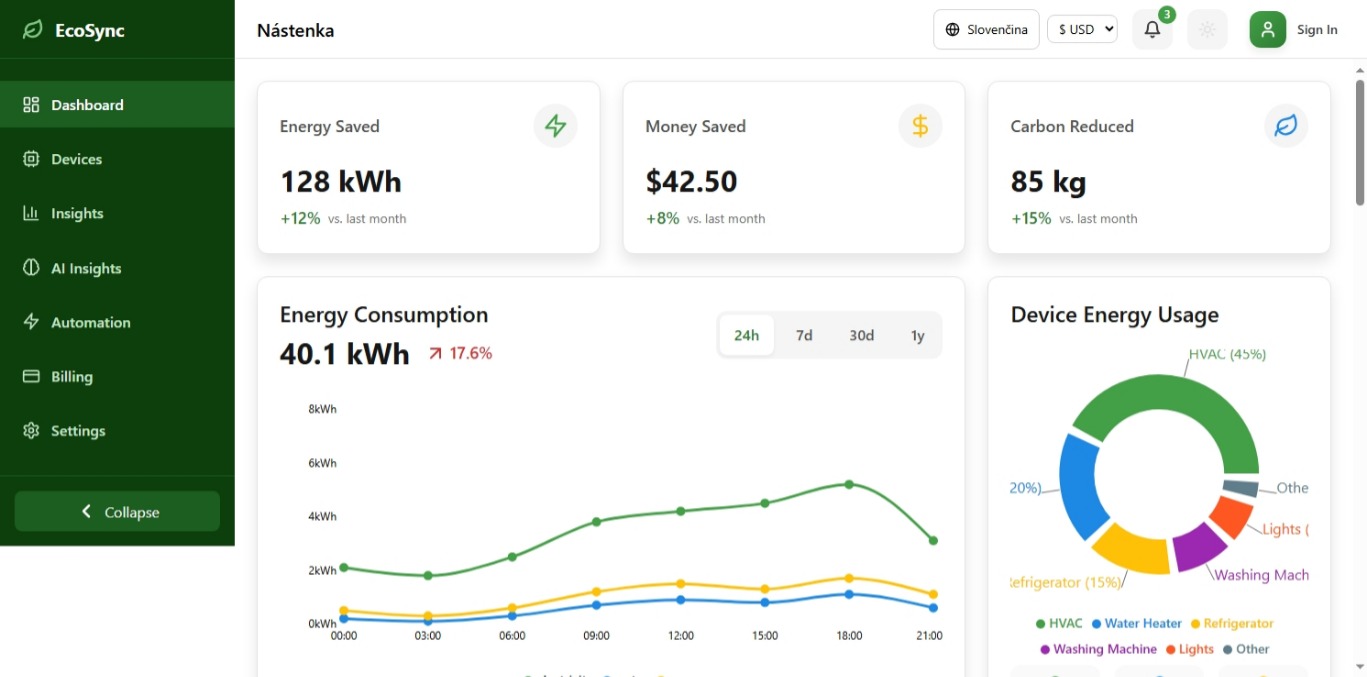
- Plot live + historical power use by device
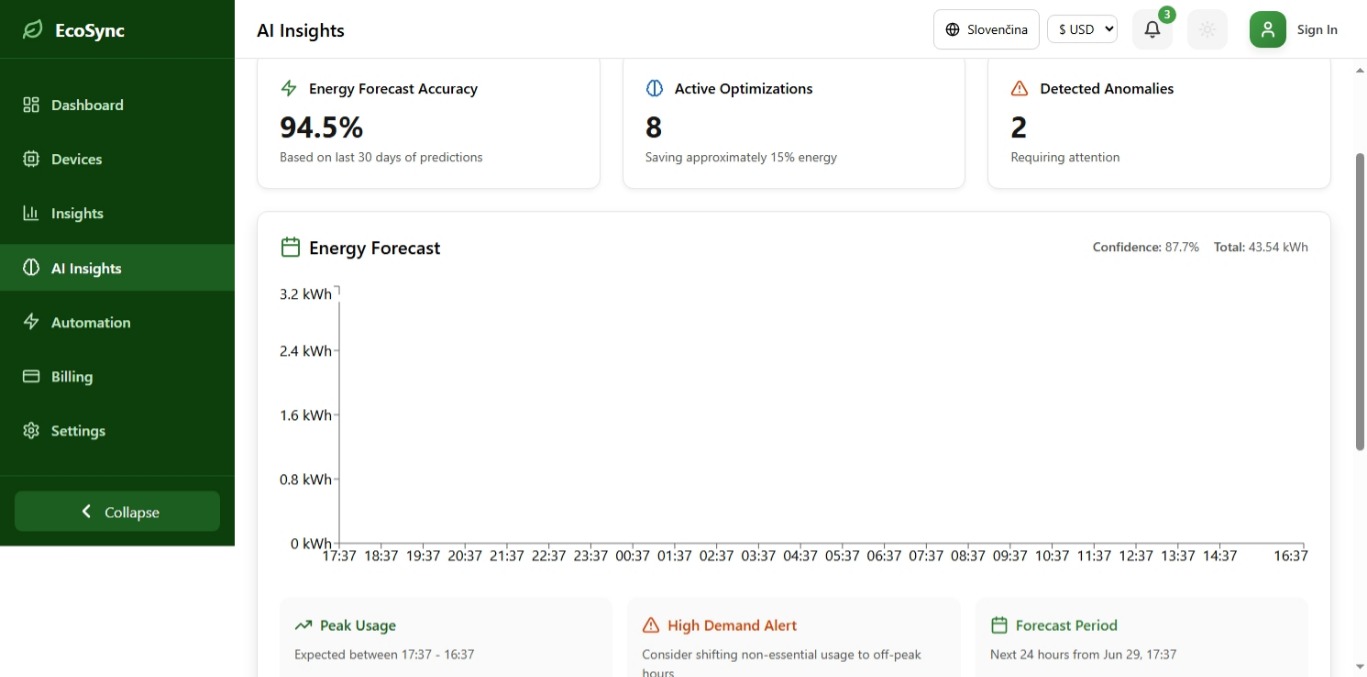
- Surface AI-driven tips (“Your coffee maker idled 15 min after brew.”)
- Let you craft Automation Rules and Scenes (“When solar hits 80% output, charge EV.”)
- Answer natural-language voice commands (“EcoSync, shut off all basement loads.”)
How we built it
- Front-end: React + TailwindCSS, with websockets for live updates
- Back-end: Node.js/Express, SQLite for telemetry, MQTT broker for device streams
- AI layer: OpenAI GPT-3.5 via carefully batched prompts to stay under token budgets
- Automation engine: Rule-eval loop in JavaScript, running on a lightweight server
Challenges we ran into
- Total deletion: On submission day, the hackathon platform wiped my draft—every line of code, every rule. I had no backup on that host, so I had to rebuild core modules from memory under extreme time pressure.
- Solo & token-starved: With no teammates, I juggled frontend, backend and AI-prompt design alone—while rationing API calls to avoid mid-demo cutoff.
- Reliability under load: Re-implementing MQTT + websocket sync twice taught me hard lessons about dropped packets and reconnection logic.
Accomplishments that we’re proud of
- Rebuilt MVP in 48 hours after total data loss, complete with AI insights and automation rules
- Token-saving feats: Slashed AI costs 70% via prompt-chunking, response caching and smart batching
- UX milestone: Delivered a polished dashboard in time for the demo, despite the platform meltdown
What we learned
- Back up relentlessly: No hackathon submission is complete without off-site version control
- Embrace the pivot: Adversity forced me to prioritize core features; nice-to-haves became tomorrow’s roadmap
- Solo developer trade-offs: Rapid iteration comes at the expense of peer review—build in extra debug time
What’s next for EcoSync
- Add Git-backed auto-save so no more “total wipe” nightmares
- Enable multi-user accounts for shared homes or offices
- Integrate Zigbee/Z-Wave hubs and inverter vendor APIs
- Ship mobile apps with push alerts on anomalies
- Open-source core modules and invite the community to extend and harden the platform


Log in or sign up for Devpost to join the conversation.