-
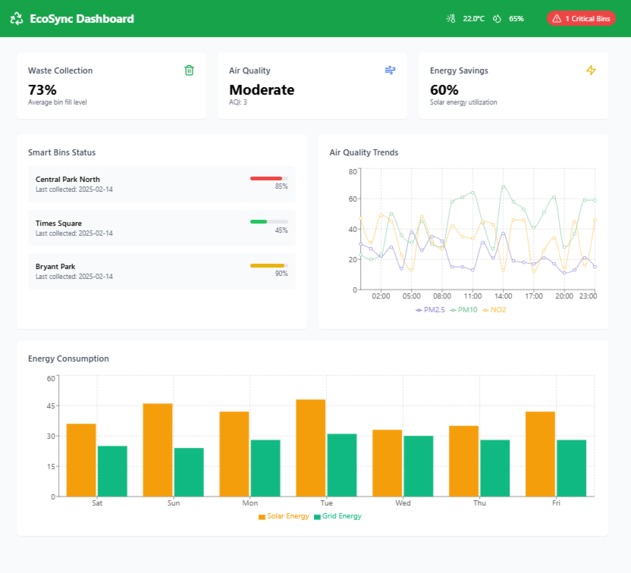
EcoSync Prototype
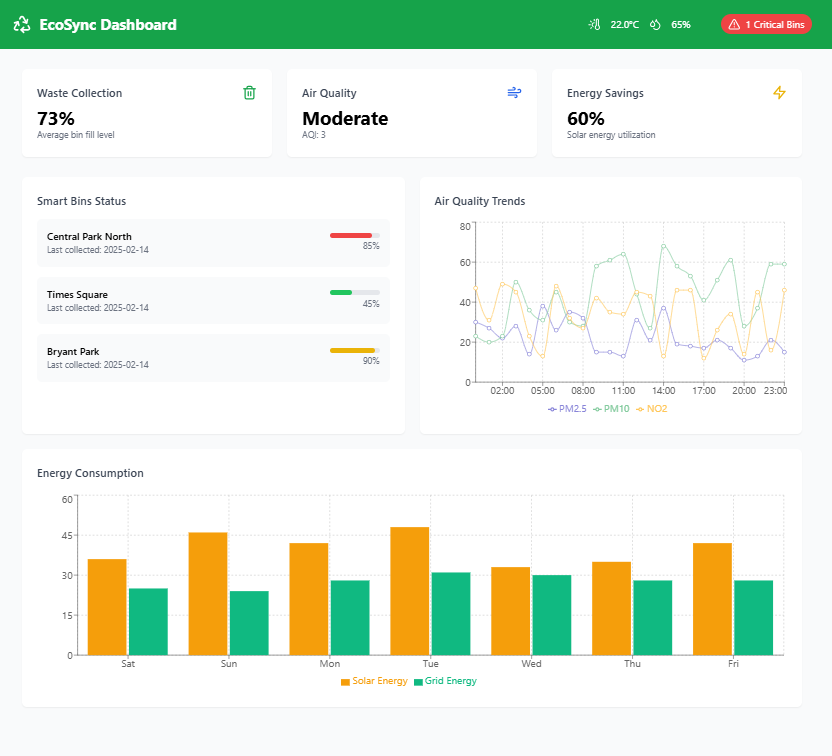
EcoSync: AI-Driven Smart Waste & Sustainable Urban Management
Executive Summary
EcoSync is an AI-powered Smart Waste Management System integrated with energy-efficient urban designs and real-time environmental monitoring tools. By leveraging machine learning, IoT, and geospatial analytics, it optimizes waste collection, enhances recycling efficiency, and minimizes environmental degradation in urban spaces.
Problem Statement
- Low Recycling Rates: Many urban areas struggle with inefficient waste sorting and processing.
- Energy-Intensive Infrastructure: Cities consume 78% of the world's energy, yet many lack sustainable designs.
- Environmental Degradation: Lack of real-time monitoring leads to slow responses to pollution and ecological damage.
Solution Overview
1. AI-Powered Smart Waste Management
- Automated Waste Sorting: AI-powered vision systems categorize waste at collection points.
- Optimized Waste Collection: IoT-enabled bins detect fill levels, optimizing collection routes.
- Recycling Incentives: Blockchain-based reward systems encourage citizens to recycle efficiently.
2. Energy-Efficient Urban Designs
- Smart Street Lighting: Adaptive lighting that adjusts based on pedestrian activity.
- Green Roofs & Solar Panels: Sustainable architecture to reduce heat and generate renewable energy.
- Passive Cooling & Smart Insulation: AI-driven building materials selection to minimize energy waste.
3. AI-Driven Environmental Monitoring & Mitigation
- Real-Time Air & Water Quality Sensors: IoT-based sensors detect pollution hotspots.
- Geospatial AI for Ecosystem Health: Satellite imagery identifies urban heat islands and deforestation trends.
- Automated Alerts & Policy Guidance: AI generates actionable insights for policymakers.
Technology Stack & Implementation
| Component | Description |
|---|---|
| Machine Learning & AI | TensorFlow for waste sorting, route optimization, and energy consumption predictions. |
| IoT & Smart Sensors | Arduino/Raspberry Pi-powered air/water quality monitoring. |
| Cloud Computing | AWS for real-time data processing and dashboard visualization. |
| Blockchain | Transparent reward system for incentivized recycling. |
| Geospatial Data Analytics | GIS tools for urban heat mapping and land-use monitoring. |
Challenges & Solutions
- Data Accuracy & Bias: Improved model training with diverse datasets to reduce errors.
- Hardware & Cost Constraints: Open-source IoT solutions and modular deployment strategies.
- Adoption Barriers: Government & corporate collaborations to incentivize early adoption.
Impact & Future Scope
- Expected Benefits:
- 30% improvement in waste sorting efficiency.
- 25% reduction in energy consumption through AI-driven designs.
- Faster pollution detection & mitigation.
- Scalability: Adaptable for various city sizes, from small towns to megacities.
- Future Enhancements: Integration with autonomous waste collection vehicles and carbon credit trading.
Conclusion
EcoSync presents a data-driven, scalable, and impactful solution to urban waste, energy, and environmental challenges. By combining AI, IoT, and smart infrastructure, it creates sustainable cities of the future while fostering community engagement and policymaker collaboration.
This project embodies the core vision of the Green Pioneers Hackathon, driving real-world change through technology and innovation.
Project Breakdown
Inspiration
The growing issue of urban waste mismanagement and inefficient energy use inspired us to create EcoSync. By leveraging advanced AI and IoT solutions, we aim to transform cities into sustainable and efficient environments.
What It Does
EcoSync integrates:
- Smart waste collection & sorting using AI-based vision systems.
- Energy-efficient urban designs with sustainable architecture.
- AI-driven environmental monitoring to detect pollution hotspots in real-time.
How We Built It
- Technologies Used: TensorFlow, AWS, Raspberry Pi, GIS, and Blockchain.
- Development Process:
- Designed the AI-powered waste sorting model.
- Implemented IoT sensors for real-time data collection.
- Integrated GIS-based geospatial analytics for environmental monitoring.
- Developed a blockchain-based incentive system for citizen participation.
Challenges We Ran Into
- Data Collection: Ensuring high-quality, unbiased training data for AI models.
- Hardware Constraints: Finding cost-effective IoT solutions for large-scale implementation.
- Scalability Issues: Designing a modular approach adaptable for different city sizes.
Accomplishments That We're Proud Of
- Successful integration of AI, IoT, and blockchain into a unified waste and energy management system.
- Development of a real-time monitoring system for pollution detection.
- Building a scalable and replicable model that cities worldwide can implement.
What We Learned
- AI and IoT can significantly enhance waste management efficiency.
- Community incentives, powered by blockchain, improve citizen participation.
- Urban sustainability requires multidimensional solutions, combining technology with policy-making.
What's Next for EcoSync
- Expanding AI models to predict urban pollution trends.
- Partnering with municipalities and private sector companies for pilot projects.
- Enhancing the system with autonomous waste collection and AI-driven predictive analytics for environmental sustainability.

Log in or sign up for Devpost to join the conversation.