
Track Alignment
Track: Sustainable Supply Chains Challenge: Increase transparency and accountability in supply chains
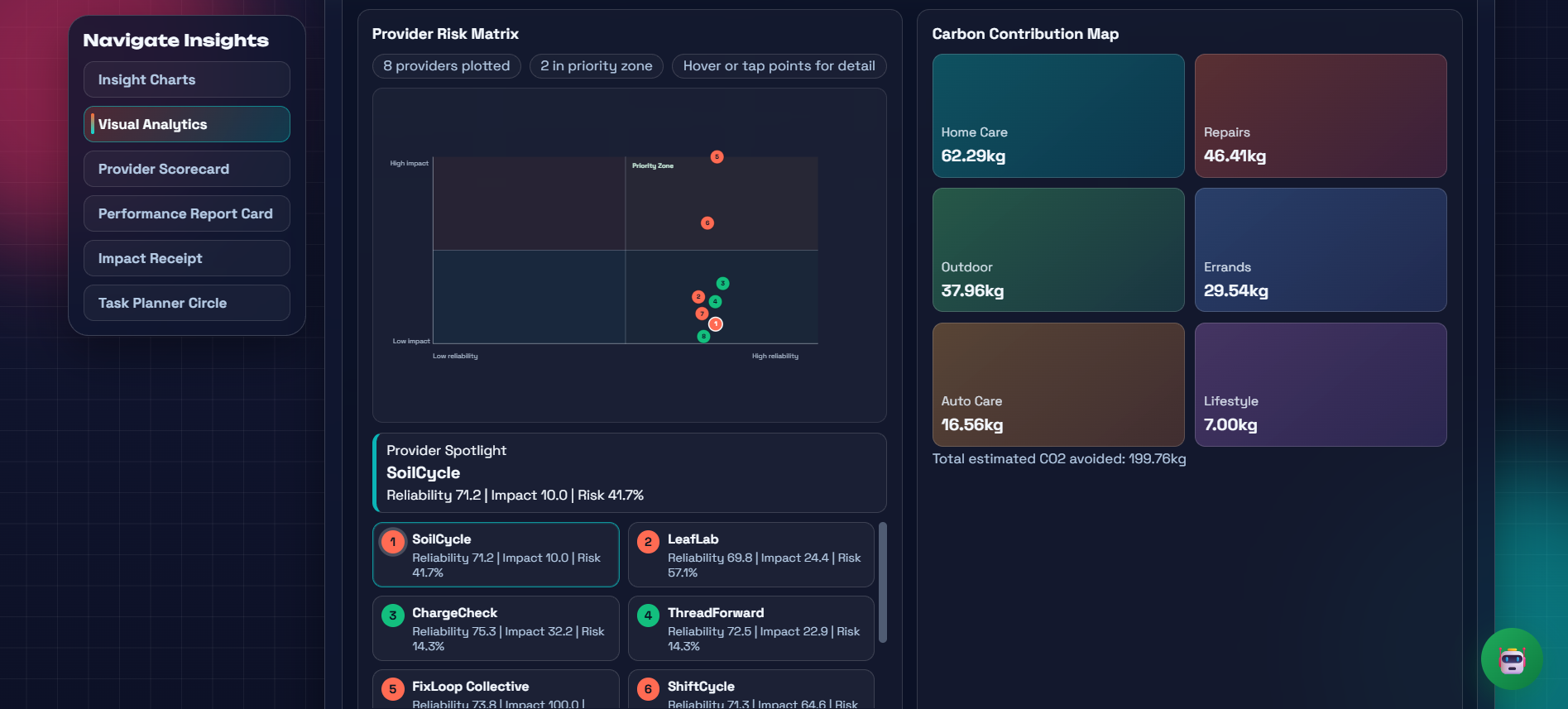
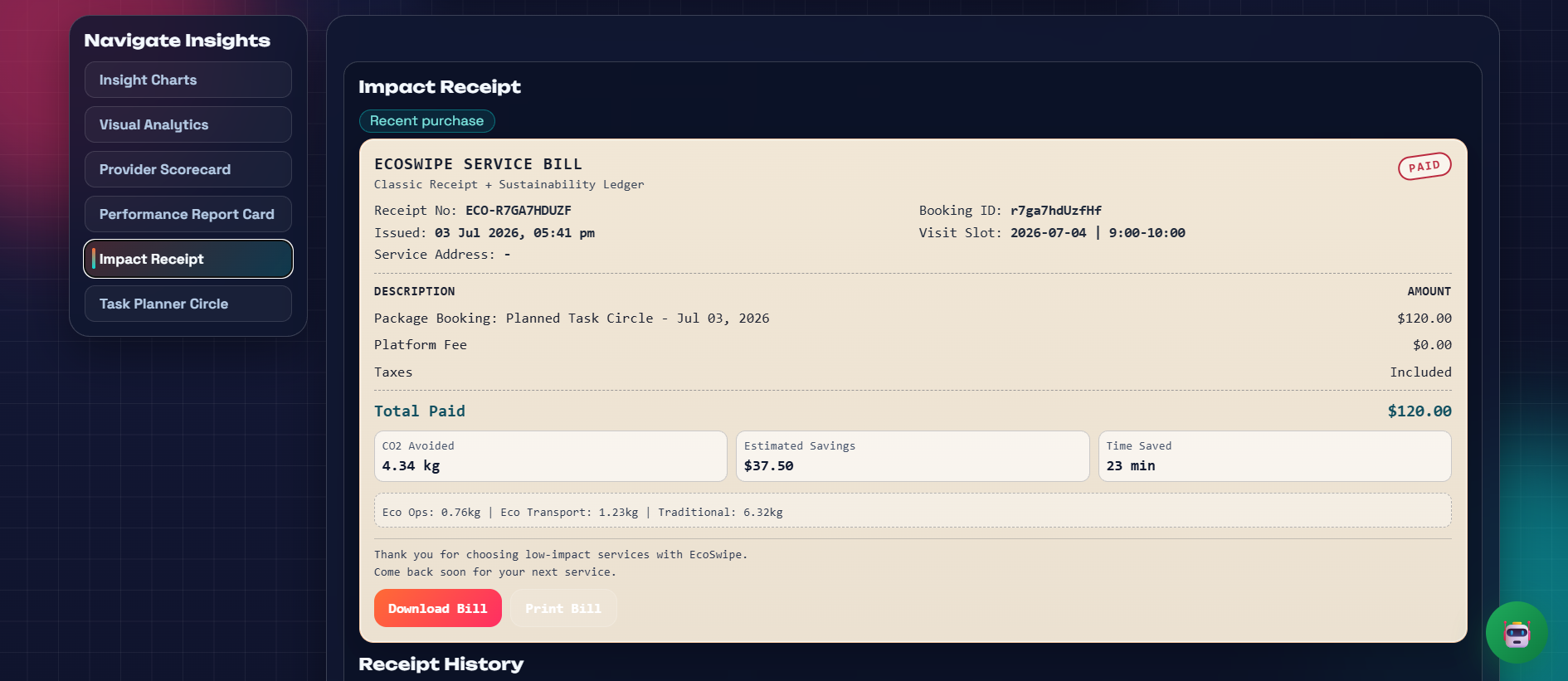
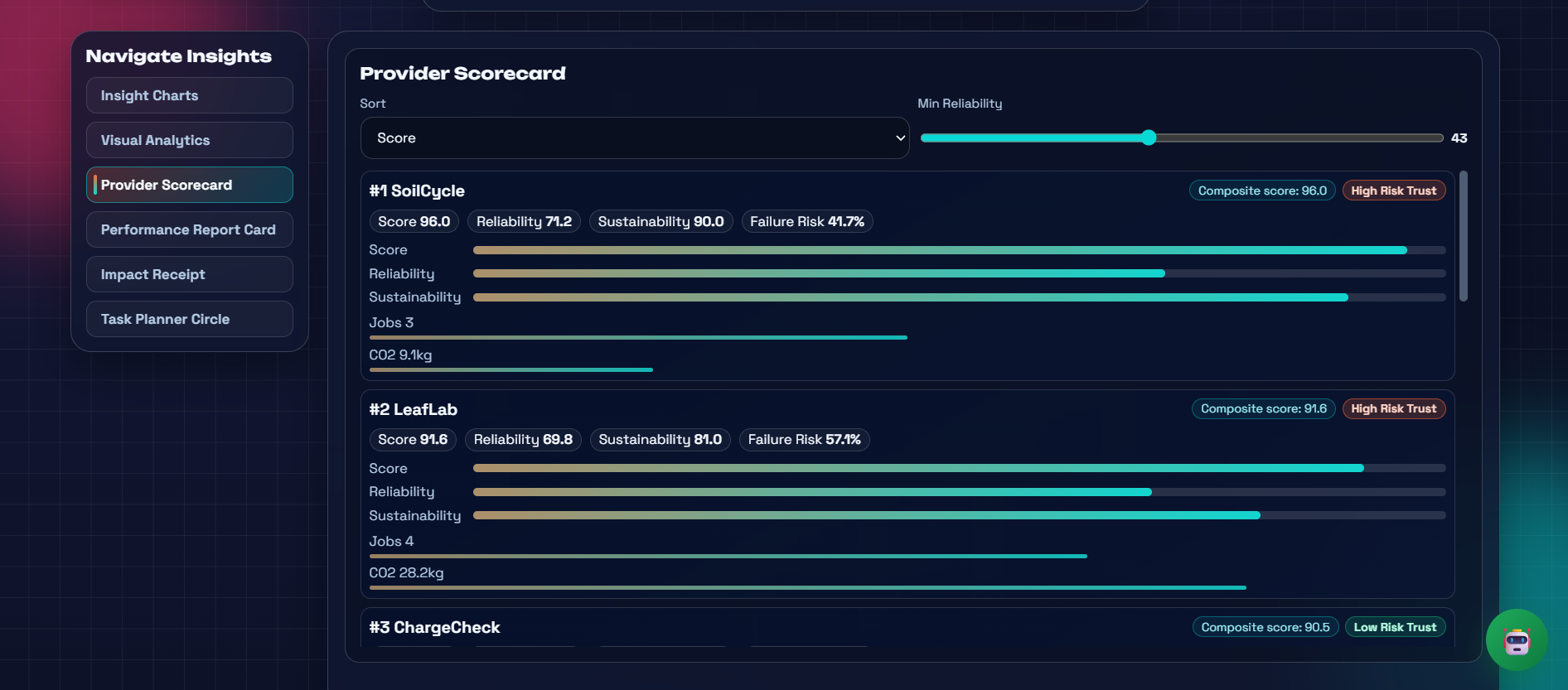
EcoSwipe addresses the core problem directly: it is currently very difficult to verify sustainability claims in service markets. Every booking generates a carbon impact receipt computed from a calibrated model against a real 20-service catalog not a badge, but an auditable number. Provider trust scores are Bayesian-smoothed from actual completion behavior, so greenwashing providers cannot inflate their standing.
Blockchain extension (What's Next): EcoSwipe's impact receipts are natural candidates for on-chain verification each receipt hash stored via smart contract creates a tamper-proof, tradeable carbon savings record, directly solving the double-counting problem in carbon markets.
Inspiration
Booking a home service today means scrolling near-identical listings with vague "verified" badges and no real way to know if "eco-friendly" means anything beyond marketing. At the same time, most sustainability apps make going green feel like homework guilt-trippy dashboards nobody opens twice. We wanted the opposite: a booking experience people actually enjoy, where the sustainable choice is the fastest and most obvious one, and where "trust score" and "carbon saved" are computed from real behavior, not decorative numbers.
What It Does
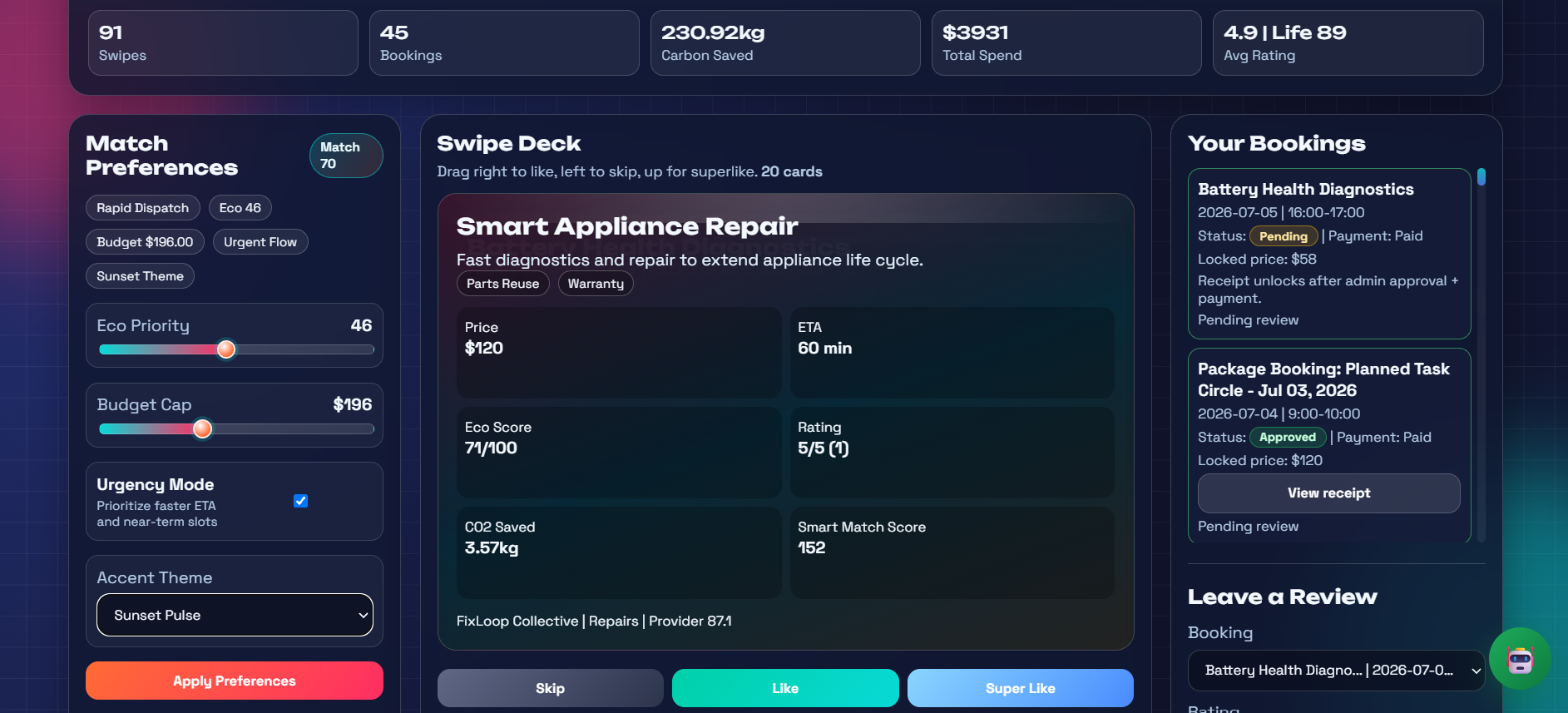
EcoSwipe is a full-stack home services marketplace built around a Tinder-style swipe deck. Every card shows a service's real price, ETA, and carbon savings versus a modelled traditional-service baseline. Behind that deck sits a Bayesian trust-scoring engine that rates providers on actual completion rate, punctuality, and repeat-hire behavior not inflated star averages.
Users can also describe what they need in plain English "eco plumber under ₹500 tomorrow morning" to a Claude-powered booking agent that extracts intent, matches real providers, remembers context across a conversation, and falls back to regex parsing if the LLM is unreachable.
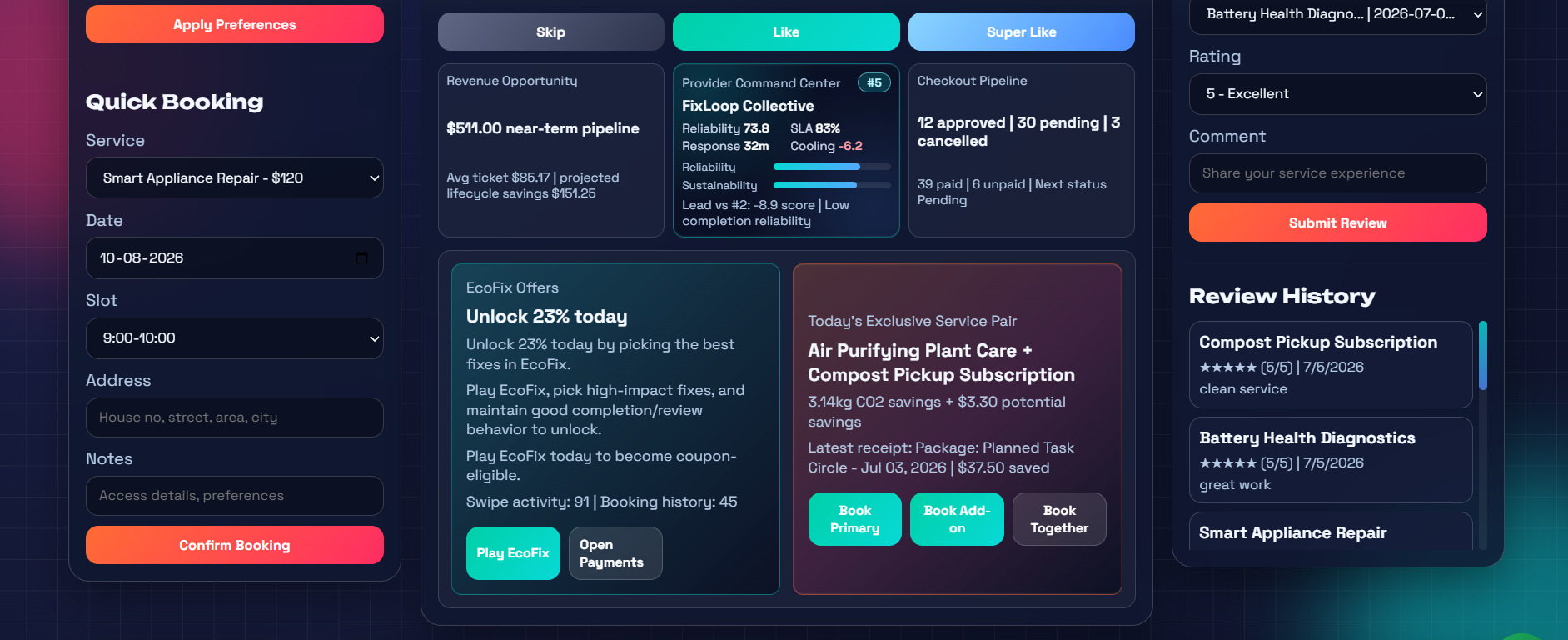
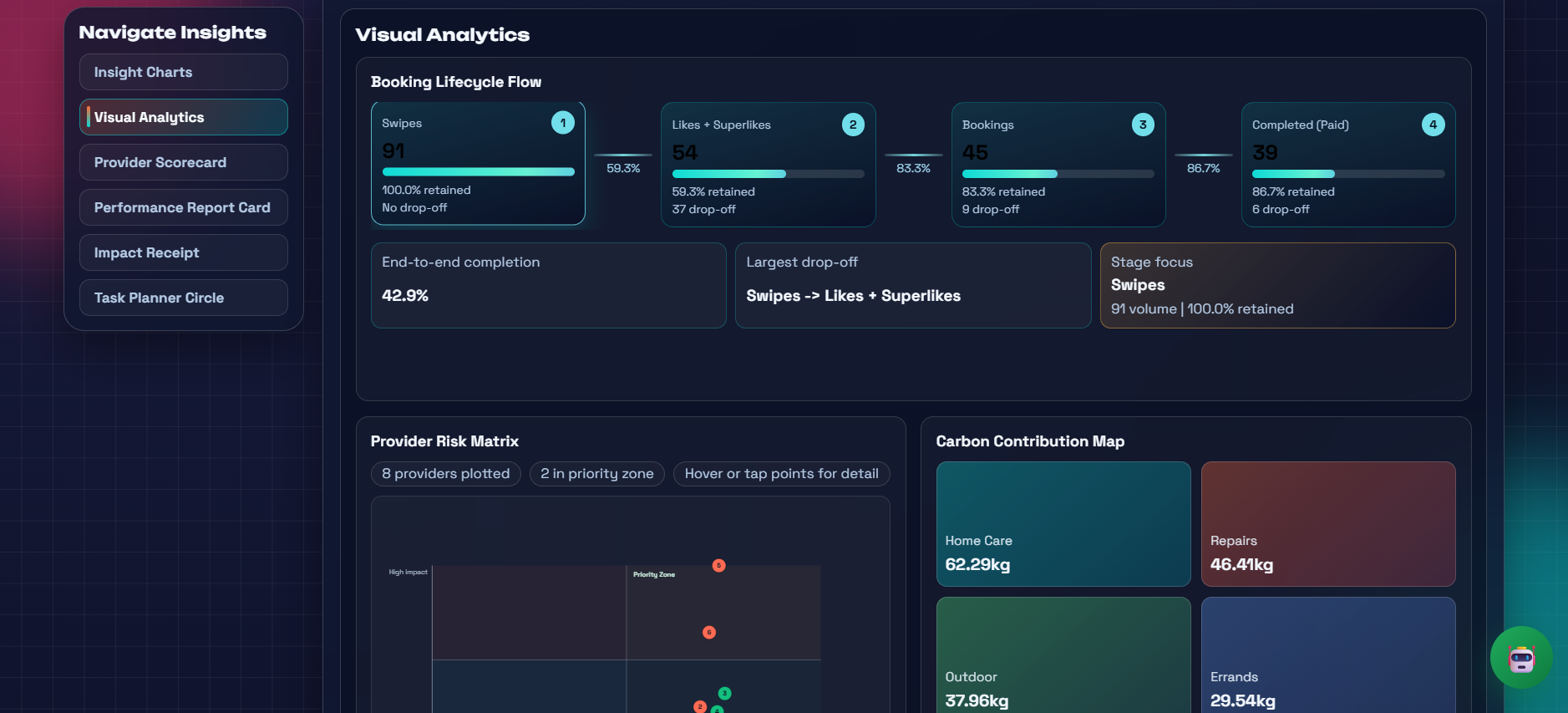
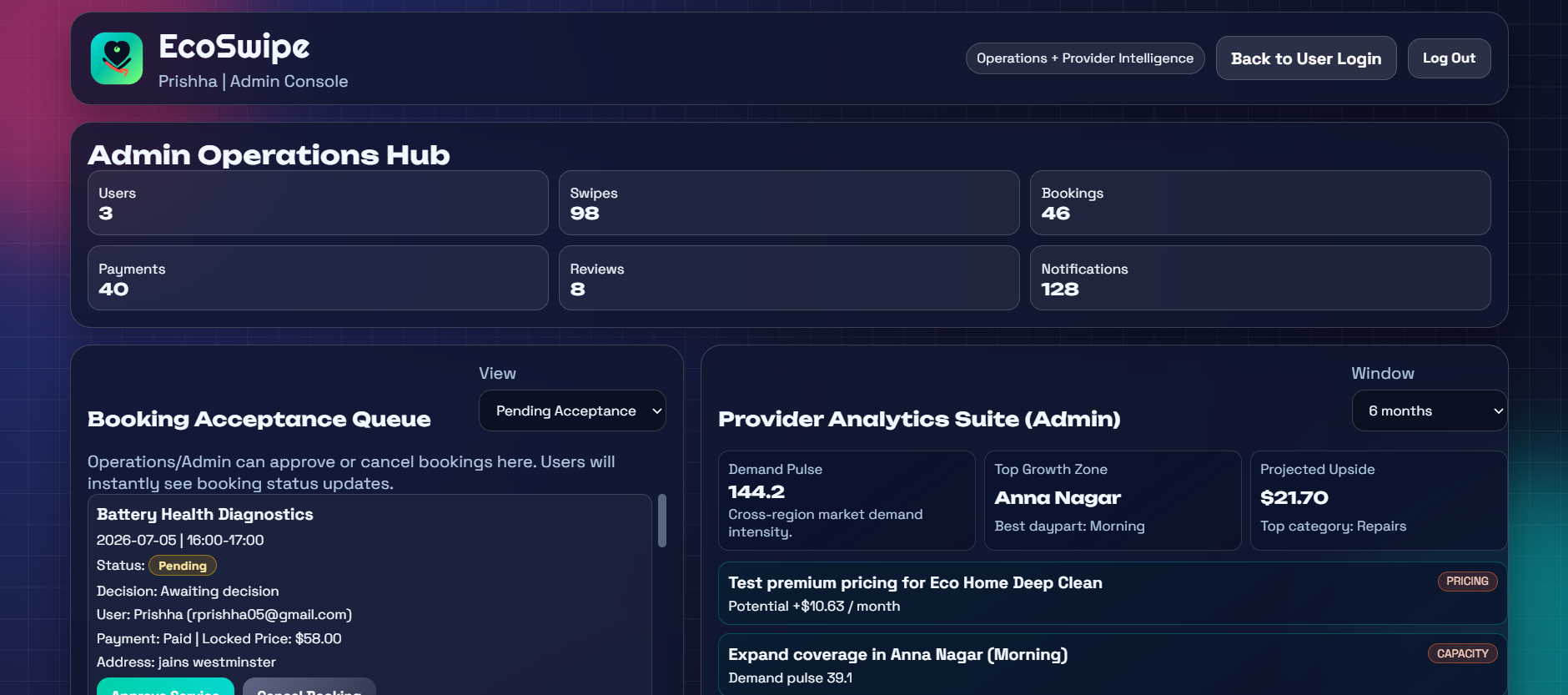
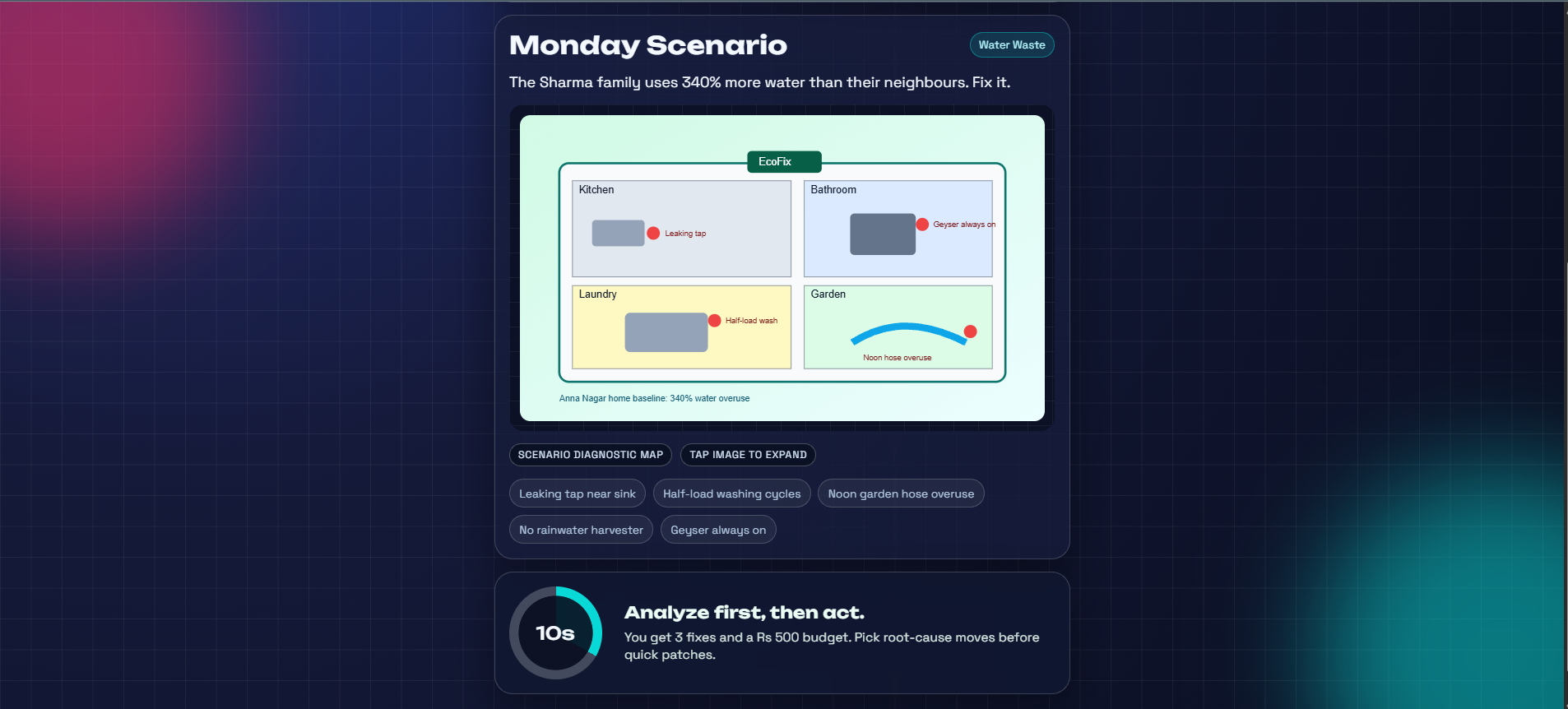
Sustainability is gamified through EcoFix, a daily eco-decision mini-game that unlocks real discount coupons capped to one per person per week so rewards require actual engagement, not just clicking through. An admin console handles booking approval, swipe-to-booking conversion funnels, and demand heatmaps. Every booking generates a downloadable impact receipt breaking down carbon, money, and time saved the foundation for future on-chain verification.
How We Built It
Backend: Node.js/Express with SQLite (via better-sqlite3), optionally recalibrated from Supabase-hosted benchmark data. Auth is JWT-in-httpOnly-cookie with CSRF token verification and role-based access control. Frontend is intentionally vanilla JS/HTML/CSS no bundler, except EcoFix, which loads React 18 and Babel Standalone from CDN and JSX-transpiles in the browser at runtime, so it ships without a build step.
The Claude API integration uses raw fetch calls against the Messages API with a structured-extraction system prompt, backed by a regex fallback so the assistant degrades gracefully instead of breaking. Provider trust scores use Bayesian smoothing (prior-weighted toward the population mean for providers with few jobs) so a provider's first booking can't swing their score wildly.
Challenges We Ran Into
The hardest bugs weren't the ones we expected. EcoFix originally used a flat score threshold to unlock coupons but when we computed the true achievable ceiling for each day's fix combinations, two days' content couldn't mathematically reach that floor, making those days permanently unwinnable. We brute-forced each day's real scoring ceiling from actual game data and derived per-day targets as a percentage of that ceiling.
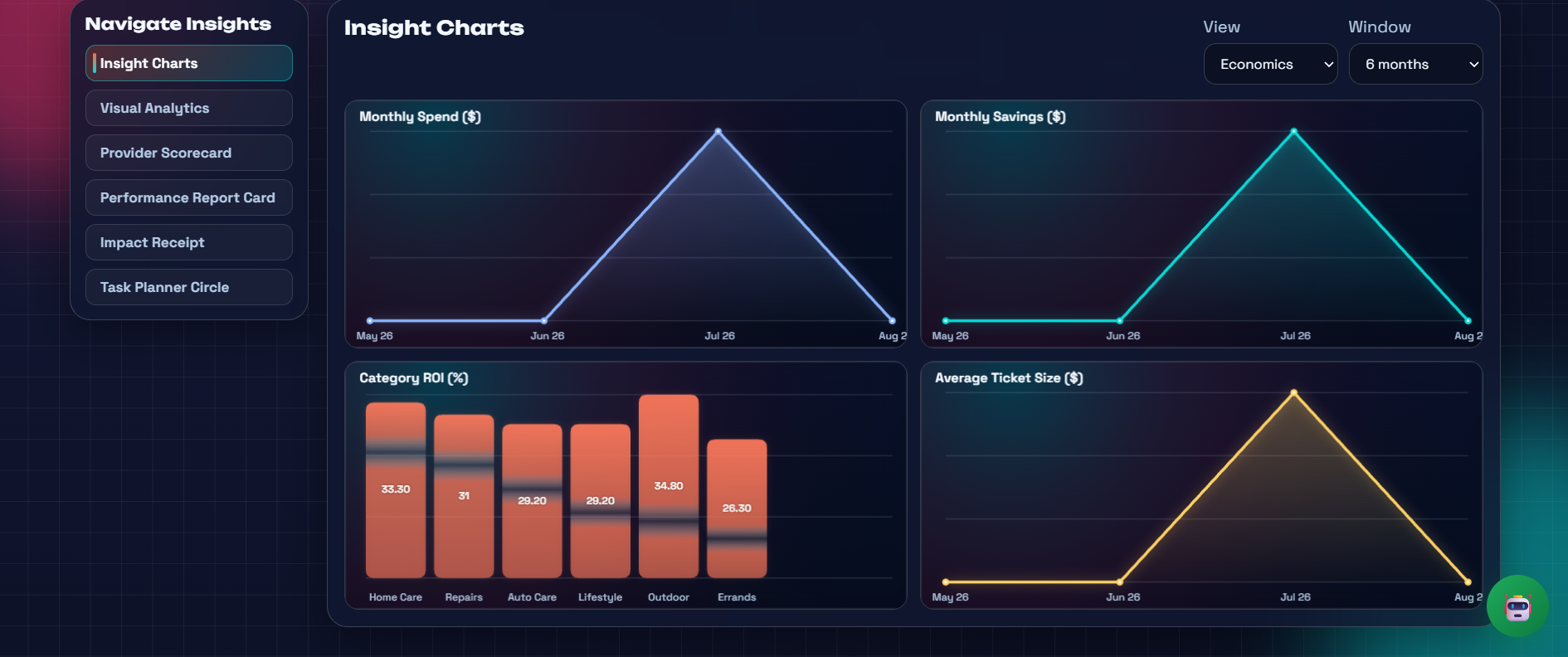
We also found and closed a coupon-eligibility loophole where a secondary engagement-scoring path let users unlock EcoFix rewards without ever playing the game. And a chart-styling pass caught gradient-animation code that hardcoded the teal accent as the glow color for every bar, regardless of its actual color.
Accomplishments We're Proud Of
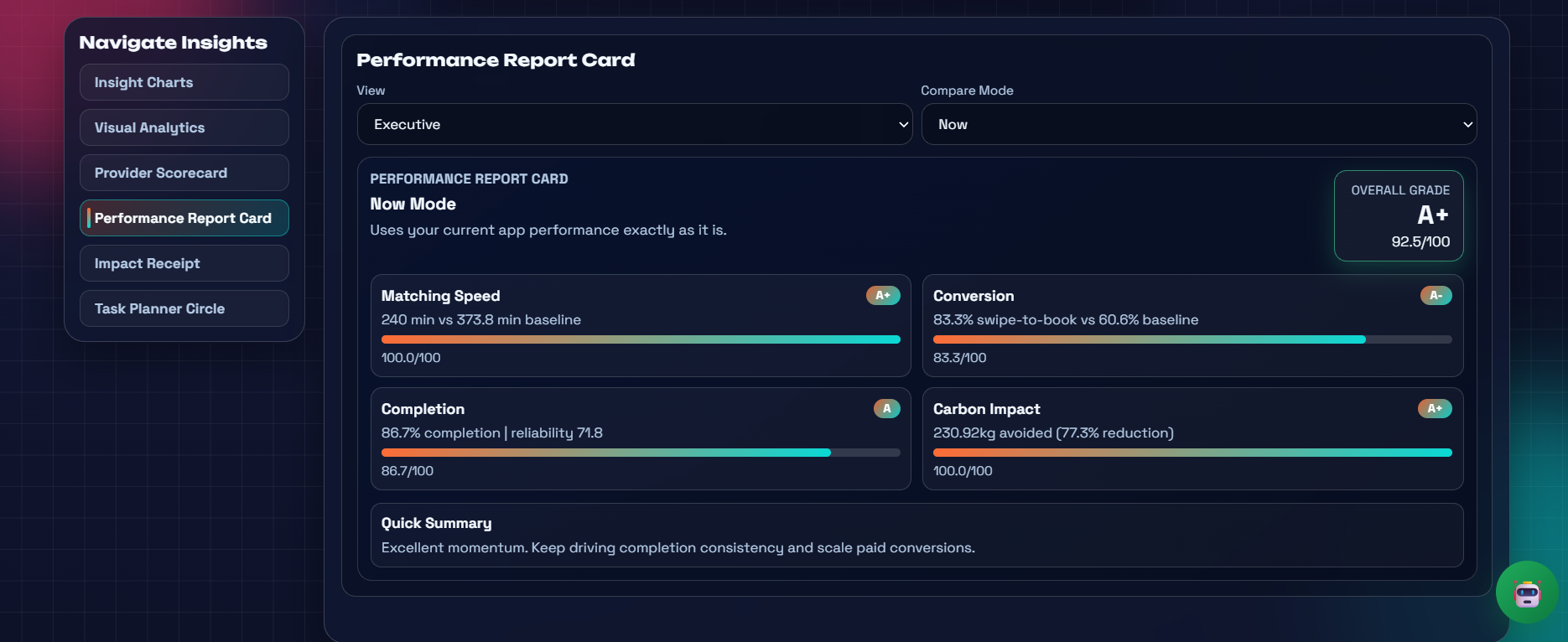
Running our calibration model against the real 20-service catalog gives an honest 74.5% average carbon reduction and 29.6% average time savings versus traditional-service baselines numbers we computed by actually executing the app's logic, not projecting them. The trust-scoring system reports its own confidence band, so a provider with 2 jobs is visibly less certain than one with 20. And we caught and fixed our own security and fairness bugs the coupon loophole and the unwinnable-day bug before they shipped, by testing against real data rather than trusting the code by inspection.
What We Learned
The biggest lesson: distrust your own assumptions the moment real data is available to check them against. The flat threshold and the engagement-based coupon path both looked reasonable in isolation and only broke down once we simulated real play patterns. We also learned that "vanilla JS with no build step" and "ship a real React feature" aren't mutually exclusive CDN + runtime Babel transpilation let EcoFix use React 18 without forcing a bundler onto the rest of the app. And building the Claude-powered agent taught us that a good fallback path matters as much as the AI integration itself.
What's Next for EcoSwipe
Near-term: Give the booking agent access to real-time provider availability so it can propose exact slots, and extend conversation memory to handle multi-step booking flows end-to-end.
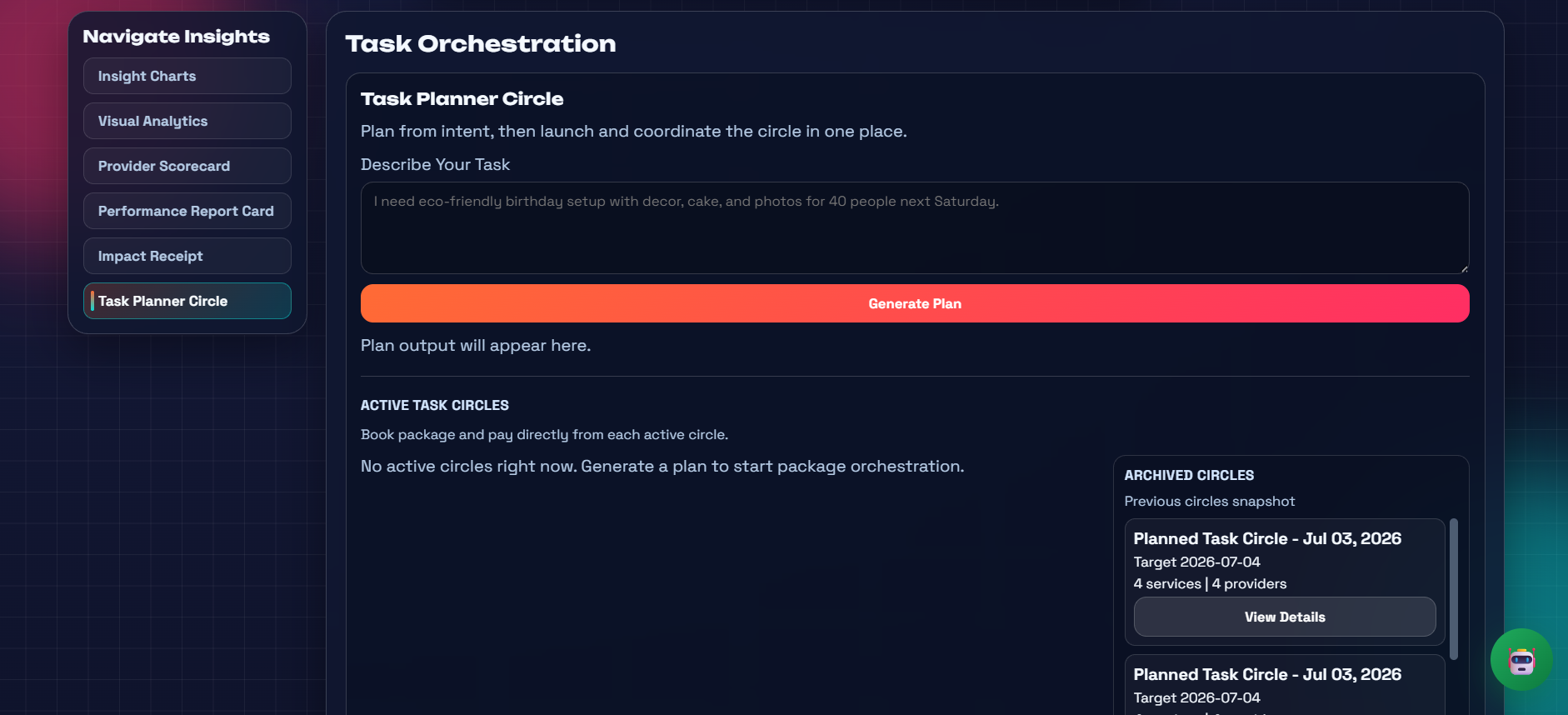
Medium-term: Move providers off the hardcoded catalogue into a dynamic, provider-managed listing system with a provider-facing app for self-managed bookings.
Blockchain layer: Store impact receipt hashes on-chain via smart contracts — making carbon savings tamper-proof, verifiable, and tradeable. This directly addresses the transparency and double-counting problems in carbon markets that this track targets.
Long-term: Pilot with a real local provider network to validate whether modelled carbon/time savings hold up against actual measured outcomes.


Log in or sign up for Devpost to join the conversation.