-
-
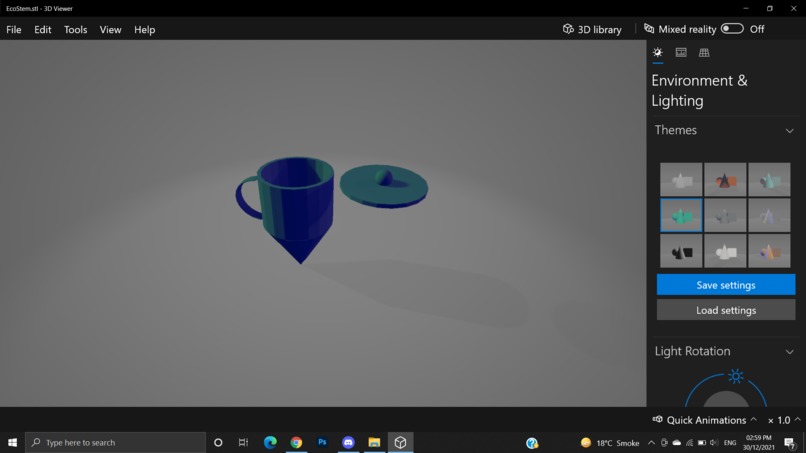
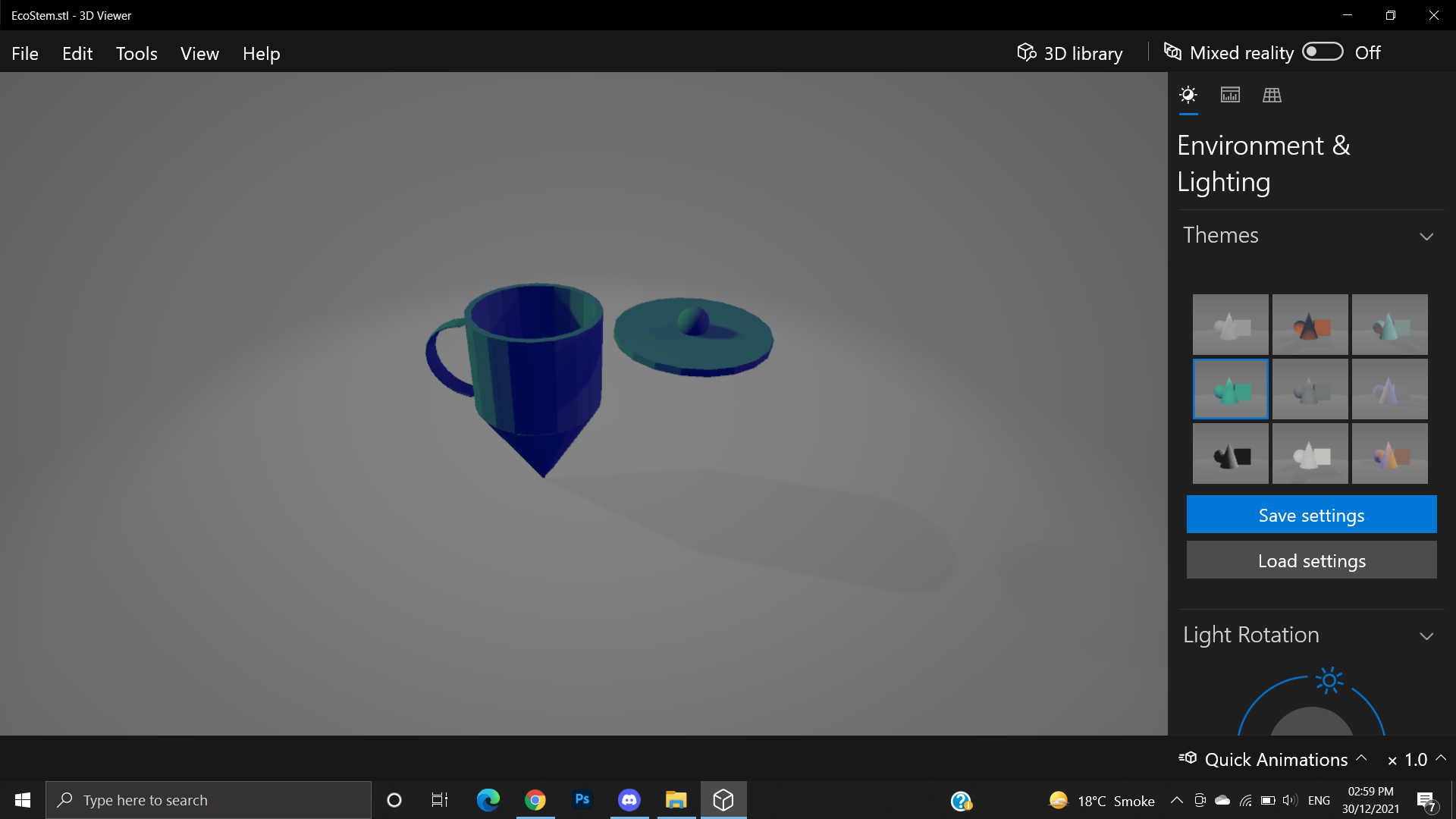
3D Model
-
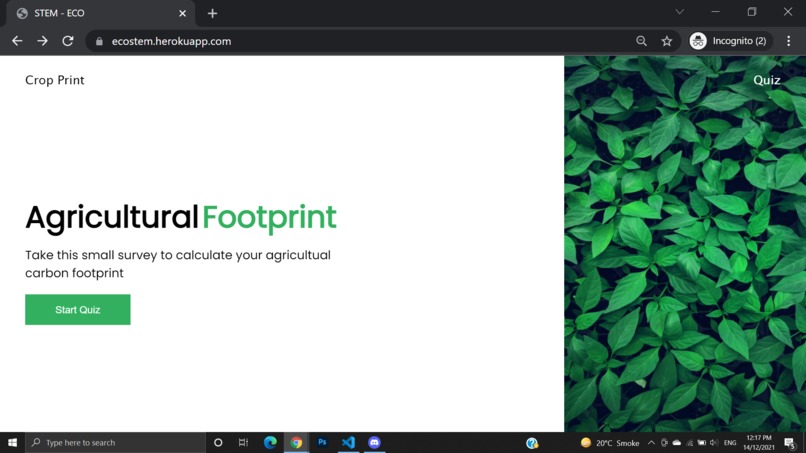
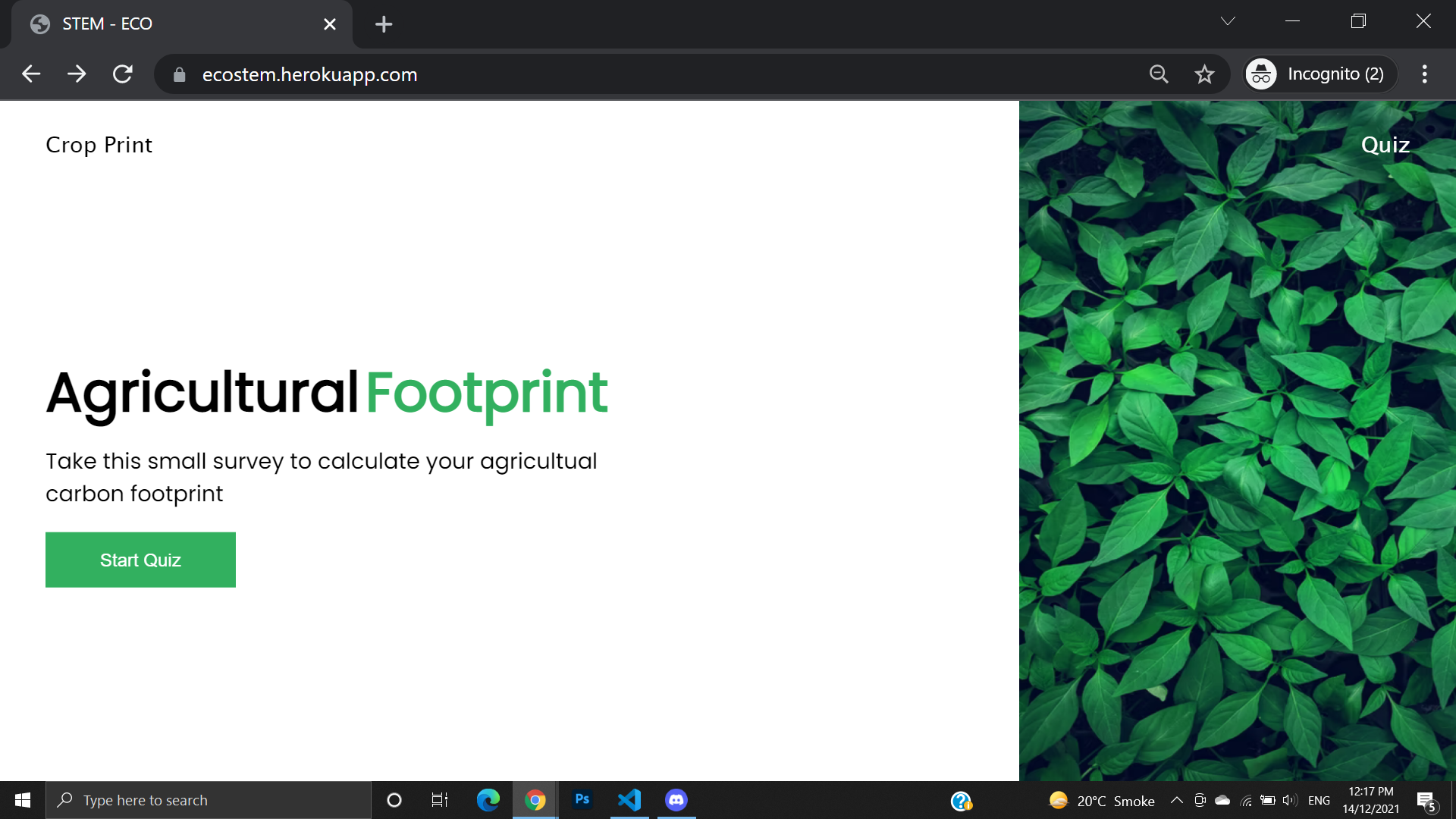
Welcome Screen
-
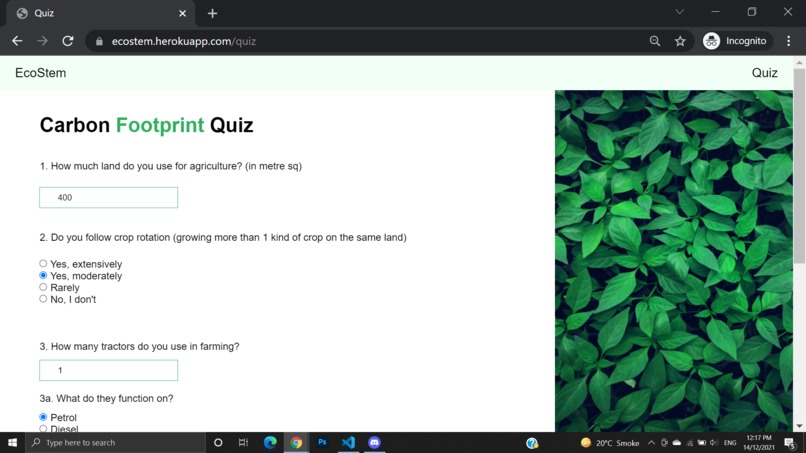
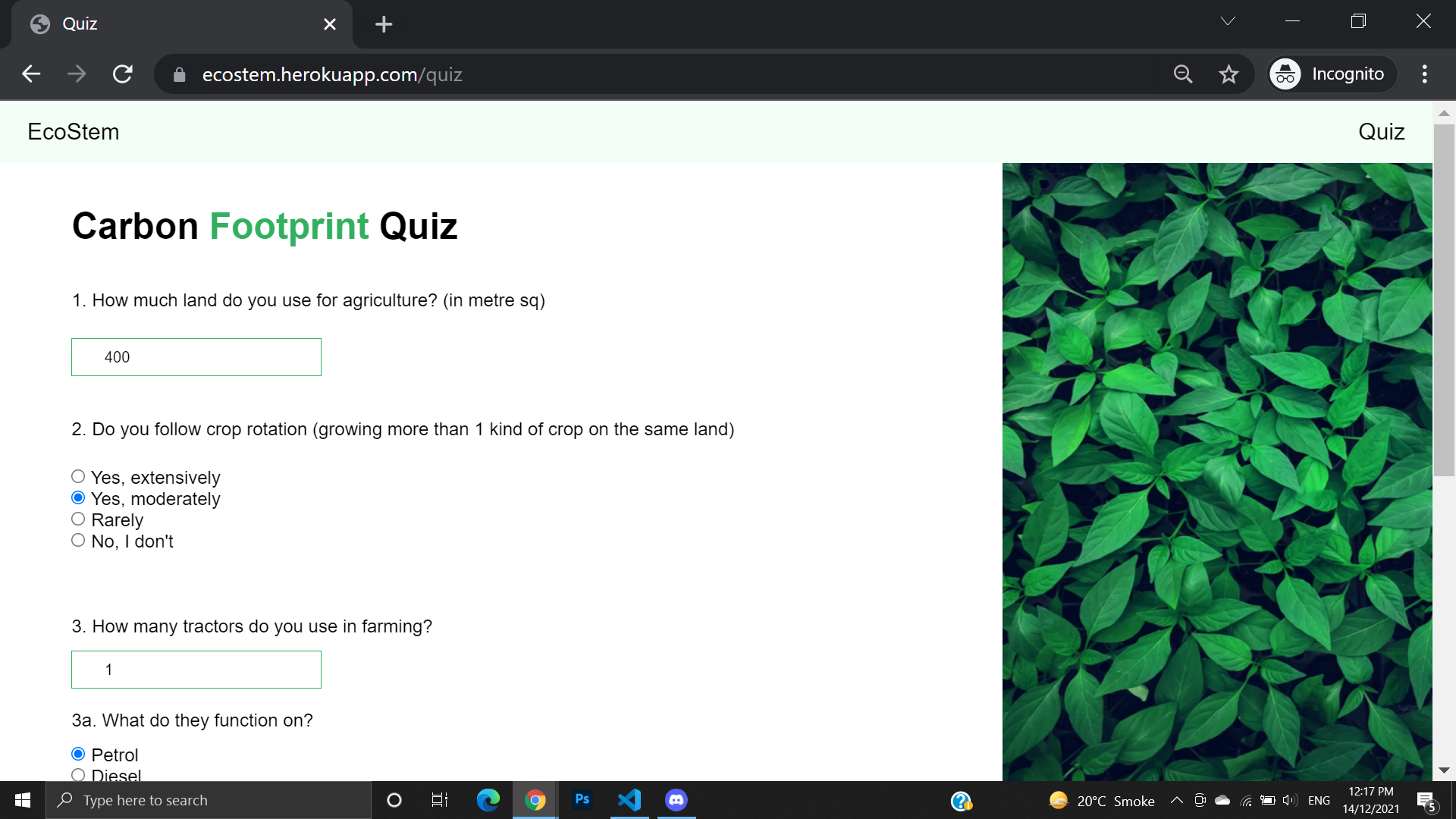
Questions Screen
-
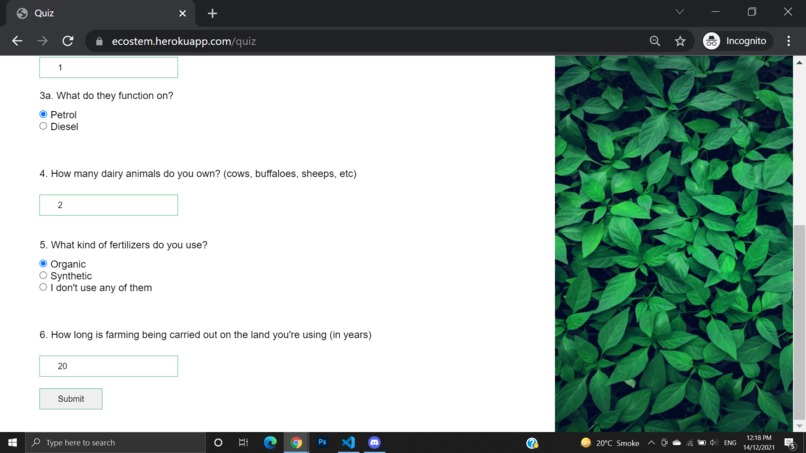
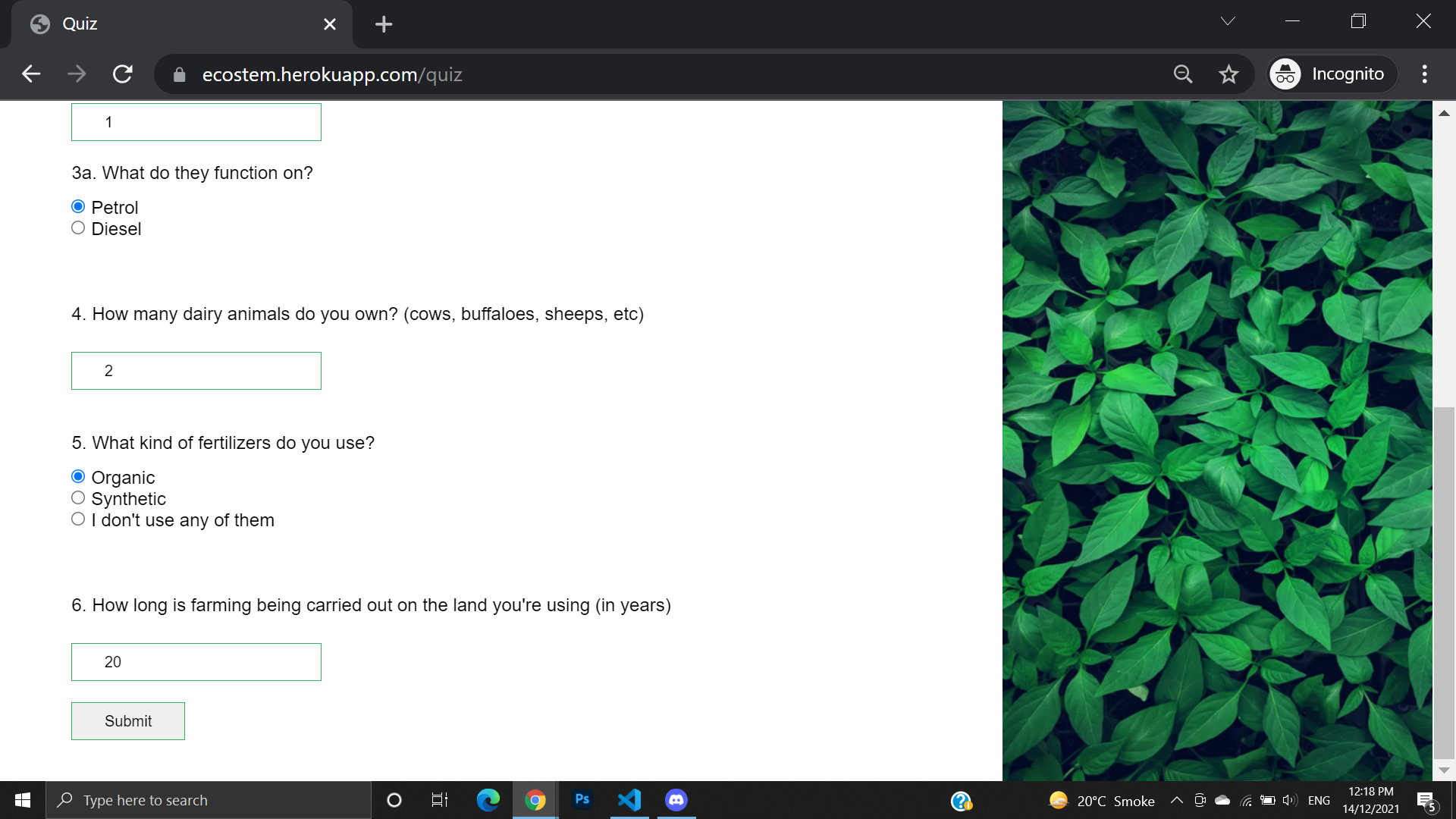
Questions Screen 2
-
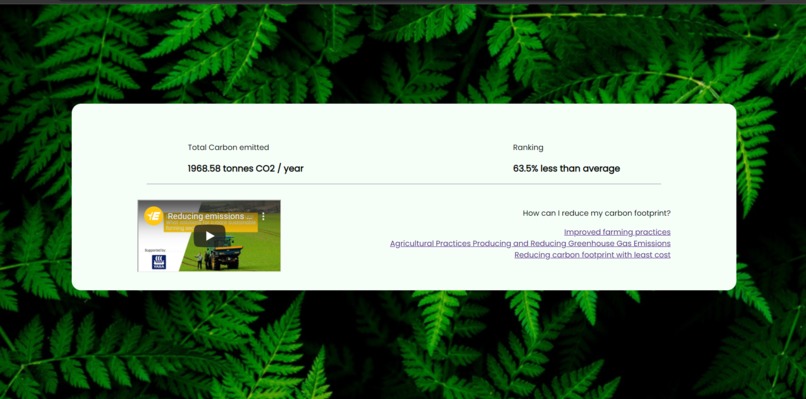
Result Screen
-
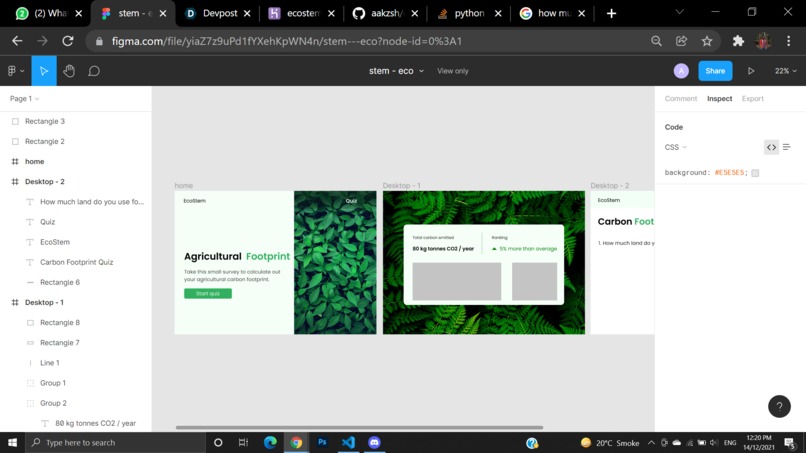
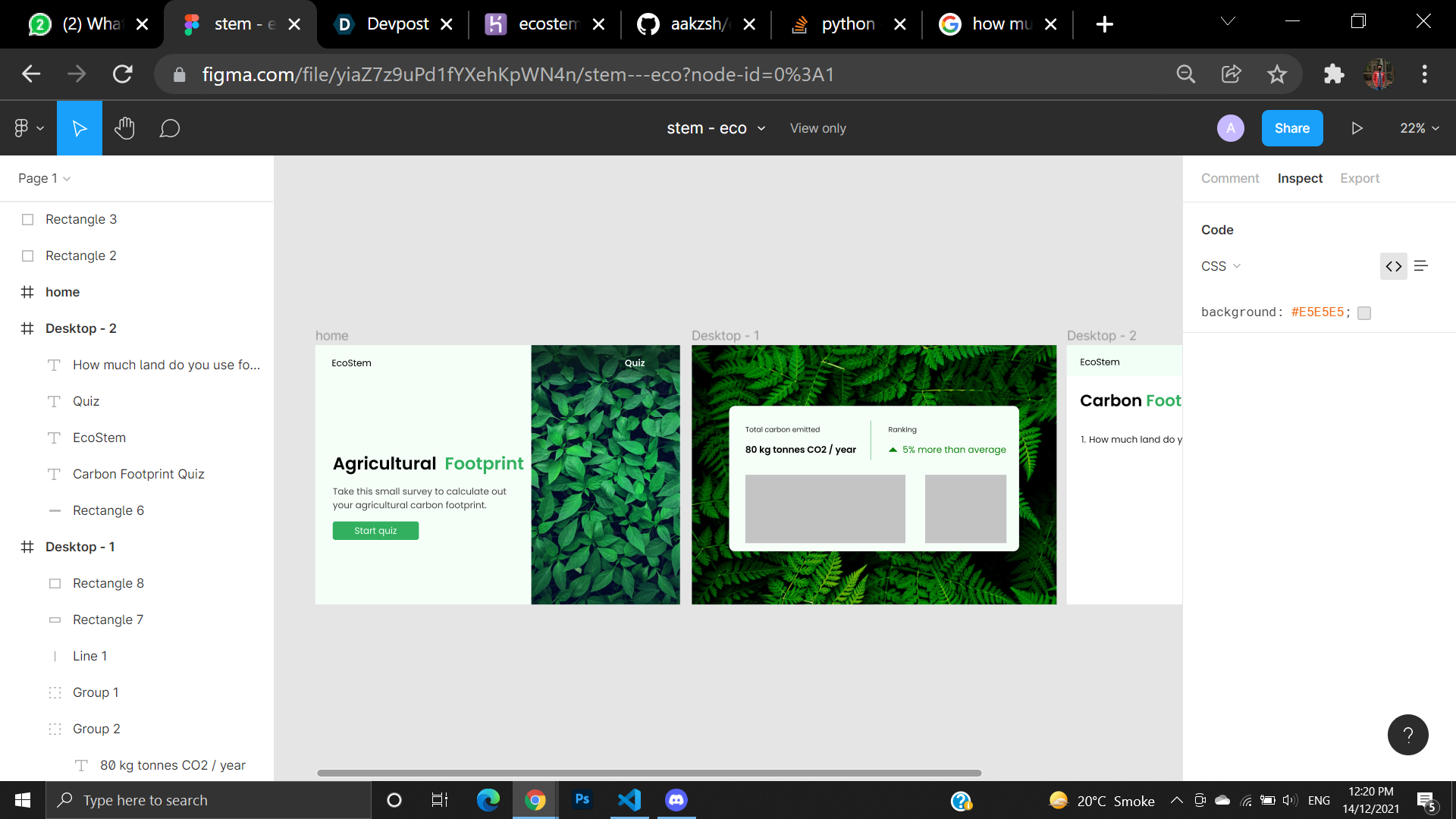
figma

Submitting for
We're submitting this project for two categories:-
• Coding
• 3D Modelling
Inspiration
We were intrigued by the fact that there are several websites for calculating household and commercial carbon footprints, but there were barely any resources to calculate the same in agriculture, given the fact that agriculture accounts for more than 10% of global carbon emissions. We felt that this should be made available, and would really help out our farmers to understand about their carbon footprint and find ways to reduce it as much as possible. That was our inspiration to make EcoStem!
What it does
EcoStem is a web application that lets users calculate their carbon footprint in the field of agriculture, by completing a quick survey based on questions regarding crop land size, number of dairy animals and tractors, types of fertilizers used and more. Thereafter, they can know about their carbon emissions and can also find ways to reduce it effectively, and eventually contributing towards a better environment!
Additionally, we've created a 3D model in Tinkercad that farmers can use to pour their fertilizer over the crop. Since over fertilization is a severe issue and not only it can affect the quality of crops, but also leads to wastage, which in turn increases the carbon emissions. So, our 3D model is like a flask that can store fertilizer, and its lower conical valve can rotate, to either allow or obstruct fertilizer material to flow, and farmers can also attach it it their tractors and ensure that the fertilizer is being spread evenly over the land.
The model's link is given below in a drive folder


How we built it
• We used python's library called Flask, to make our web application and serve our html pages on the frontend. For the backend too, we used flask and passed form requests through flask app routes and calculated the footprint using python.
• To make the design of our web application, we used Figma
• To deploy the app on web, we used heroku's hosting service
• To make the 3D model, we used Autodesk's TinkerCad
Challenges we ran into
We ran into a couple of challenges while completing our project
• Collecting data from various articles and formulating it was indeed time taking.
• Completing everything within the given time frame was also challenging.
• Designing and making a 3D model for the first time was also a bit challenging.
Accomplishments that we're proud of
• We're very proud that we were able to complete our project.
• We're proud that this is something unique and is actually very useful for people according to us.
• We're also proud of our minimalistic aesthetic design.
What we learned
We learnt many things, including
• Deploying on heroku
• Significance of carbon emissions in environmental degradation
• Getting and working with form data in flask
• Using TinkerCad
What's next for EcoStem
We would like to add more features over time such as letting farmers know more about their crops using AI, suggesting nice places from where they can buy carbon free products, adding more customization on app and authentication, and more!


Log in or sign up for Devpost to join the conversation.