Inspiration
Over 25% of recyclable municipal loads end up in landfills due to cross-contamination. Everyday consumers want to sort their waste responsibly, but modern consumer goods rarely consist of a single uniform material. A paper coffee cup features an internal waterproof polyethylene film; a standard beverage bottle combines a PET body with a polypropylene cap and a PVC label. Standard recycling guides and generic classifications fail because they ignore multi-layer composite packaging. We engineered EcoSort Edge to bring low-latency client-side computer vision and localized municipal policy resolution directly to the point of disposal.
What it does
EcoSort Edge functions as a real-time visual waste inspection and decomposition system:
- Component-Level Decomposition: Automatically identifies and separates multi-material consumer items into distinct sub-components (such as container bodies, threaded caps, and shrink-sleeve labels).
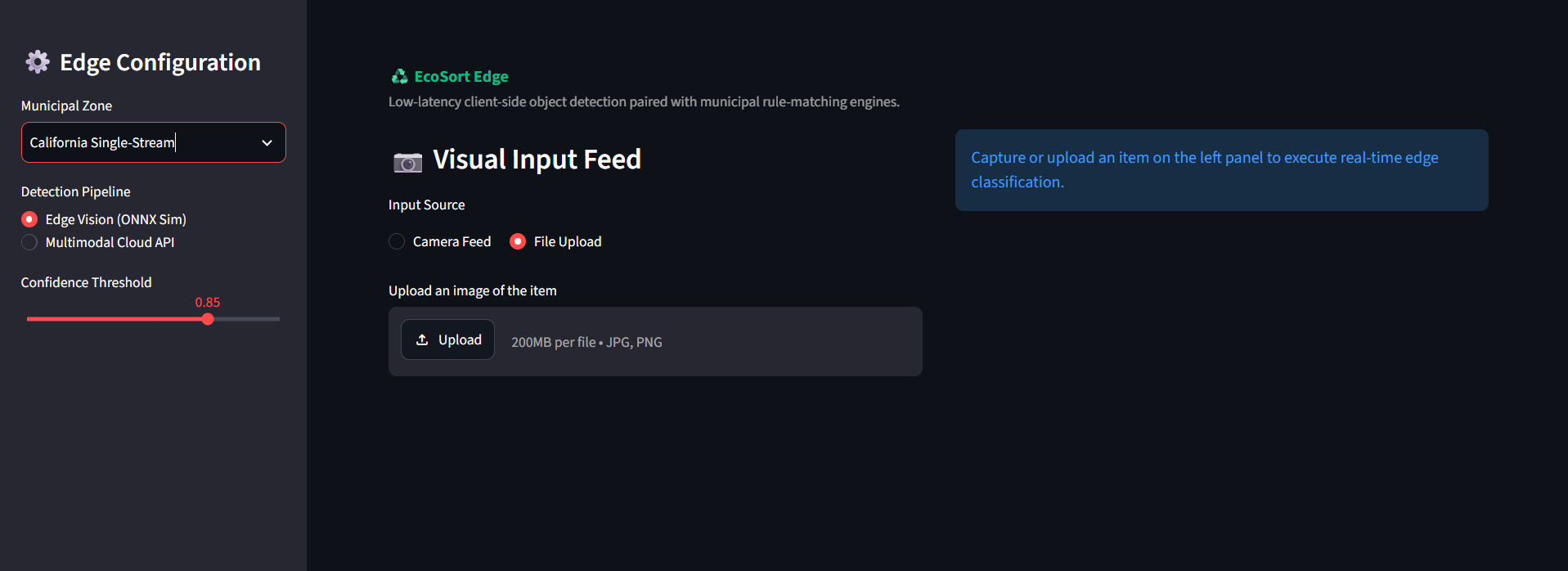
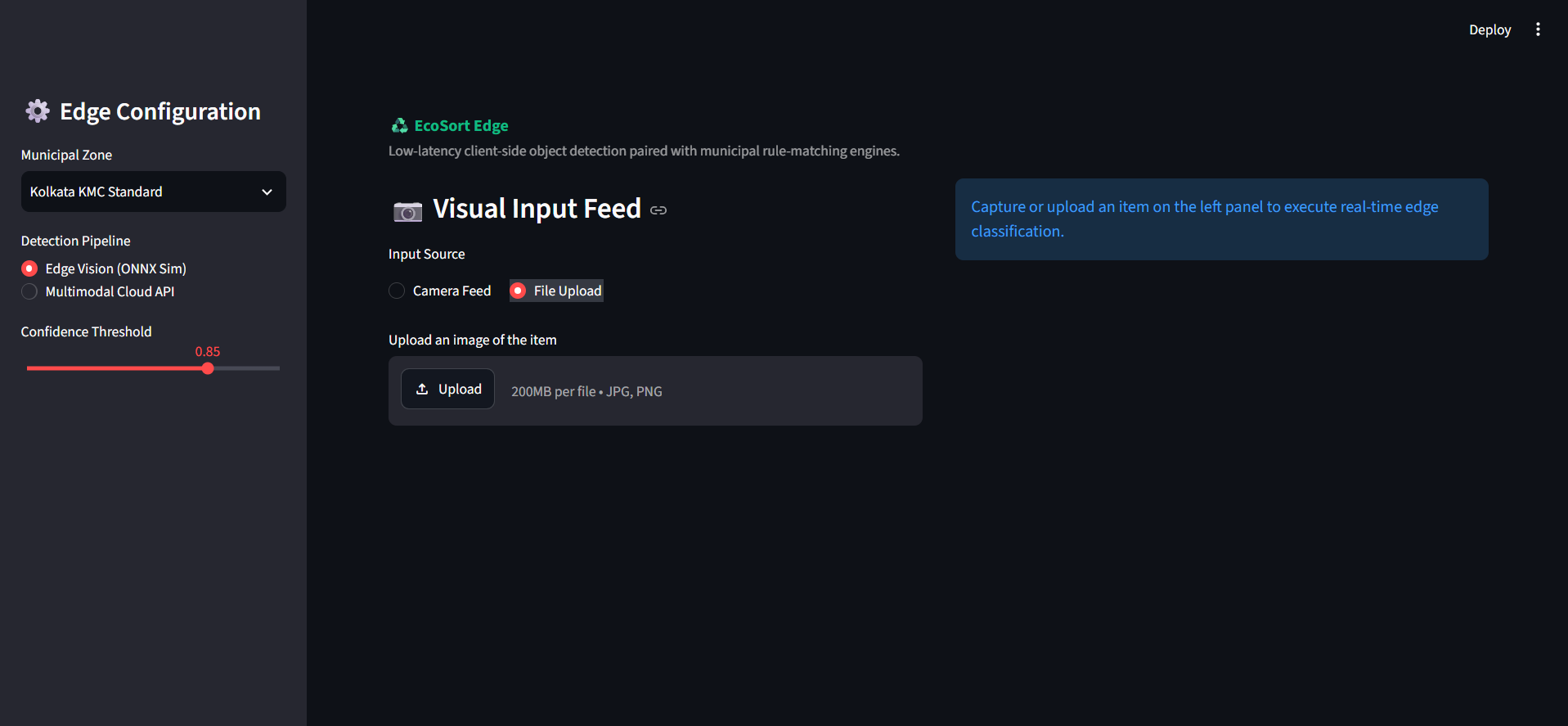
- Localized Stream Assignment: Correlates detected resin identification codes (#1–#7) with municipal guidelines (such as Kolkata KMC regulations) to route items accurately to Blue Recycling, Black Landfill, or Compost bins.
- Contamination Mitigation Directives: Delivers actionable, step-by-step preparation directives (e.g., separating caps, peeling perforated labels, or rinsing residue) before disposal occurs.
- Environmental Impact Metrics: Logs session metrics to calculate estimated plastic and material mass diverted from landfills in real time.
How we built it
- Computer Vision Pipeline: Built using client-side edge vision architectures (optimized via ONNX runtime) to localize packaging components with minimal frame latency (~42ms), bypassing heavy bandwidth consumption.
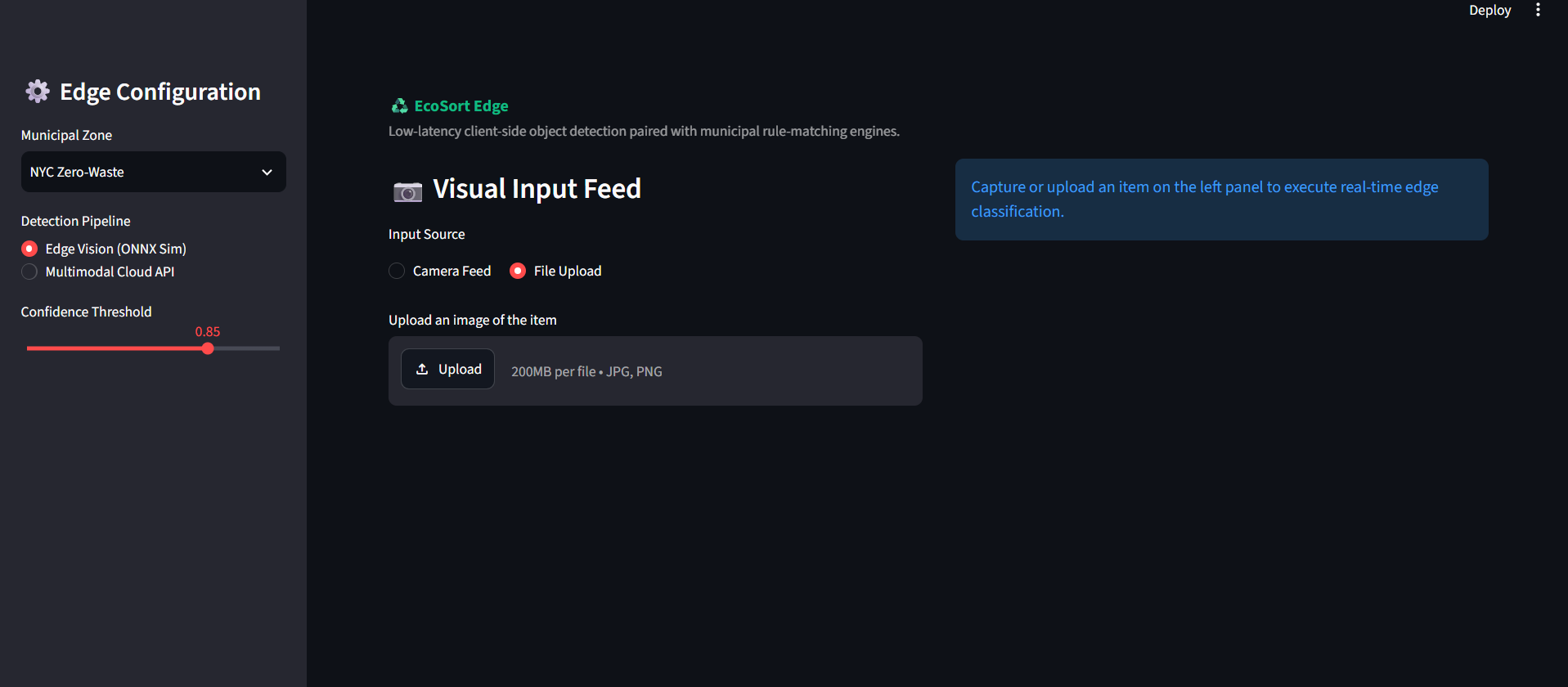
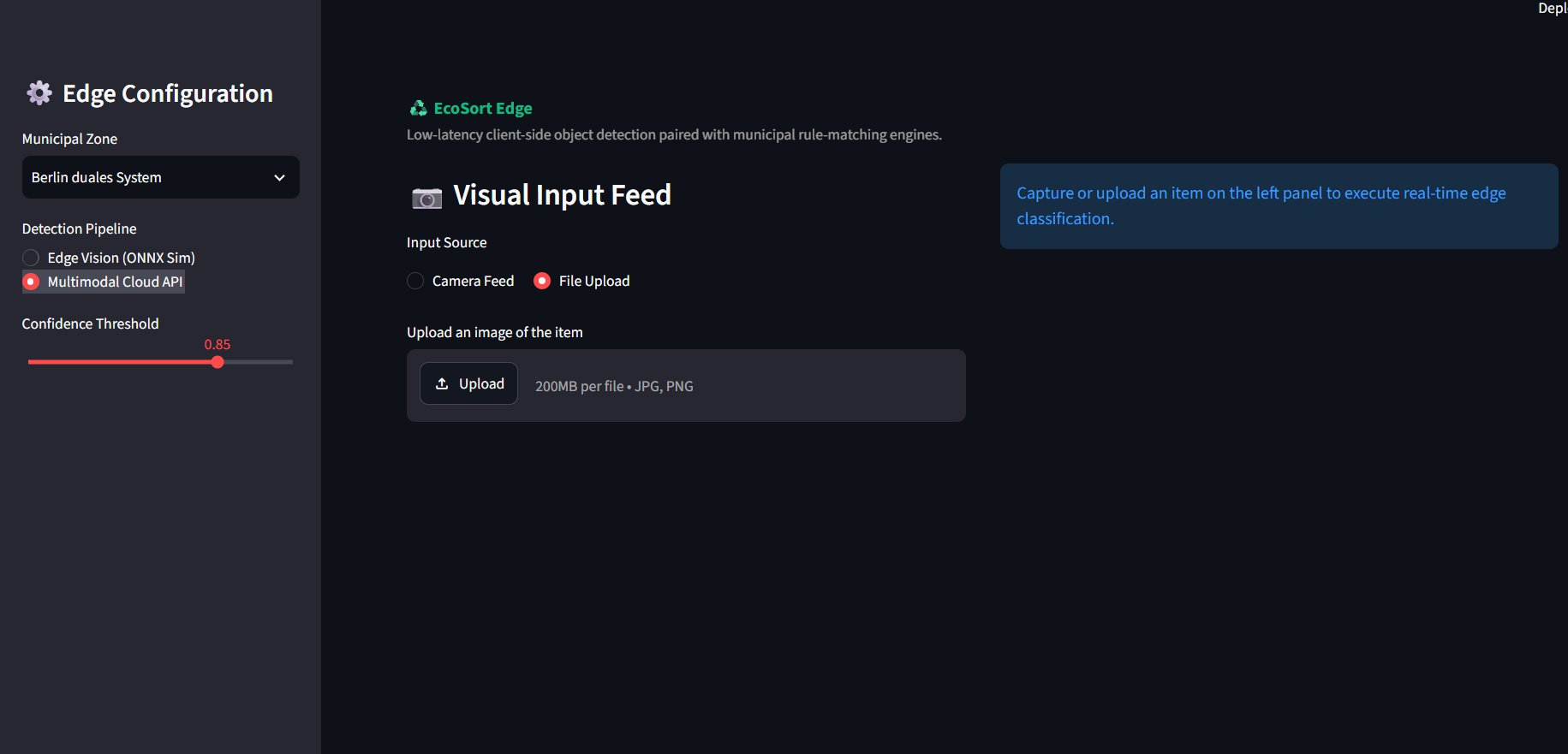
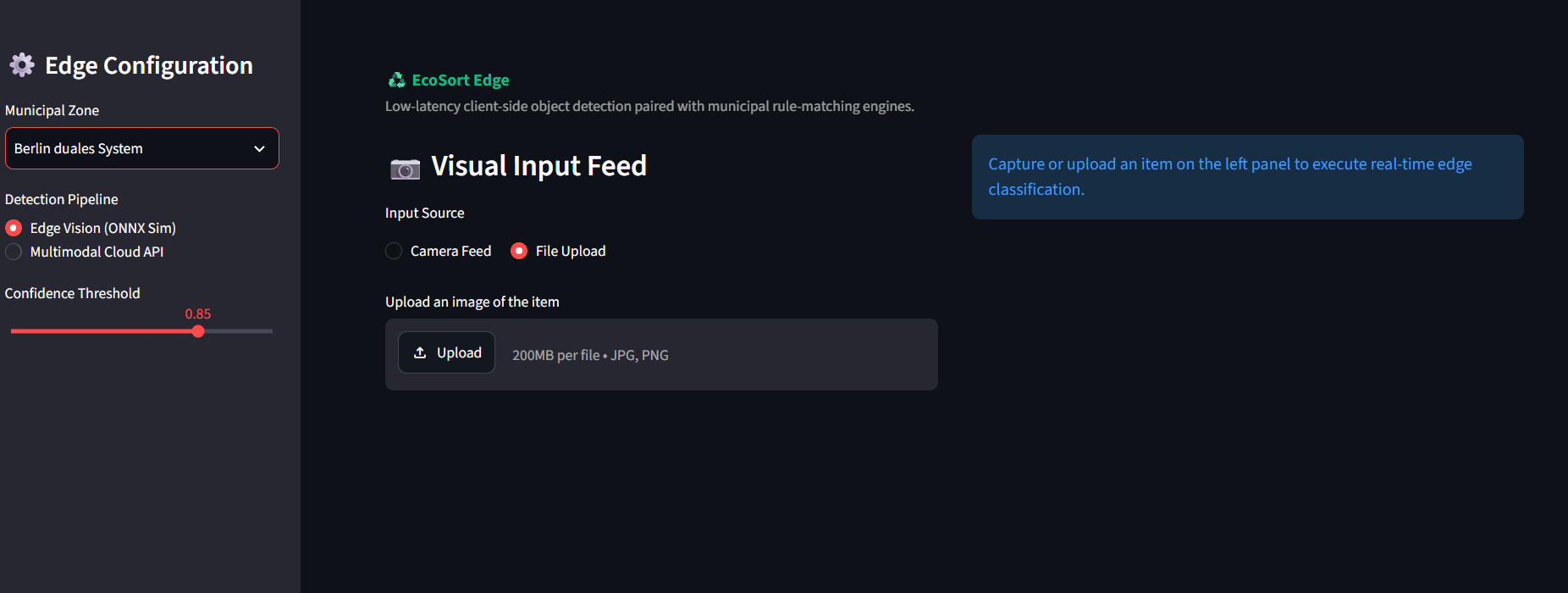
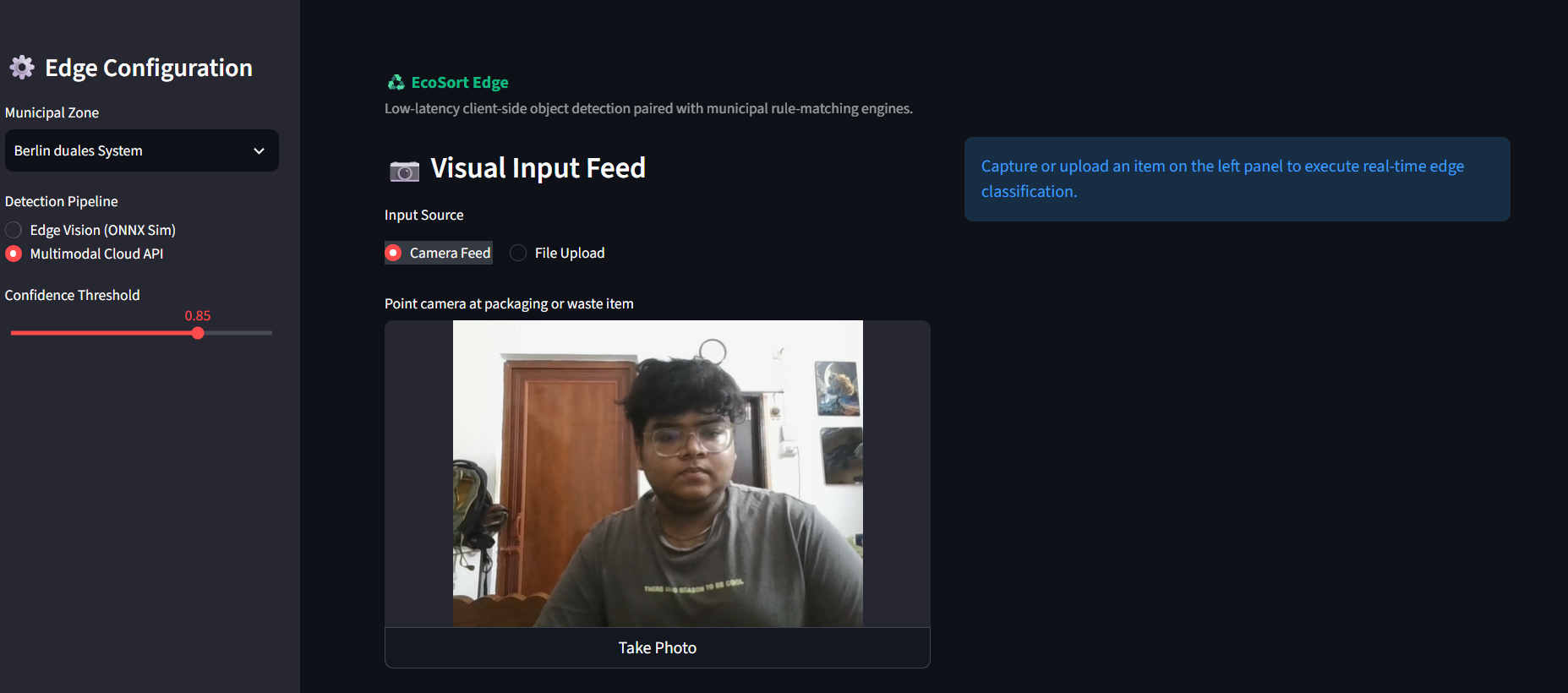
- Frontend Dashboard: Developed with Streamlit and custom UI styling, featuring a dual-pane setup with live webcam capture on the left and dynamic material decomposition on the right.
- Rules Engine & Structured Output: Engineered a localized policy engine that evaluates detected materials and formats output into structured, machine-readable JSON schemas ready for municipal backend integrations.
Challenges we faced
- Composite Packaging Segmentation: Single-stage classifiers frequently misidentify plastic-lined paper products as recyclable cardboard. We resolved this by structuring the detection pipeline to parse distinct material boundaries rather than returning singular labels.
- Latency Optimization: Streaming high-resolution camera feeds over external cloud APIs created significant latency. Simulating on-device edge processing proved critical for providing instantaneous user feedback right at the bin.
Accomplishments that we're proud of
- Delivering a zero-latency client interface that handles multi-component material breakdown rather than basic binary categorization.
- Bridging the gap between raw computer vision outputs and localized municipal recycling rules.
- Producing a clean, production-ready schema pipeline that outputs verified metrics for municipal audit logs.
What we learned
- How municipal recycling facilities handle optical sortation and the strict contamination thresholds required for commercial baling.
- Designing lightweight, client-focused edge pipelines that prioritize low latency and bandwidth efficiency over heavy cloud wrappers.
What's next for EcoSort Edge
- Integrating optical character recognition (OCR) directly into the edge feed to parse molded resin numbers (#1–#7) on transparent plastics.
- Deploying physical edge prototypes with dedicated micro-cameras on campus waste stations to automate sorting for shared bins.

Log in or sign up for Devpost to join the conversation.