-
-
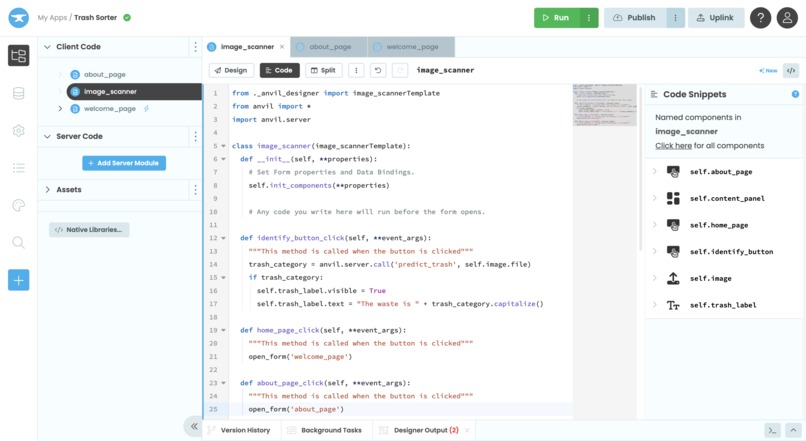
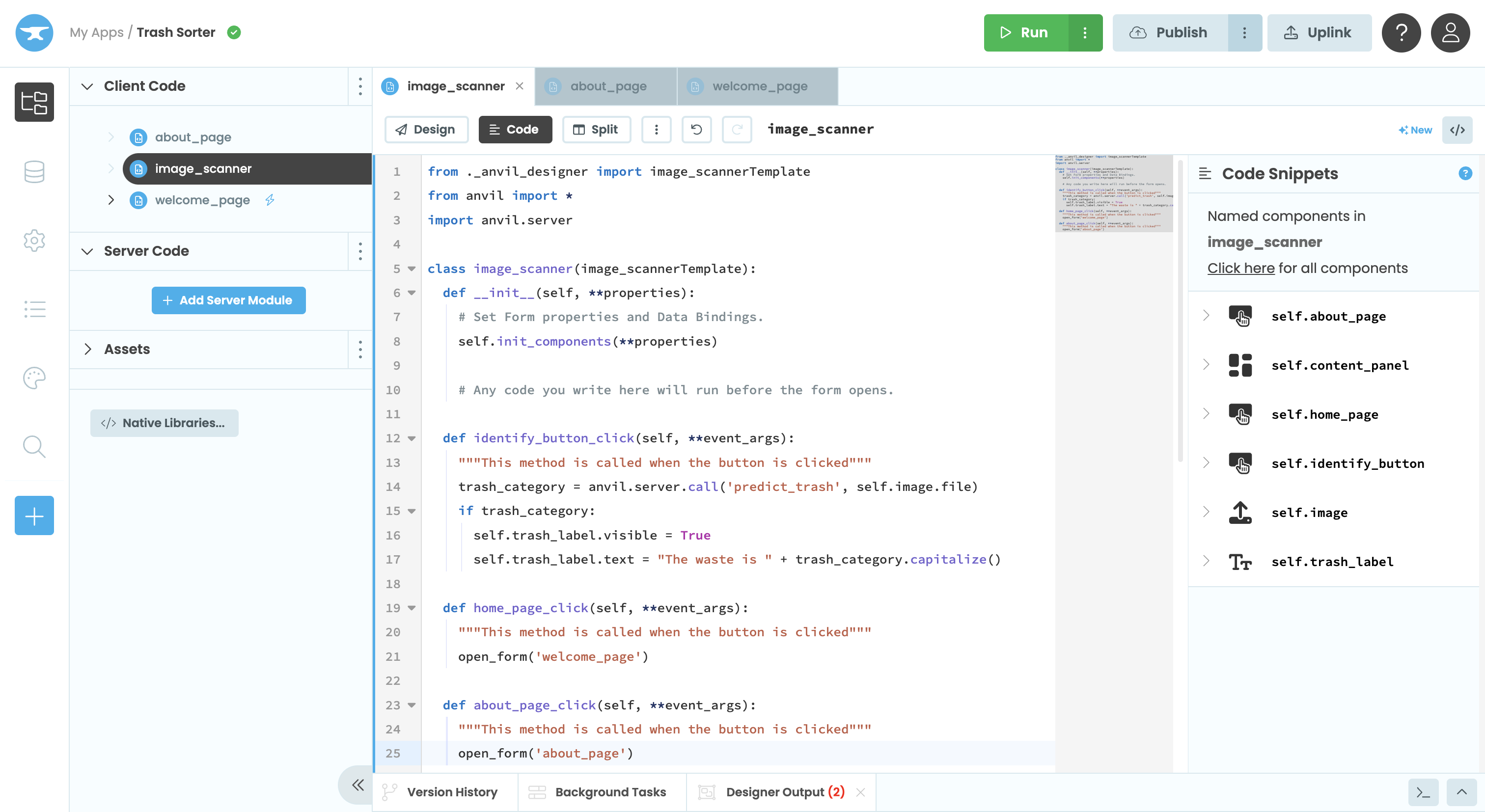
Anvil Code
-
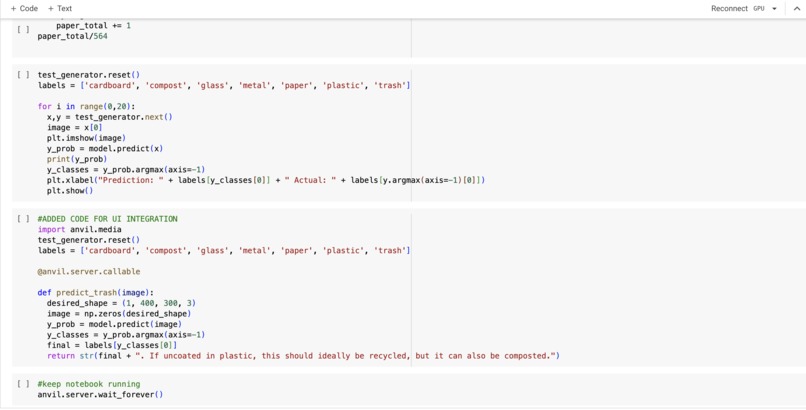
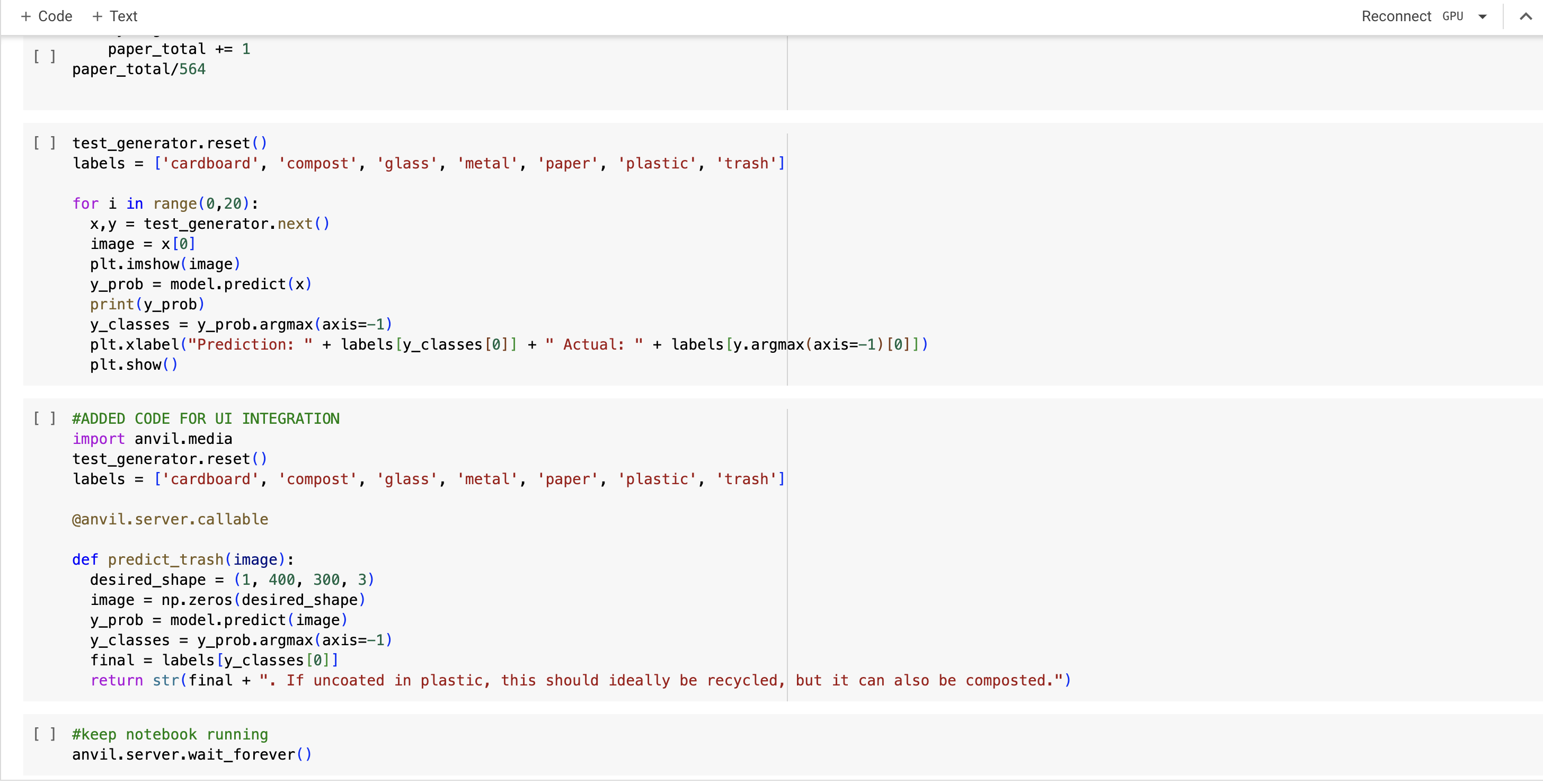
Google Colab Code
Inspiration
We were inspired by our experiences of being unsure of whether we could recycle certain materials.
What it does
After a user uploads a photo, the website tells them what material it is and whether it should be recycled or trashed.
How we built it
Using a pre-trained model from Github, the website utilizes an Anvil frontend connected to a Google Colab backend.
Challenges we ran into
Finding a model with high accuracy + accessible data Models with high accuracy did not have easily accessible data while low accuracy models were easier to work with
Connecting front-end to back-end Uploading an image onto website and to Google Colab Running the model on the new image Writing the model’s prediction on the website
Accomplishments that we're proud of
Finding several waste sorting models online We were able to easily find three to four different pre-trained waste sorting models
Developing the wireframes Planning out the front end of our web app was relatively straightforward
Staying on track Our team was able to easily schedule weekly meetings and delegate tasks to stay on top of our project and meet deadlines
What we learned
We learned about integrating machine learning models into a website.
What's next for EcoSort
We will add more game-like aspects to the website, in addition to implementing a log-in and account system, so that users can keep track of their eco-friendly habits.
Built With
- anvil
- python

Log in or sign up for Devpost to join the conversation.