Inspiration
Every day, we make dozens of choices — what to eat, what to buy, what to wear — without realizing the hidden environmental costs behind them. Whether it’s the water used for that cotton shirt or the CO₂ footprint of a quick snack, the lack of accessible information keeps most people in the dark. We wanted to bridge that gap and create something that turns everyday awareness into real climate action.
What it does
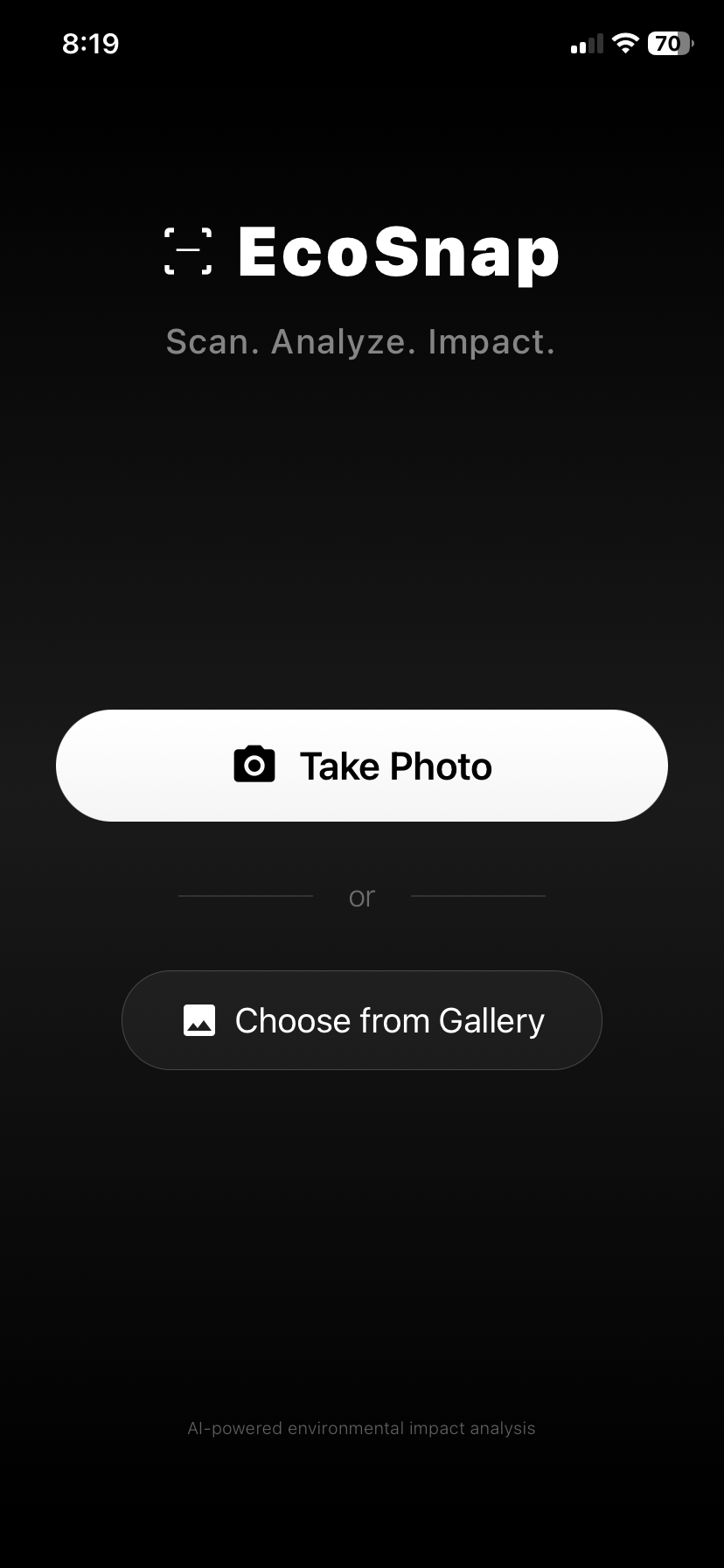
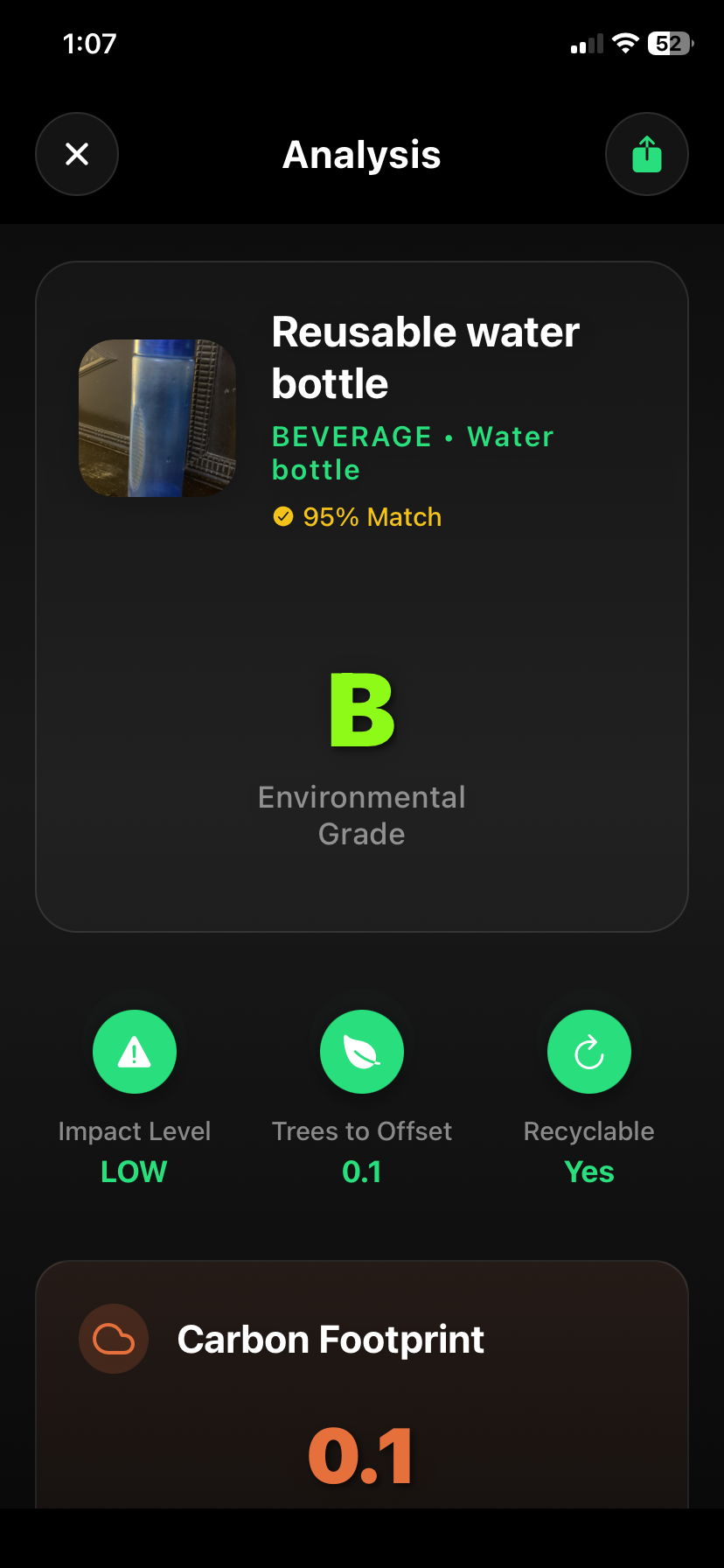
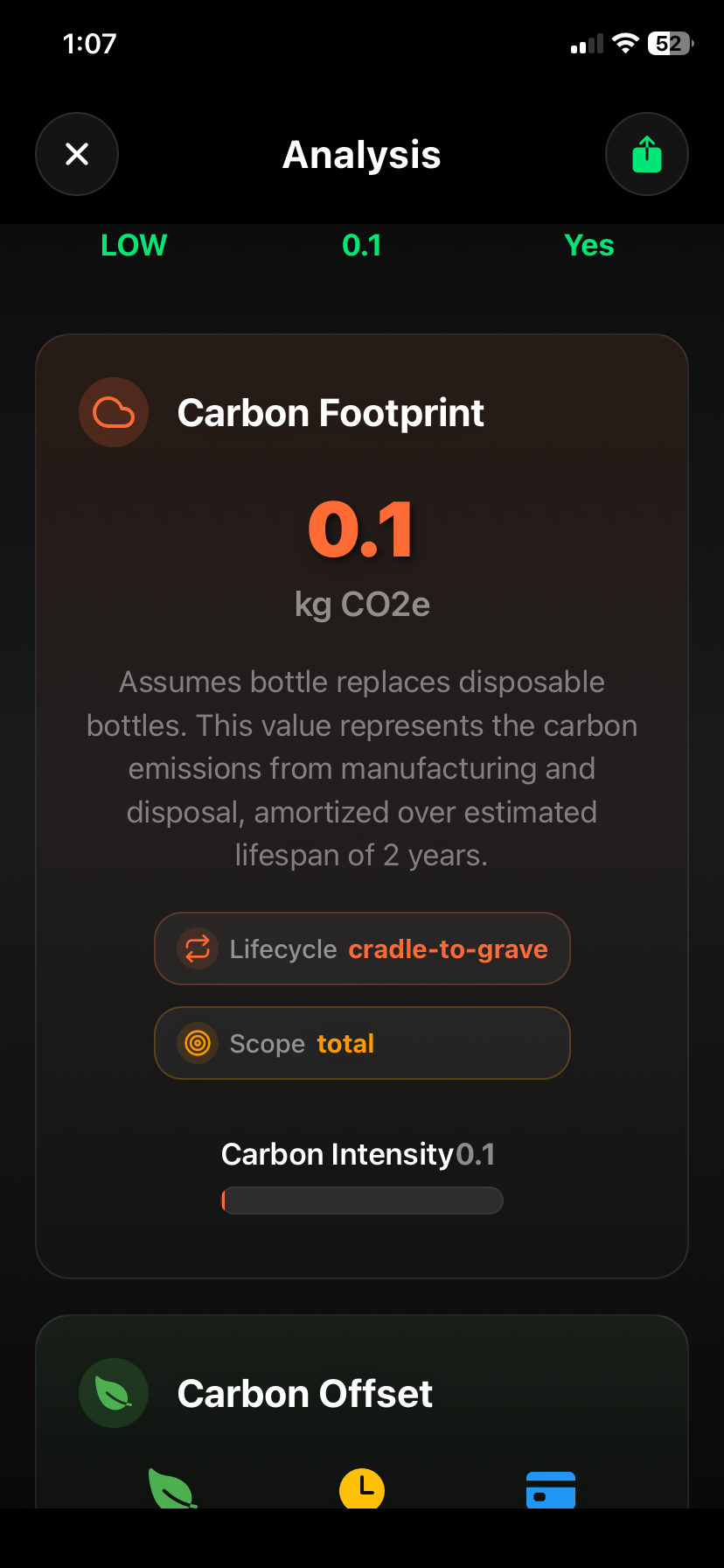
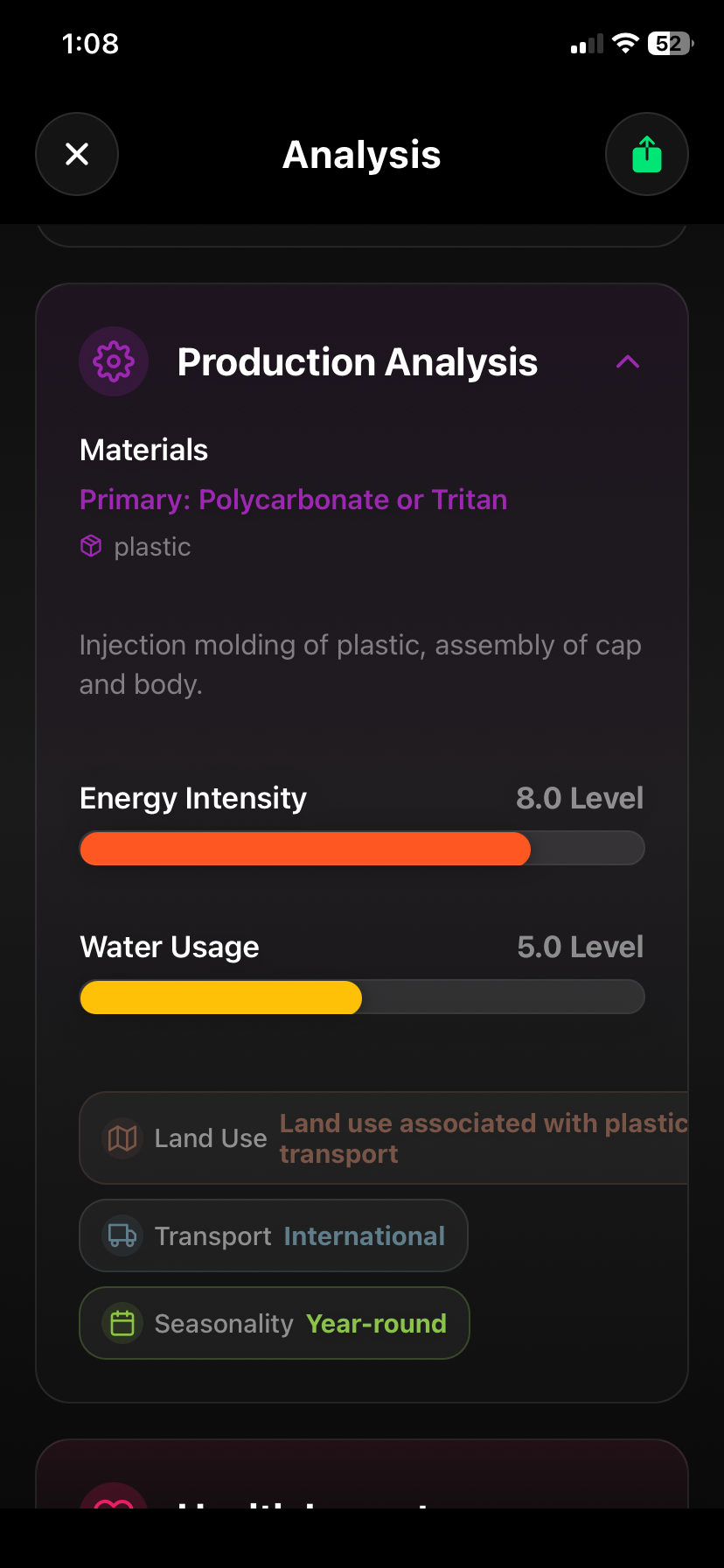
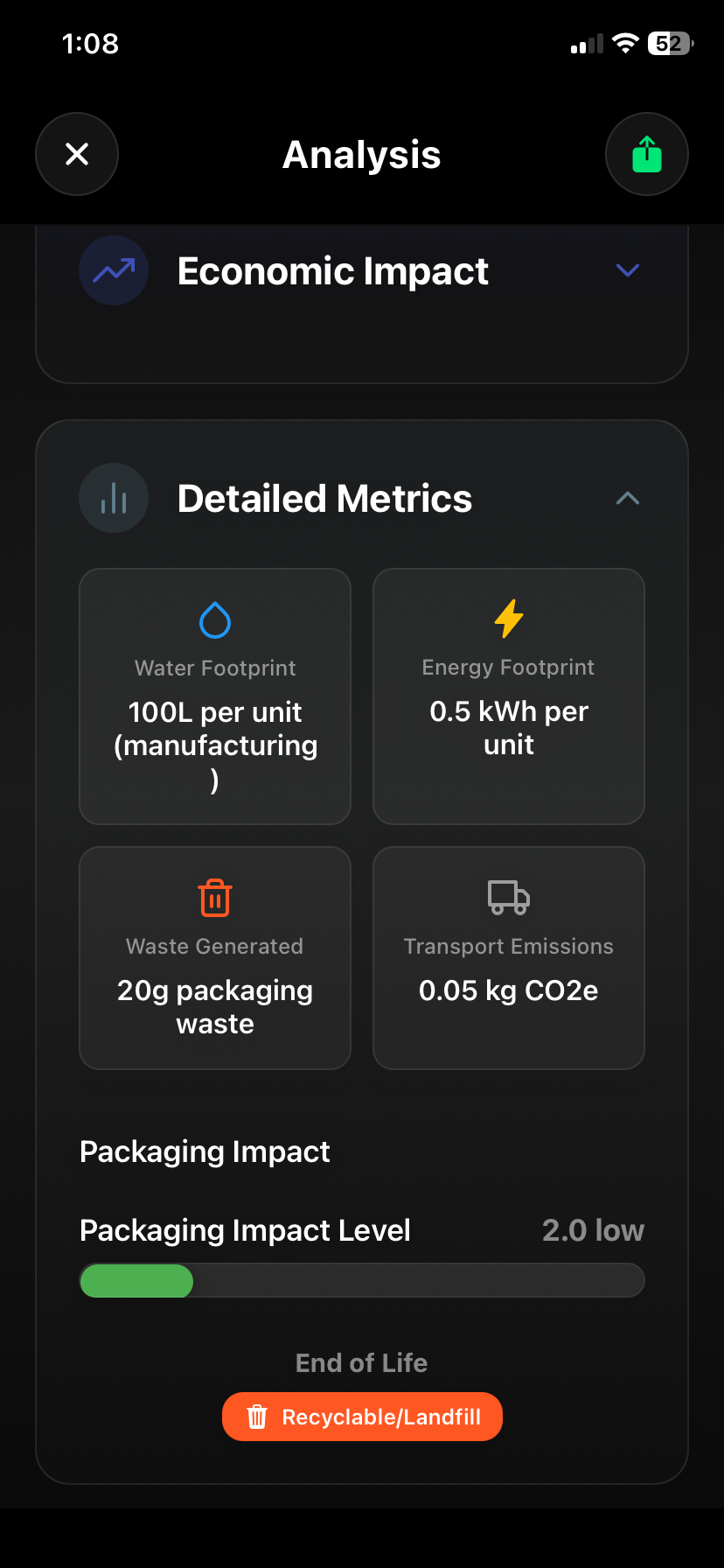
EcoSnap lets users snap or upload a photo of any product, and instantly get a clear breakdown of its environmental footprint — from carbon emissions and water usage to waste and energy costs.
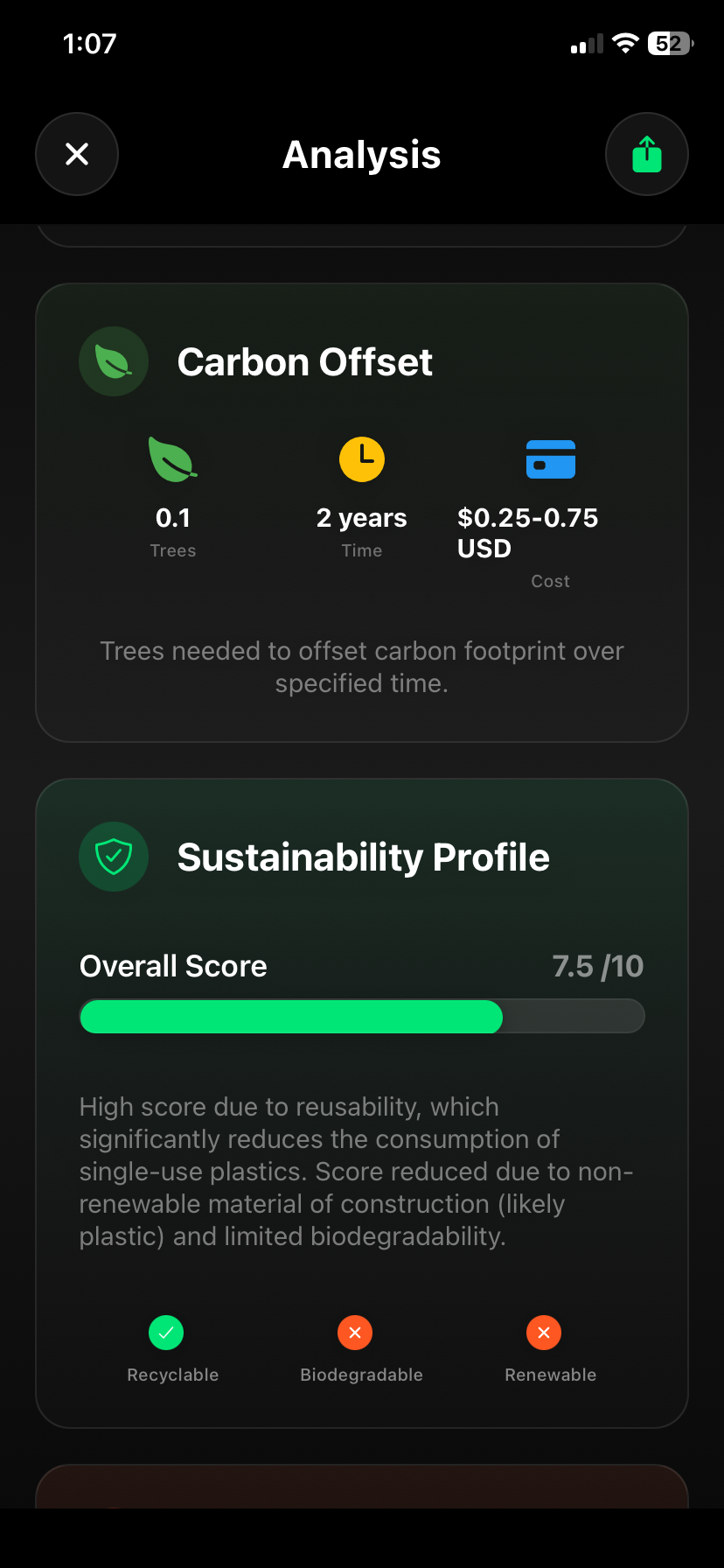
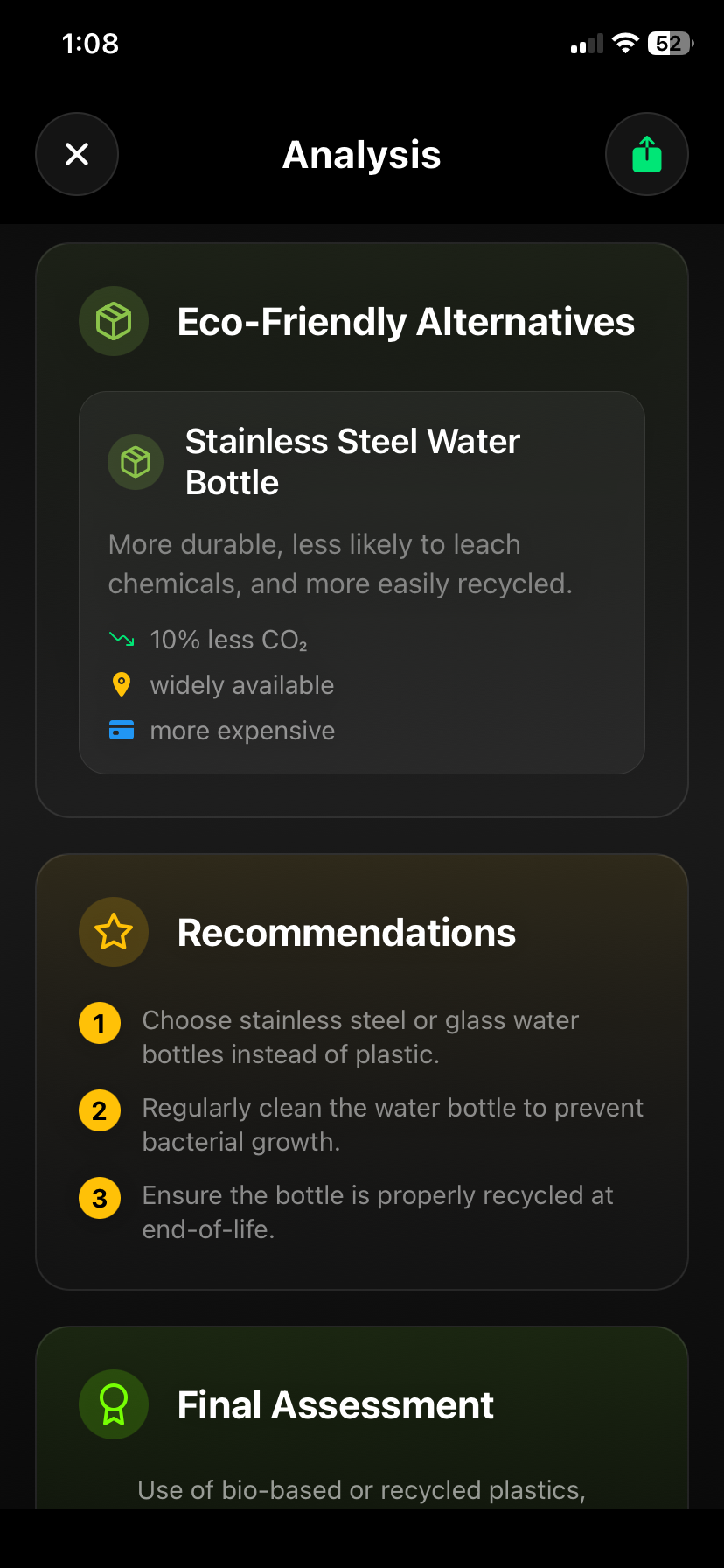
But EcoSnap doesn’t stop at guilt-tripping. It goes further by suggesting practical, low-impact alternatives, giving visual comparisons (like how many trees you’d need to plant to offset it), and providing actionable recommendations to help you make more sustainable choices in real time.
How we built it
Built on React Native (Expo) for cross-platform usability.
API pipeline for product recognition.
Curated sustainability data and mapped it to product categories.
Designed intuitive UI flows that make eco-data digestible, visual, and quick.
Focused on speed: snap → analyze → impact report in seconds.
Challenges we ran into
Data availability: sustainability metrics for consumer products are fragmented, inconsistent, and sometimes non-transparent. We had to normalize and approximate in ways that still keep it meaningful for users.
Making complex metrics like carbon footprint and water usage visual and relatable without overwhelming users.
Optimizing LLM multimodal Image recognition within Expo so it runs smoothly on the device.
Accomplishments that we’re proud of
A working MVP in under 24 hours that actually feels intuitive to use.
Designing not just one, but two user-friendly result dashboards: one for detailed reports and another for quick visual insights.
Turning sustainability into something interactive and personal, rather than abstract.
What we learned
Sometimes, simplicity wins: the idea isn’t to be another giant climate dataset, but to make eco-awareness fit into a 10-second interaction on someone’s phone.
Effective sustainability design is less about “doom” and more about empowerment.
We deepened our skills in rapid prototyping with Expo and data integration under pressure.
What’s next for EcoSnap
Expanding product databases and API integrations for higher accuracy.
Adding community features — imagine comparing your eco-impact with friends, or gamifying sustainable swaps.
Exploring partnerships with retailers and brands to show eco-impact before checkout.
Eventually, scaling EcoSnap to become a trusted “nutrition label for the planet.”
Impact vision
If EcoSnap reached even 1% of smartphone users and nudged one eco-friendly swap per week, it could cut over 2.6 million tons of CO₂ a year — equivalent to removing ~560,000 cars from the road. Small changes, scaled globally, can be transformative.


Log in or sign up for Devpost to join the conversation.