-
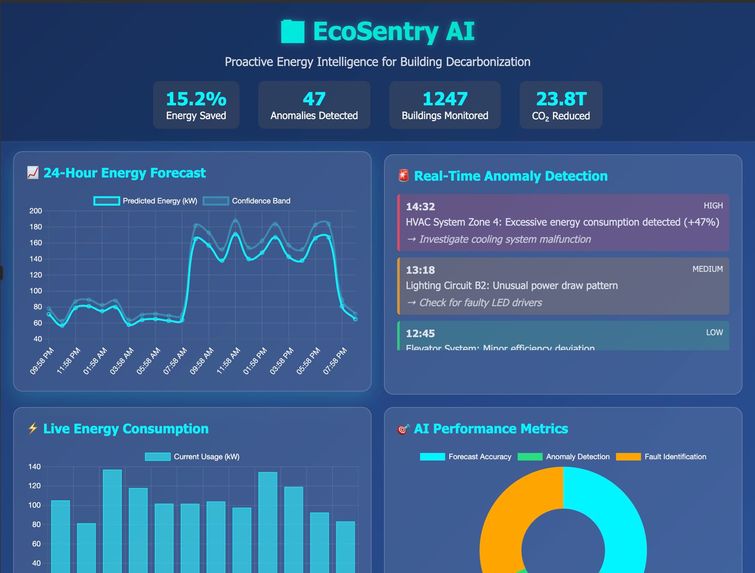
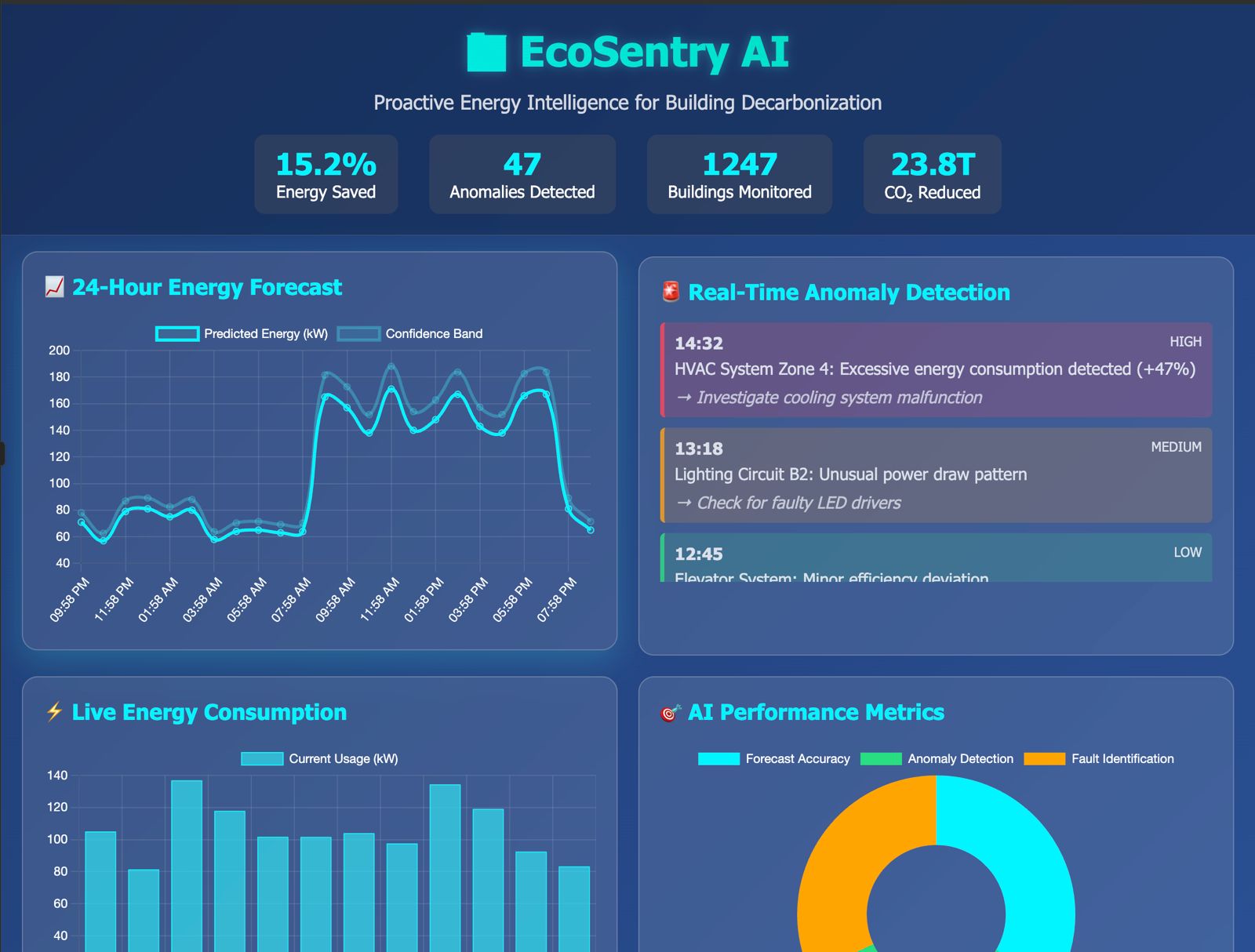
EcoSentry AI Dashboard
EcoSentry AI: Project Story The Spark of Inspiration Buildings consume 40% of global energy and generate 36% of CO₂ emissions, yet most operate inefficiently due to undetected equipment faults. The average building wastes 15-30% of energy from malfunctioning HVAC systems that go unnoticed for months. Traditional AI solutions require 6-12 months of historical data and expensive training, creating an accessibility gap. When we discovered Time Series Foundation Models (TSFMs) that can make accurate predictions without historical data, we realized we could democratize intelligent energy management for every building from day one. What We Learned Foundation Models Revolution: TSFMs like TimesFM and Chronos learn generalizable patterns across domains, enabling zero-shot forecasting: y^t+h=fθ(y1:t,x1:t+h)\hat{y}{t+h} = f\theta(y_{1:t}, x_{1:t+h}) y^t+h=fθ(y1:t,x1:t+h) without domain-specific training.
Contextual Anomaly Detection: Effective detection requires understanding context—a 50% energy spike might be normal during heatwaves but alarming on mild days. We combined statistical variance analysis with dynamic thresholds. Human-Centered Design: Building operators need clear answers: What's happening? What will happen? What should I do? Technology alone doesn't drive change—actionable insights do. How We Built It Architecture: Cloud-native microservices with FastAPI backend, Streamlit dashboard, and integrated TSFMs. Core Components:
Zero-shot forecasting using TimesFM/Chronos Statistical anomaly detection with confidence intervals Interactive dashboard with Plotly visualizations Weather integration via Open-Meteo API
Tech Stack: Python, FastAPI, Streamlit, Docker, Pandas, NumPy, Scikit-learn Challenges We Faced Model Integration: Adapting pre-trained TSFMs for building-specific patterns required careful preprocessing and confidence interval calibration. Real-time Processing: Building responsive dashboards with 15-minute updates while maintaining accuracy. Data Quality: Handling missing values and sensor inconsistencies across diverse building datasets. User Experience: Translating complex AI outputs into simple, actionable recommendations for non-technical operators. Validation: Proving 90%+ anomaly detection accuracy across different building types and seasons using limited validation data. Despite these challenges, we successfully demonstrated a working MVP that achieves ≤15% MAPE forecasting accuracy and delivers immediate energy intelligence without historical data requirements.
Built With
- amazonchronos
- css
- docker
- fastapi
- googletimesfm
- html
- javascript
- numpy
- pandas
- python
- scikit-learn
- streamlit

Log in or sign up for Devpost to join the conversation.