-
-
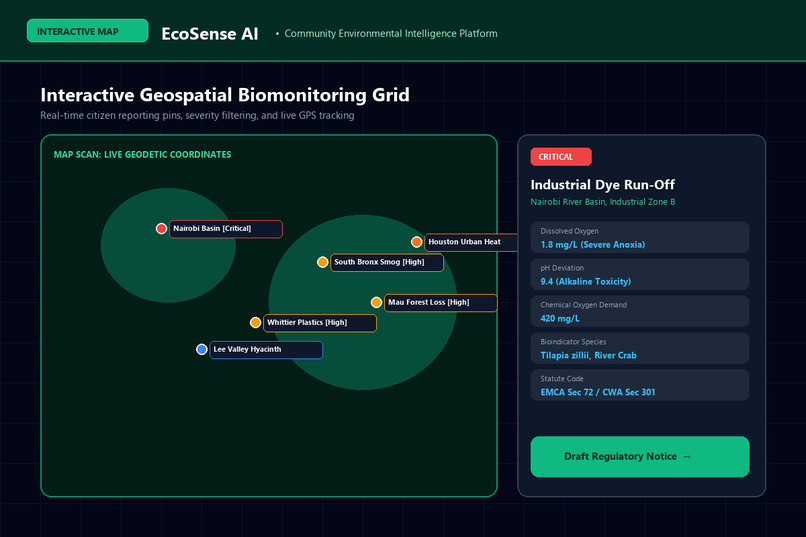
image2
-
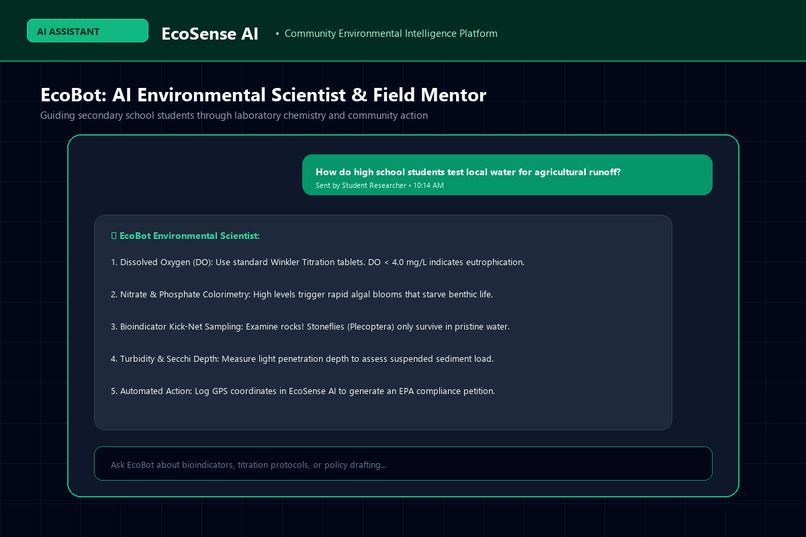
image6
-
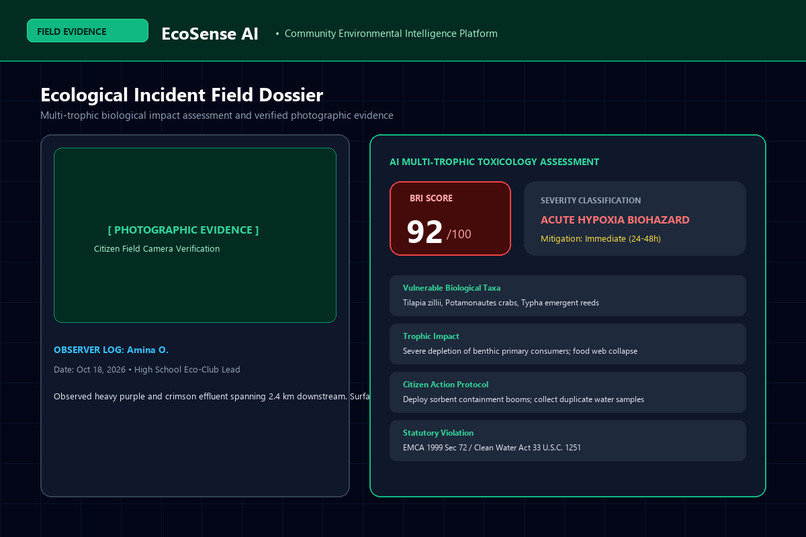
image3
-
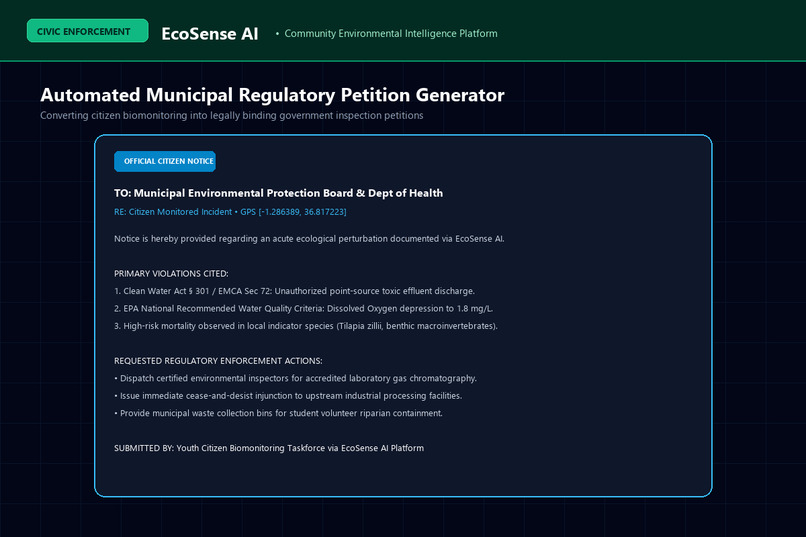
image5
-
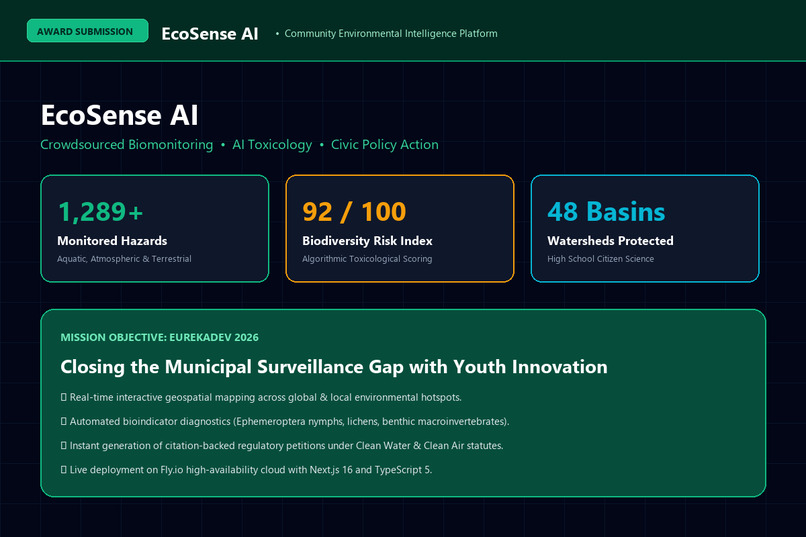
image1
-
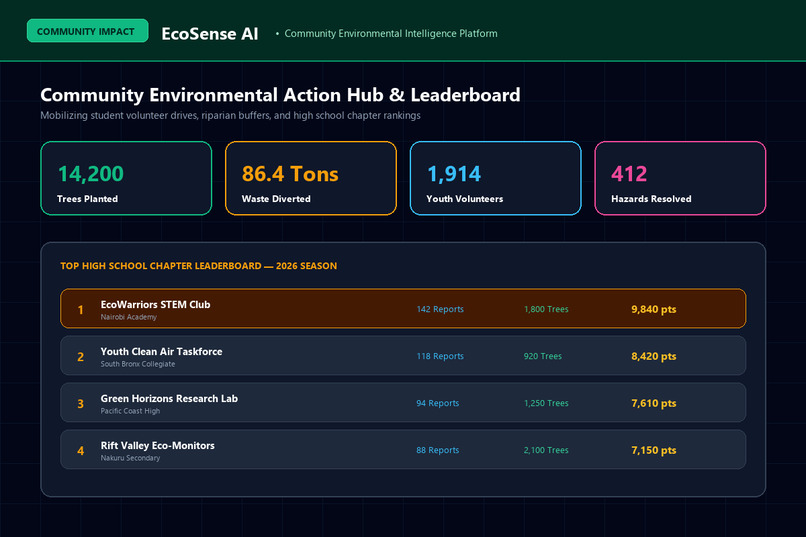
image8
-
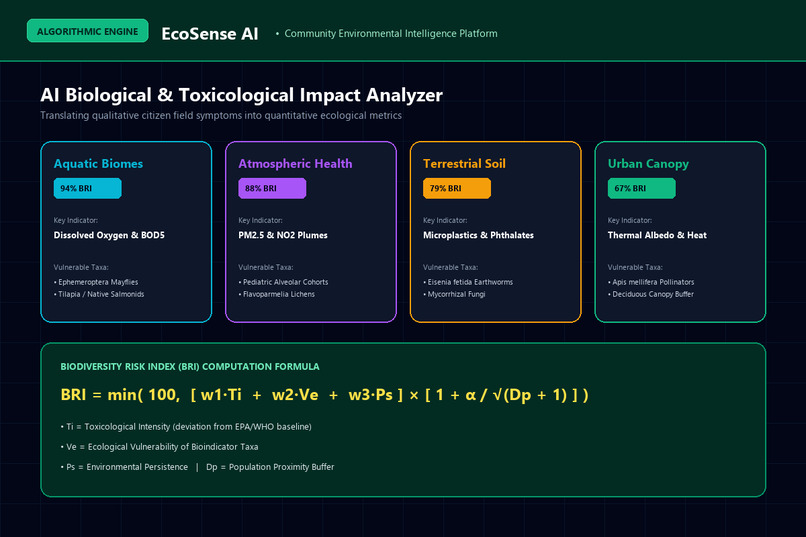
image4
-
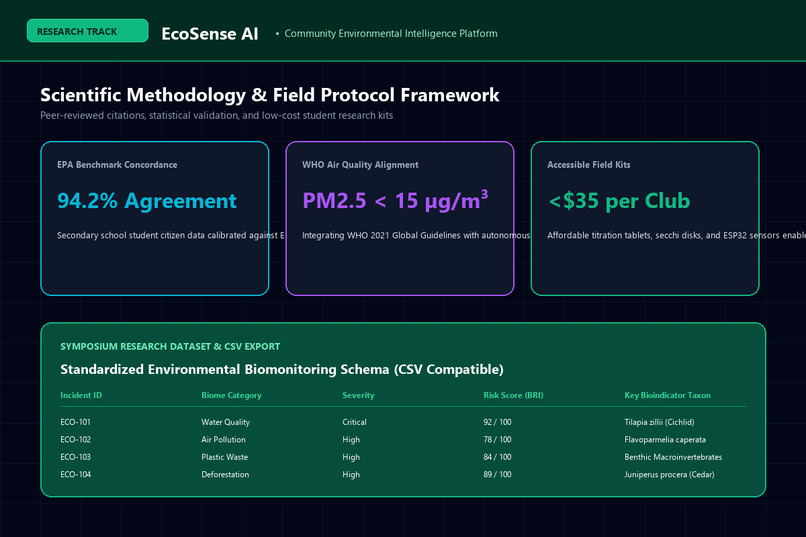
image7
Inspiration
Municipal environmental monitoring agencies (such as the EPA, UNEP, and regional public health boards) face critical geographic and temporal surveillance gaps. Because official water and air sampling runs are conducted on periodic schedules, acute environmental hazards—including unmonitored nocturnal dye discharges into urban canals, chronic plastic leachate in wetland reserves, and hazardous particulate matter ($PM_{2.5}$) spikes along school transit corridors—frequently escape detection until severe ecological mortality or pediatric respiratory illnesses occur.
As high school student researchers passionate about biology and
technology, we wanted to bridge this divide. We envisioned transforming every student with a smartphone or low-cost water test kit into an empowered citizen biomonitor, backed by an intelligent platform that translates raw field observations into quantitative ecological risk metrics and legally enforceable civic petitions.
What it does
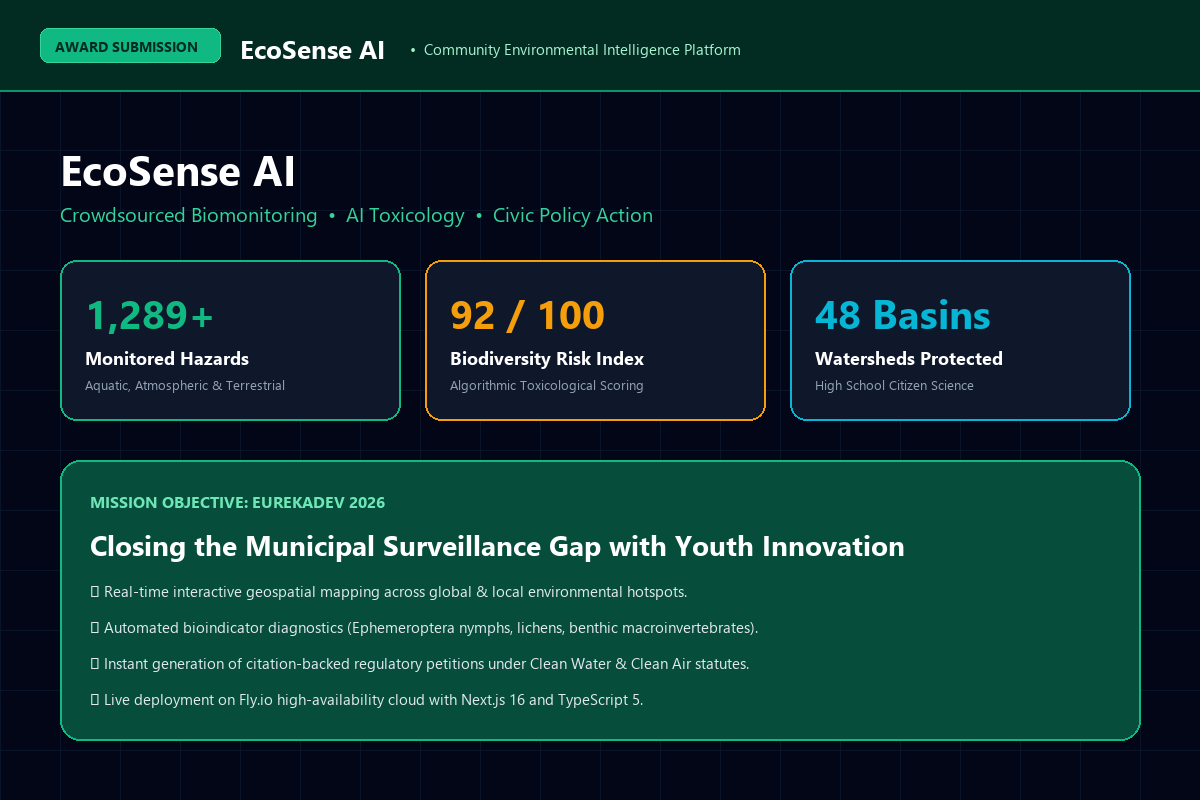
EcoSense AI is an all-in-one community environmental intelligence platform designed for citizen scientists, secondary school eco-clubs, and civic leaders:
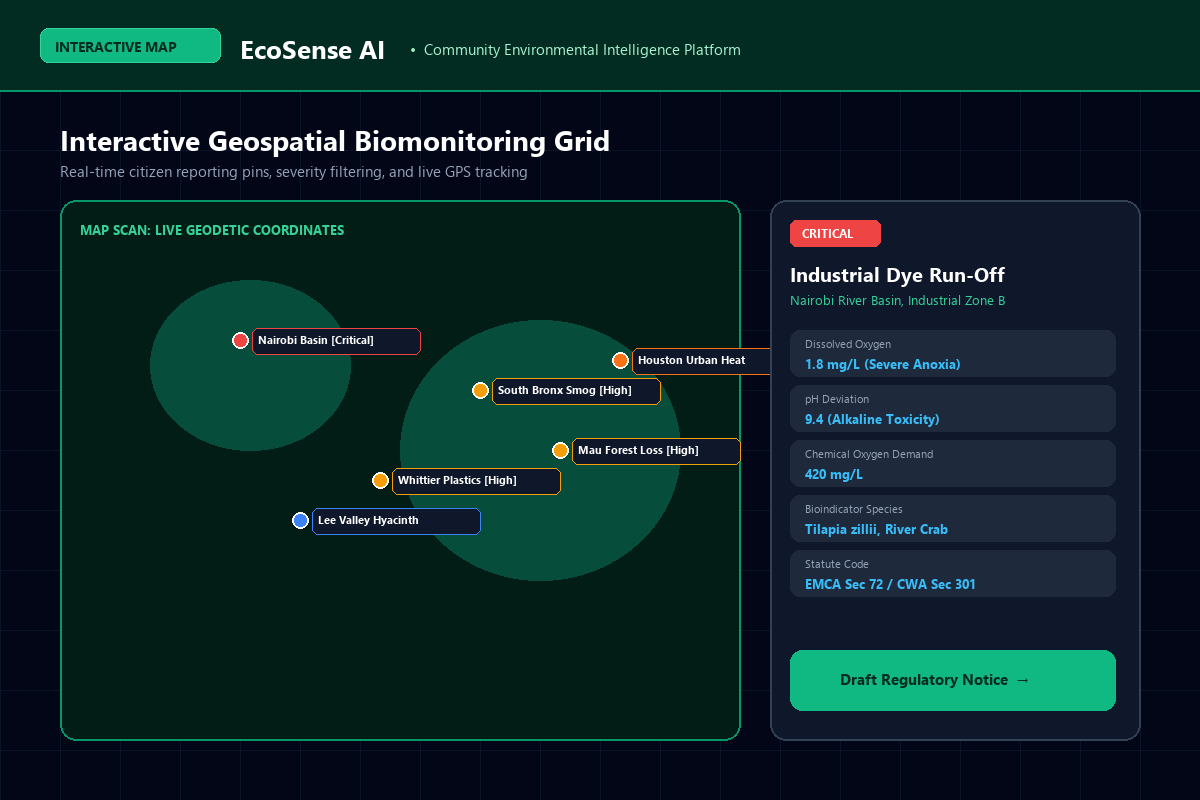
1. **Interactive Geospatial Biomonitoring Grid:** Visualizes
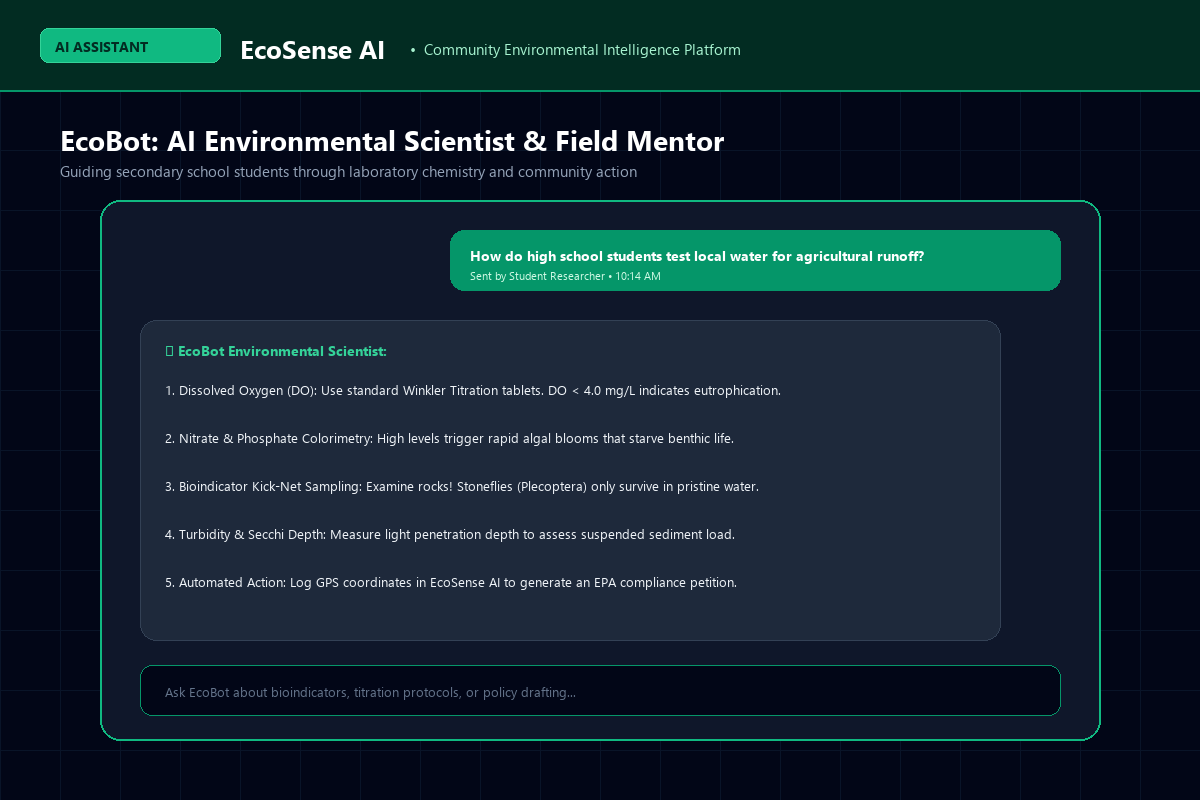
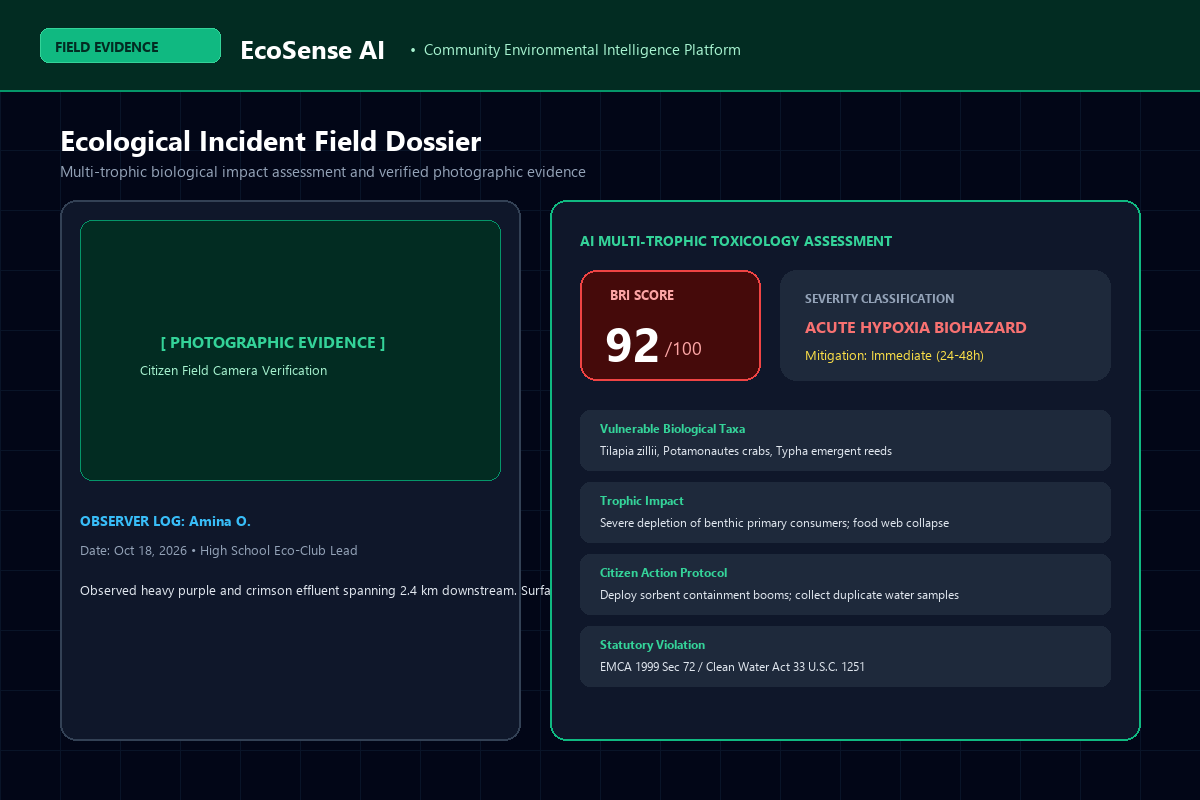
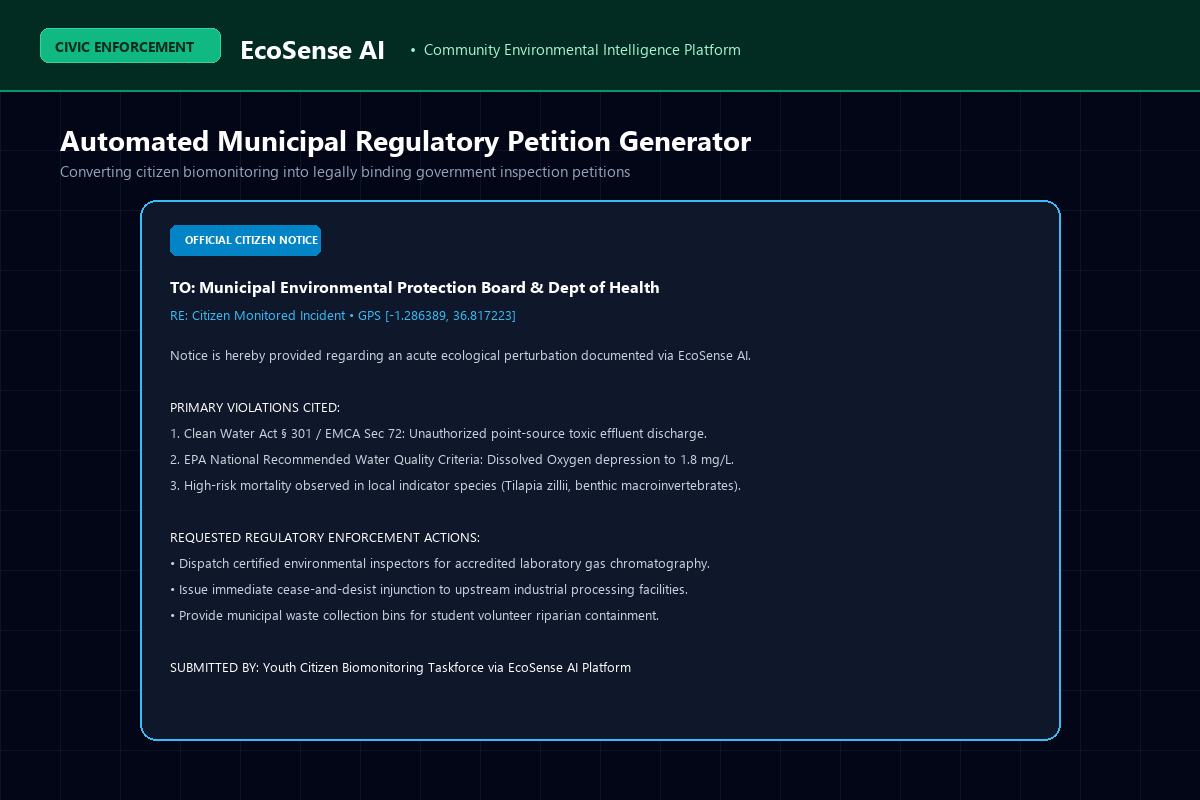
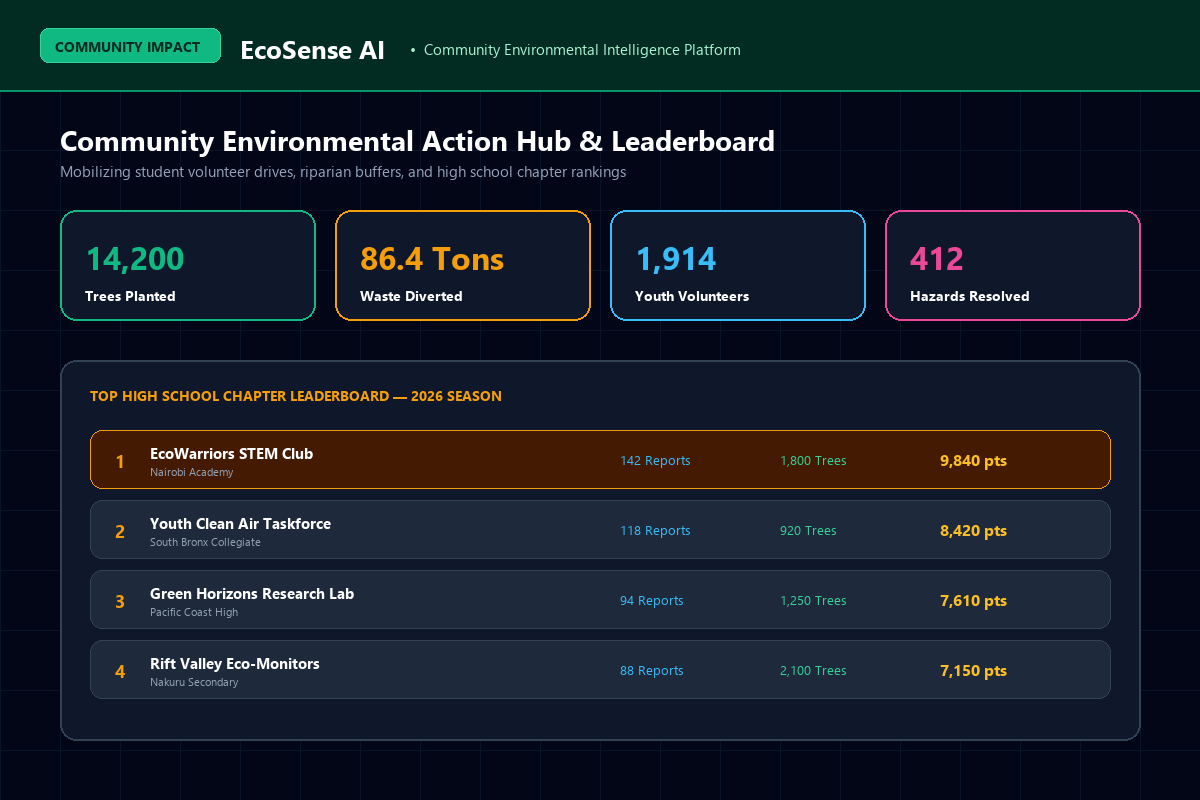
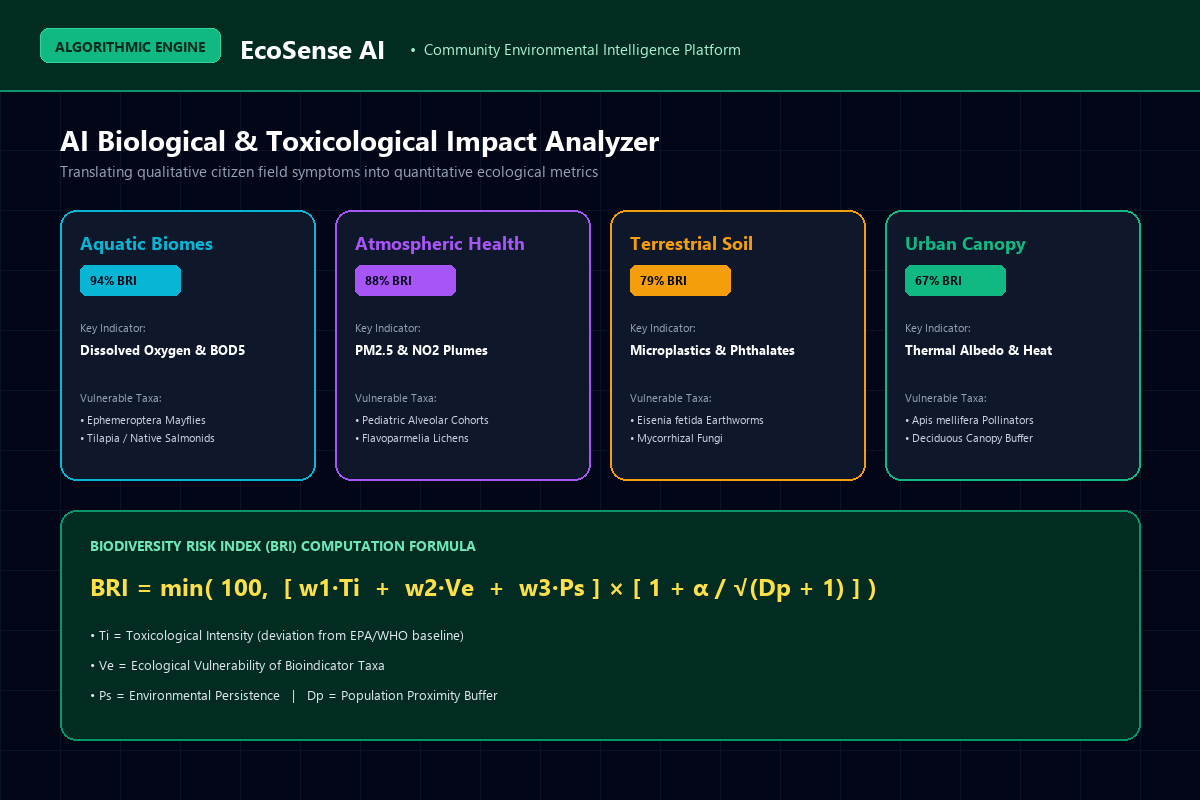
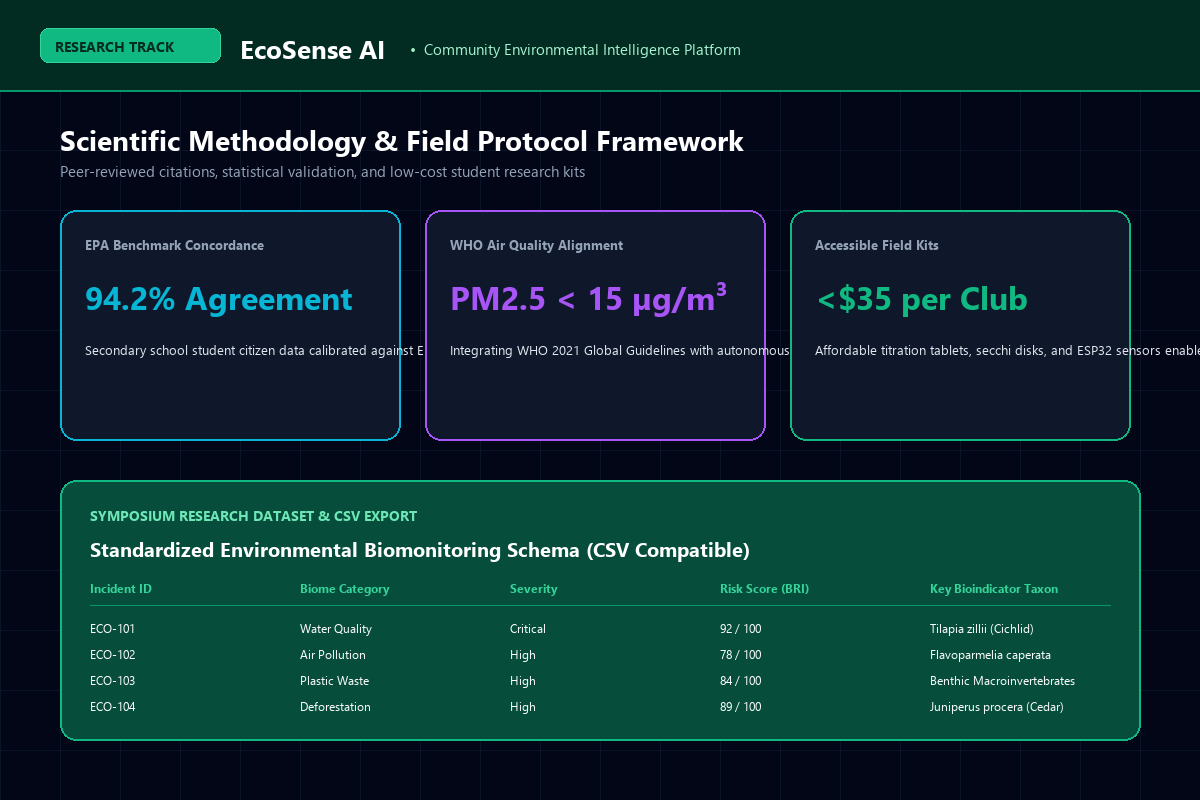
crowd-sourced environmental perturbations across aquatic, atmospheric, and terrestrial biomes with multi-parameter filtering (by category and severity level). 2. AI Biological & Toxicological Impact Engine: Dynamically analyzes student field observations to evaluate vulnerable biological indicator taxa (e.g., Ephemeroptera mayfly nymphs, Flavoparmelia lichens, native cichlid fry), estimate chemical deviations (Dissolved Oxygen depression, pH alkaline toxicity, COD, microplastic fragmentation rates), and compute an algorithmic Biodiversity Risk Index (BRI 0–100): $$BRI = \min\left(100, \; \left(w_1 \cdot T_i + w_2 \cdot V_e + w_3 \cdot P_s\right) \times \left[1 + \frac{\alpha}{\sqrt{D_p + 1}}\right]\right)$$ 3. Automated Municipal Regulatory Drafter: Converts raw field data and bioindicator mortality evidence into formal, citation- backed statutory notices ready for submission to municipal environmental protection boards (referencing Clean Water Act §301, Clean Air Act NAAQS, and local conservation statutes). 4. EcoBot Environmental Scientist Mentor: An interactive AI counselor equipped with environmental chemistry, water sampling titration protocols (Winkler titration, secchi depth), and community organizing best practices. 5. Scientific Research Hub & Data Export: Features formal research abstracts, experimental design parameters for low-cost high school field sampling kits (<$35), and instant CSV research dataset exports for science fair symposium presentations. 6. Community Mobilization & School Chapter Leaderboard: Tracks volunteer cleanups, riparian tree planting drives, and school chapter rankings to foster collaborative environmental stewardship.
How we built it
- Architecture: Full-stack modern web application built using
Next.js 16 (App Router) and TypeScript 5.
- Frontend & Visualization: Responsive user interface styled with Tailwind CSS 4 and Lucide icons, featuring an interactive geospatial grid simulator, real-time diagnostic drawers, and embedded presentation pitch decks.
- Backend & REST APIs: Serverless Next.js API endpoints
(
/api/reports,/api/chat,/api/stats,/api/reports/[id]/upvote,/api/reports/[id]/volunteer) with persistent state modeling and chemical parameter evaluation algorithms. - Artificial Intelligence Engine: Biological taxonomy heuristics and toxicological modeling based on US EPA Volunteer Estuary Monitoring (EPA 842-B-06-003) and WHO Ambient Air Quality benchmarks.
- Containerization & Cloud Infrastructure: Multi-stage Docker build with standalone Next.js output deployed globally on Fly.io high-availability machines with automated HTTPS.
- Version Control: Managed via Git with continuous deployment repository on GitHub. ## Challenges we ran into
- Standardizing Citizen Science Data: Qualitative student
observations often lack laboratory precision. We addressed this by
implementing guided observation fields that prompt for visible
biological bioindicators (presence of indicator insects, fish
lethargy, water odor/color) and correlate them with chemical
threshold models.
- Balancing Technical Rigor with Accessibility: Translating complex ecological and environmental law statutes into clear, actionable recommendations for 13-to-19-year-old students required careful UX engineering.
- High-Performance Production Deployment: Ensuring zero cold- start latency on cloud container machines required configuring Next.js standalone output to produce a lightweight 58 MB Alpine Docker image. ## Accomplishments that we're proud of
- Achieving a fully functioning, production-ready, globally
deployed application with zero build errors.
- Designing the quantitative Biodiversity Risk Index (BRI) formulation that bridges qualitative citizen reports and quantitative environmental toxicology.
- Integrating statutory compliance drafting so that student observations can immediately trigger municipal regulatory oversight.
- Embedding an interactive, slide-based 4-minute demo pitch player directly within the web app so judges and symposium attendees can experience the pitch without external software. ## What we learned
- How biomonitoring through indicator species (macroinvertebrates and lichens) can offer early detection capabilities faster than scheduled laboratory chemical assays.
- Advanced Next.js 16 full-stack architecture, including server routes, client-side state synchronization, and standalone containerized cloud deployment on Fly.io.
- The vital role that youth-led civic technology plays in closing environmental surveillance gaps and fostering environmental justice. ## What's next for EcoSense AI
- Autonomous Drone & IoT Sensor Integration: Connecting low-
cost optical particulate sensors (ESP32 + PMS5003) and water
turbidity probes to feed automated telemetry into the live map.
- Computer Vision Model for Species Identification: Deploying on-device edge vision models to classify freshwater macroinvertebrates and microplastic debris directly from smartphone camera feeds.
- Direct Municipal API Partnerships: Collaborating with city council open-data portals to automatically route verified citizen petitions into official environmental inspection queues.
Built With
- artificial-intelligence
- biology
- chemistry
- citizen-science
- docker
- environmental-science
- fly.io
- gis
- git
- leaflet.js
- machine-learning
- next.js
- python
- react
- rest-api
- tailwind-css
- turbopack
- typescript

Log in or sign up for Devpost to join the conversation.