EcoSecure Agent Inspiration
Modern software development moves fast, but security and sustainability often lag behind. Developers push code under tight deadlines, which can lead to overlooked vulnerabilities such as hardcoded secrets, injection flaws, or exposure of sensitive user data.
At the same time, AI is increasingly integrated into development workflows, yet its environmental impact is rarely considered.
We asked: What if security, automation, and sustainability could be embedded directly into the developer workflow without slowing it down?
This led to EcoSecure Agent — an AI-powered security agent that not only protects codebases but also raises awareness of the carbon footprint of AI usage.
What it does
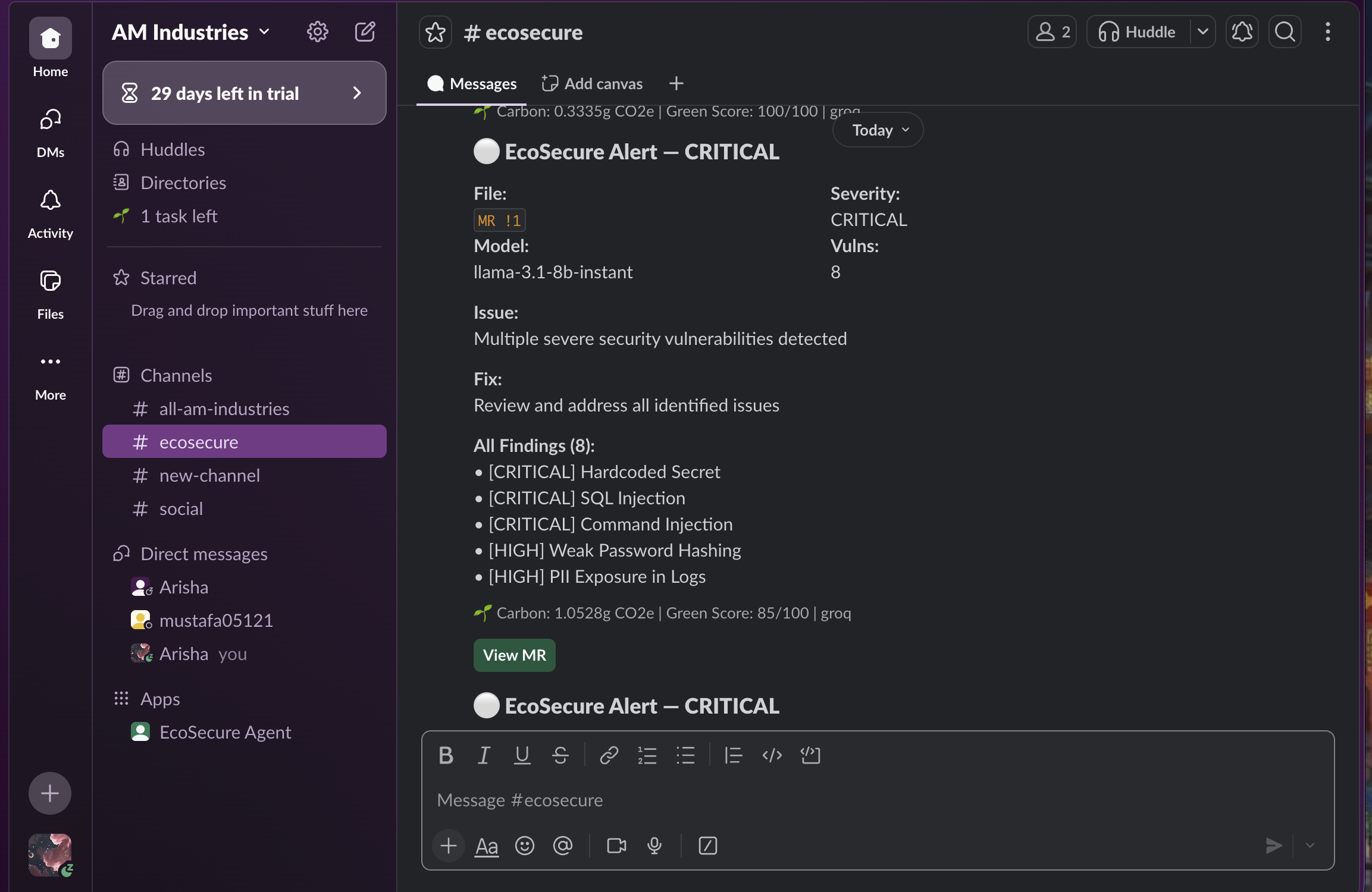
EcoSecure Agent is an autonomous AI security agent that integrates directly into GitLab and Slack.
It:
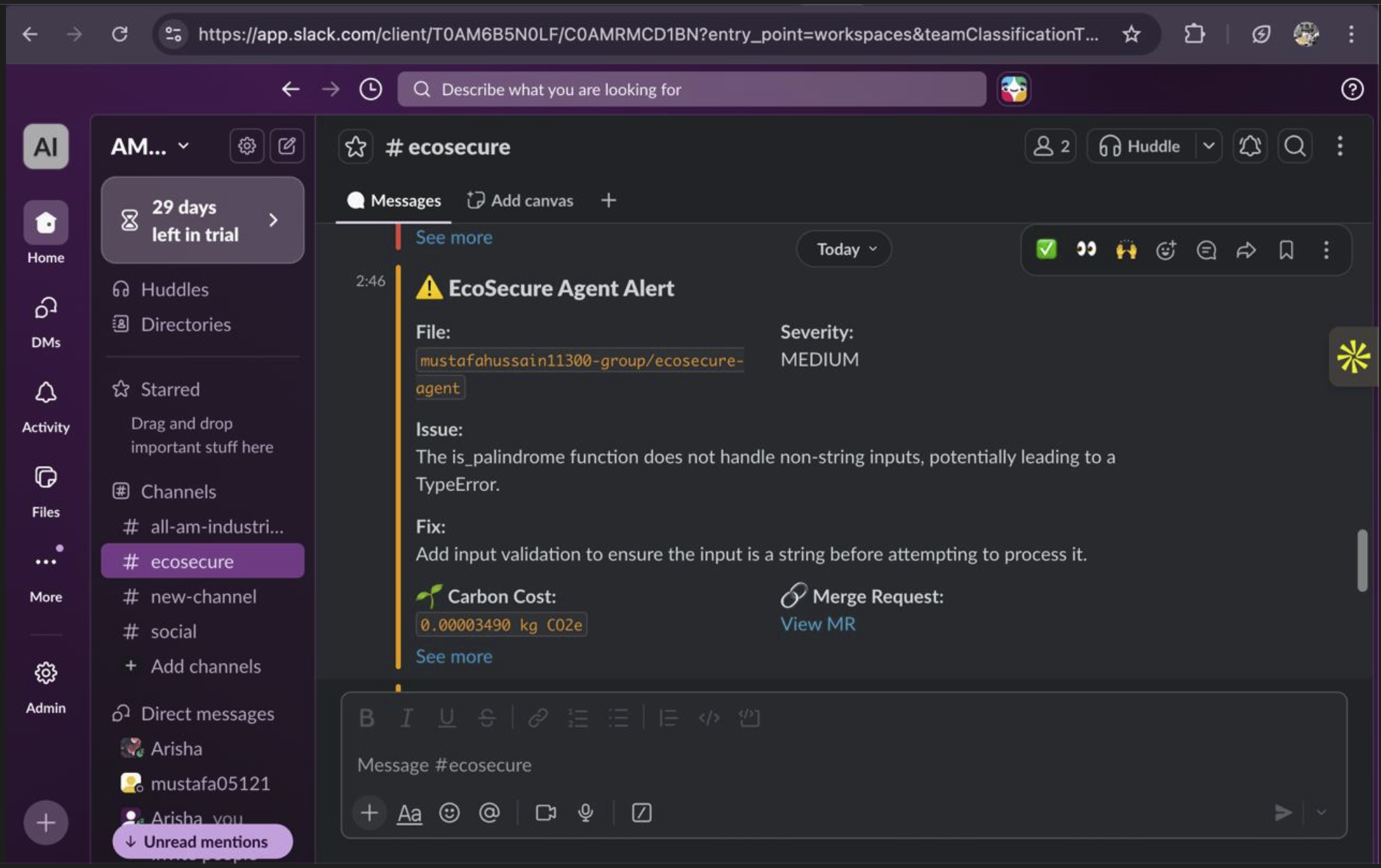
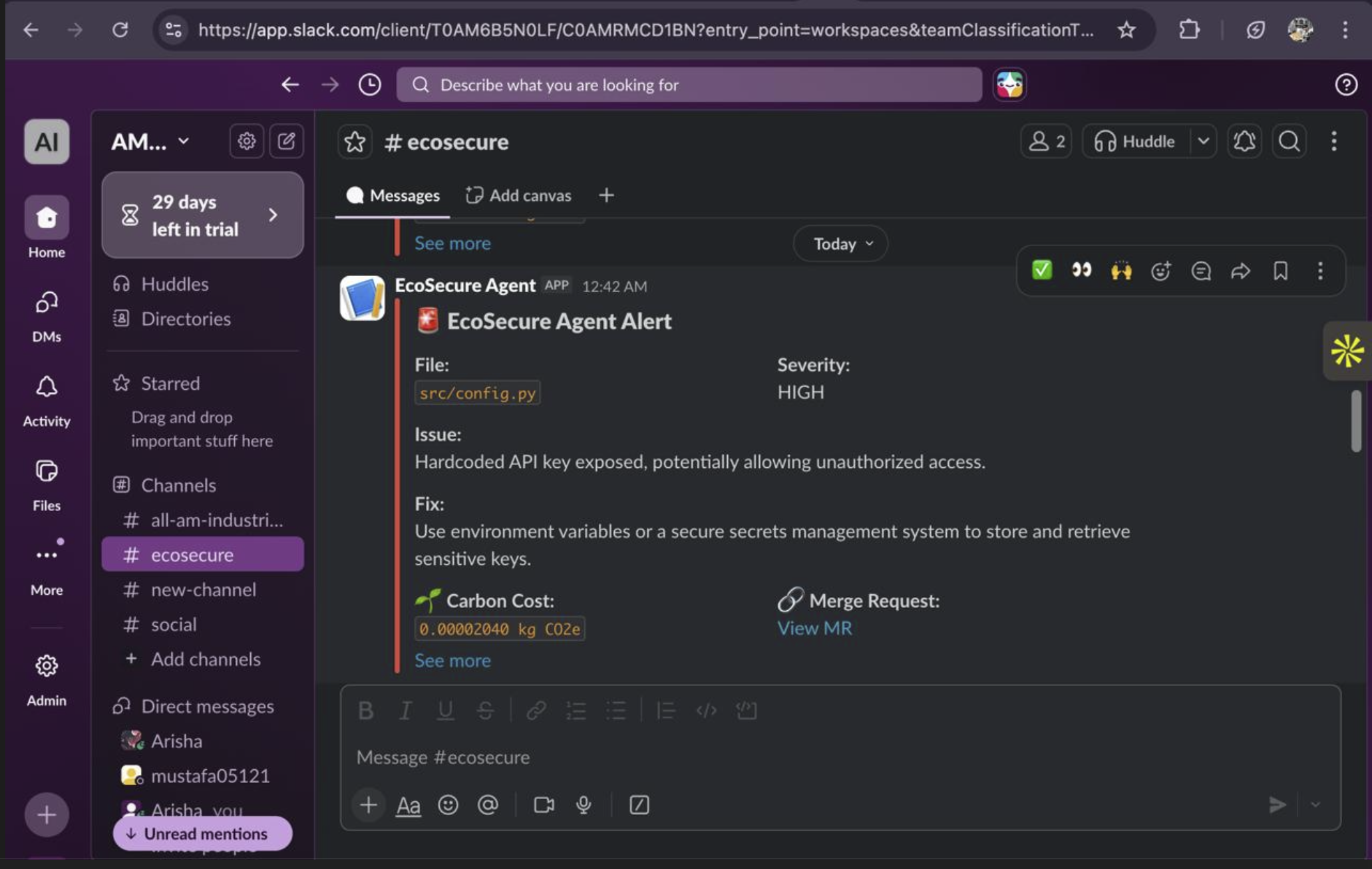
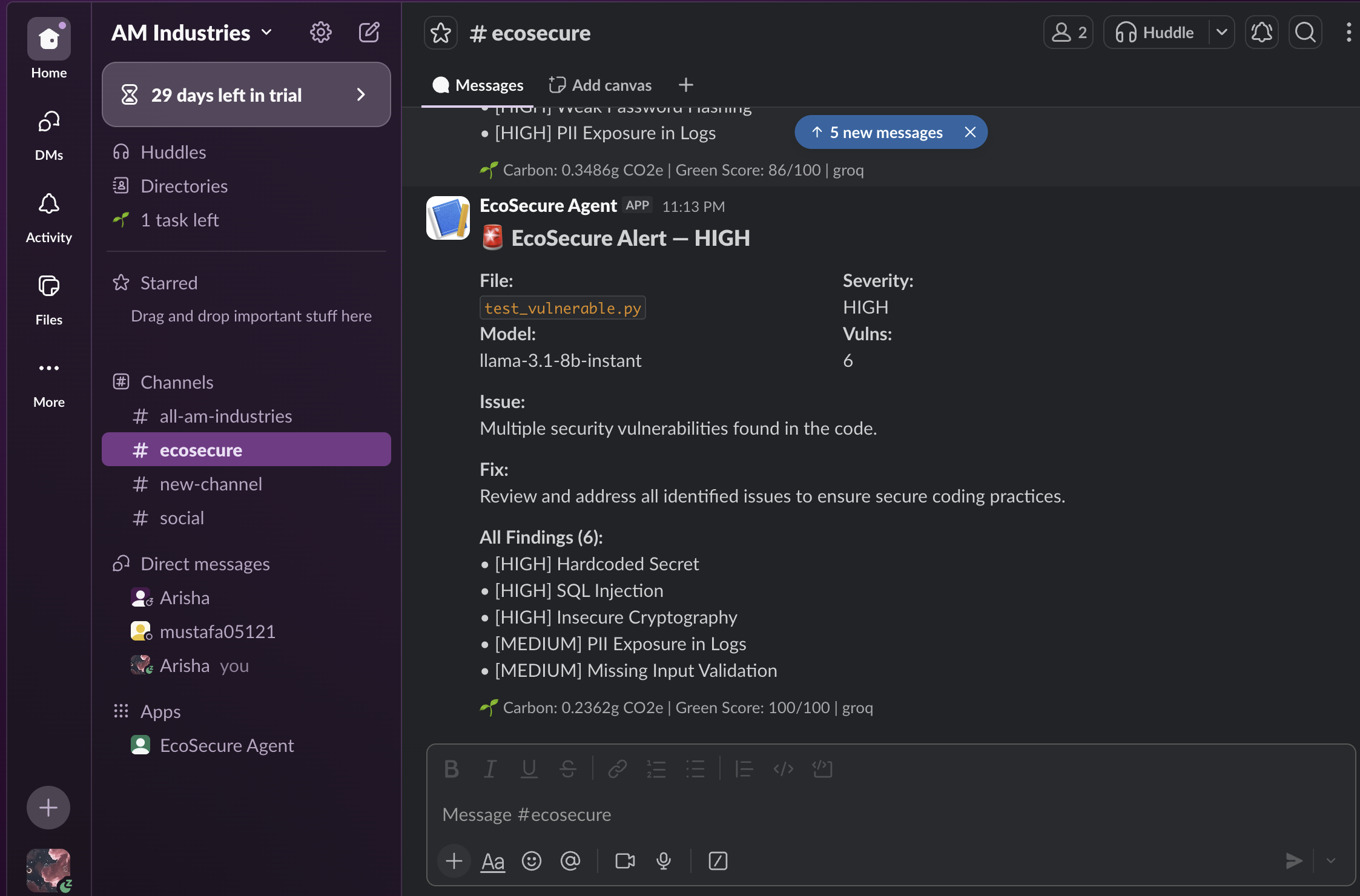
Scans every code change (diffs, commits, merge requests) for vulnerabilities Detects issues such as hardcoded secrets, SQL injection, XSS, weak cryptography, and more Posts actionable feedback directly on GitLab Merge Requests Sends real-time alerts to Slack for high-severity issues Suggests fixes for detected vulnerabilities Tracks and reports the carbon footprint of each AI analysis
It operates in real time using webhooks, eliminating delays and manual intervention.
How we built it
We built EcoSecure Agent as a lightweight, event-driven AI system:
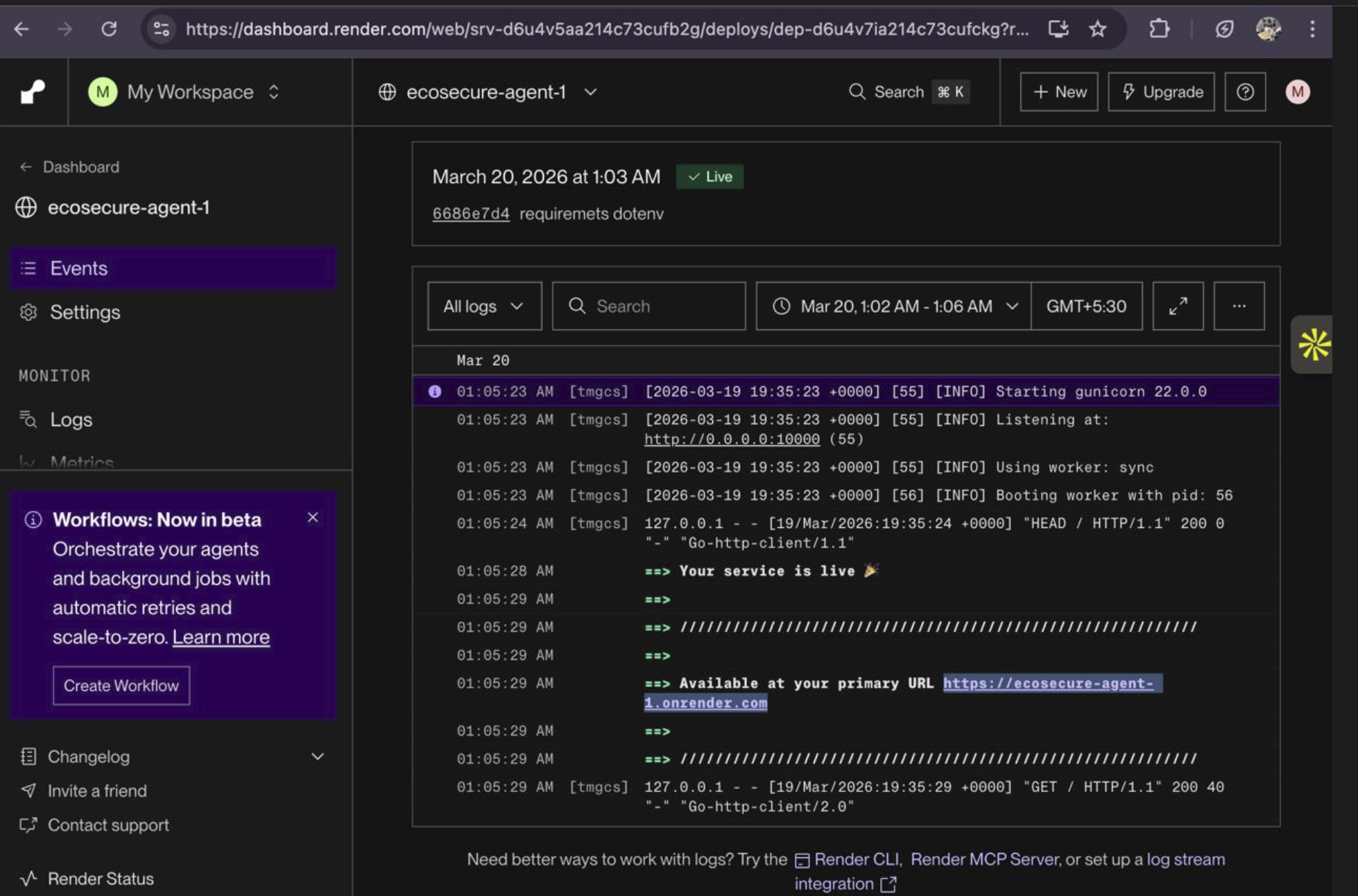
Backend: Python with Flask deployed on Render AI Analysis: Groq (Llama 3.1) for fast security scanning Integration: GitLab Webhooks and APIs for real-time merge request interaction CI/CD Backup: GitLab pipelines to ensure reliability during service cold starts Notifications: Slack Webhooks for instant alerts Architecture: REST-based microservice Carbon Tracking: Token-based estimation model for CO₂ emissions per AI call
Workflow:
Developer pushes code or opens a merge request GitLab webhook triggers the backend Code diff is analyzed using AI Results are posted as: GitLab MR comments (detailed report) Slack alerts (for high-severity issues) Carbon usage is calculated and displayed Challenges we ran into Ensuring consistent structured output from AI responses required robust parsing strategies Handling webhook reliability issues such as duplicate events, missing diffs, and Render cold starts Balancing speed and accuracy between fast scans and deeper analysis Reducing false positives while maintaining strong vulnerability detection Designing a simple yet meaningful carbon estimation model based on token usage Accomplishments that we're proud of Built a fully autonomous security agent that takes action, not just reports issues Achieved seamless integration with GitLab and Slack within developer workflows Introduced carbon-aware AI usage into DevSecOps Enabled real-time scanning through webhooks instead of relying solely on CI/CD Balanced performance, usability, and sustainability in a single system What we learned Workflow integration is more impactful than raw AI capability Developers prefer tools that reduce friction rather than add new interfaces Security tools must provide actionable insights, not just reports Even simple carbon tracking can influence responsible AI usage Real-world systems require handling edge cases beyond ideal scenarios What's next for EcoSecure Agent Add hybrid multi-model analysis for improved accuracy Enhance auto-fix capabilities with more reliable patch suggestions Build a dashboard for tracking security and carbon metrics over time Expand support to platforms like GitHub Extend compliance checks to include GDPR, SOC2, and other standards Optimize carbon efficiency by dynamically selecting models based on task requirements
Built With
- carbon
- gemini
- gitlab-ci/cd
- gitlab-webhooks-&-apis
- groq-(llama-3.1)
- python-(flask)
- render
- rest-apis
- slack-webhooks
- tracking


Log in or sign up for Devpost to join the conversation.