-
-
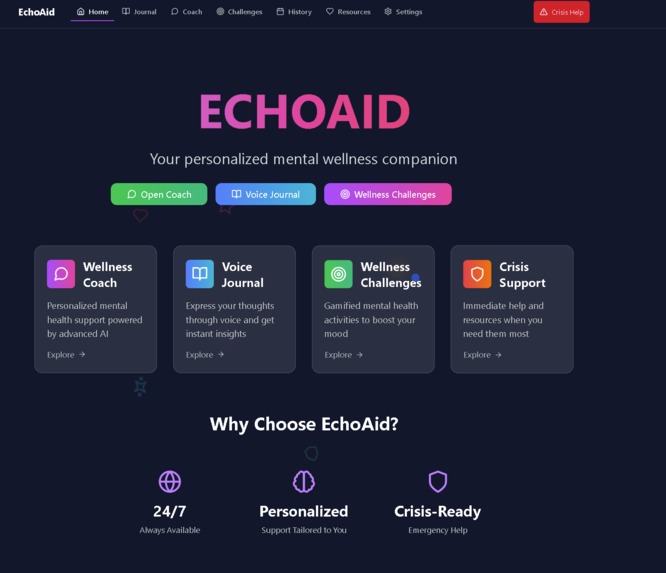
Home page
-
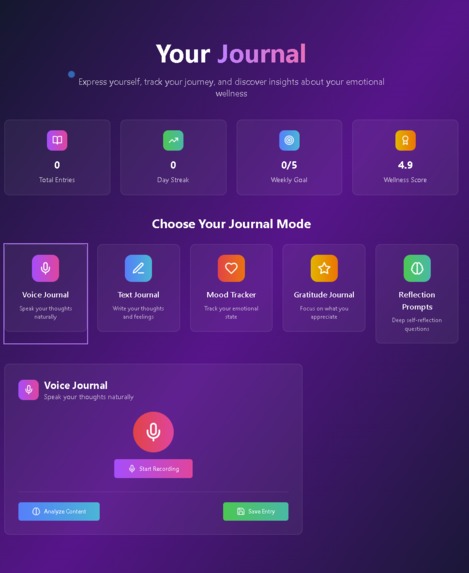
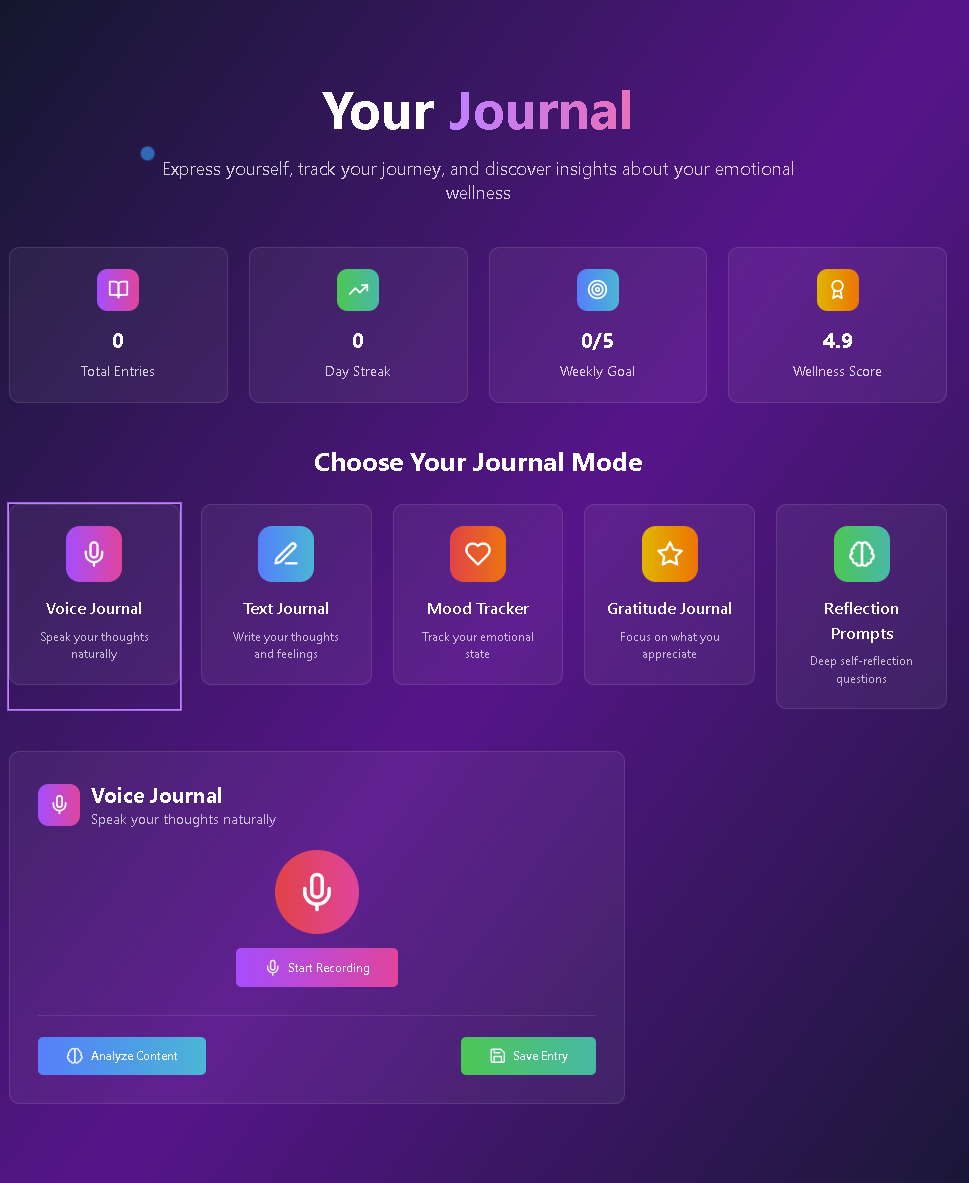
Journal page
-
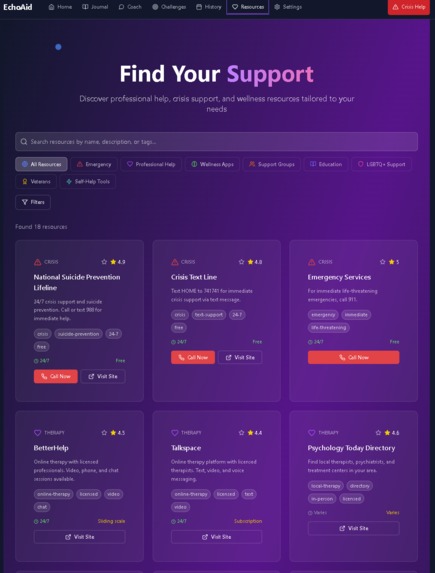
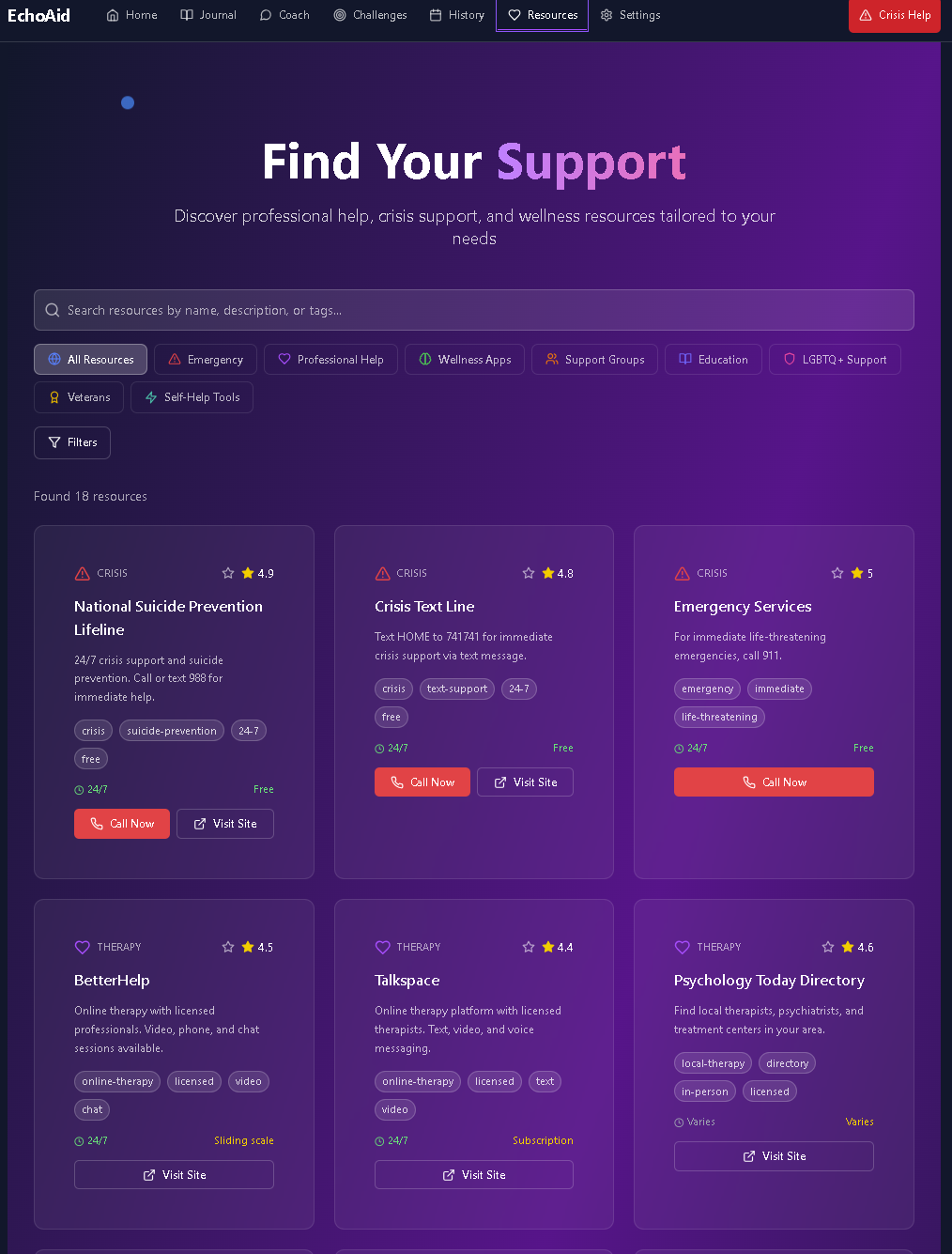
Resources
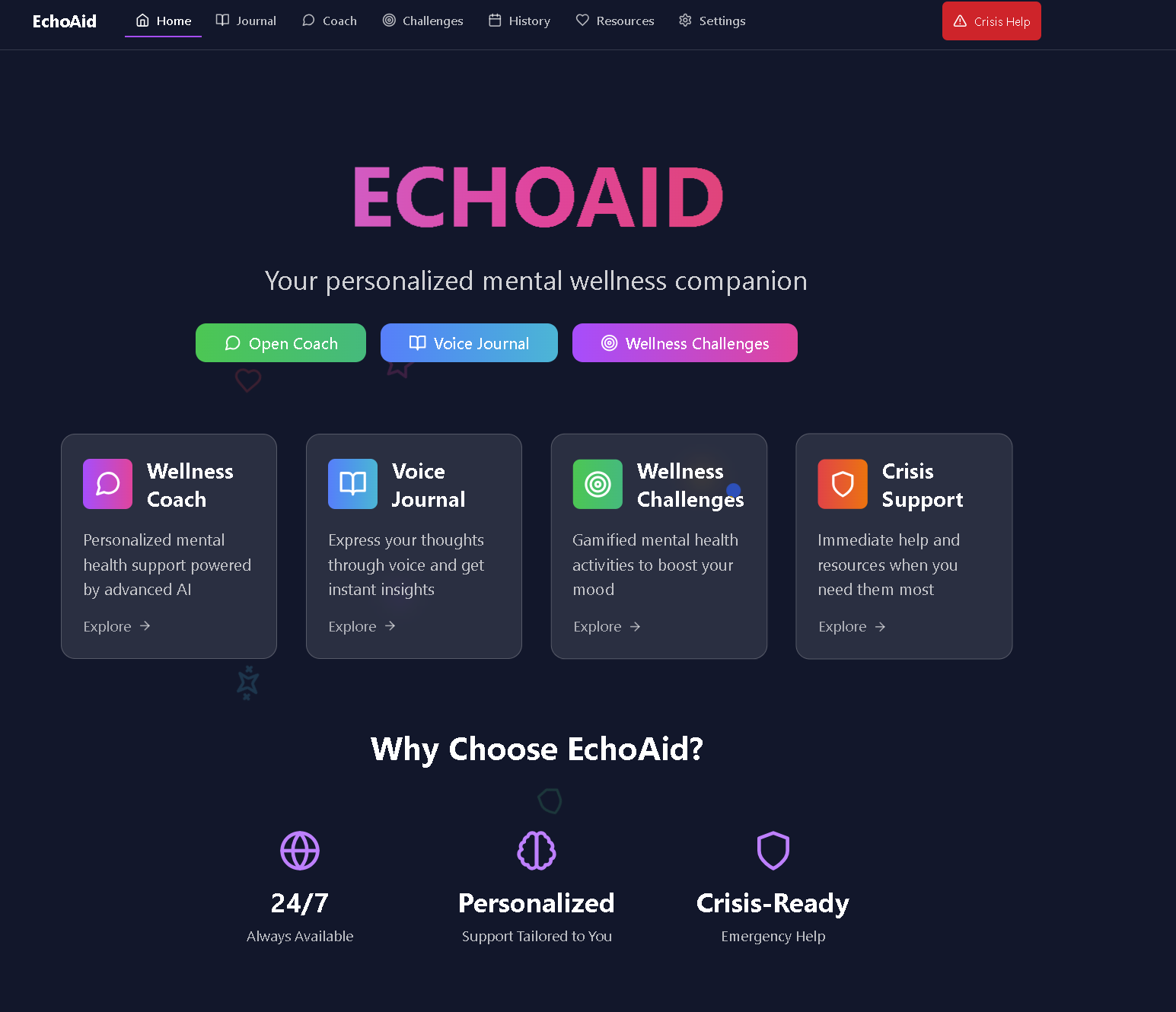
About the Project
EchoAid started because I saw how tough it is for people to get mental health support exactly when they need it. There’s plenty of help out there, but it’s not always easy to find or fast enough. I wanted to build something that feels like a real friend, smart, supportive, and ready 24/7.
Inspiration
Honestly, the idea came from watching friends and people around me struggle silently. Mental health is super important but often overlooked. I figured, with all the AI tools available now, why not create a platform that can catch someone in crisis early, talk with them in a helpful way, and connect them with support?
What it does
EchoAid is like a mental health buddy powered by AI. It listens in real-time and can tell if someone might be going through a tough time. Then it jumps in with proven therapy techniques, stuff like CBT and mindfulness to help out. It speaks multiple languages, so it can reach way more people. Plus, there’s a dashboard for pros to see how the community’s doing and track interventions.
If I get a bit technical, the AI works like a function:
$$ f(x) = \begin{cases} 1 & \text{if it thinks you need help} \ 0 & \text{if everything’s okay} \end{cases} $$
where (x) is the stuff you say or type, and the AI decides if it’s time to step in.
How I built it
I used React with TypeScript to make the frontend smooth and snappy with some animations to make it feel friendly, not robotic. The backend is Node.js and Express, connecting to OpenAI’s API to power the AI chat. Security is handled with JWT login and rate limiting to avoid abuse.
I kept the code organized so everything’s neat and easy to manage, from UI components to backend logic. That was super helpful as the project got pretty complex.
Challenges I ran into
- Making sure the AI doesn’t freak out and cause false alarms was tricky, it had to be accurate but not annoying.
- Getting the AI to sound caring and professional without sounding robotic took a lot of trial and error.
- Supporting 12 languages was way harder than just English some therapy phrases don’t translate easily.
- And syncing local changes with Vercel deployments gave me a headache for a while!
Accomplishments I’m proud of
- Got the crisis detection accuracy up to around 98%, which feels solid for this kind of thing.
- Built an app that looks nice and flows well, with animations that make it welcoming.
- Created a live dashboard that shows real people getting helped, super rewarding.
- Managed to pack professional therapy techniques into an AI chat it feels genuinely helpful.
What I learned
- AI can help in mental health, but only if it’s built thoughtfully and respectfully.
- Keeping the project organized really helps when things get complicated.
- Language support is about more than just translation, it’s about culture and empathy.
What’s next for EchoAid
- Building a mobile app so people can get help anytime, anywhere.
- Adding live chat with real therapists to back up the AI.
- Making the AI smarter with personalized journeys instead of one-size-fits-all.
- Training the crisis detector with more diverse data to help even more people.
Working on EchoAid taught me how technology and empathy can come together to make a real difference. I’m proud of what I built and excited to keep improving it.


Log in or sign up for Devpost to join the conversation.