-
-
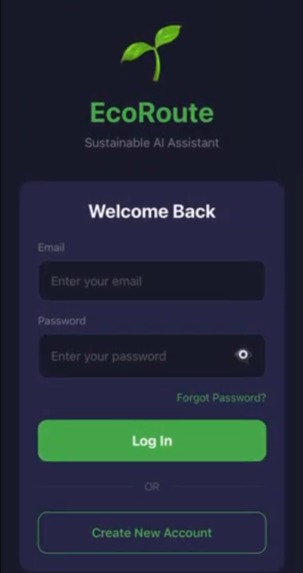
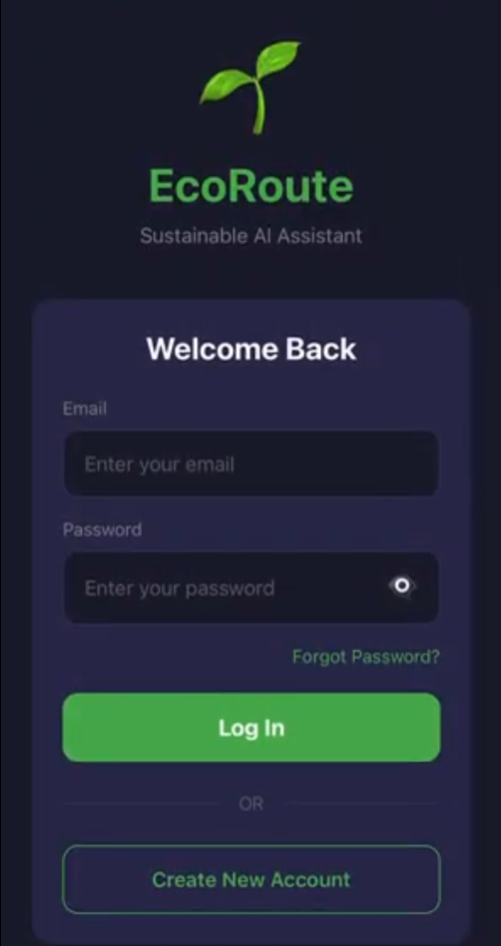
Log In Screen
-
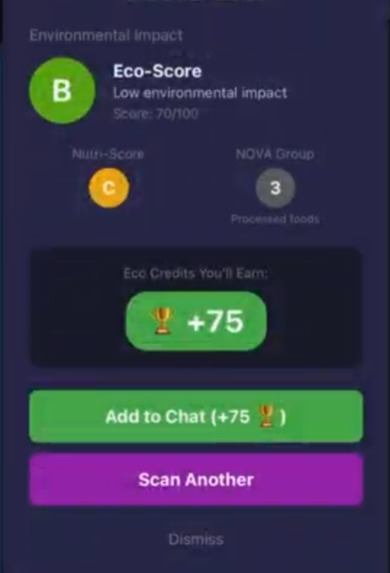
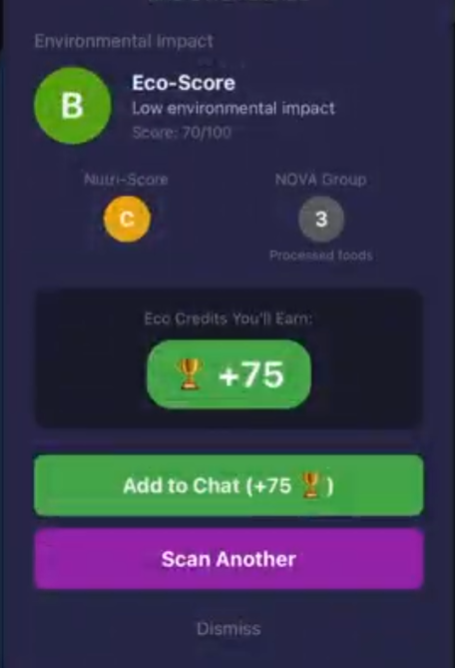
Environmental Score
-
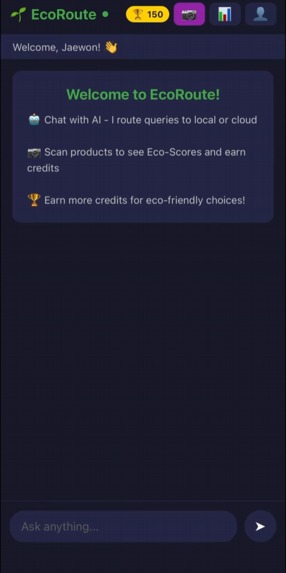
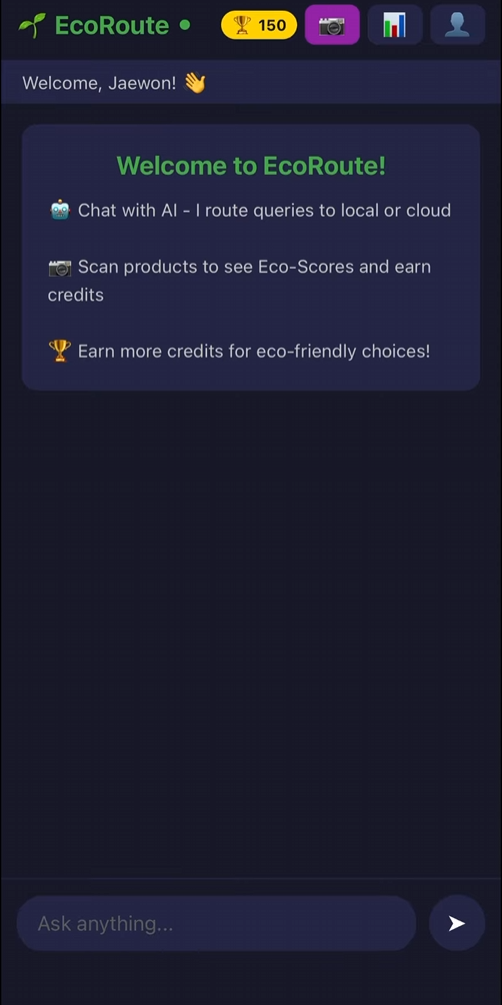
AI Chat
-
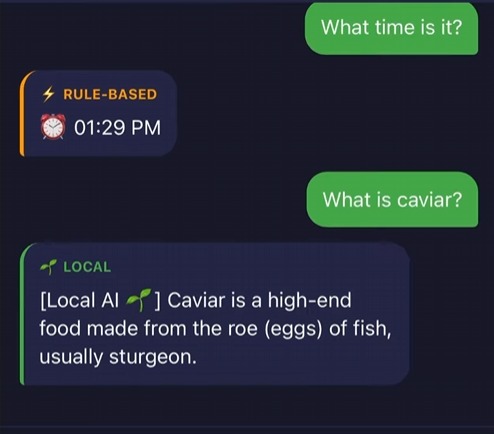
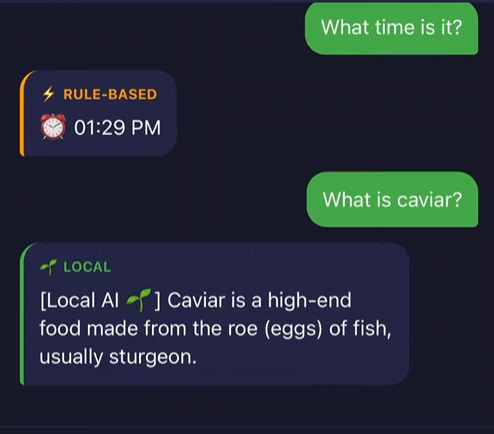
Example Responses
Inspiration
The inspiration for EcoRoute stemmed from a BBC News Article that talked about how much water and energy are being used to train an AI model. At the same time, we noticed AI prompts are mostly simple definitions, facts, or quick questions - yet they are still handled by powerful LLM models designed for complex reasoning. So it inspired us to ask: what if AI models only used what was necessary?
What it does
Our project determines the complexity of a prompt based on rule based algorithim. The inputs are then redirected to be simple or complex. Simple questions are answered using lightweight local models that consume significantly less energy, while complex questions are routed to a powerful cloud-based LLM. This process happens automatically and transparently, preserving the user experience while reducing unnecessary compute.
How we built it
EcoRoute uses a lightweight routing layer that analyzes incoming prompts before calling any AI model. Instead of relying on another machine learning model, we implemented simple heuristic rules such as time, simple math, dates, and greetings to identify very low complexity inputs from the user.
Challenges we ran into
One of the main challenges we faced was the difficulty in keeping the server running. We faced multiple complications in running the server, but eventually managed to overcome it.
Accomplishments that we're proud of
Implementing features like food product scanning to grade environmental impact, and also integrating credits into the program to use the AI.
What we learned
Simple heuristics can be effective if used properly.
What's next for EcoRoute AI
Plans include improving prompt classification, adding analytics to track avoided compute, and making the system independent so it can operate without relying on a single local computer or server.
Built With
- api
- barcode
- llm
- python


Log in or sign up for Devpost to join the conversation.