Inspiration
We were inspired by ad-blockers, which help people avoid unwanted ads and spam in a simple, seamless way while they browse. We wanted to bring that same kind of passive, everyday support to sustainable shopping. Instead of asking users to completely change their habits, EcoRN works alongside the shopping experience they already have and helps them make greener decisions with less effort.
What it does
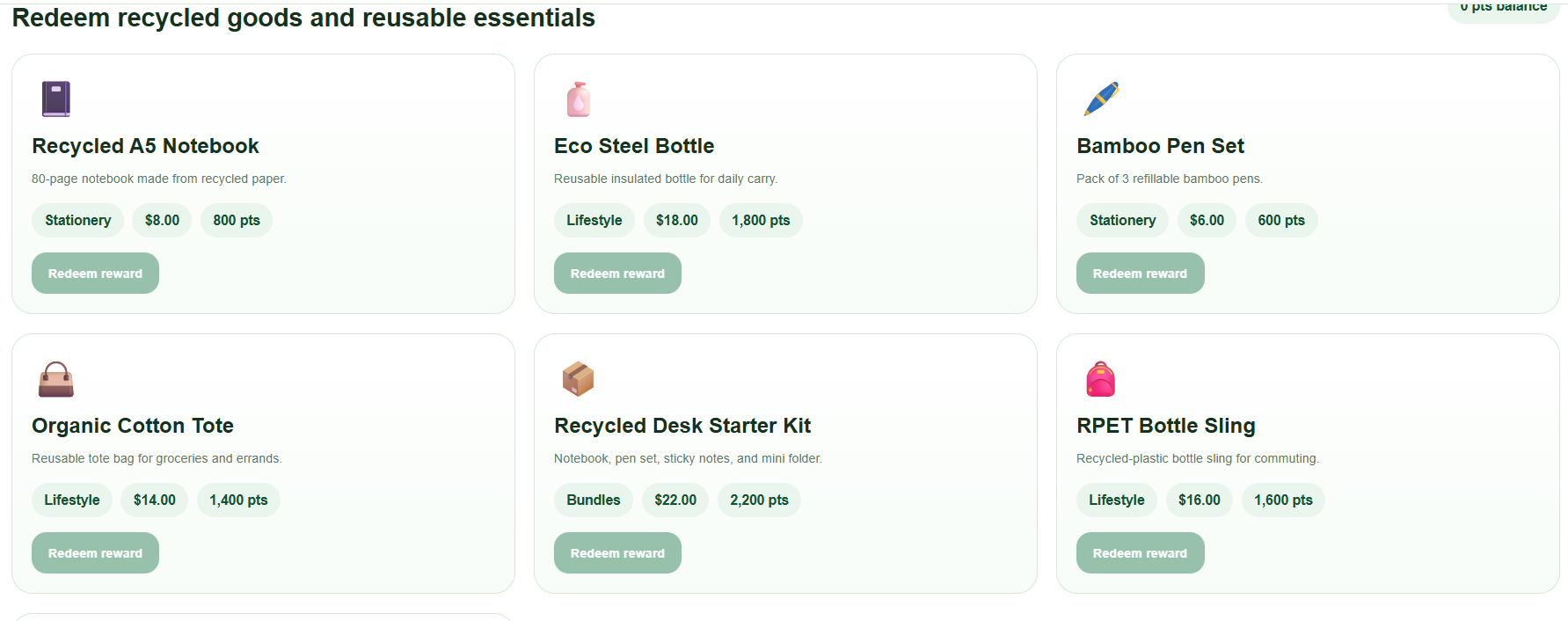
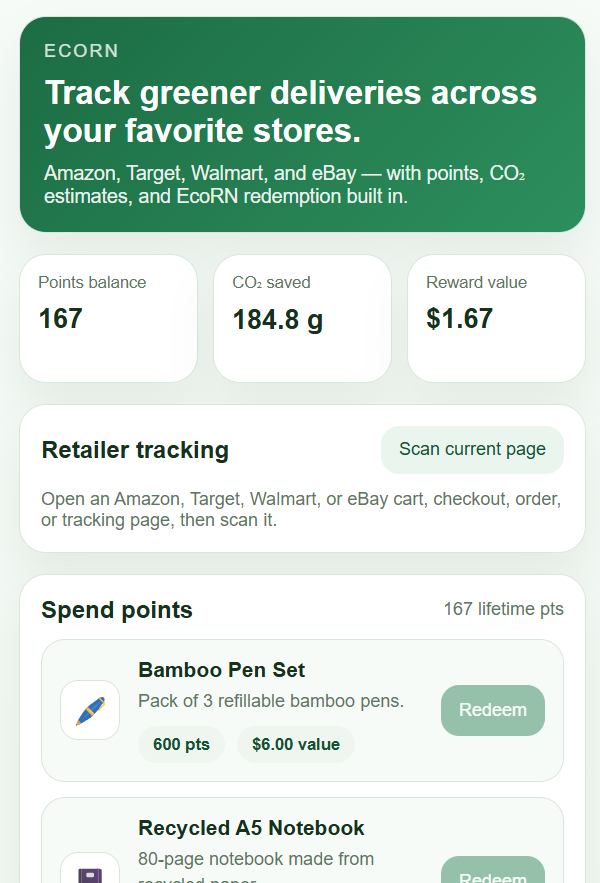
EcoRN is a browser extension that helps users shop more sustainably across platforms like Amazon, Walmart, Target, and eBay. It tracks when users choose slower or more sustainable delivery options and estimates the amount of CO2 saved from those choices. It also rewards users with points based on their purchases, which can later be redeemed for eco-friendly products through the EcoRN store.
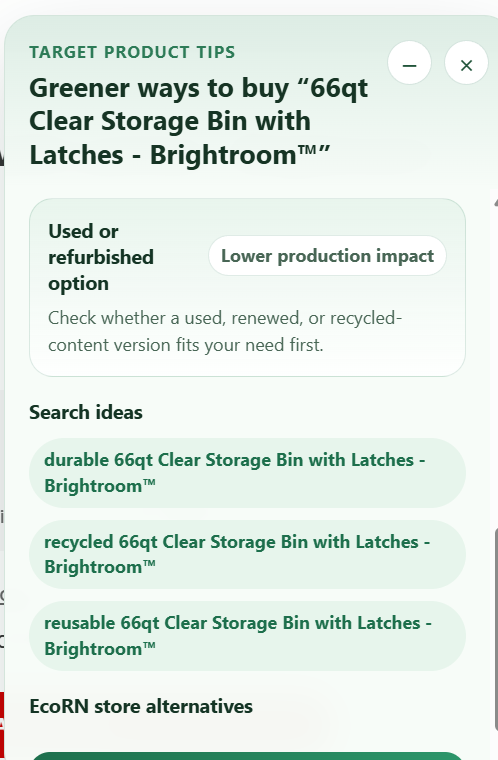
In addition, EcoRN recommends more sustainable ways to buy products while users browse, such as choosing refurbished items, recycled alternatives, or lower-impact shipping methods. The extension also surfaces EcoRN store alternatives when relevant, making it easier for users to discover greener products without leaving their shopping flow.
How we built it
We built EcoRN as a browser extension using a popup dashboard, content scripts, and a local data storage system to track user activity and rewards. The extension detects supported retailer pages, identifies delivery choices and product context, and then uses a sustainability model to estimate carbon savings based on shipping speed and purchase behavior.
We also built an EcoRN storefront experience within the extension, including signup, rewards tracking, product browsing, redemption, and a mock checkout flow. On top of that, we designed an on-page recommendation panel that appears while users shop and offers sustainable suggestions in real time.
Challenges we ran into
One of the biggest challenges was that retailers do not expose sustainability information in a consistent way. Every site structures shipping options, product pages, and checkout flows differently, so we had to create flexible logic for detecting retailer-specific purchase and delivery information.
Another challenge was making sure the rewards system was fair and could not be exploited. We had to add validation so users could only select shipping options that actually matched the retailer they were on. We also had to improve the user experience of the recommendation panel, including handling scrolling, layout, and when to show relevant alternatives without overwhelming the page.
Accomplishments that we're proud of
We are proud that EcoRN turns a small everyday decision, like choosing slower shipping, into something visible, rewarding, and motivating. We successfully created a working multi-retailer extension that combines carbon impact awareness, shopping recommendations, and a rewards system in one experience.
We are also proud of building a full ecosystem around the idea rather than just a tracker. EcoRN not only estimates CO2 savings, but also encourages better choices through product recommendations, redeemable rewards, and a built-in eco-focused store experience.
What we learned
We learned that sustainability tools are most powerful when they fit naturally into existing user behavior. People are much more likely to make greener choices when those options are surfaced at the right time and paired with clear benefits.
We also learned how important trust and transparency are in a product like this. Since exact emissions data is not always available, we had to think carefully about how to present estimates honestly while still making the experience useful and engaging. On the technical side, we learned a lot about browser extension architecture, cross-site content handling, and designing around inconsistent web layouts.
Future of EcoRN
We hope to implement it in flights and other transportation services and other websites.


Log in or sign up for Devpost to join the conversation.