-
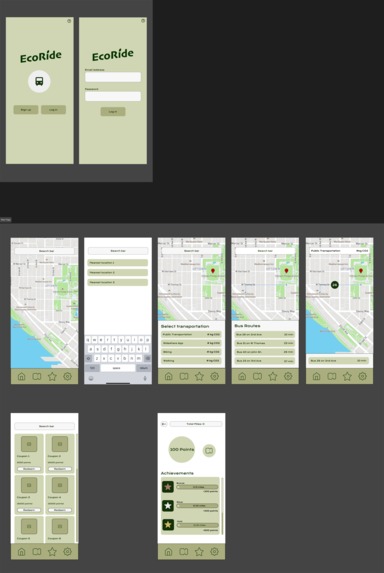
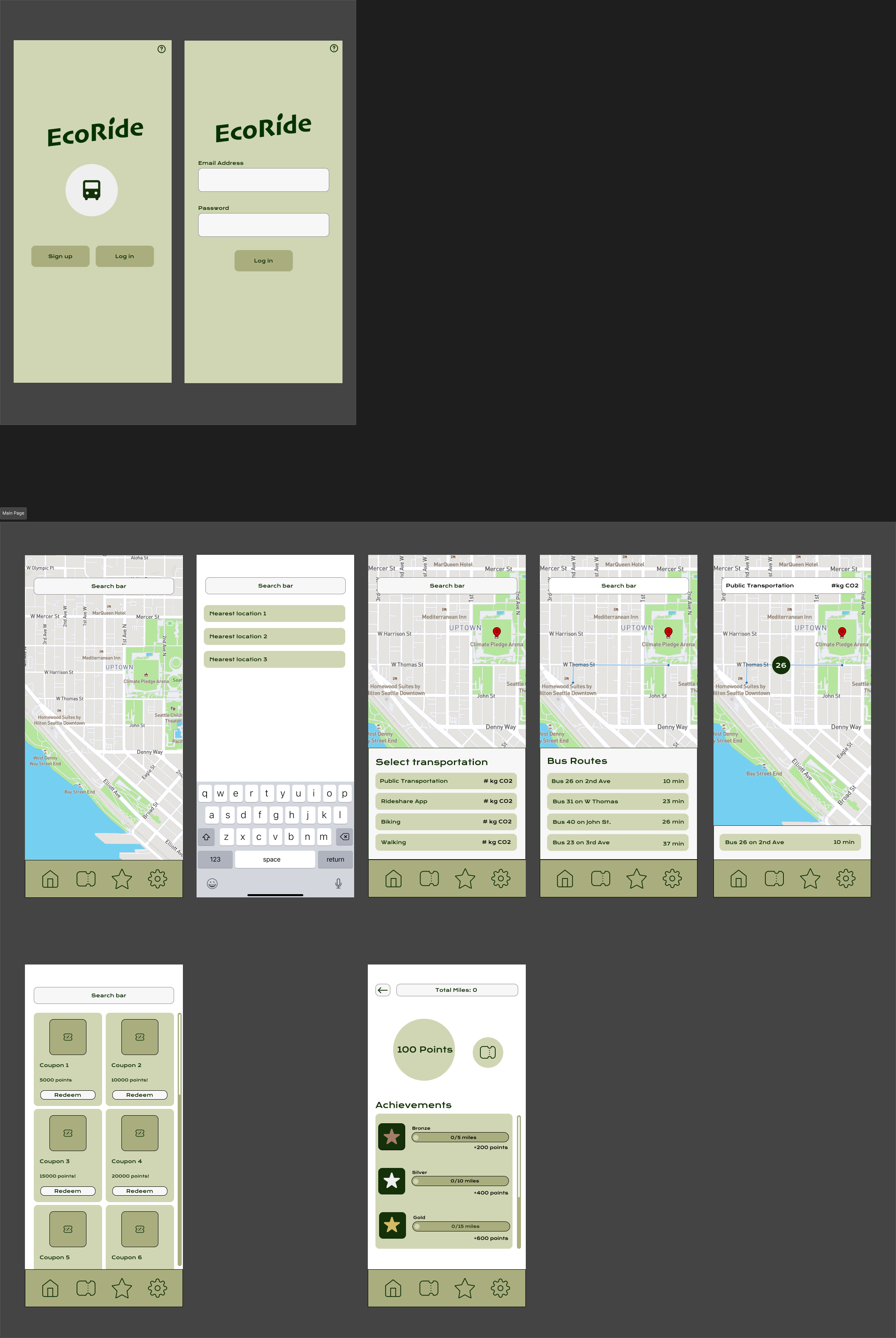
The interface of our app
-
The EcoRide logo
Inspiration
Our app "EcoRide" was created after conducting a research survey about how often people used different methods of transportation. We found out that over 50% of the participants use a car to get to school or work. Cars release harmful carbon emissions that contribute to climate change. We decided to create an app that incentives its users to use other forms of transportation such as the bus, rideshare, biking and walking in order to gain coupons.
What it does
EcoRide shows a map of transportation options after users input their location. The list of options will include how much CO2 they emit. After users reach their destination, the amount of miles they traveled will be added to their account. On the bottom panel next to the home button is a coupon button. When this is clicked the available coupons and their prices are shown. The coupons are discounts for the public transportation options. Users can see how many points they gained from the miles traveled by clicking the star icon. Points are converted with achievements that reset each day.
How we built it
We started by brainstorming features we wanted to see in our design and sketched them out on paper. After that we created a rough draft wireframe in Figma of our concept. We chose a colour palette, created a logo, and cleaned up the edges and outlines of shapes to create our final project.
Challenges we ran into
EcoRide was not our first idea, but it came later on as we noticed the flaws of our first draft. Our first thought was to create an app that promoted walking, but when we researched and asked friends and family around us about means of transportation and why people would prefer to use cars instead of walking. We noticed that walking everywhere might not be as convenient as other forms of transportation. So, we decided to readjust our idea to other forms of travel. We then looked into public transportation and car-sharing options and learned that these forms of transportation produce less carbon emission than driving a car. We also learned that taking buses or trains is also more cost-efficient. Another thing that we had to keep in mind was the use of Figma. While some members knew the basics, we didn't have someone well-versed in the software. So, we had to rely on our previous experience and became familiar with the software by not being afraid of messing things up before we could produce our design.
Accomplishments that we're proud of
We are proud of our ability to adapt to the information provided from our research and adjust our goals for our app to align with our demographic’s needs and interests. Our the responses we were given enabled us to effectively rework our app to better serve our target demographic of commuters. Furthermore, we are also proud of our Figma design as it balances both usability and aesthetics that do not complicate or oversimplify the functionality of our app.
What we learned
While working on EcoRide, we learned many things along the way. Two significant learning experiences include how our daily lives affect the ecosystem. There are many options that we take throughout our day that contribute to damaging our ecosystem, and there are ways that we can avoid them simply by choosing an alternative. We also learned how important UI and UX are. There were many small details that we had to take into consideration. While others may have seen them as unimportant in the long run, they significantly affect the application experience.
What's next for EcoRide
EcoRide will make not only make sustainable transportation choices but also eco-friendly product choices (e.g., eco-friendly water bottles, reusable bags, bike equipment) and create a small marketplace with eco-friendly brands. Points or rewards earned from eco-friendly travel could be redeemable for discounts. Users get more value from the app through actionable and product-based solutions that support their eco-friendly journeys.
Built With
- figma


Log in or sign up for Devpost to join the conversation.