-
-
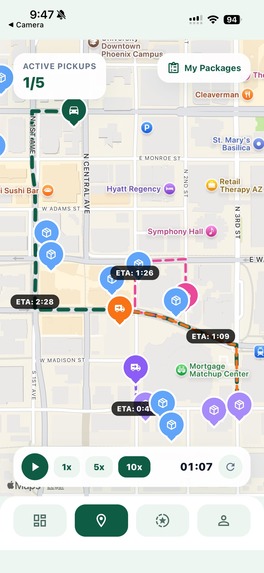
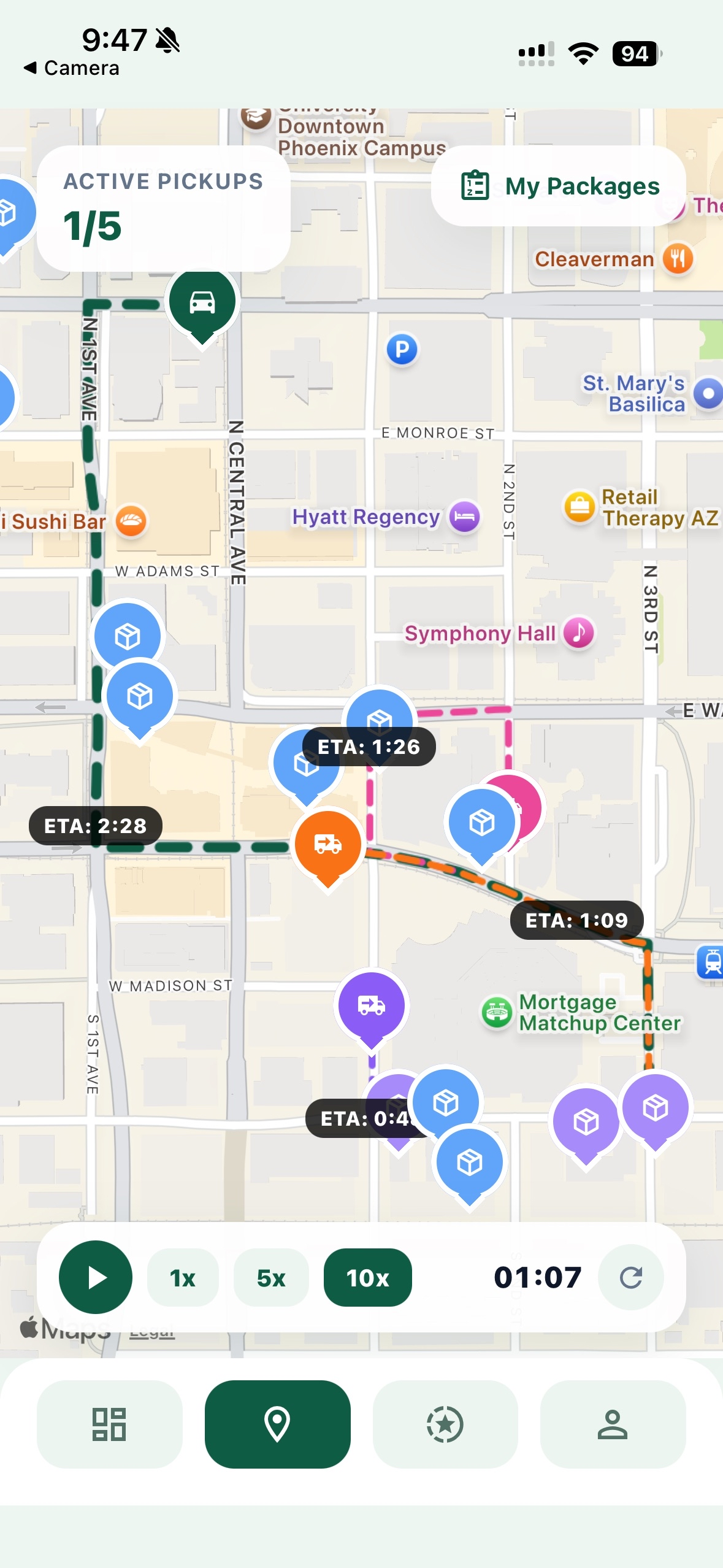
Delivered map
-
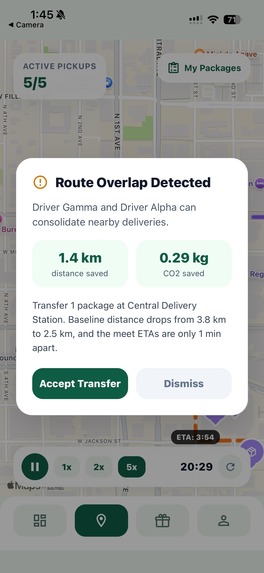
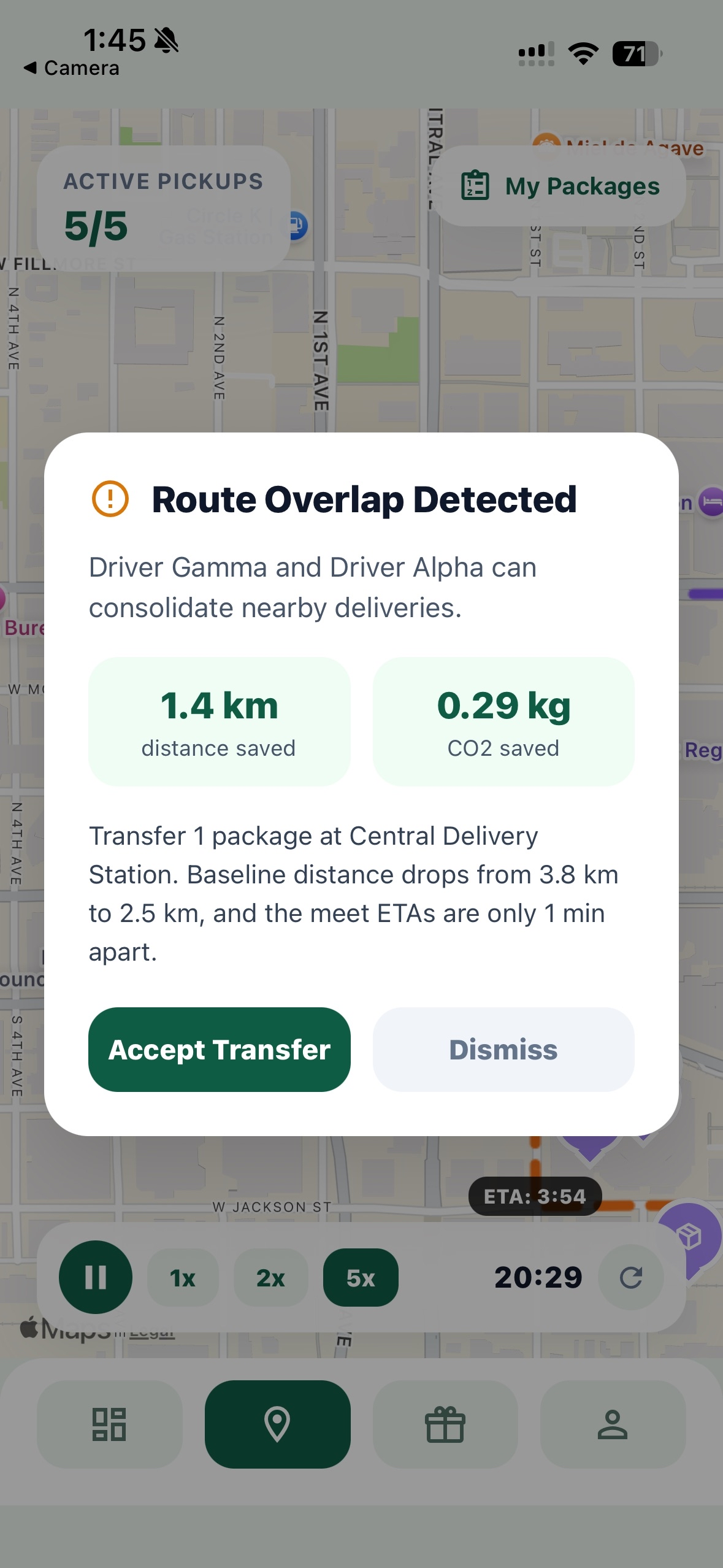
Overlapped situation
-
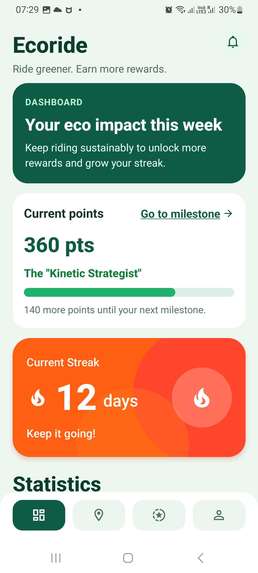
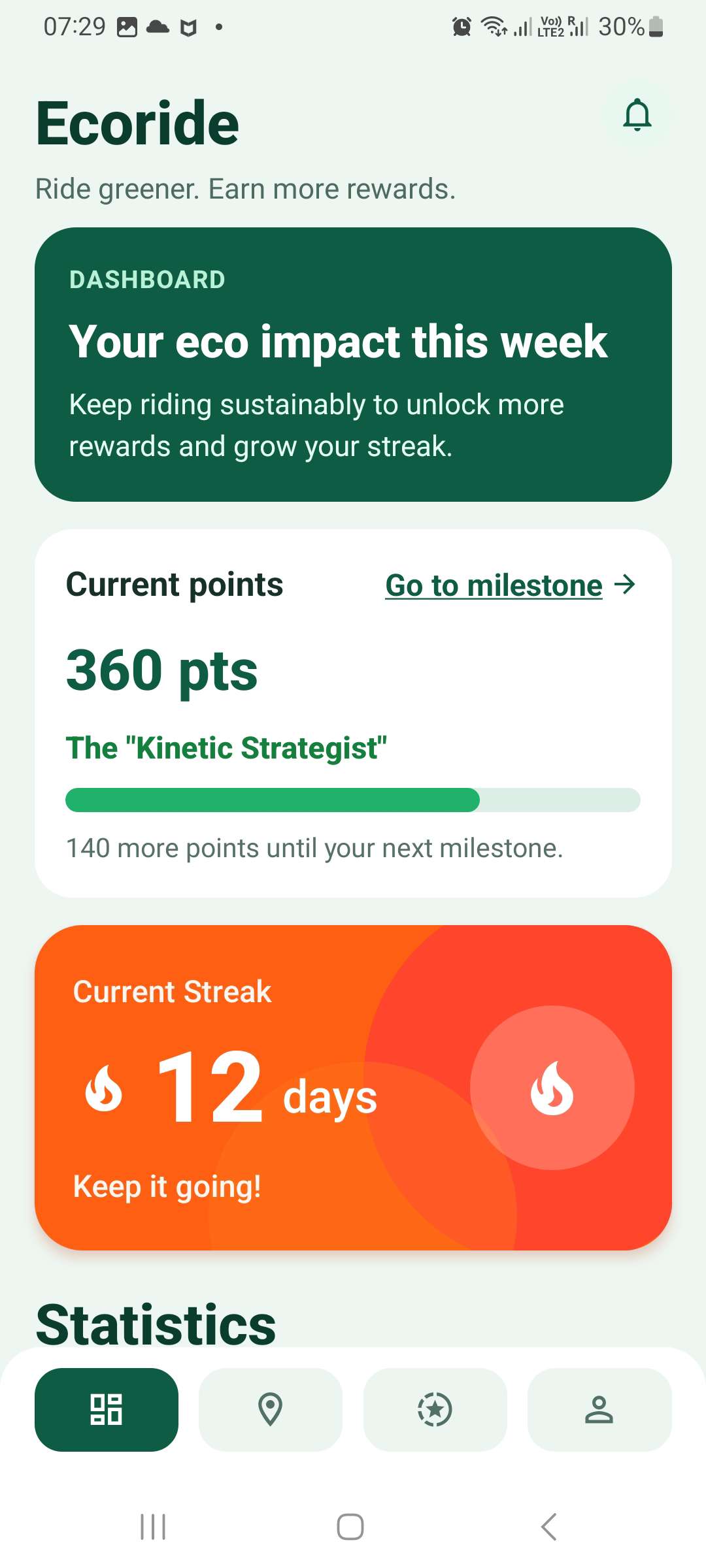
Dashboard
-
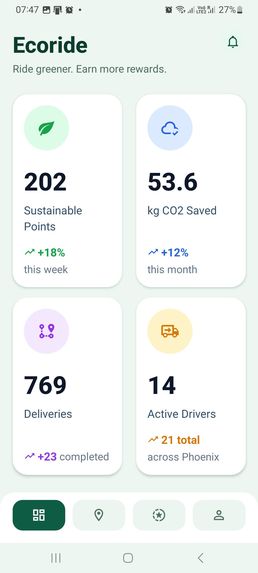
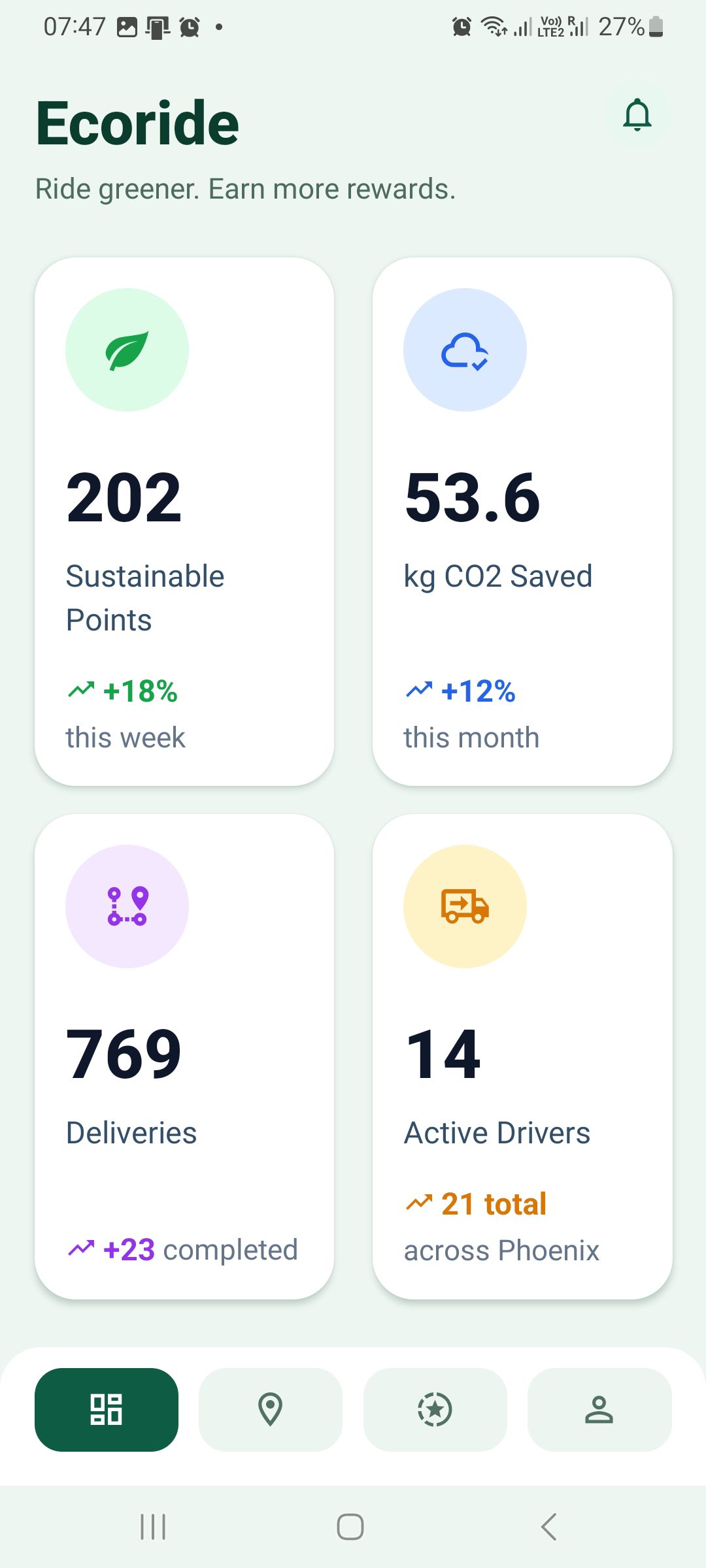
Statistical data
-
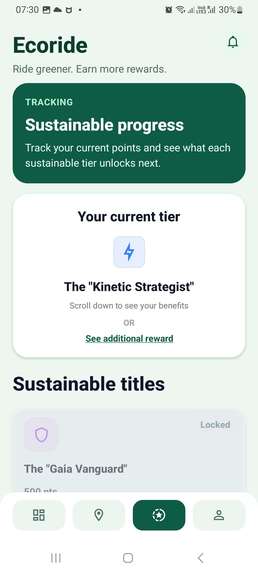
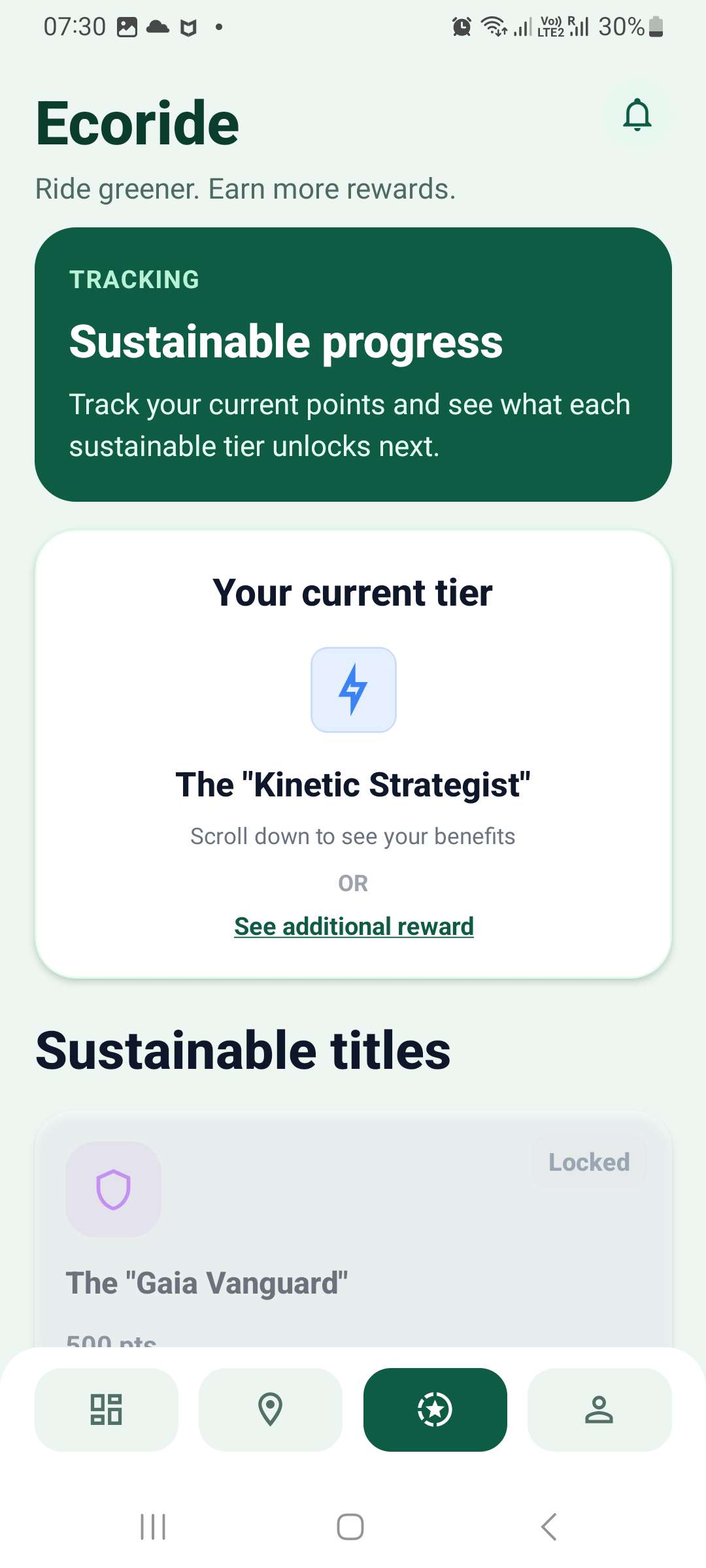
Current tier
-
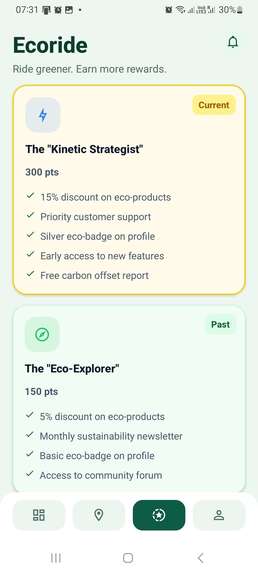
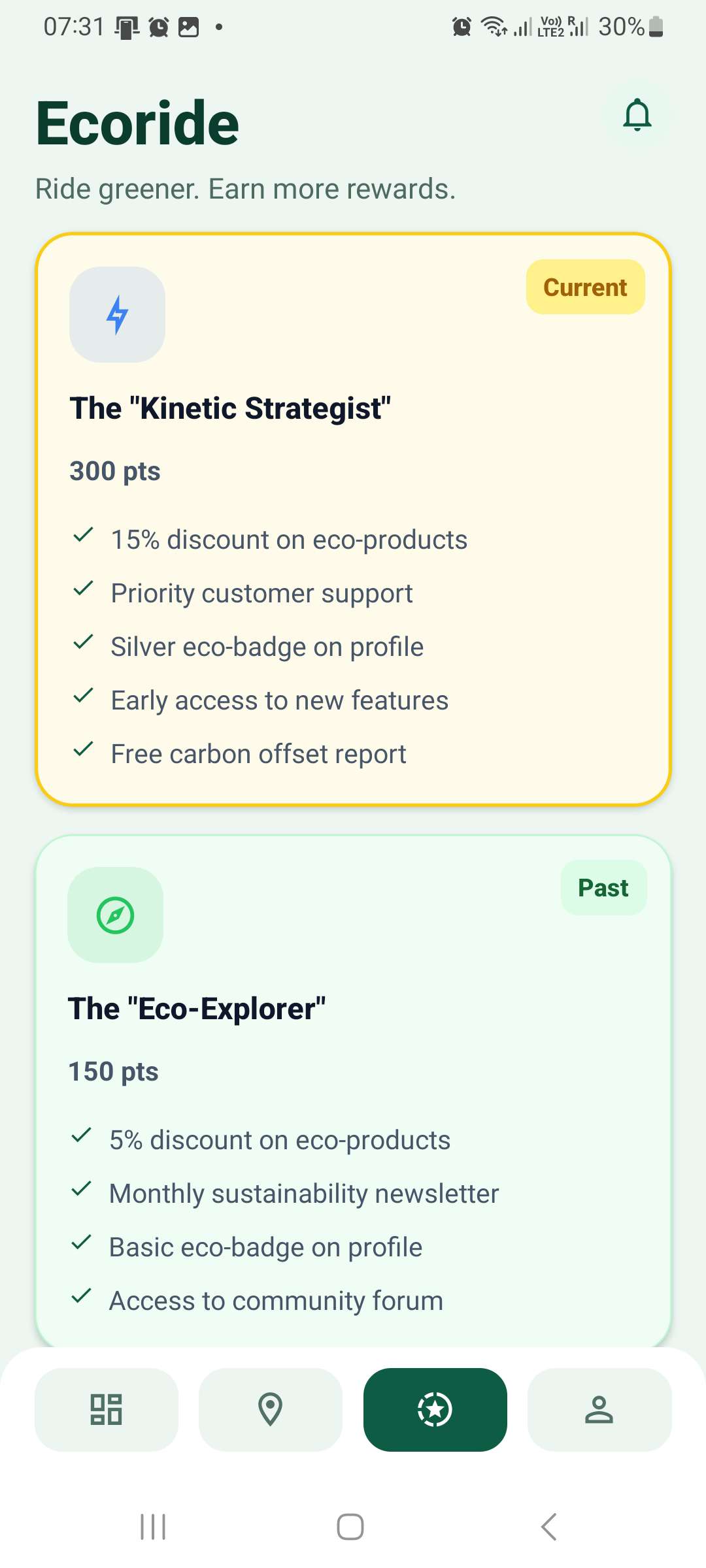
Tier benefits
-
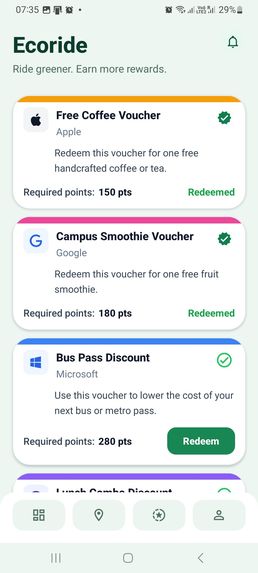
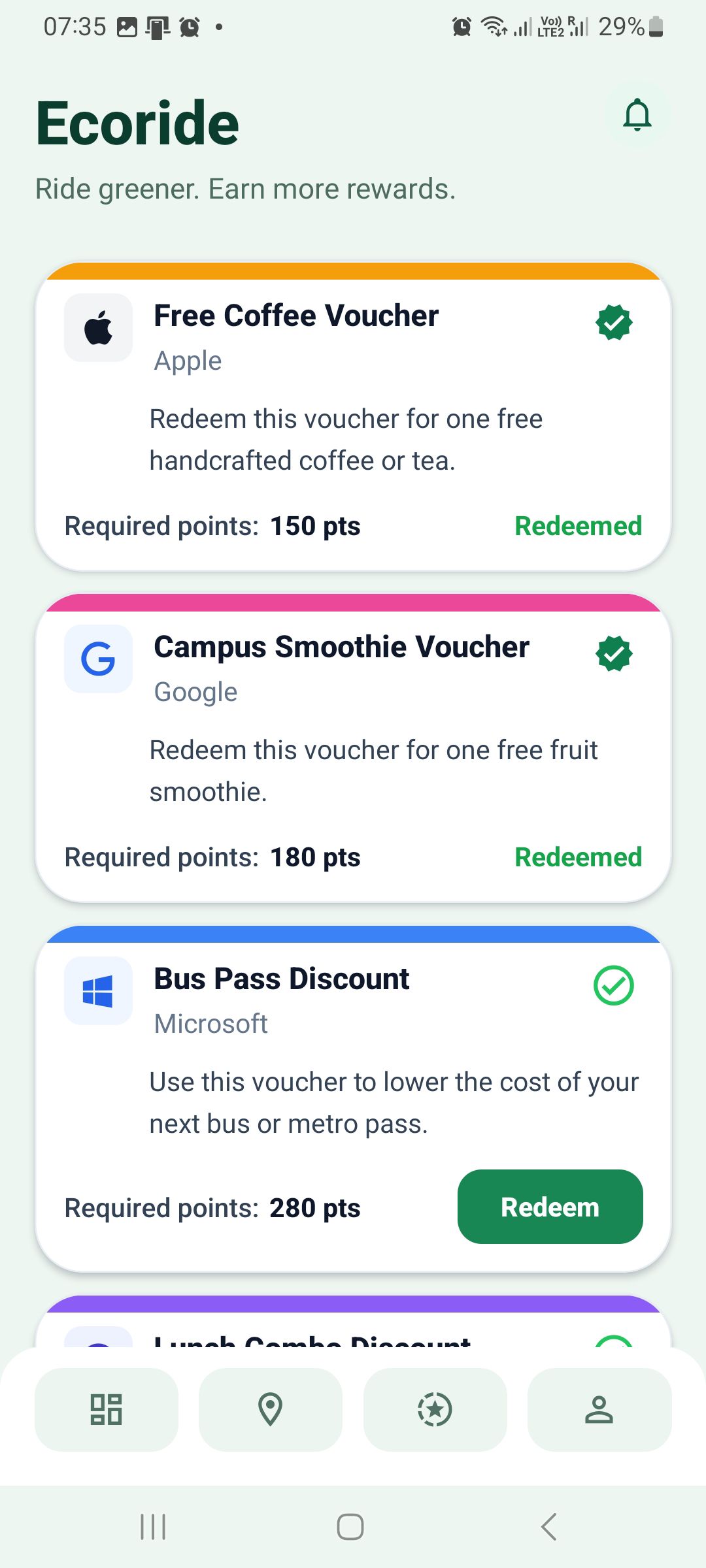
Reward
-
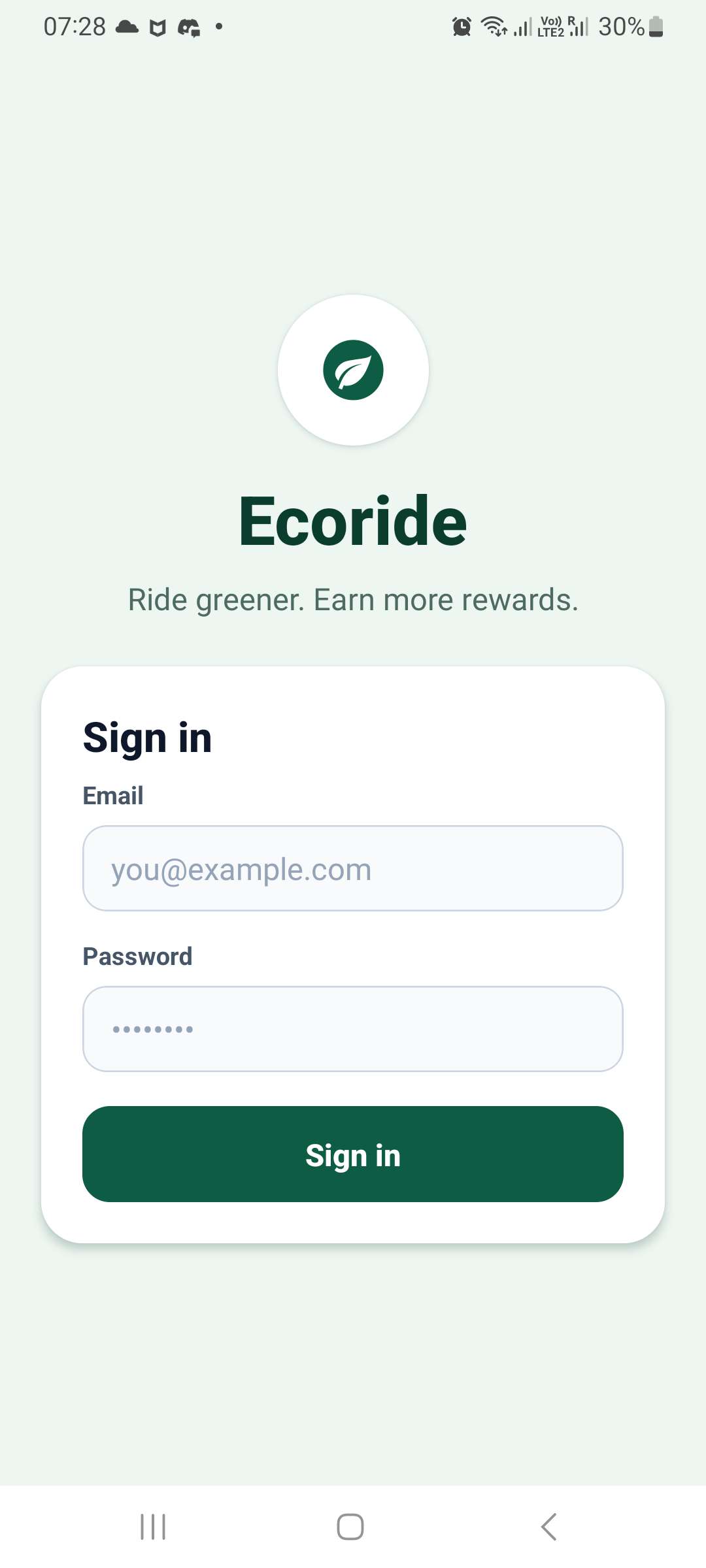
Sign-in page
Inspiration
EcoRide was inspired by two problems happening at the same time: city deliveries are becoming more frequent, and a lot of that movement is inefficient and wasteful. We wanted to imagine a delivery experience where drivers are rewarded for making smarter, greener choices, while the system itself actively reduces redundant driving through route optimization and collaboration.
We were also inspired by the idea that sustainability apps should feel motivating, not just informational. That is why EcoRide combines live map-based logistics with points, milestones, and rewards to make eco-friendly delivery decisions feel visible and worthwhile.
What it does
EcoRide is a mobile app that simulates a smarter, more sustainable package delivery network. Drivers can view packages on a live map, pick them up, follow optimized delivery routes, and complete drop-offs while earning reward points.
The app also tracks sustainability impact through metrics like CO2 saved, total deliveries, and active drivers. On top of that, EcoRide includes gamified features such as milestones, honor tiers, reward vouchers, trip history, and point history so users can see both their environmental impact and their personal progress.
A standout feature is conflict detection: when two drivers are heading toward nearby destinations, EcoRide can identify the overlap and suggest a transfer strategy that reduces unnecessary travel.
How we built it
We built EcoRide using React Native with Expo and TypeScript, which let us create a mobile-friendly experience quickly. The frontend is centered around a large App.tsx interface that ties together the dashboard, rewards, history, profile, and live map views.
Under the hood, we created a custom simulation engine to power package spawning, driver behavior, route progression, and conflict detection. We used react-native-maps to visualize drivers, packages, route polylines, ETAs, and delivery targets in real time. For routing, we integrated OpenStreetMap Valhalla data and added a fallback route system so the simulation still works even if live route fetching fails. We also built helper modules for geometry, drivers, packages, and routing logic to keep the app organized.
Challenges we ran into
One challenge was making the simulation feel realistic while still being responsive inside a hackathon project. We had to manage package spawning, driver states, pickup and drop-off logic, timing, ETA tracking, and map updates all at once.
Another challenge was handling route coordination and overlap. Detecting when two drivers are effectively doing redundant work, then proposing a more efficient handoff, required us to balance location logic with simple but meaningful optimization. We also had to make sure the user experience stayed understandable even though there is a lot happening in the system at the same time.
Accomplishments that we're proud of
We are proud that EcoRide is not just a concept screen, but an interactive working simulation. The app includes real-time delivery flow, dynamic package generation, AI driver movement, route visualization, package management, and delivery confirmation.
We are also proud of the way we connected sustainability with engagement. Instead of only showing carbon savings, we turned impact into something users can track through rewards, milestones, and achievement tiers. The conflict-resolution feature is another big accomplishment because it pushes EcoRide beyond simple delivery tracking into intelligent logistics coordination.
What we learned
We learned how much value there is in combining user experience with systems thinking. A sustainability app becomes much stronger when users can both understand the impact and directly participate in improving it.
From a technical side, we learned a lot about simulation design, state management in React Native, geospatial calculations, and building route-aware map interactions. We also learned that even simple optimization ideas, like nearest-stop ordering or transfer suggestions, can make a concept feel much more innovative and practical.
What's next for EcoRide
Next, we want to move EcoRide from simulation toward a more production-ready platform. That includes real driver accounts, real package assignment, live backend syncing, and integrations with actual mapping and logistics APIs.
We also want to improve the intelligence of the system by adding better route optimization, stronger multi-driver coordination, and predictive delivery clustering. On the user side, we would expand the rewards ecosystem with real partner incentives, community challenges, and deeper sustainability reporting so EcoRide can become both an efficient delivery tool and a platform that encourages greener transportation behavior.


Log in or sign up for Devpost to join the conversation.