-
Overview
-
Welcome Screen
-
Sign Up Screen
-
Home
-
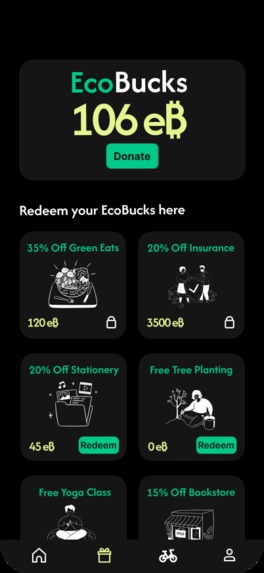
Rewards Screen
-
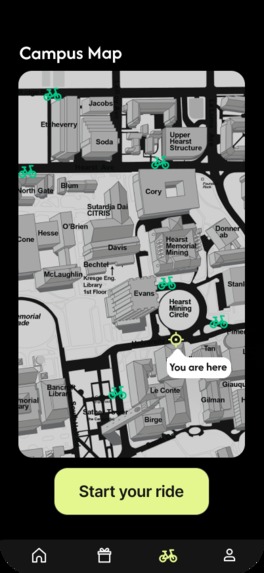
Ride Screen
-
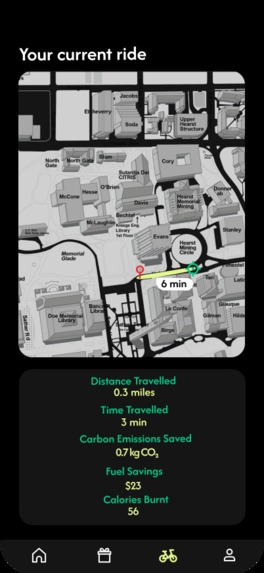
Ride Screen 2
-
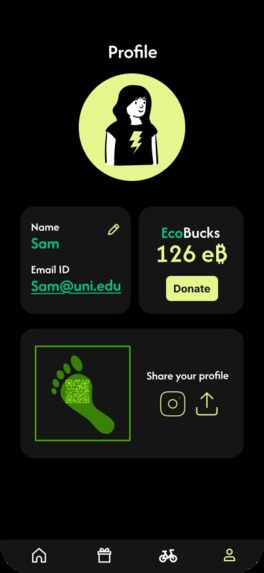
Profile
EcoQuest
EcoQuest
Empowering university students to opt for sustainable campus travel options through Rewards and Engagement
Project Proposal
Project Prototype Link:
https://www.figma.com/proto/g8dxhZoS7FEp2cg4loq4hB/Untitled?node-id=11-6&t=kp5c0UYAb1ETMClc-1&scaling=scale-down&content-scaling=fixed&page-id=0%3A1&starting-point-node-id=11%3A6
Problem Statement
Transportation is a significant contributor to carbon emissions, even within university campuses. Students often rely on cars or other non-sustainable modes of transport, which increases their carbon footprint. There’s a lack of engaging, localized solutions to encourage eco-friendly habits.
Objective
To create a user-friendly app that incentivizes university students to choose biking over driving through a reward-based system while tracking their environmental impact in real time.
Aim
To reduce carbon emissions and encourage and educate students to opt for eco-friendly alternatives.
How EcoQuest Works
EcoQuest is a mobile app designed to encourage university students to adopt biking over driving to reduce carbon emissions and promote sustainable transportation on campus. Here's how the app functions overall:
1. Getting Started
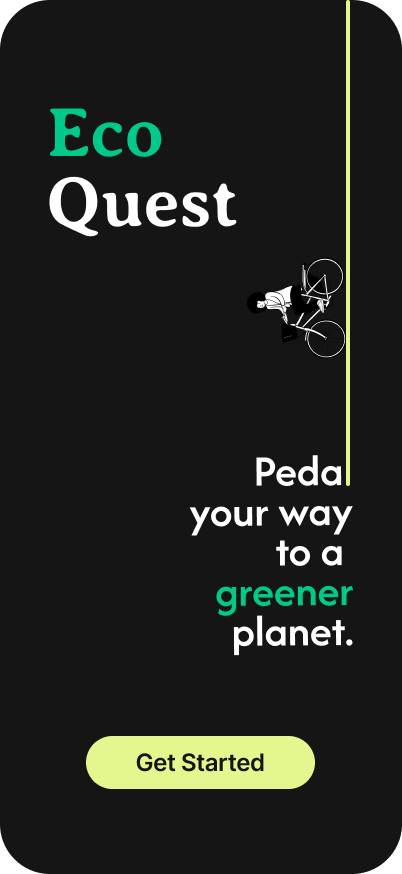
Welcome Screen/Landing Page:
The landing screen has a simple button to get started.Sign Up:
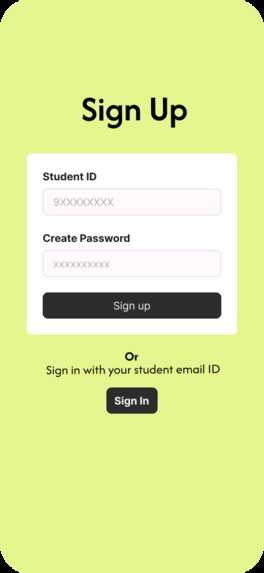
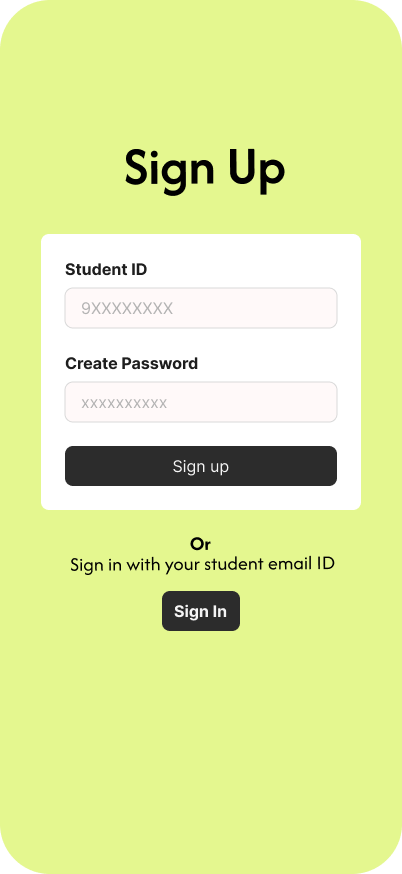
Students can create an account by either:- Logging in using their university email ID, which redirects to the university's authentication page.
- Entering their student ID to create a unique username and password.
- Logging in using their university email ID, which redirects to the university's authentication page.
The secure login ensures only university-affiliated users can access the app.
2. Home Dashboard
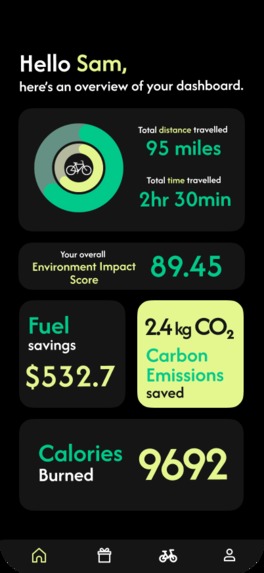
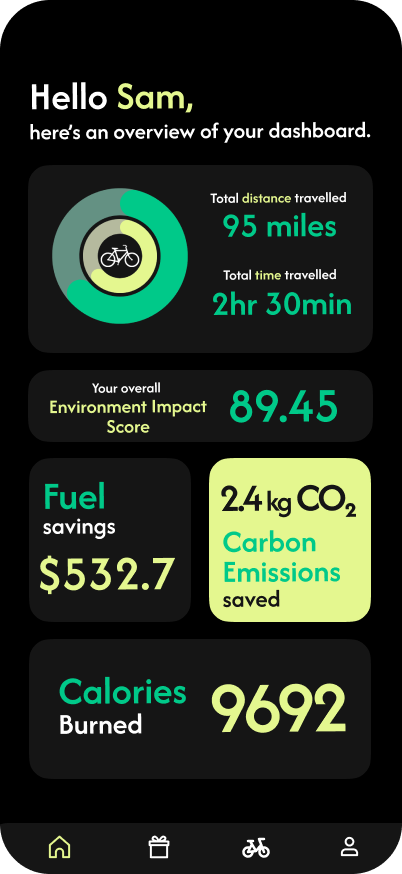
- After logging in, users are taken to the Home Dashboard, which serves as a personalized summary of their eco-friendly transportation activity.
- The dashboard displays key metrics in an easy-to-understand format, including:
- Total Distance Traveled: Tracks cumulative distance the user has biked.
- Total Time Spent: Monitors the cumulative time spent biking.
- Carbon Emissions Saved: Shows the amount of CO₂ avoided by choosing biking over driving.
- Fuel Savings: Calculates the monetary savings compared to driving a car.
- Calories Burned: Tracks health benefits gained from biking.
- Environmental Impact Score (EIS): A weighted score based on all metrics to summarize the user’s overall impact.
- Total Distance Traveled: Tracks cumulative distance the user has biked.
3. Ride Tracking
- The Ride feature allows users to plan and track their rides:
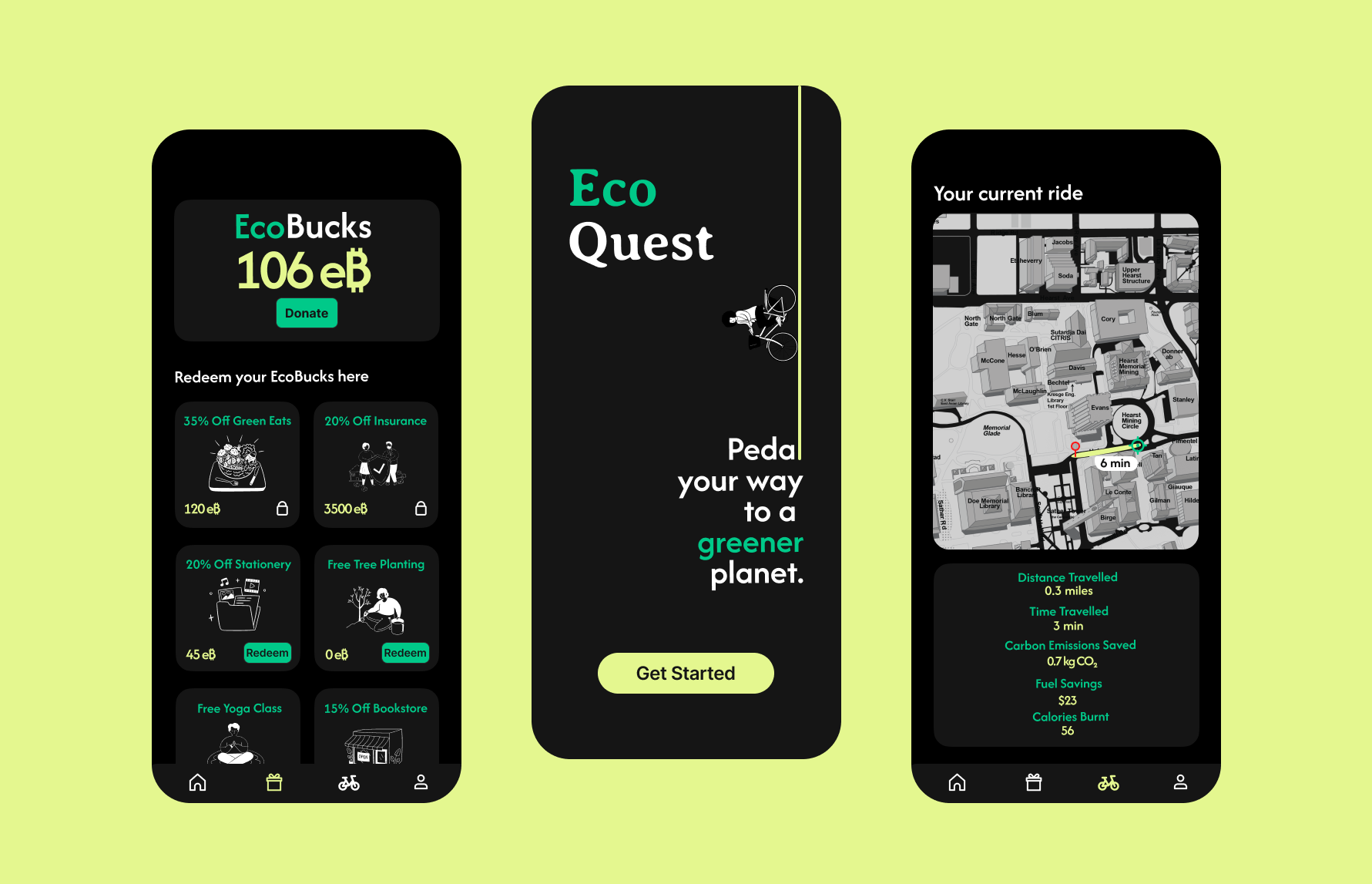
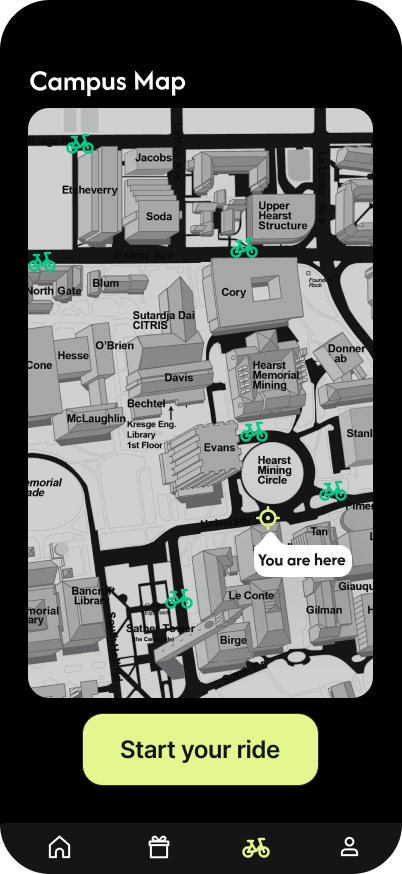
- Campus Map: Users can see a real-time map of the campus, including bike pick-up spots (marked with green bike icons).
- Start Ride:
- After starting a ride, users must scan a QR code on the bike to verify and unlock it.
- Users input any additional details required and start the ride.
- After starting a ride, users must scan a QR code on the bike to verify and unlock it.
- Live Ride Details:
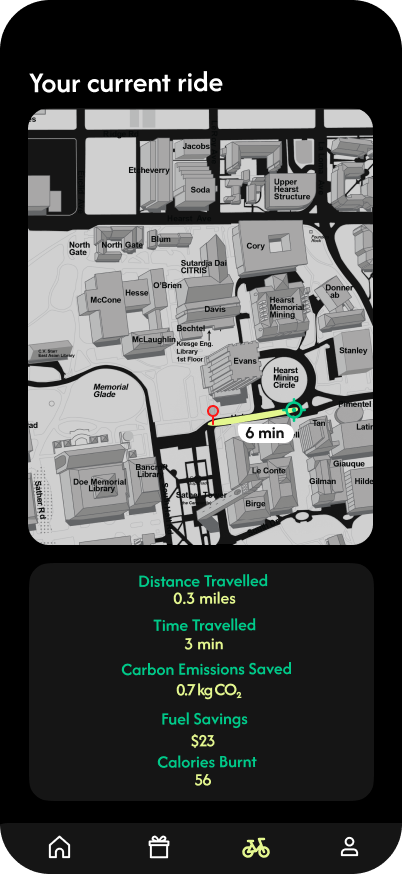
- Once the ride begins, the app dynamically tracks metrics like speed, distance, fuel savings, calories burned, and estimated carbon savings in real-time.
- Once the ride begins, the app dynamically tracks metrics like speed, distance, fuel savings, calories burned, and estimated carbon savings in real-time.
- End Ride:
- Upon completing the ride, users confirm the drop-off location on the map and lock the bike.
- EcoBucks are automatically credited to their wallet based on the ride metrics.
- Upon completing the ride, users confirm the drop-off location on the map and lock the bike.
- Campus Map: Users can see a real-time map of the campus, including bike pick-up spots (marked with green bike icons).
4. EcoBucks Rewards
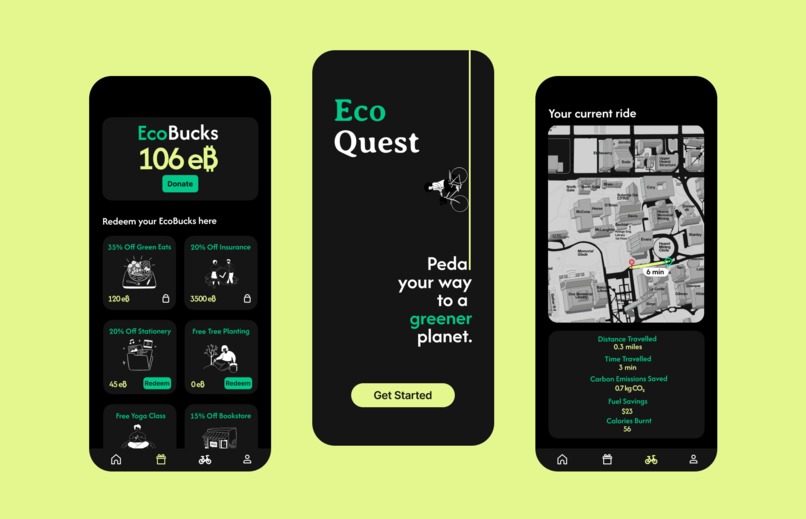
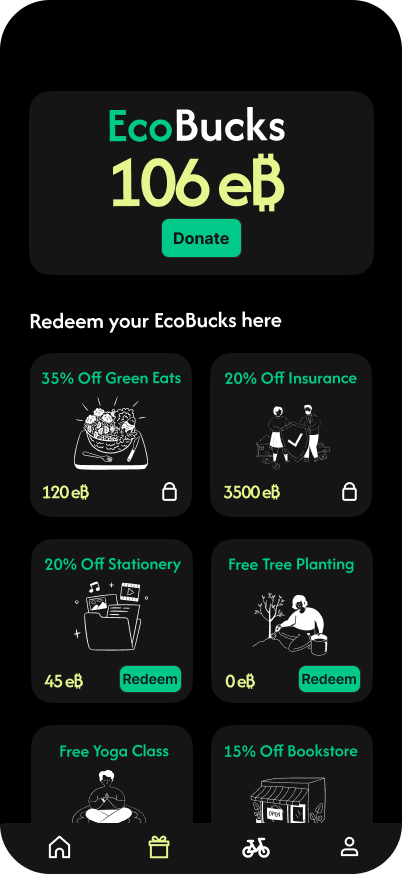
- The Rewards Screen shows users the EcoBucks they’ve earned and provides a list of redemption options.
- The student can choose to alternatively donate their EcoBucks to fund campus sustainability initiatives, such as planting trees or installing solar panels, by clicking the “Donate” button.
How EcoBucks Work:
- EcoBucks are awarded based on the total distance traveled and carbon emissions saved during rides.
- Users can redeem EcoBucks for student-friendly rewards, such as:
- Discounts on university supplies (stationery, textbooks, etc.)
- Offers at campus cafes or restaurants
- Vouchers for fitness classes or campus events
- Discounts on university supplies (stationery, textbooks, etc.)
Each reward option clearly displays the number of EcoBucks required for redemption.
5. Social and Profile Features
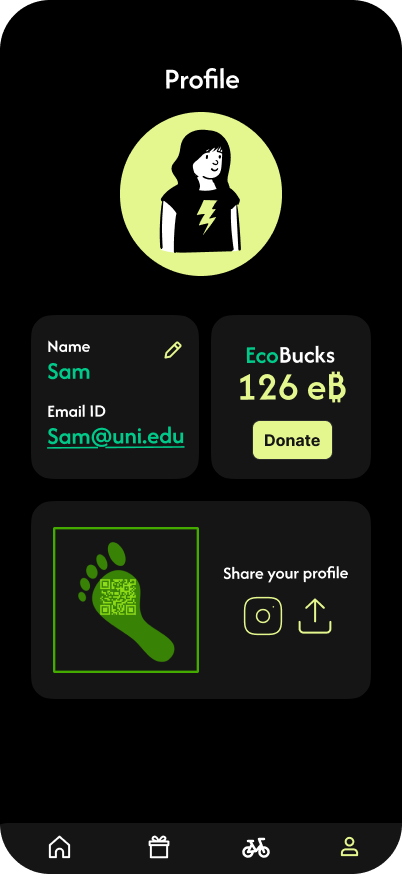
- Profile Page:
- Account Settings: Users can update their personal information, password, and preferences.
- Carbon Footprint Sharing:
- Users receive a unique, personalized profile URL/QR code displaying their environmental achievements (e.g., CO₂ saved, calories burned, and EIS).
- This QR code can be shared on social media platforms to inspire others to join the initiative.
- Users receive a unique, personalized profile URL/QR code displaying their environmental achievements (e.g., CO₂ saved, calories burned, and EIS).
- Account Settings: Users can update their personal information, password, and preferences.
Potential Impact
EcoQuest could significantly reduce campus carbon emissions and serve as a model for other universities. By gamifying sustainability, it encourages students to adopt eco-friendly practices.
Key Estimations and Impact:
Single University:
- Assume a mid-sized university with 20,000 students.
- If 10% actively use EcoQuest, 420 metric tons of CO₂/year could be saved.
- Assume a mid-sized university with 20,000 students.
Global Scale:
- If 10% of 520 million global university students adopt EcoQuest, 10.92 million metric tons of CO₂/year could be saved.
- If 10% of 520 million global university students adopt EcoQuest, 10.92 million metric tons of CO₂/year could be saved.
This is equivalent to:
- Removing 2.3 million cars from the road annually.
- Sequestering carbon via 180 million trees annually.
Other impacts include:
- Fuel Savings: 4.16 billion liters of fuel saved/year.
- Health Benefits: 2.08 trillion calories burned/year.
Technical Implementation
Possible Technology Stack:
- Frontend: React Native for a seamless cross-platform experience.
- Backend: Cloud-based architecture (AWS/GCP) with scalable microservices.
- APIs: Google Maps API for location services, GPS, and QR code scanning for real-time metrics and ride details.
- Database: PostgreSQL for structured data (metrics, users, rewards), Redis for caching, and Amazon S3 for file storage (e.g., QR code data or map assets).
Benefits
- Encourages sustainable habits among students.
- Reduces carbon emissions on campus.
- Promotes physical health through biking.
Future Improvements and Additions
- Leaderboards: Adding leaderboards or challenges (e.g., weekly competitions for most EcoBucks earned) to encourage user engagement.
- Push Notifications: Sending reminders or motivational updates, e.g., "You’re 5km away from earning your next reward!"
- Partnerships: Collaborating with the university or local businesses to expand EcoBucks redemption options.
Conclusion
If EcoQuest is adopted globally by 10% of university students:
- 10.92 million metric tons of CO₂/year could be saved.
- Equivalent to removing 2.3 million cars from roads annually.
- 4.16 billion liters of fuel saved.
While the numbers might seem small compared to global emissions, this initiative could pave the way for a cultural shift toward sustainability, amplified by education and community engagement.
Built With
- figma


Log in or sign up for Devpost to join the conversation.