-
-
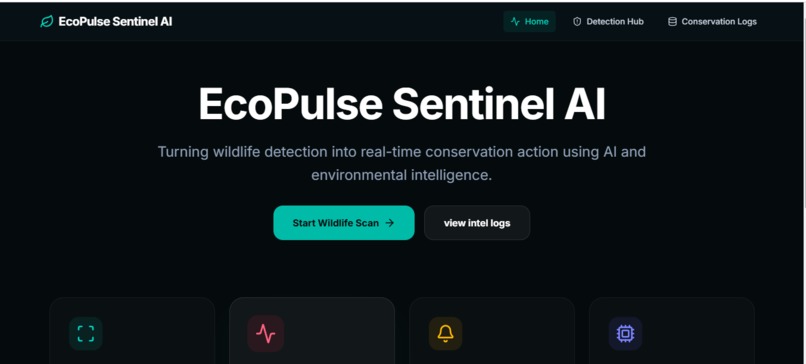
Home
-
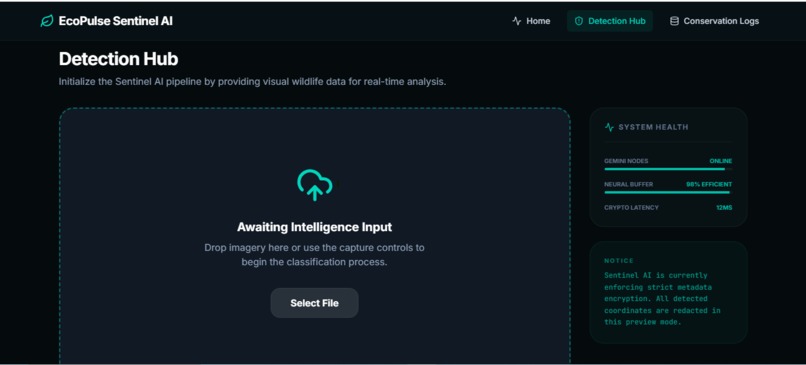
Detection Hub
-
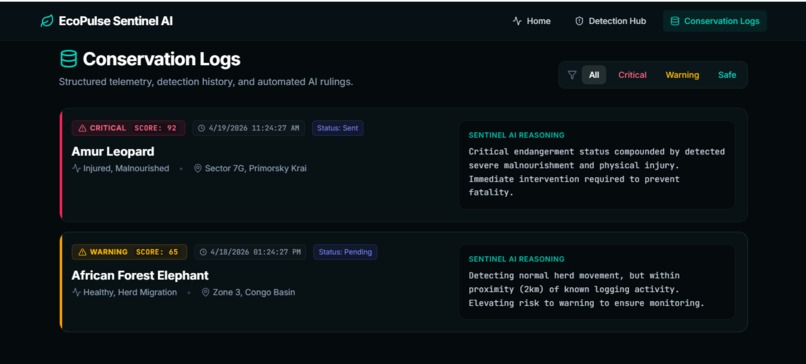
Conservation Logs
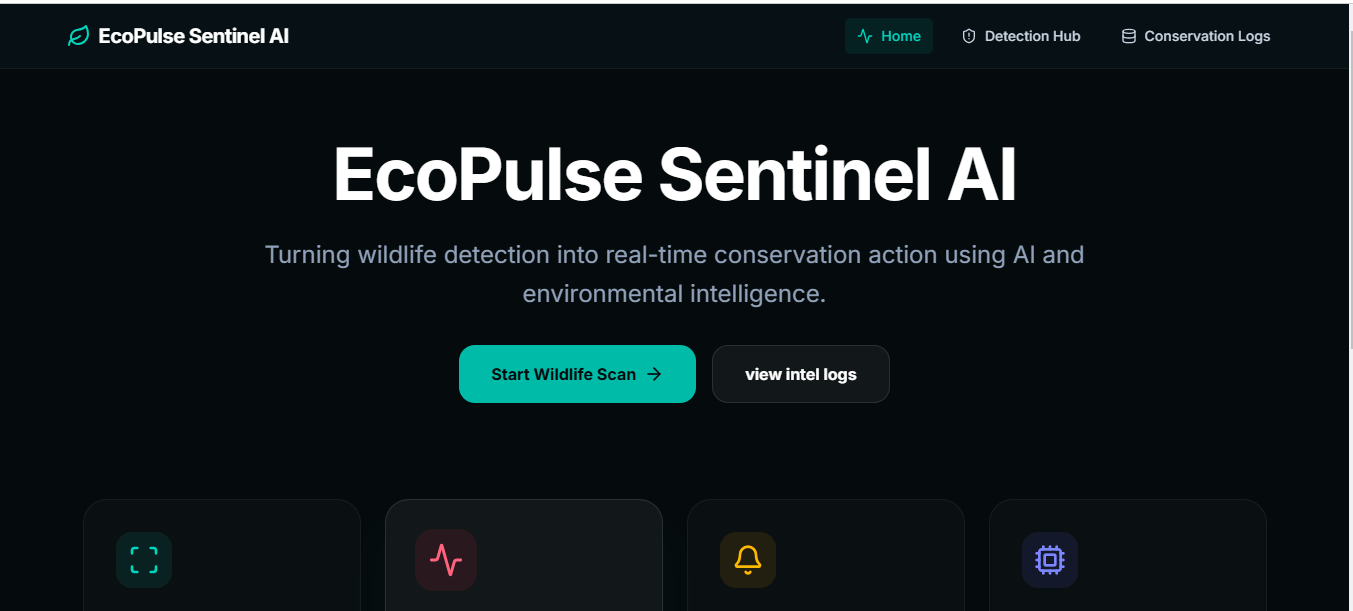
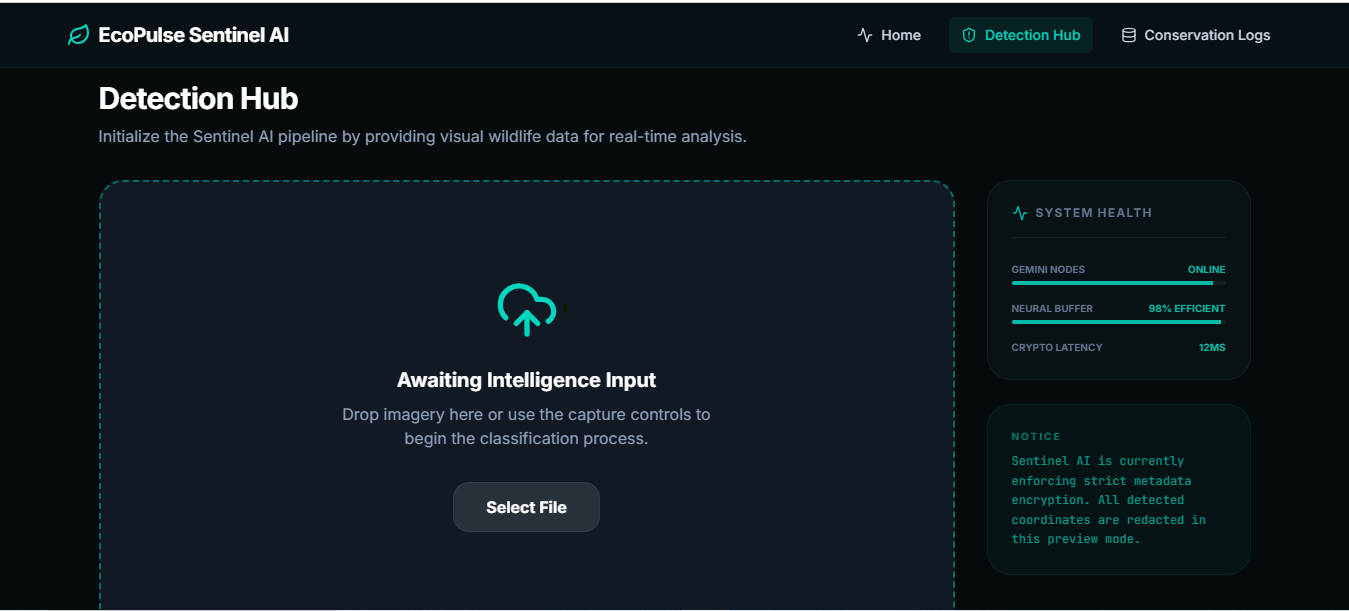
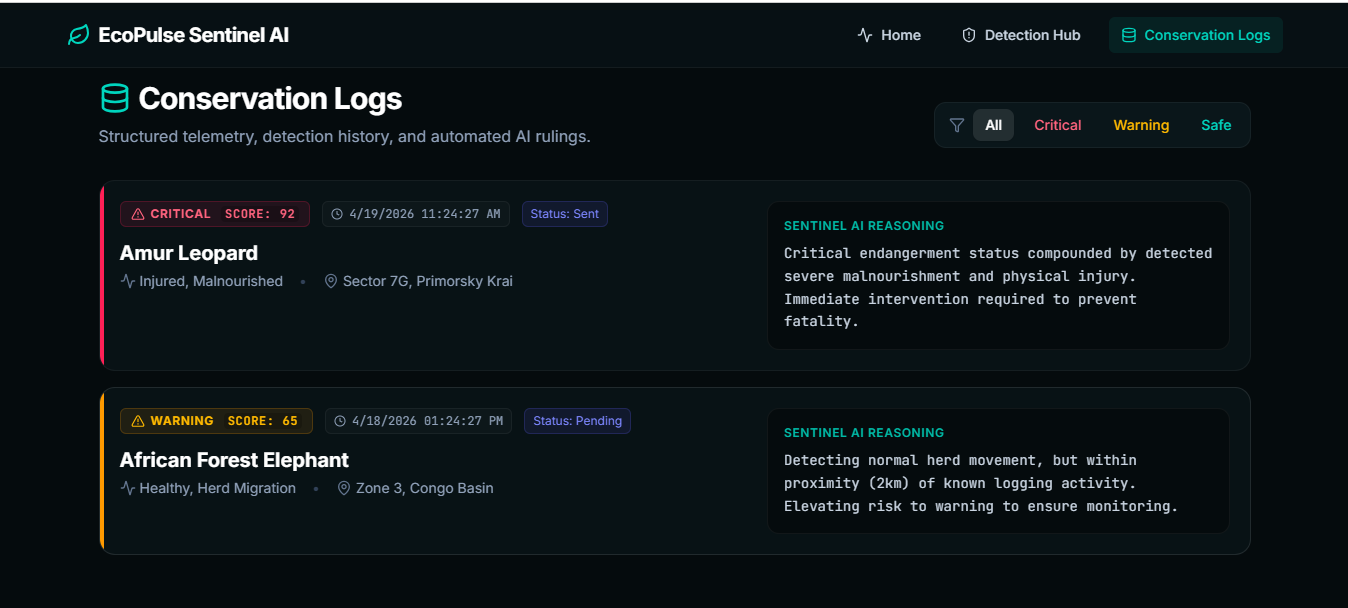
EcoPulse Sentinel AI was inspired by my interest in animals and my curiosity about how technology can help protect them. I wanted to explore how artificial intelligence could be used not just for detection, but to actually support real-world conservation decisions. Even though AI and environmental science seem like different fields, I wanted to combine them into one system that could make a meaningful impact. While building this project, I learned how to design a full web application and simulate an AI pipeline. I worked with concepts from environmental science, such as conservation status, habitat risk, and human impact, and combined them with logic-based decision systems to generate risk scores. I also learned how to structure a system so that user input leads to meaningful and consistent outputs, which is important in real AI applications. I built this project using web development tools, including a frontend interface with multiple pages like the Home dashboard, Detection Hub, and Conservation Logs. The system simulates wildlife detection and uses rule-based logic along with real-world environmental concepts to analyze species and generate alerts. I focused on creating a clean UI and a smooth user flow so that the project could be easily demonstrated. One of the biggest challenges I faced was making the system feel realistic while working within limitations. I had to ensure that the outputs were consistent and meaningful, even though the detection itself is simulated. I also faced challenges with deployment and integrating AI features, which required troubleshooting and adjusting my approach. Overall, this project helped me understand how AI systems can be designed to support environmental awareness and decision-making. It showed me that technology can play an important role in solving real-world problems, especially in conservation.
Built With
- api
- database
- typescript

Log in or sign up for Devpost to join the conversation.