-
-
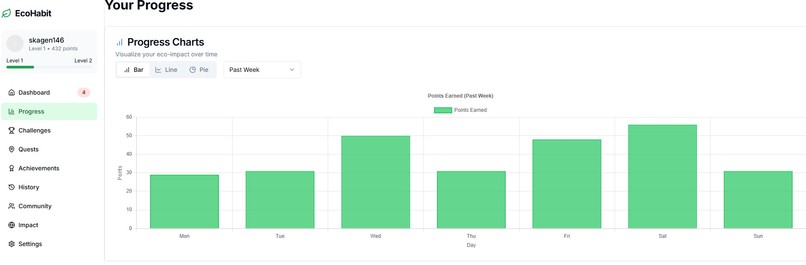
dashboard graph
-
-
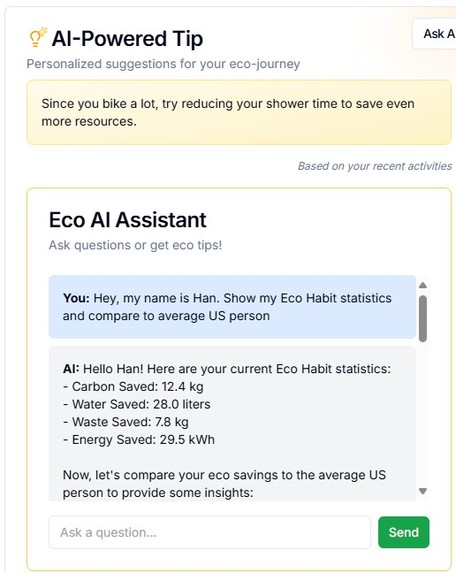
Eco AI
-
-
EcoHabit
Inspiration
The inspiration for EcoHabit came from observing the disconnect between people's desire to live more sustainably and the lack of tools to track and visualize their environmental impact. We noticed that while many people want to make eco-friendly choices, they often lack motivation or don't see the tangible results of their actions. The climate crisis demands individual action alongside systemic change, and we wanted to create a tool that empowers individuals to see how their small daily choices add up to significant environmental impact over time.
What it does
EcoHabit is a gamified sustainability tracker that helps users build eco-friendly habits by:
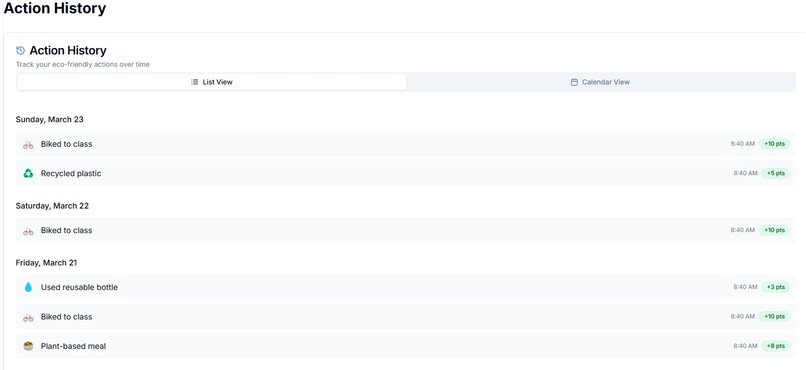
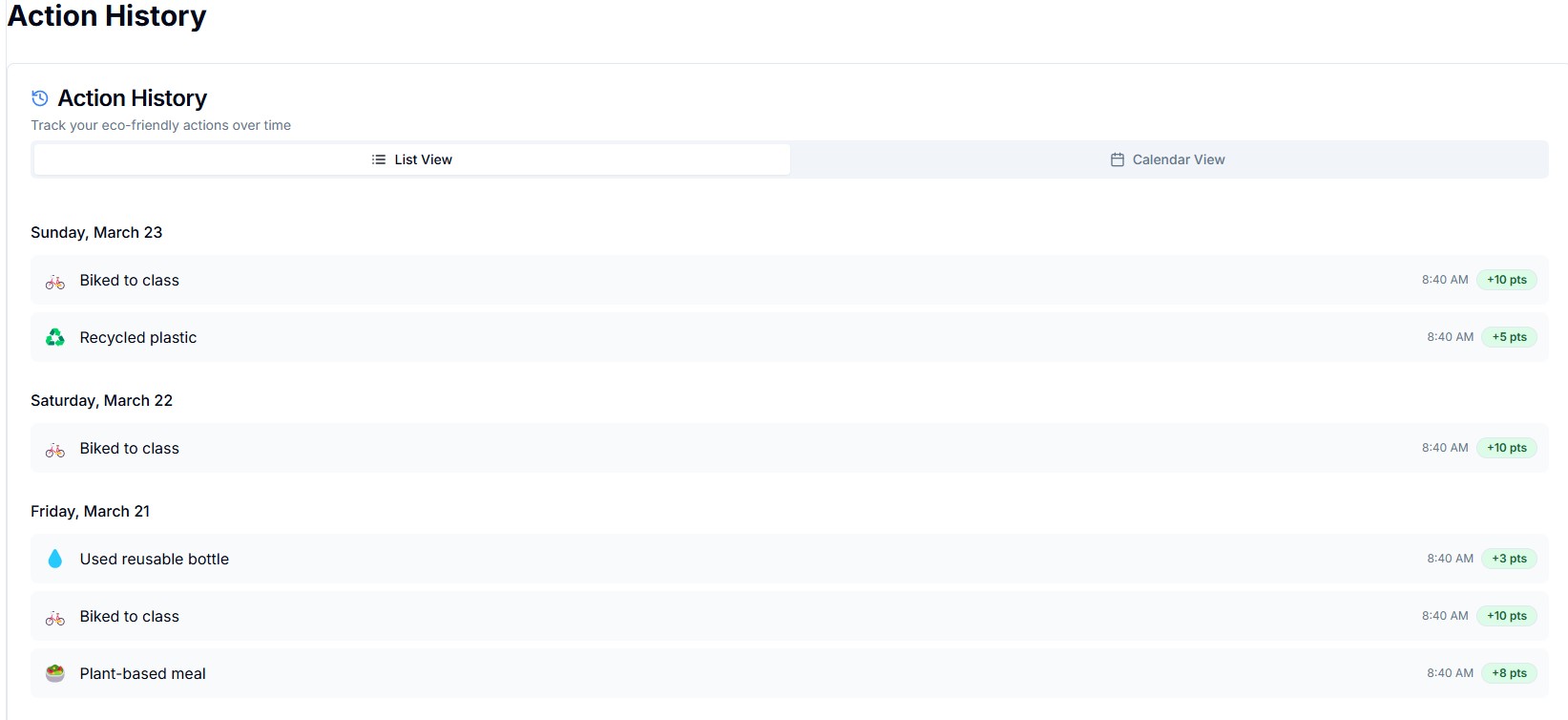
- Tracking daily eco-actions like recycling, using reusable bottles, biking instead of driving, and conserving energy
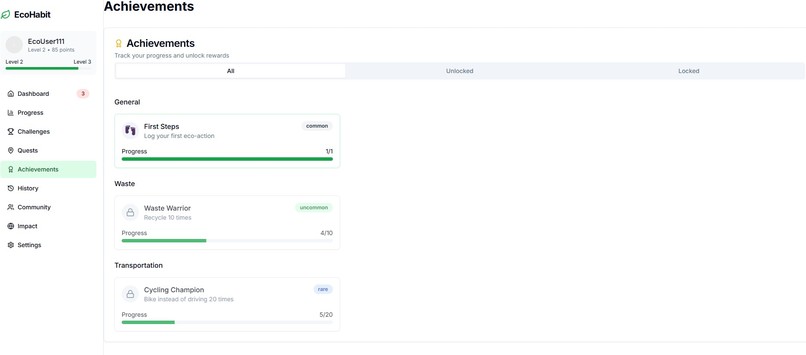
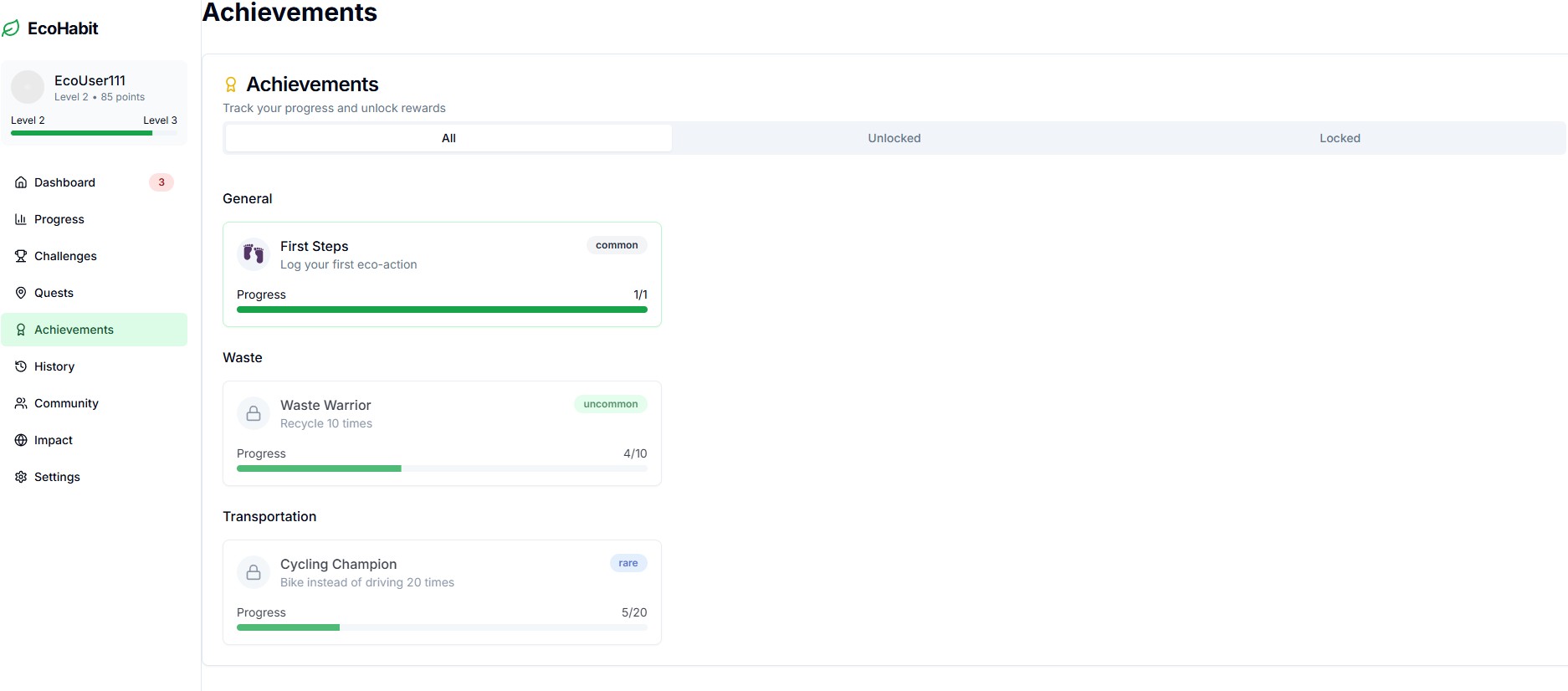
- Awarding points and levels for completed actions to create a sense of achievement
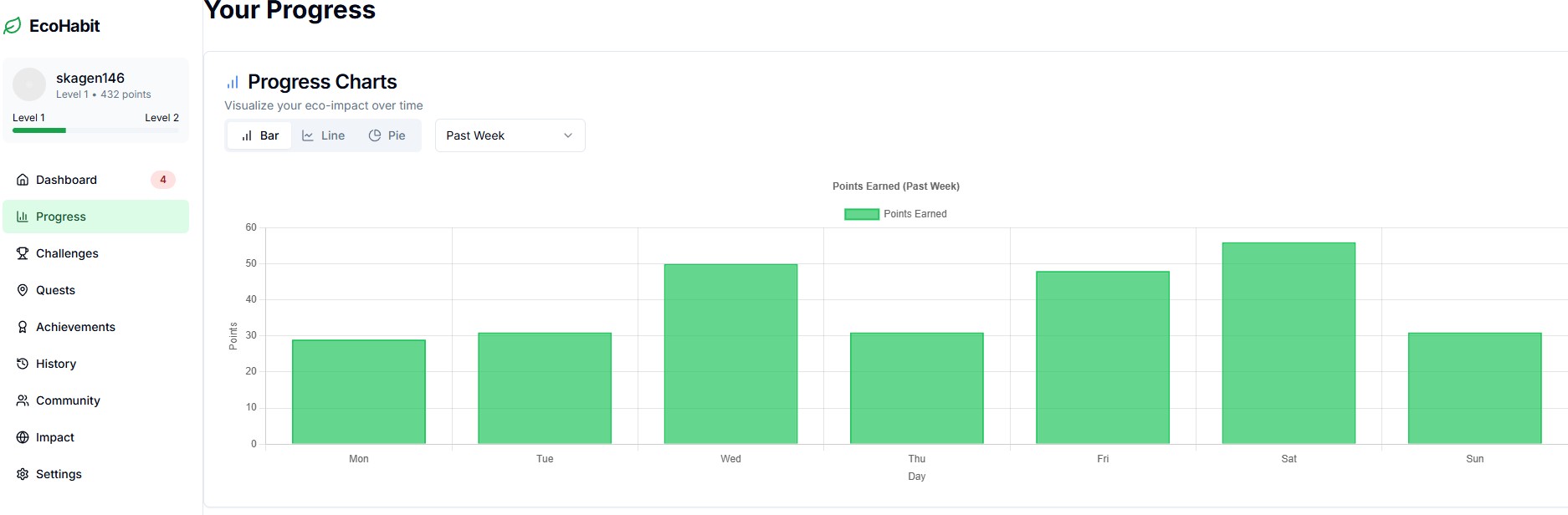
- Visualizing environmental impact metrics (carbon saved, water conserved, waste reduced)
- Maintaining streaks to encourage consistent eco-friendly behavior
- Offering challenges and quests with time-limited goals and rewards
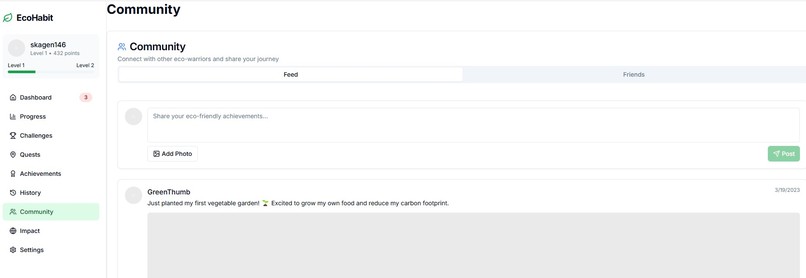
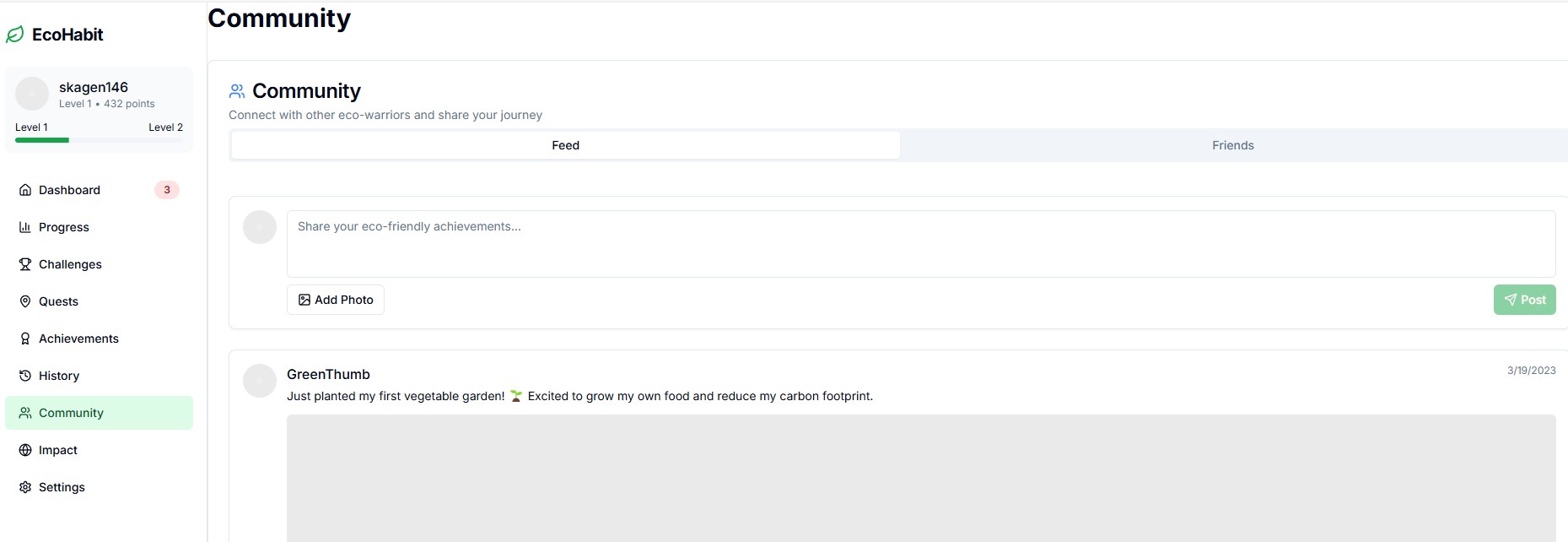
- Providing a community space to connect with like-minded individuals
- Generating personalized tips based on user activity patterns
- Creating beautiful visualizations of global impact
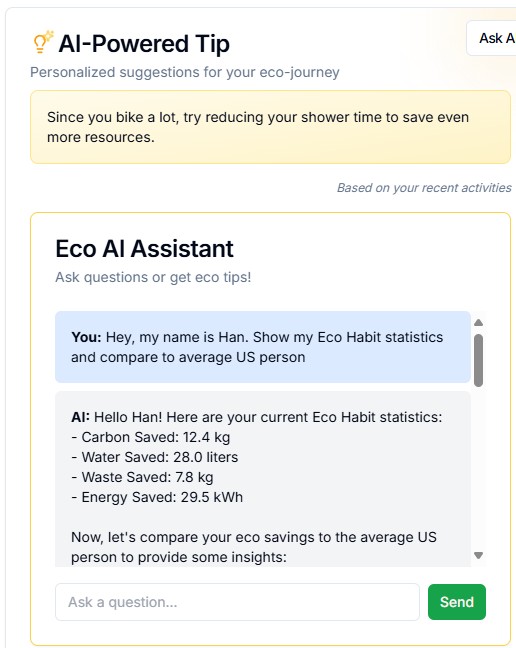
- Provides Conversational AI powered by GPT-3.5-Turbo Large Language Model (LLM) that can interact with the user's data from Supabase DB.
🧠 AI Integration
EcoHabit includes an AI-powered assistant that enhances user interaction and delivers smart insights by:
Providing personalized eco-tips based on user activity and logged actions
Analyzing environmental behavior patterns to offer encouragement and identify areas for improvement
Answering sustainability-related questions using natural language processing
Offering real-time suggestions during challenges and quests
Summarizing the user’s impact using environmental data (e.g., carbon, water, energy, and waste saved)
The AI chatbot uses OpenAI’s GPT-3.5 model via a FastAPI backend to process user queries and respond conversationally. It also pulls aggregate user data from Supabase (like total carbon/water saved) to contextualize responses and give meaningful insights, turning raw metrics into motivating feedback.
By integrating AI, EcoHabit transforms static data into interactive and educational dialogue, increasing user engagement and environmental awareness.
How we built it
We built EcoHabit using a modern tech stack focused on performance, scalability, and user experience:
- Frontend: Next.js 14 with the App Router for server-side rendering and routing, React 19 for UI components, and TypeScript for type safety
- Styling: Tailwind CSS for utility-first styling with shadcn/ui components for a consistent design system
- State Management: Zustand for global state with persistent storage and synchronization
- Animations: Framer Motion for smooth, engaging animations and transitions
- Visualizations: Recharts for data visualization and Three.js for the 3D globe visualization
- Backend: Supabase for authentication, PostgreSQL database, and real-time features
- Deployment: Vercel for seamless deployment and hosting
We implemented a responsive design that works across all devices and focused on creating an engaging user experience through gamification elements like points, levels, and achievements.
Challenges we ran into
Building EcoHabit wasn't without its hurdles:
- Data Synchronization: Ensuring seamless synchronization between local storage and the Supabase database, especially for offline usage, proved challenging. We had to implement a robust syncing mechanism with conflict resolution.
- Authentication Complexity: Implementing a secure yet user-friendly authentication system with features like email verification and password reset required careful planning and testing.
- Environmental Impact Calculations: Determining accurate metrics for environmental impact (like CO2 saved) from various actions required extensive research to ensure our calculations were scientifically sound.
- Performance Optimization: Balancing rich animations and visualizations with performance, especially on mobile devices, required significant optimization work.
- User Engagement Design: Creating a gamification system that was motivating without feeling trivial or overly complex took several iterations of user testing and refinement.
Accomplishments that we're proud of
Despite the challenges, we achieved several significant milestones:
- Seamless Online/Offline Experience: Users can log actions even without internet connectivity, with data syncing automatically when connection is restored.
- Engaging Visualization System: Our impact dashboard transforms abstract numbers into compelling visual representations that help users understand their environmental impact.
- Sophisticated Gamification: The points, levels, challenges, and achievements create a motivating experience that encourages consistent eco-friendly behavior.
- Community Features: We successfully implemented features that connect users while maintaining privacy and security.
- Accessibility: We ensured the application is accessible to users with disabilities, following WCAG guidelines.
What we learned
This project was a tremendous learning experience for our team:
- Environmental Science: We deepened our understanding of how individual actions translate to environmental impact metrics.
- Behavioral Psychology: We learned about habit formation and how gamification can drive sustainable behavior change.
- Technical Skills: We improved our proficiency with Next.js, Supabase, and state management in complex applications.
- User Experience Design: We gained insights into creating engaging, intuitive interfaces that motivate users.
- Data Visualization: We learned how to transform complex data into meaningful, accessible visualizations.
What's next for EcoHabit
We have ambitious plans for the future of EcoHabit:
- Mobile App: Developing native mobile applications for iOS and Android to improve the user experience and enable push notifications.
- Smart Device Integration: Connecting with smart home devices to automatically track certain eco-actions like energy usage.
- AI-Powered Recommendations: Implementing machine learning to provide personalized suggestions based on user behavior patterns.
- Community Challenges: Enabling organizations and communities to create group challenges for collective impact.
- Carbon Offsetting: Partnering with verified carbon offset projects to allow users to directly contribute to environmental initiatives.
- Educational Content: Expanding our library of eco-tips with in-depth articles and resources about sustainable living.
- Global Impact Visualization: Enhancing our global impact visualization to show collective user actions in real-time.
By continuing to develop EcoHabit, we aim to create a powerful tool that not only helps individuals track their eco-friendly actions but also fosters a global community committed to environmental sustainability.
Tools and Technologies Used in EcoHabit
Frontend Framework and Core
- Next.js 14: React framework with App Router for server-side rendering, routing, and API routes
- React 19: UI component library for building the user interface
- TypeScript: Strongly typed programming language that builds on JavaScript
Styling and UI
- Tailwind CSS: Utility-first CSS framework for rapid UI development
- shadcn/ui: Reusable UI component collection built on Radix UI
- Radix UI: Headless UI component primitives (via shadcn)
- Lucide React: Icon library with over 1000 customizable icons
- Framer Motion: Animation library for React
- next-themes: Theme management for Next.js (dark/light mode)
- class-variance-authority: Utility for creating variant components
- tailwind-merge: Utility for merging Tailwind CSS classes
- tailwindcss-animate: Animation utilities for Tailwind CSS
- clsx: Utility for conditionally joining class names
State Management
- Zustand: Lightweight state management library
- zustand/middleware/persist: Persistence layer for Zustand
Form Handling
- React Hook Form: Form state management and validation
- Zod: TypeScript-first schema validation
- @hookform/resolvers: Connects React Hook Form with Zod
Data Visualization
- Recharts: Composable charting library built on React components
- Three.js: 3D library for creating the interactive globe visualization
- Chart.js: Flexible charting library (used with react-chartjs-2)
- react-chartjs-2: React wrapper for Chart.js
Backend and Database
Supabase: Backend-as-a-Service platform providing:
PostgreSQL Database: Relational database for data storage
Authentication: User authentication and management
Row Level Security (RLS): Fine-grained access control
Storage: File storage solution
Realtime: Real-time data subscriptions
Edge Functions: Serverless functions
UI Components and Interactions
- cmdk: Command menu component
- date-fns: Date utility library
- react-day-picker: Flexible date picker component
- embla-carousel-react: Carousel/slider component
- input-otp: One-time password input component
- react-resizable-panels: Resizable panel components
- vaul: Drawer component for React
- sonner: Toast notification component
- canvas-confetti: Confetti animation for celebrations
Development Tools
- ESLint: JavaScript and TypeScript linter
- Prettier: Code formatter
- PostCSS: CSS transformation tool
- Autoprefixer: Adds vendor prefixes to CSS
- TypeScript Compiler: Compiles TypeScript to JavaScript
- npm/yarn: Package managers
Deployment and Hosting
- Vercel: Hosting platform optimized for Next.js
- GitHub: Version control and code repository
- Vercel Analytics: User analytics and performance monitoring
Testing Tools
- Chrome DevTools: Browser-based debugging
- React DevTools: React component inspection
- Next.js DevTools: Next.js specific debugging
Design Tools
- Figma: UI/UX design and prototyping
- Unsplash: Stock photography for placeholder images
Authentication and Security
- @supabase/supabase-js: Supabase JavaScript client
- JWT (JSON Web Tokens): Used by Supabase for authentication
- Middleware: Next.js middleware for route protection
Performance Optimization
- Next.js Image Optimization: Automatic image optimization
- Dynamic Imports: Code splitting for better performance
- Incremental Static Regeneration (ISR): Updating static content
Responsive Design
- CSS Media Queries: For responsive layouts
- Flexbox and Grid: CSS layout systems
- Custom React hooks: For responsive behavior (e.g., useMediaQuery)
Animation and Interactive Elements
- Framer Motion: Animation library
- Three.js: 3D visualizations
- CSS Transitions: Simple UI transitions
- Intersection Observer API: For scroll-based animations
Accessibility
- ARIA attributes: For improved accessibility
- Keyboard navigation: Support for keyboard users
- Focus management: Proper focus handling for modals and dialogs
- Color contrast: WCAG compliant color schemes
Environment and Configuration
- dotenv: Environment variable management
- next.config.js: Next.js configuration
- tailwind.config.js: Tailwind CSS configuration
- tsconfig.json: TypeScript configuration
Data Fetching and API
- fetch API: Native browser API for data fetching
- SWR: React hooks for data fetching (used in some components)
- Next.js API Routes: Serverless functions for API endpoints
Internationalization
- Basic i18n support: Through user settings for language preference
Offline Support
- localStorage: Browser storage for offline data
- Custom sync mechanism: For syncing offline actions with the database


Log in or sign up for Devpost to join the conversation.