-
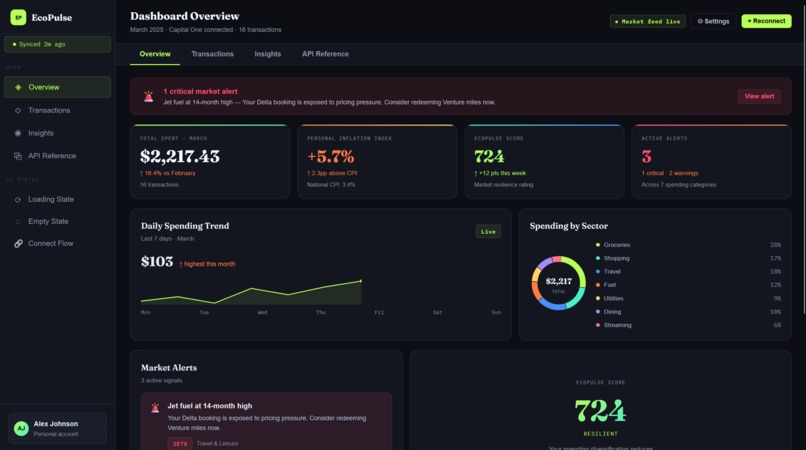
Home Page
-
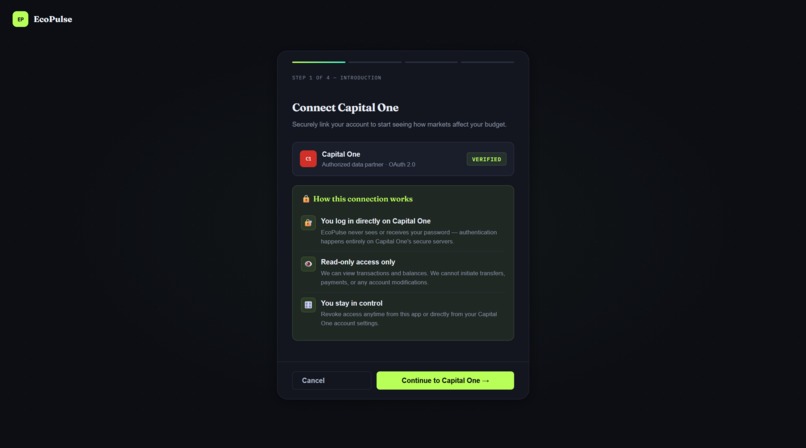
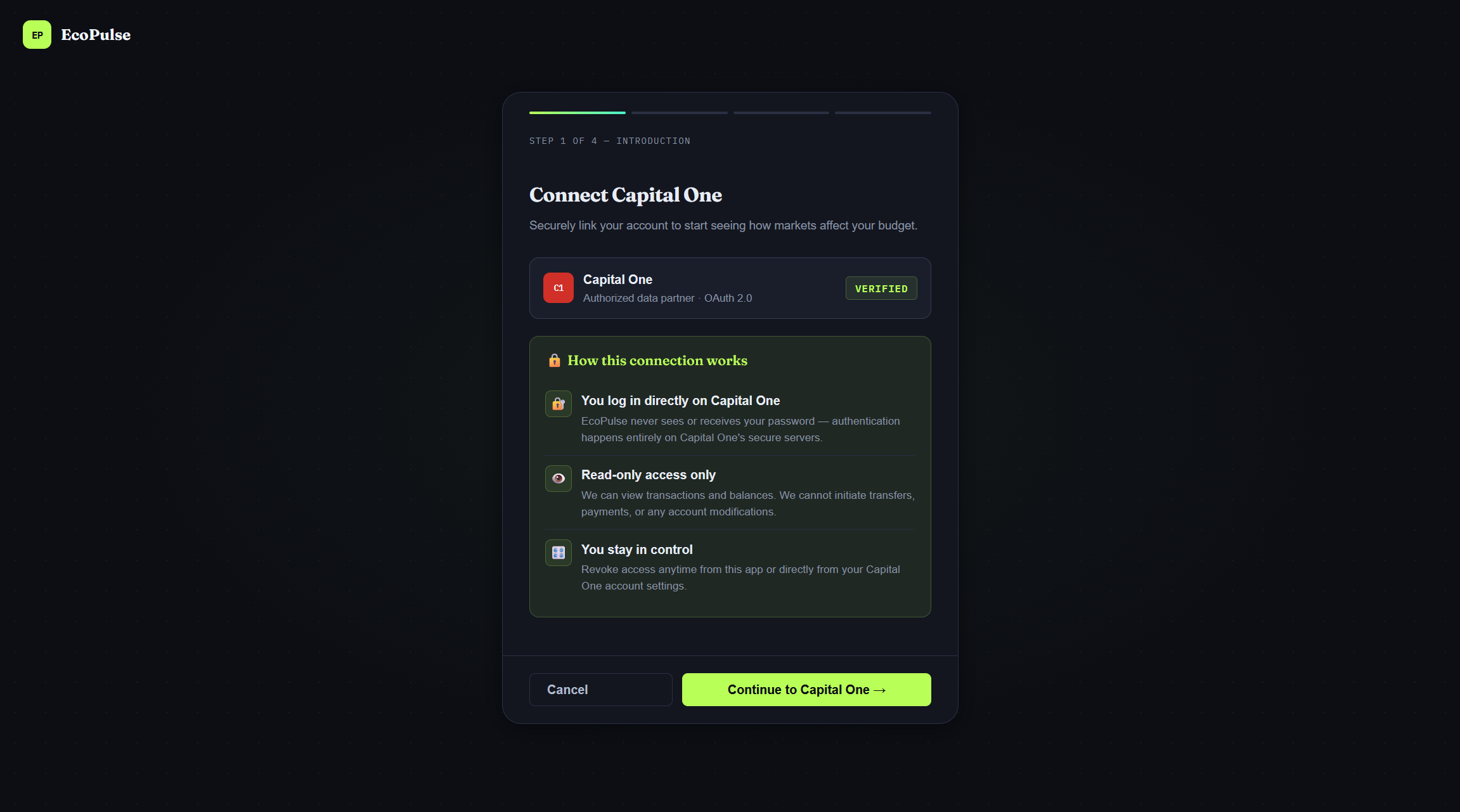
Login Page
-
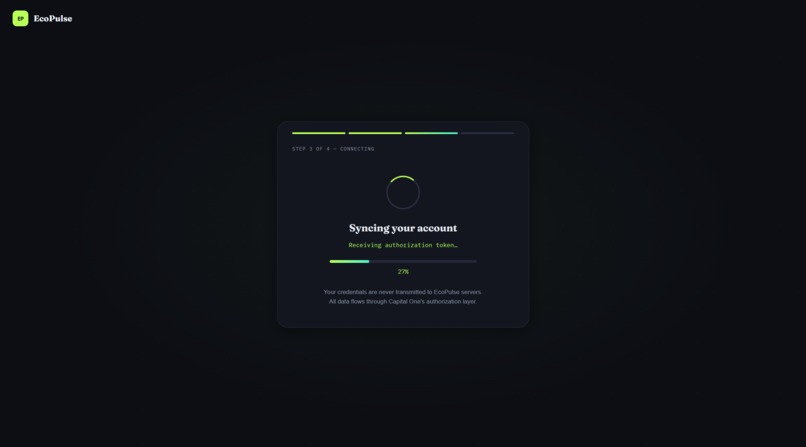
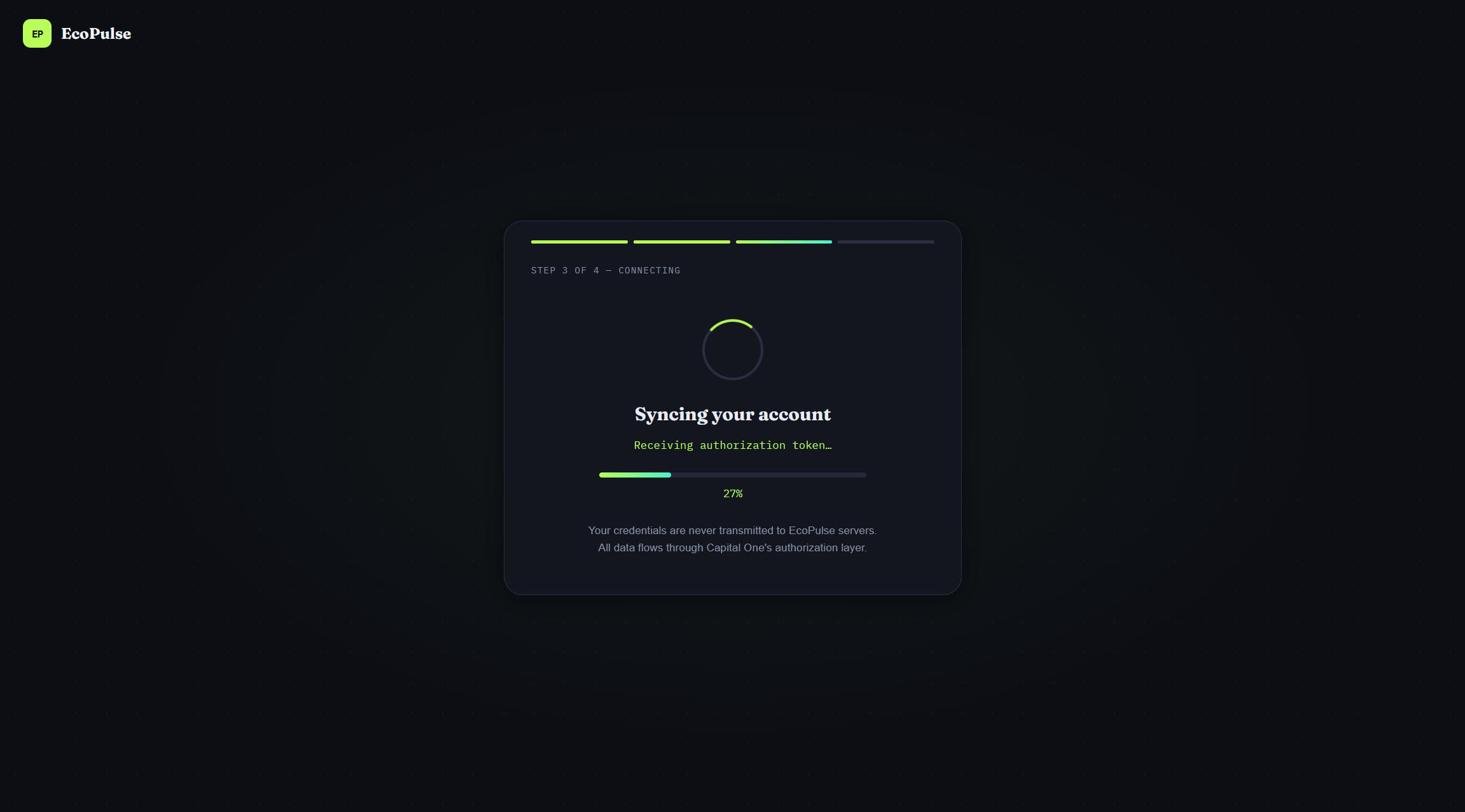
Verifying
-
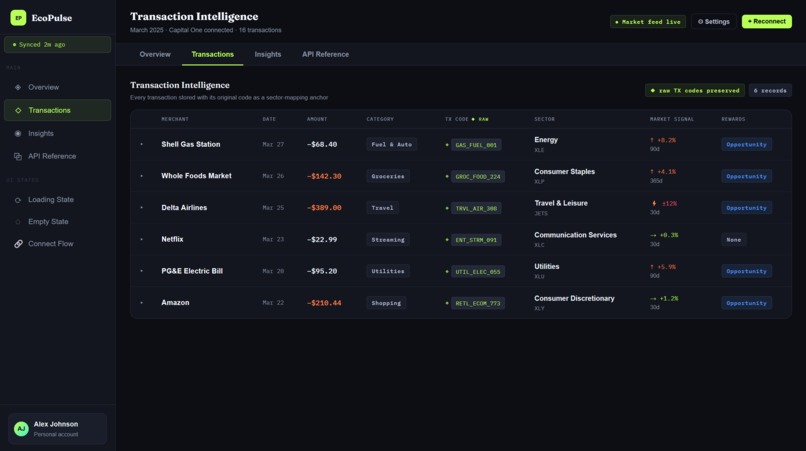
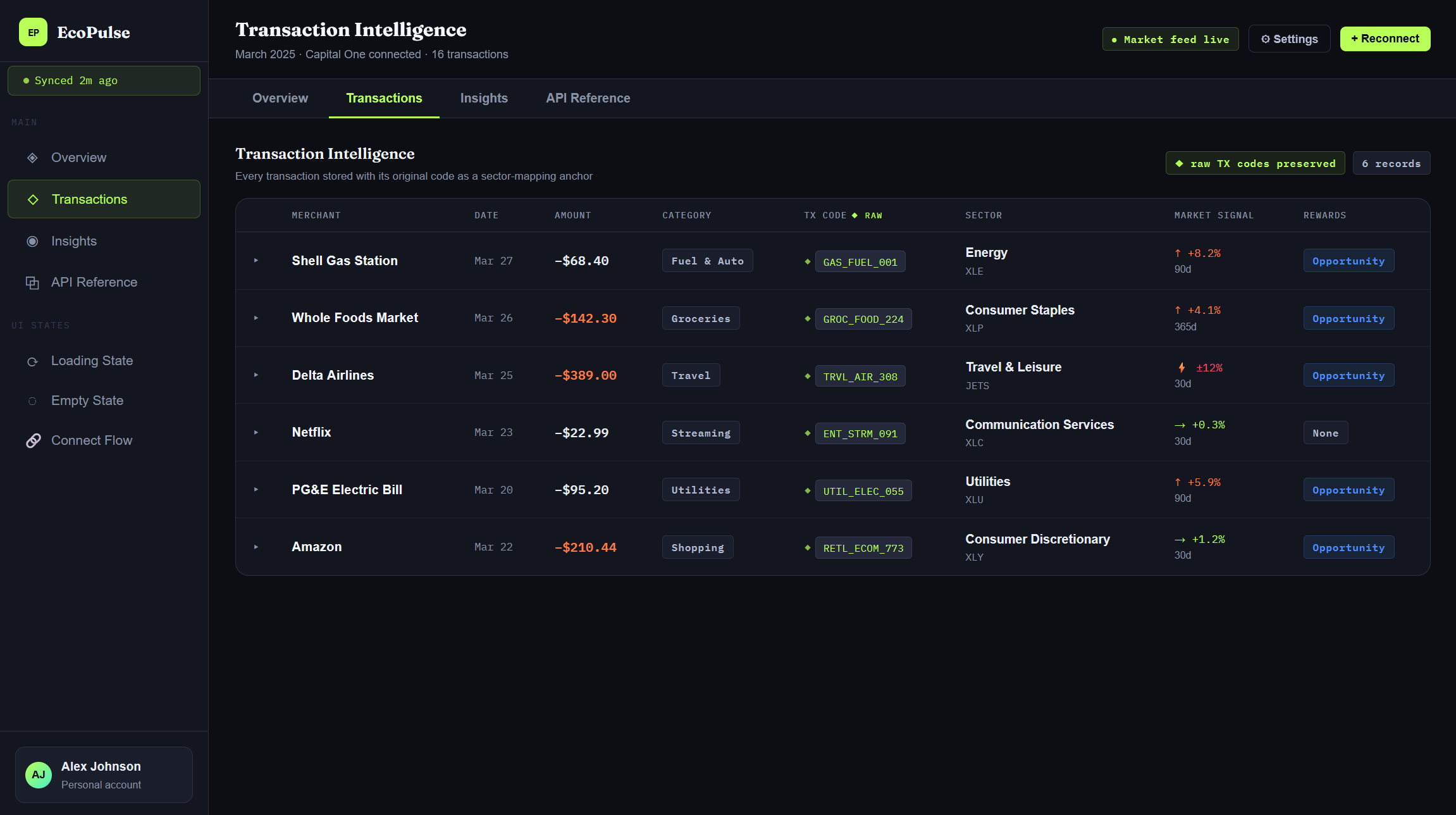
Transaction Tab
-
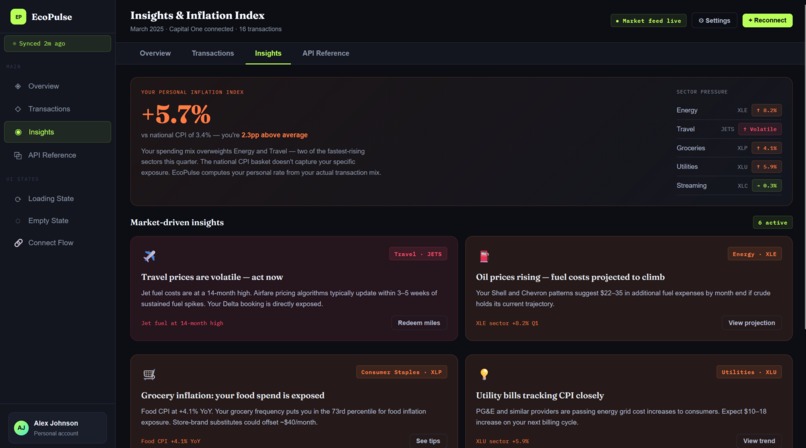
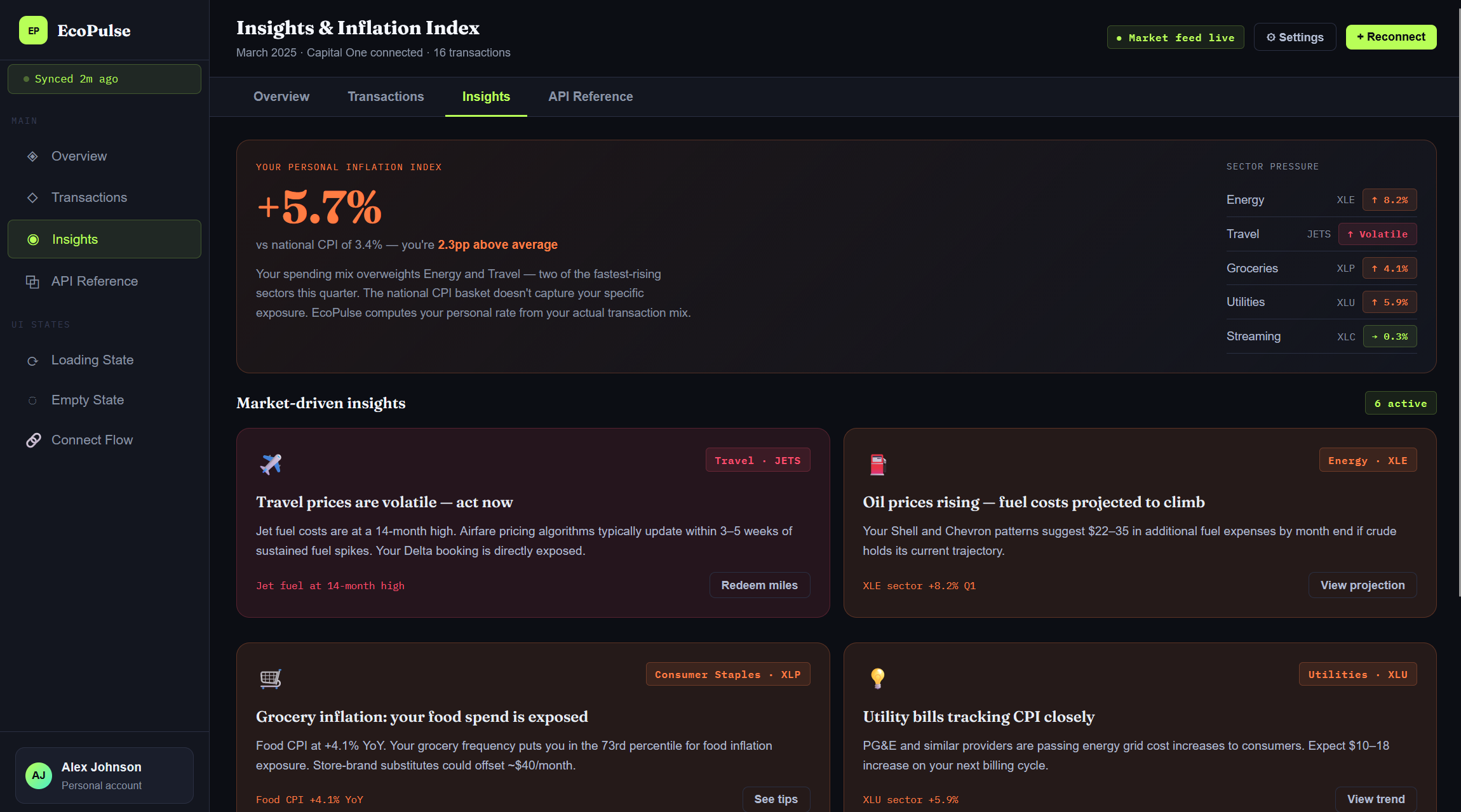
Insight Tab
Inspiration
We wanted to answer the "WHY" question behind personal finance. By integrating the Capital One Nessie and Bloomberg APIs, we aimed to transform static bank statements into a dynamic story about how our spending connects to the global economy.
What it does
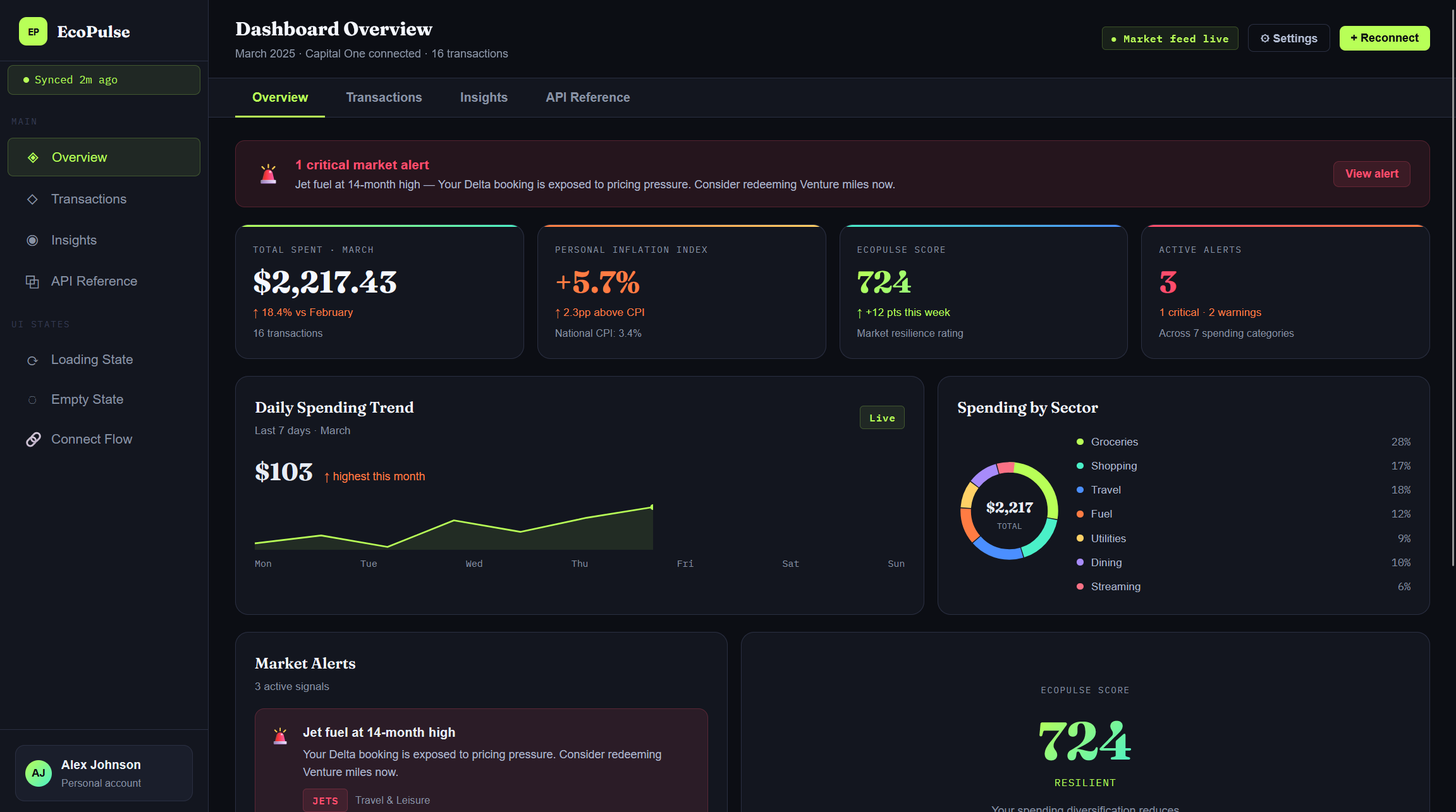
Functionality: EcoPulse is a fintech dashboard that maps everyday purchases to real-time market sectors and ETFs. It calculates a live "EcoPulseScore" to show your market exposure.
How we built it
The Tech Stack: Frontend: Built with a dynamic UI using Chart.js for data visualization. Backend: Powered by a Node.js/Express server, our first experience with server-side coding. Database: Managed via MongoDB Atlas for a flexible, document-based data store.
Challenges we ran into
Our biggest hurdle was the Backend-to-Database pipeline. As beginners in backend development, we spent significant time making MongoDB work seamlessly with our Express routes and ensuring that data correctly "flowed" to the frontend without crashing the UI.
Accomplishments that we're proud of
Successfully orchestrating a multi-API environment. Integrating the Capital One Nessie API for transaction data alongside AlphaVantage for market signals while managing a live NoSQL database was a massive milestone for us.
What we learned
We realized we should have focused more on Data Modeling (the "valuables" in our MongoDB documents) at the start of the project. Better planning of our data structure would have made querying and frontend integration much smoother.
What's next for EcoPulse
We plan to build a Purchase Validation Engine. This feature will tell you if a purchase was "worth it" based on current market volatility, helping users make smarter decisions not just in trading, but in their everyday lives.
Built With
- alphavantage
- axios
- capital-one-nessie
- dotenv
- html
- javascript
- mongodb-atlas
- node.js
- react
- restful-api
- tailwind-css

Log in or sign up for Devpost to join the conversation.