-
-
Command Center
-
Command Center
-
Command Center
-
Command Center
-
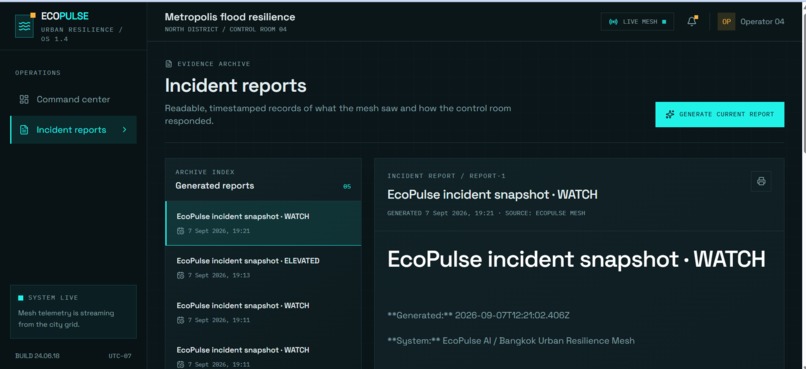
Incident Reports
Inspiration I wanted to build an intelligent, responsive platform to tackle critical urban environmental challenges like flood risks and heat stress, bridging the gap between raw IoT data and actionable insights.
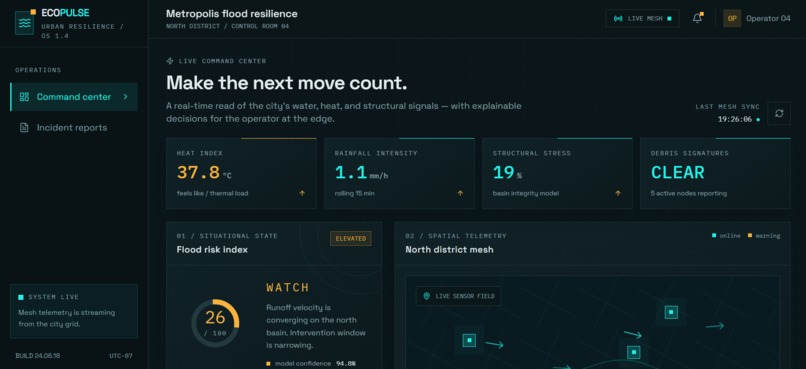
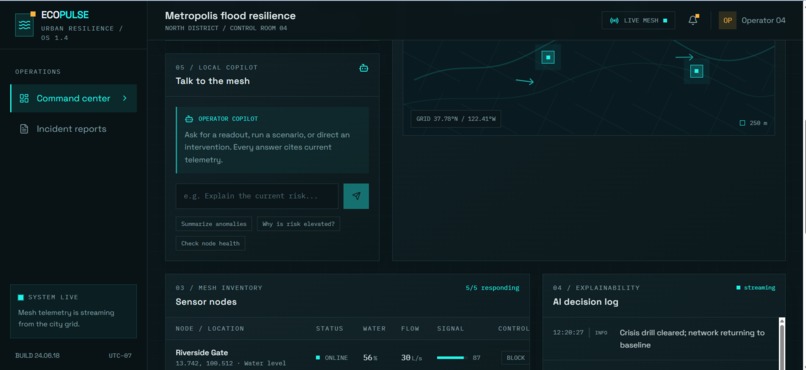
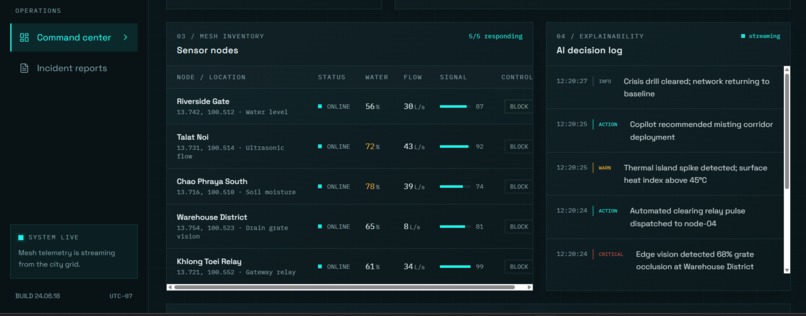
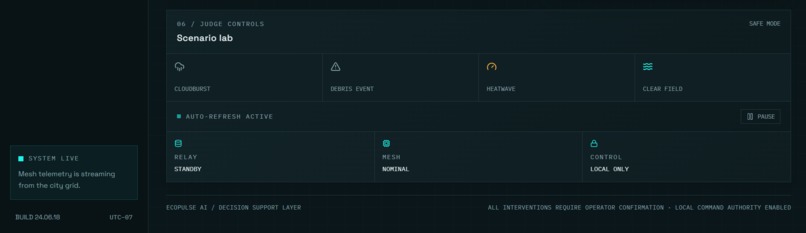
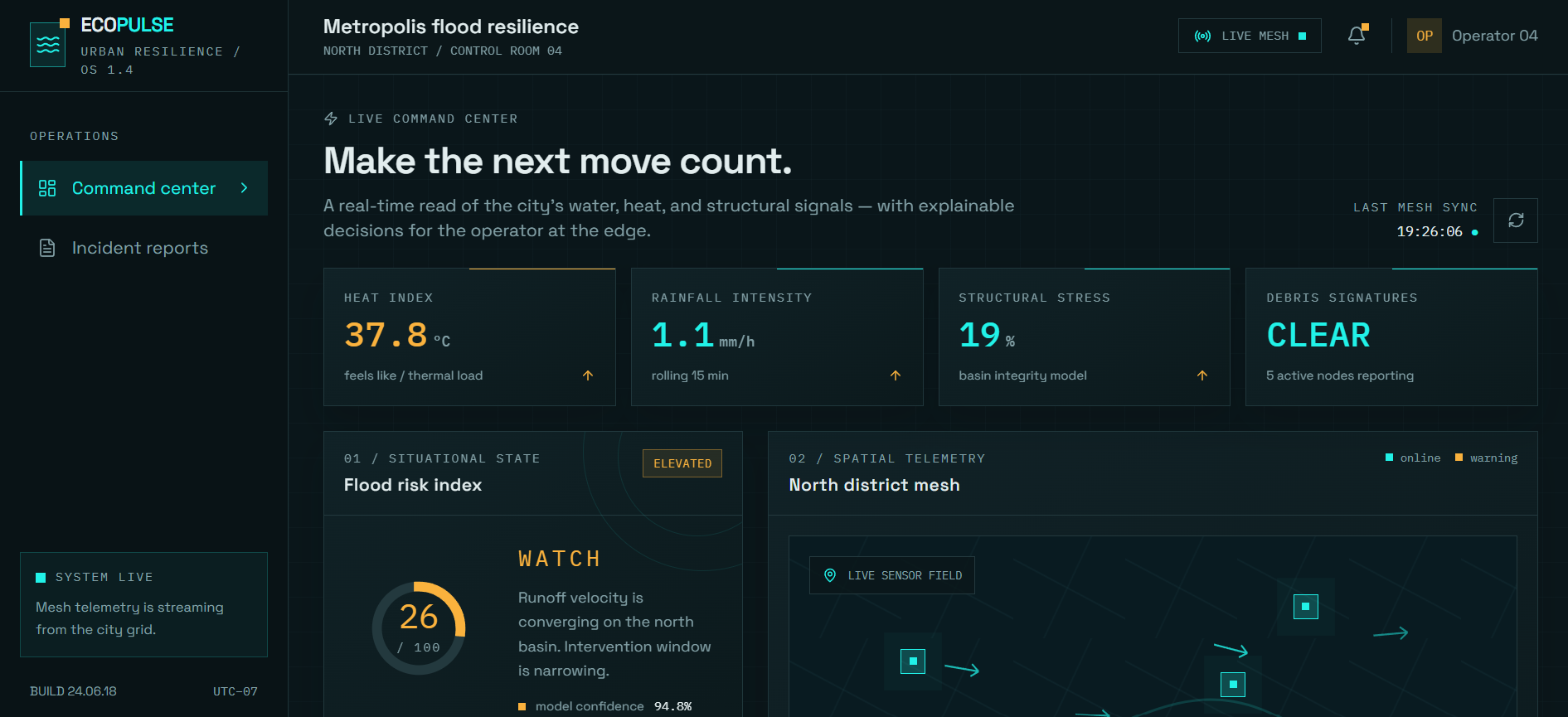
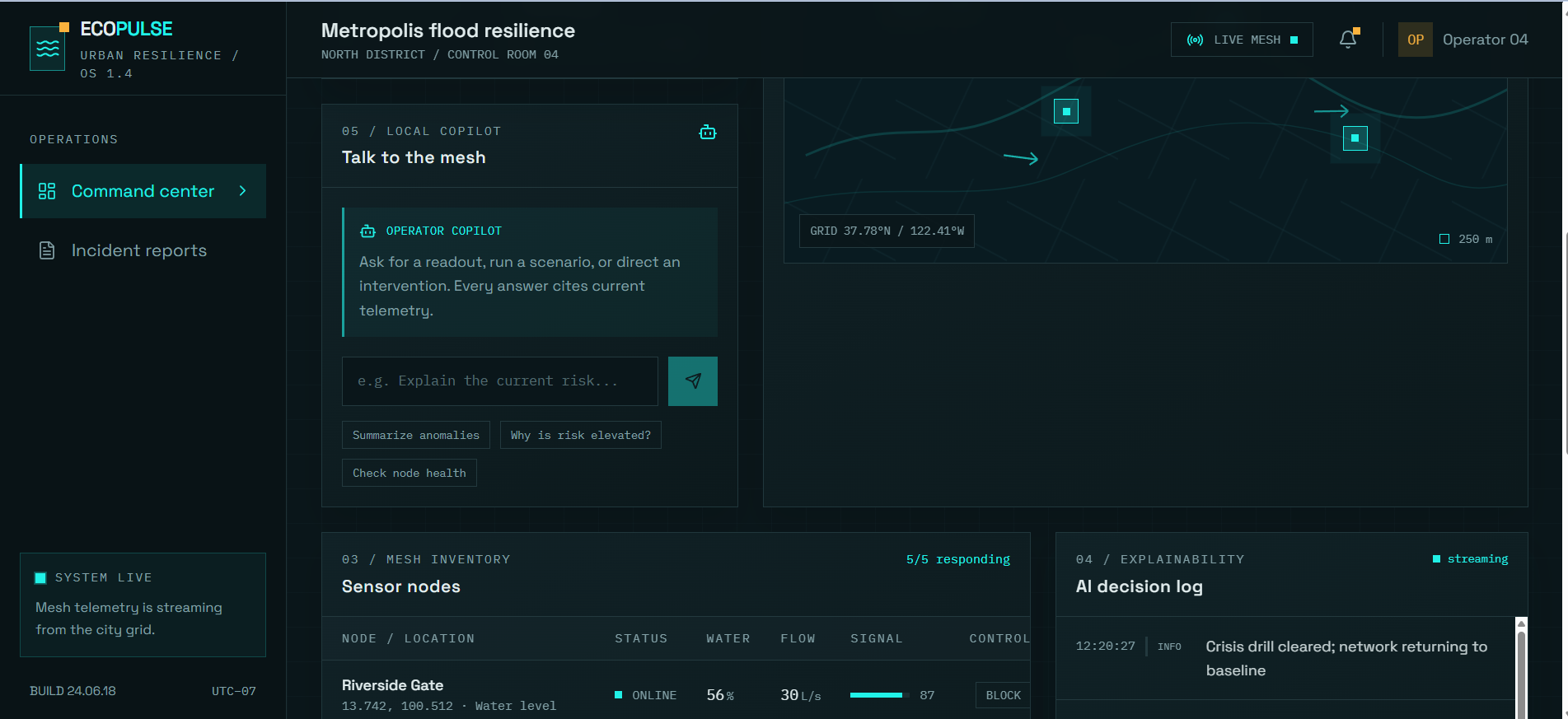
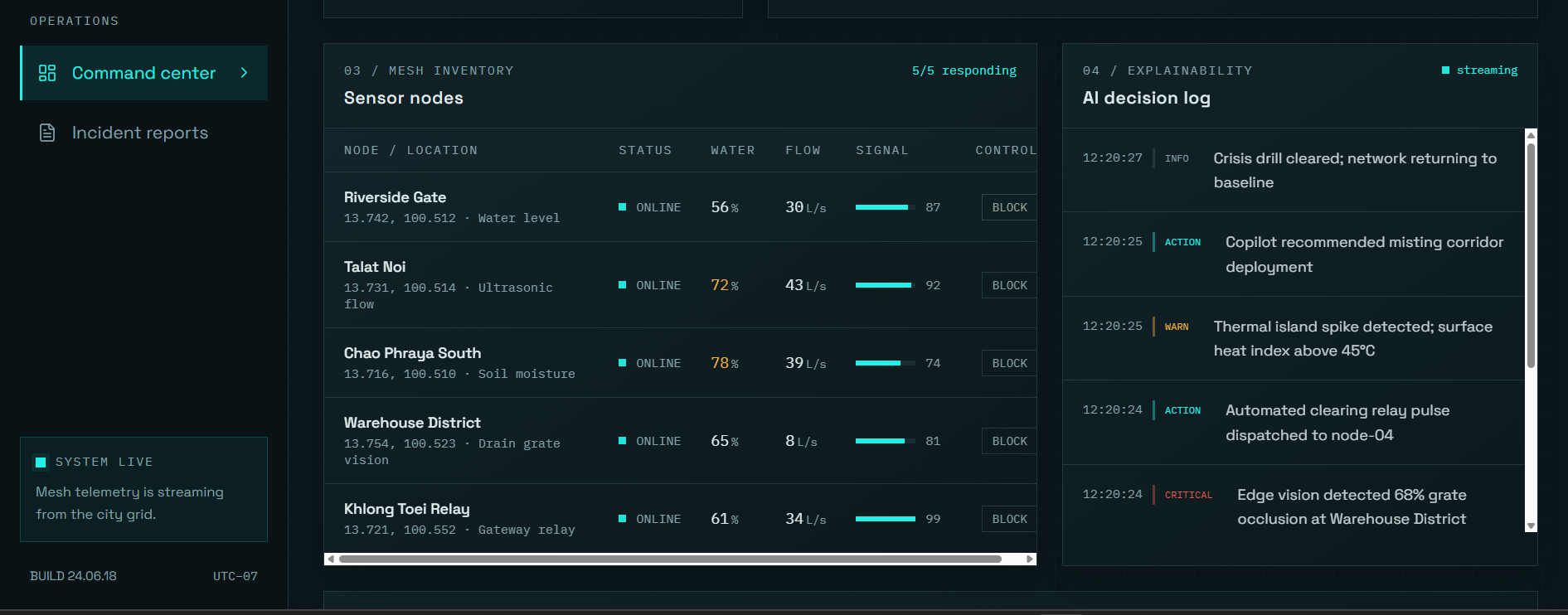
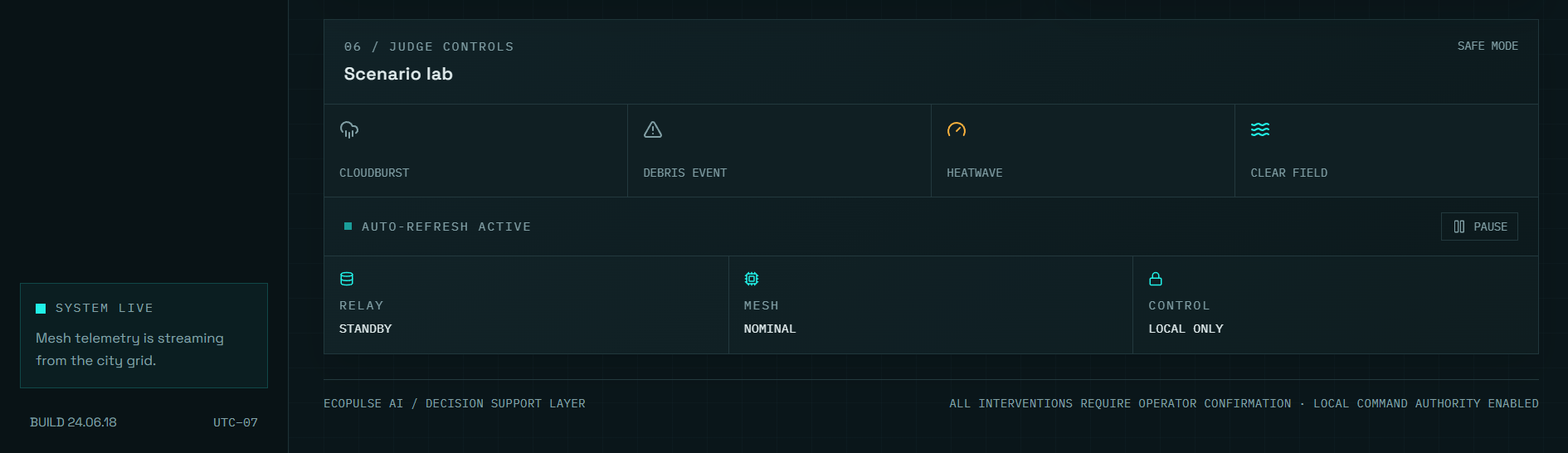
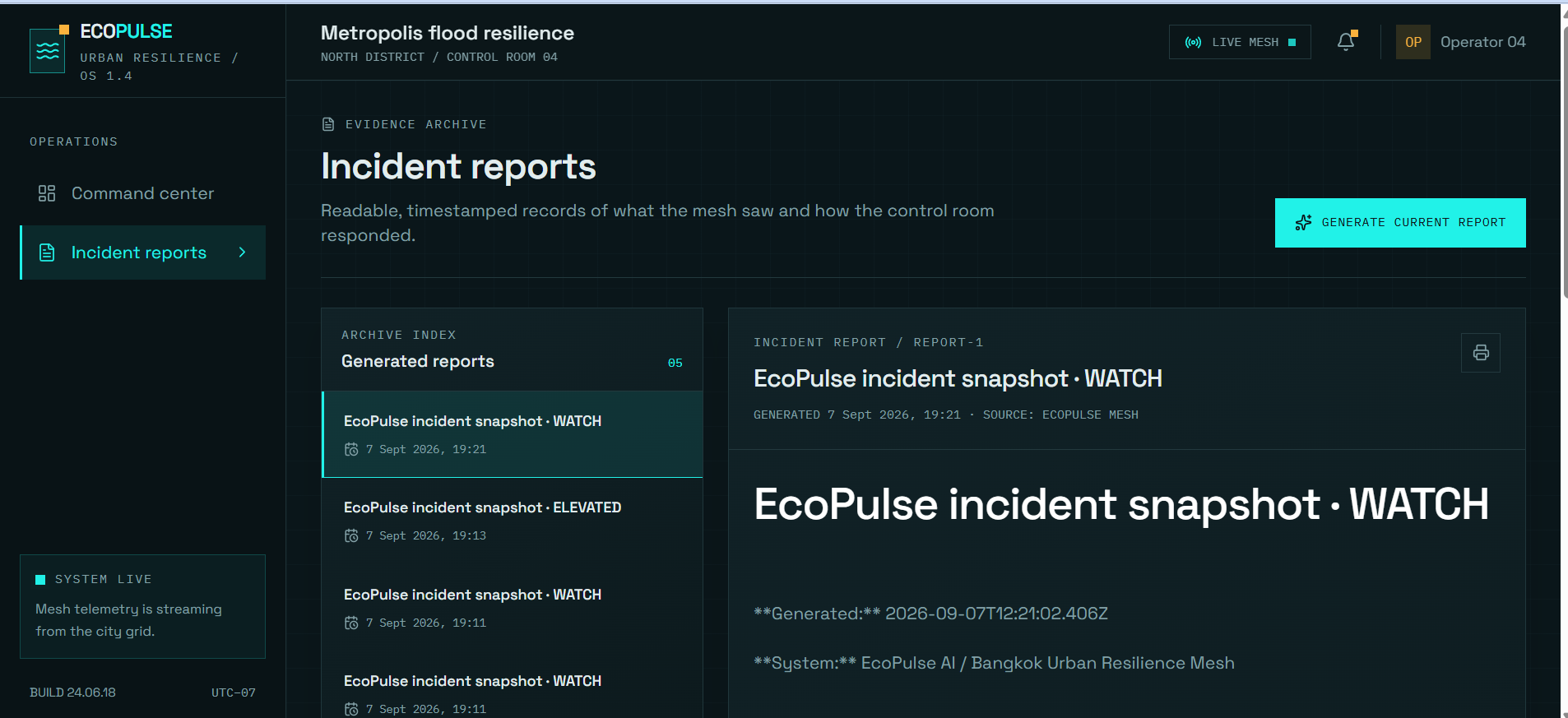
What it does EcoPulse serves as an urban resilience and flood defense command center, providing real-time telemetry on water levels, heat indexes, rainfall intensity, and structural stress alongside an AI operator copilot and incident reporting archive.
How I built it I built the application using React, Vite, TypeScript, and Tailwind CSS for the frontend interface, powered by a Python FastAPI backend integrated with ESP-NOW sensor node simulation and custom workspace tools.
Challenges I ran into I faced hurdles navigating local pathing conflicts, environment shell discrepancies, and permission errors while setting up the monorepo architecture and managing multi-stream sensor telemetry.
Accomplishments I successfully designed, built, and deployed EcoPulse from scratch, transforming a multi-stack architecture (React, TypeScript, Vite, Tailwind CSS, and Python FastAPI) into a fully functional local development environment. I engineered a real-time IoT command center capable of tracking live ESP-NOW sensor telemetry, flood risk indices, and structural stress metrics, while integrating an AI operator copilot and automated incident reporting system.
What I learned I gained deep practical experience orchestrating full-stack TypeScript and Python architectures, designing real-time dashboard data visualizations, and streamlining local developer workflows.
What's next for EcoPulse I plan to scale up the live sensor hardware network, refine the predictive flood analytics models, and expand automated operator intervention triggers.
Built With
- esp-now
- fastapi
- python
- react
- tailwind-css
- typescript
- vite


Log in or sign up for Devpost to join the conversation.