Inspiration:
Environmental restoration projects often require governments, NGOs, and conservation organizations to make difficult decisions with limited budgets and incomplete information. While there are many tools for monitoring environmental change, there are far fewer that help decision-makers explore what could happen before investing in a restoration strategy.
We wanted to build a platform that shifts the conversation from simply detecting environmental problems to planning meaningful ecological recovery. EcoPulse was inspired by the idea of giving restoration teams an intuitive way to simulate different conservation strategies and visualize their long-term environmental impact.
What it does:
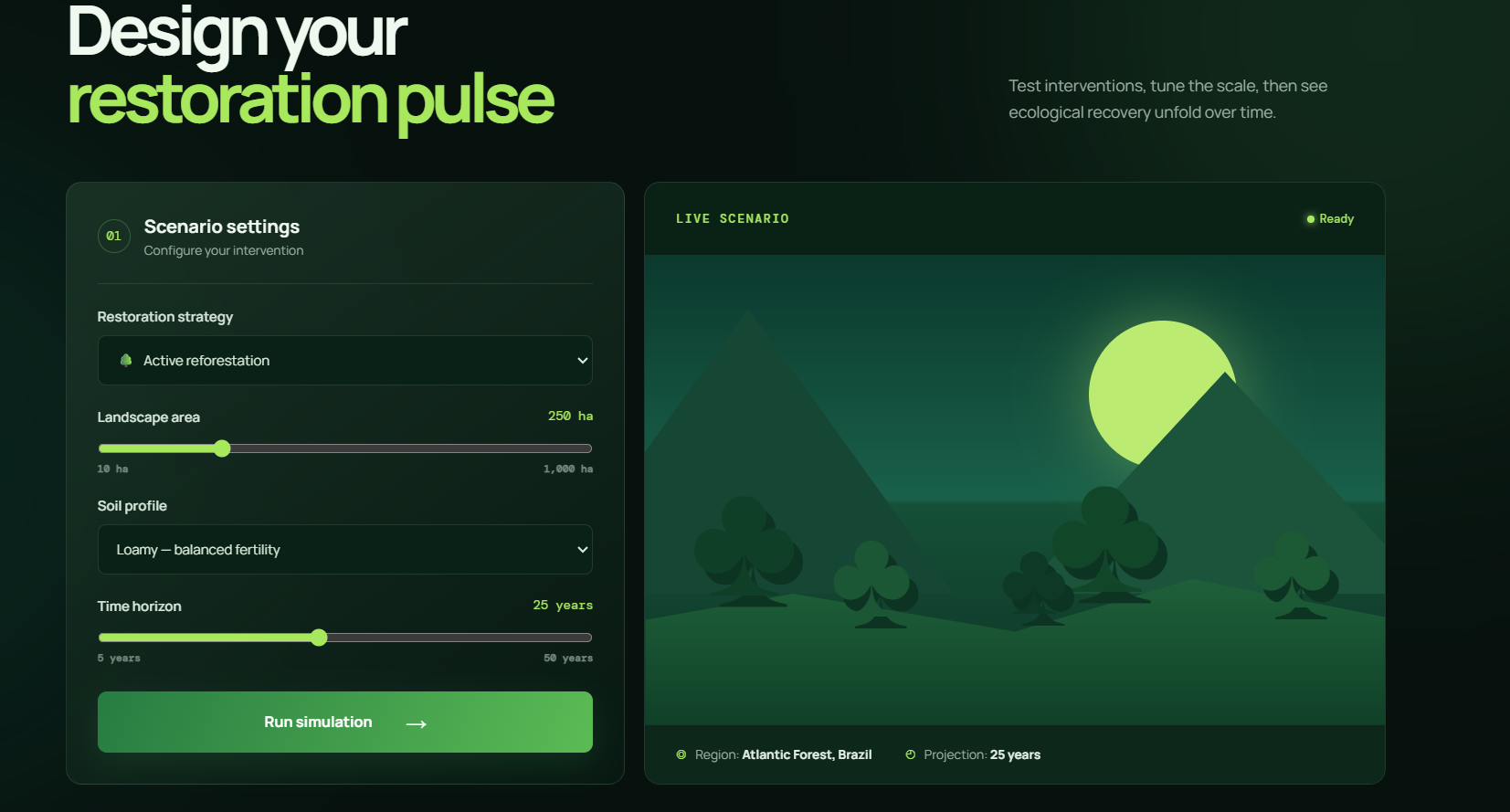
EcoPulse is an AI-powered restoration planning platform that enables users to create restoration scenarios for ecosystems and visualize their projected outcomes over time.
Users can configure:
- Restoration strategy
- Landscape area
- Soil profile
- Time horizon
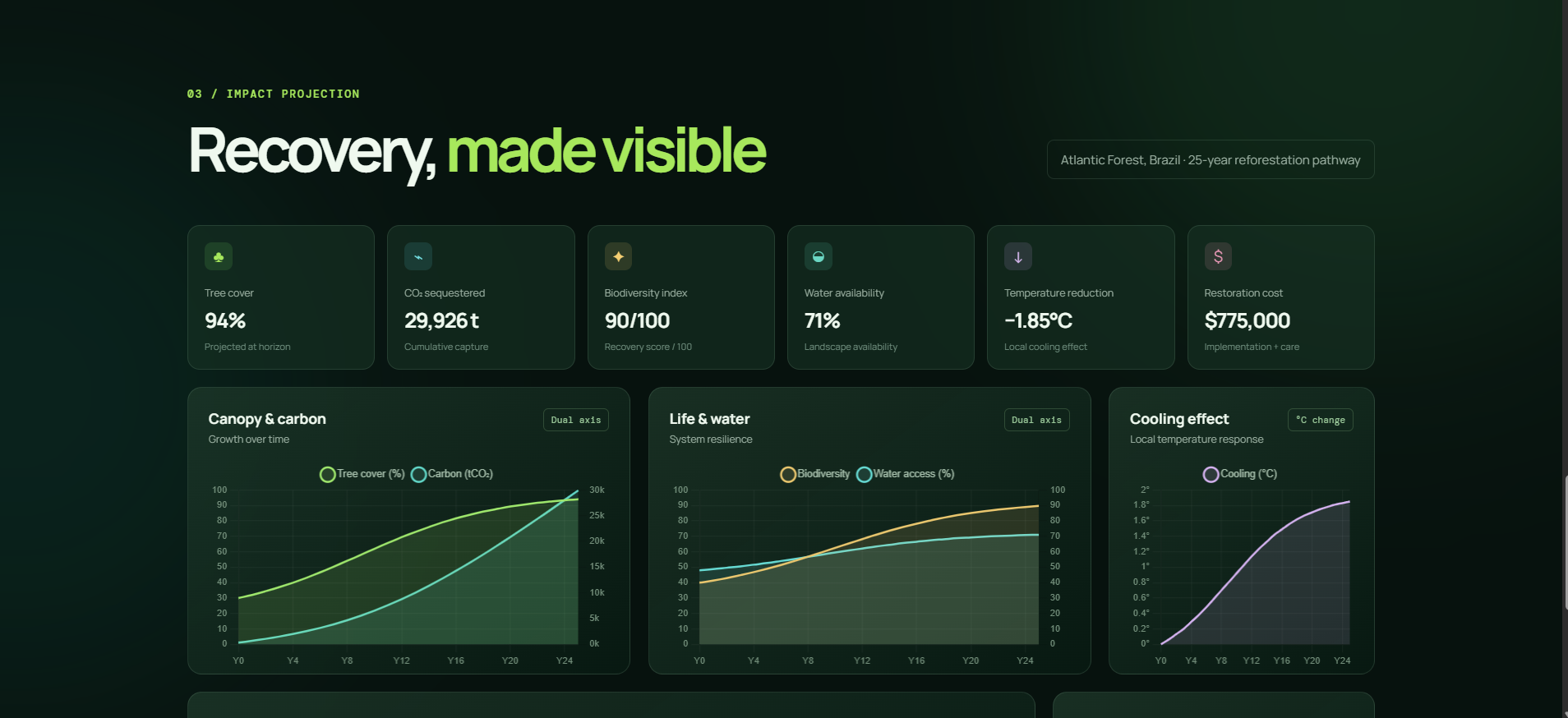
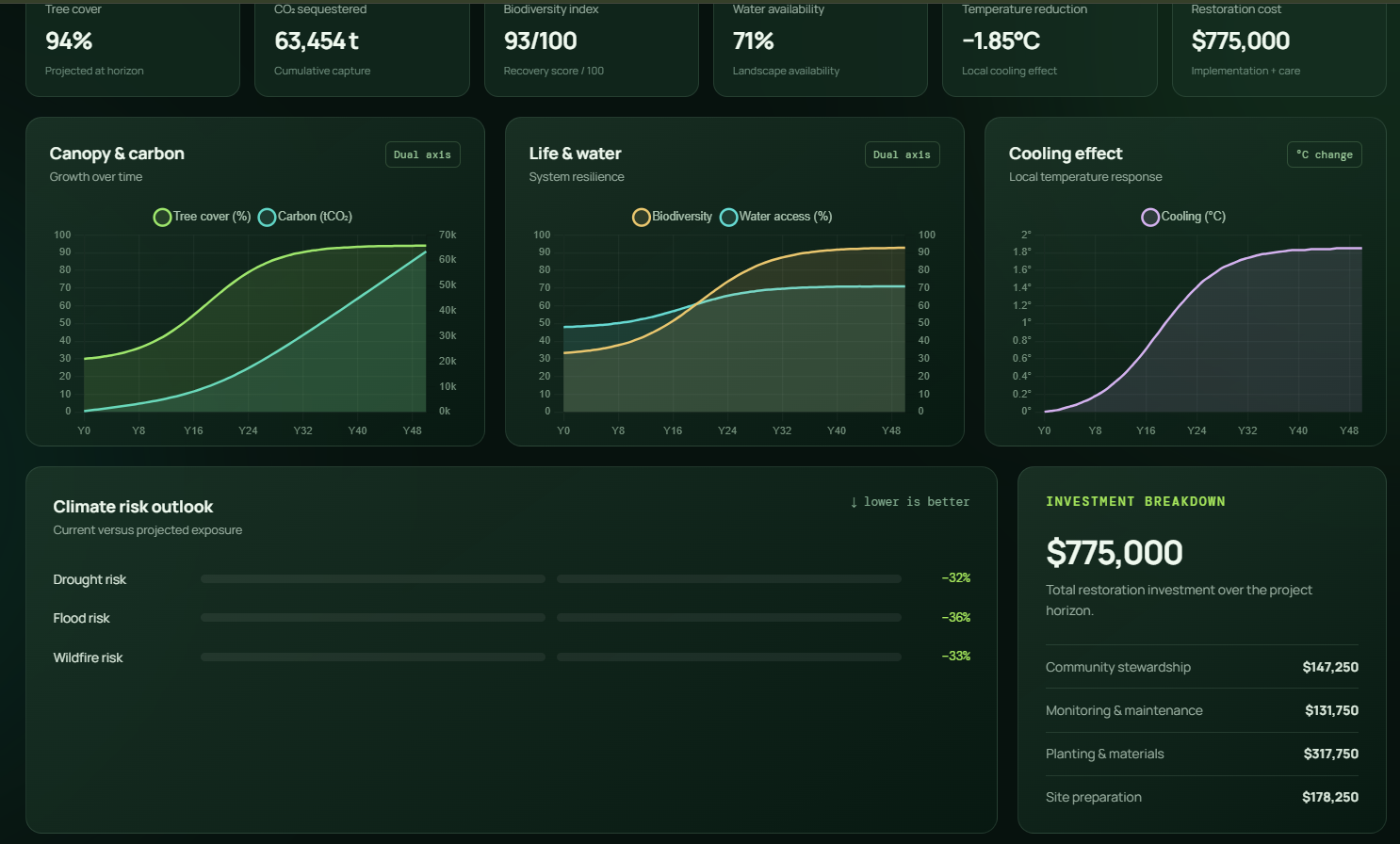
The platform then presents an interactive impact dashboard showing projected ecological indicators such as:
- Tree cover
- Carbon sequestration
- Biodiversity recovery
- Water availability
- Local temperature reduction
- Estimated restoration cost
The goal is to help decision-makers compare restoration approaches before implementation.
How we built it:
We focused on creating a complete end-to-end product experience rather than only building a prediction model.
The project consists of:
- A modern responsive web interface
- Interactive restoration simulator
- Scenario configuration system
- Environmental impact dashboard
- Dynamic charts and visualizations
- Modular architecture designed for future integration with ecological models and satellite datasets
The interface was designed to make complex environmental information easy to understand for both technical and non-technical users.
Challenges we ran into:
One of the biggest challenges was balancing technical complexity with usability.
Ecological restoration involves many interconnected variables, and representing them in a simple, intuitive interface required multiple design iterations.
Another challenge was deciding the scope of the hackathon prototype. Instead of attempting to build highly complex ecological prediction models within a limited timeframe, we focused on validating the overall workflow, user experience, and decision-support concept.
Accomplishments that we're proud of:
We are proud of the fact that could help us preserve the beauty of our mother Earth also while taking wise financial decisions
What we learned:
Building EcoPulse taught us that impactful environmental technology is not only about accurate predictions—it is also about presenting information in a way that helps people make better decisions.
We also learned how important thoughtful interface design is when communicating complex environmental data.
What's next for Ecopulse:
Our vision is to transform EcoPulse into a comprehensive AI-powered ecosystem restoration platform.
Future development will include:
- Integration with real satellite imagery
- AI-driven restoration recommendations
- Multi-scenario comparison
- Geographic Information System (GIS) support
- Carbon credit estimation
- Biodiversity forecasting
- Real-time environmental monitoring
- Exportable restoration reports for governments and NGOs
Built With
- api
- chart.js
- climate
- conservation
- css3
- data
- development
- environmental
- flask
- geospatial
- html5
- interactive
- javascript
- leaflet.js
- numpy
- open
- python
- science
- source
- sustainability
- tech
- visualization
- web

Log in or sign up for Devpost to join the conversation.