EcoPlate Project Description
Inspiration
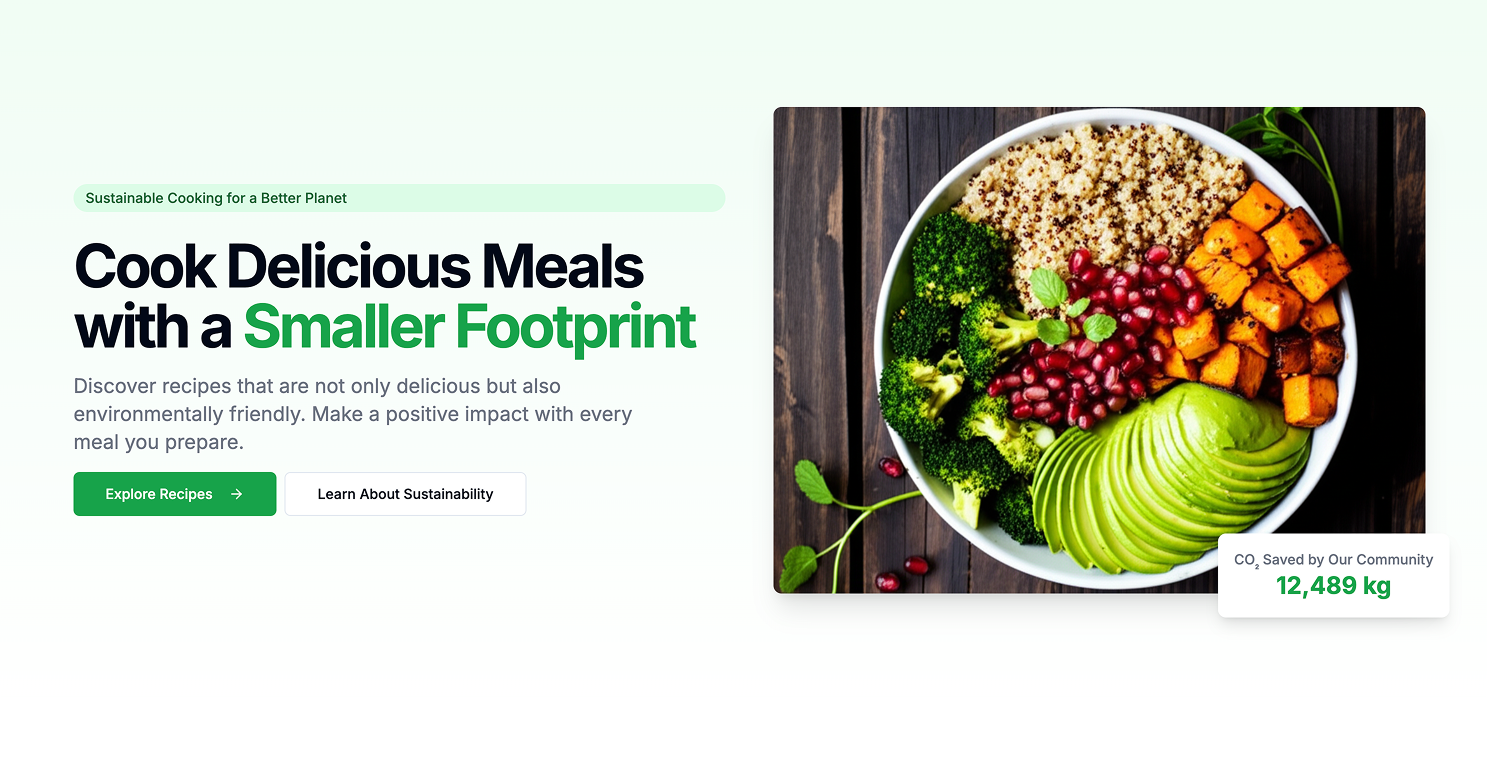
Climate change is accelerating, and our food choices contribute significantly to this crisis. The global food system accounts for approximately 26% of greenhouse gas emissions. We realized that while many people want to make environmentally conscious food choices, they lack accessible tools to understand the impact of their meals and discover sustainable alternatives. This gap between intention and action inspired us to create EcoPlate.
What it does
EcoPlate is a web application that helps users make environmentally conscious food choices through:
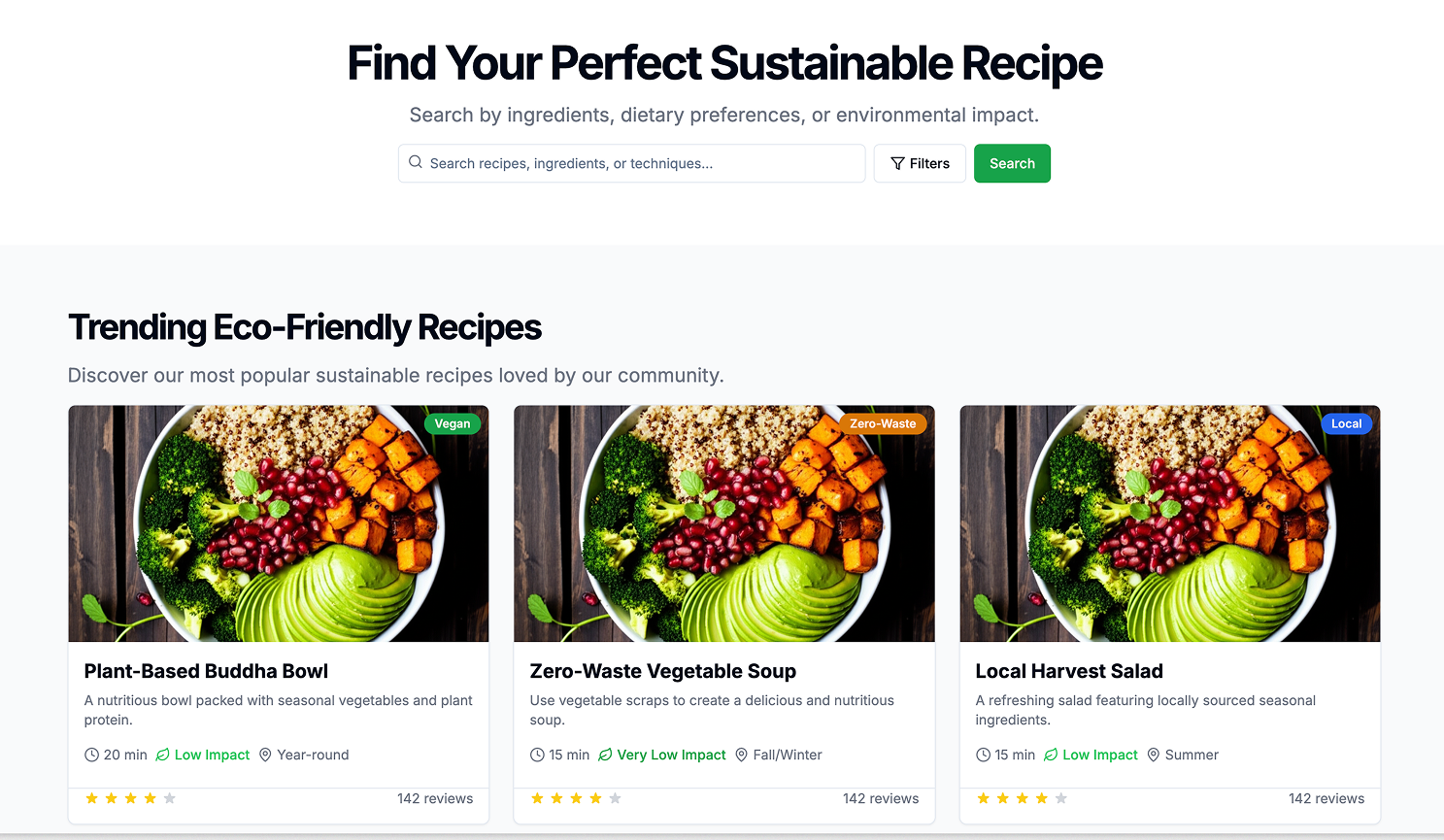
- Sustainable Recipe Database: A collection of recipes categorized by environmental impact (carbon footprint, water usage, energy consumption) and sustainability features (zero-waste, seasonal, local, energy-efficient).
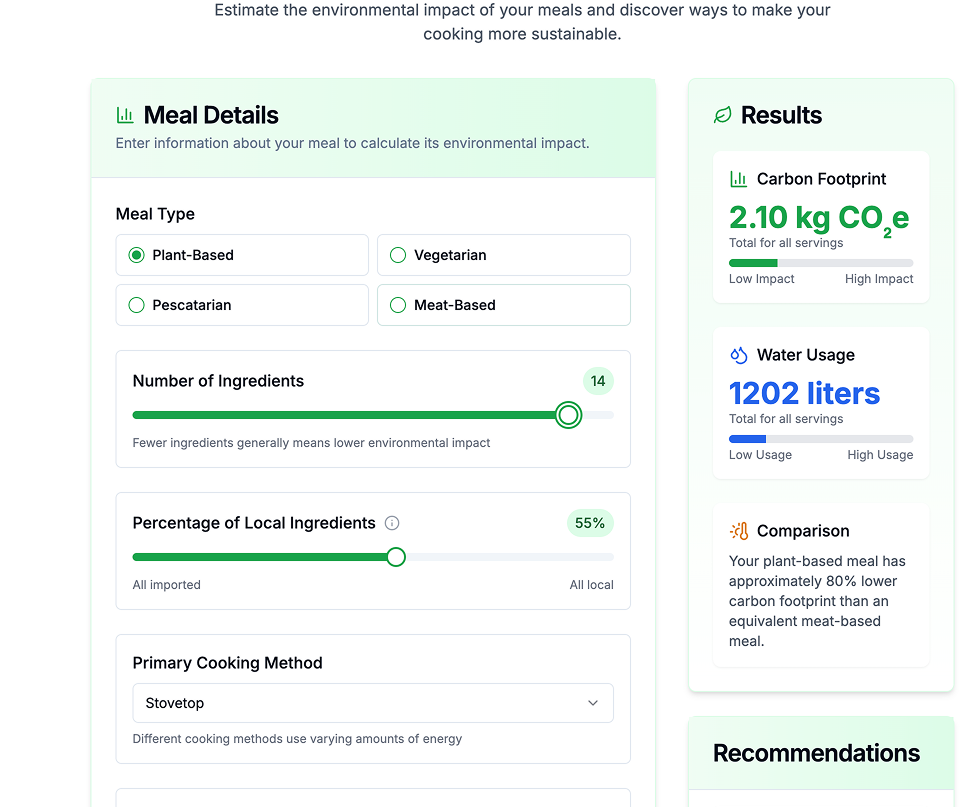
- Carbon Calculator: A tool that calculates the environmental impact of meals based on ingredients, cooking methods, and serving size, providing specific metrics on carbon footprint and water usage.
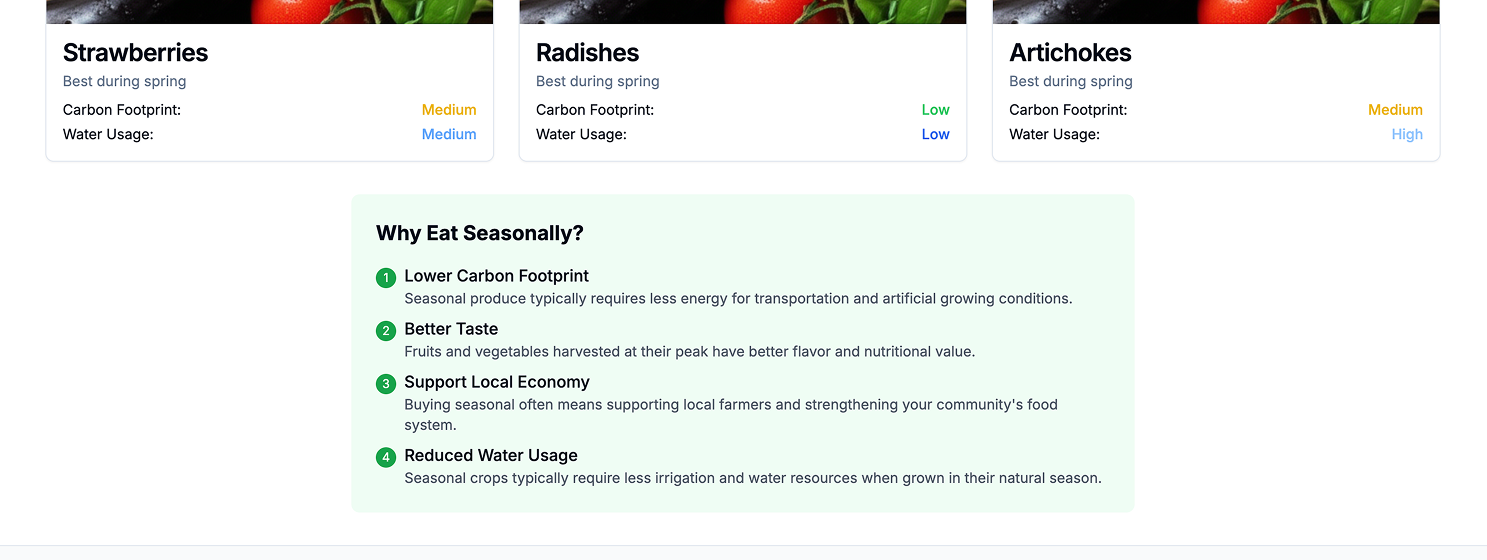
- Seasonal Guide: A region-specific guide showing which ingredients are currently in season, helping users reduce the transportation emissions associated with out-of-season produce.
- Educational Content: Practical sustainability tips for each recipe and information about the environmental benefits of different cooking approaches.
How we built it
We built EcoPlate using:
- Next.js: For the frontend and backend functionality, using the App Router for efficient page routing
- React: For building interactive UI components
- Tailwind CSS: For responsive styling and consistent design
- shadcn/ui: For accessible UI components
- TypeScript: For type safety and improved developer experience
The application architecture includes:
- A recipe database with detailed sustainability metrics for each recipe
- Interactive components for the carbon calculator
- Dynamic rendering of seasonal ingredients
- Responsive design that works across mobile and desktop devices
Challenges we ran into
- Accurate Environmental Impact Data: Finding reliable data on the carbon footprint and water usage of different ingredients and cooking methods required extensive research.
- Balancing Information and Usability: We needed to present complex environmental data in an accessible way without overwhelming users.
- Creating Realistic Metrics: Developing a simplified but meaningful model for the carbon calculator that accounts for various factors like ingredient sourcing, cooking methods, and serving size.
- Responsive Design: Ensuring the application worked well across different screen sizes while maintaining visual appeal and functionality.
- Recipe Database Development: Creating a comprehensive database of recipes with accurate sustainability metrics required significant time and research.
Accomplishments that we're proud of
- Intuitive Carbon Calculator: We developed an interactive tool that helps users understand the environmental impact of their food choices through concrete metrics.
- Comprehensive Recipe Database: We created a diverse collection of recipes with detailed sustainability information, making eco-friendly cooking accessible and appealing.
- Educational Integration: Rather than just providing recipes, we integrated educational content throughout the app to help users understand why certain choices are more sustainable.
- Visual Design: We created a clean, engaging interface that makes sustainability information approachable rather than intimidating.
- Practical Sustainability Tips: Each recipe includes specific, actionable tips for reducing environmental impact.
What we learned
- Food System Complexity: We gained deeper insight into the environmental impact of different food choices and the complexity of measuring sustainability.
- User Experience Design: We learned how to present complex information in accessible ways that encourage positive behavior change.
- Technical Skills: We improved our abilities with Next.js, React, and Tailwind CSS while working on a real-world application.
- Sustainability Metrics: We developed a better understanding of how to quantify and communicate environmental impact in meaningful ways.
- Interdisciplinary Collaboration: This project required combining knowledge from environmental science, nutrition, and software development.
What's next for EcoPlate
- User Accounts: Implement user profiles to track personal impact over time and save favorite recipes.
- Community Features: Add the ability for users to share their own sustainable recipes and tips.
- Location-Based Seasonality: Enhance the seasonal guide with more precise location-based data.
- Shopping List Integration: Add functionality to create shopping lists from recipes and find local sources for ingredients.
- Mobile App: Develop a native mobile application for improved accessibility.
- API Integration: Connect with environmental databases for more precise impact calculations.
- Personalized Recommendations: Implement an algorithm to suggest recipes based on user preferences and environmental impact goals.ion
Built With
- css
- html
- javascript
- lucide
- next-themes
- next.js
- radix
- react
- shadcn/ui
- tailwind
- typescript
- ui

Log in or sign up for Devpost to join the conversation.