-
-
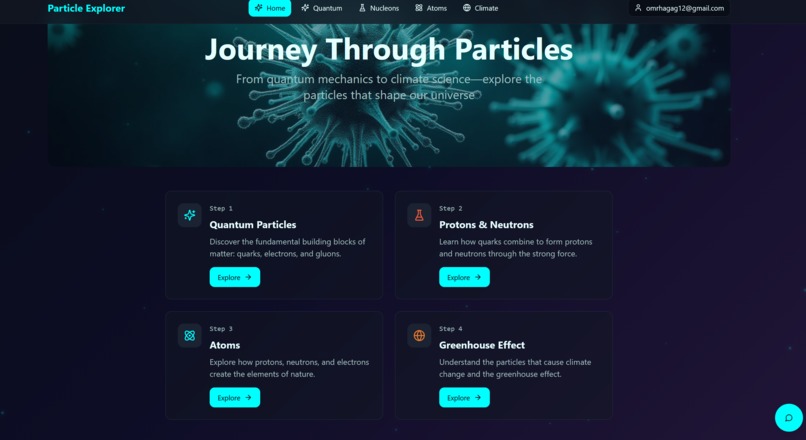
Home page
-
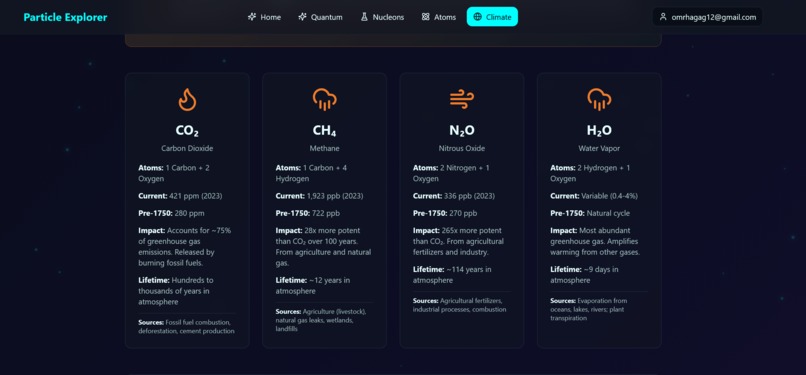
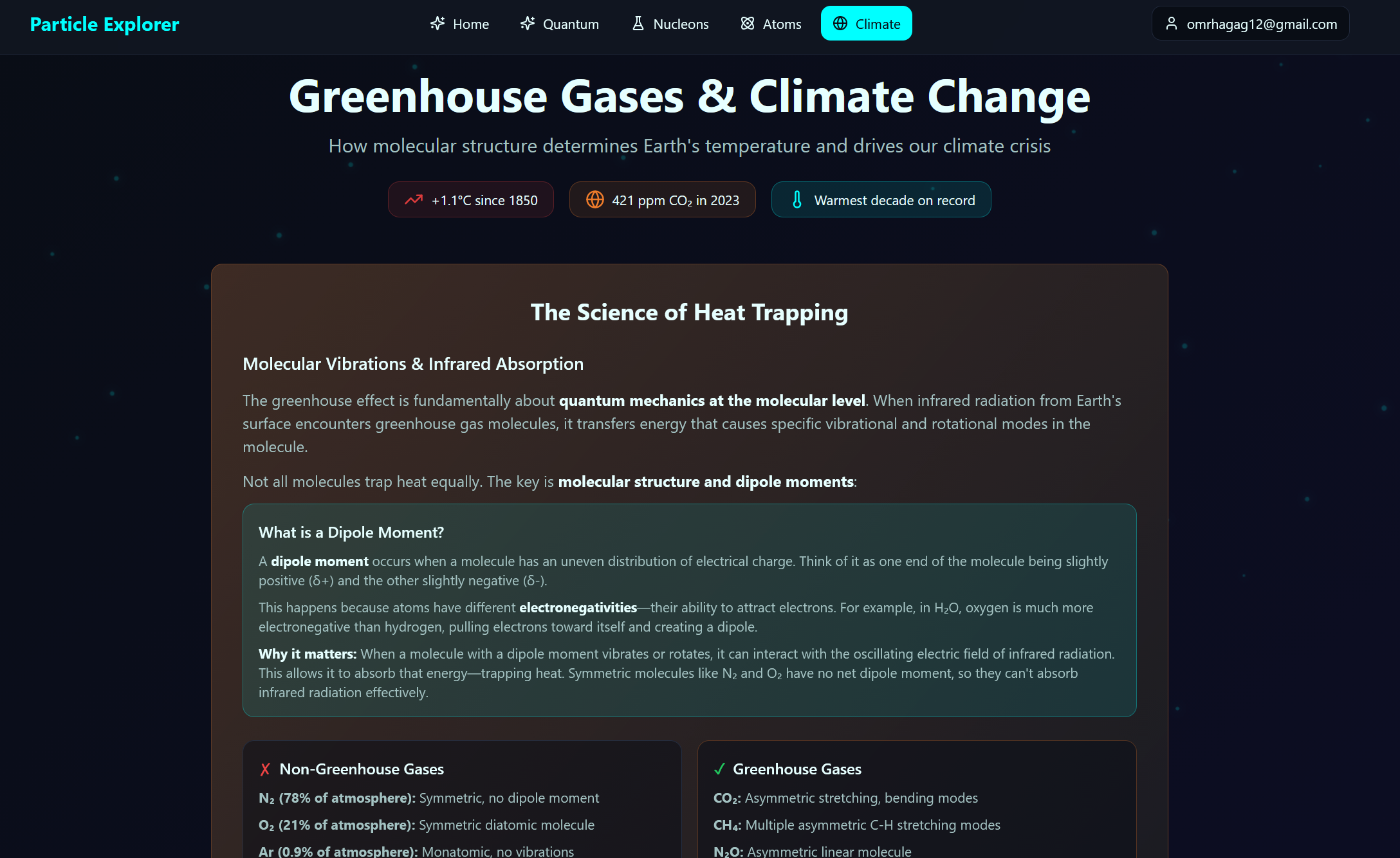
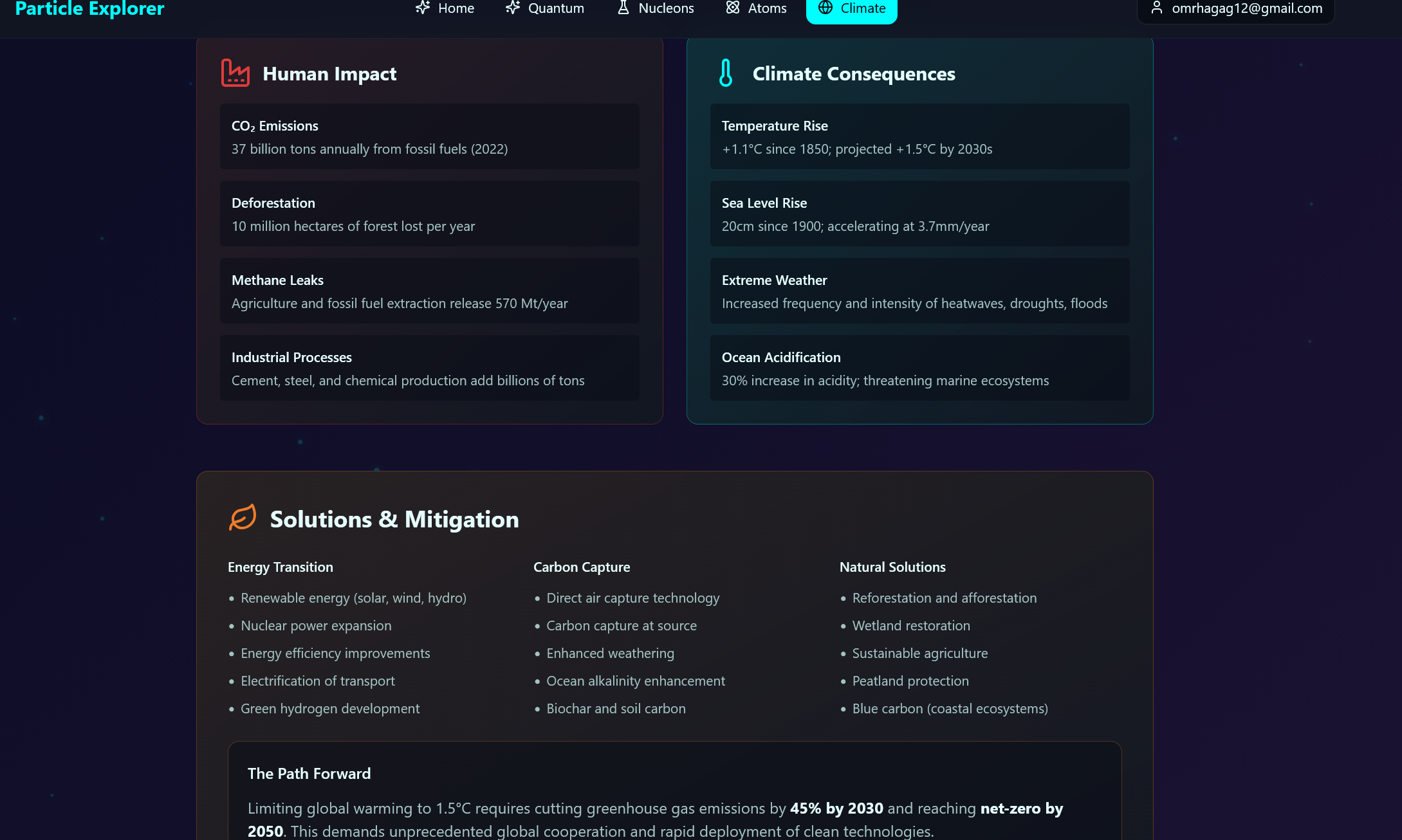
Climate Change page
-
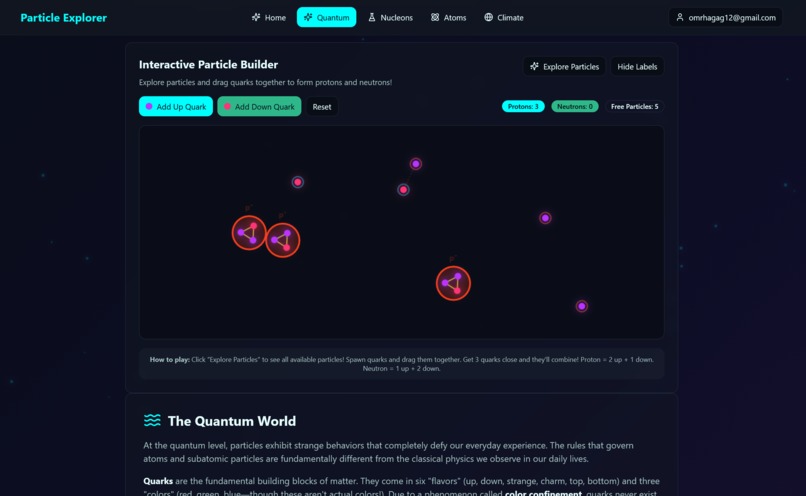
Quantum Particles page
-
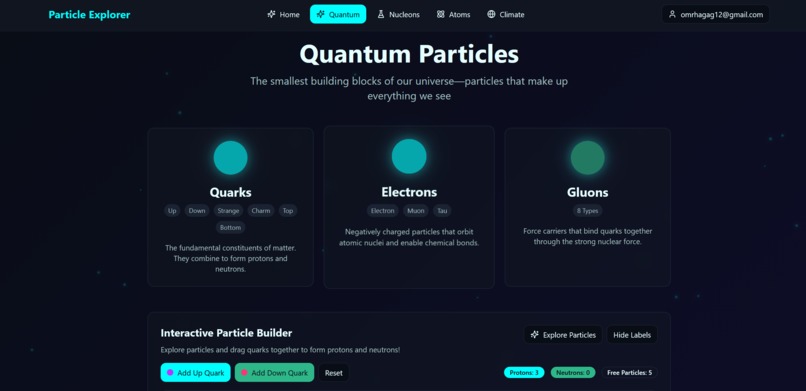
Quantum Particles page
-
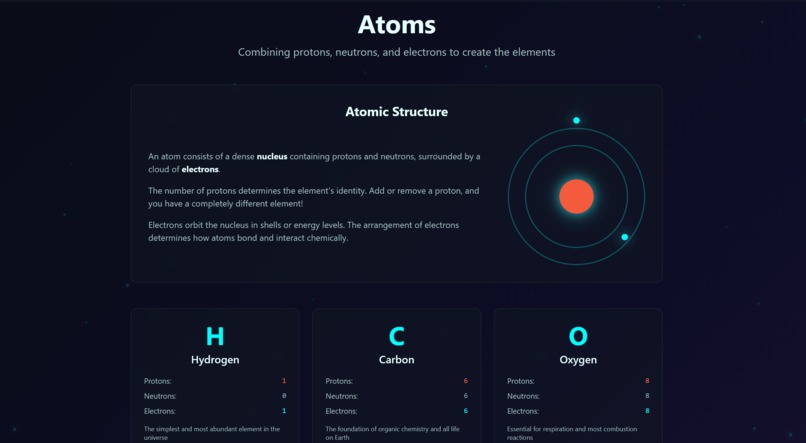
Atoms page
-
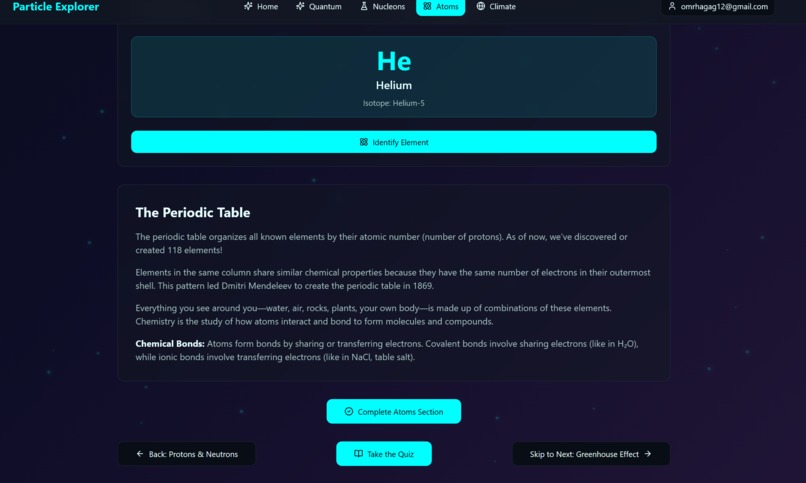
Atoms page
-
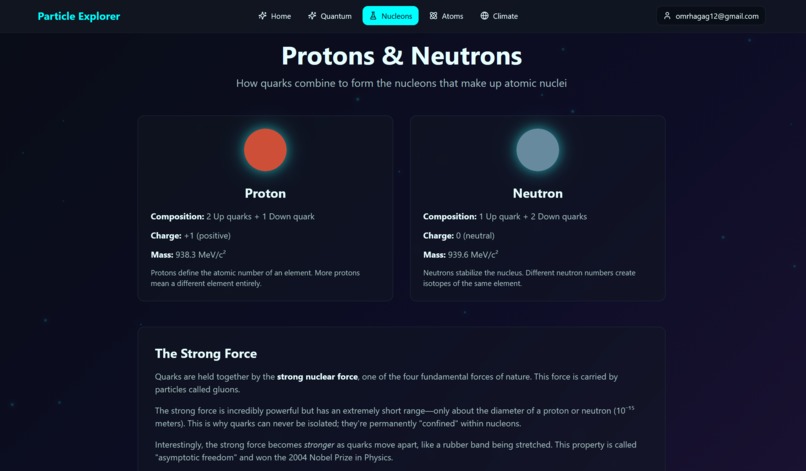
Nucleons page
-
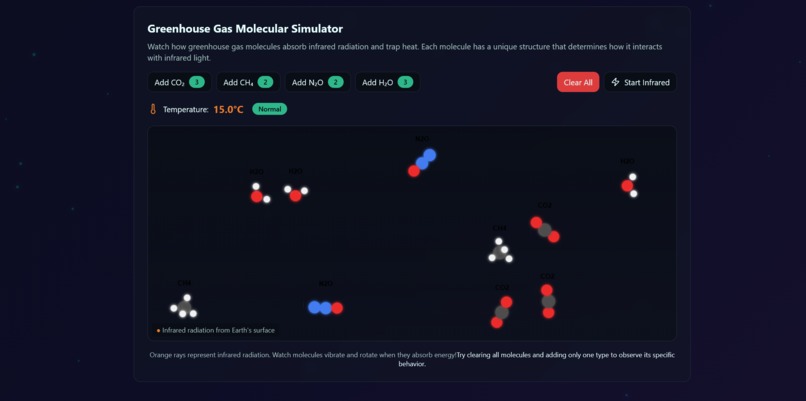
Climate Change page
-
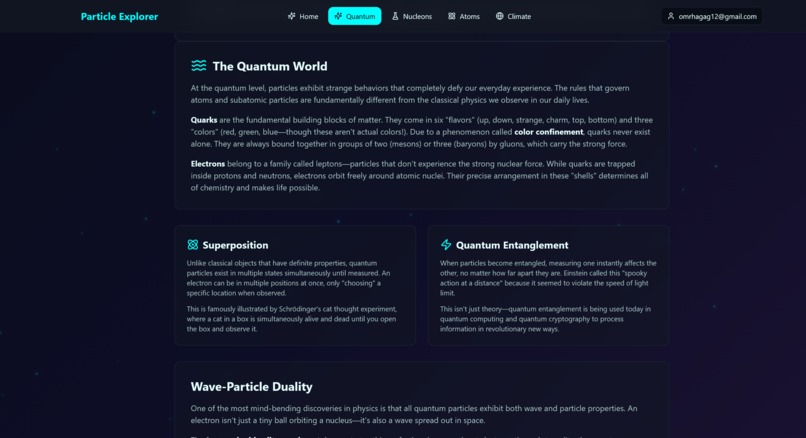
Climate Change page
-
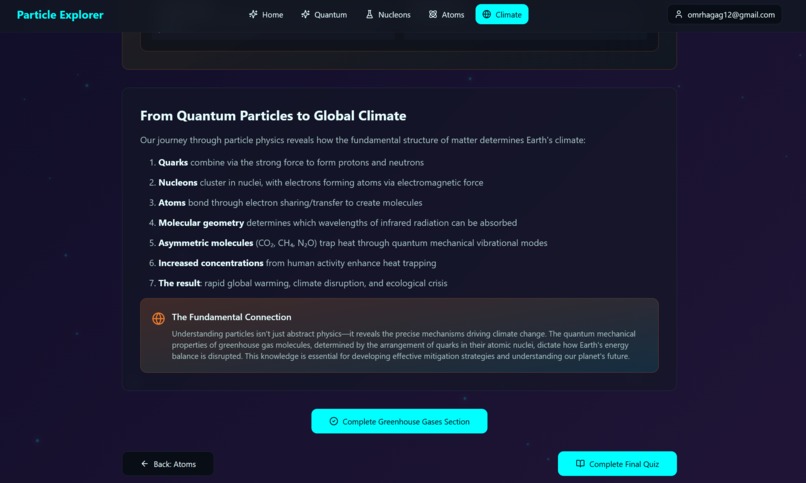
Climate Change page
-
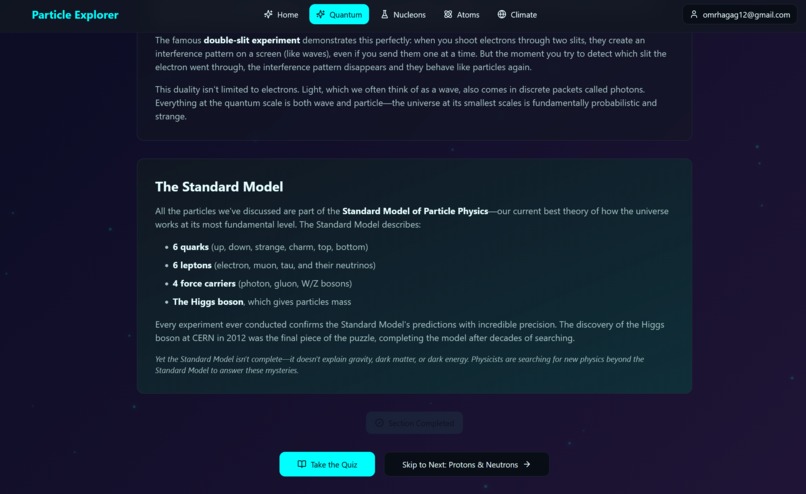
Quantum page
-
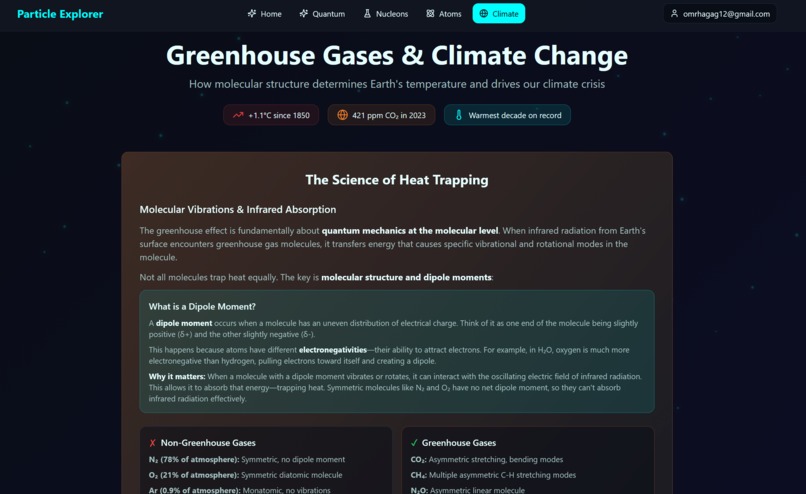
Climate Change page
-
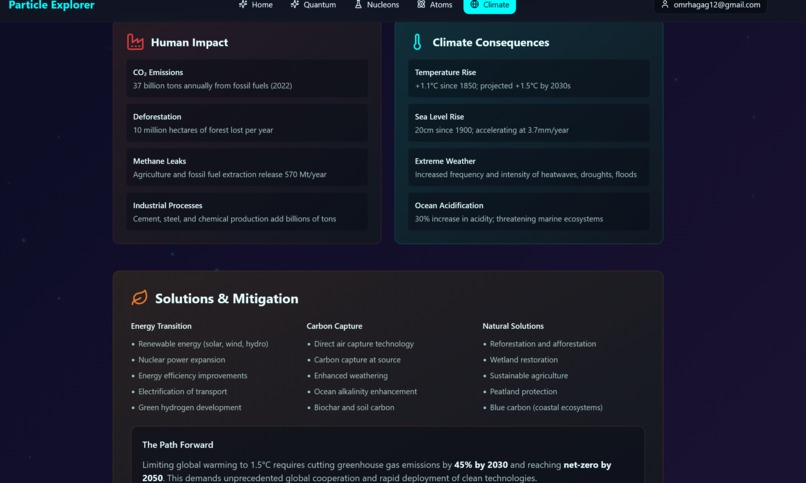
Climate Change page
-
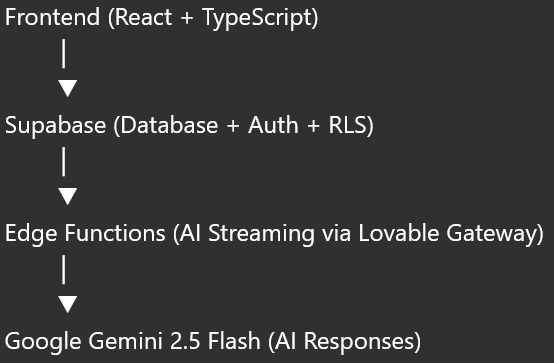
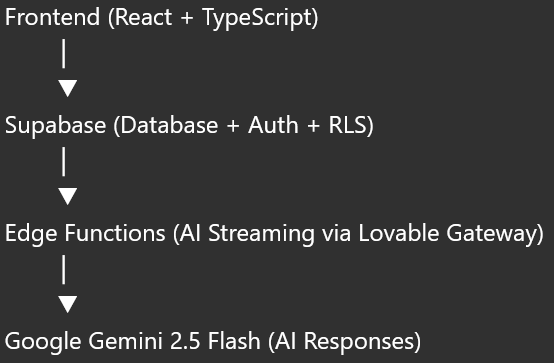
Architecture Overview
-
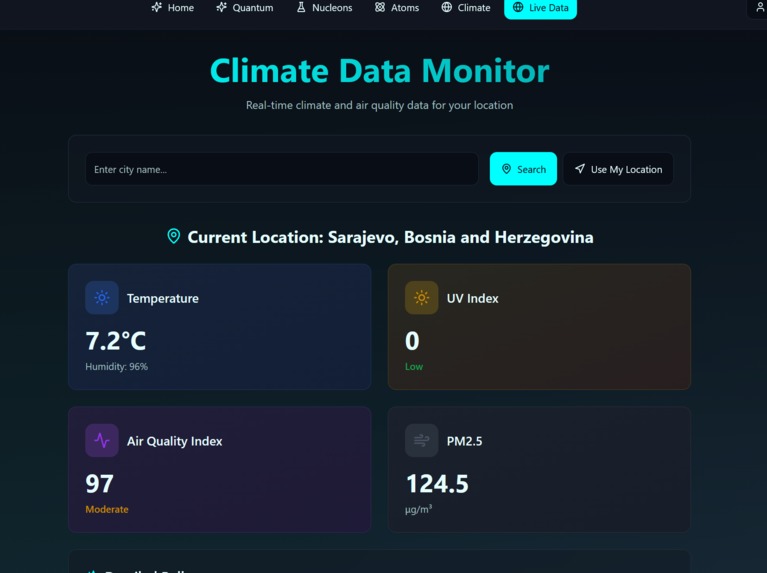
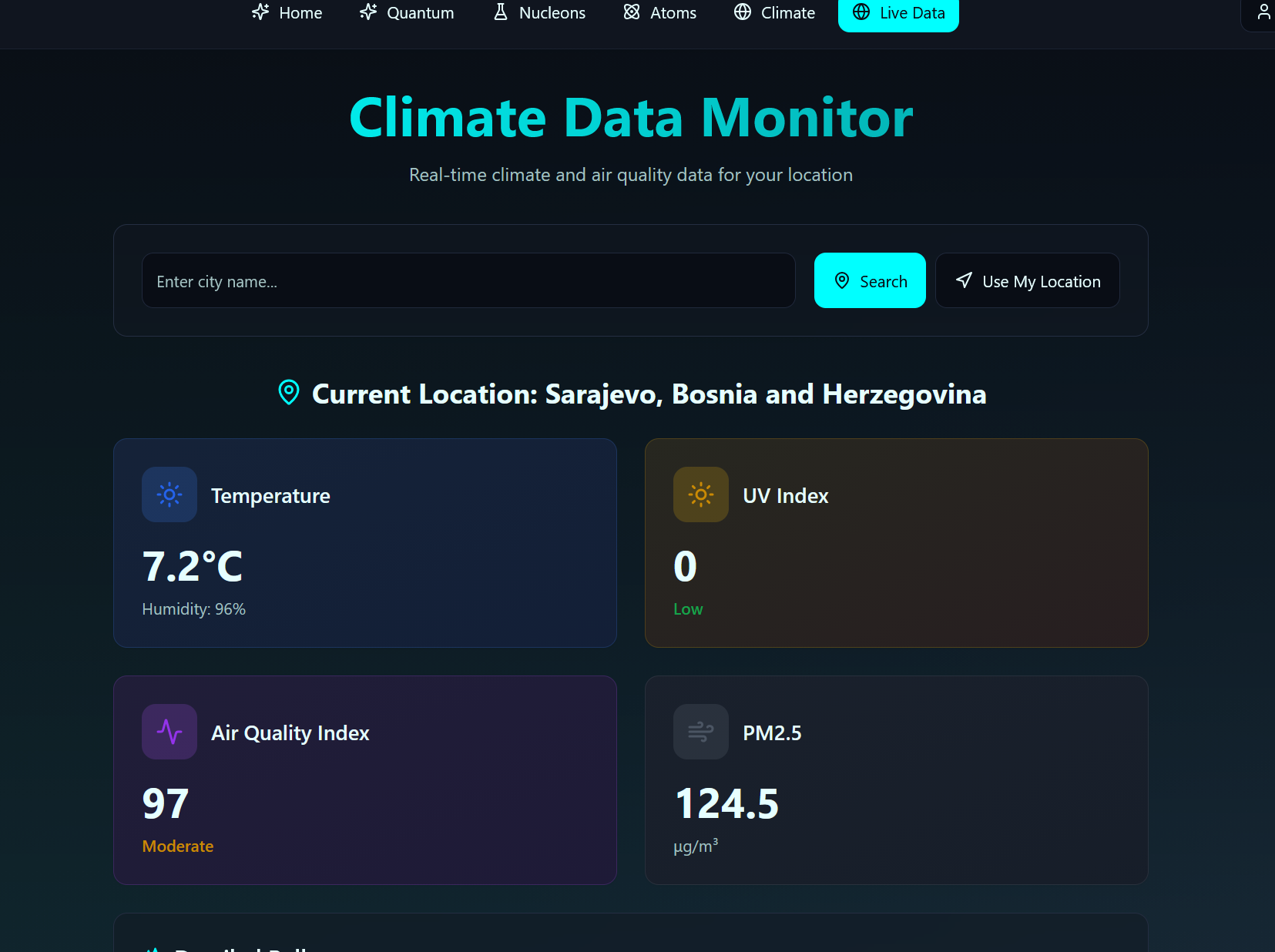
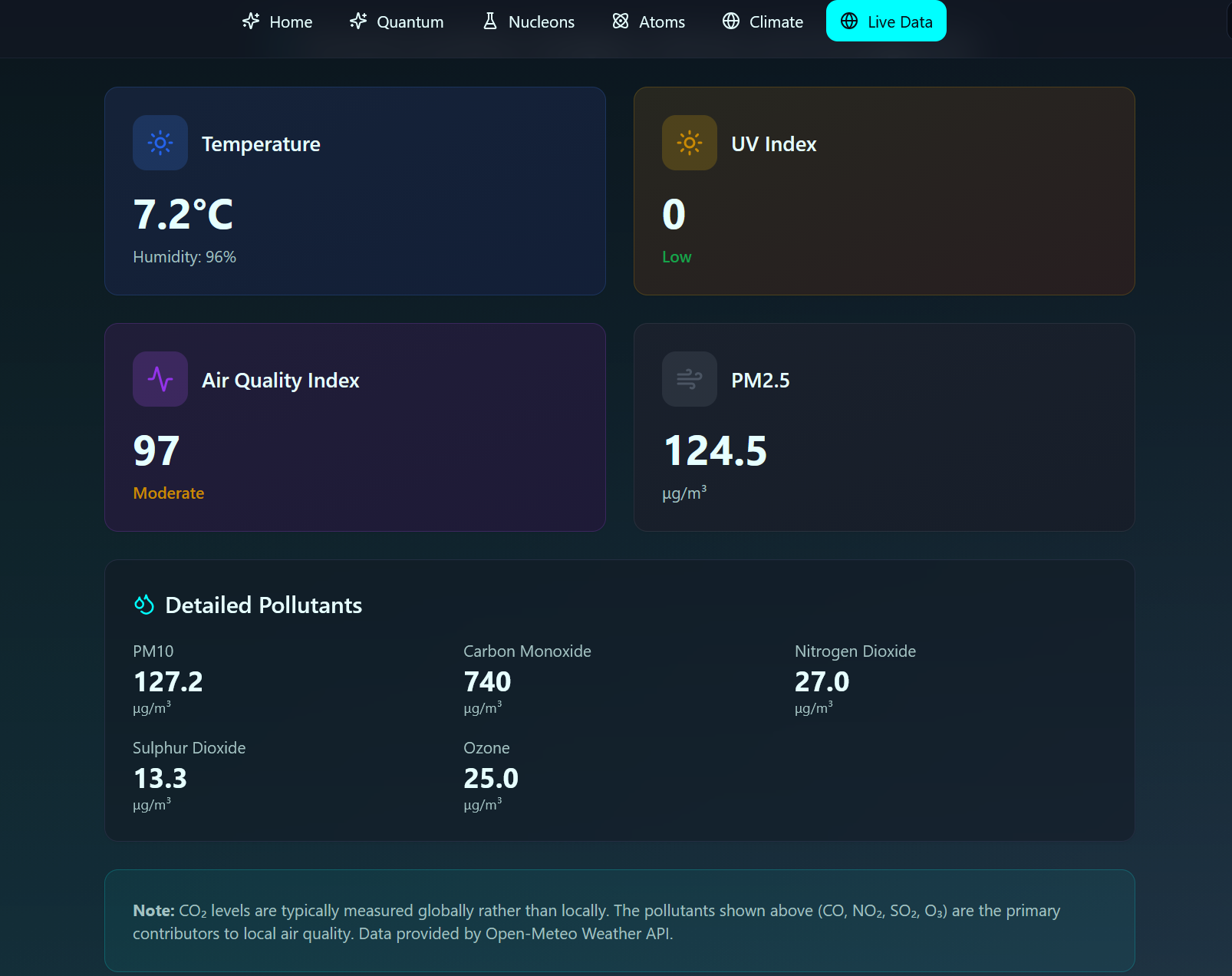
Climate Data Monitor
-
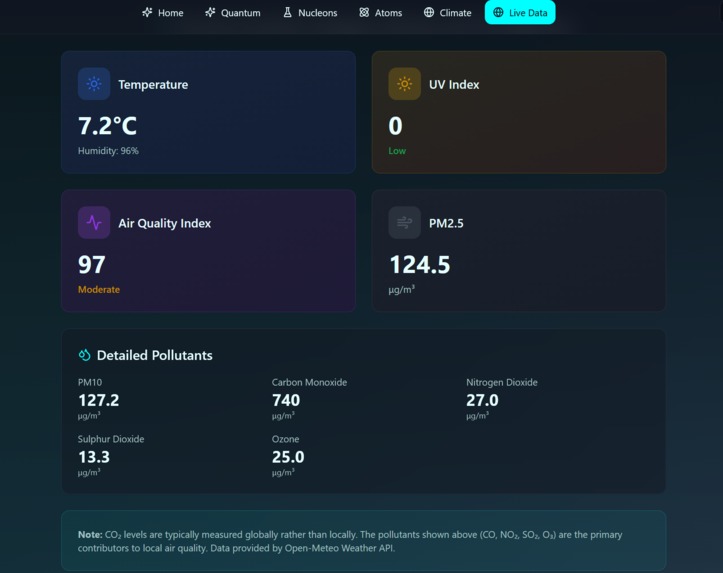
Climate Data Monitor
-
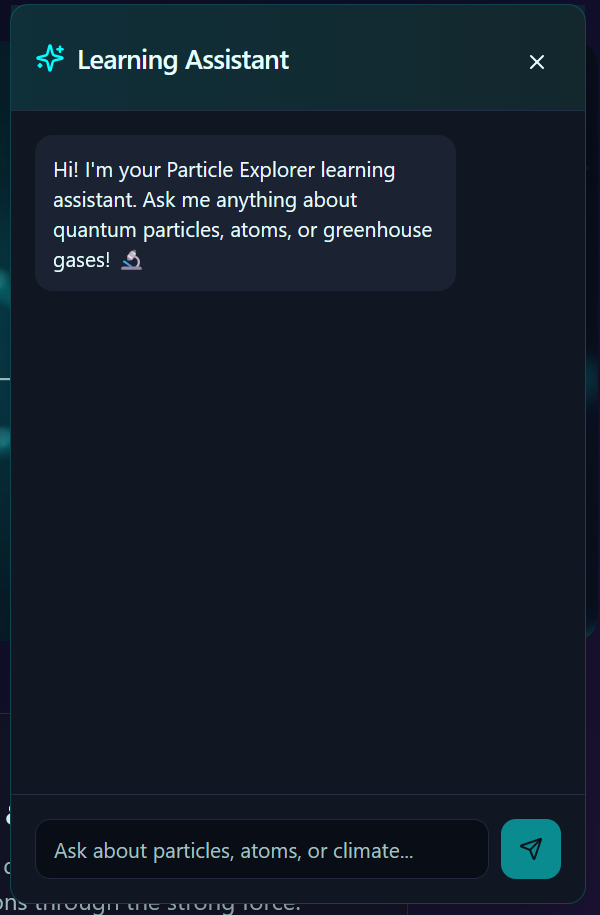
Ai Assistant
Inspiration
Our inspiration for EcoPhysics came from our passion for making science engaging and understandable for everyone. Physics and climate science are often seen as complex or intimidating, especially for students who learn better through visuals and interaction. We wanted to change that, to show how tiny quantum particles connect to massive environmental systems, all in one interactive platform.
The idea evolved from our experience at the Kayseri Robotics 2025 Competition, where we competed with an earlier version of an educational science app. Even though it was a robotics event, our project stood out for its creativity and practical AI integration, and we managed to beat nearly half the category using that prototype. That success showed us that technology could bridge education and innovation, inspiring us to rebuild and expand the concept into what is now EcoPhysics.
What it does
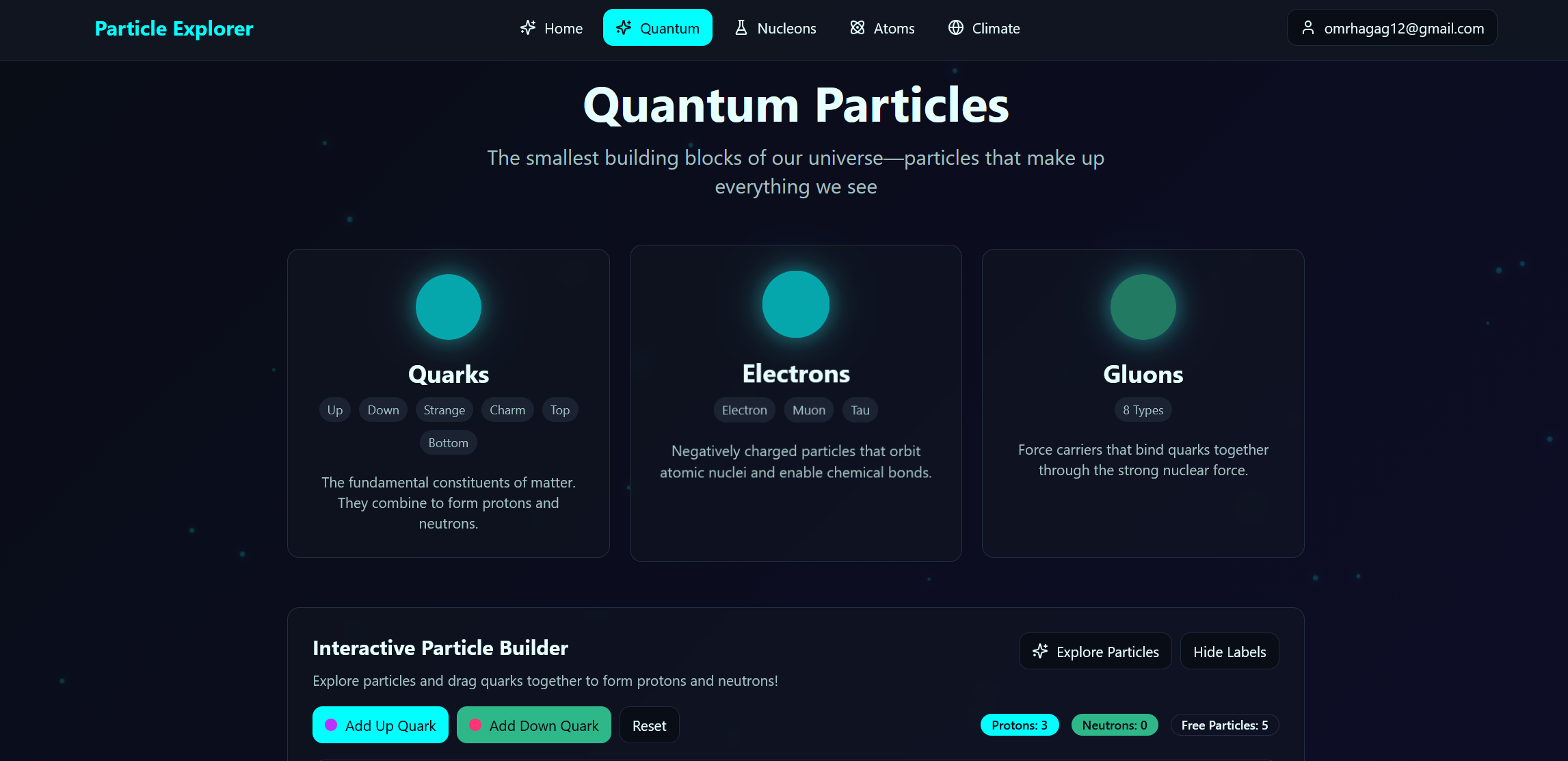
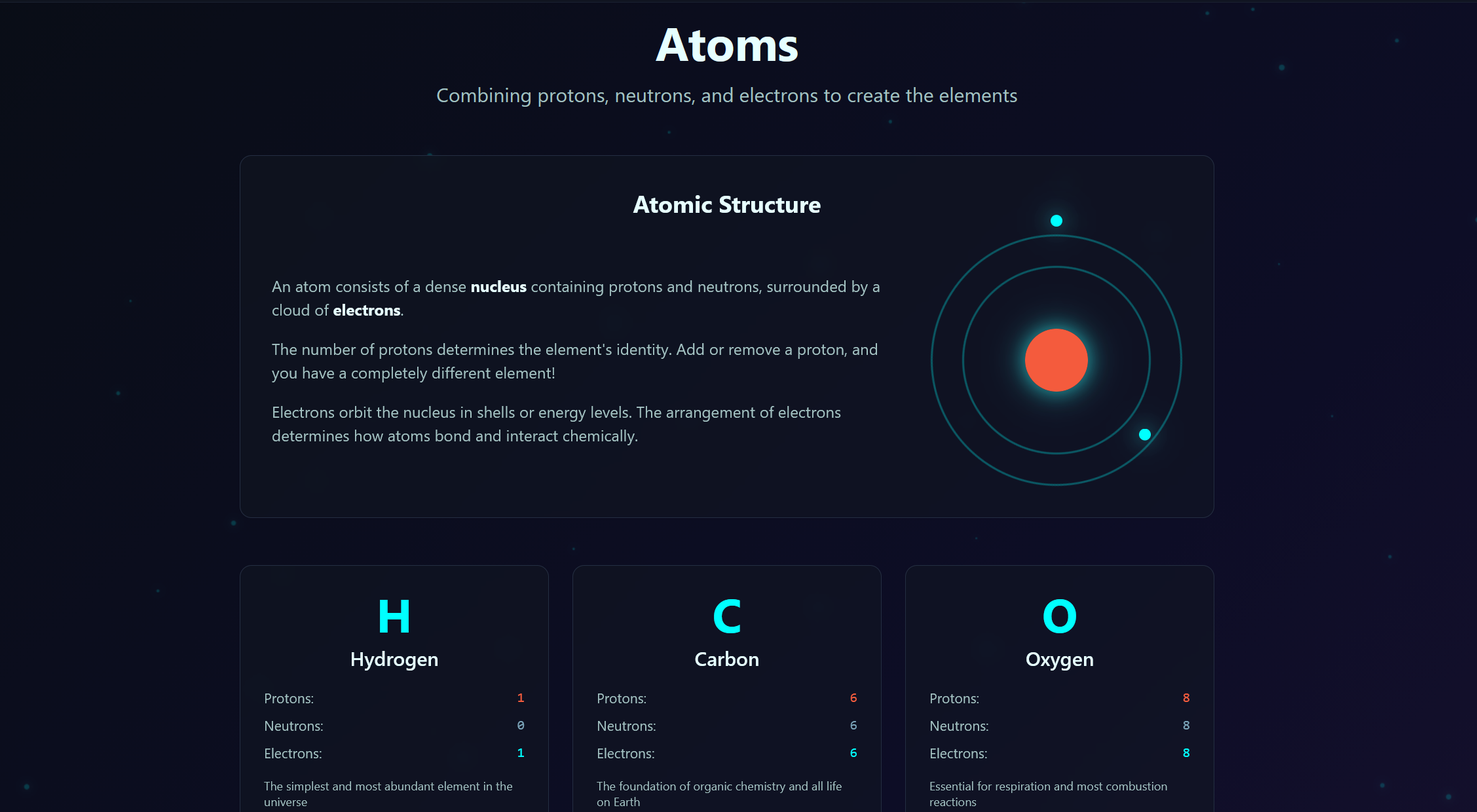
EcoPhysics is an interactive educational web application that simplifies difficult scientific theories and promotes active learning.
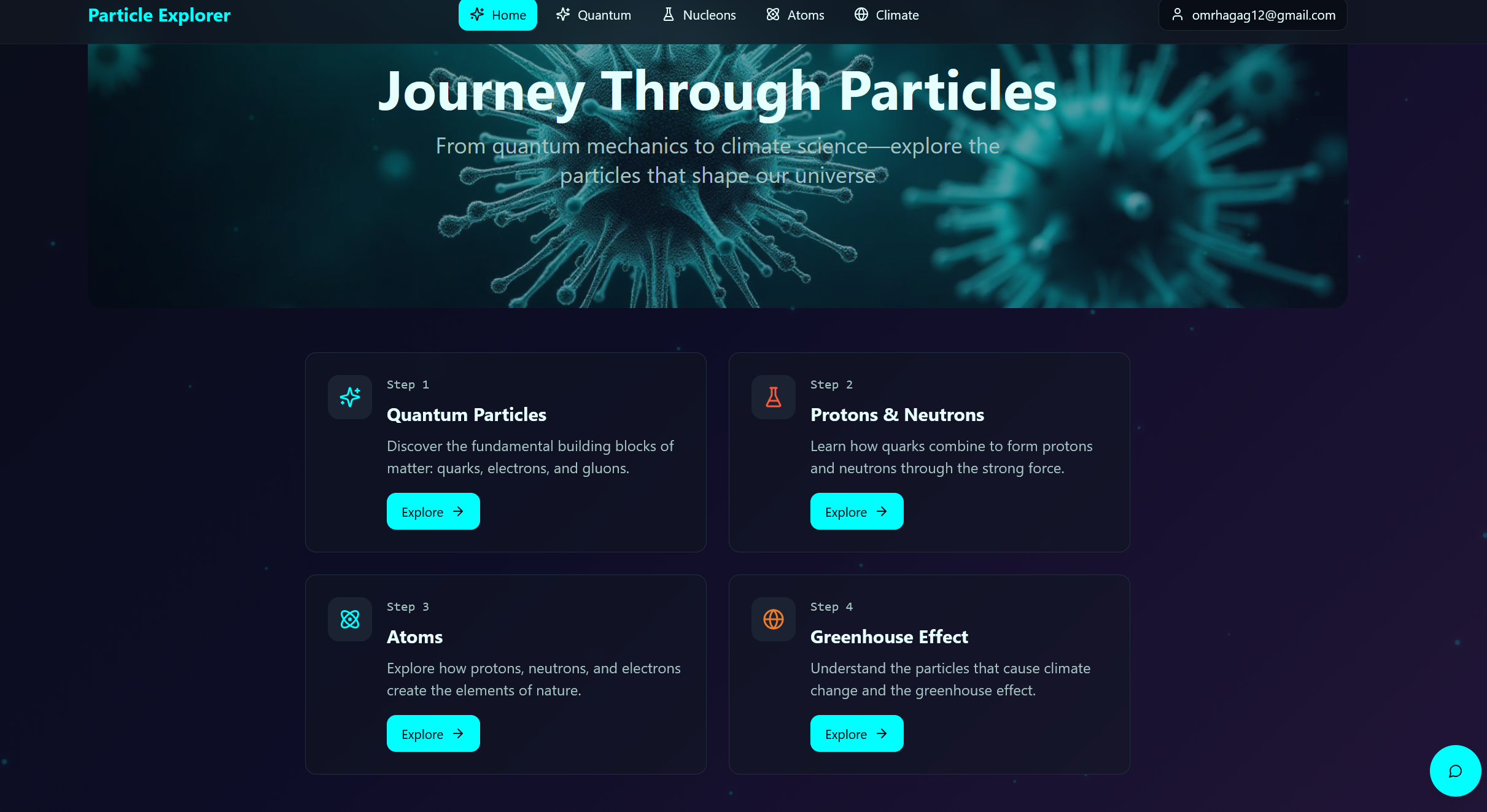
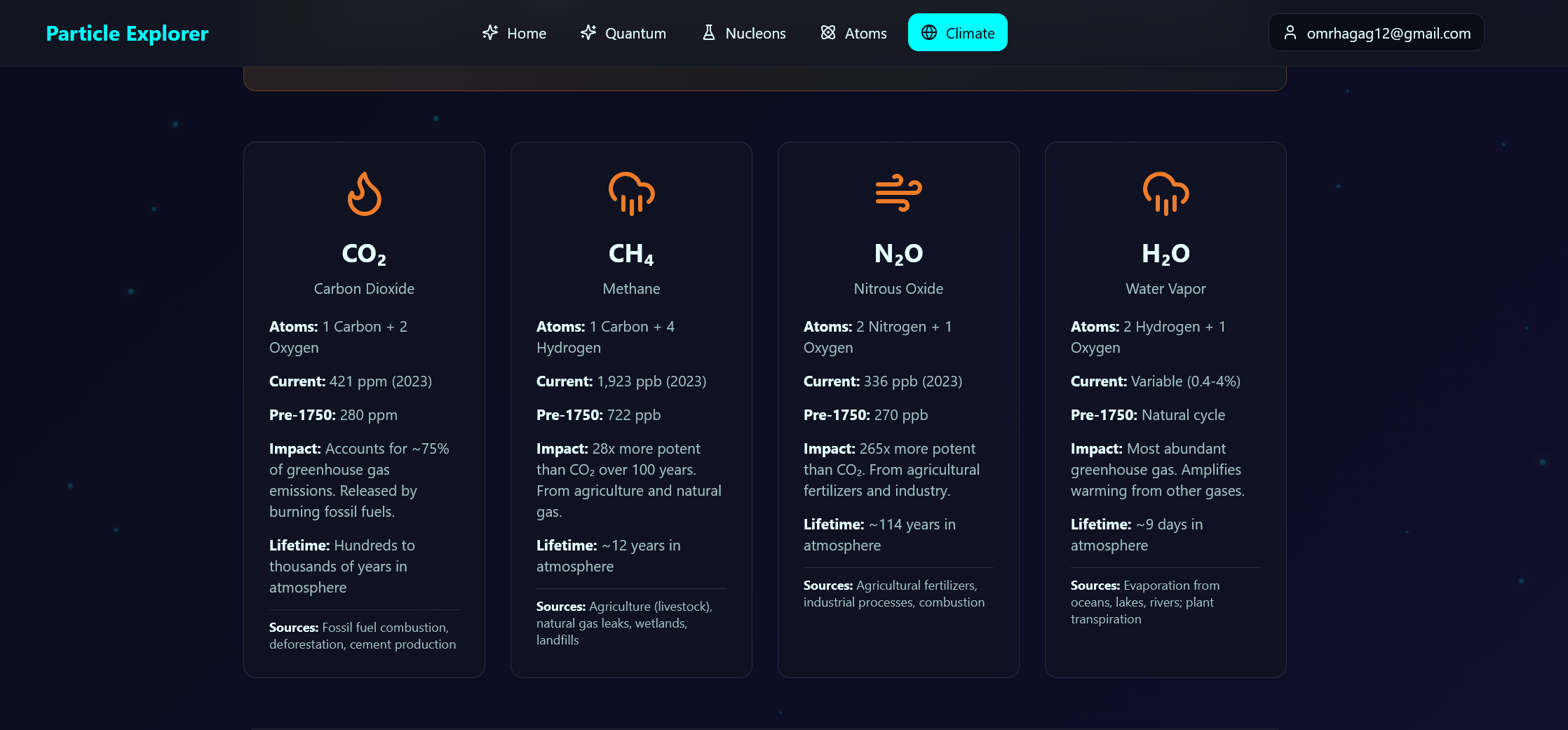
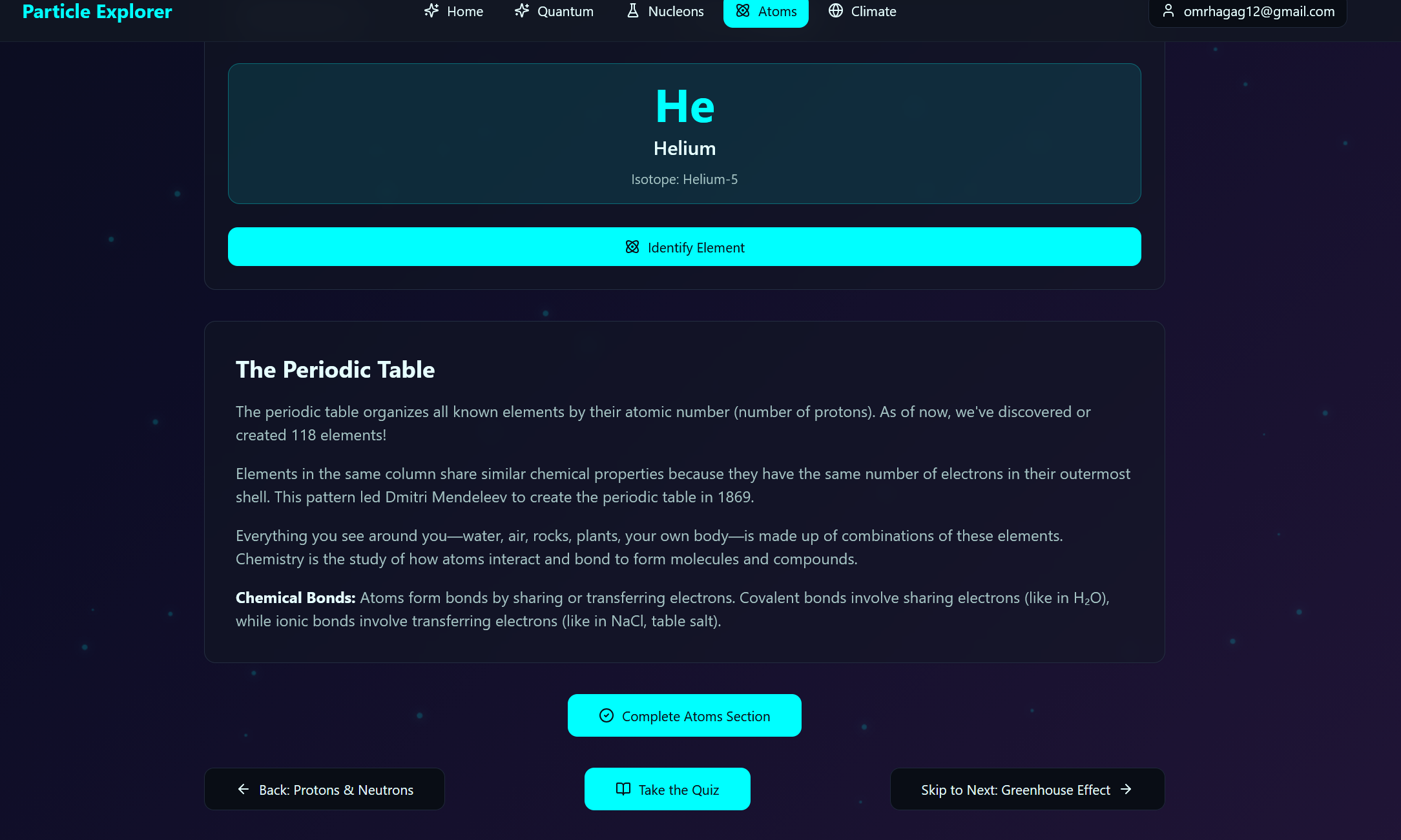
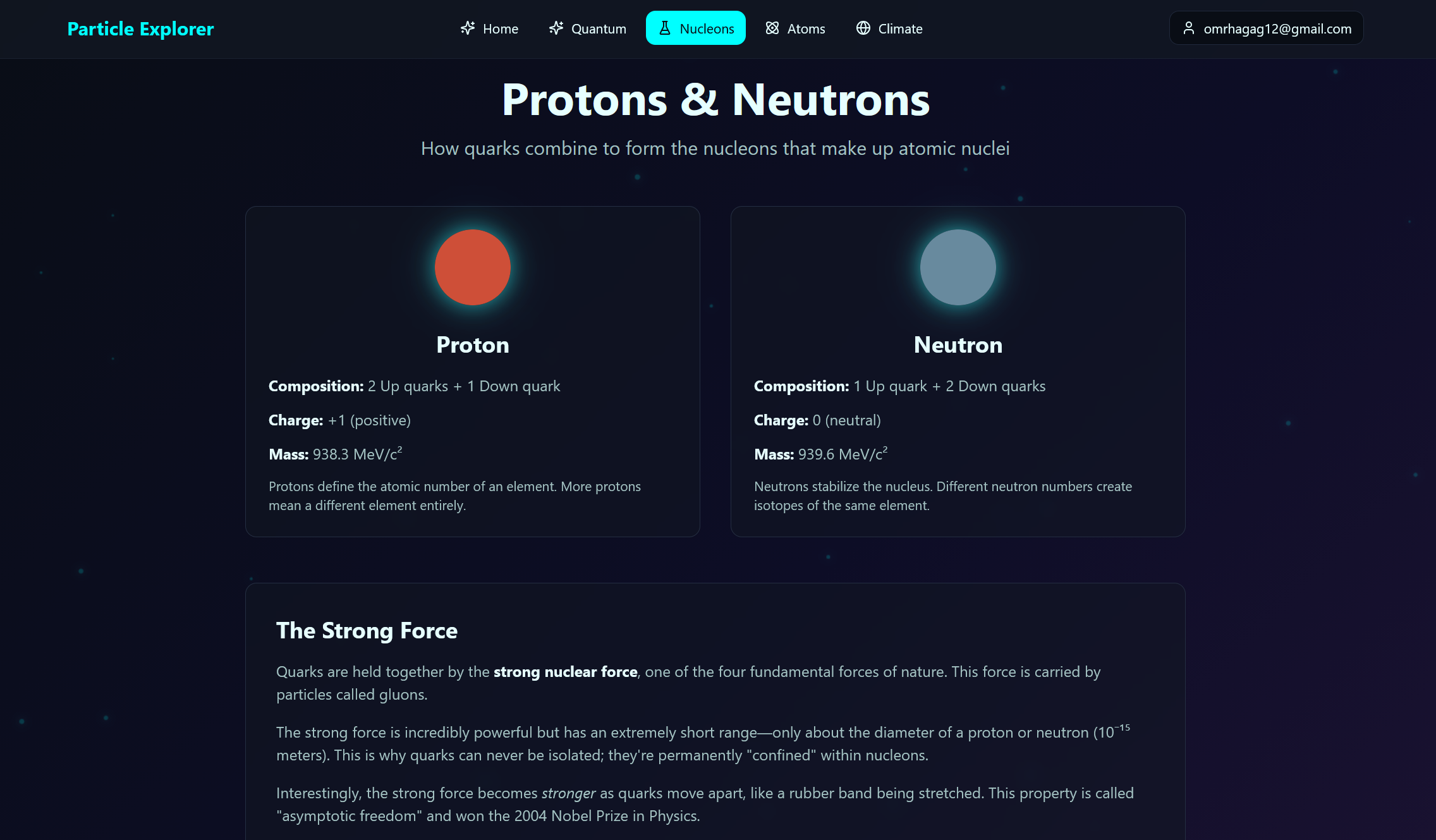
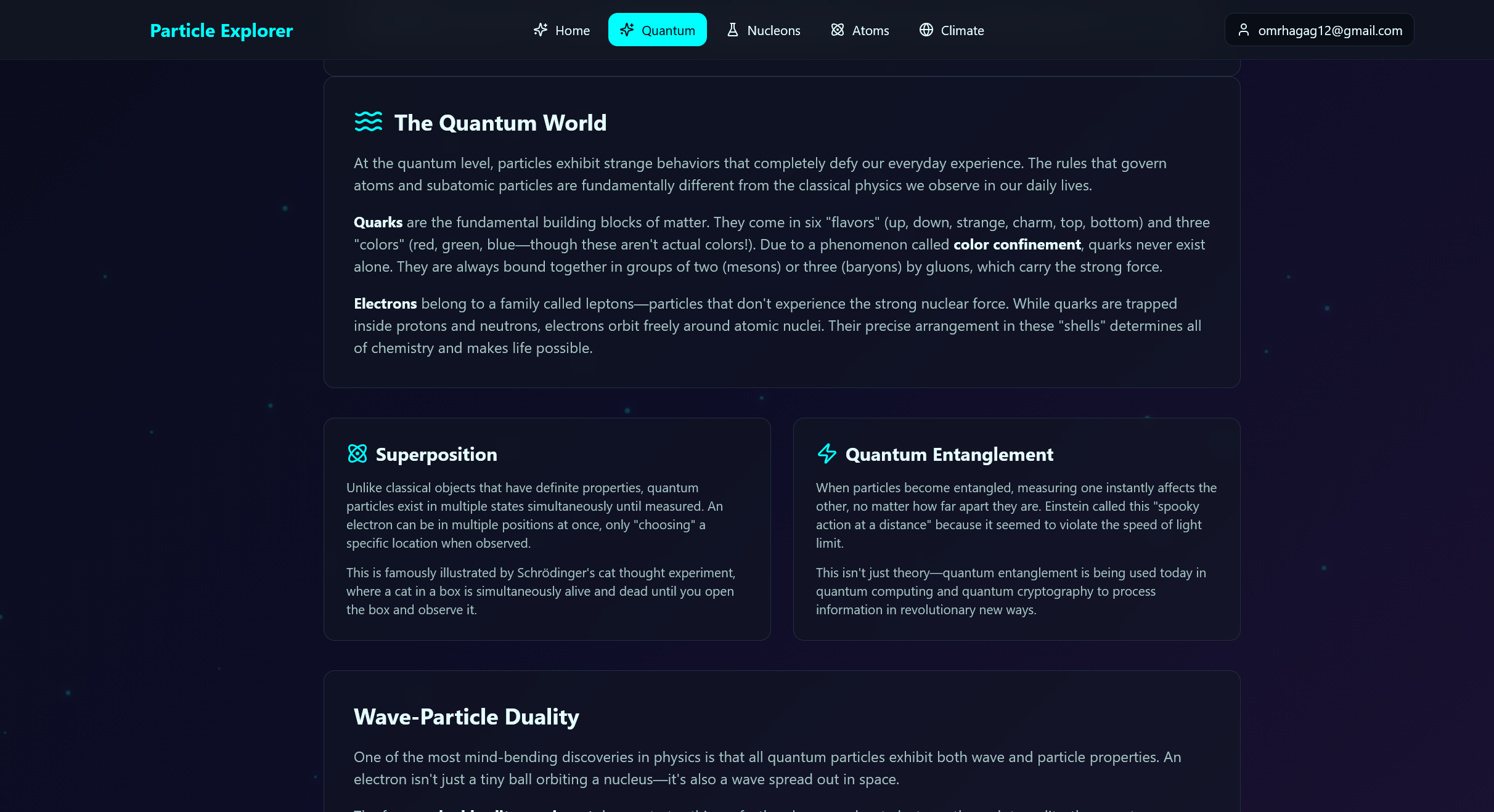
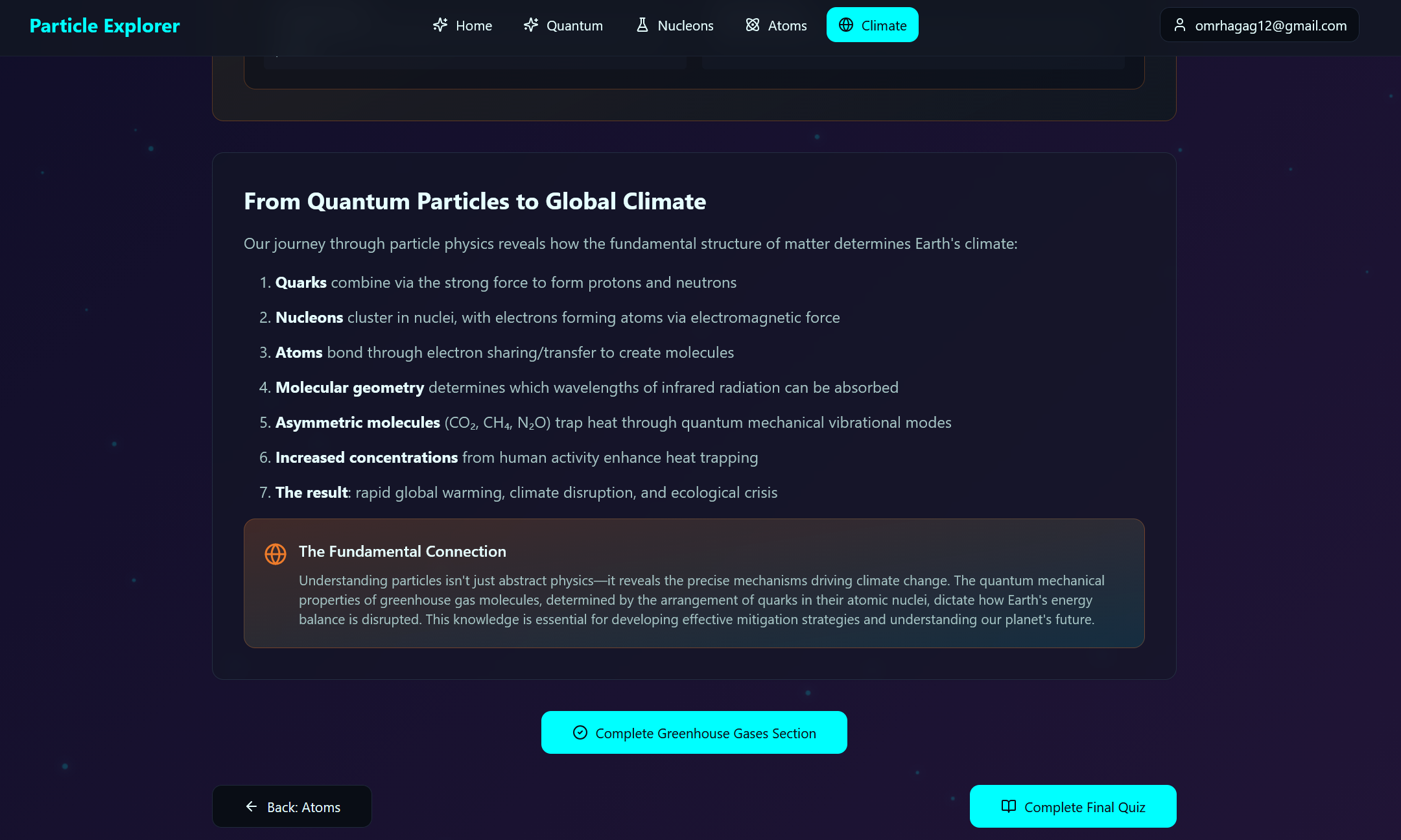
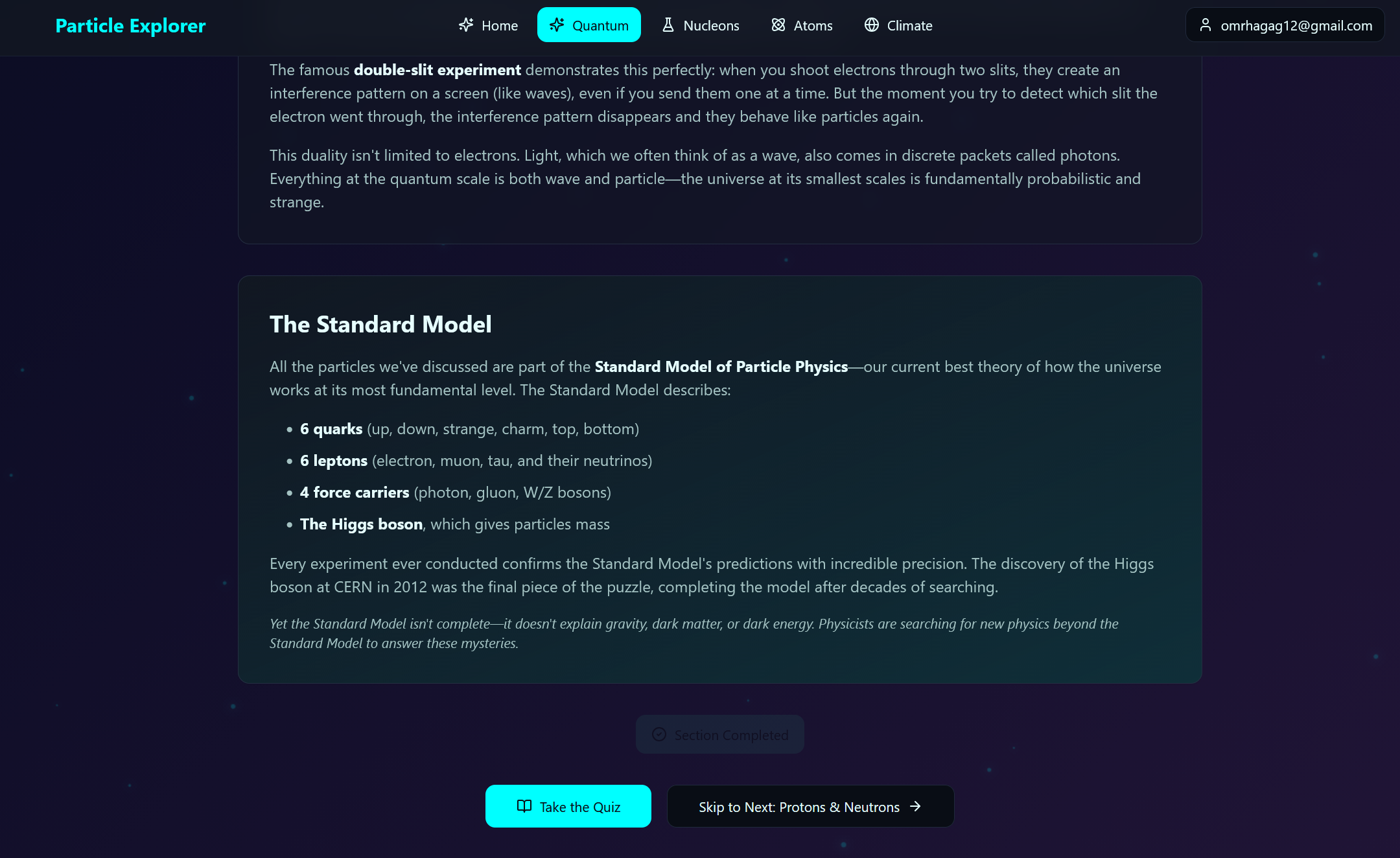
The website focuses on moving users seamlessly through four core modules: Quantum Particles, Protons & Neutrons, Atoms, and Greenhouse Gases, which together form a continuum from quantum mechanics to environmental science.
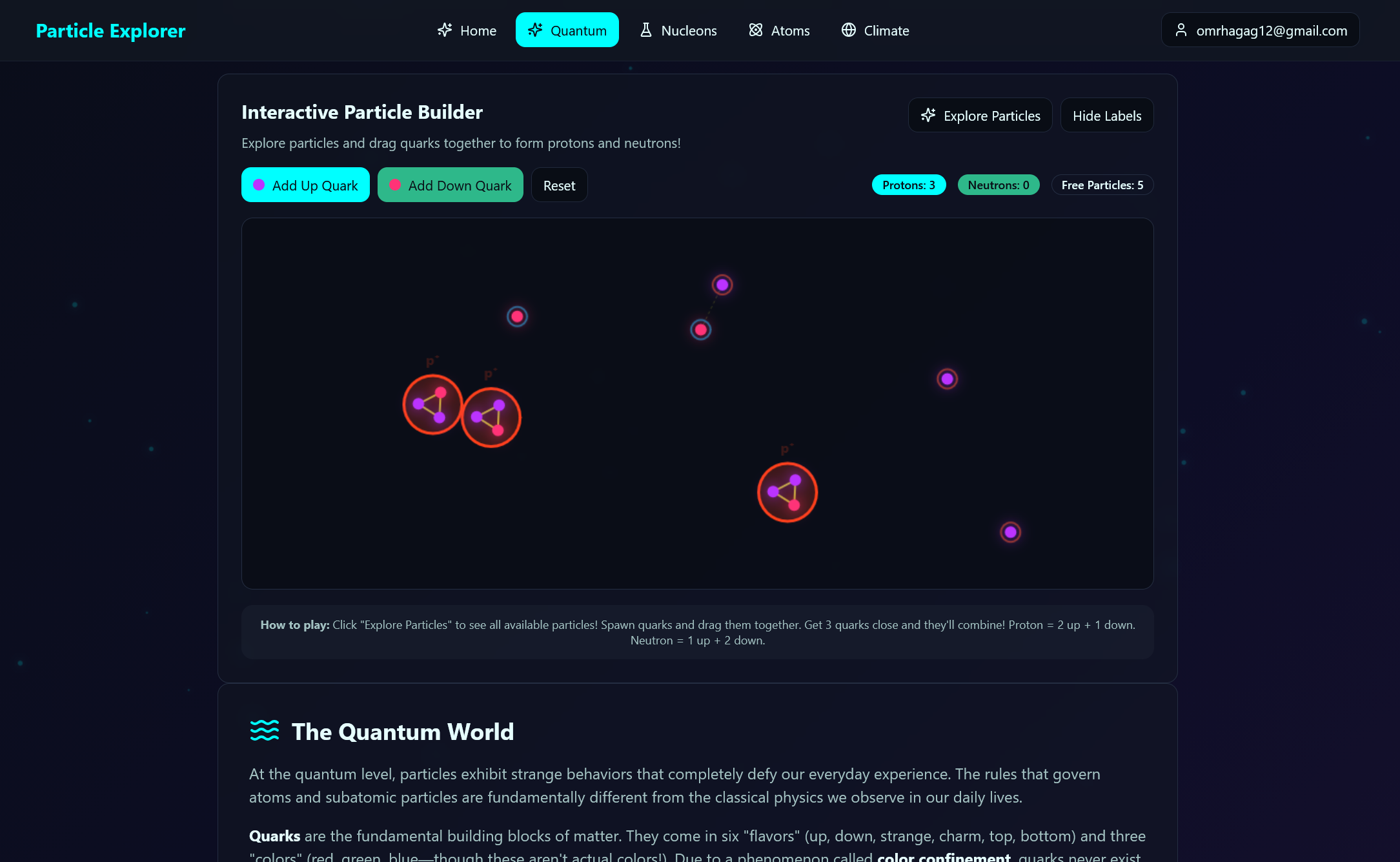
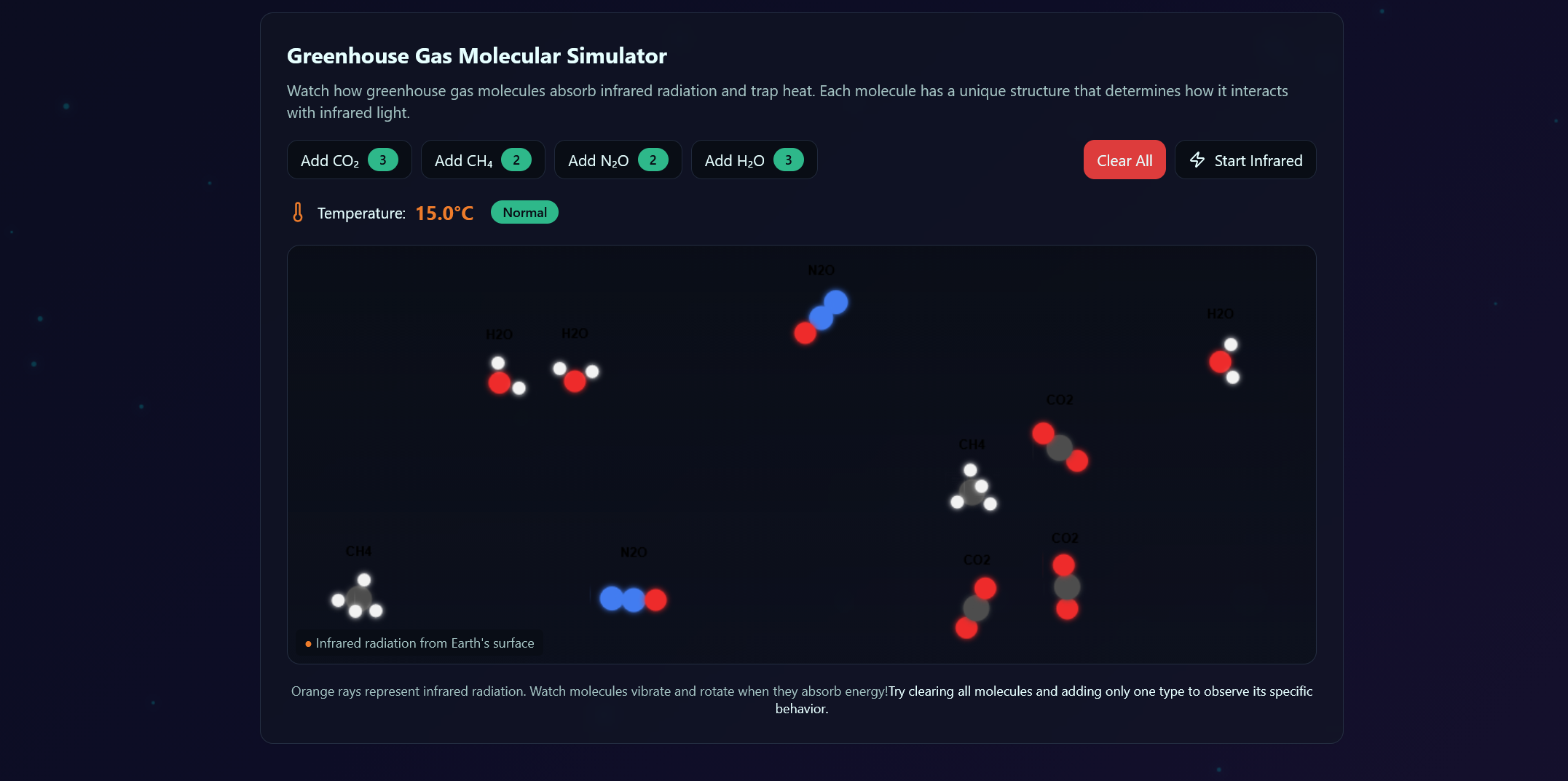
Each module includes interactive simulations that allow users to manipulate particles, build atoms, and analyze real-world climate phenomena and their effects in real-time.
These activities foster a deeper understanding of the core concepts of physics and their applications in the real world.
EcoPhysics also offers a range of other features:
Gamified Quiz System: Students receive instant scoring and feedback as they test their understanding on the material presented at the end of each section.
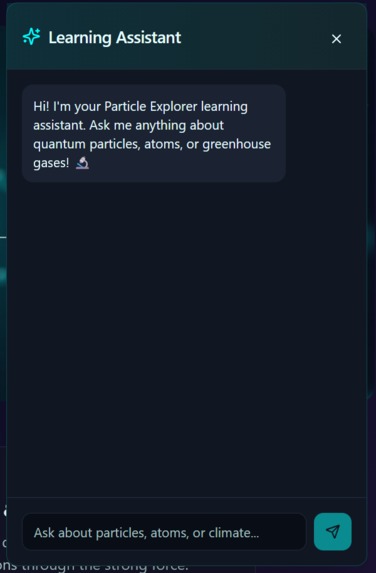
AI Tutoring Chatbot: The chatbot, integrated as a tutor, offers guidance and complex topic explanations using the Google Gemini models and Lovable AI Gateway.
Progress and Quiz Synchronization: Through Supabase, the app enables real-time progress tracking and achievement recording.
Cross-Platform Support: As a Progressive Web App (PWA), EcoPhysics runs seamlessly on web and Android devices, promoting learning on-the-go.
By combining engaging scientific storytelling, interactive simulations, and AI-driven learning, EcoPhysics helps users navigate the continuum from basic curiosity to in-depth understanding of physics and its connection to environmental science.
How we built it
We built EcoPhysics on a modern, scalable, and secure full-stack architecture by combining interactive frontends, AI fusion, and cloud data architecture.
Frontend: We used React 18 and TypeScript. Vite built the applications, while Tailwind CSS with shadcn/ui offered a responsive, consistent design system.
Backend: Managed by Supabase (Lovable Cloud) for database, authentication, and progress tracking. User-specific data isolation was enforced through Row Level Security (RLS).
AI Integration: The AI chatbot interfaces with the Lovable AI Gateway to stream live AI responses produced by Google Gemini 2.5 Flash, delivered via Supabase Edge Functions.
Simulations: Built using custom React components and canvas-based rendering to design dynamic, resource-efficient simulations.
Deployment: Integrated with GitHub for version control and automatic CI/CD pipeline builds. Vercel was used for global edge hosting, ensuring fast and reliable performance.
The architecture flows from the frontend built with React and TypeScript, through Supabase (handling the database, authentication, and row-level security), then to edge functions delivering AI streaming via the Lovable Gateway, and finally to Google Gemini 2.5 Flash for AI responses.
This architecture ensures EcoPhysics is stable, responsive, scalable, and fast, while maintaining a high degree of interactivity and AI intelligence.
Challenges we ran into
One of the biggest challenges was maintaining educational integrity while producing efficient particle simulations that perform smoothly across devices. Achieving the right balance between visual engagement and scientific accuracy took considerable effort and multiple rounds of research and refinement. Another difficult task was configuring real-time progress monitoring along with the necessary security (RLS policies), while sustaining a frictionless user experience.
Deployment challenges on GitHub Pages regarding React Router’s client-side routing were also solved by using dynamic base paths and SPA fallback methods.
Constructing the quiz system that adapts to difficulty levels and delivers meaningful feedback demanded a lot of UX design consideration.
Last, the integration of AI capabilities to the learning chatbot while keeping API cost, response time, and system performance within the limits was one of the most complex technical challenges of the project.
Accomplishments that we're proud of
Although EcoPhysics is relatively new, we are already proud of everything we have accomplished during this hackathon. For one, we created a Progressive Web App (PWA) that works on the web and Android as a fully functional, AI-powered educational platform. Next, we developed interactive scientific simulations that help explain and visualize complex, abstract concepts, such as quantum particles and atomic structure, as well as greenhouse gases. Also, we attached an AI tutoring chatbot plugged into Google Gemini models through the Lovable AI Gateway and offers real-time contextual explanations.
In addition, we created a secure 4 Supabase authentication and progress tracking system with user Row Level Security (RLS) for advanced and secured data protection. We ensured seamless deployment and securing of hosting with Vercel, automatic updates, and continuous delivery with GitHub. Lastly, we converted an idea we got from a robotics competition to a fully functional, AI-powered educational tool that links quantum physics and environmental science.
The work we produced demonstrates our unique ability to turn complex ideas into a working solution under tight time constraints, while focusing on innovation, learning, and user experience.
What we learned
While developing EcoPhysics, we gained more than just technical knowledge. We advanced our expertise in React, TypeScript, and Supabase, especially using RLS and Edge Functions for scalable and secure application development.
We learned how to integrate AI models in real-time web apps and manage streaming responses, performance optimization, and cost considerations.
We designed interactive learning tools that integrate education and technology, turning abstract scientific principles into engaging and easy learning materials.
We boosted our problem-solving and teamwork skills in overcoming problems related to deployment, synchronization, and AI integration.
Above all, we learned how to take an idea from prototype to production. This illustrates how a small, committed team can create work that impacts curiosity and learning. Remembering that building EcoPhysics taught us that technology is more than code. It is about **building tools that allow people to think, learn, and see the world in new ways.
What's next for EcoPhysics
Expanded Scientific Modules: Develop new subjects like Renewable Energy, Nuclear Reactions, and Space Physics to improve understanding of the continuum from micro to macro-science.
Voice-Based AI Tutoring: Allow hands-free and voice Gemini chatbot interaction for learning and receiving spoken explanations.
Poised Learning System: Create a recommendation engine to personalize and auto-rate learning content to user performance and pace.
Gamified Progression: Incorporate achievements, ranks, and badges to provide motivators and recognition for goal sustained attainment to boost learning soreness.
Collaborative Learning: Implement classroom features for teachers to oversee students in real time, managed assigning of learning modules, and facilitating results discussions.
Play Store Deployment: For improved reach and visibility, upload the Android PWA iteration to the Google Play Store.
Optimization: Continue to focus on improvements of simulation rendering and AI latency for dependable low-performance systems.
Alignment with Challenge Theme: Quality Education
The International hAIckathon encourages projects that deliver inclusive, equitable education and incorporate a climate‑change dimension. EcoPhysics addresses this by:
Making complex science accessible: Our app simplifies quantum physics and environmental science through interactive simulations and gamified lessons
Users can build atoms, explore greenhouse gases and visualize climate phenomena in real time
Promoting lifelong, self‑paced learning: With a built‑in AI tutoring chatbot and progress‑tracking system, learners receive personalized feedback and can advance at their own pace. This aligns with the theme’s goal of equitable quality education for all.
Embedding a climate dimension: By connecting quantum principles to real‑world climate science, EcoPhysics raises awareness about environmental challenges and empowers users to understand the science behind climate change.
Through these features EcoPhysics directly supports the hackathon’s Quality Education theme, providing an engaging educational platform that combines science literacy and climate awareness.
Built With
- css
- gemini
- html
- javascript
- lovable
- lovable-cloud
- npm
- postcss
- postgresql
- sooner
- sql
- supabase
- supabase-authentication
- supabase-edge-functions
- tanstack-query-5.83
- typescript
- vite

Log in or sign up for Devpost to join the conversation.