-
-
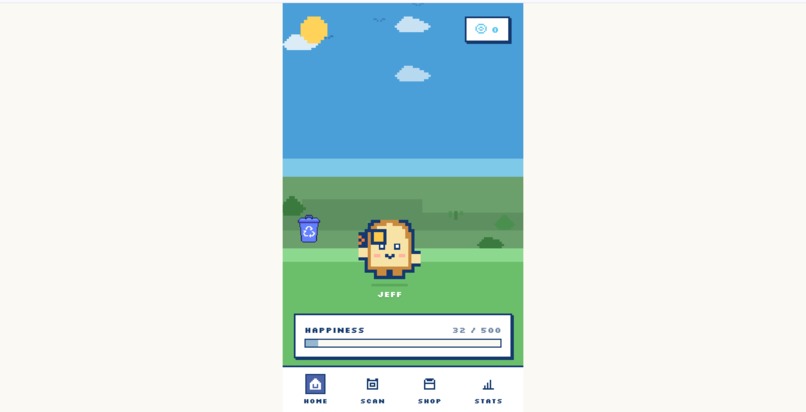
main page
-
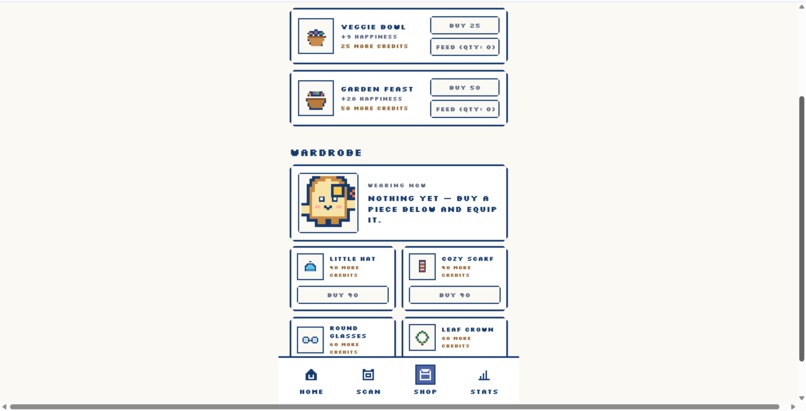
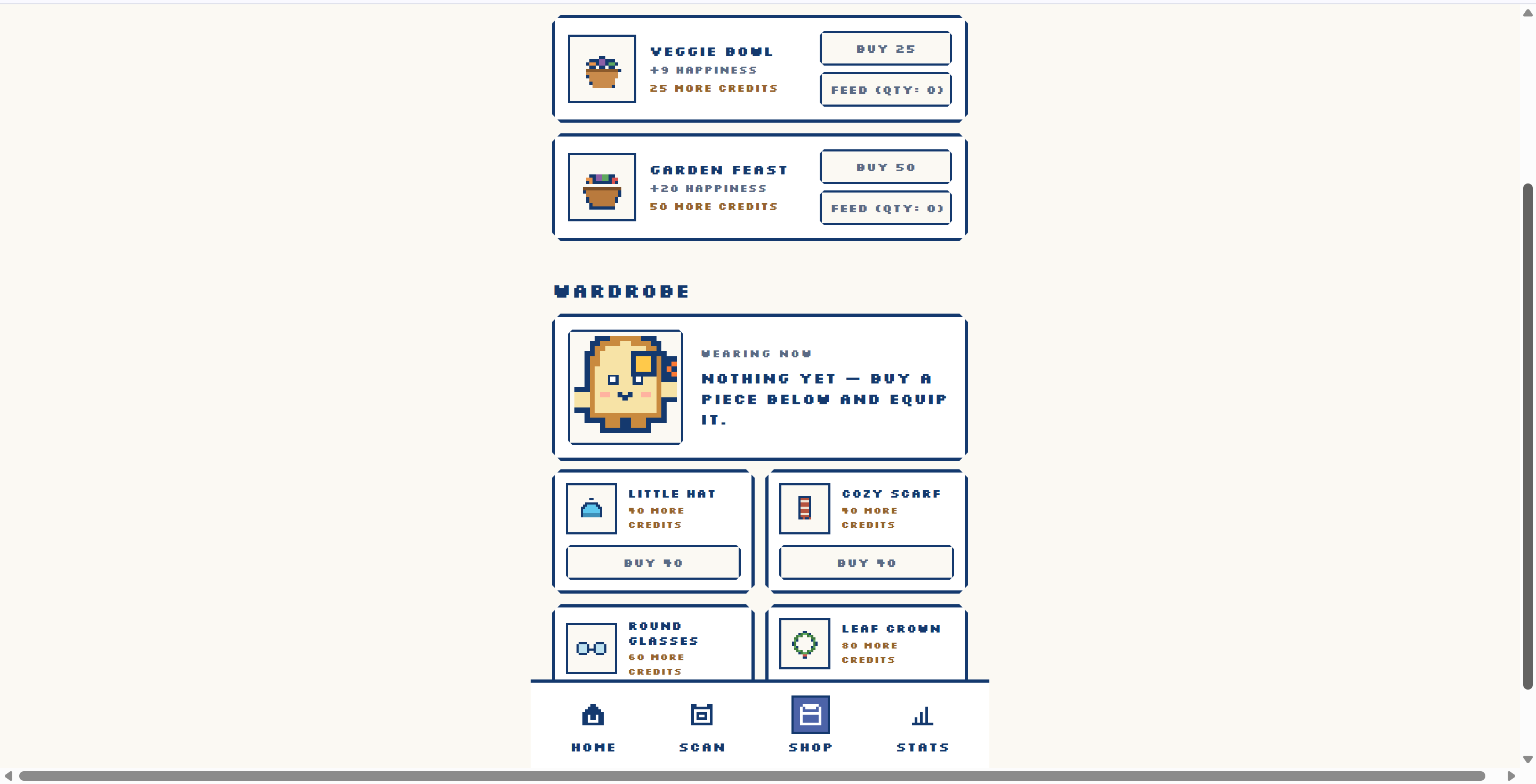
shop
-
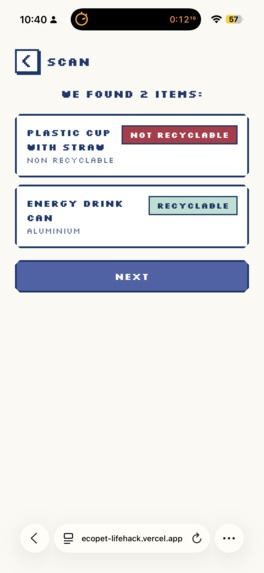
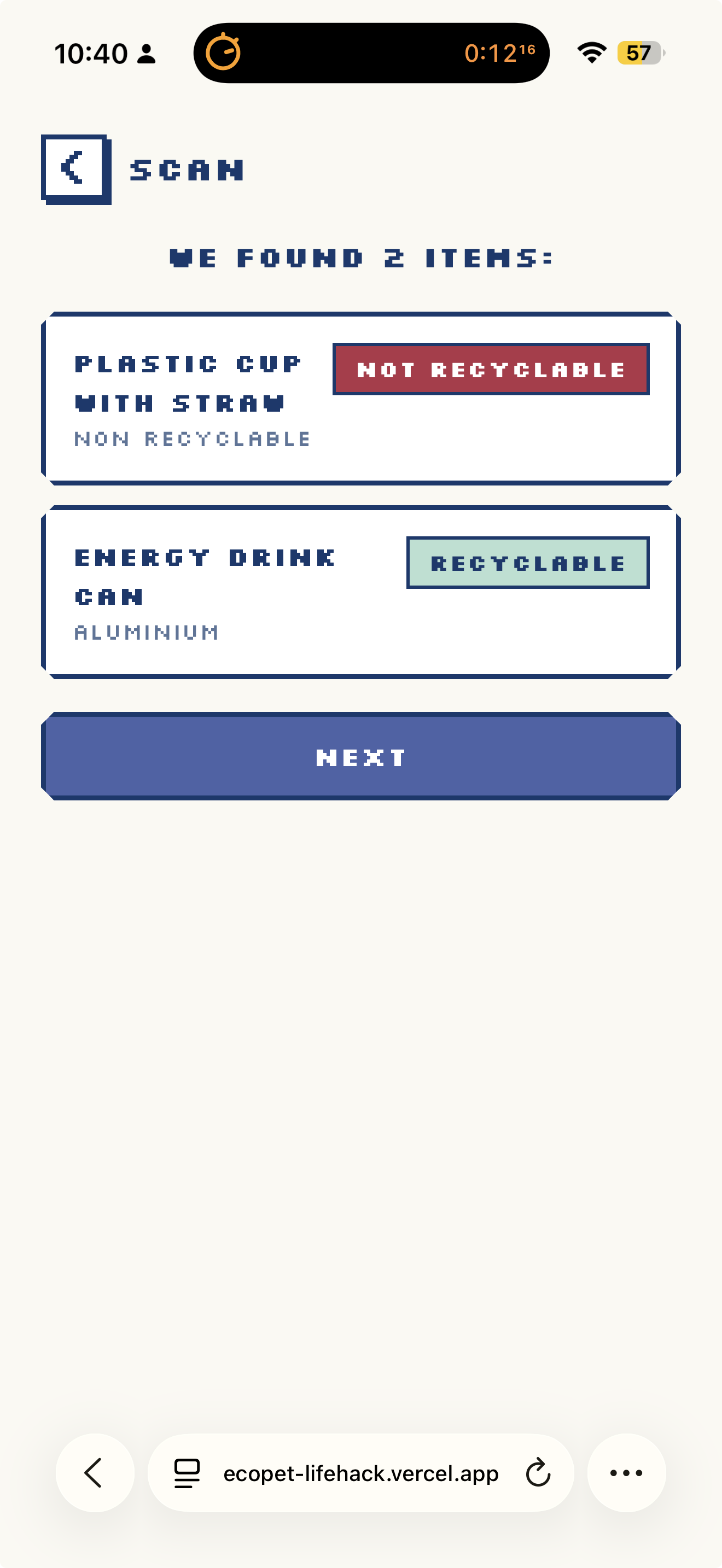
successful scan to recycle
Inspiration
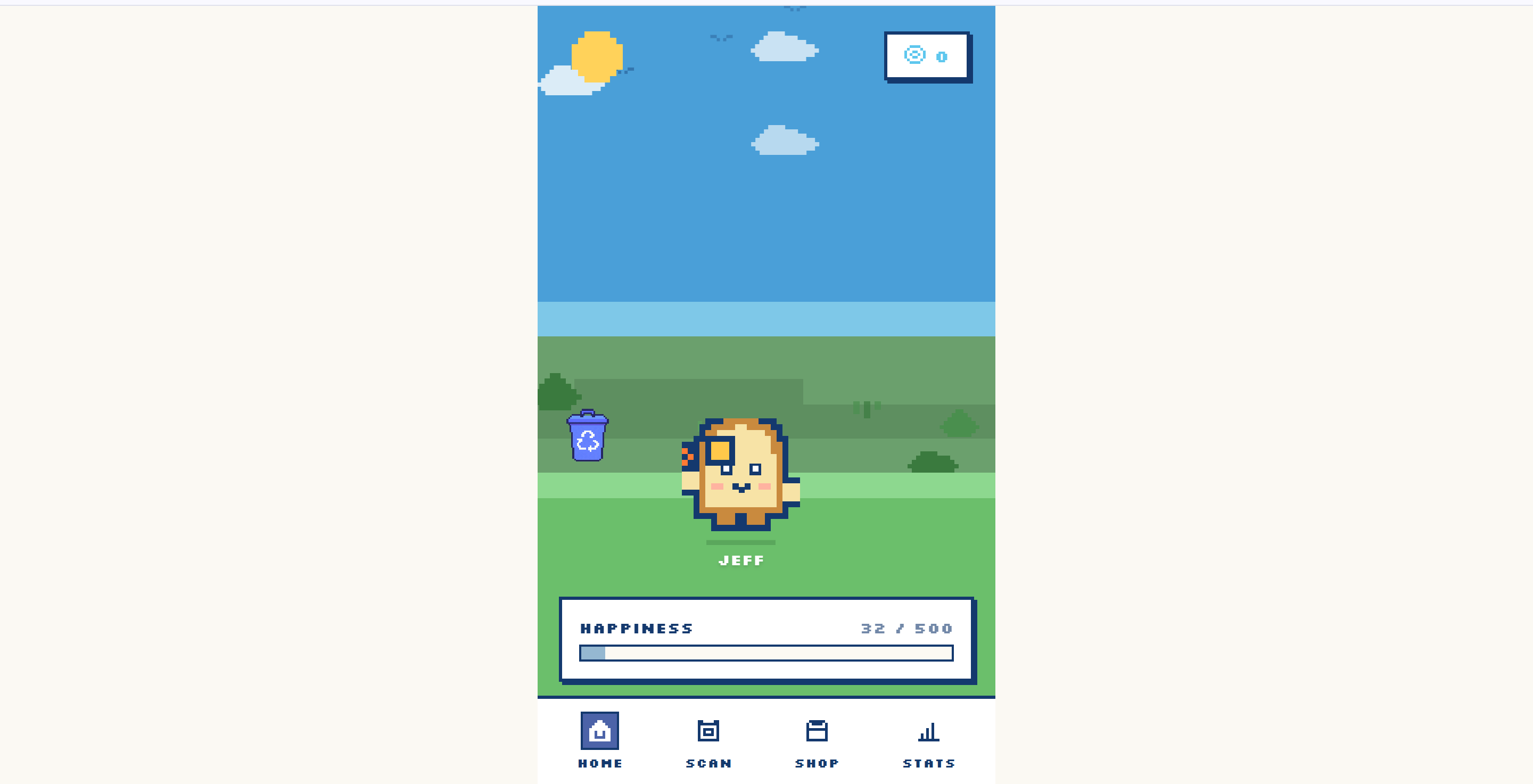
We were tasked with creating a project focused on sustainability. Rather than building just another recycling tool, we wanted to make sustainability feel personal, interactive and fun. Hence, we built EcoPet, revisiting a nostalgic icon of the gaming: The Tamagotchi. Tamagotchis encouraged users to repeatedly care for a virtual pet. We wondered: what if we could harness those same caring behaviours to caring for the planet?
Instead of caring for a pet by feeding and cleaning it, what if you can care for it by performing sustainable actions? The EcoPet is kept happy as users document their recycling journey.
Target audience and rationale
EcoPet is aimed at teenagers aged between 13-30. The incorporation of AI allows EcoPet to identify recyclable items using the user's camera. The corresponding recycling actions are then prompted to the user, providing them with clear and actionable follow-up steps. This includes an interactive recycling map that directs users to nearby recycling points, including BCRS locations. The user is also able to track their progress, allowing them to see how their everyday habits contribute to a larger environmental impact. We hope this reshapes the behaviour of our users, nudging them to cultivate sustainable habits.
Challenges and lessons learnt
One of our biggest challenges was turning our ideas into a working prototype within a limited timeframe. We had to balance ideation and creativity with the practical demands of development, especially when integrating AI into our application. Through AI-assisted development, we learned that simply asking AI to build something was not enough; we had to clearly understand our own ideas, break problems down, and craft precise prompts to get the results we wanted. Along the way, we encountered technical challenges such as integrating our YOLO model with TensorFlow.js and ensuring that the application and model loaded reliably when hosted locally. We realised we were unable to train a model which is able to correctly identify recyclables with at least 80% confidence. Overcoming these challenges taught us to treat AI as a tool that amplifies our creativity and problem-solving, rather than replacing them. As such, we made the decision to pivot and use the API credits we were given to do the heavy lifting.
Our accomplishments
Despite the time constraints and setbacks, we are proud that we were able to turn our ideas into a working prototype while learning how to collaborate effectively with AI throughout the development process. More importantly, we designed EcoPet around the idea that sustainability should not feel like a chore. By combining the emotional attachment of a virtual pet with AI-powered recycling identification, progress tracking, and real-world recycling locations, we hope to turn individual recycling actions into a habit. Rather than simply telling users to recycle, EcoPet gives them a reason to come back and care.
What's Next?
We envision EcoPet taking on a broader role in encouraging sustainable living in the future. With recycling as our starting point, we aim to extended the same reward-based system to other everyday sustainability habits. For example, users could earn points by choosing public transport instead of driving, setting their air conditioning to 25°C, reducing energy and water consumption, or taking other environmentally conscious actions. By rewarding a wider range of sustainable choices, EcoPet could grow from a recycling companion into a personal sustainability companion, helping users turn small, everyday decisions into lasting habits.
Built With
- chatgpt
- claude
- css
- gemini
- typescript

Log in or sign up for Devpost to join the conversation.