Inspiration
Ecopath was born out of a deep inspiration to create a positive impact on our environment and improve the way we navigate our world. I was motivated by the pressing need to reduce carbon emissions, optimize travel routes, and promote sustainable transportation practices. I drew inspiration from the urgency of climate change and the desire to empower individuals to make eco-conscious choices. By combining innovative technologies, such as data analysis, AI algorithms, and user-friendly interfaces, we sought to revolutionize the way people plan their journeys, minimize their carbon footprints, and contribute to a greener and more sustainable future. Ecopath embodies our collective commitment to creating a better world by reimagining the way we navigate and protect our planet.
What it does
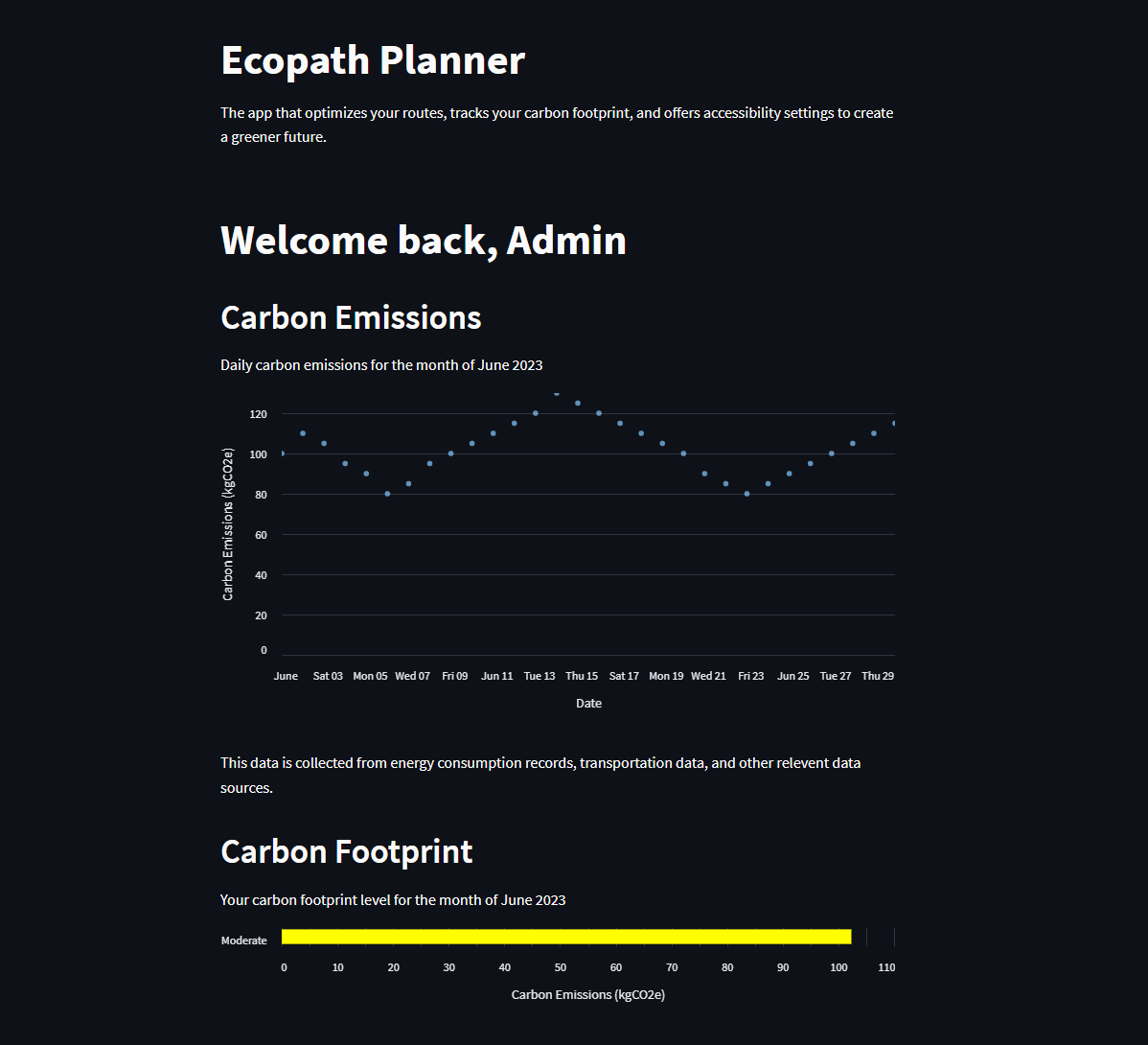
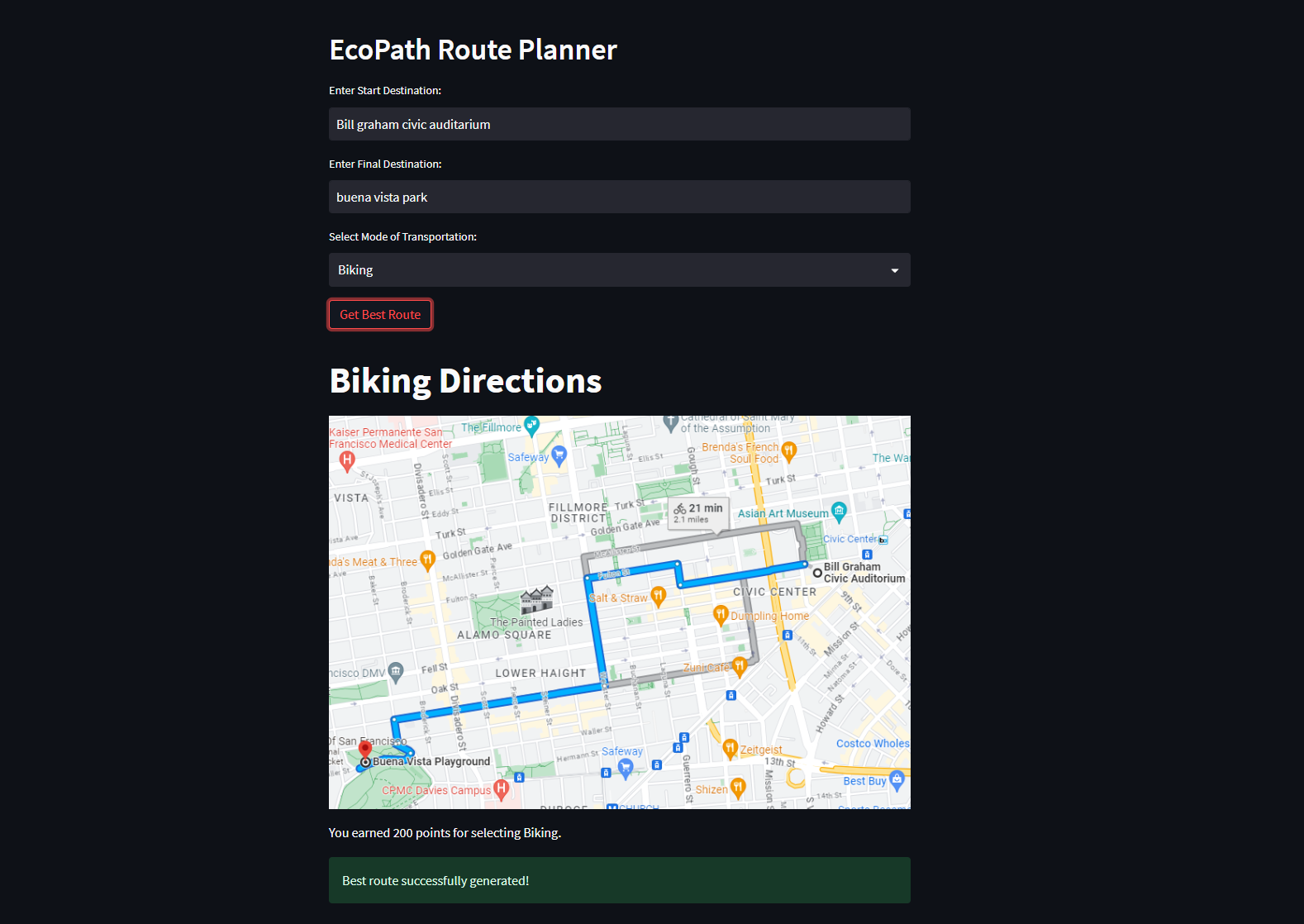
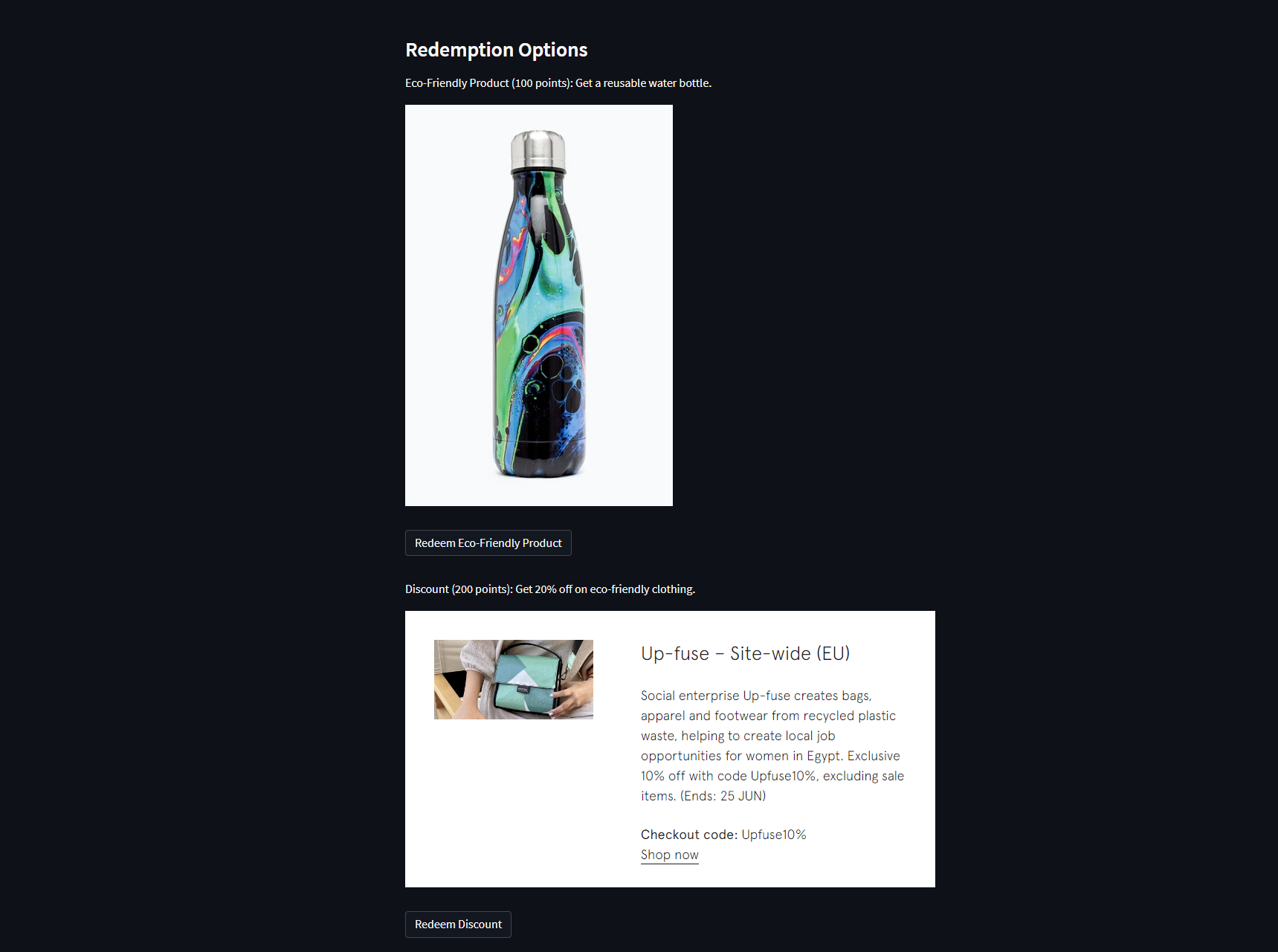
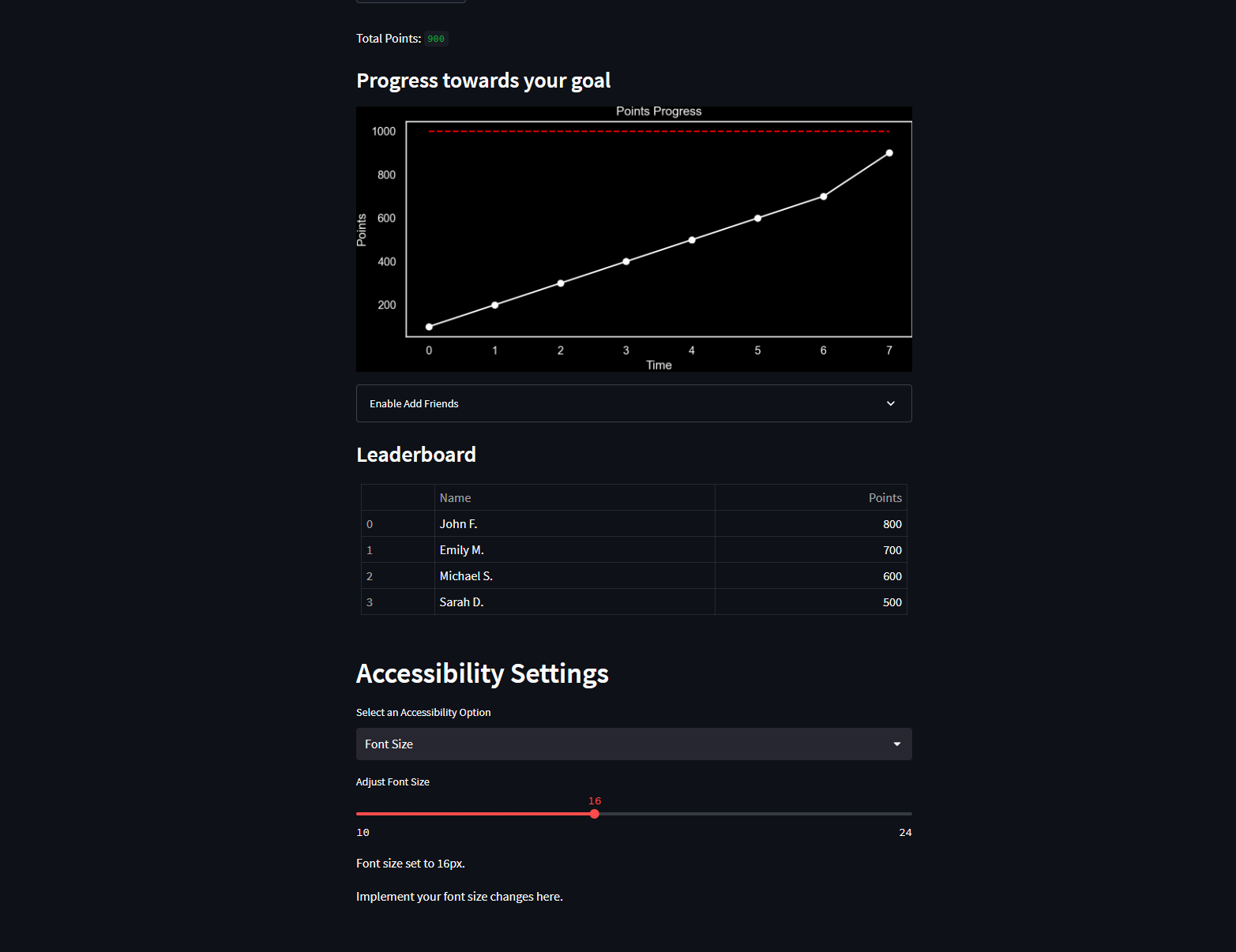
Ecopath is a groundbreaking app that revolutionizes travel planning by optimizing routes, tracking carbon footprints, and promoting sustainable transportation choices. By leveraging advanced technologies like data analysis, AI algorithms, and user-friendly interfaces, Ecopath empowers users to plan their journeys efficiently while minimizing their environmental impact. It provides real-time insights on carbon emissions, offers personalized recommendations for eco-friendly transportation modes, and enables users to visualize their carbon footprints over time. With Ecopath, individuals can make informed decisions, contribute to a greener future, and actively participate in creating a more sustainable world. User can check their carbon footprint, plan sustainable routes, and redeem their points while competing with their friends.
How we built it
I harnessed the power of data, AI, Streamlit, MongoDB, and Google Cloud to make this app. I focused on incorporating accessibility settings that empower users with diverse needs, ensuring they can fully engage with the application. My goal was to create an inclusive experience that promotes equal access and usability for everyone. I aimed to tackle the environmental impact of transportation by optimizing routes and tracking carbon footprints. By leveraging data and AI algorithms, I developed a solution that not only minimizes travel time but also enables users to make informed decisions about their carbon emissions, fostering a greener future. I recognized the immense value of data in driving meaningful insights and decision-making. This project utilized comprehensive data on routes, carbon emissions, and user preferences to provide personalized recommendations and accurate carbon footprint calculations. Through AI algorithms, I optimized route planning, identified patterns in carbon emissions, and delivered intelligent recommendations to users, making their journeys more efficient and eco-friendly. I leveraged MongoDB capabilities to store and retrieve user data securely, ensuring a reliable and efficient system and integration of Google Cloud services, harnessing its computational power and storage capabilities to enhance the performance and scalability of the application.
Challenges we ran into
Throughout the development process, we encountered several challenges that pushed us to innovate and find creative solutions. One of the main hurdles was integrating diverse data sources and ensuring their accuracy and reliability. Additionally, optimizing the performance of complex algorithms, especially when handling large datasets, required careful fine-tuning and optimization techniques. Ensuring the app's accessibility for users with varying needs posed another significant challenge, requiring us to implement inclusive design principles and incorporate accessibility features seamlessly. Despite these obstacles, our team's dedication and collaborative spirit enabled us to overcome these challenges and deliver a robust, user-friendly, and impactful solution in Ecopath.
Accomplishments that we're proud of
One of my notable accomplishments during this project was the successful adoption and mastery of Streamlit, a powerful framework for building interactive web applications. I had limited prior experience with Streamlit, but I enthusiastically embraced the challenge of learning and leveraging its capabilities. Through dedicated research, experimentation, and collaboration, I quickly grasped the fundamental concepts and became proficient in using Streamlit to develop our application. This accomplishment enabled me to create a polished and user-friendly interface for Ecopath and showcased our adaptability and determination to explore new technologies. Learning Streamlit opened up new possibilities for future projects and empowered us to deliver a seamless and engaging user experience.
What we learned
Throughout the development of Ecopath, I encountered various challenges that tested my problem-solving skills and pushed me to expand my knowledge. From integrating accessibility features to ensuring sustainability and leveraging data and AI technologies, I navigated complex territories. I tackled the intricacies of Streamlit, diving into its documentation and experimenting with its components to create a seamless user interface. Additionally, I harnessed the power of MongoDB for efficient data storage and retrieval and explored the capabilities of Google Cloud to enhance the application's performance and scalability. The experience of overcoming these challenges not only bolstered my technical expertise but also fostered a deep sense of accomplishment in learning and applying new technologies to create a robust and impactful solution like Ecopath.
What's next for EcoPath
Ecopath has achieved significant milestones as a solo project, but its journey is far from over. Moving forward, the plan is to leverage advanced machine learning techniques to enhance route optimization and carbon footprint predictions. Integration of real-time data sources will provide users with up-to-date information on carbon emissions and transportation options. Continual improvement of accessibility features remains a priority, ensuring that Ecopath caters to the needs of diverse users. The future of Ecopath extends beyond being a standalone application, as it aims to foster collaborations with local communities, organizations, and governments to drive sustainable transportation initiatives and create a more environmentally conscious world.
Built With
- ai
- big-data
- google-cloud
- mongodb
- python
- streamlit

Log in or sign up for Devpost to join the conversation.