Inspiration
What it does
How we built it
Inspiration
Climate change is an enormous problem, but individual climate action often feels abstract. Most people already know that driving less, taking public transit, or walking can reduce emissions — the harder question is: how do we make people actually want to change their everyday habits?
That question inspired EcoPal.
We wanted to move beyond simply showing users carbon numbers or telling them what they should do. Instead, we asked: What if climate action felt rewarding, personal, and even fun?
We decided to start with students and everyday transportation. Students travel constantly — to class, work, grocery stores, restaurants, social activities, and around the city — making transportation a natural starting point for small but repeatable climate actions.
What EcoPal Does
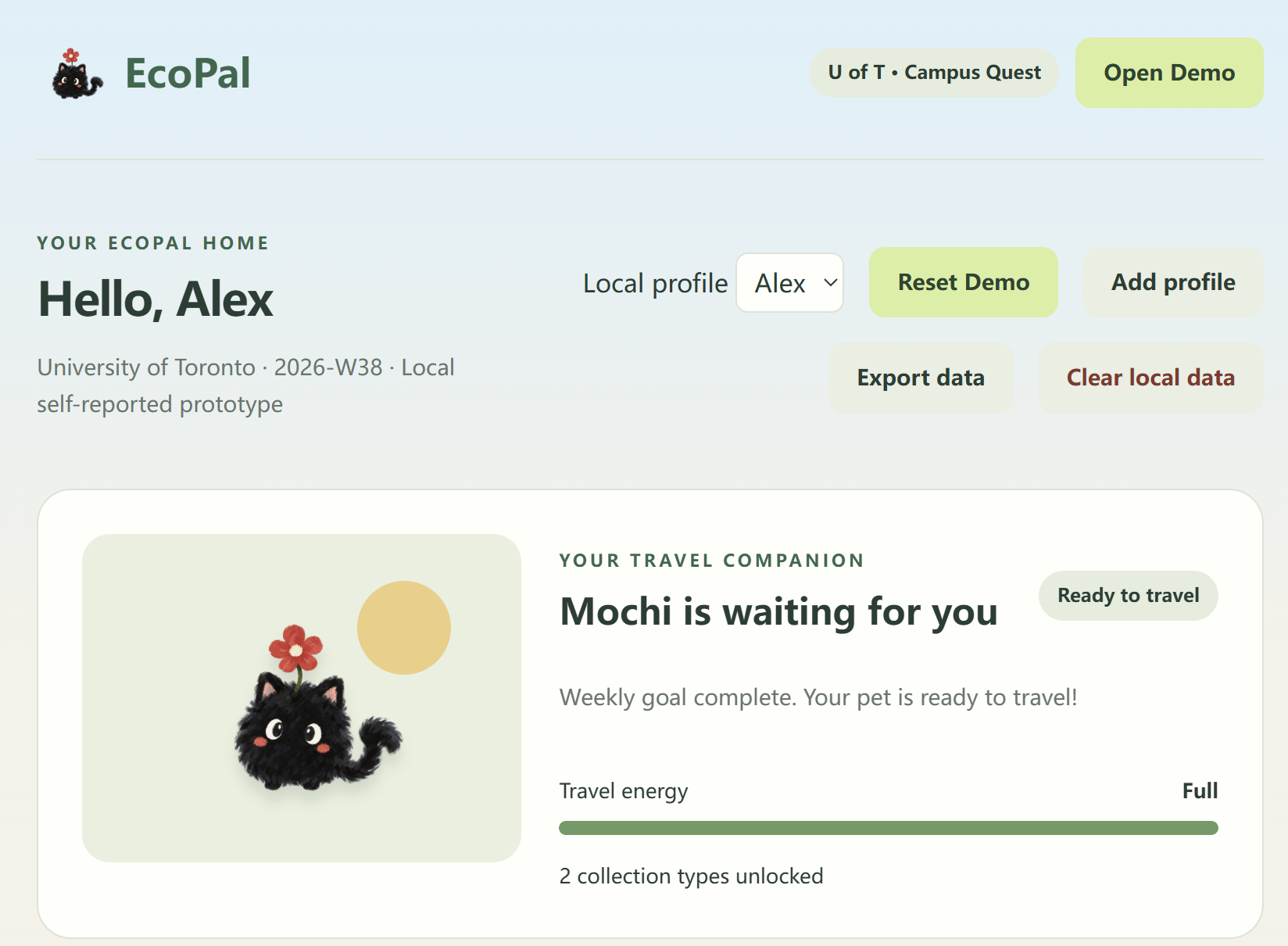
EcoPal is a gamified sustainability app that turns everyday transportation choices into personalized goals, rewards, and adventures with a virtual pet.
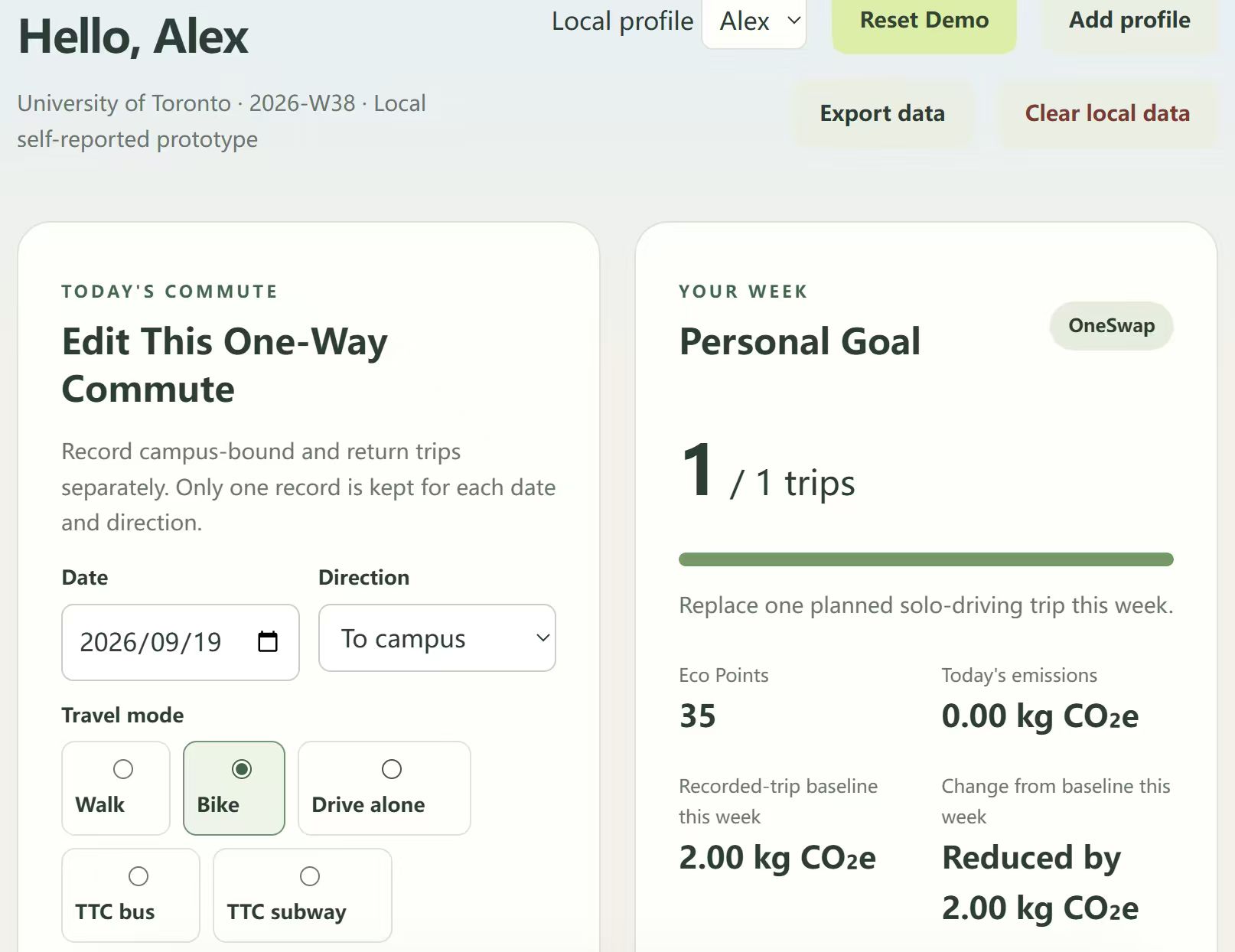
During onboarding, users enter information about their transportation habits and choose between two types of goals:
- OneSwap encourages users to replace an existing higher-carbon trip with a more sustainable alternative.
- KeepGoing rewards users who already walk, bike, carpool, or take public transit for maintaining those habits.
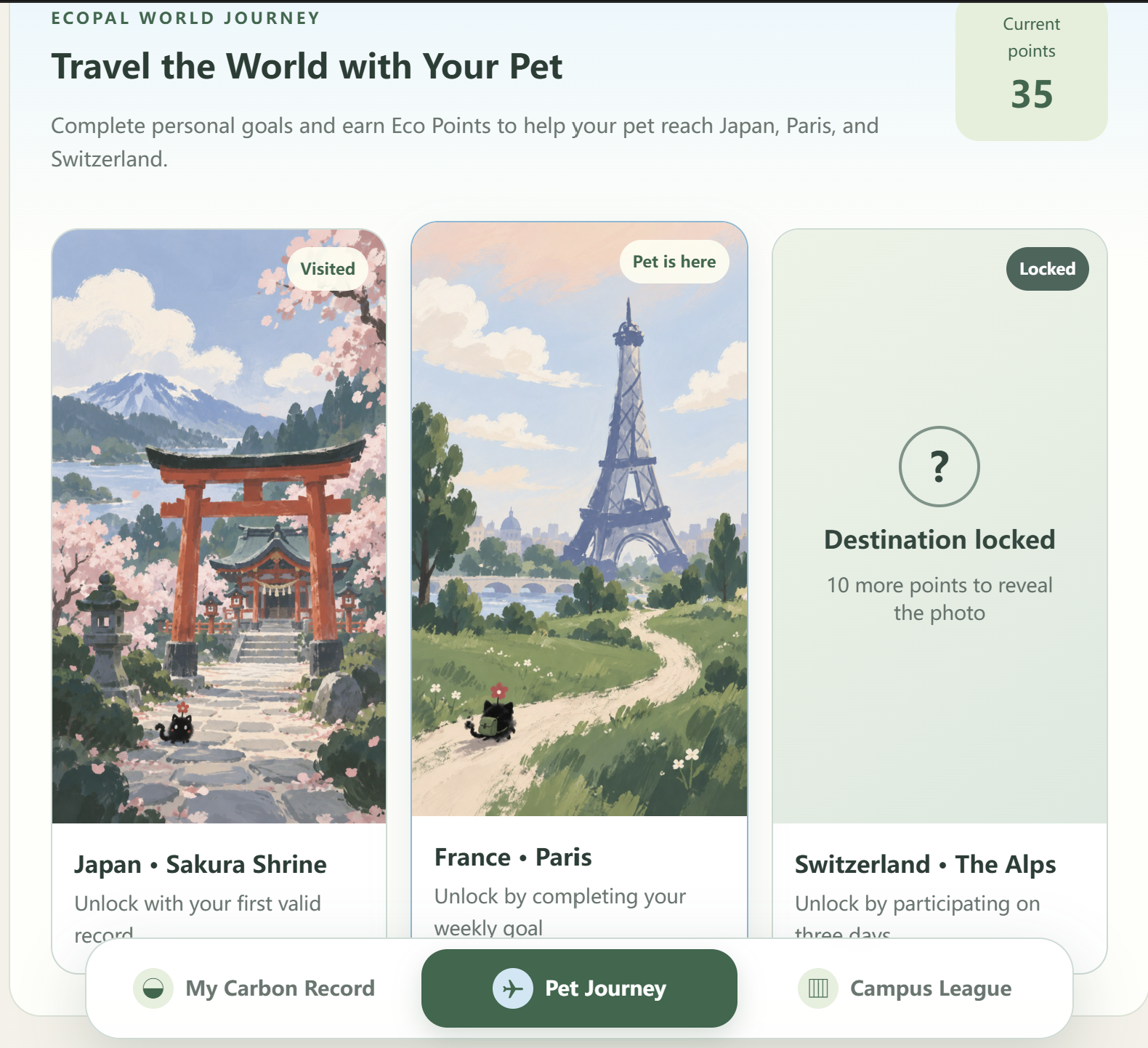
As users log trips and make progress toward their goals, they earn points. Once they collect enough points, they can unlock new destinations and send their EcoPal on an adventure.
Their EcoPal then returns with a travel photo, which becomes part of the user's permanent collection.
This creates a simple reward loop:
Sustainable trip → Goal progress → Points → New destination → EcoPal adventure → Collectible memory
We also designed EcoPal to encourage users rather than punish them. If someone gets busy and leaves the app for several days, their progress and collection remain. Their EcoPal simply waits for them to return.
How We Built It
Our team approached EcoPal from multiple perspectives: product strategy, sustainability, UI/UX design, data, and development.
We first mapped out the complete user journey — from onboarding and transportation preferences to goal selection, trip logging, rewards, map progression, and collectible travel memories.
From there, we focused on building a functional prototype around the most important behavior loop rather than trying to implement every possible sustainability feature during the limited hackathon timeframe.
We designed EcoPal around three principles:
Accessible: Climate action shouldn't require completely changing your lifestyle. A user can start with just one trip.
Sustainable: Instead of rewarding one-time actions, EcoPal encourages behaviors that can realistically become long-term habits.
Scalable: Transportation is only our starting point. The same system of personalized goals, progress, and rewards could eventually expand into areas such as diet, household energy, consumption, and travel.
Challenges We Faced
Our biggest challenge was scope.
Climate action covers almost every part of daily life, and we initially had many ideas for EcoPal. With limited hackathon time, we had to decide what actually demonstrated our core idea.
We ultimately narrowed our prototype to transportation and focused on making the central experience clear and functional.
We also faced the challenge of balancing impact with engagement. We didn't want EcoPal to feel like another carbon calculator, but we also didn't want gamification to distract from its environmental purpose. The virtual pet, destination system, and collectible photos became our solution: sustainability drives the game rather than sitting beside it.
On the development side, integrating different parts of the prototype and debugging under a tight deadline also required constant communication between our team. We learned to prioritize essential functionality, divide responsibilities, and iterate quickly when something didn't work as expected.
What We Learned
One of our biggest lessons was that building a sustainability product isn't only about calculating carbon emissions — it's also about understanding human behavior.
Simply giving someone more information doesn't necessarily change what they do. Sustainable choices need to feel achievable, visible, and rewarding.
We also learned how important scope is in a hackathon. Our initial vision was much larger than what we could realistically build, so we learned to identify the smallest experience that could still communicate the larger idea.
Most importantly, working across different backgrounds taught us how product design, behavioral thinking, data, and technology can come together around one problem.
What's Next for EcoPal?
We see the university as EcoPal's first community, not its boundary.
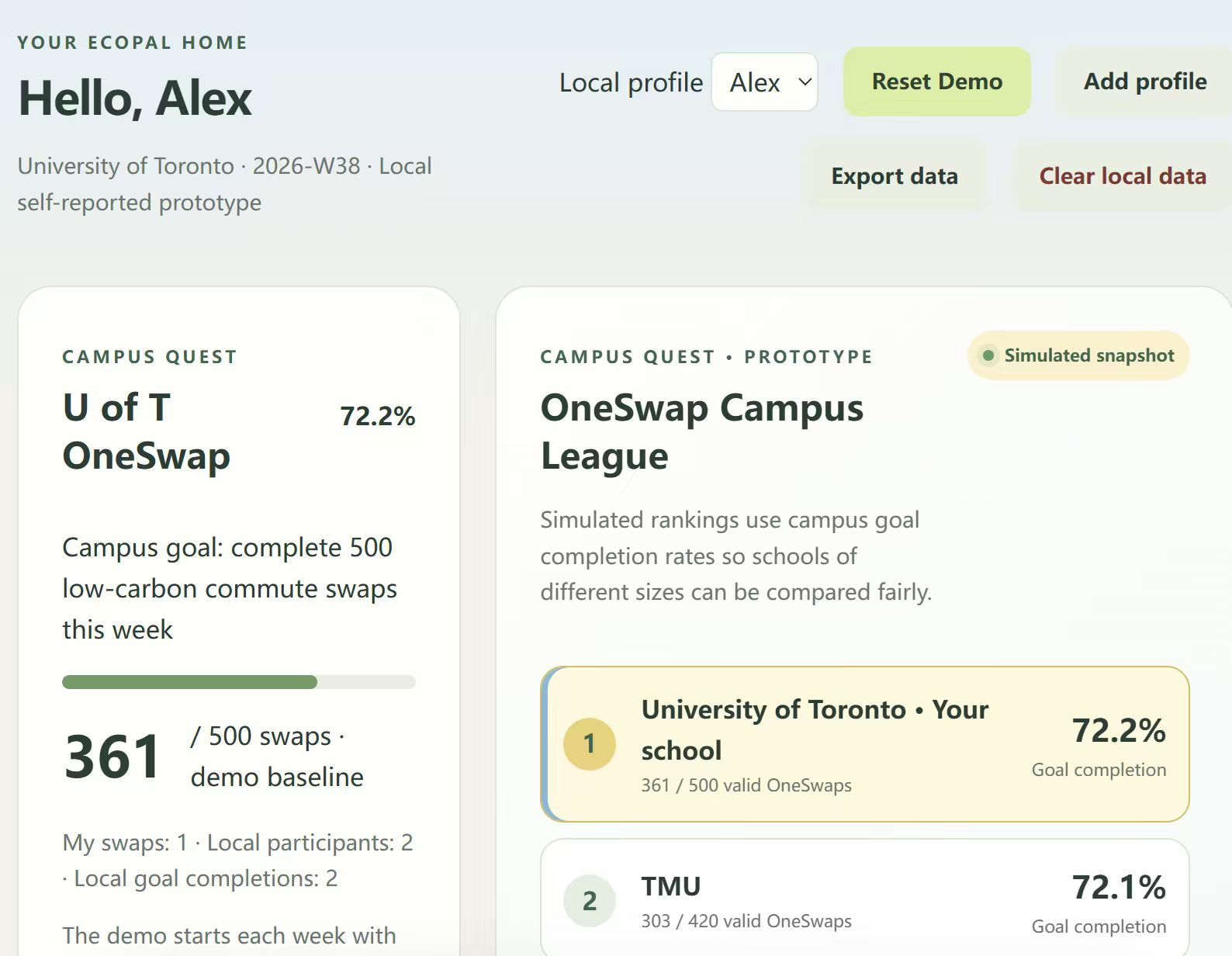
Future versions could introduce Campus Quests, where individual actions contribute toward shared sustainability challenges across an entire university community.
From there, EcoPal could expand beyond students and transportation. The same behavior-change model could be adapted to food choices, household energy, consumption, and travel.
As the platform develops, we also see an opportunity to address higher-impact consumer behaviors, where changes in areas such as frequent air travel, energy use, and high-carbon consumption could produce significantly larger reductions per user.
Our long-term vision is therefore bigger than a student transportation app.
EcoPal is a scalable behavior-change platform designed to make climate action easier to start, rewarding to continue, and powerful enough to grow from individual choices into collective impact.

Log in or sign up for Devpost to join the conversation.