The Inspiration
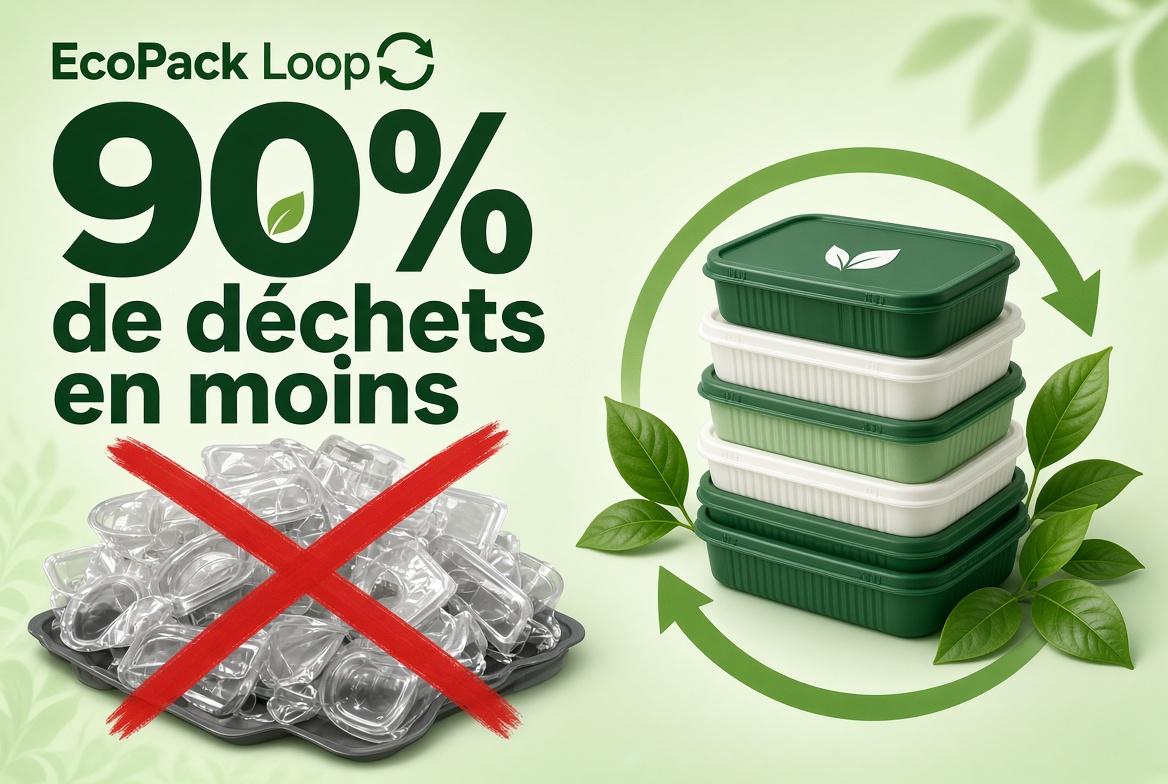
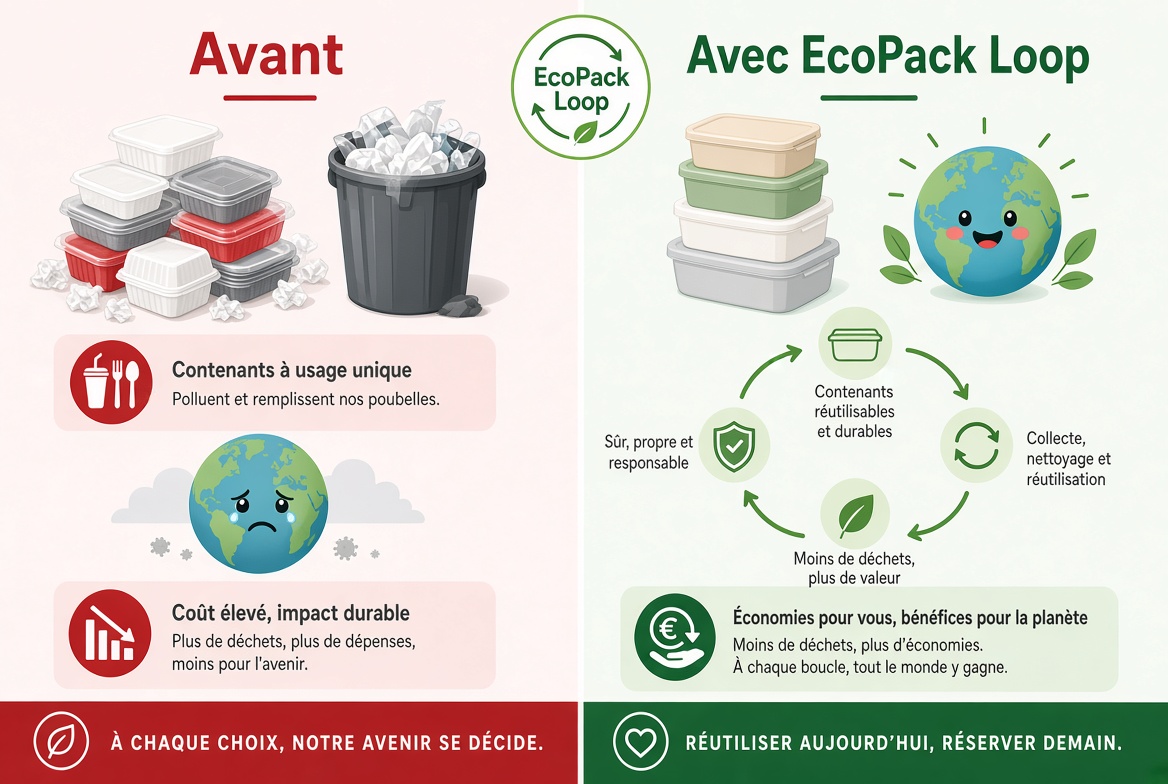
Online commerce and takeaway have exploded, bringing with them a silent environmental crisis: single-use packaging.
Every day, millions of cardboard boxes and plastic containers are used for just 20 minutes… only to end up incinerated or buried in landfills.
We observed that current deposit-return systems often fail because they require extra effort from the consumer (downloading an app, creating an account, returning the container to a specific location).
The inspiration for EcoPack Loop was born from a simple conviction:
For ecology to work at scale, it must demand zero extra effort from the user.
What It Does (Our Solution)
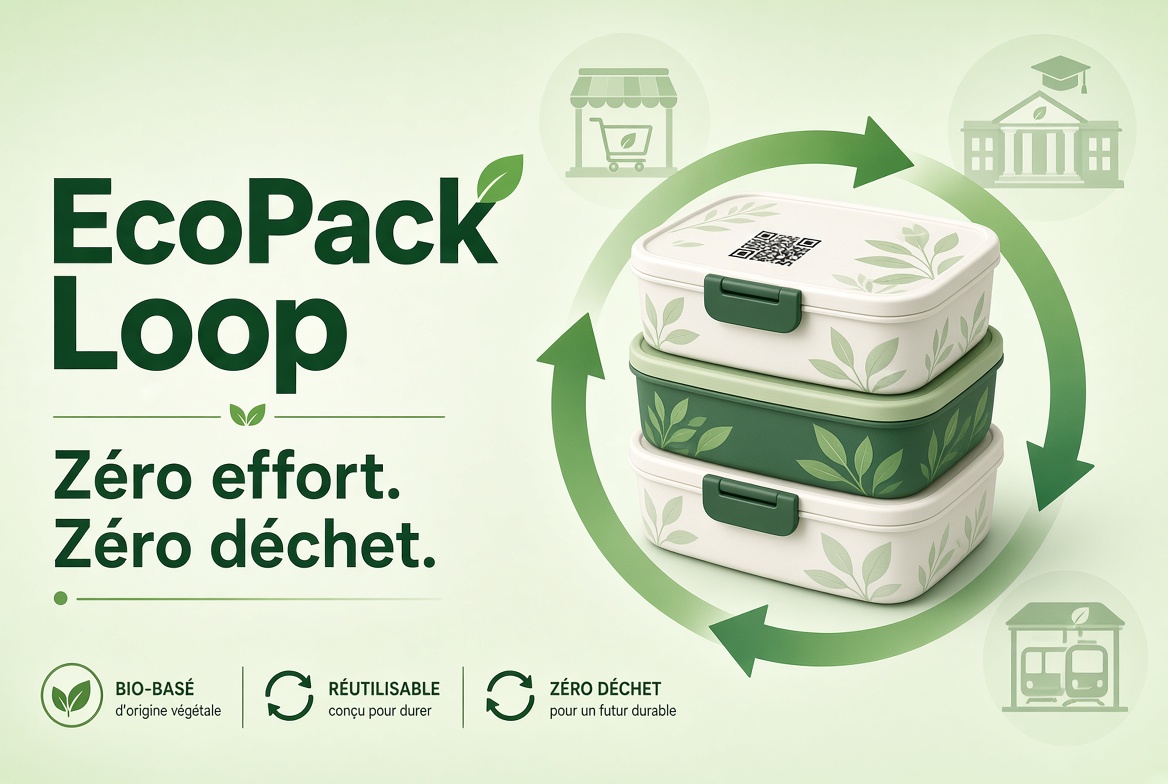
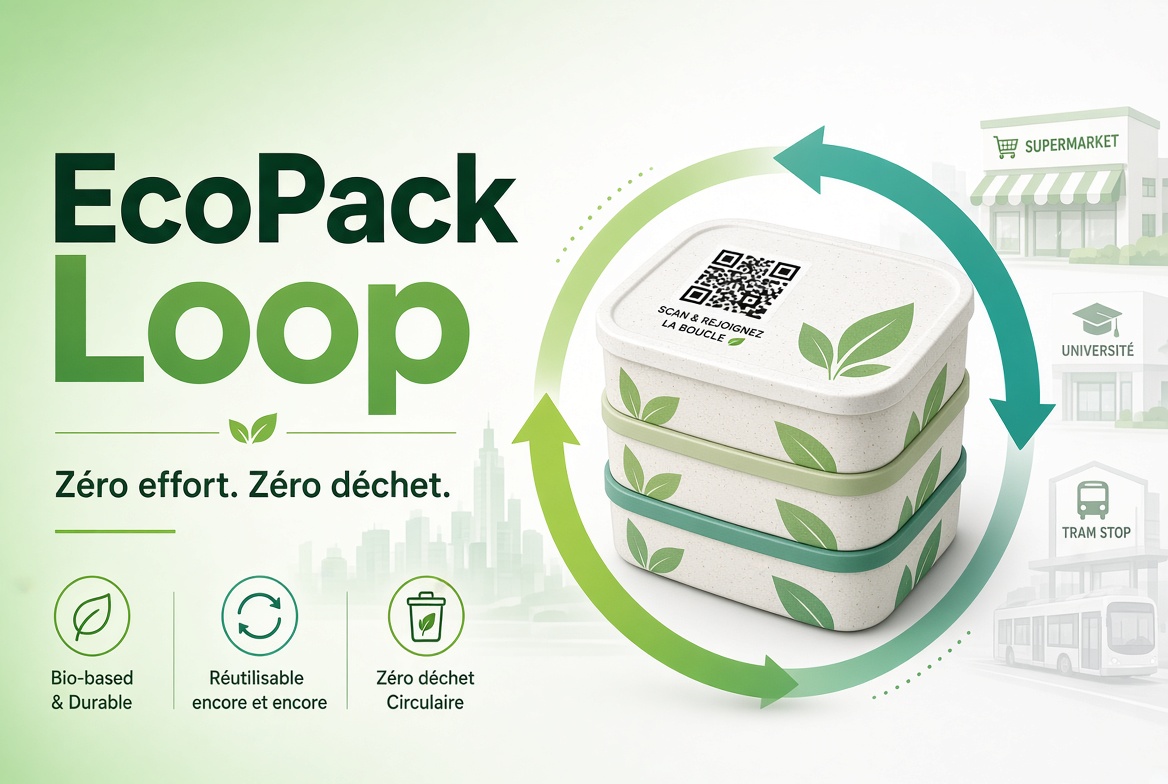
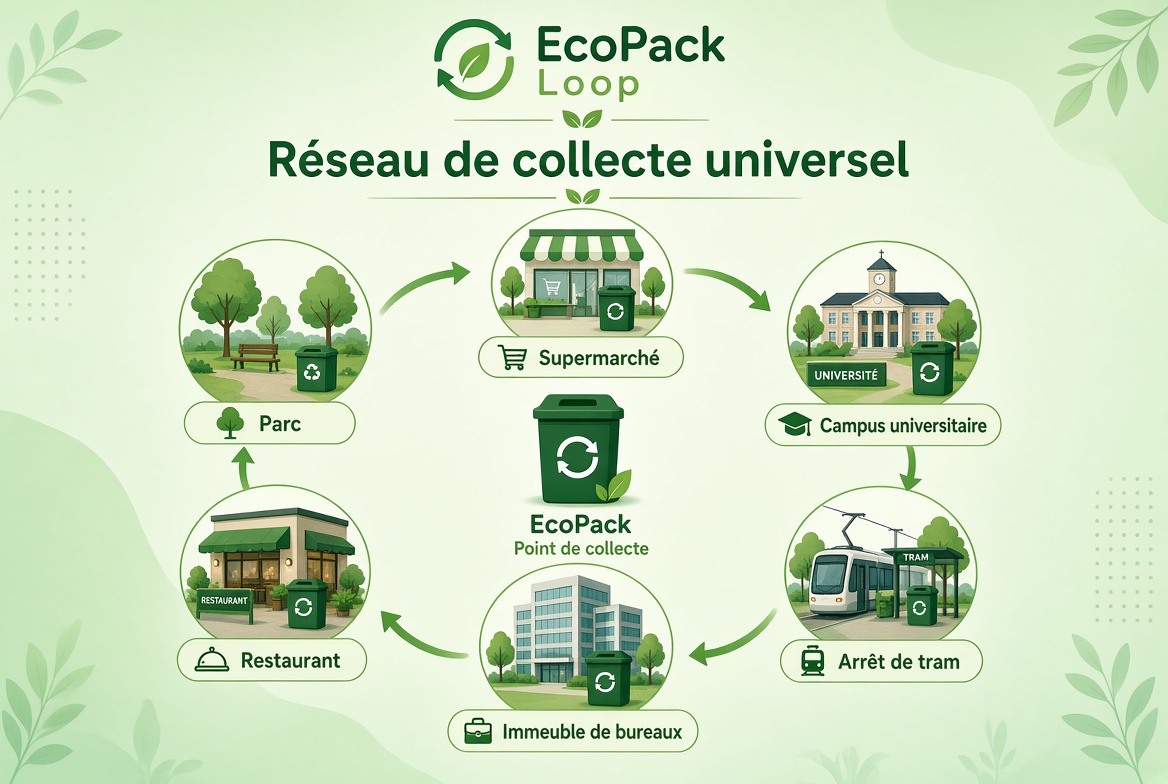
EcoPack Loop is an ecosystem of reusable, bio-based, and ultra-durable packaging, paired with a universal, frictionless collection network.
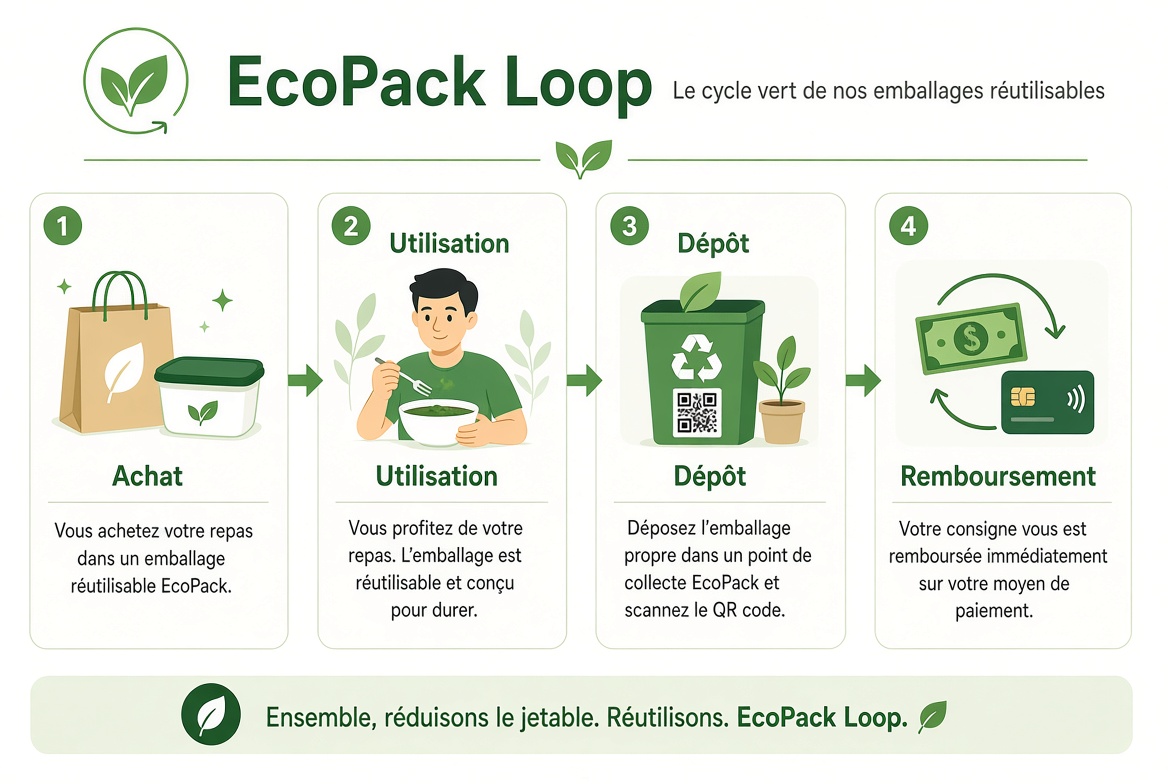
Instead of throwing away their packaging, customers simply drop it off at any partner collection point (supermarkets, universities, tram stops…).
The major innovation? Zero app required.
The deposit is refunded instantly:
- by scanning the QR code on the container with any smartphone,
- or directly onto the bank card via the collection terminal.
The environmental impact of our model is expressed by the following equation:
$$ Impact = \sum_{i=1}^{N} (C_{single-use} - C_{washing}) \times T_{rotation} $$
Where $C_{single-use}$ is the carbon cost of disposable packaging, and $T_{rotation}$ is the number of uses of the EcoPack container.
🛠 How We Designed It (The No-Code Approach)
Since this hackathon rewards strategic thinking beyond code, we focused our work on system design and the business model:
Design Thinking & User Journey
We mapped the entire takeaway meal journey to identify every friction point. Containers were designed to be stackable (space-saving for restaurants) and standardized.Logistics Modeling
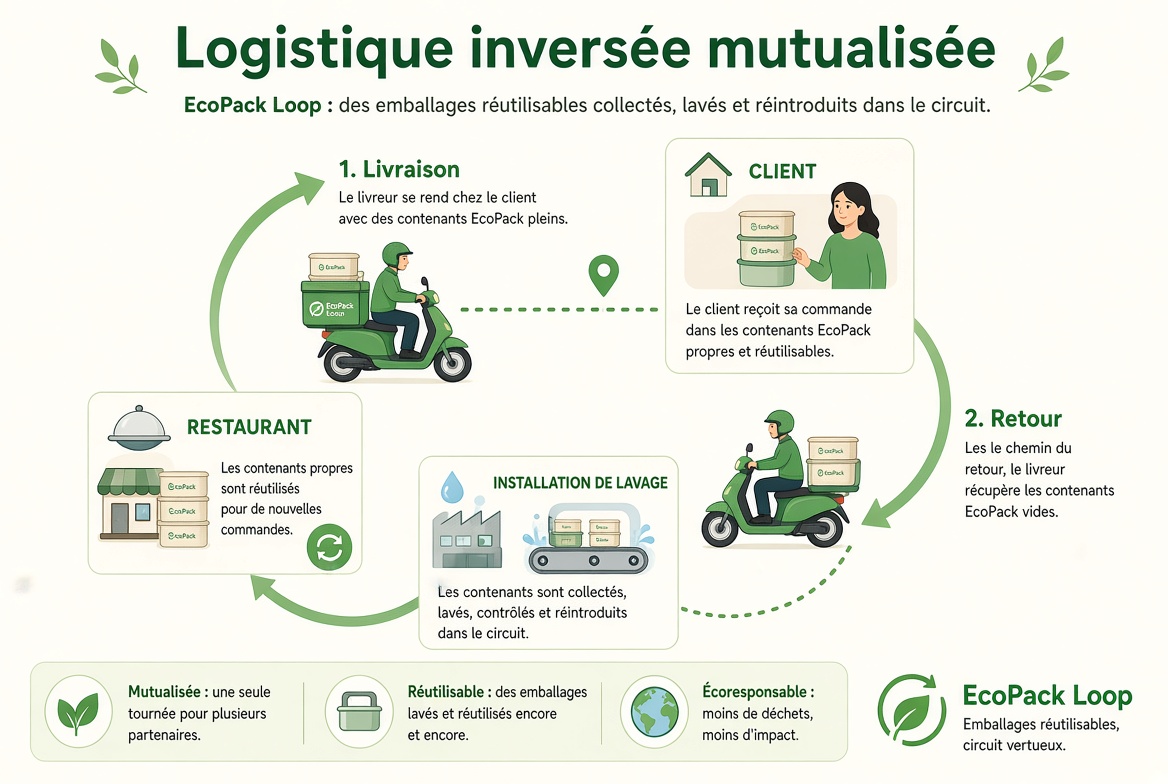
Instead of creating a dedicated truck fleet to collect the boxes, we designed a mutualized reverse logistics system. Existing couriers and delivery drivers pick up empty packaging on their return trips, optimizing “empty” journeys.Business Model Canvas
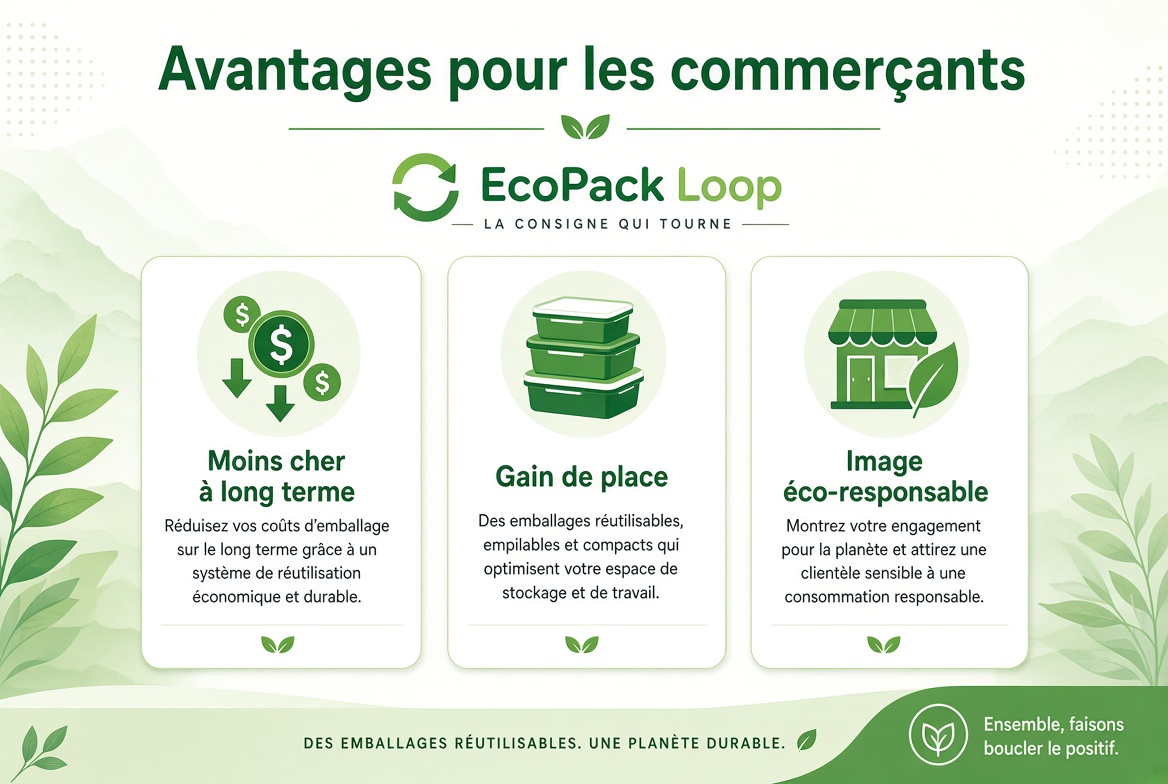
The model is based on rental. The restaurant pays a usage fee per packaging unit to EcoPack, which ultimately proves cheaper than continuously buying disposable boxes.
Challenges Encountered
The biggest challenge was solving the “return problem”.
How do you encourage people to return the box without forcing them?
We realized that instant gratification was the key.
That’s why we abandoned points systems or dedicated apps in favor of an immediate financial refund (micro-transaction) that truly drives engagement.
The second challenge was designing a financially viable model despite the costs of cleaning and redistribution.
Achievements We’re Proud Of
We are particularly proud of having designed a circular economy model that is:
- universal,
- financially viable for merchants,
- completely transparent for the end user.
We transformed an ecological constraint into a practical service.
What We Learned
During this innovation process, we learned that sustainability must always be paired with convenience.
If an ecological alternative is more complex to use than the polluting option, it will remain niche.
Social and ecological innovation often lies in the extreme simplification of processes.
What’s Next for EcoPack Loop
The next step is the deployment of a pilot program (Proof of Concept) within a closed ecosystem, such as a large university campus or a business district.
This will allow us to:
- test the collection terminals,
- measure the real rotation rate of the packaging,
- refine the washing logistics with a local partner,
before expanding to an entire city.
Built With
- business-model
- canva
- design-thinking
- economie-circulaire
- figma
- miro
- recherche-utilisateur

