Inspiration
What it does## 📉 The Market Failure: Good Intentions, Bad UX
At Hack the Pulse, the goal is to build meaningful solutions that address real-world challenges. When evaluating the digital economy, we found a massive failure: every single day, 3.2 billion digital transactions occur across ride-hailing, food delivery, and e-commerce platforms.
Consumers want to make sustainable choices. However, the current tech infrastructure is failing them:
- Carbon Data is Invisible: The environmental cost is hidden at the point of decision.
- Checkout Friction: When platforms do try to add carbon offsets, they add extra checkboxes and friction, creating 12-18% conversion drops for the business.
The Result: $2.3 trillion in annual e-commerce transactions happen with zero environmental awareness because companies refuse to sacrifice checkout conversion rates for sustainability.
💡 The Solution: EcoNudge SDK
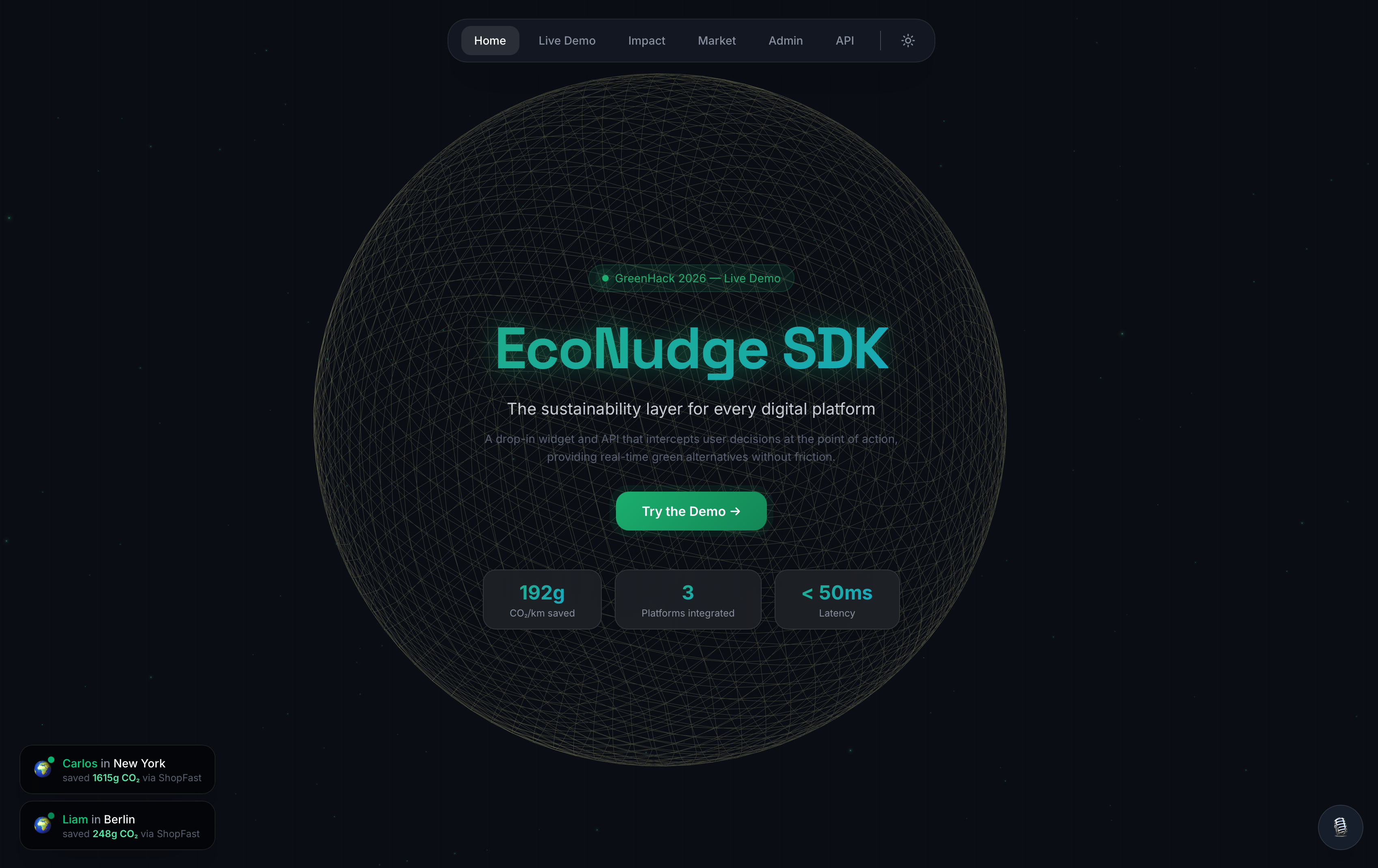
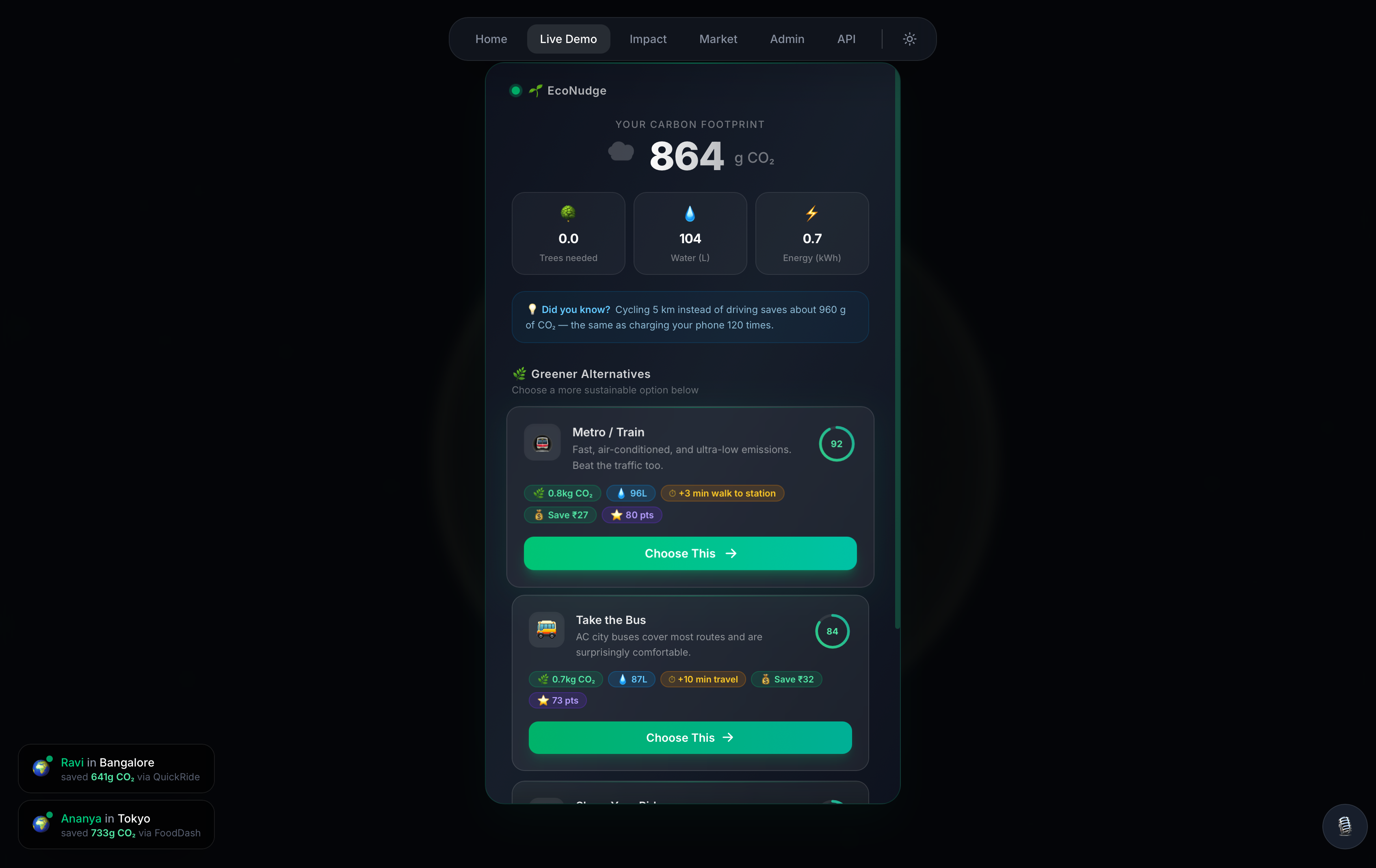
EcoNudge sits at the intersection of Product Strategy, AI, and Sustainability. It is an AI-powered, drop-in React SDK that intercepts user decisions at the exact point of action, calculates the environmental impact in under 50ms, and presents gamified, greener alternatives — all without disrupting the native checkout experience.
We aren't building a consumer app that people have to remember to download. We are building the infrastructure layer that plugs directly into the apps they already use (like Uber, Zomato, and Amazon).
🚀 Key Architectural Features
🧠 1. AI-Powered Smart Analogies (Google Gemini)
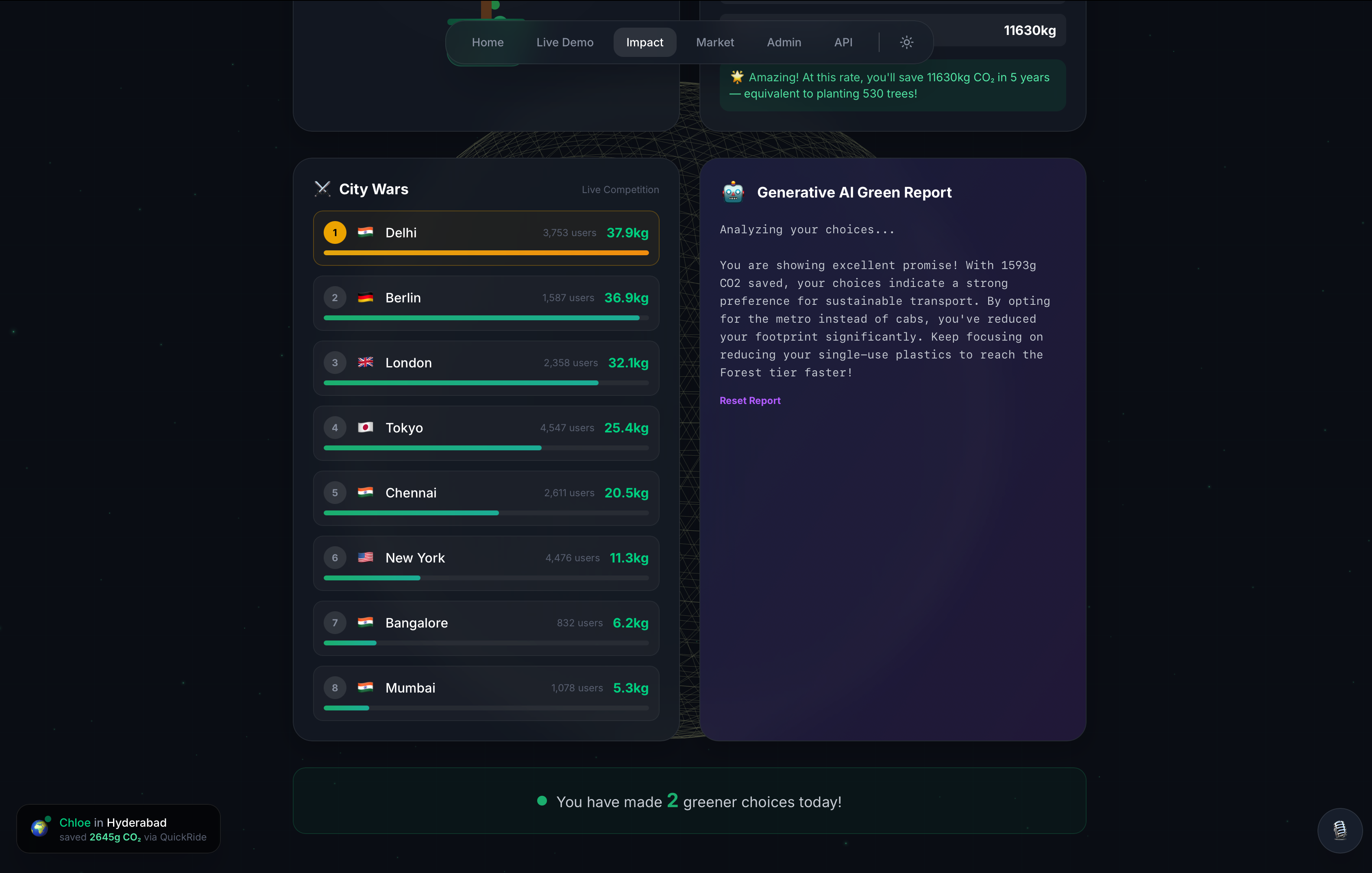
Nobody understands what "1.2 kg of CO₂" means. Our Gemini-powered AI engine intercepts the carbon data and generates hyper-personalized, funny, and highly shareable analogies in real-time.
"Choosing the SUV emits the same amount of CO₂ as charging your PlayStation 5 for 14 hours straight! 🎮"
⚡ 2. Sub-50ms Carbon Predictive Engine
To ensure we never hurt a client's checkout conversion rate, our engine runs on the edge. It queries over 1,000+ emission factors to calculate dynamic sustainability scoring (0-100) with zero perceived latency.
🎮 3. Behavioral Gamification Loop
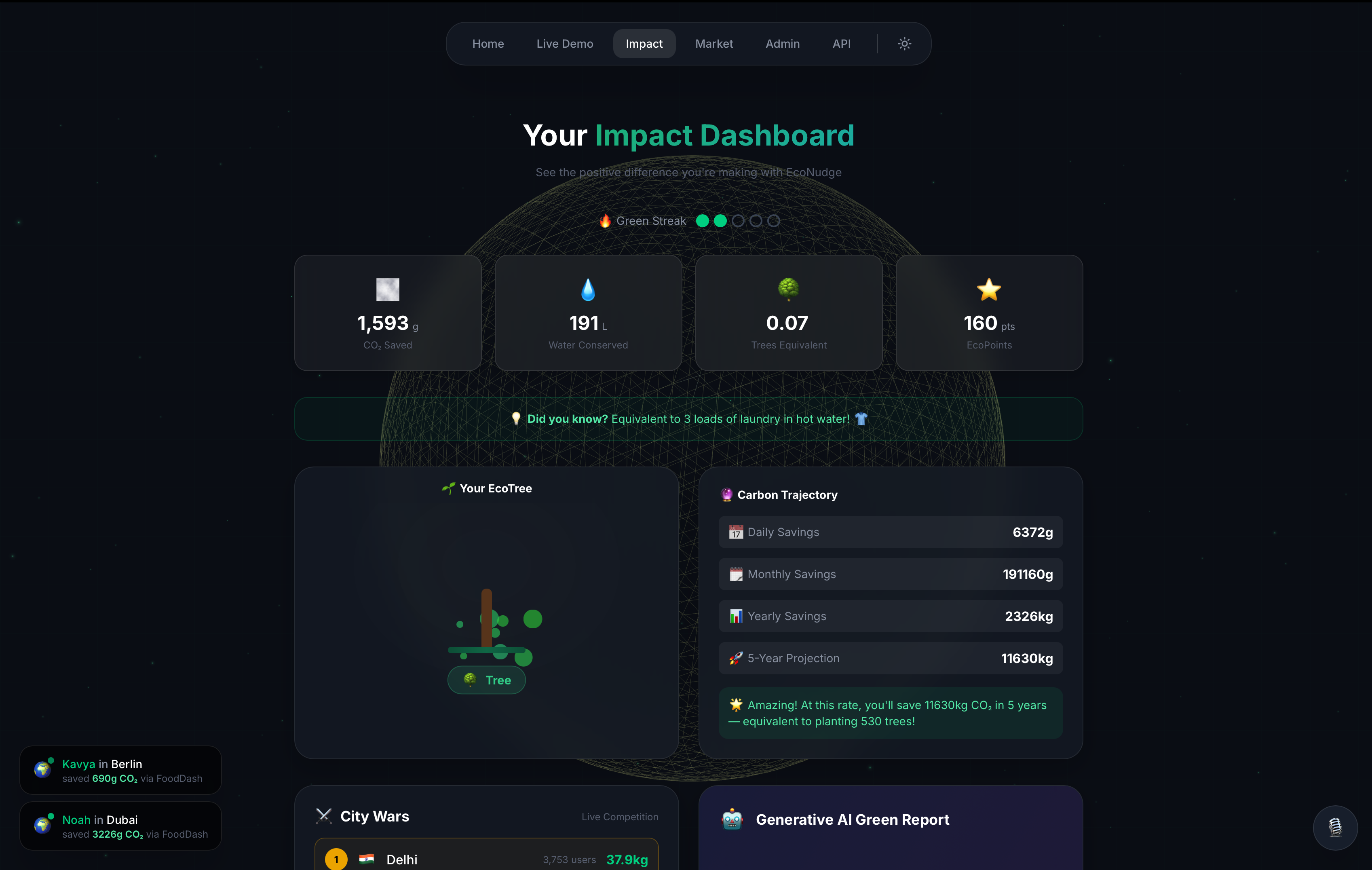
We turn sustainability into a multiplayer game using a WebGL Dynamic Biome. Using react-three-fiber and custom GLSL shaders, users interact with a 3D "Virtual Tree" that physically grows and reacts to their real-world eco-decisions on partner platforms.
📊 4. Enterprise B2B ESG Dashboard
EcoNudge provides immense value to the B2B platforms integrating our SDK. Our enterprise dashboard gives them real-time carbon offset analytics, automated UN SDG alignment tracking, and one-click exports for global ESG compliance reporting.
⚙️ How We Built It
- Framework: Next.js 16 (App Router) with strict TypeScript
- AI/ML: Google Gemini API for low-latency contextual analogies
- 3D/WebGL:
react-three-fiber, Three.js, and Custom GLSL Shaders for the interactive biome - Deployment: Vercel Edge Network for global sub-50ms latency
🚧 Challenges We Faced
The most significant engineering challenge was latency. Because our SDK injects itself into the critical path of a checkout flow (e.g., booking a ride), it could not add blocking network requests. We had to architect a highly optimized edge-computing pipeline where the Carbon Predictive Engine and the Gemini AI API resolve in parallel, streaming the UI response via Next.js Edge Functions before the user's thumb even finishes clicking the button.
📈 The Future of EcoNudge
EcoNudge is designed to be the ultimate infrastructure for sustainable e-commerce. By creating an Open API Portal, our goal is to allow any startup in the world to generate an API key and drop EcoNudge into their checkout flow in under 5 minutes.
Built With
- gemini
- next.js
- tailwind
- three.js
- typescript
- webgl

Log in or sign up for Devpost to join the conversation.