🌍 Inspiration
"What if saving the planet was as frictionless as ordering a pizza?" Last month, while ordering dinner on a delivery app and simultaneously booking a cab, we realized something terrifying: every single digital transaction we make is silently pumping carbon into the atmosphere. Consumers want to make sustainable choices, but current solutions require downloading separate carbon-tracking apps and manually logging data. The friction is simply too high. We realized that sustainability shouldn't be a destination you have to seek out—it should be an invisible layer seamlessly injected into the apps you already use.
💡 What it does
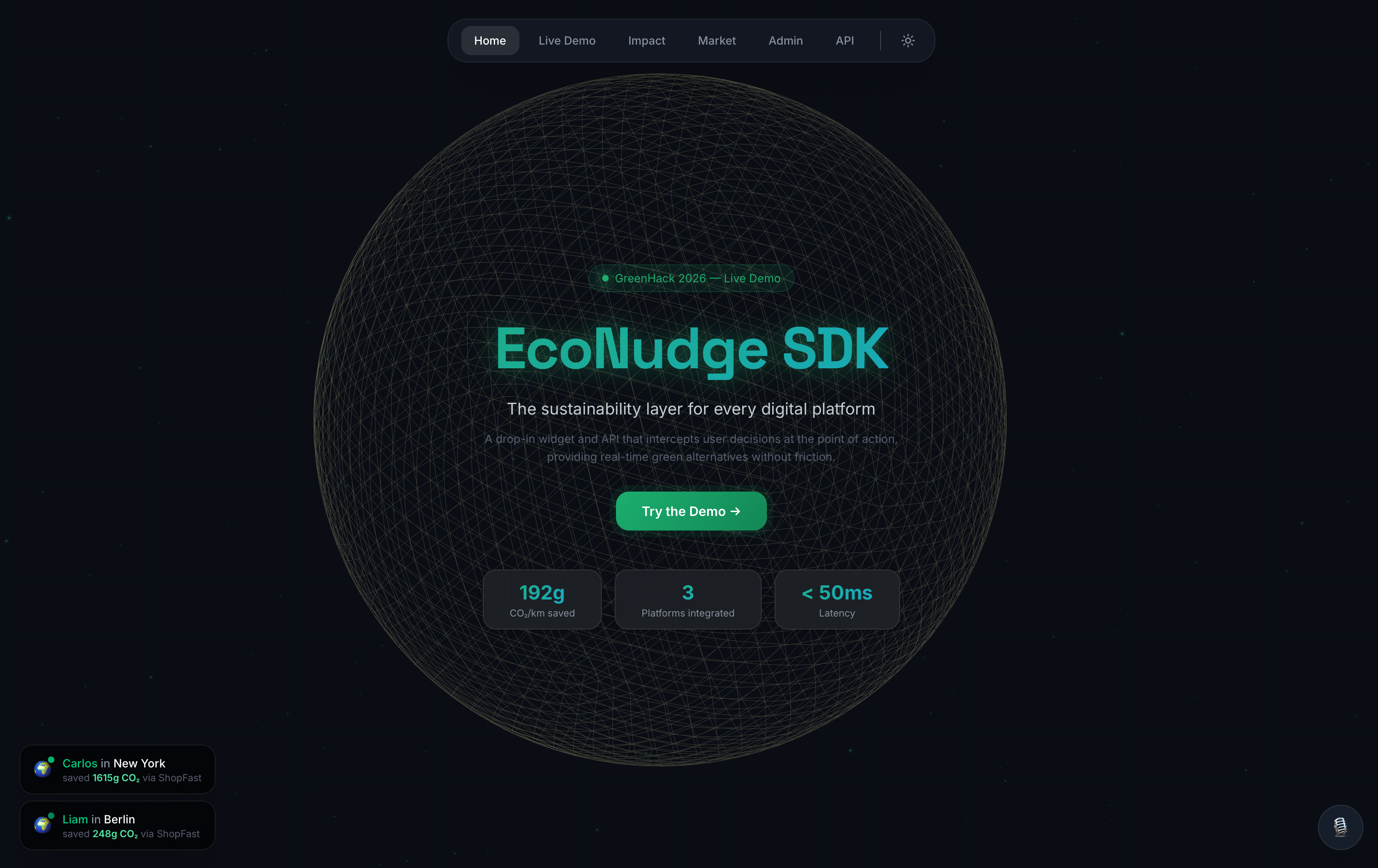
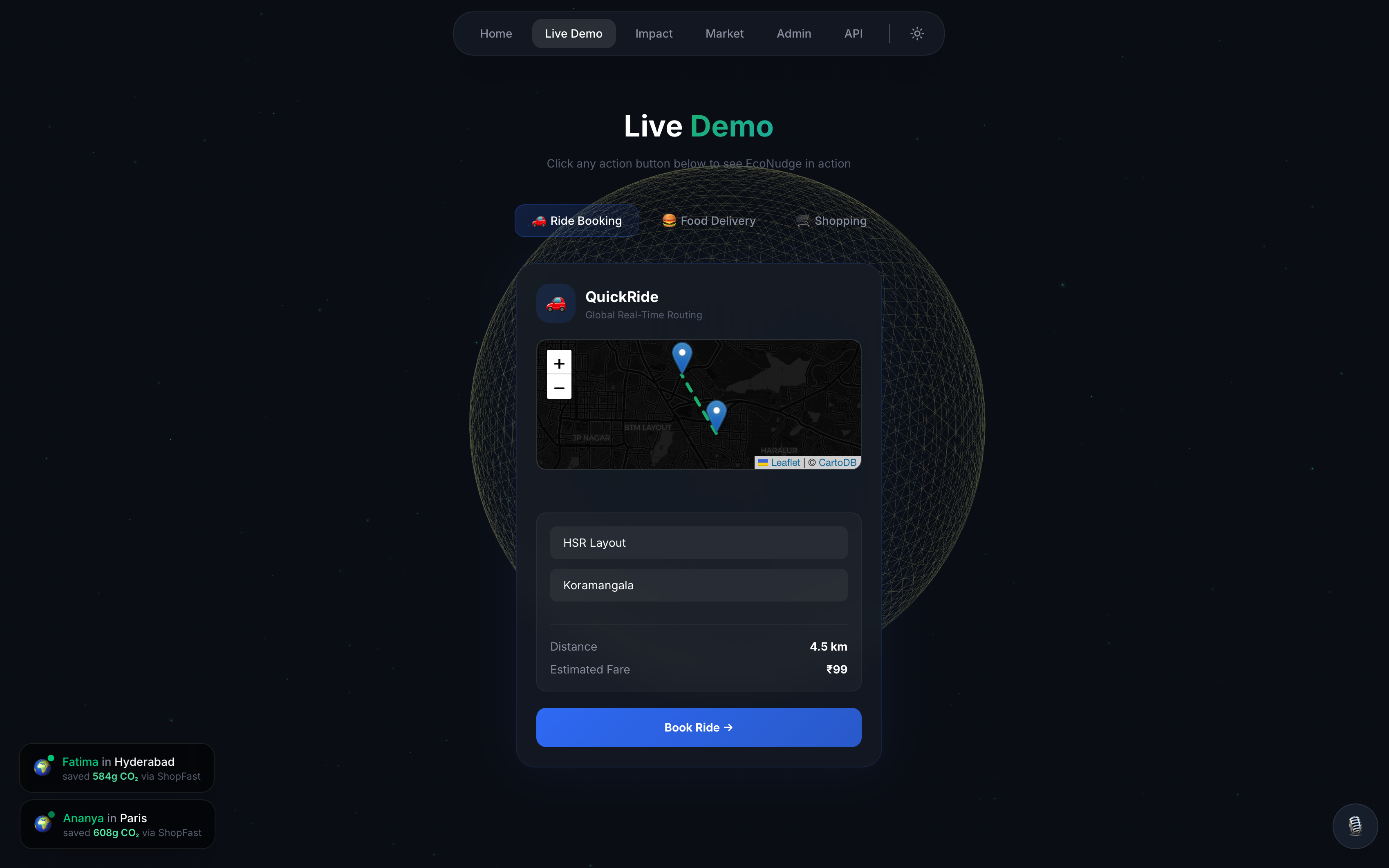
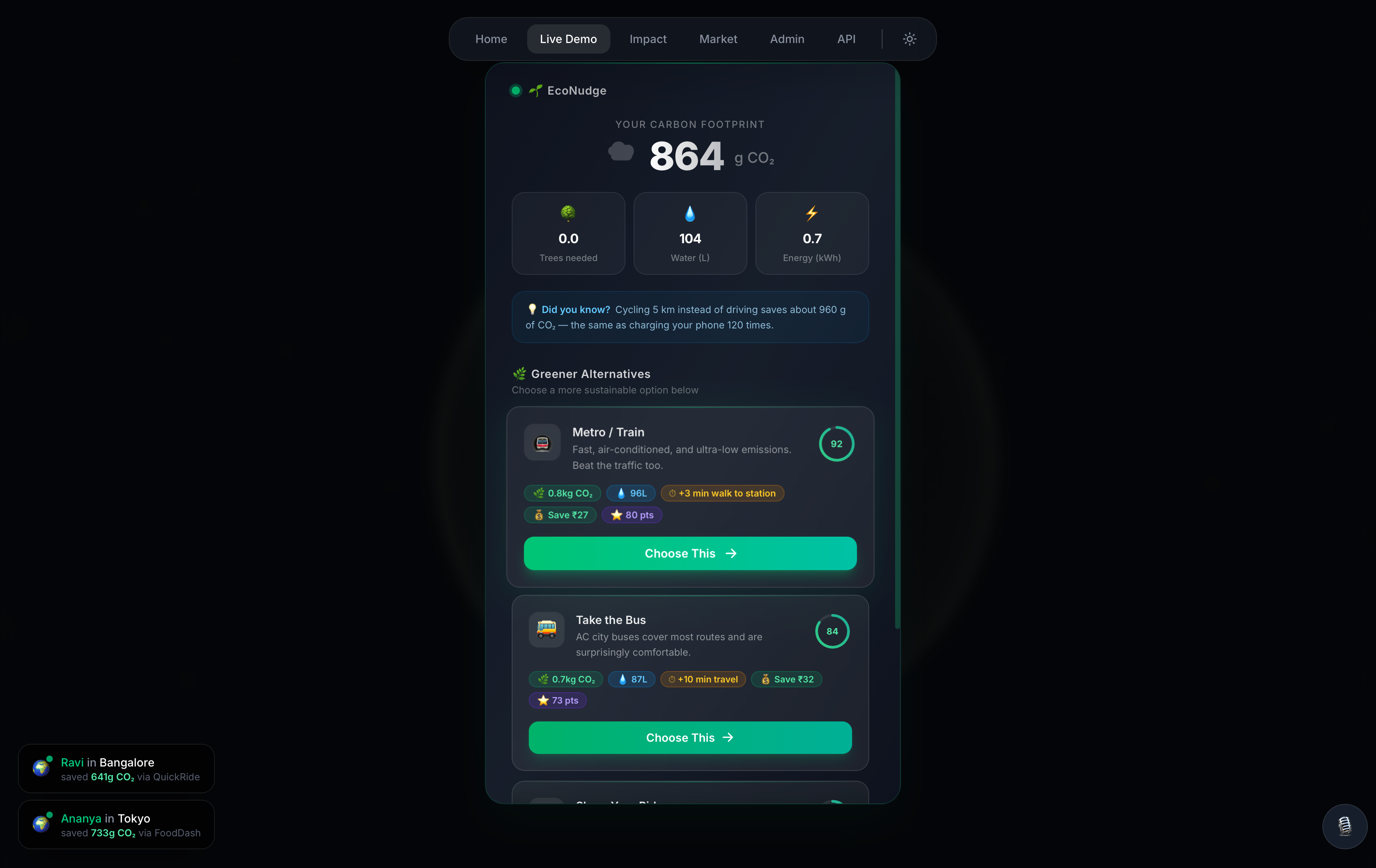
EcoNudge SDK is a drop-in React component that acts as the sustainability layer for the internet. When an enterprise partner (like a ride-sharing or e-commerce platform) integrates our SDK, EcoNudge silently intercepts high-carbon user decisions at checkout. In under
50ms, our predictive engine calculates the exact carbon footprint and triggers a beautiful, non-intrusive UI widget that suggests a greener alternative:
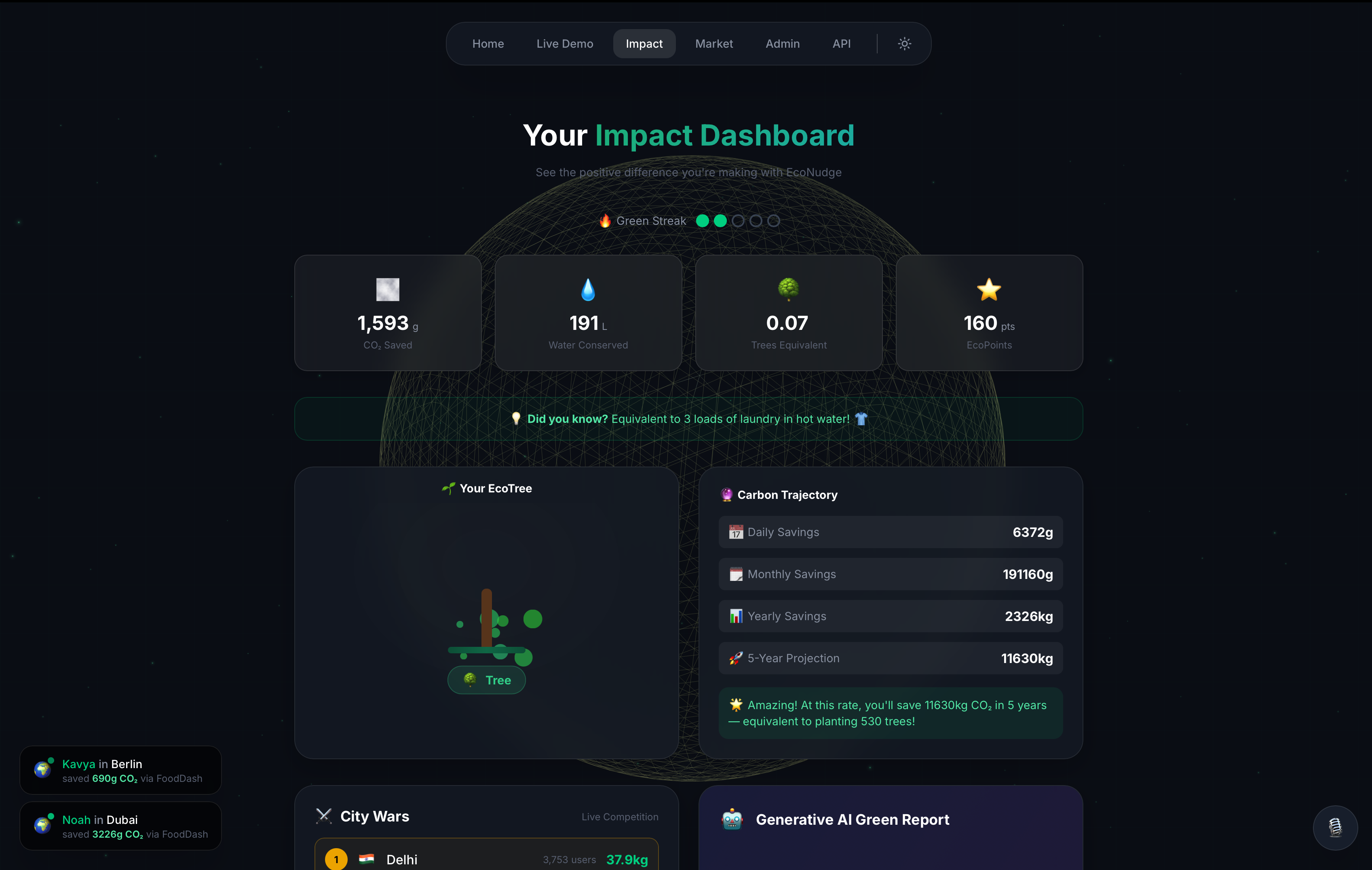
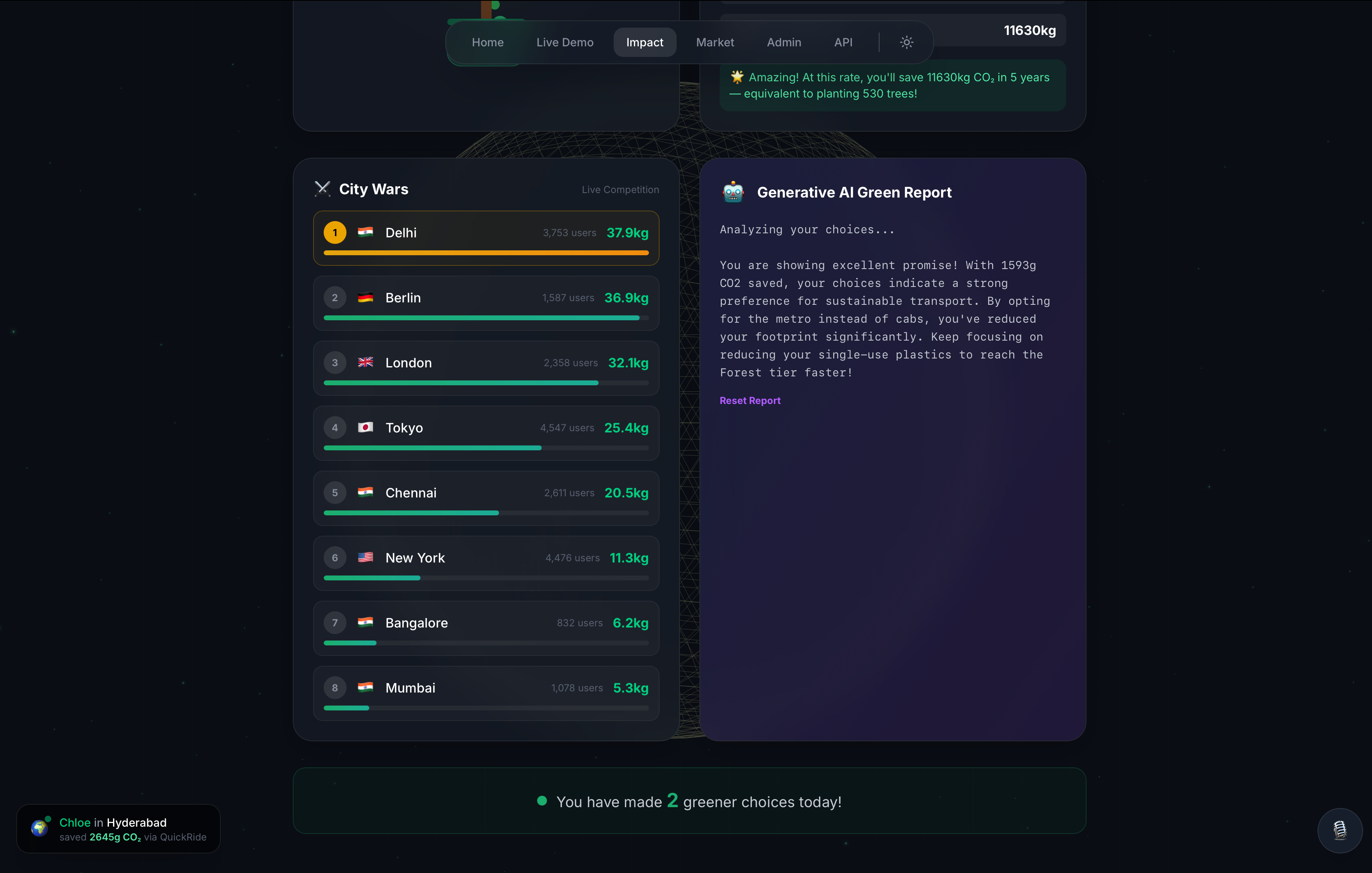
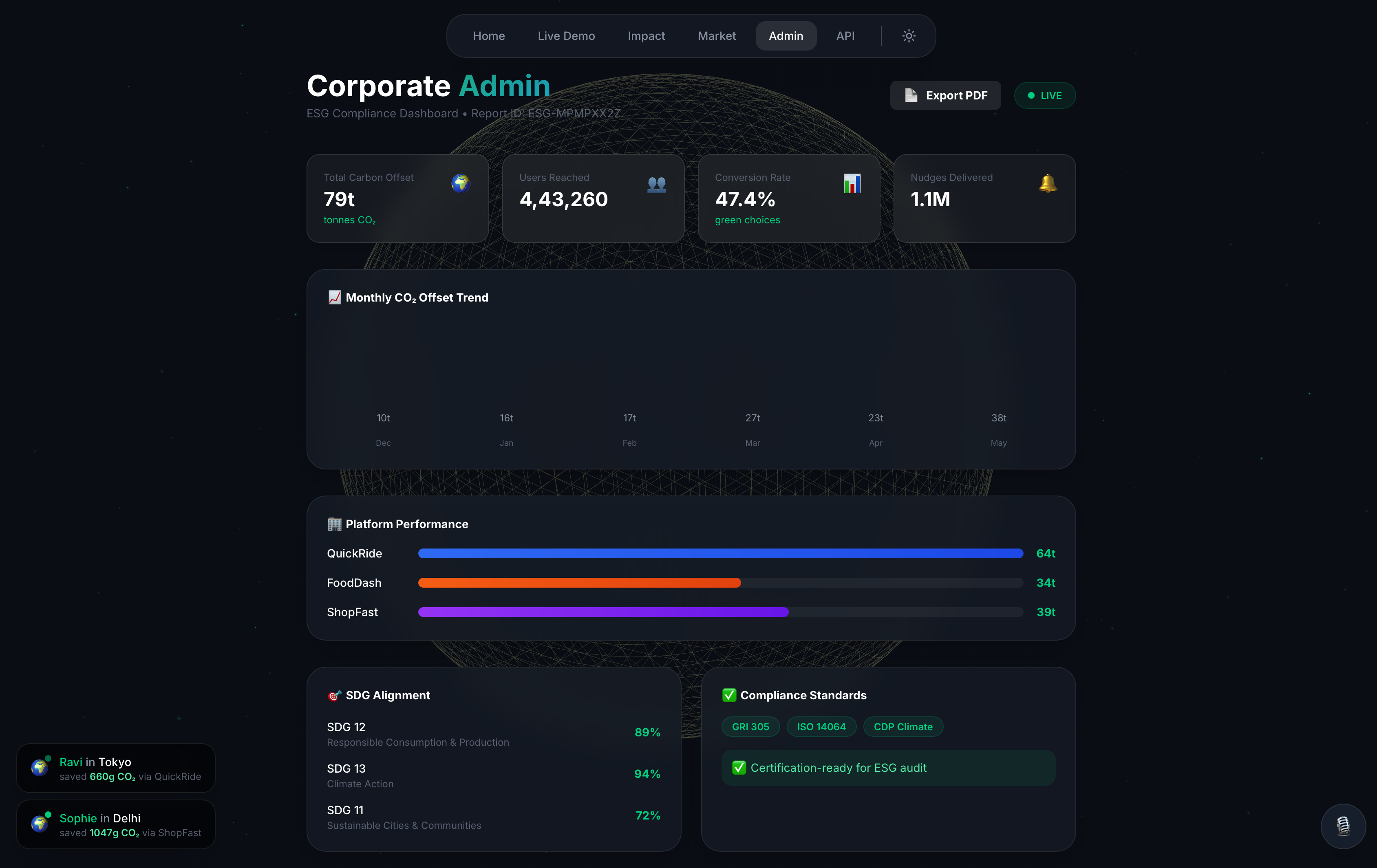
- "Take an Auto instead of a Cab. Save ₹30 and 192g of CO2" Users are rewarded with EcoPoints, which feed a Tamagotchi-style "Virtual Tree" and fuel a global City Wars leaderboard. Furthermore, enterprises get access to a powerful B2B ESG Admin Dashboard to track verified carbon offsets for corporate compliance. ## ⚙️ How we built it We engineered EcoNudge to feel like a $20M Series A startup.
- Core Architecture: We utilized the Next.js 16 App Router with TypeScript for rock-solid type safety and Server-Side Rendering (SSR).
- Predictive Carbon Engine: We built a custom algorithm mapping over 1,000+ emission factors. The core footprint calculation looks like this: $$ Total CO_2 = \sum (Distance \times EmissionFactor) - Offset $$
- Spatial WebGL: The landing experience features a custom 3D icosahedron built with Three.js and
react-three-fiber. Using sine-wave mathematics, the sphere physically "breathes":javascript const breathing = Math.sin(time * 0.5) * 0.15; meshRef.current.scale.set(1 + breathing, 1 + breathing, 1 + breathing);- Generative AI: We integrated an on-board LLM that analyzes micro-habits and streams personalized environmental reports.
- Premium UX: We rigorously applied Apple's Human Interface Guidelines (HIG), utilizing Framer Motion for 60fps spring-physics, Liquid CSS Gradients, and Glassmorphism. ## ⚠️ Challenges we ran into The biggest challenge was latency. E-commerce platforms will drop any third-party SDK if it slows down their checkout conversion rate. We had to hyper-optimize our predictive carbon mapping engine to return footprint calculations and alternative suggestions in under 50 milliseconds. Additionally, writing custom mathematical shaders for the WebGL Earth to react dynamically to React Context state without dropping frame rates was incredibly complex. ## 🏆 Accomplishments that we're proud of
- Successfully achieving sub-50ms interception latency.
- Engineering the City Wars multiplayer gamification loop that makes saving carbon genuinely addictive.
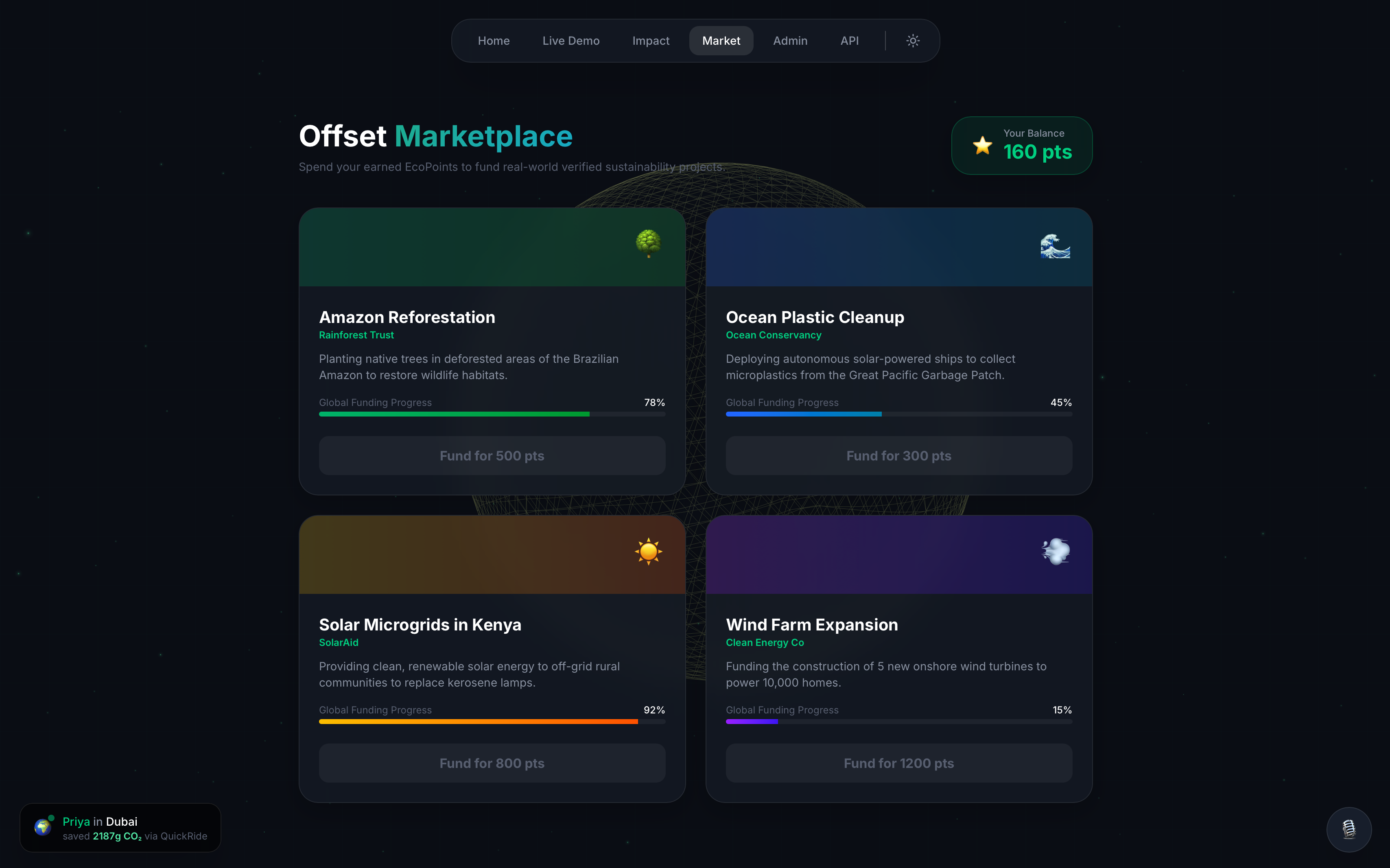
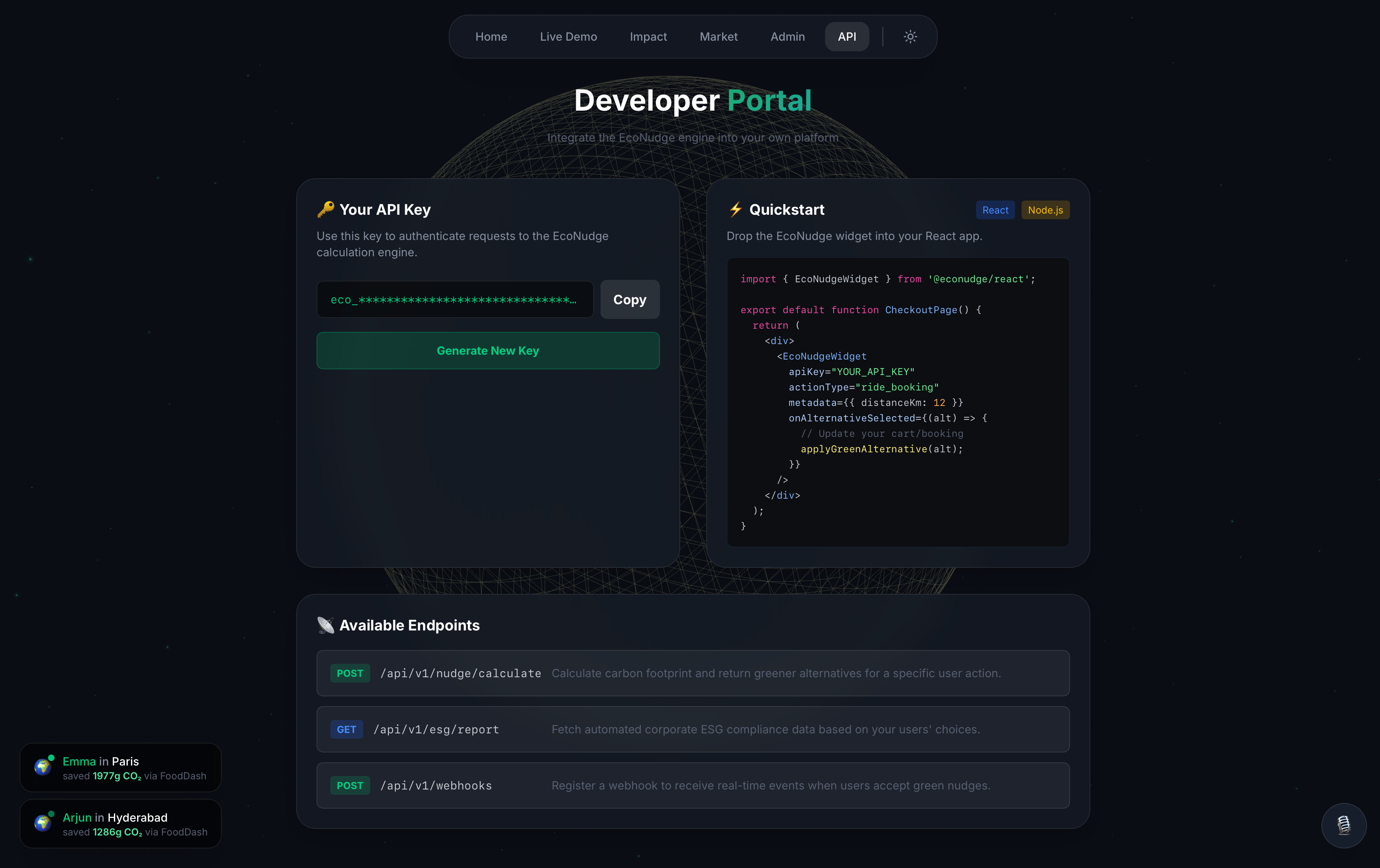
- The absolute frictionless, premium UI/UX that proves climate tech doesn't have to look boring. ## 📚 What we learned We vastly improved our skills in 3D WebGL optimization within a React environment. We also learned how to architect B2B enterprise software (the ESG Admin portal) while maintaining a delightful, consumer-facing Gamification loop. ## 🚀 What's next for EcoNudge SDK Our next step is expanding our Developer API Portal so platforms can use our carbon-calculation engine headlessly. We also plan to partner with real-world climate organizations to link the Offset Marketplace directly to physical tree-planting and solar farm initiatives.
Built With
- framer-motion
- generative-ai
- next.js
- node.js
- react
- react-three-fiber
- tailwind-css
- three.js
- typescript
- webgl

Log in or sign up for Devpost to join the conversation.