-
-
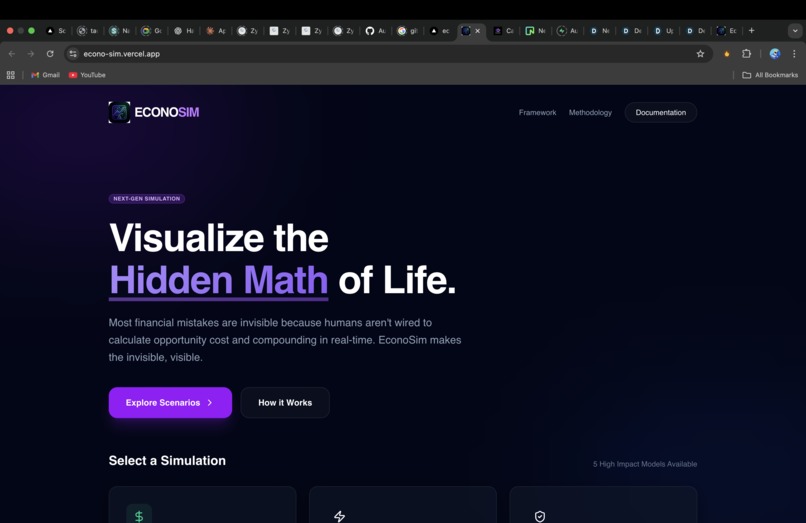
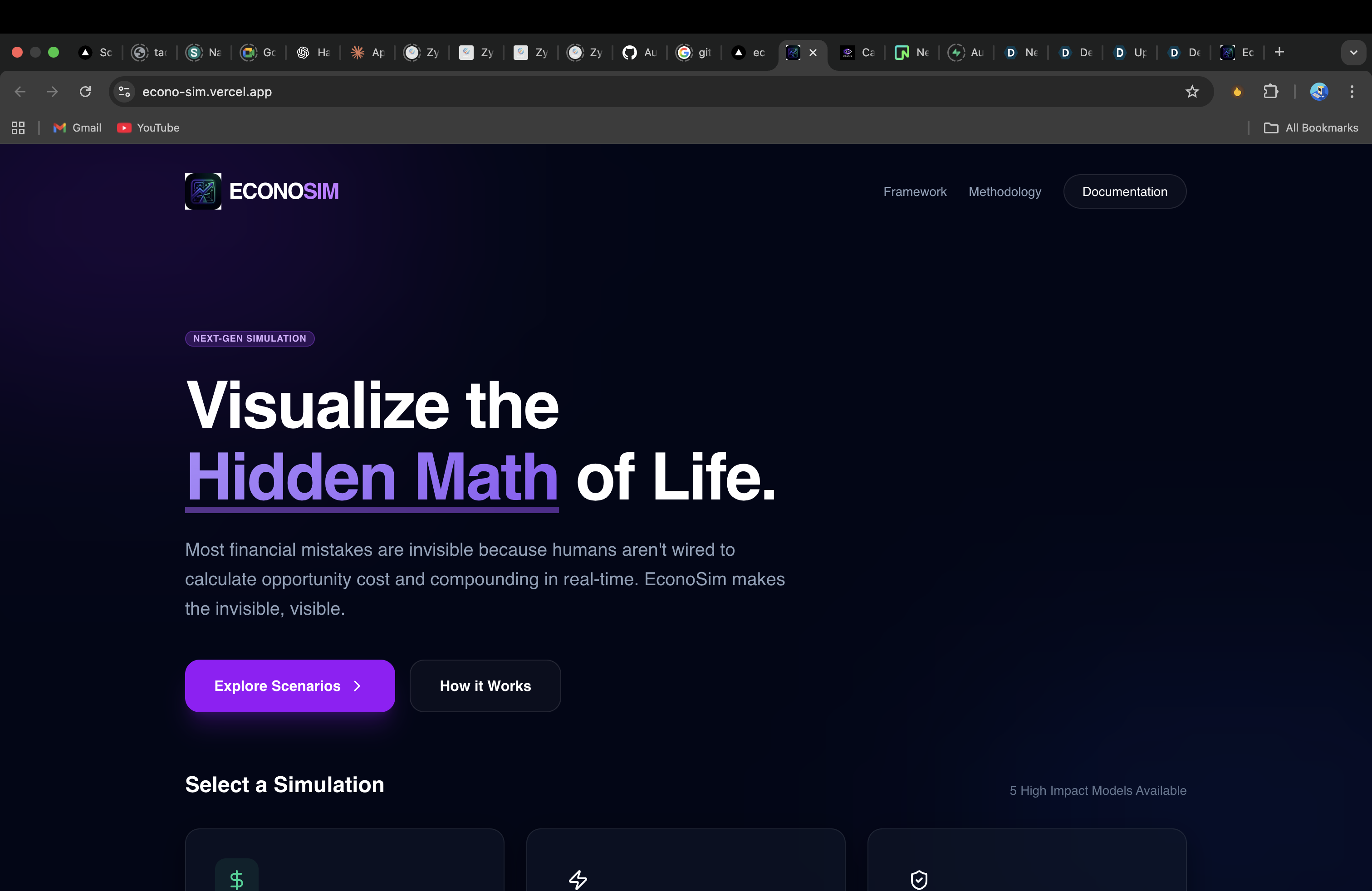
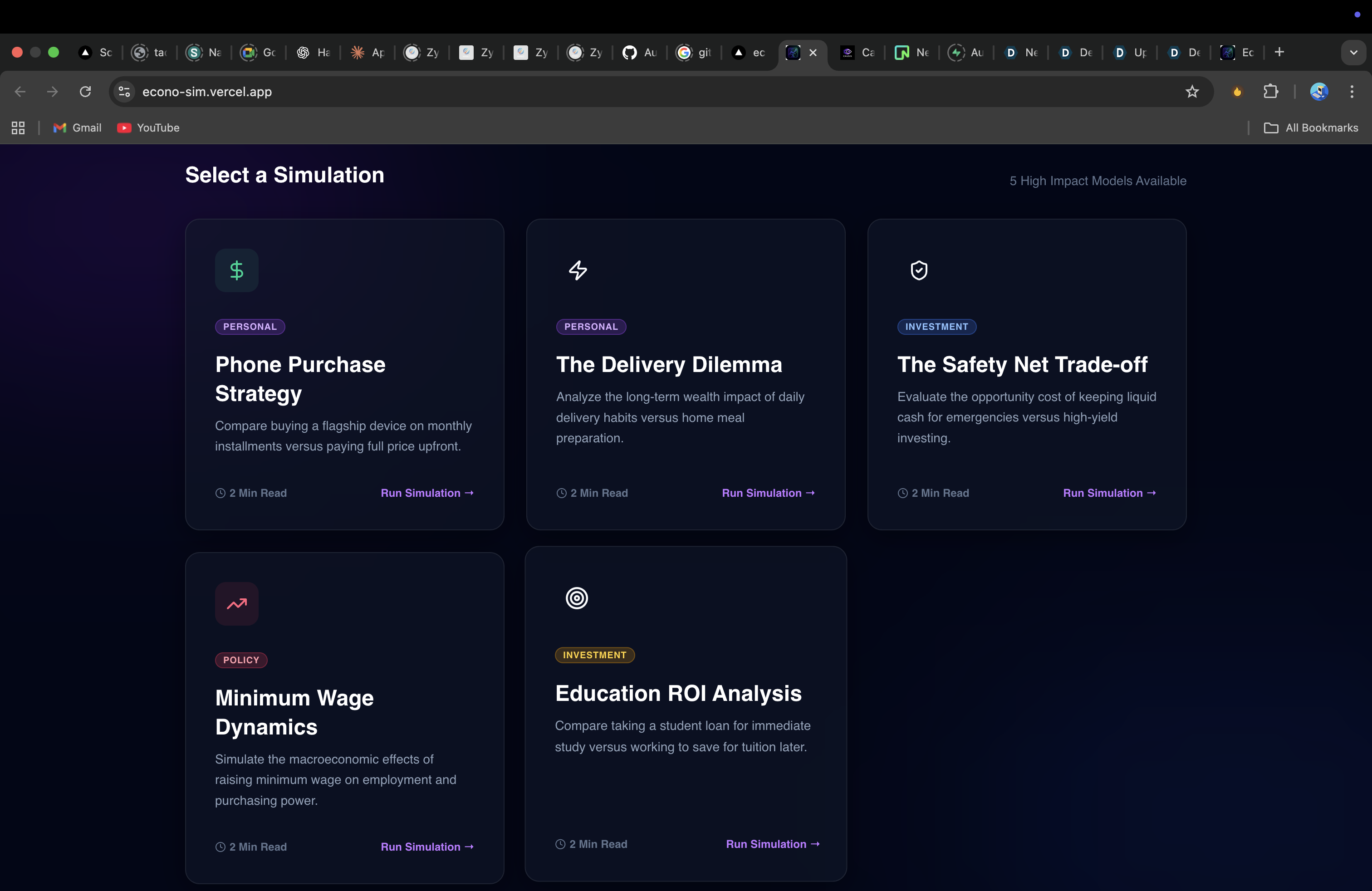
EconoSim’s homepage introduces a decision → consequence flow, emphasizing economic trade-offs over financial advice.
-
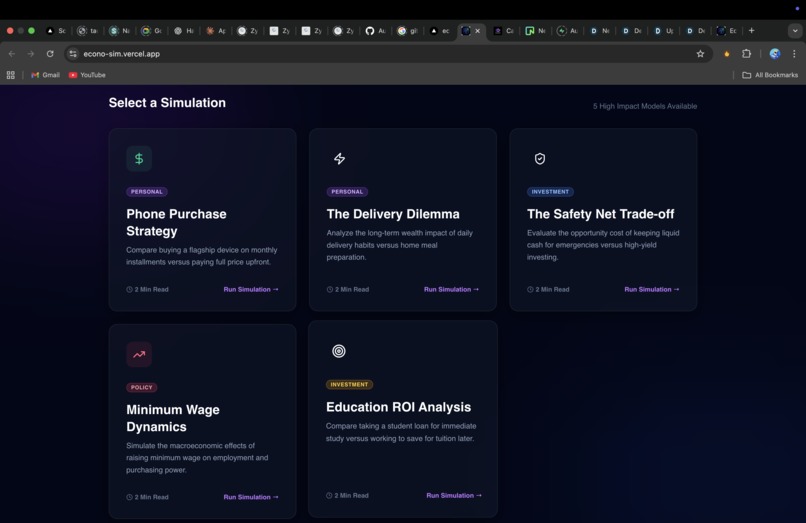
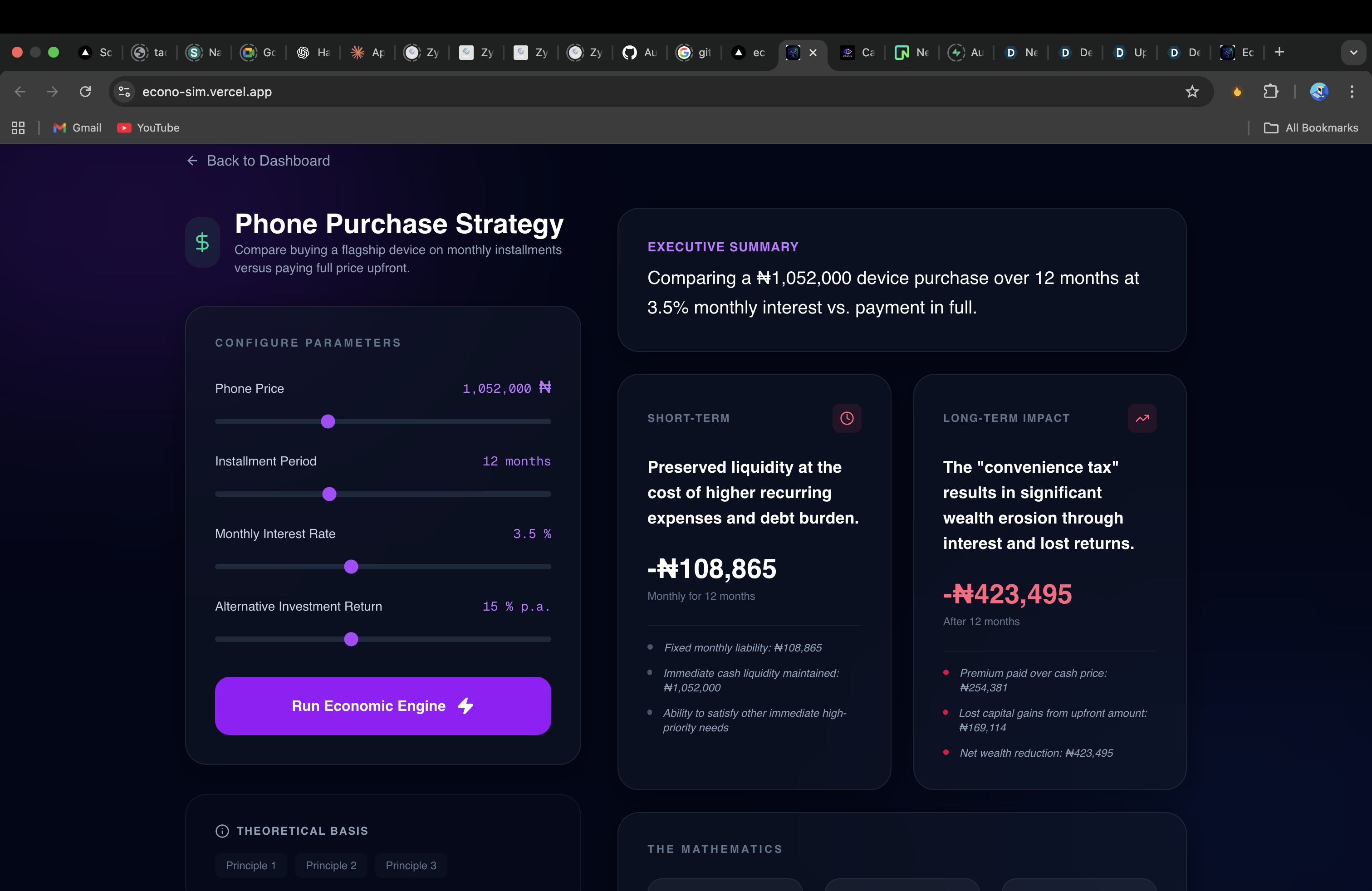
Side-by-side simulation output comparing short-term convenience with long-term economic impact using deterministic calculations.
-
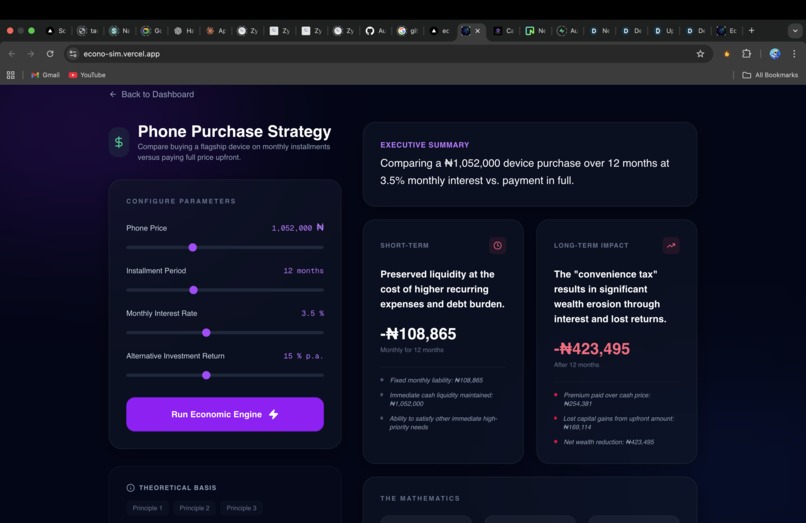
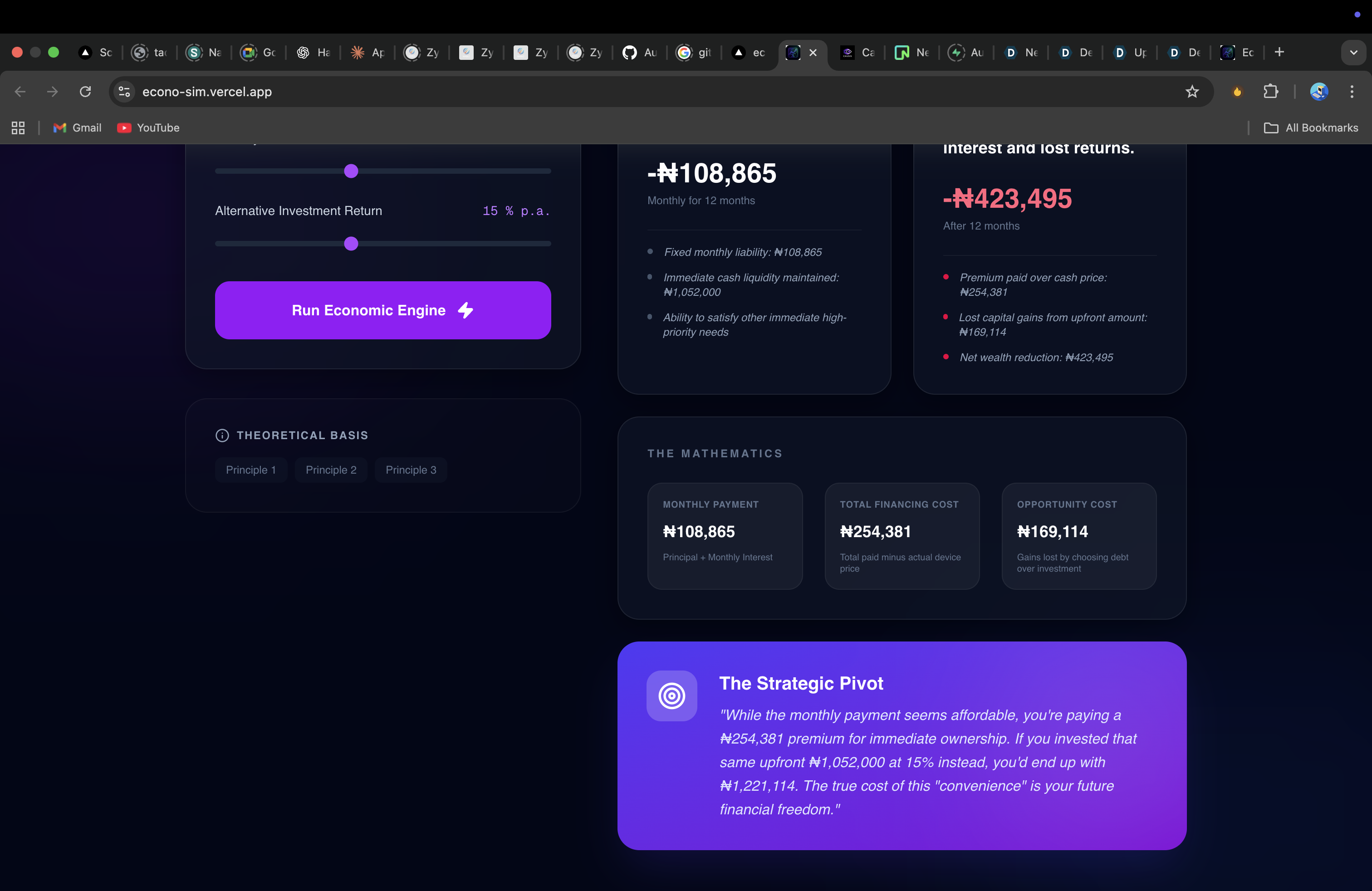
Phone installment scenario showing interest cost and opportunity cost, illustrating the time value of money in a real-life decision.
-
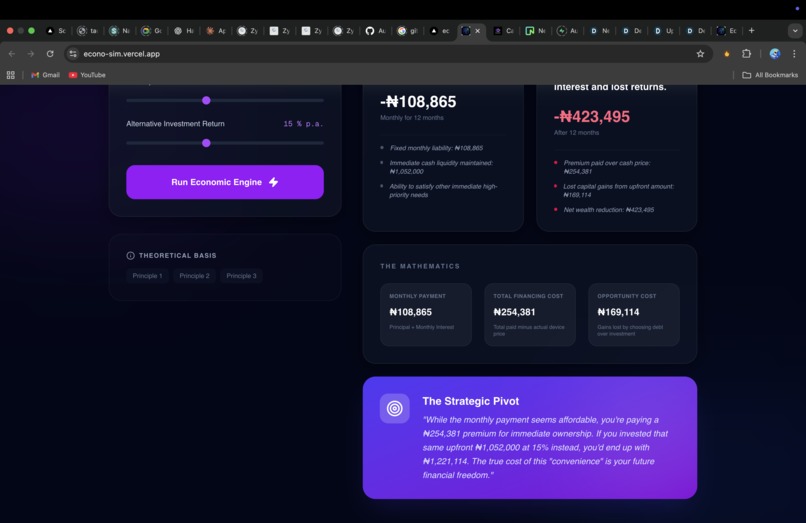
Phone installment scenario showing interest cost and opportunity cost, illustrating the time value of money in a real-life decision.
Inspiration
Most financial tools focus on advice — what to save, what to spend, what to invest. But many poor decisions happen not from lack of advice, but from not clearly seeing trade-offs.
Everyday choices like buying a phone on installment or relying on food delivery feel harmless in the moment, yet have hidden long-term economic consequences. We wanted to build something that teaches how economic thinking works, not just financial rules.
EconoSim was inspired by the idea that seeing consequences is more powerful than being told what to do.
What it does
EconoSim is an economic reasoning simulator for real-life financial decisions.
Users select a common scenario and instantly see:
the economic principles involved
short-term vs long-term outcomes
opportunity cost, compounding effects, and risk trade-offs
clear explanations in plain language
Instead of giving advice, EconoSim makes trade-offs visible, helping users understand why decisions matter over time.
How we built it
EconoSim was built using Next.js and TypeScript, with a strong emphasis on clarity and correctness.
At its core is a deterministic, rule-based economic engine:
All calculations (interest, compounding, opportunity cost, risk trade-offs) are explicit and reproducible
No AI is used for math or numbers
Each scenario is mapped directly to specific economic principles
The UI is intentionally minimal, focusing on side-by-side comparisons so users can quickly understand short- and long-term outcomes.
Challenges we ran into
One major challenge was balancing economic realism with simplicity. Economic models can become complex very quickly, but over-complication would reduce clarity and educational value.
Another challenge was scope control. It was tempting to add features like personalization or dashboards, but we deliberately avoided anything that didn’t directly improve economic understanding.
Accomplishments that we're proud of
Built a transparent economic simulation engine with real, explainable numbers
Designed scenarios that teach economic principles through everyday decisions
Created an experience that communicates complex ideas in under a minute
Avoided black-box AI and prioritized reasoning and trust
What we learned
We learned that effective financial literacy tools are less about automation and more about making reasoning explicit.
Clear models, honest assumptions, and visible trade-offs often teach more than complex features or predictions. This project reinforced how software can be used to teach better thinking, not just deliver outcomes.
What's next for EconoSim
Next, we plan to:
add lightweight visualizations (timelines and simple charts)
expand the library of curated scenarios
optionally layer AI explanations that explain why outcomes happen without generating numbers
Long term, EconoSim could be adapted for classrooms, workshops, and community financial education programs.

Log in or sign up for Devpost to join the conversation.