-
-
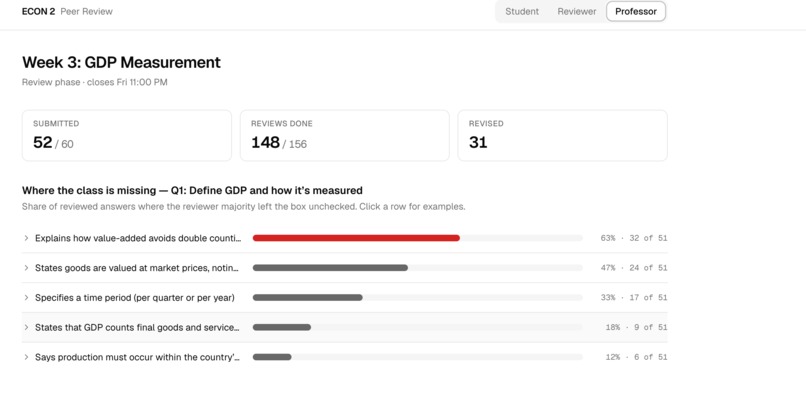
"Professor" interface
-
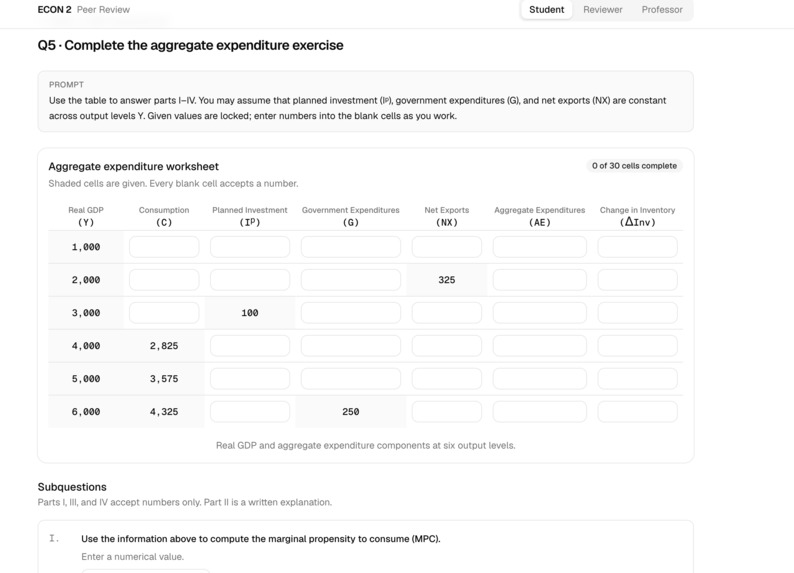
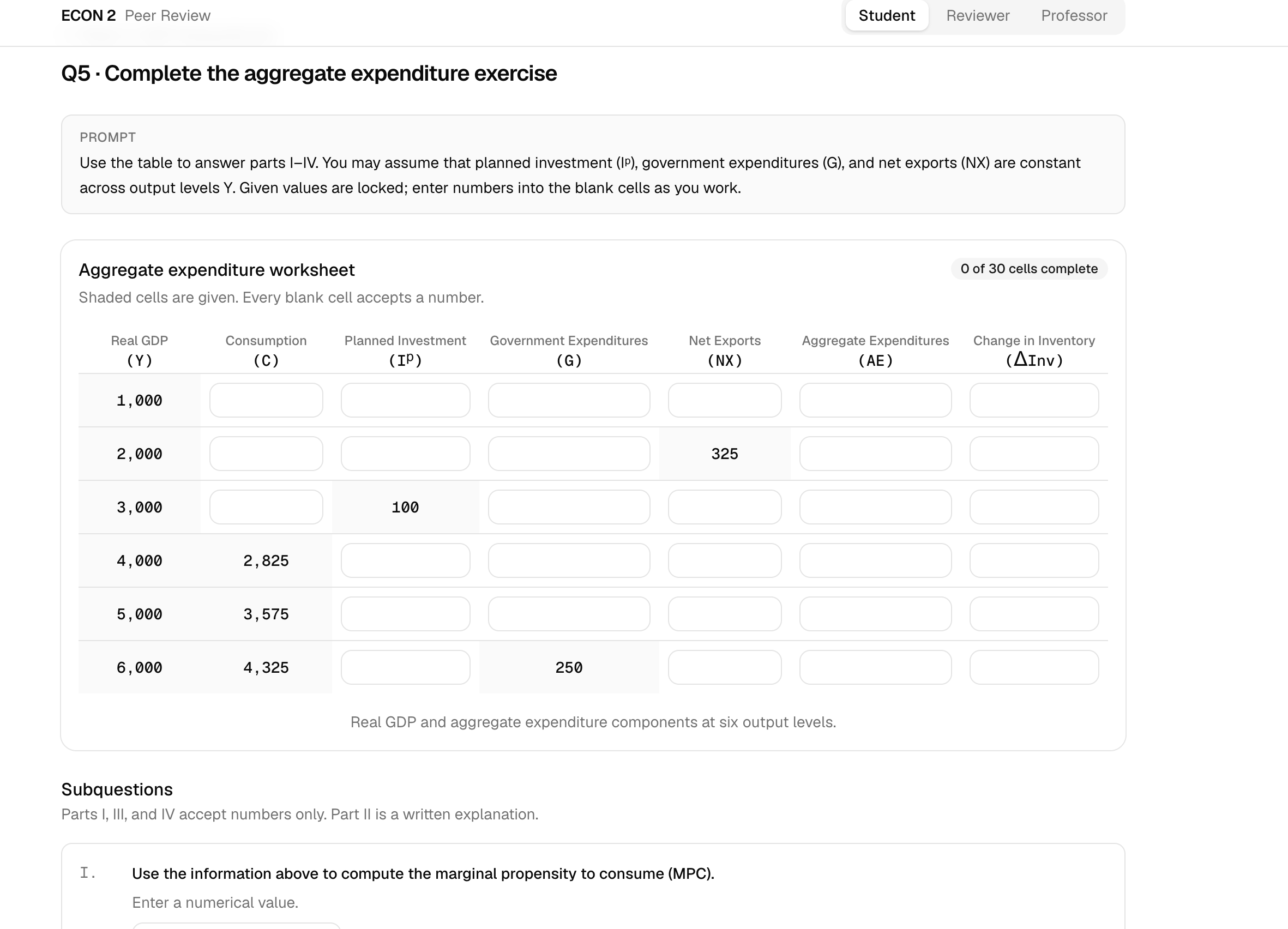
One of the questions
-
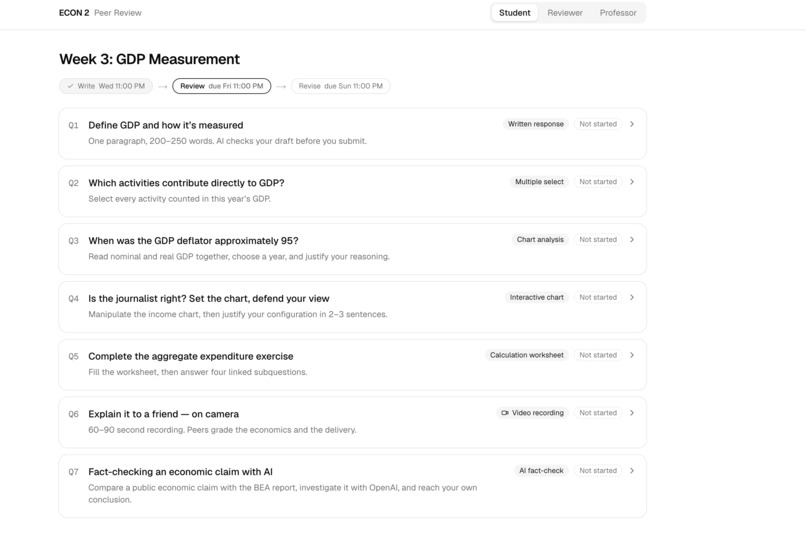
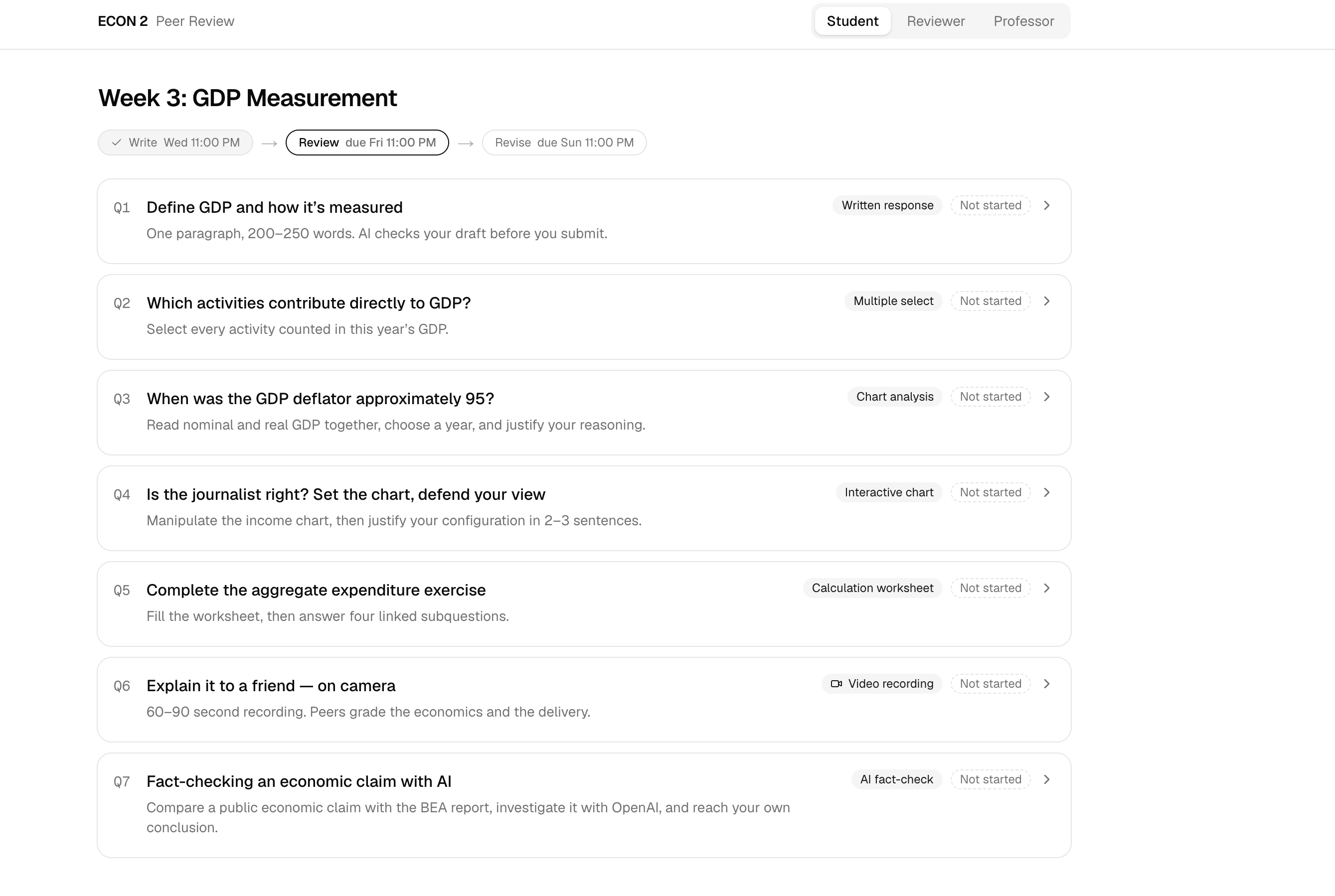
"Student" interface. The queue of exercises for the student to complete. T
-
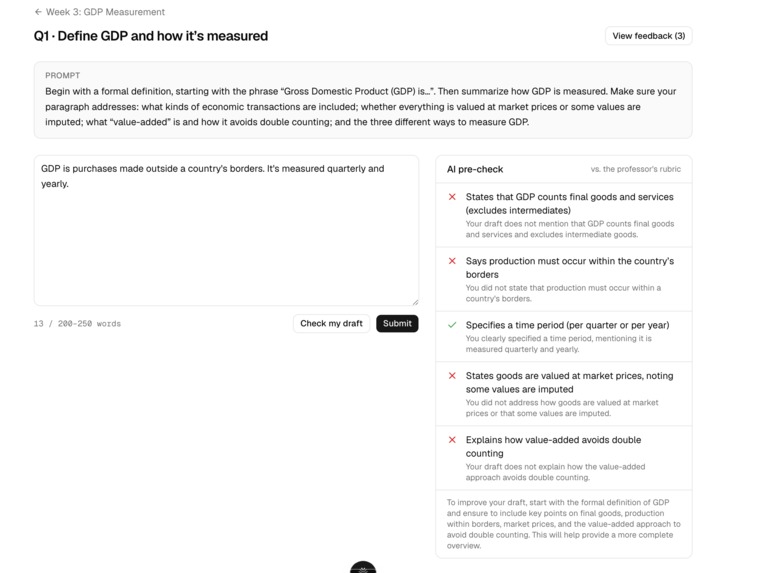
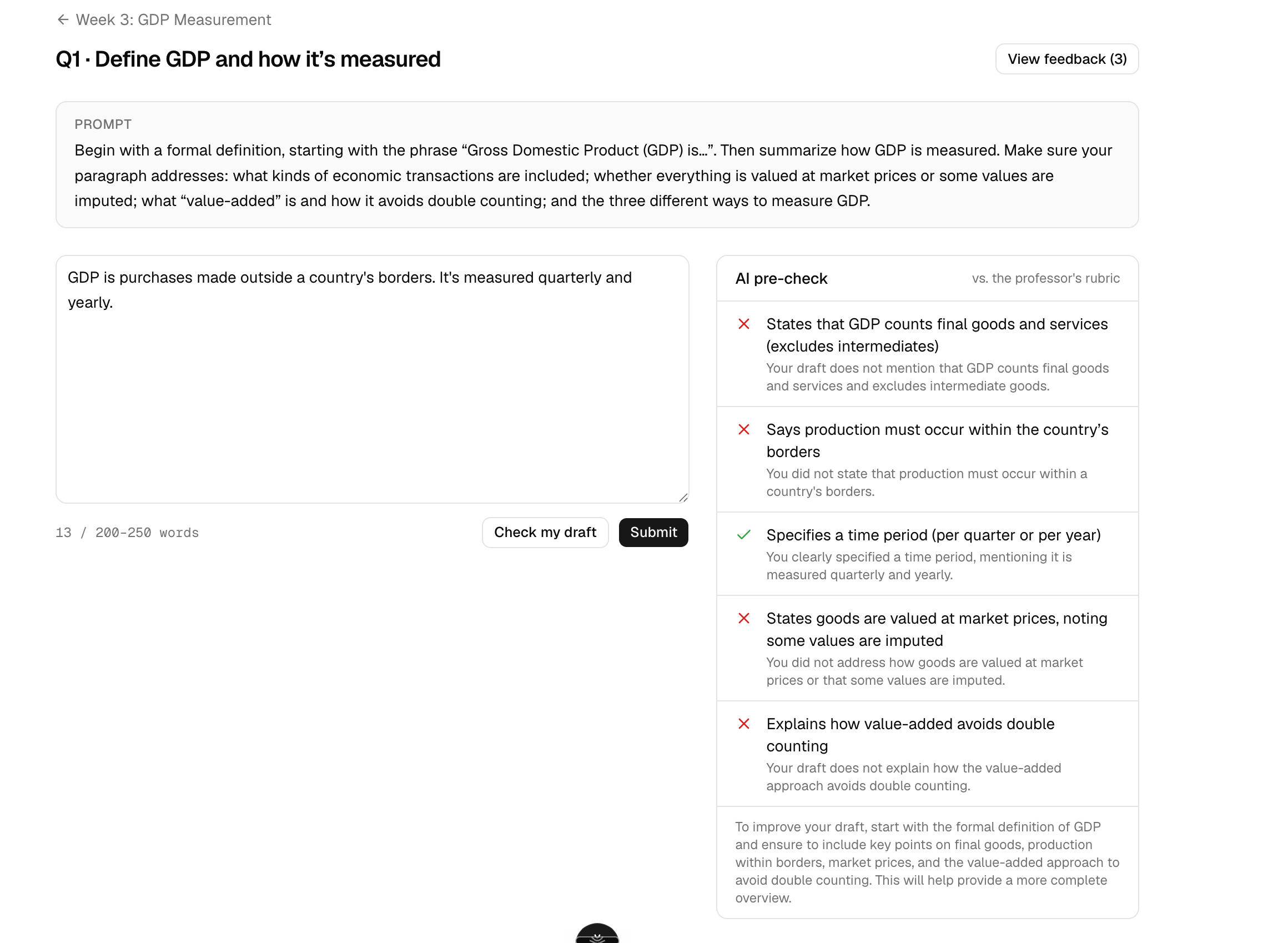
AI preflight check on a response before the students formally submits it for review
-
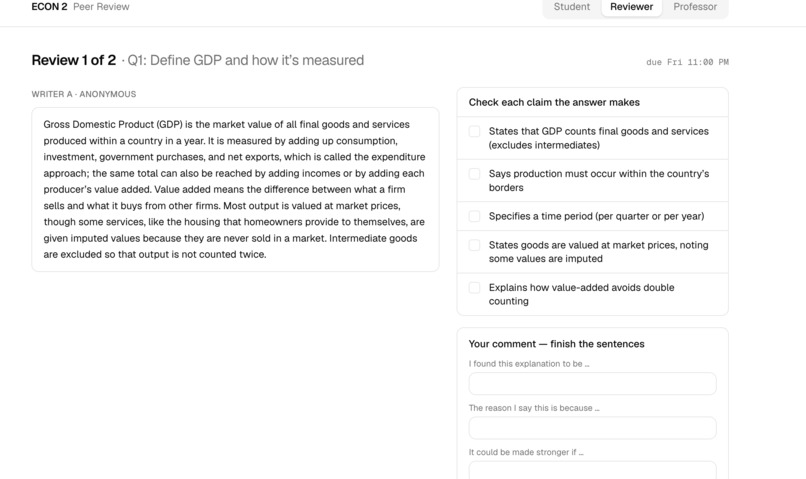
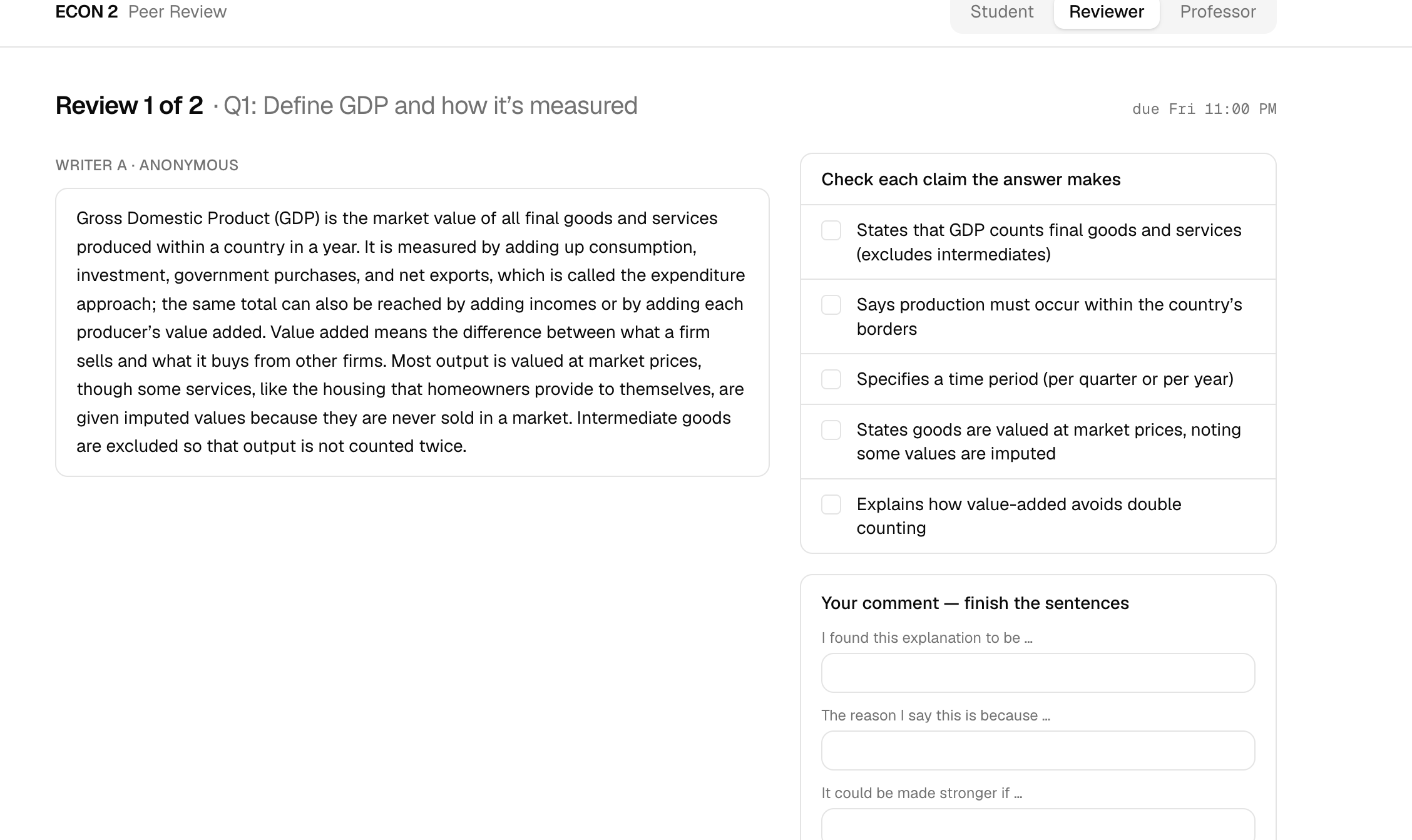
Review queue
-
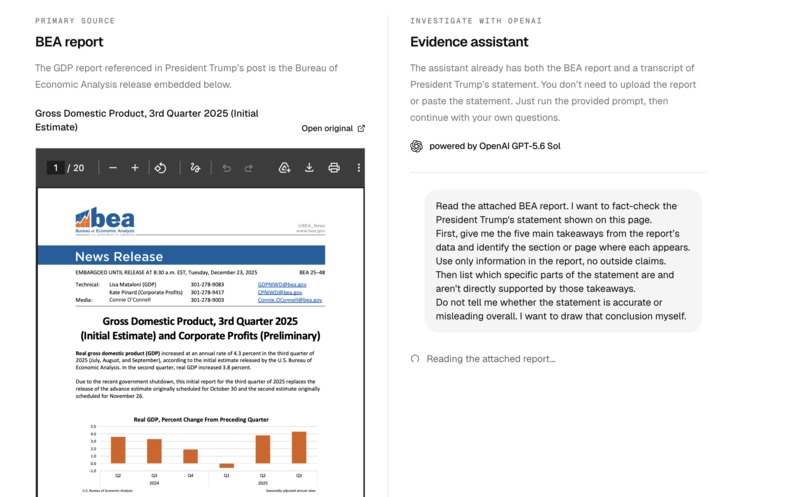
Chatbot - powered by GPT-5.6
-
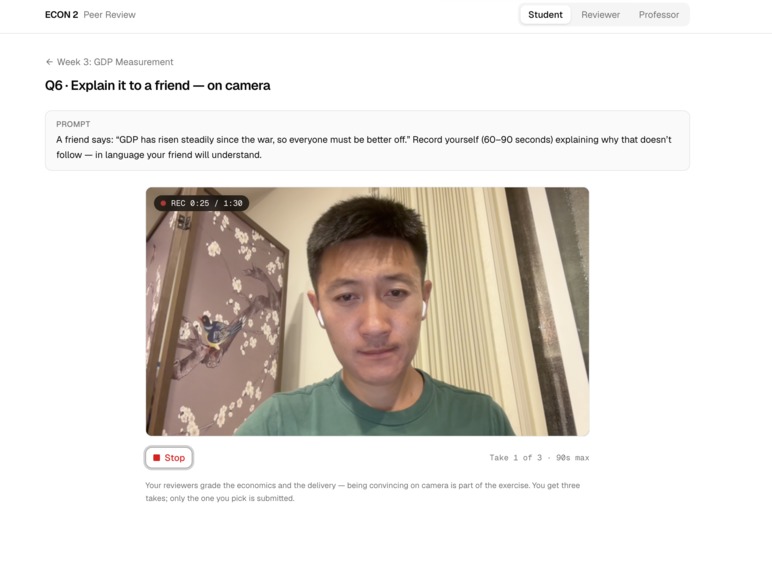
Some questions require students to video record their response. They're assessed on their communication skills.
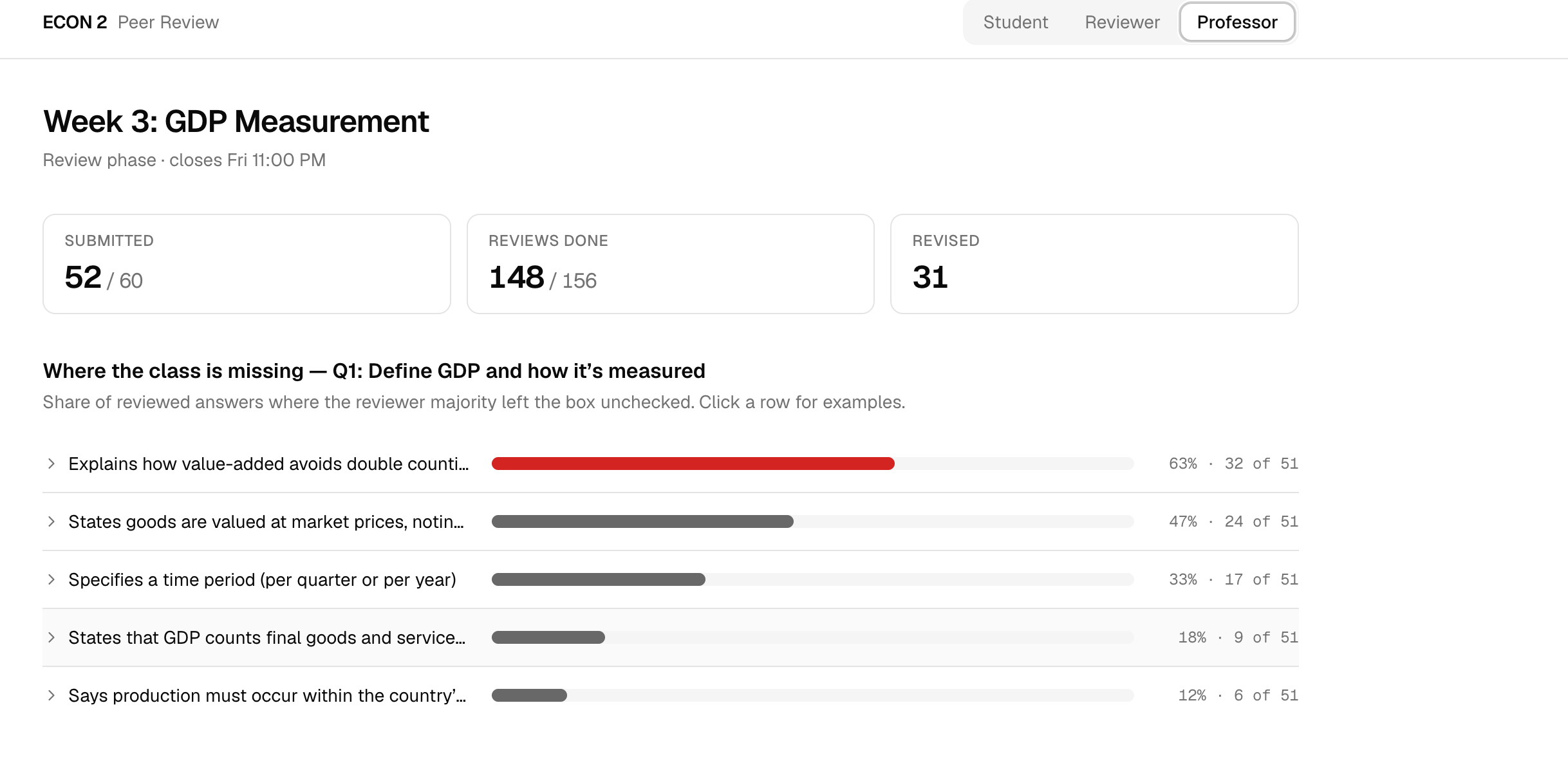
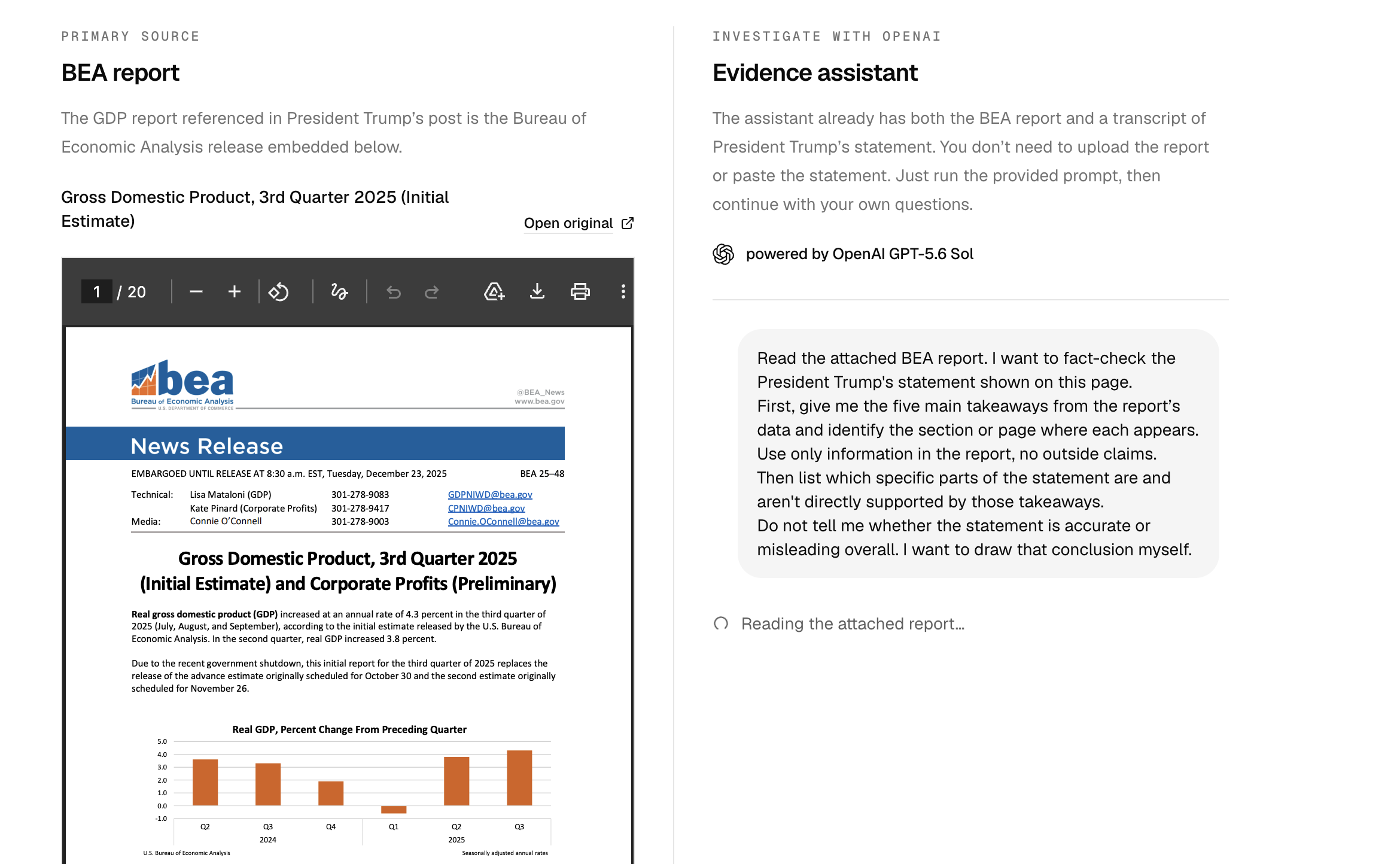
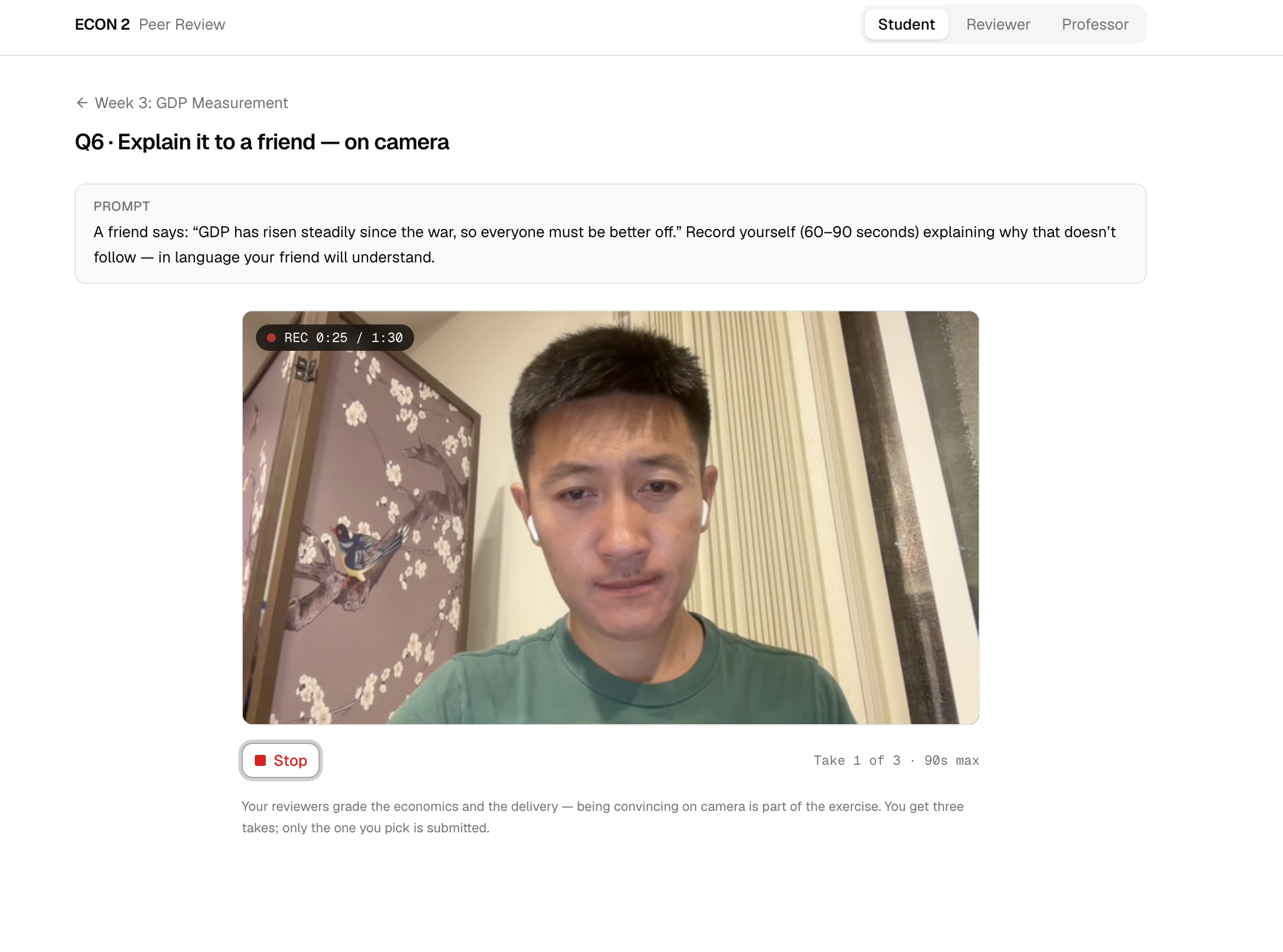
The Feedback Loop bridges the gap between traditional higher ed assessment and the promise of AI-assisted learning. Rather than banning AI tools outright, we build structured, peer-reviewed evaluation directly into how students use them. For students, this replaces memorizing textbook definitions with the critical thinking skills real mastery requires which is a gap we saw firsthand as TAs. AI-native tasks pair tailored feedback with hands-on AI use, mirroring how students will work after graduation and freeing up hours once spent digesting tangential material for forming and defending their own opinions. For instructors, offloading first-pass evaluation to peer review frees up grading time, critical in 800+ student courses, while rubric-tagged reviews feed a live dashboard pinpointing where understanding breaks down, thus allowing instruction to adapt in real time.
To sum up, students build real understanding, professors get real-time insight, and classrooms adapt to AI usage without losing academic rigor.
We built this entirely using Codex (via 5.6 Sol). GPT-5.6 Sol powers the fact-checking chatbot assistant for Question 7 in our app, while GPT-4o mini is behind the "AI-precheck" that grades the student's response against the professor's rubric in Question 1 in our app. A key challenge was demonstrating the complete student-to-reviewer flow without spending our limited time building a backend. We solved this with shared local state, allowing written responses and browser-recorded videos to appear immediately in the "Review queue". From my perspective (Chris, the software engineer), Codex was most helpful for turning decisions and suggestions from the economics domain experts like Lars (my project collaborator) into a tested, working experience. Being able to bridge that gap is I think crucial for success and possibly suggests how the most effective teams of the future might be composed: domain experts like Lars working in a tight feedback loop with software engineers like myself.
Built With
- codex
- next.js
- openai

Log in or sign up for Devpost to join the conversation.